What Boats Are Exempt From Tennessee Registration?
It can be incredibly confusing trying to figure out if your beloved boat, kayak, or even a simple paddleboard needs to be registered with the state of Tennessee. Many folks assume that if it doesn't have a giant outboard motor, it's exempt, but the rules aren't always so clear-cut, leading to a lot of head-scratching and worry about getting caught without the right paperwork. This guide is here to untangle those nuances and clearly lay out which boats are exempt from Tennessee registration, helping you hit the water with confidence.
Understanding Tennessee's Basic Boat Registration Rules
Before we dive into the exemptions, it's helpful to understand the baseline. Tennessee, like most states, has pretty clear rules about what typically does require registration. It's not about the size of the boat as much as it is about how it's propelled.
What Generally Requires Registration?
At its heart, Tennessee law generally requires any vessel that uses a mechanical means of propulsion to be registered. This is where many people get tripped up. When you hear "mechanical propulsion," your mind probably jumps straight to big gas engines on bass boats or pontoon boats. And yes, those absolutely need to be registered. But the definition is broader than that. It includes electric trolling motors, too!
Think about your average fishing boat that you've probably seen on Percy Priest Lake or out on Chickamauga Lake. If it has an outboard motor, an inboard engine, or even a small electric trolling motor, it's almost certainly going to need to be registered. This applies to everything from large cruisers to modest aluminum fishing skiffs. The goal of registration is multifaceted: it helps with identification in case of theft or accident, contributes to funding for state waterways and safety programs, and allows law enforcement to manage and monitor vessel traffic. It's a foundational element of safe and responsible boating in the state. If you want to dive deeper into the general requirements, check out our Tennessee Boat Registration Requirements Explained article.
Why the Confusion About Exemptions?
The confusion often stems from the increasing popularity of smaller watercraft and the evolving technology in boating. For years, if you just had a canoe or a rowboat, nobody thought twice about registration. But now, with battery-powered motors becoming smaller, lighter, and more efficient, people are adding them to vessels that traditionally didn't need registration. Is that sleek new kayak you just bought from Bass Pro Shops considered "mechanical" if you strap on a small electric motor? The answer is often yes, and that's where the lines get blurry for many anglers.
Another source of confusion comes from visitors. If you're coming from out of state to fish Kentucky Lake for a weekend, do you need to register your boat in Tennessee? What if you're a snowbird who spends half the year here? These scenarios create nuances that aren't always obvious at first glance. The key is to remember that the law focuses on the method of propulsion for most recreational vessels on public waters.
Specific Exemptions to Tennessee Boat Registration
Alright, let's get to the good stuff. While many boats do need registration, there are several distinct categories that are typically exempt in Tennessee. Understanding these can save you a lot of paperwork and potential headaches.
Man-Powered Vessels: Canoes, Kayaks, Paddleboards
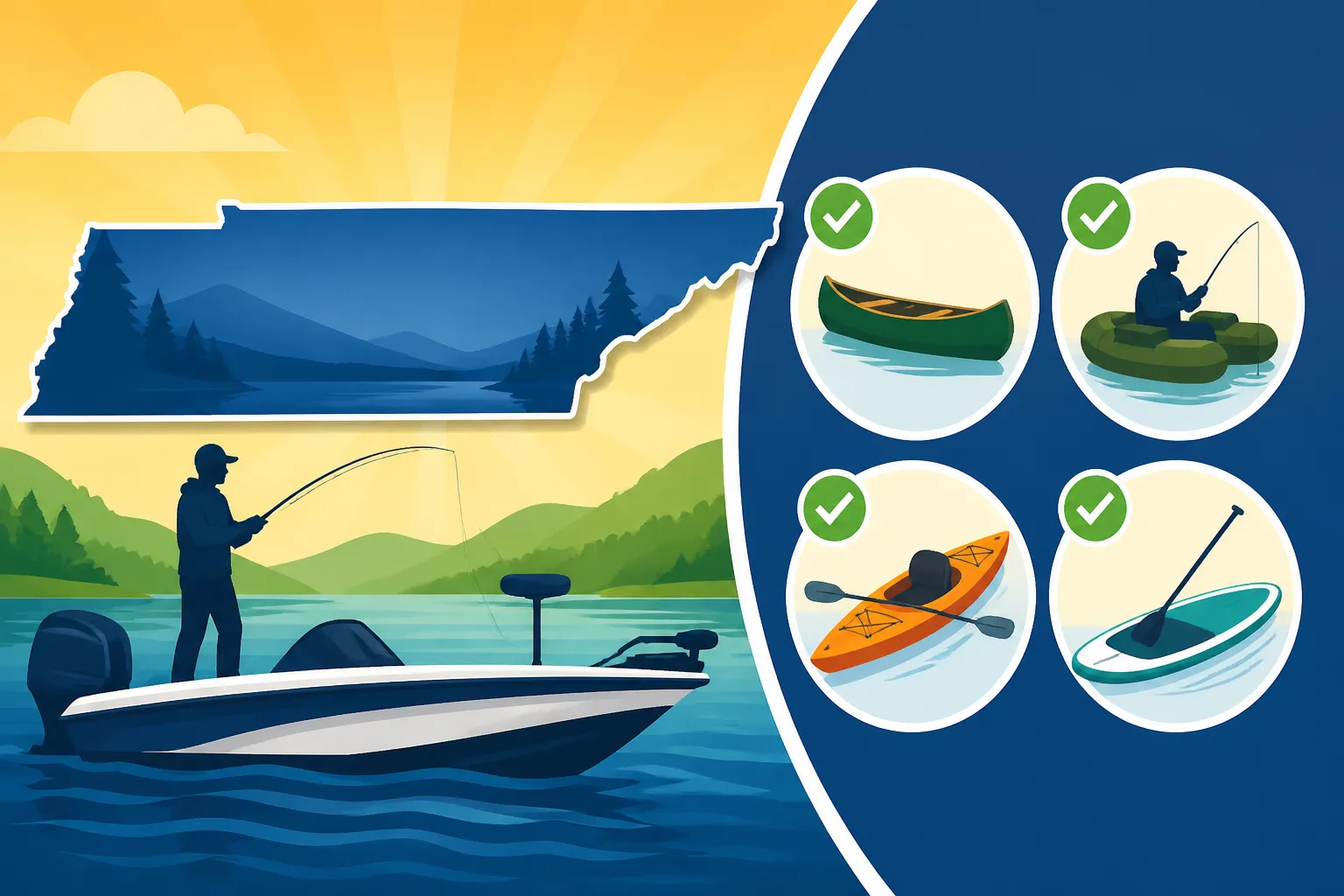
This is probably the most common and clear-cut exemption. If your vessel is propelled solely by human power, it generally does not need to be registered in Tennessee. This includes:
- Canoes: Whether it's a classic aluminum canoe for paddling down the Cumberland River or a modern composite one for lake trips, if you're only using paddles, you're usually exempt.
- Kayaks: The explosion in kayak fishing has brought many new paddlers to the water. A standard kayak, whether recreational, touring, or fishing-specific, does not require registration as long as it's paddled. Check out Do Kayaks Need to Be Registered in Tennessee? for more detailed info on this.
- Paddleboards (SUPs): These increasingly popular boards, used for everything from leisurely floats to fitness, are also exempt when propelled by a paddle.
- Rowboats and Dinghies: Smaller boats designed to be rowed or sculled are typically exempt, again, as long as they don't have any mechanical assistance.
The critical takeaway here is the "solely by human power" part. The moment you introduce an electric trolling motor or even a small gas engine to one of these vessels, even if it's primarily paddled, it moves into the "requiring registration" category. It's a game-changer that often catches people by surprise.
Documented Vessels (Federal Registration)
This is a less common exemption for the average recreational angler but important to know for those with larger vessels. Some boats are registered directly with the U.S. Coast Guard, a process known as federal documentation. This is typically done for commercial vessels or larger recreational yachts.
If your boat is federally documented, it is generally exempt from state registration stickers and numbers. However, some states still require documented vessels to pay an annual state fee, which acts as a "use tax" for operating on state waters, even if they don't get the state-issued registration numbers. It’s always wise to check the most current regulations to ensure full compliance. For those with significant vessels, understanding Do Federally Documented Boats Need Tennessee Registration? is crucial.
Boats Registered in Other States (Temporary Use)
Visiting anglers, listen up! If you're bringing your boat into Tennessee from another state where it is legally registered and numbered, you are generally exempt from Tennessee registration for a limited period. This is designed to facilitate tourism and allow people to enjoy our beautiful lakes and rivers without having to register their boat in every state they visit.
However, "temporary" is the keyword here. While there isn't always a hard-and-fast rule universally applied, if you establish residency in Tennessee or if your boat is primarily used in Tennessee waters for an extended period (often more than 60 or 90 consecutive days, though this can vary), you will likely be required to register it in Tennessee. It's important to remember that state boating laws differ, so always ensure your home state's registration is current and readily available. This exemption is really about short-term visits, not a loophole for long-term use.
Small, Non-Motorized Vessels
Beyond canoes and kayaks, there are other small craft that fit into the non-motorized exemption. Think of a child’s toy boat, a small inflatable dinghy without a motor, or even a paddle boat designed for recreational pedaling. As long as these vessels are under a certain length (often under 10 feet, but always confirm) and are powered solely by human effort or wind (without a sail that can be mechanically assisted), they are generally exempt. This category is for genuinely simple, human-powered craft.
Boats on Private Waters
This exemption applies to vessels that are used exclusively on private ponds or lakes that do not have direct access to public waterways. If your little jon boat with a trolling motor never leaves your private farm pond, it typically doesn't need to be registered.
The key here is "exclusively private." The moment that pond or lake connects to a public stream, river, or reservoir, or if you transport that boat to a public launch, it falls under the standard registration requirements. So, if you've got a small lake on your property, you're probably in the clear. But if you occasionally trailer that boat to Watts Bar Lake or Norris Lake, you'll need to get it registered. This is where What Counts as a Public Water for License Purposes also becomes relevant – understanding the distinction is important.
Situations That Can Revoke an Exemption
Just because a boat starts as exempt doesn't mean it stays that way. There are common scenarios that can quickly change its status. It's like adding an accessory that fundamentally alters the nature of the vehicle.
Adding Mechanical Propulsion to an Exempt Vessel
This is perhaps the biggest pitfall for many well-meaning boaters. As mentioned earlier, if you take a kayak, canoe, or even a small rowboat that was originally exempt because it was human-powered, and you attach any form of mechanical propulsion, it instantly requires registration. This includes:
- Electric Trolling Motors: These are incredibly popular for kayak fishing, offering a silent and efficient way to cover water. However, the moment you mount an electric trolling motor, even a small one you picked up from Amazon, your kayak or canoe becomes a "mechanically propelled vessel" and needs to be registered. This often surprises new kayak anglers who thought their human-powered status was permanent.
- Small Gas Outboards: Similarly, adding even a tiny gas engine to a canoe or dinghy will necessitate registration.
The law focuses on the capability of mechanical propulsion, not just whether you're using it at that exact moment. If it's on the boat and functional, it counts. For a deep dive into this, check out Do Electric Trolling Motors Count as Mechanical Propulsion in Tennessee?.
Duration of Stay for Out-of-State Boats
While visiting boats are initially exempt, this has a time limit. If you move to Tennessee, or if your boat remains in the state for an extended period beyond what's considered temporary (again, typically 60 to 90 days, but always verify current official guidelines), you will be expected to register it in Tennessee. This isn't just about revenue; it's also about ensuring all vessels regularly using state waters are accounted for and comply with Tennessee's specific safety and equipment requirements. It's crucial for those who spend significant time here to understand these nuances.
Here’s a quick summary of common boat types and their general registration status:
| Boat Type | Primary Propulsion Method | Generally Requires TN Registration | Common Caveats/Notes |
|---|---|---|---|
| Bass Boat, Pontoon Boat | Gas/Electric Engine | Yes | Always requires registration. |
| Kayak, Canoe, SUP | Paddle/Human Power | No | Requires registration if any mechanical motor is added (e.g., trolling motor). |
| Rowboat, Dinghy | Oars/Human Power | No | Requires registration if any mechanical motor is added. |
| Sailboat | Wind (Sail) | No | Requires registration if an auxiliary engine (gas/electric) is used for propulsion. |
| Federally Documented | Varies (usually engine) | No (but may have state fees) | Federally documented vessels are exempt from state numbering but may owe state use fees. |
| Out-of-State Registered | Varies (usually engine) | No (for temporary use) | Becomes required if boat is primarily used in TN for an extended period (e.g., >60 days). |
| Boat on Private Water | Varies (motor or not) | No | Only if water has no access to public waterways. |
Why Registration Matters (Even if You're Close to Exempt)
Even if you think your vessel barely squeaks by on an exemption, understanding the purpose of registration and why it’s enforced can help you appreciate the system and avoid potential issues.
Safety and Enforcement
Boat registration plays a vital role in public safety on the water. When a boat is registered, it has a unique identification number, much like a license plate on a car. In the event of an emergency, accident, or if a vessel is reported missing or stolen, these numbers are critical for law enforcement (like the TWRA) and emergency responders to quickly identify the boat and its owner. Imagine a capsized boat on Dale Hollow Lake; if it has a clear registration number, authorities can swiftly determine who might be in distress and initiate a rescue. Without it, finding the owner and understanding the situation becomes incredibly difficult.
Furthermore, registration helps the TWRA enforce boating safety regulations. They can easily track vessels and ensure they meet basic safety requirements, such as carrying enough life jackets or having proper navigation lights for night fishing. Tennessee Life Jacket and PFD Rules for Boaters are just one example of regulations that can be enforced more effectively with a robust registration system.
Proving Ownership
Think of your boat registration as a vital piece of proof of ownership. While Tennessee doesn't issue boat titles for most vessels in the same way it does for cars, the registration serves as the primary document linking you to your boat. This is incredibly important in cases of theft. If your boat is stolen and later recovered, having it registered makes it much easier to prove it belongs to you. Without registration, proving ownership can be a prolonged and frustrating process, leaving you in a difficult situation. It’s a bit different from how cars work, as Why Tennessee Doesn't Issue Boat Titles explains, but the principle of ownership proof remains critical.
Funding Conservation and Waterway Management
The fees collected from boat registrations are crucial for maintaining and improving Tennessee's incredible waterways. These funds often go directly back into boating-related programs, including:
- Public Boat Ramps and Access Points: Ensuring that there are well-maintained, accessible places for everyone to launch their boats.
- Water Safety Education: Programs like the Tennessee Boating Safety Education Certificate Guide are often supported by these fees, making boating safer for everyone.
- Fisheries Management and Conservation: A portion of registration fees helps fund efforts to stock fish, manage fish populations, and protect aquatic habitats, directly benefiting anglers across the state, whether they're targeting bass on Chickamauga or crappie on Reelfoot.
- Aids to Navigation: Maintaining buoys, markers, and other navigational aids that help boaters safely navigate lakes and rivers.
So, while paying a registration fee might feel like an extra burden, it's actually an investment in the resources and infrastructure that make Tennessee such a fantastic place for boating and fishing. It's all part of ensuring a sustainable and enjoyable experience for generations of anglers to come.
Disclaimer
This article is for general informational purposes only and does not constitute professional advice. Laws, prices and regulations vary by location and change over time. Consult a qualified professional for guidance on your specific situation.