Tennessee Life Jacket and PFD Rules for Boaters
There’s nothing quite like the feeling of being out on the water in Tennessee, whether you’re casting a line on Chickamauga Lake, exploring the quiet coves of Norris, or just enjoying a sunset cruise. But that serene feeling can quickly turn to anxiety if you’re not sure you have the right safety gear, especially when it comes to life jackets. The rules can feel like a tangled mess, and nobody wants to risk a fine or, worse, a serious accident. This comprehensive guide is here to untangle all the ins and outs of Tennessee’s life jacket and Personal Flotation Device (PFD) rules, so you can enjoy the Volunteer State’s beautiful waterways with peace of mind.
The Foundation: Why Tennessee Takes Life Jacket Rules Seriously
It's easy to look at life jacket rules as just another bit of red tape, a hurdle put in place by some far-off agency. But out on the water, especially in a state like Tennessee with its vast lakes and powerful rivers, these regulations are absolutely vital. They're not there to spoil your fun; they're there to save lives. When you consider the sheer number of people enjoying our water, from seasoned anglers to families on vacation, the potential for accidents is always present.
The Human Element: Safety First on the Water
Let's be real: nobody plans for an emergency on the water. You head out hoping for a day of relaxation or a trophy catch, not a crisis. Yet, accidents happen in a blink. A sudden wave from a passing boat, an unexpected turn, a slippery deck, or even just losing your balance while reaching for something can send someone overboard in an instant. In those terrifying moments, a properly worn and fitted life jacket can mean the difference between a scary story and an unimaginable tragedy.
Imagine a child, laughing one second, then tumbling into the murky depths the next. Or an adult, perhaps not a strong swimmer, struggling after an unexpected capsize. Even skilled swimmers can be quickly overwhelmed by cold water, currents, or injuries. Life jackets provide immediate buoyancy, keeping heads above water and allowing precious time for rescue, or for the individual to regain composure. Tennessee waterways, while beautiful, can be unpredictable, and even calm waters can hide swift undercurrents or sudden drops in temperature. It’s not just about staying afloat; it’s about conserving energy and increasing visibility for rescuers.
Legal Framework: Who Enforces These Rules?
So, who's keeping an eye on all this? In Tennessee, the primary enforcement agency for boating and fishing regulations, including PFD rules, is the Tennessee Wildlife Resources Agency (TWRA). Their wildlife officers are regularly patrolling our lakes and rivers, ensuring everyone is complying with the law. They're not just looking for fishing licenses; they're checking for proper boat registration, safety equipment, and, yes, life jackets.
Beyond the TWRA, if you're out on some of Tennessee's larger, navigable waterways like portions of the Tennessee River or Kentucky Lake, you might also encounter the U.S. Coast Guard. They have jurisdiction on federal waters and uphold federal boating safety regulations, which often overlap with or enhance state laws. It’s important to remember that state and federal laws work hand-in-hand to create a comprehensive safety net. Understanding the specifics is key, and if you're ever in doubt, it's always best to err on the side of caution and ensure you have more than enough compliant gear. For a broader look at all the rules, check out our guide on Tennessee Fishing Regulations Explained.
Mandatory Wear Rules: Protecting Our Youngest Boaters
When it comes to life jackets, not everyone on board has to wear one all the time. But there are very specific groups and situations where wearing a PFD is not just recommended, it's the law. These rules are designed to protect the most vulnerable or those engaged in higher-risk activities.
The Under-12 Rule: No Exceptions While Underway
This is perhaps the most critical rule for families enjoying Tennessee's waters, and it's one that TWRA officers are particularly vigilant about. In Tennessee, any child under the age of 12 must wear a U.S. Coast Guard-approved life jacket whenever they are on the open deck or cockpit of a vessel that is underway. "Underway" simply means the boat is not anchored, moored, or aground. It's moving, even if slowly.
Think about it: a small child can slip and fall overboard incredibly quickly, often silently, and a boat might travel a significant distance before anyone even notices. Their small size makes them incredibly difficult to spot in the water, and they have less strength and stamina to stay afloat or call for help. This rule takes the guesswork out of it. It’s not about how well your child can swim; it’s about providing constant, immediate protection against the unexpected. If you're planning a family outing, make sure every child under 12 has a properly fitted life jacket on before you even leave the dock. To dive deeper into this specific regulation, take a look at Tennessee's Under-12 Life Jacket Rule Explained.
This rule applies to all types of vessels, from a massive cruiser on Watts Bar Lake to a small fishing boat on Percy Priest. It doesn't matter if you're just putting around or cruising at full speed. The moment that boat is in motion and a child under 12 is out in the open, that life jacket needs to be on. There are no exceptions for strong swimmers or calm weather. It’s a blanket rule for consistent safety.
Life Jackets for PWC Operators and Skiers
Beyond children, there are other situations where everyone involved must wear a life jacket, regardless of age. If you're operating a Personal Watercraft (PWC), like a Jet Ski or Sea-Doo, you and any passengers are required to wear a USCG-approved PFD at all times while underway. These craft are designed for speed and maneuverability, which inherently carries a higher risk of falling off or colliding.
Similarly, anyone being towed behind a boat—whether they’re water skiing, wakeboarding, tubing, or parasailing—must also wear a USCG-approved PFD. These activities involve high speeds and sudden impacts with the water, where even skilled participants can be knocked unconscious or disoriented. The life jacket ensures immediate flotation and visibility for the operator of the towing vessel. It's not just about staying safe; it's about being visible and ready for anything the water might throw at you. These rules are non-negotiable for anyone enjoying these thrilling water sports on Tennessee’s beautiful lakes.
Onboard Requirements: Having Enough PFDs for Everyone
It's not enough to just have PFDs for the mandatory wearers; Tennessee law also dictates that you must have enough life jackets for every single person on your vessel, readily accessible, and in good condition. This ensures that in a sudden emergency, everyone has a chance to grab a PFD, even if they weren't wearing one initially.
One for Every Person: The Core Rule
This is the most fundamental requirement: for every person on board your boat, you must have at least one U.S. Coast Guard-approved wearable PFD. This includes yourself, your family, your friends, and even your pets, though pet PFDs aren't legally mandated, they're highly recommended! These PFDs must be "readily accessible," meaning they shouldn't be stowed away in a locked compartment, buried under a pile of gear, or in their original packaging. They need to be where someone can quickly grab them in an emergency, ideally within arm's reach.
Furthermore, each PFD must be in "serviceable condition." This means it should be free from rips, tears, broken straps, and waterlogging. A PFD that is torn, faded, or otherwise compromised might not provide the intended flotation and could even be a hindrance. It's a good habit to regularly inspect your life jackets, especially at the start of each boating season, to ensure they meet this standard. Having various sizes on board is also smart – an adult PFD won't do much good for a small child, even if you technically have "enough" PFDs.
The Type IV Throwable Device Requirement
For vessels 16 feet in length or longer (excluding canoes and kayaks, which we'll get to), Tennessee law requires an additional piece of flotation equipment: a U.S. Coast Guard-approved Type IV throwable device. This isn't something you wear; it's designed to be thrown to someone who has unexpectedly fallen overboard.
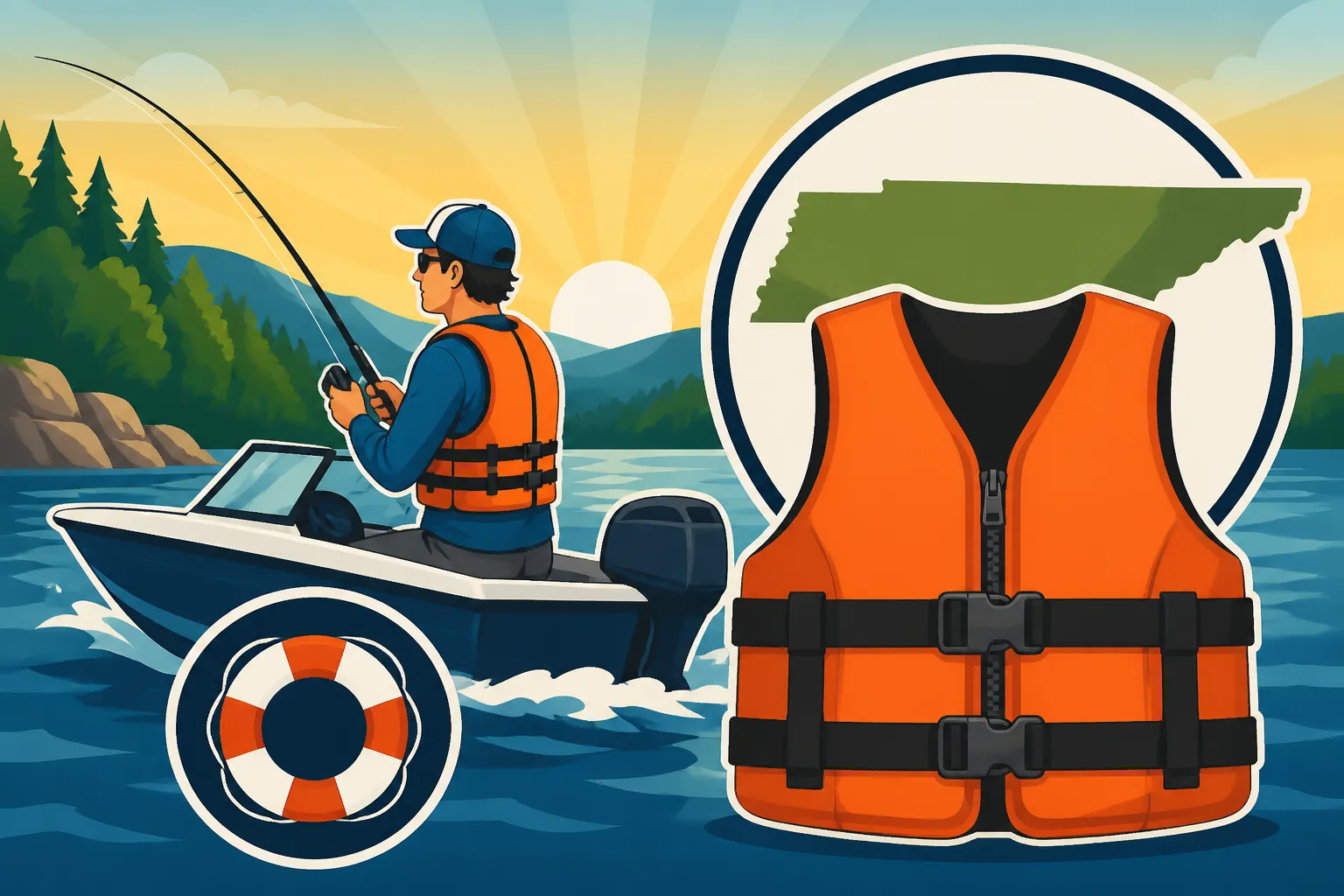
Common examples of Type IV devices include ring buoys, boat cushions, or horseshoe buoys. Like wearable PFDs, this throwable device must be in serviceable condition and immediately accessible. You can't have it tied down or buried under other equipment. Imagine someone suddenly falling off the back of your boat on Kentucky Lake; you need to be able to quickly grab that cushion and toss it to them without fumbling around. It provides immediate flotation and a target to aim for, giving the person in the water something to hold onto while you maneuver to pick them up. This rule is a critical backup safety measure, especially on larger boats where retrieving a person from the water might take a little longer. For more details, see Tennessee's Type IV Throwable Device Rule for Boats 16 Feet and Longer.
Demystifying PFD Types: USCG-Approved Categories
When you walk into a store like Bass Pro Shops or browse online on Amazon, you’ll see a bewildering array of life jackets. They’re not all the same, and understanding the different U.S. Coast Guard (USCG) approval types is crucial for choosing the right one for your activity and ensuring compliance.
Understanding Wearable PFDs: Types I, II, III, and V
The USCG categorizes wearable PFDs into several types, each designed for different conditions and levels of buoyancy. Knowing these helps you pick the right gear for your Tennessee adventures:
- Type I (Offshore Life Jackets): These are designed for rough, remote waters where rescue may be delayed. They offer the most buoyancy (at least 22 lbs for adults) and are designed to turn an unconscious person face-up in the water. They're bulky, not very comfortable for active sports, but are your best bet in extreme conditions, like deep offshore ocean sailing (though less common for typical Tennessee lakes, they still count!).
- Type II (Near-Shore Vests): These provide at least 15.5 lbs of buoyancy and are good for calmer, inland waters where a quick rescue is likely. They will turn some unconscious wearers face-up, but not all. They are less bulky than Type I but still not ideal for active water sports. Think of them as a basic, reliable option for general boating.
- Type III (Flotation Aids): These are the most common and comfortable PFDs for recreational boating, providing at least 15.5 lbs of buoyancy. They come in many designs, including vests for fishing, waterskiing, and kayaking. They offer great freedom of movement, but generally, they will not turn an unconscious person face-up. You need to be conscious and able to assist yourself. These are often the preferred choice for anglers, kayakers, and those engaged in active sports due to their comfort.
- Type V (Special Use Devices): This category covers PFDs designed for specific activities, like work vests, deck suits, or hybrid inflatable PFDs. They often incorporate a Type I, II, or III performance level but are approved only for their intended use. For example, some fishing vests might be rated as a Type V but function as a Type III. The key with Type V PFDs is that they must be worn to count as a legally required PFD on board.
Here's a quick comparison table:
| PFD Type | Minimum Buoyancy (Adult) | Intended Use | Turns Unconscious Wearer Face Up? | Comfort/Mobility |
|---|---|---|---|---|
| Type I | 22 lbs | Offshore, rough, remote waters | Yes, most likely | Low |
| Type II | 15.5 lbs | Near-shore, calmer waters | Sometimes | Medium |
| Type III | 15.5 lbs | General recreational, active | No | High |
| Type IV | 16.5 lbs | Throwable (not worn) | N/A | N/A |
| Type V | Varies by design | Special use (must be worn) | Varies | Varies |
The Role of Inflatable PFDs
Inflatable PFDs have become increasingly popular, especially among anglers and paddle sports enthusiasts who prioritize comfort and freedom of movement. These PFDs are typically small, lightweight, and worn like a belt pack or suspenders. They only inflate when activated, either manually by pulling a cord or automatically upon immersion in water.
Most inflatable PFDs are classified as Type V, meaning they must be worn to be counted as a legally required PFD. They also often come with specific care instructions, such as regular re-arming with CO2 cartridges and checking their status indicators. While incredibly comfortable for active users, they require a conscious effort to maintain and deploy. They're a fantastic choice for those who find traditional foam PFDs too bulky, but remember that "must be worn" rule—having one stowed away won't cut it. Always check the label for the specific USCG approval and any conditions of use.
Special Craft and Unique Situations
Tennessee’s waterways are a playground for all sorts of vessels, from large pontoons to small kayaks. It’s critical to understand that the PFD rules aren't just for motorized boats; they extend to paddlecraft and even have nuances depending on whether you're anchored or on the move.
Kayaks, Canoes, and Stand-Up Paddleboards
Here's where some confusion often crops up. Many people assume that because kayaks, canoes, and stand-up paddleboards (SUPs) are non-motorized and often used close to shore, they might be exempt from certain boating regulations. Not so in Tennessee! For the purposes of PFD laws, these paddlecraft are absolutely considered "vessels" under TWRA regulations.
This means that the core rule of having "one U.S. Coast Guard-approved wearable PFD for every person on board" applies just as much to a solo kayaker on the Clinch River as it does to a family in a pontoon on Kentucky Lake. While adult kayakers, canoeists, and paddleboarders aren't always required to wear their PFD (unless they're under 12, or on a PWC), they must have it readily accessible on their craft. Many experienced paddlers choose to wear their PFDs anyway, particularly if they are in cold water, swift currents, or open, windy conditions, because retrieving a PFD after an unexpected capsize can be difficult, if not impossible. For a comprehensive look, our guide Life Jacket Rules for Kayaks and Canoes in Tennessee goes into detail.
It's a small boat, yes, but the water doesn't care about the size of your craft when an accident happens. A strong current can sweep away a paddleboarder, or a canoe can flip in choppy water, and having that PFD quickly available is your primary line of defense. Remember to also consider if your kayak needs to be registered in Tennessee; you can learn more about that here: Do Kayaks Need to Be Registered in Tennessee?.
Exceptions and Exemptions
While the rules are fairly consistent, there are a few minor scenarios that sometimes cause questions:
- Enclosed Cabins: If a person is inside a fully enclosed cabin on a larger vessel, they generally aren't required to wear a PFD, even if they're under 12, because they are not on the "open deck or cockpit." However, the PFD must still be readily available for them to grab if they were to go outside or in the event of an emergency that forces them out of the cabin.
- Anchored or Moored Vessels: The "underway" clause is important. If your boat is truly anchored, moored to a dock, or aground (not intentionally floating free), then the mandatory wear rule for children under 12 doesn't apply. However, all required PFDs must still be on board and accessible. As soon as you un-anchor and start moving, even slowly, those kids need their vests on.
- Designated Swimming Areas: If you're using your boat as a base for swimming in a designated area, and people are in the water around the boat, they generally aren't required to wear a PFD unless local ordinances specify otherwise. The PFDs, however, must remain on the vessel for each person.
- Free Fishing Day: While events like Bobby Wilson Free Fishing Day in Tennessee waive the fishing license requirement for a day, they do not waive any boating safety regulations, including life jacket rules. If you're on a boat, all the standard PFD requirements still apply. It's an opportunity to fish without a license, not to boat without safety gear.
These nuances highlight why it's always best to be overly prepared. When in doubt, wear the PFD, especially for children. Safety is paramount, and a little extra precaution never hurts.
Ensuring Your PFDs Are Up to Code: Inspection and Care
Having the right number and type of PFDs is only half the battle. They also need to be in good, working order. A damaged or poorly maintained life jacket might not perform when you need it most, making it just as useless as not having one at all.
The "Serviceable Condition" Standard
What does "serviceable condition" actually mean in the eyes of the TWRA or Coast Guard? It's more than just "looks okay." A PFD is considered unserviceable if it has:
- Rips, Tears, or Holes: Even small ones can compromise the integrity of the flotation material, especially if they allow water absorption.
- Broken or Missing Straps, Zippers, or Buckles: These are crucial for keeping the PFD securely on the wearer. A life jacket that comes off in the water is useless.
- Waterlogging or Excessive Compression: If a foam PFD feels heavy, waterlogged, or if the foam has become stiff, hard, or overly compressed from improper storage, its buoyancy can be significantly reduced.
- Sun Fading and Deterioration: Prolonged exposure to sunlight can break down the fabric and stitching, making the PFD weaker and less reliable.
- Oil or Chemical Damage: Spills can degrade the materials, weakening the jacket.
Before every outing, especially at the beginning of the season, take a few minutes to inspect each PFD. Pull the straps, check the buckles, look for any signs of wear or damage. For inflatable PFDs, check the CO2 cartridge indicator to ensure it's armed and ready. It's a quick habit that can prevent a serious problem. An officer checking your boat will be looking for these things, and an unserviceable PFD doesn't count towards your legal requirements.
Proper Storage and Maintenance for Longevity
Life jackets aren't cheap, and with proper care, they can last for many years. Neglecting them, however, can quickly lead to their deterioration and the need for costly replacements.
Here are some tips for extending the life of your PFDs:
- Rinse After Use: If you've been in saltwater or heavily chlorinated water, rinse your PFDs with fresh water and hang them to air dry thoroughly.
- Air Dry Completely: Never store a wet PFD. Mildew and mold can quickly set in, damaging the fabric and flotation material. Hang them in a well-ventilated area, out of direct sunlight.
- Store in a Dry, Ventilated Place: Avoid stuffing PFDs into a cramped, damp locker where air can't circulate. This leads to mildew and compression. A mesh bag or open bin in a dry area is ideal.
- Avoid Excessive Compression: Don't stack heavy items on top of PFDs, as this can compress the foam and reduce its buoyancy over time.
- Keep Away from Fuel and Chemicals: Store PFDs away from gas, oil, batteries, and other corrosive chemicals that can degrade the materials.
- Check Inflatables Regularly: For inflatable PFDs, follow the manufacturer's guidelines for inspecting the CO2 cartridge and deployment mechanism, and re-arm as needed.
Investing a little time in proper PFD care not only ensures they're ready for an emergency but also saves you money in the long run by extending their lifespan.
Choosing the Right Life Jacket: Comfort Meets Compliance
With so many types and styles available, picking the right life jacket can feel a bit overwhelming. But it boils down to two key factors: compliance with Tennessee law and comfort for the wearer and the activity. A life jacket that isn't comfortable or properly fitted is less likely to be worn, especially by kids, completely defeating its purpose.
Sizing and Fit: More Than Just the Label
A life jacket only works if it fits correctly. This is especially true for children, where an ill-fitting PFD can ride up around their ears, potentially dislodging and becoming more of a hazard than a help. Here's how to ensure a proper fit:
- Check the Label: Always start with the manufacturer's label, which will specify weight ranges and chest sizes. Make sure the person is within these guidelines.
- Put it On and Cinch it Tight: The PFD should feel snug, but not uncomfortably restrictive. Fasten all zippers, buckles, and straps.
- Perform the "Lift Test": For children, lift them by the shoulders of the PFD. If the PFD slides up past their chin or ears, it's too big and they could slip out. It needs to stay securely in place. For adults, have someone try to pull the PFD up from the shoulders; if it moves excessively, it's too loose.
- Test in Water (if possible): Ideally, try out a new PFD in shallow water to ensure it provides adequate flotation and doesn't ride up too much. This helps build confidence, especially for children.
Remember, children grow fast. A PFD that fit perfectly last year might not fit this year. Always re-check sizing at the start of each season. When buying for kids, prioritize fit over "room to grow." For quality options, you can find a wide range of Best Coast Guard Approved Life Jackets for Kids that meet all these criteria.
Activity-Specific Considerations
The "best" life jacket often depends on what you're doing on the water.
- For General Boating (Cruising, Fishing from a large boat): A comfortable Type III vest is often ideal. It offers good mobility and enough buoyancy for quick rescue on inland waters. If you're primarily fishing, look for fishing-specific PFDs with pockets and tool attachments, often rated as Type III or Type V.
- For Watersports (Skiing, Tubing, Wakeboarding): Look for Type III PFDs specifically designed for watersports. These often have a more secure fit, thicker foam, and durable outer shells to withstand the impacts and speeds involved.
- For Kayaking, Canoeing, and Paddleboarding: A Type III PFD designed for paddle sports will offer larger armholes and a shorter cut to allow for maximum arm movement while paddling. Some even have mesh backs to accommodate high-backed kayak seats. These are usually very comfortable for extended periods of paddling. If you're a serious paddler, you might want to explore specific options like the Best Life Jackets for Tennessee Kayak Anglers.
- For Active Anglers: Many anglers prefer an inflatable PFD (Type V) because it's lightweight and doesn't restrict casting motions. Just remember the rule: it must be worn to be legally counted.
When you're shopping for PFDs, whether you're browsing the aisles at Bass Pro Shops or clicking through options on Amazon, always look for the U.S. Coast Guard approval stamp on the label. This is your guarantee that the device meets safety standards and counts towards your legal requirements in Tennessee. Don't be swayed by unapproved "flotation aids" that aren't officially PFDs; they won't cut it legally or safely.
Navigating Enforcement and Acquiring Compliant Gear
Nobody wants their peaceful day on the water interrupted by a TWRA officer for a safety violation. Understanding the consequences and knowing where to reliably get your gear are the final pieces of the puzzle for responsible boating in Tennessee.
What Happens if You're Caught Without Proper PFDs
Let's not sugarcoat it: getting caught without the required life jackets or with unserviceable ones can lead to fines and citations from TWRA officers. These aren't just minor inconveniences; they can be costly and put a damper on your entire trip. The exact amount of the fine can vary, but generally, violating boating safety regulations like PFD requirements falls under a misdemeanor. Officers have the discretion to issue warnings in some cases, especially for minor, easily correctable issues, but they are absolutely within their rights to issue a citation.
Imagine being out on the Cumberland River, enjoying a beautiful day, when an officer pulls alongside. They conduct a routine safety check, and if they find you don't have enough PFDs, or if a child under 12 isn't wearing one, that's a direct violation. You might be ordered to return to the dock until you can rectify the issue, or even face a court appearance. It's a bit like getting a ticket for driving without a seatbelt – it's a safety measure, and ignorance of the law isn't an excuse. The potential financial hit and the disruption to your day are far greater than the cost of simply having the right PFDs in the first place. This is similar to the consequences of not having a fishing license; you can read more about those here: Penalties for Fishing Without a License in Tennessee. It's always better to be proactive about safety and compliance.
Finding USCG-Approved Life Jackets
So, where do you get these essential pieces of safety gear? Thankfully, U.S. Coast Guard-approved life jackets are widely available, making it easy to ensure you're compliant and safe.
- Local Marine and Outdoor Stores: Your best bet for hands-on sizing and expert advice. Stores like Bass Pro Shops are excellent resources, offering a huge selection of PFDs for all ages, sizes, and activities. The staff can help you try on different styles and ensure a proper fit.
- Big Box Retailers: Many large department stores or sporting goods sections will carry a basic selection of USCG-approved PFDs, especially during the spring and summer boating seasons.
- Online Retailers: Websites like Amazon offer an extensive range of life jackets, often with competitive prices and customer reviews. When buying online, just be extra diligent about checking the product description for the clear "U.S. Coast Guard Approved" designation and sizing charts. Remember, a life jacket that isn't USCG-approved doesn't count.
- Used Options (with caution): While it might be tempting to save money by buying used, exercise extreme caution. You need to be absolutely certain the PFD is still in serviceable condition, free from damage, waterlogging, or chemical exposure that might not be immediately obvious. Often, the savings aren't worth the risk.
No matter where you purchase your life jackets, always double-check the label for the official U.S. Coast Guard approval stamp. This stamp confirms that the PFD meets rigorous safety standards and will provide the flotation it's designed for. Buying reliable, approved PFDs is one of the easiest and most important steps you can take to ensure a safe and enjoyable experience on Tennessee's beautiful waters.
Disclaimer
This article is for general informational purposes only and does not constitute professional advice. Laws, prices and regulations vary by location and change over time. Consult a qualified professional for guidance on your specific situation.