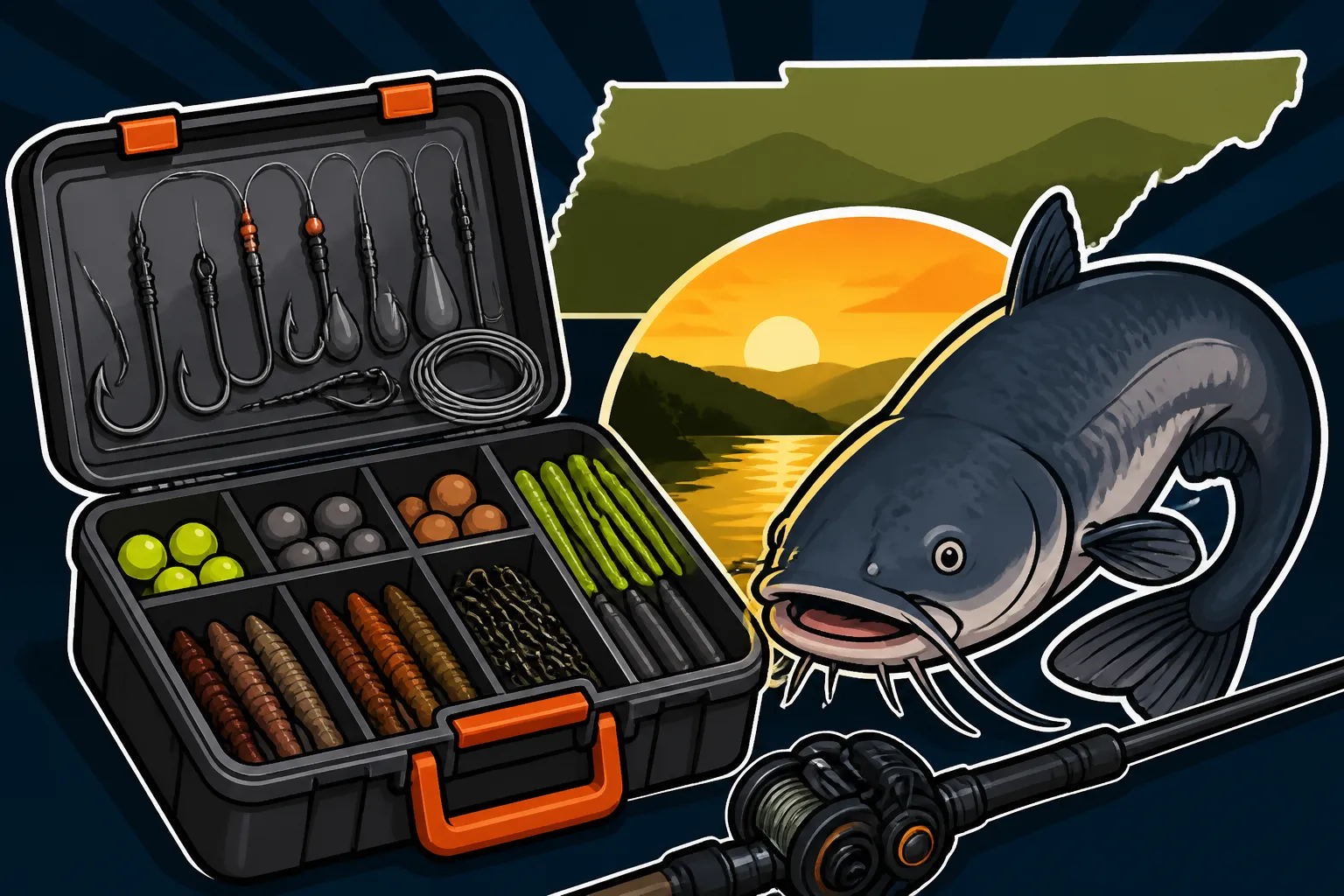
Tackle Box Setup for Catfish Fishing
There's nothing quite as frustrating as showing up at your favorite Tennessee fishing spot, ready to target some hard-fighting catfish, only to realize your tackle box is a chaotic mess, missing crucial components, or simply not up to the task. We've all been there: fumbling through tangled lines and mismatched hooks while the fish are biting. This comprehensive guide is here to help you ditch the tackle box woes and set up a perfectly organized, highly effective tackle box specifically for chasing those whiskered wonders across Tennessee's abundant waters.
The Foundation: Your Catfish Tackle Box Choices
Before you even start thinking about hooks and weights, you need the right vessel to carry your precious gear. The humble tackle box is more than just a container; it’s your mobile command center on the water, and for catfish, it needs to be robust and intelligently designed.
Box Size and Organization Styles
When it comes to tackle boxes for catfish, size definitely matters. You're often dealing with larger hooks, heavier weights, and bulkier baits than, say, panfish. A small, single-tray box might suffice for a quick bank fishing trip for smaller channel cats, but if you're serious about targeting blue catfish on the Tennessee River or flatheads on Kentucky Lake, you'll need something more substantial.
Traditional multi-tray tackle boxes are a classic choice, offering quick access to several layers of organized compartments that fan out. These are fantastic for keeping different hook sizes, swivels, and smaller weights neatly separated. However, they can sometimes lack the deep storage needed for larger spools of line, bulkier bait jars, or specialized tools like fish grips. Another popular option, especially among boat anglers or those who carry a lot of gear, are soft-sided tackle bags. These bags typically come with several removable plastic utility boxes (often called 3600 or 3700 series boxes) that slide into designated slots. This modular approach is incredibly versatile; you can dedicate one box entirely to hooks, another to weights, and another to specialized leaders. This makes it easy to grab just the box you need, or swap out an entire box of gear if you're switching from targeting channel cats to trophy blues. Many anglers find these soft bags more comfortable to carry and less prone to rattling around in a boat.
For bank fishing or simpler setups, a smaller, robust utility box might be all you need, especially if you're focusing on one type of bait and rig. The key is to think about what you’ll be carrying most often and how much space it will realistically require. Don't underestimate the amount of space needed for a good selection of various weights, especially if you’re contending with strong river currents.
Durability and Portability Considerations
Catfishing can be a messy business, and your tackle box needs to stand up to it. You’ll be in environments with dirt, mud, bait juice, and often, the elements. Look for boxes made from tough, impact-resistant plastics that won't crack if dropped or left out in the sun. Quality latches are non-negotiable – there's nothing worse than a box bursting open and spilling its contents just as you're loading it into the truck or boat. Many modern tackle boxes feature rust-inhibiting technology in their plastic, which can be a real savior for hooks and other metal components, especially in humid Tennessee weather.
Portability is another crucial factor. If you mainly fish from a boat on Chickamauga Lake: Tennessee's Top Bass Fishing Destination or Kentucky Lake Fishing on the Tennessee Side, a larger, heavier box might be acceptable, as you won't be carrying it far. However, if you hike to remote spots on the Clinch River Trout Fishing in East Tennessee (yes, they have catfish too!), or spend hours walking the banks of a pond, a lighter, more compact, and comfortable-to-carry option is essential. Soft-sided bags with padded shoulder straps or sturdy handles can make a huge difference in reducing fatigue. Consider also how easily the box can be cleaned. Fish slime, bait residue, and dirt will inevitably find their way in, so a box with smooth surfaces and minimal crevices will be much easier to maintain.
Essential Catfish Rigs and Terminal Tackle
This is where the rubber meets the road! Having the right terminal tackle is paramount to successfully hooking and landing catfish. These components might be small, but they make all the difference between a triumphant catch and a frustrating lost fish.
Hooks for Every Catfish Scenario
Catfish anglers typically rely on a few key hook styles, each with its own advantages. For general catfishing, especially with cut bait or chicken liver, circle hooks are a game-changer. Their unique design means the fish almost always hooks itself in the corner of the mouth as it swims away, leading to fewer gut-hooked fish and easier, safer releases. They're also incredibly effective. Sizes can range from 4/0 for smaller channel cats up to massive 12/0 or even 16/0 for trophy blue cats. Brands like Gamakatsu and Owner are highly respected for their sharpness and strength, and you can find a great selection at Bass Pro Shops or on Amazon.
J-hooks are also popular, particularly for those who prefer to set the hook manually. These come in various styles, including Kahle hooks (often used for live bait) and O'Shaughnessy hooks (heavy-duty for big fish). Again, sizes will vary, but having a range from 2/0 to 10/0 will cover most situations. Many anglers keep a small selection of treble hooks in sizes 4 to 2/0, primarily for use with dip baits or stink baits where the multiple points help hold the pungent bait more effectively. Just be mindful that treble hooks can cause more damage, so use them responsibly, especially if you plan to release your catch. It’s wise to keep your hooks neatly organized in small, labeled compartments within your tackle box so you can quickly grab the right size and style.
Weights and Sinkers: Keeping Your Bait Down
Catfish are often bottom feeders, and getting your bait to the strike zone, and keeping it there, requires the right amount and type of weight. The most common sinkers for catfish are egg sinkers. These slide freely on your main line, allowing the fish to pick up the bait without feeling the weight, which can be crucial for finicky eaters. Pair them with a swivel to prevent line twist. Sizes usually range from ½ ounce to 4 ounces, depending on current and depth.
For river fishing or high-current situations, no-roll sinkers or pyramid sinkers are excellent choices. Their flat or pointed designs help them dig into the bottom, preventing your rig from being swept away. A 3- to 8-ounce pyramid sinker can hold its own in some serious river flow on the Cumberland River Fishing Spots in Tennessee. Less common but still useful are disc sinkers, which are very flat and good for snag-prone areas as they tend to slide over obstacles. It’s a good idea to have a variety of weights in your box, from light split-shot for still water to heavy sinkers for strong currents. Consider keeping them in a separate, dedicated utility box within your soft bag, as they can be quite heavy and might damage other gear if mixed in.
Swivels, Leaders, and Line
These often-overlooked components are critical for a strong and reliable catfish rig. Swivels prevent line twist, especially when using cut bait that might spin in the current or when reeling in a fighting fish. Barrel swivels are standard, but snap swivels allow for quick changes of your leader or entire rig. For specific rigs like the Santee Cooper rig, three-way swivels are essential. Make sure your swivels are appropriately sized for your main line and leader strength; small swivels can be a weak link if you're targeting big cats.
Your leader material should be strong and abrasion-resistant. Monofilament or fluorocarbon in the 30- to 80-pound test range is typical for most catfishing. Fluorocarbon is less visible underwater and more abrasion-resistant, which is a bonus when fishing around rocky bottoms or submerged timber. Some anglers even use heavy braided line for leaders, especially when targeting trophy fish in thick cover, as it offers superior cut resistance. Having pre-tied leaders in various lengths (from 12 inches to 3 feet) can save you valuable time on the water.
And finally, your main line. For catfishing, you'll generally want something robust. Braided line in the 30- to 80-pound test range is a popular choice for its incredible strength-to-diameter ratio, sensitivity, and lack of stretch. Monofilament in similar pound tests (20- to 50-pound test for heavy catfish) is also a good, more forgiving option. Ensure your spools of line are tucked away safely, perhaps in a dedicated compartment, so they don't unravel or get damaged. Having a spare spool of your preferred line is always a smart move. When exploring what's best, reading Best Line Weight for a Catfish Trotline might offer some insights on heavy-duty choices.
Baits and Scent: The Catfish Magnets
Let's be real: catfish are often less about finesse and more about smell. A well-stocked tackle box for catfish fishing absolutely needs to include a variety of tempting baits and scent enhancers. These fish have an incredible sense of smell, and you'll want to exploit that!
Natural Baits: The Tried and True
When it comes to catfish, nothing quite beats natural baits, and having the means to store and use them effectively in your tackle box setup is key. Cut bait is perhaps the most famous, and for good reason. Shad, skipjack herring, or even bluegill cut into chunks release oils and scents that catfish simply can't resist. While you typically won't store large quantities of fresh cut bait in your main tackle box due to smell and perishability, you should have small, sealable containers (like Ziploc bags or small plastic tubs) ready to hold pre-cut pieces for your fishing session. This keeps the mess contained and prevents bait juice from contaminating your other gear. Frozen cut bait can be transported in a cooler and thawed as needed.
Chicken liver is another legendary catfish bait, especially for channel cats. It's incredibly smelly and effective but notoriously soft and messy. To mitigate the mess in your tackle box, use small, sturdy plastic containers with tight-sealing lids to hold your liver. Some anglers cure their chicken liver with garlic powder or other attractants to make it tougher and even more enticing. If you're using live bait like minnows, small sunfish, or bluegill (check local regulations on baitfish use and limits, especially for Tennessee Fishing Regulations Explained), you'll need a separate bait bucket with an aerator. However, your tackle box should still contain the hooks, weights, and floats necessary to rig them effectively. Don't forget a small pair of scissors to easily cut natural baits into ideal sizes.
Prepared and Commercial Baits
Sometimes, convenience and concentrated scent are exactly what you need. Prepared baits are a staple for many catfish anglers, and your tackle box should have a dedicated space for them. Dough balls and punch baits are popular for channel cats, often made from various ingredients that create a strong, pungent aroma. These can be pre-made and stored in small plastic jars.
Dip baits and stink baits are perhaps the most famous of the commercial offerings. These extremely odorous concoctions come in tubs or jars and require specific treble hooks or sponge holders to be effective. Their robust scent profile is designed to attract catfish from a distance. While they're effective, they are also incredibly messy and pungent. It's an absolute must to store these in extremely well-sealed, heavy-duty plastic containers or even double-bagged within your tackle box. You don't want that smell permeating everything else! Brands like Danny King's Catfish Bait or Sonny's Super Sticky are well-known and readily available. Keep a designated "bait towel" in your box just for handling these. For those times you don't want to deal with the fuss, pre-formed commercial pellets or small chunks of prepared bait can also be incredibly effective and much less messy. Always check the packaging for storage instructions to keep them fresh and potent.
Scent Additives and Attractants
Even with the best bait, a little extra boost never hurts. Scent additives and attractants can take your catfish game to the next level, and they deserve a spot in your tackle box. These typically come in liquid or gel form and can be applied directly to your bait, lures, or even soft plastics.
For natural baits, a spray or squeeze bottle of garlic or anise oil can significantly enhance the appeal of your cut bait or worms. Some anglers swear by a mixture of flavors. For artificial baits, many scent sprays are designed to mimic common catfish forage like shad or crawfish. These can be particularly useful if you're trying a more active fishing style with lures that catfish might strike. A small bottle of concentrated catfish attractant, which often contains amino acids and natural fish oils, can be a secret weapon when the bite is slow. Just like prepared baits, store these in leak-proof bottles within a separate, sealable bag inside your tackle box to prevent accidental spills. These small, potent bottles can make a big difference, especially on days when the catfish seem hesitant to bite. Learning about How Water Temperature Affects Fish Activity can help you understand when these attractants might be most effective.
Tools and Accessories for Catfish Anglers
Beyond hooks, weights, and bait, a truly effective catfish tackle box is equipped with a range of specialized tools and accessories that make your fishing experience smoother, safer, and more successful. Don't overlook these crucial items!
Line Cutting and Hook Removal Tools
Imagine hooking into a monster blue cat, only for your line to get tangled, or the fish to swallow the hook deep. Without the right tools, you're in a tough spot. A good pair of pliers is indispensable. Long-nose pliers are perfect for reaching into a fish's mouth to safely remove hooks, especially with the wide mouths of blue and flathead catfish. Look for models with a comfortable grip and a sturdy build. Dedicated de-hookers are even better for deep-set hooks, allowing you to extract them with minimal harm to the fish, which is essential for practicing catch and release.
For cutting line, especially tough braided line, you'll need sharp tools. A good pair of braid scissors (small, sharp scissors specifically designed for braided line) should be a permanent resident in your tackle box. Standard nail clippers or dull scissors will only fray braid, leading to weak spots. Small, sharp line clippers (often with a small hook eye cleaner built-in) are also incredibly handy for quick snips while tying knots. Keeping all these tools sharp and rust-free, perhaps with a quick spray of lubricant after each trip, ensures they're ready when you need them most.
Handling and Measuring Your Catch
Catfish, especially larger ones, can be powerful and have sharp pectoral and dorsal fins. Handling them safely, both for you and the fish, requires specific gear. A sturdy pair of fish grips (often called lip grippers) is invaluable for securing a catfish without directly touching its mouth or fins. They allow you to safely lift, weigh, and photograph your catch, and then release it without undue stress. Look for a floating model, just in case!
A durable, waterproof measuring tape or bump board is essential for knowing if your catch meets the legal size requirements, especially important when fishing for species like crappie, bass, and trout that have specific limits on size, as detailed in Tennessee Fishing Season and Catch Limits. You’ll also want a reliable scale if you plan on weighing your fish, particularly for bragging rights or if you're participating in a tournament. Knowing the exact size and weight helps you comply with regulations and track your personal bests. Remember, responsible handling is part of being a good angler.
Lighting and Miscellaneous Gear
Even if you plan to fish during the day, a small headlamp or flashlight is a must-have for any catfish angler. Catfish often bite best at dawn, dusk, or even throughout the night, making good lighting essential for rigging baits, tying knots, and navigating. Night fishing can be incredibly productive for channel cats and big blues, so don't be caught without a light! You can read more about How to Set Up for a Night Fishing Trip for additional tips.
Additionally, a few miscellaneous items can significantly enhance your trip. A small, waterproof first-aid kit for minor cuts and scrapes is a smart addition, as hooks and sharp fins can lead to unexpected injuries. A bottle of insect repellent will be your best friend during warmer months, especially when fishing near still water. A small, absorbent towel (perhaps one dedicated to bait handling and another for drying hands) is invaluable for keeping things clean. Don't forget a small pair of polarized sunglasses to reduce glare on the water, and maybe a small bottle of sunscreen. Having a plastic bag for trash, like empty bait containers or broken line, ensures you leave your fishing spot as clean as you found it.
Here’s a quick comparison of common hook types for catfish:
| Hook Type | Key Feature | Best Use Case | Pros | Cons |
|---|---|---|---|---|
| Circle Hook | Inward-pointing point | Cut bait, live bait, dead sticking | Self-sets, minimal gut-hooking, safer for fish | Requires patience, no hard hook set |
| J-Hook | Straight shank, sharp point | Live bait, cut bait, manual hook setting | Versatile, strong hook set | More prone to gut-hooking if not monitored |
| Treble Hook | Three points | Dip baits, stink baits, prepared baits | Excellent bait retention, good for soft baits | Can be harder to remove, more damaging to fish |
By taking the time to thoughtfully set up your tackle box with these essential items, you'll be well-prepared for whatever the waters of Tennessee throw your way. Whether you're chasing Blue Catfish Identification and Habitat in Tennessee on the big rivers or smaller channel cats in a local pond, a well-organized box means more time fishing and less time fumbling!
Disclaimer
This article is for general informational purposes only and does not constitute professional advice. Laws, prices and regulations vary by location and change over time. Consult a qualified professional for guidance on your specific situation.