Best Line Weight for a Catfish Trotline
There's nothing quite as frustrating as waking up before the sun, heading out to check your trotline, and finding nothing but a broken main line or a snapped gangion where a trophy catfish should have been. It’s a gut-wrenching feeling that many Tennessee anglers know all too well. This guide is dedicated to helping you avoid that disappointment by walking you through how to choose the best line weight for a catfish trotline, ensuring your setup is robust enough for those powerful Tennessee flatheads, blues, and channel cats.
Setting the Stage: What is a Catfish Trotline and Why Line Weight Matters
Trotline fishing is a time-honored tradition in Tennessee, offering an effective way to target larger catfish, especially when you're looking to put some serious meat on the table. It involves a main line strung across a waterway, typically anchored at both ends, with multiple baited hooks (gangions or stagings) hanging down at intervals. It’s a passive yet incredibly productive method, but its success hinges almost entirely on the strength and suitability of your line.
Understanding the Anatomy of a Trotline
Before we dive into pound test, let's quickly break down the essential components of a trotline. Each part plays a critical role, and the line weight of one affects the performance and durability of the others.
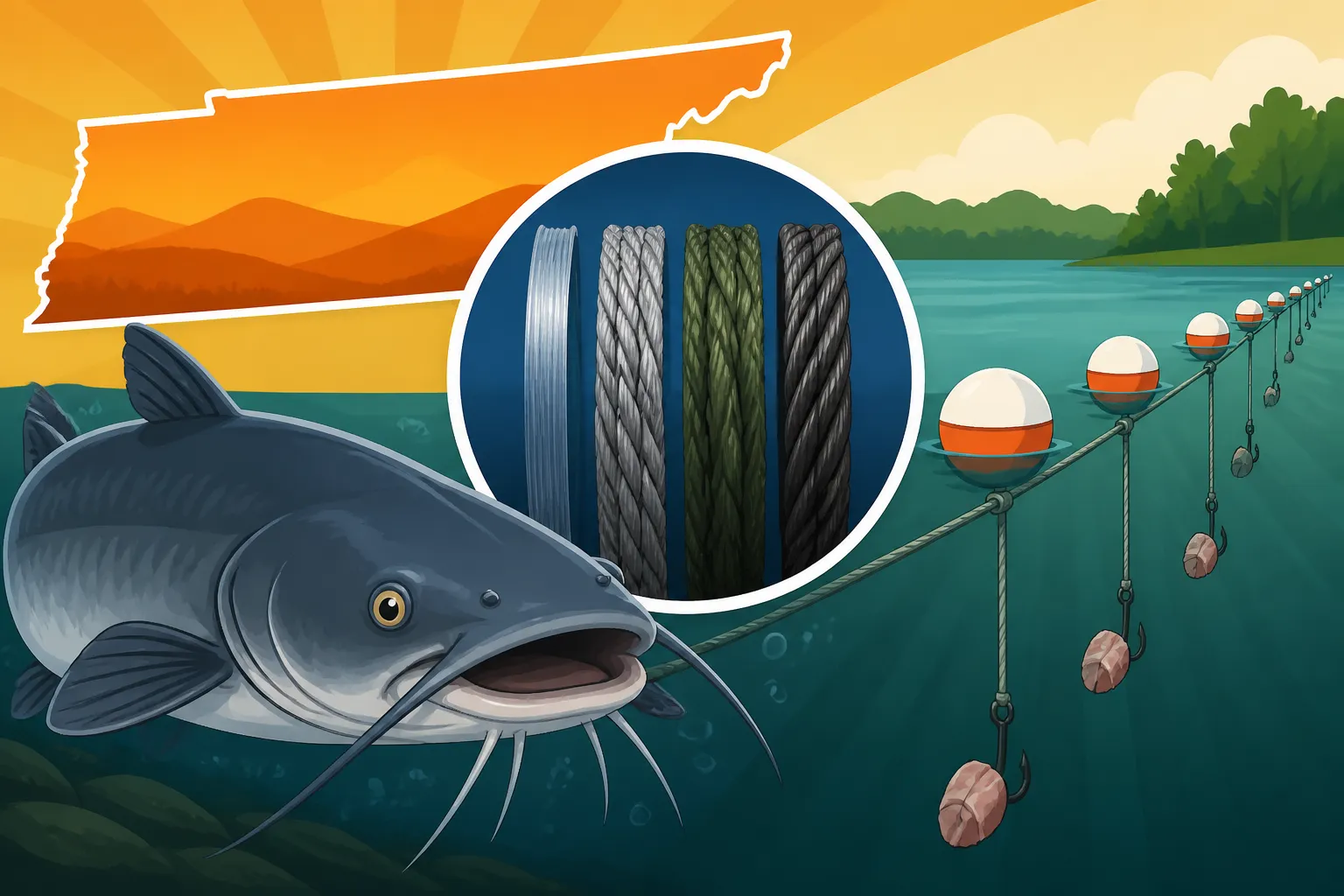
The "backbone" of your trotline is the mainline. This is the heavy-duty cord that spans the area you're fishing, anchored to something sturdy on either end. It needs to withstand the pull of multiple strong fish, the tension from currents, and potential snags. Connected to this mainline are shorter lengths of line called gangions or stagings, which are individual leaders holding your hooks. These gangions must be strong enough to hold a struggling fish but ideally weaker than the mainline, acting as a sacrificial link if a snag occurs. Finally, you have your hooks, which must be appropriately sized and strong, and often weights and buoys to keep everything in position.
Why does line weight matter so much? Imagine trying to land a 50-pound blue cat on a line meant for panfish – it’s not going to happen. But it’s not just about breaking strength. The right line weight affects how your trotline handles, how it resists abrasion, how visible it is to fish, and even how much current it can withstand without becoming a tangled mess. For the discerning Tennessee angler, getting this right is paramount to consistent success.
The Purpose of a Well-Weighted Line
A properly weighted trotline isn't just about preventing breaks; it’s about creating an efficient and durable fishing system. The main line needs to be stout enough to handle not just one fish, but potentially several large ones pulling simultaneously, along with the constant strain of water current. Think about fishing in a powerful current on the Cumberland River; a flimsy line will sag, drift, or worse, snap.
Furthermore, line weight influences the overall longevity of your setup. Thicker, heavier lines generally offer more abrasion resistance against submerged timber, rocks, and debris – common culprits in many Tennessee waterways. This means fewer lost rigs and more time fishing. While you might save a few dollars initially by going with lighter line, the frustration and cost of constantly replacing broken sections, lost hooks, and missed fish will quickly outweigh any savings. We want a setup that can reliably bring in those big channel cats from Percy Priest Lake or tackle the monster flatheads found in the lower Tennessee River.
Deciphering Mainline Choices: Pound Test, Materials, and Conditions
The mainline is truly the workhorse of your trotline. It's under constant stress, so choosing the right strength and material is crucial. You're not just picking a number; you're selecting a partner for battle against some of the strongest fish Tennessee waters have to offer.
Factors Influencing Main Line Choice
When standing in the aisle, looking at all the different line options, it can feel a bit overwhelming. But by considering a few key factors, you can narrow down your choice significantly.
First, what species of catfish are you primarily targeting, and how big do they typically get in your chosen spot? If you're generally catching 5-15 pound channel cats, a different line might be suitable compared to going after 40+ pound blue catfish on Kentucky Lake. For example, Tennessee's official state fish, the Channel Catfish, is abundant, but if you're chasing the truly massive specimens that lurk in the depths of big reservoirs, you'll need significantly more muscle in your line. Anglers often refer to how big do channel catfish get in Tennessee lakes to gauge their target size.
Second, consider the water current and structure of your fishing spot. Are you setting your trotline in a calm cove on Old Hickory Lake, or are you deploying it in the swift currents of the Tennessee River? Stronger currents exert more force on your line, increasing the risk of stretching or breaking. Moreover, if your chosen fishing spot is littered with submerged trees, stumps, or rocky ledges, you'll need a line with excellent abrasion resistance to prevent it from fraying and snapping. A good understanding of the local environment is just as important as knowing your target fish.
Third, the depth of water you'll be fishing can also play a role. While not as critical as current or target species, deeper water means longer gangions, and potentially more contact with bottom structure. A robust mainline ensures that if a gangion snags, you have a better chance of recovering the entire setup by pulling it free or sacrificing just the gangion, rather than losing the whole mainline.
Recommended Main Line Materials and Strengths
Now, let's talk specifics. You have several material options, each with its own advantages and disadvantages. Most experienced trotline anglers gravitate towards synthetic ropes for their strength and durability.
- Tarred Nylon: This is arguably the gold standard for trotline mainlines. The tar coating provides exceptional abrasion resistance, protects the nylon from UV degradation, and helps prevent tangles by making the line stiffer and less prone to kinking. It's also less visible in the water, which can be an advantage. For general catfish trotlining in Tennessee, a tarred nylon mainline in the 150 to 300-pound test range is excellent. If you're specifically targeting those monster blue or flathead catfish in areas like Chickamauga Lake, you might even consider bumping up to 350-500 pound test. You can find quality tarred nylon lines from suppliers or on platforms like Amazon.
- Braided Nylon: Strong and flexible, braided nylon offers good knot strength. However, it typically lacks the abrasion resistance of tarred nylon and can be more prone to tangling if not handled carefully. It's a decent option for calmer waters or if tarred nylon isn't available, but generally, I'd lean towards tarred for trotlines. A similar pound test range as tarred nylon would apply here, 150-300 lbs.
- Polypropylene: This material floats, which can be an advantage or disadvantage depending on your setup. It's often cheaper, but generally has less abrasion resistance and UV stability than nylon. While it might work for very specific applications, it’s not usually recommended for a robust, long-lasting catfish trotline mainline in Tennessee's varied waters.
- Monofilament (Heavy Pound Test): While you can find monofilament in very heavy pound tests, it's generally not ideal for trotline mainlines. It has memory, is prone to kinking, and can be difficult to handle in long lengths, especially in cold weather. It also has stretch, which can be a double-edged sword: good for shock absorption, but bad for maintaining consistent depth. Stick to specialized trotline ropes for the mainline.
Here's a quick comparison table for common mainline materials:
| Material Type | Key Advantages | Key Disadvantages | Recommended Pound Test Range (Tennessee Catfish) |
|---|---|---|---|
| Tarred Nylon | Excellent abrasion & UV resistance, stiff, low visibility | Can be messy (tar), slightly higher cost | 150-500 lbs (depending on target) |
| Braided Nylon | Strong, good knot strength, flexible | Less abrasion & UV resistance than tarred, can tangle | 150-300 lbs |
| Polypropylene | Floats, inexpensive | Poor abrasion & UV resistance, less durable | Not generally recommended for mainline |
Why Going Too Heavy or Too Light Can Hurt Your Catch
It might seem intuitive to just buy the heaviest line you can find, but there's a balance to strike.
Too Heavy:
- Increased Visibility: Extremely thick lines can be more visible in the water, potentially spooking more wary catfish, especially in clearer waters like Norris Lake. While catfish are not known for their keen eyesight, every little bit of stealth helps.
- Handling Difficulty: Very heavy line is cumbersome to store, deploy, and retrieve. It takes up more space, is harder to tie, and can be a real workout, especially if you're managing a long trotline.
- Cost: Heavier, higher-quality line naturally comes at a higher price point. While investing in good gear is smart, overspending on unnecessary strength isn't always efficient.
Too Light:
- Breakage and Loss: This is the most obvious and painful consequence. A line that's too light will snap under the strain of a large catfish, a strong current, or a snag, leading to lost fish, lost tackle, and wasted effort.
- Abrasion: Lighter lines are much more susceptible to abrasion from rocks, logs, and debris. Even minor friction can weaken the line significantly, leading to unexpected breaks.
- Tangles: Flimsier lines are more prone to kinking and tangling, both during deployment and while in the water, especially in current. This can lead to frustrating hours of untangling or, again, lost gear.
The sweet spot is a line that offers ample strength for your target species and conditions, provides good abrasion resistance, is manageable, and doesn't break the bank. For most Tennessee catfish anglers, the 150-300 pound test range for tarred nylon hits this sweet spot perfectly, giving you plenty of power to land those trophy fish without overdoing it.
The Critical Connection: Gangion Line, Hooks, and Rigging for Success
While the mainline is the backbone, the gangions and hooks are where the magic happens – where your bait meets the fish. Getting these components right, and ensuring they work in harmony with your mainline, is key to a successful trotline.
Matching Gangion Line to Mainline and Target Fish
The gangions (or stagings) are the individual lines that connect your hook to the mainline. A good rule of thumb for gangion line weight is that it should be strong enough to hold the fish you're targeting, but ideally lighter than your mainline. Why lighter? Because if your hook gets irrevocably snagged on a stump or rock, you want the gangion to break before your entire mainline snaps. This way, you only lose a hook and a short piece of line, not your entire trotline setup.
For catfish in Tennessee, a gangion line in the 80 to 150-pound test range is generally suitable. Again, this can be adjusted based on the size of fish you expect. If you're consistently pulling in 30+ pound blue cats from Kentucky Lake, you might lean towards the heavier end of that spectrum. Materials for gangions often include heavy monofilament or braided nylon, sometimes even a lighter test of tarred nylon. Heavy mono offers good abrasion resistance and is stiff enough to reduce tangles with the mainline or other gangions, especially when using circle hooks. You can buy spools of heavy monofilament line on Amazon for this purpose.
The length of your gangions is also important. They should be long enough to allow your bait to present naturally at the desired depth, but not so long that they easily tangle with each other or the mainline. Typically, gangions range from 12 to 24 inches. The spacing between your gangions on the mainline is usually dictated by regulations, but a common practice is to space them far enough apart (e.g., 3-5 feet) to prevent tangles. Remember to always check the latest Tennessee Fishing Regulations Explained to ensure your setup complies with local rules, including the maximum number of hooks allowed on a trotline.
The Importance of Hook Size and Strength
No matter how strong your line is, a weak or improperly sized hook is a point of failure. Catfish have tough mouths and are powerful fighters, so your hooks need to be up to the task.
- Hook Size: For most Tennessee catfish, you'll be looking at hook sizes ranging from 3/0 to 10/0. Smaller sizes (3/0-5/0) are great for channel cats and smaller blues, while larger sizes (7/0-10/0) are perfect for big flatheads and trophy blue catfish. Match the hook size to your bait and your target fish. If you're using large chunks of cut bait for flatheads, a big, stout hook is essential.
- Hook Type:
- Circle Hooks: These are widely recommended for trotlines, especially in catch-and-release scenarios or when you want to minimize gut hooking. When a fish bites, the design of a circle hook causes it to slide to the corner of the fish's mouth and hook itself, usually without the need for a hard hookset. This also makes them less likely to be swallowed deep, which can increase fish survival.
- J-Hooks: Traditional J-hooks require a more deliberate hookset, but some anglers prefer them for certain baits or techniques. If using J-hooks, ensure they are heavy-duty and sharp.
- Hook Strength: Regardless of type, ensure your hooks are made from high-quality, strong steel. Look for terms like "heavy-duty," "extra strong," or "forged" in the product description. A cheap, thin-wire hook will straighten out under the strain of a strong catfish or even just a snag, leading to lost fish. Many reputable brands offer excellent trotline-specific hooks. You can often find a good selection of these on Amazon.
Your hook choice directly impacts the overall effectiveness and ethical considerations of your trotline. A strong, sharp hook properly matched to your line weight ensures that when a fish bites, it stays on, giving you the best chance of a successful retrieve.
Beyond the Line: Strategic Deployment and Maintenance for Tennessee Anglers
Choosing the right line weight is only half the battle. How you deploy and maintain your trotline in the diverse waters of Tennessee is just as crucial for success and longevity. Even the best line weight won't save a poorly set or neglected trotline.
Deploying and Anchoring Your Trotline Effectively
The success of your trotline often starts before you even bait the first hook. Strategic deployment involves understanding the water, potential hang-ups, and the habits of catfish.
First, location is everything. Catfish, regardless of species, love structure. Look for areas with submerged timber, rock piles, ledges, or deep channels. On large reservoirs like Watts Bar Lake, these structures can be prolific. If you're targeting Flathead Catfish Habitat in Tennessee Rivers, aim for deeper holes, snags, and undercut banks. Remember that Catfish Species Found in Tennessee Waters have distinct preferences, so knowing your target helps. Avoid areas with heavy boat traffic if possible, as props can damage your line.
Second, anchoring your trotline securely is non-negotiable. For a 150-300 pound test mainline, you'll need anchors that can truly hold it in place against current and the pull of multiple fish. Heavy concrete blocks, large rocks, or purpose-built trotline anchors are essential. Make sure your anchor ropes are also strong and durable, ideally matching or exceeding your mainline's strength, to prevent losing your entire setup. Attach your mainline to strong, immovable objects on the bank (if shore-tied) or robust buoys that mark your line's ends. Use sturdy knots that won't slip under tension.
Third, consider the current when deploying. If you're fishing in a river, set your trotline with the current, not against it, to minimize drag and reduce tangles. Ensure there's enough slack in the mainline to allow for some flex, but not so much that it sags excessively and creates huge loops that can snag. Proper tension is key. Some anglers like to use a weight in the middle of a long trotline to sink it deeper and keep it out of the path of boats, making it less visible. This can be particularly useful in popular spots like those found in the Best Fishing Spots Near Nashville, Tennessee.
Maintenance and Longevity of Your Trotline
A trotline is an investment, both in time and materials. Proper maintenance will extend its life, keep it effective, and ensure it's always ready for your next outing.
Regular Inspections: Every time you check your trotline, take a few extra minutes to inspect the mainline, gangions, and knots for any signs of wear, fraying, or damage. Pay close attention to points where the line might rub against anchors, buoys, or submerged structure. Even a small nick can become a major weak point under strain. Promptly replace any damaged gangions or mainline sections. It's often easier and cheaper to replace a small worn section than to lose a whole setup and a potential record catch.
Cleaning and Storage: After use, especially if your trotline has been out for an extended period, it's a good idea to clean it. Remove any algae, mud, or debris. Rinse it thoroughly with fresh water to remove any grime, especially if you're fishing in brackish or slightly salty water. Allow it to air dry completely before storing to prevent mildew and material degradation. Store your trotline neatly coiled in a cool, dry place, away from direct sunlight, which can weaken nylon over time. Using a dedicated trotline reel or bucket can keep it organized and tangle-free. This simple step can significantly prolong the life of even the most heavy-duty tarred nylon mainline.
Adhering to Regulations: Finally, always be mindful of the rules for trotlines in Tennessee. Regulations cover things like maximum number of hooks, length of the trotline, specific marking requirements (buoys with your name and TWRA ID), and even where they can be deployed. Ignoring these rules can lead to stiff penalties for Fishing Without a License in Tennessee, and other violations. Familiarize yourself with the Tennessee Fishing Regulations Explained to ensure your trotline fishing is always legal and responsible.
By putting thought into your line weight, carefully setting your rig, and dedicating a little time to maintenance, you'll greatly increase your chances of consistent success and enjoy many memorable days (and nights) pulling in some fantastic catfish from Tennessee's abundant waters.
Disclaimer
This article is for general informational purposes only and does not constitute professional advice. Laws, prices and regulations vary by location and change over time. Consult a qualified professional for guidance on your specific situation.