Blue Catfish Identification and Habitat in Tennessee
It can be incredibly frustrating when you're out on the water, reeling in a potential trophy, only to find yourself second-guessing exactly what kind of fish you've caught. The world of catfish, especially here in Tennessee, can be a little confusing with different species sharing similar features. This comprehensive guide is here to clear up the mystery, helping you confidently identify blue catfish and understand their preferred hangouts across our beautiful Tennessee waters.
Blue Catfish: What Makes Them Unique?
When you’re staring down at a big catfish in the net, it’s easy to just call it “catfish” and move on. But for serious anglers, or even just those curious about the ecosystem, knowing the specific species makes all the difference. Blue catfish are distinct, and once you know what to look for, you’ll be able to tell them apart from their whiskered cousins. They are truly one of Tennessee's magnificent sport fish, and understanding their characteristics is the first step to truly appreciating them.
Distinctive Physical Traits
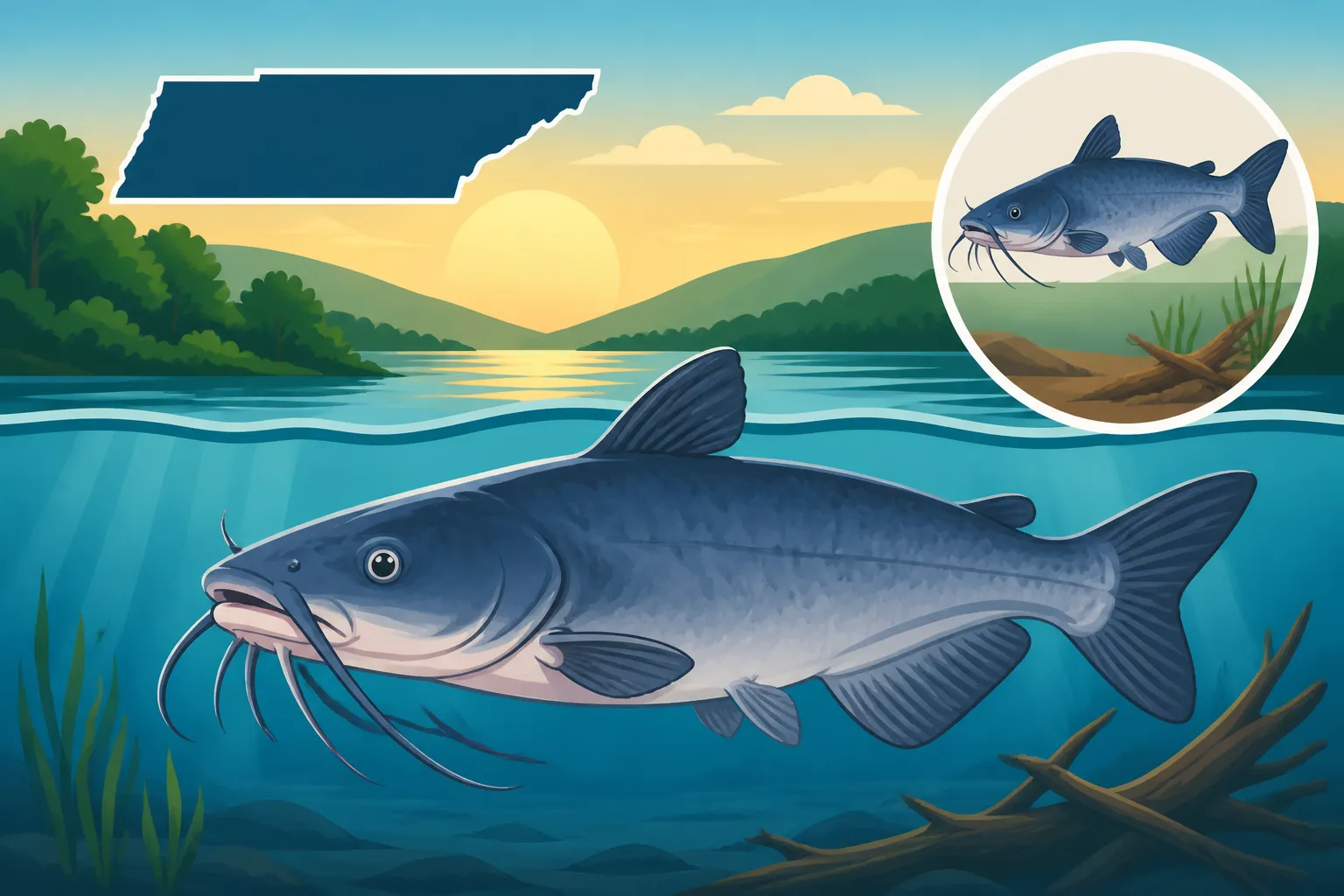
The most striking feature of a blue catfish is right there in the name: their color. While not always a vibrant blue, they typically exhibit a slate blue to silvery gray on their backs and sides, fading to a stark white on their belly. This coloration is usually much more uniform than the mottled, blotchy patterns you might see on a flathead, or the greenish-brown of a channel catfish. Think of a clean, almost metallic sheen compared to a camouflaged pattern.
Beyond color, pay close attention to the anal fin. This is a dead giveaway for blue catfish. They have a long, straight-edged anal fin that contains between 30 and 36 rays. If you count the fin rays, or even just observe the straight, uniform edge, you'll immediately notice how different it is from the rounded anal fin of a channel catfish or the much shorter, more distinctively lobed anal fin of a flathead. Their head also tends to be smaller in proportion to their body compared to a flathead, and their tail fin is typically deeply forked, like a channel cat's, but often even more pronounced. This deep fork is another helpful identifier, especially when you're dealing with smaller specimens. We’ve even got a deeper dive into Blue Catfish vs Channel Catfish Identification if you want to really get into the nitty-gritty comparisons.
Size and Age Factors
Blue catfish are the largest species of catfish in North America, and Tennessee is absolutely famous for producing some true monsters. While you might encounter smaller ones, they have the potential to grow to immense sizes, often exceeding 50 pounds, with some record-breakers well over 100 pounds. It's truly something to behold a truly massive blue cat, and it's a testament to the rich, fertile waters we have here. A big blue catfish can be a once-in-a-lifetime catch, and they certainly put up a fight!
Their growth rate is impressive, especially in nutrient-rich reservoirs, where they can pack on pounds quickly. A blue catfish's age can often be estimated by its size, with the largest individuals being many years, sometimes decades, old. This potential for immense size is why they're such a prized target for trophy anglers. Even a smaller, younger blue cat will display those characteristic physical traits, but witnessing the sheer scale of an older, mature fish really drives home the difference between them and other catfish species. You can read all about Tennessee Blue Catfish Record Catches to get an idea of the giants swimming in our waters.
Understanding Blue Catfish Habitat in Tennessee
Tennessee boasts an incredible array of aquatic environments, from winding rivers to sprawling reservoirs, and understanding where blue catfish prefer to spend their time is crucial for anyone hoping to land one of these impressive fish. They aren't just everywhere; they have specific preferences that make certain spots prime real estate.
Preferred Environments: Rivers and Reservoirs
Blue catfish are predominantly riverine fish, meaning they naturally thrive in river systems. Here in Tennessee, this translates to our major river systems and the massive reservoirs created from them. They absolutely love large, flowing rivers with deep channels, strong currents, and plenty of bottom structure. Think of the Tennessee River and its tributaries, and the Cumberland River, for example. These vast water bodies provide the expansive habitat they need to grow large and establish strong populations.
In these environments, they're often found in the main river channel, especially around bends, submerged humps, old creek beds, and deep scour holes. They appreciate areas with hard bottoms, like gravel, rock, or even clay, where they can find stable foraging grounds. Reservoirs like Kentucky Lake, Chickamauga, and Watts Bar offer ideal conditions, mimicking large river environments with their expansive open waters and deep, complex structures. These areas are truly some of the Best Catfish Lakes in Tennessee, and blues are a huge reason why. If you're looking for Kentucky Lake Catfish Fishing Spots, you'll definitely be targeting areas where these giants roam.
Seasonal Movements and Depths
Like many fish, blue catfish movements are influenced heavily by water temperature and food availability, leading to distinct seasonal patterns. In the warmer months, you'll often find them actively feeding in shallower areas, especially at night or during low-light conditions. They might patrol flats adjacent to deep channels, or hang out around submerged cover where baitfish congregate. During summer, they’re still often associated with the main river channel, but their feeding forays might take them into surprisingly shallow water, particularly overnight.
As water temperatures drop in the fall and winter, blue catfish tend to retreat to deeper, more stable environments. They'll often school up in deep holes, channel breaks, or near the base of dam structures, where water temperatures remain more consistent. While their metabolism slows, they still feed, just less frequently and often on larger, slower-moving prey. This deep-water behavior is why understanding your sonar and locating those critical deep-water structures is paramount during the colder parts of the year. Finding them often means finding the baitfish that are also holding in those deeper, more stable thermal zones.
Why Blue Catfish Thrive in Tennessee Waters
Tennessee is renowned for its excellent fishing, and blue catfish are a significant contributor to that reputation. There's a perfect storm of environmental factors that allow these magnificent fish not just to survive, but to truly thrive and grow to incredible sizes, providing fantastic angling opportunities for residents and visitors alike.
Abundant Food Sources
One of the primary reasons blue catfish flourish here is the sheer abundance and diversity of their food sources. Blue catfish are opportunistic feeders and apex predators in many of our waterways. They have a varied diet that includes smaller fish, crustaceans, and even mussels. Our reservoirs and rivers are teeming with baitfish like gizzard shad, threadfin shad, and various panfish, which form the cornerstone of the blue cat's diet. These plentiful schools of bait provide a constant, rich food supply, allowing blue catfish to grow quickly and reach impressive sizes.
They are also not above scavenging, which means any available protein on the bottom, whether it's a dead shad or a discarded piece of food, becomes fair game. This adaptability in their diet makes them incredibly resilient and capable of exploiting whatever food is most readily available. Anglers often take advantage of this by using cut bait, which mimics injured or dead prey, making it an irresistible meal for a hungry blue cat. If you're wondering about Best Bait for Blue Catfish Fishing, fresh cut bait from local forage fish is often a top choice. You can find specialized hooks and weights on platforms like Amazon that are perfect for presenting these larger baits.
Ideal Water Conditions
Tennessee's waters offer an ideal cocktail of conditions that suit blue catfish perfectly. They prefer large, turbid rivers and reservoirs with moderate to strong currents. The extensive river systems, like the Tennessee and Cumberland, provide vast expanses of flowing water that blue cats adore. These rivers are often deep, offering the thermal stability and protective cover that large fish need. The flow helps to oxygenate the water and distributes food, keeping the ecosystem vibrant.
The large, interconnected reservoirs, which are essentially dammed sections of these river systems, maintain many of these favorable conditions. They feature expansive open water, deep channels, and a wealth of submerged structure from the original riverbeds and flooded timber. This combination of deep, flowing water, rich food sources, and suitable bottom structure creates a perfect nursery and hunting ground for blue catfish. They are perfectly adapted to these large, dynamic environments, making Tennessee a truly prime destination for targeting these colossal catfish.
Angler's Perspective: Finding and Identifying Blue Catfish
For us anglers, knowing how to spot a blue catfish once it’s in the boat, and more importantly, knowing where to find them in the first place, is half the battle. There’s a distinct thrill in targeting these powerful fish, and a little knowledge goes a long way in increasing your success.
Practical Identification on the Water
Once you’ve got a catfish in hand, confirming it’s a blue cat is generally straightforward if you remember those key features. First, look at the color: a uniform slate gray or silvery blue, fading to a clean white belly. If it’s blotchy, yellowish, or has a distinct olive hue with darker spots, you're likely looking at a channel cat or perhaps a flathead.
Next, and this is the most reliable tell, check that anal fin. Remember, it's long and has a straight edge, almost like a barber used a ruler. Count the rays if you can, aiming for 30-36. If it's noticeably rounded, it's probably a channel catfish. If it's short and appears distinctively lobed, you're likely holding a flathead. And finally, check the tail. A deeply forked tail is characteristic of a blue cat. While channel cats also have a forked tail, the blue's can often appear even more pronounced, especially on larger specimens. Using these three indicators together will almost guarantee correct identification every time. For a full breakdown, check out our Catfish Species Comparison: Channel, Blue, and Flathead.
Best Spots for Blue Catfish
Knowing where to cast your line significantly increases your chances of hooking into a blue cat. As we've discussed, large rivers and reservoirs with significant current and deep channels are prime territory. Look for areas with pronounced changes in bottom contour, such as channel edges, submerged river bends, and humps. These structures act as highways and ambush points for blue catfish as they hunt for baitfish.
Targeting deep holes downstream of dams or significant current breaks can also be incredibly productive, especially during colder months. Blue catfish often congregate in these deeper, calmer pockets. Don't be afraid to use your electronics to locate schools of baitfish, as the blue cats won't be far behind. Consider specific locations like Kentucky Lake Catfish Fishing Spots, Watts Bar, or Chickamauga Lake for some of the best opportunities. Techniques like bottom fishing with cut bait or even Jug Fishing for Catfish Explained are popular and effective methods here. Even when you're stocking up on terminal tackle like heavy sinkers, swivels, and strong hooks, online retailers like Amazon can be a convenient resource. Remember, Tennessee Catfish Fishing Techniques and Seasons will vary, so staying informed about seasonal patterns will give you an edge.
| Feature | Blue Catfish | Channel Catfish | Flathead Catfish |
|---|---|---|---|
| Coloration | Slate blue/silvery, white belly | Olive-green/brown, scattered dark spots | Mottled brown/yellow, dark patterns |
| Anal Fin | Long, straight edge, 30-36 rays | Rounded, 24-29 rays | Shorter, distinctively lobed, 14-17 rays |
| Tail Fin | Deeply forked | Moderately forked | Slightly notched to rounded, not forked |
| Head Shape | Relatively small, pointed | Medium, conical | Large, broad, flattened |
| Upper Jaw | Protrudes slightly beyond lower jaw | Upper jaw longer than lower jaw | Lower jaw protrudes beyond upper jaw |
| Size Potential | Very large (often 50-100+ lbs) | Medium (usually 5-20 lbs, up to 50 lbs) | Large (often 20-60 lbs, up to 100+ lbs) |
| Habitat | Large rivers, deep reservoirs, current | Diverse: rivers, lakes, ponds, slower current | Slower moving rivers, log jams, dense cover |
| Diet | Fish, crustaceans, mussels, scavengers | Fish, insects, crustaceans, vegetation | Primarily live fish |
Disclaimer
This article is for general informational purposes only and does not constitute professional advice. Laws, prices and regulations vary by location and change over time. Consult a qualified professional for guidance on your specific situation.