How to Identify a Brook Trout
There's nothing quite like the feeling of wading through a pristine, cold mountain stream in Tennessee, fly rod in hand, hoping to connect with one of our state's true native gems: the brook trout. But let's be honest, distinguishing between the various trout species, especially when they're darting through swift currents or when you're just starting out, can be genuinely frustrating. This comprehensive guide is here to walk you through the distinct characteristics of the brook trout, helping you confidently identify this beautiful fish and appreciate its unique place in our Tennessee waters.
Why Accurate Brook Trout Identification is Crucial for Tennessee Anglers
Getting to know the fish you're targeting isn't just about showing off your knowledge; it's fundamental to responsible and successful angling. For brook trout, in particular, accurate identification plays a vital role in conservation and ensures you're always fishing within the rules. These little beauties are special, and treating them with respect starts with knowing exactly what you've caught.
The Thrill of Catching a Native Tennessee Trout
Imagine the scene: you've hiked into a secluded section of a crystal-clear mountain stream, the air crisp and clean. You make a perfect cast with a small dry fly, and suddenly, a flash of iridescent color erupts from the water, taking your offering. Bringing that fish to hand, you see vibrant orange fins, a dark green body mottled with patterns, and a splash of blue around some of its red spots. That's the unmistakable thrill of a native Tennessee brook trout. Unlike the more commonly stocked rainbow trout, brook trout are truly indigenous to many of our colder, higher-elevation streams, particularly in places like the Great Smoky Mountains. Connecting with one feels like a direct link to the wilderness and history of our state's angling heritage. It's a reward that goes beyond just the size of the fish, offering a sense of accomplishment knowing you've found a true wild resident.
Conservation and Regulation Compliance
Beyond the personal satisfaction, knowing your brook trout is incredibly important for their continued survival and for keeping you on the right side of the law. Brook trout populations can be delicate, often found in specific, fragile cold-water ecosystems. Because they are a native species, Tennessee Brook Trout Conservation Waters often have specific, sometimes stricter, regulations regarding catch limits, size restrictions, or even tackle choices, all designed to protect these precious fish. For instance, some areas might have a "catch and release only" rule for brook trout, or different limits compared to other trout species. If you accidentally misidentify a brook trout as a rainbow or brown trout, you might inadvertently keep a fish you shouldn't, or miss out on a legal catch because you thought it was a protected species. Always make sure you're familiar with the local regulations for the specific body of water you're fishing, as they can sometimes override statewide norms. Understanding these differences contributes directly to the long-term health of our fisheries and ensures future generations can enjoy the same experience.
Unmistakable Marks: Key Physical Traits of Brook Trout
When you're trying to figure out if you've got a brook trout in your hands, you'll want to focus on a few key physical markers. These aren't subtle hints; they're usually quite pronounced and, once you know what to look for, will make identification a breeze. Forget generic "trout" thinking for a moment; brook trout have their own distinct flair.
The Iconic Worm-Like Markings (Vermiculation)
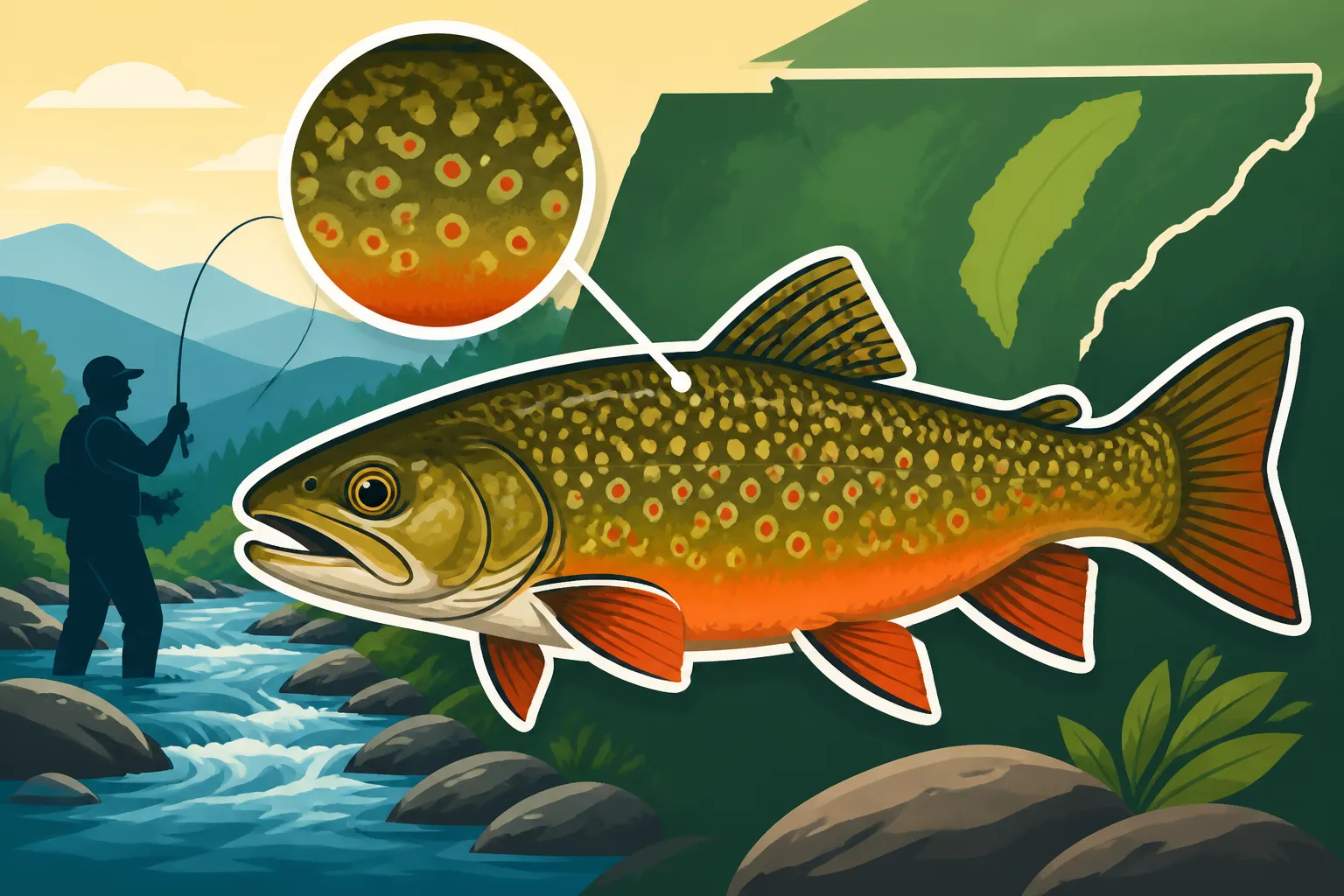
The absolute first thing most seasoned anglers look for on a brook trout is its unique pattern of vermiculation on its back and upper sides. Imagine a maze of interconnected, wavy lines that look like ancient hieroglyphs or, more commonly described, like worm tracks. These light, often yellowish-green lines twist and turn across a darker background, usually a dark olive or almost black color. This isn't just a random smattering; it's a distinct, intricate pattern that's highly characteristic of the species. You won't see this kind of vermiculation on a rainbow trout or a brown trout. It's a key identifier, and once you've seen it clearly, it's hard to forget. When you're browsing fishing books or gear online on sites like Amazon, look for images that highlight this feature – it's a dead giveaway.
Spots: Red, Blue Halos, and Yellow Dots
While all trout have spots, the type, color, and arrangement of a brook trout's spots are quite specific. Brook trout typically have light spots, ranging from yellow to cream-colored, scattered across their flanks. But here's the kicker: they also feature small, vibrant red or orange spots, and these red spots are usually surrounded by a distinct bluish halo. It's almost like someone took a tiny paintbrush and added a perfect blue ring around each red dot. These "haloed" red spots are a strong indicator of a brook trout. You won't find large, dark spots like those on a brown trout, nor the uniformly small, black spots of a rainbow. The combination of yellow dots and these blue-haloed red spots makes them truly stand out.
Fin Colors: The White Leading Edges
Pay close attention to the fins, particularly the lower fins—the pectoral, pelvic, and anal fins. A hallmark of the brook trout is the striking white leading edge on these fins. This bright white stripe is almost always present, often followed by a thin, dark line, and then the reddish-orange or grayish color of the rest of the fin. It's a beautiful contrast and serves as another reliable identification mark. When you're holding a fish, carefully check these fins. If you see that crisp white stripe on the front edge, especially on the pelvic fins (the ones on the belly), you're very likely holding a brook trout. This feature is particularly helpful if the fish's body coloration is less vibrant due to water conditions or stress.
Body Shape and Mouth Structure
While less definitive than the markings and fin colors, the overall body shape and mouth can also offer clues. Brook trout generally have a more streamlined, elongated body shape compared to some other trout species that might appear a bit more robust. Their tail fin is often only slightly forked, or sometimes almost square, especially on smaller, younger fish. The mouth of a brook trout is relatively large, extending back to at least the middle of the eye. They are opportunistic feeders, and their mouth shape reflects their ability to gulp down insects, small fish, and other aquatic prey. When comparing it to other species, this subtle difference can add to your confidence in identification.
Avoiding Mix-Ups: Differentiating Brook Trout from Other Species
In Tennessee, the most common confusion for anglers comes when trying to tell a brook trout apart from brown trout or rainbow trout, as these are the other primary species you'll encounter, especially in stocked waters. Let's break down the key differences to help you avoid those "Is it, or isn't it?" moments. For a broader overview, you might find Tennessee Trout Guide: Rainbow, Brown, and Brook Trout helpful.
Brook Trout vs. Brown Trout: The Spots Tell the Tale
This is perhaps the most frequent mix-up, as both species can have beautiful, sometimes similar, coloring. However, their spots are the clearest differentiator.
- Brook Trout: As we just discussed, brook trout have those distinctive yellow/cream spots and, crucially, red spots surrounded by blue halos. Their backs and upper sides also feature the worm-like vermiculation.
- Brown Trout: Brown trout, on the other hand, are characterized by prominent dark spots (black or dark brown) scattered across their sides and often extending onto their dorsal fin. Many of these dark spots will also have a light, often reddish-orange, halo, but without the distinct blue ring you see on a brook trout. Brown trout often have some red or orange spots too, but again, without the blue halo. Another key is that brown trout typically have far fewer or no vermiculation patterns on their back, instead favoring a more uniform brown or olive color. Their tail fin is usually quite square. If you want to delve deeper, checking out Brown Trout Identification Tips for Tennessee Anglers could be beneficial.
Imagine holding two fish side-by-side. The one with the "worm tracks" on its back and the red spots with blue rings is your brook trout. The one with the larger, darker spots (often with orange halos) and a generally more uniform brownish back is likely a brown trout.
Brook Trout vs. Rainbow Trout: Colors and Bands
Rainbow trout are another common species in Tennessee, extensively stocked in many waters. They are perhaps easier to distinguish from brook trout once you know what to look for.
- Brook Trout: Again, think vermiculation on the back, yellow/cream spots, and those blue-haloed red spots. The white leading edges on the lower fins are also critical.
- Rainbow Trout: The name "rainbow" gives it away – these fish often display a prominent, iridescent pink or red lateral stripe running horizontally along their sides, from gill plate to tail. This stripe can be very vibrant, especially during spawning season or in certain waters. Rainbow trout typically have a profusion of small, dark spots (black or brown) covering their entire body, including their dorsal fin and their tail fin. Unlike brook trout, their fins generally lack the stark white leading edges, and their backs do not have the worm-like vermiculation. Their tail fin is noticeably more forked. If you're encountering a fish with a strong pink stripe and many small black spots, you've likely found a rainbow. For more specific details, see How to Identify Rainbow Trout in Tennessee Streams.
A Quick Comparison Table
To really nail down the differences, here's a handy comparison chart summarizing the key identification points for these three common Tennessee trout species. This can be a great reference to save on your phone or even print out for your tackle box, maybe sourced from a waterproof guide you found on Amazon!
| Feature | Brook Trout | Brown Trout | Rainbow Trout |
|---|---|---|---|
| Back/Upper Sides | Dark olive with distinctive light (worm-like) vermiculation | Usually brownish/olive, few to no vermiculation | Olive/green, often with many small dark spots |
| Body Spots | Light yellow/cream spots, red spots with blue halos | Dark (black/brown) spots, some red/orange spots (no blue halos) | Many small, dark (black) spots |
| Lateral Stripe | Absent | Absent (may have yellowish tint) | Prominent pink/red iridescent band |
| Lower Fins | White leading edge, followed by a dark line | Generally uniform, yellowish to orange | Generally uniform, no distinct white edge |
| Tail Fin | Slightly forked to square | Slightly forked to square | Noticeably forked |
| Mouth | Extends to middle of eye | Extends well past eye | Extends to back of eye |
Beyond the Scales: Habitat and Behavior Clues
Sometimes, simply knowing where you caught a fish and observing its behavior can be a huge clue to its identity. Brook trout are creatures of habit and prefer specific environments, which can help narrow down your identification even before you get a good look. This is especially true for Brook Trout: Tennessee's Native Cold-Water Species.
Cold, Clear Water: The Brook Trout's Sanctuary
Brook trout are true cold-water specialists. They absolutely thrive in the coldest, cleanest, most oxygen-rich streams and rivers in Tennessee. Think high-elevation mountain streams, spring-fed creeks, and the headwaters of larger river systems. They require water temperatures to remain consistently cool, typically below 68 degrees Fahrenheit (about 20 degrees Celsius), and prefer it much colder for optimal health and reproduction. If you're fishing a relatively warm, slow-moving river in the middle of summer, the chances of catching a brook trout are significantly lower compared to a fast-flowing, shaded tributary deep in the Appalachians. If you're pulling a fish from truly icy, pristine water, your likelihood of it being a brook trout goes way up. Where Do Brook Trout Live in Tennessee Streams? provides more detail on their specific habitat preferences.
Stream Characteristics and Preferred Lies
Brook trout aren't just in cold water; they like specific types of cold water. They prefer streams with plenty of cover, such as fallen logs, undercut banks, large boulders, and dense overhanging vegetation. These features provide shelter from predators, shade to keep water temperatures down, and ambush points for prey. You'll often find them tucked into eddies behind rocks, in the deeper pools beneath waterfalls, or along the edges of swift currents where food is delivered directly to them. They're not typically found in the wide, open expanses of large reservoirs or slow-moving rivers that are more characteristic of bass or crappie fishing. When you're carefully prospecting a small, rugged mountain stream with these features, you're in prime brook trout territory. Understanding these characteristics can help you target your fishing efforts and anticipate what species you might encounter.
Behavior and Feeding Habits
While all trout are opportunistic feeders, brook trout, especially the wild native ones, tend to be less wary than large, heavily pressured brown or rainbow trout. In their secluded, often less-fished habitats, they can sometimes be quite aggressive towards a well-presented fly or lure. They primarily feed on aquatic insects (larvae, nymphs, and adults), terrestrial insects that fall into the water (ants, beetles, grasshoppers), and small baitfish or crustaceans. You might observe them rising to take dry flies on the surface more readily in certain conditions, or aggressively chasing small spinners or spoons in deeper pools. When you observe a fish striking with a certain ferocity in a tiny mountain pocket, that aggressive, territorial behavior can sometimes be another subtle clue that you've got a brook trout on the line. They are often smaller in size than stocked trout, so a modest-sized but feisty fish in a high mountain stream is another good sign.
By combining these physical identifiers with an understanding of their preferred environment and typical behavior, you'll be well on your way to confidently identifying the beautiful, native brook trout of Tennessee. It's a skill that enhances your entire fishing experience and connects you more deeply to the unique natural world around us.
Disclaimer
This article is for general informational purposes only and does not constitute professional advice. Laws, prices and regulations vary by location and change over time. Consult a qualified professional for guidance on your specific situation.