Kentucky Lake’s Best Catfish Waters in Tennessee
If you've ever felt the magnetic pull of truly massive catfish, the kind that can spool your reel in seconds and give your arms a serious workout, then you know the unique thrill of chasing these whiskered giants. And if you've been dreaming of such an experience in Tennessee, you've likely heard whispers of Kentucky Lake. This guide is all about diving deep into where those legendary catfish hide on the Tennessee side of Kentucky Lake, what makes them tick, and how you can get in on the action.
Getting to Know Kentucky Lake's Catfish Scene
Kentucky Lake is a behemoth, stretching over 184 miles and covering more than 160,000 acres across both Kentucky and Tennessee. It’s a true angler’s paradise, but for us catfish fanatics, it holds a special, almost revered, status. The sheer size of the lake, combined with the Tennessee River's fertile waters, creates an ecosystem ripe for producing some truly incredible catfish. It's not just a place to catch fish; it's a place to hunt for fish, to understand their habits, and to test your patience and skill against some of the strongest freshwater fighters around.
The Allure of Kentucky Lake for Catfish Anglers
What makes Kentucky Lake such a magnet for those of us obsessed with catfish? Well, it boils down to a few key factors. First, the size and depth of the lake provide ample habitat for all three major catfish species found in Tennessee: channel, blue, and flathead. The Tennessee River, which feeds and flows through the lake, brings a constant supply of nutrients and baitfish, creating a rich food chain that allows catfish to grow to truly impressive sizes. We're talking about blue cats that can push the tape past 50 pounds, flatheads that look like prehistoric monsters, and channels that offer a consistent, fun fight.
Many anglers are drawn to Kentucky Lake because of its reputation for trophy-sized fish. You hear stories, see pictures, and it sparks something inside you. The challenge isn't just catching a catfish, it's catching a memorable catfish. Plus, the diverse structure of the lake – from deep river channels to expansive flats, stump fields, and submerged creek beds – offers endless opportunities and challenges. It’s a dynamic environment that keeps you on your toes, always learning, always adapting. Whether you're a seasoned catfisherman or looking to land your first big one, Kentucky Lake offers an experience unlike any other, demanding respect and rewarding perseverance.
Primary Catfish Species Calling Kentucky Lake Home
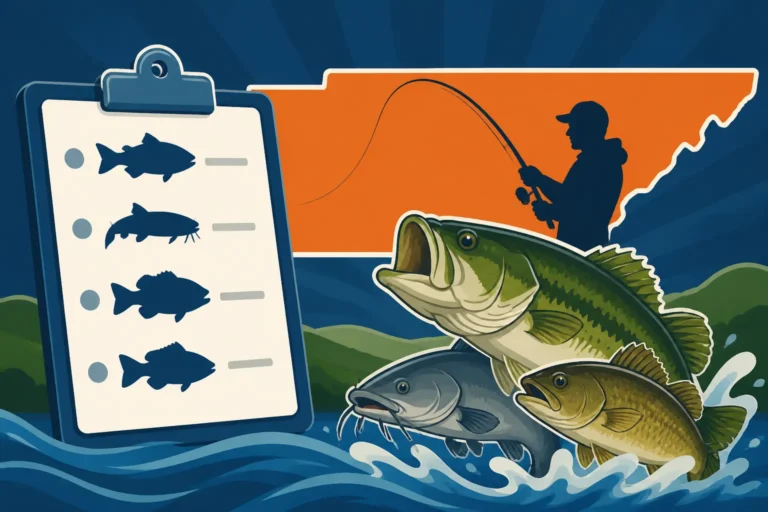
Kentucky Lake is a prime habitat for the three main species of catfish we find in Tennessee, each with its own characteristics and preferred haunts. Understanding these differences is key to successful catfishing.
Channel Catfish
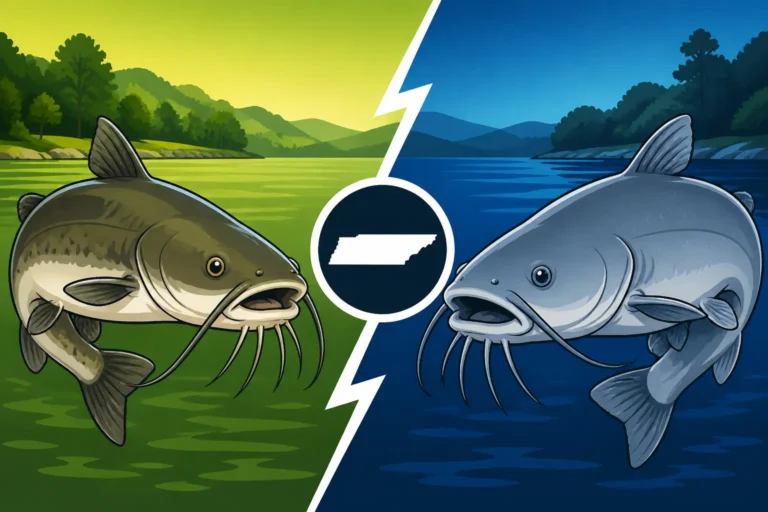
Ah, the channel cat! This is probably the most commonly recognized and caught catfish in Tennessee, and Kentucky Lake certainly has its share. Channels are typically smaller than blues or flatheads, usually ranging from a few pounds up to the teens, though bigger ones are definitely around. They're often identifiable by their olive-brown to grayish color, scattered dark spots on their sides (especially when younger), and a deeply forked tail. They’re opportunistic feeders, meaning they’ll munch on just about anything – cut bait, worms, stink bait, even some artificial lures. You'll find them almost everywhere on Kentucky Lake, from shallow coves to main river channels, making them a great target for anglers of all skill levels. If you're looking to consistently hook up and have some fun, targeting channel cats is a fantastic choice. Their abundance means there's always a good chance for action, and they put up a surprisingly strong fight for their size. To learn more about them, check out Channel Catfish: Tennessee's Other Official State Fish.
Blue Catfish
If you're after true leviathans, the blue catfish is your target. Kentucky Lake is famous for its massive blue cats, with many anglers reporting catches well into the 30, 50, and even 80-pound range. These are the kings of the deep channels and open water. Blues are typically steel-blue to gray on their backs, fading to white on their bellies, and they have a slightly forked tail, though not as deep as a channel cat's. Their heads are usually flatter and wider than a channel cat's. Blue cats are primarily piscivores, meaning they love to eat other fish. Fresh cut bait, especially shad, skipjack, or perch, is usually the ticket for these big boys. They tend to congregate in deeper water, particularly along the main river channel, bends, and deep holes. Targeting blues requires heavier gear, patience, and a willingness to explore deeper contours. For help telling them apart, read Blue Catfish vs Channel Catfish Identification.
Flathead Catfish
The flathead is a unique beast, often described as looking more like a prehistoric river monster than a typical catfish. They have a distinctly flattened head, a lower jaw that protrudes beyond the upper, and a rounded, unforked tail. Their coloration is usually mottled brown and yellow, offering excellent camouflage against the river bottom. Unlike channels and blues, flatheads are almost exclusively live-bait predators. They prefer live bluegill, sunfish, or even small carp, and they're often found hiding in heavy cover – submerged timber, brush piles, or rock structures – waiting to ambush their prey. Catching a flathead is often a test of patience and stealth, as they can be quite elusive. They grow to impressive sizes on Kentucky Lake, rivaling blue cats in weight and offering an incredibly powerful fight. Their preference for cover means you'll need stout tackle to pull them out. If you're looking for a truly different catfishing experience, pursuing flatheads is incredibly rewarding. You can learn more about their preferred haunts in Flathead Catfish Habitat in Tennessee Rivers.
Understanding the Lake's Geography and How It Affects Catfish
Kentucky Lake's unique geography, a sprawling impoundment of the Tennessee River, is what makes it such a phenomenal fishery for catfish. The layout isn't just random water; it's a carefully crafted environment (by nature and man) that provides diverse habitats for catfish at every stage of their lives.
At its core, Kentucky Lake is the Tennessee River. This means you have a discernible river channel that winds its way through the entire length of the lake. This channel is critical for catfish. It provides deeper, cooler water in summer, and a highway for fish movement throughout the year. The current, even subtle, often concentrates baitfish, which in turn attracts hungry catfish. Along this channel, you’ll find significant bends, submerged old river banks, and scour holes – all prime ambush points for blue and flathead catfish.
Beyond the main channel, Kentucky Lake boasts vast expanses of flats, many of which were once agricultural fields or lowlands before inundation. These flats, often studded with submerged stumps, brush piles, and old roadbeds, become important feeding grounds, especially for channel cats and smaller blues. During warmer months, baitfish spread out over these flats, and catfish follow. The transition zones where these flats drop off into deeper creeks or the main channel are particularly productive. Look for these "breaks" on your sonar; they're often highways for bait and predators alike.
Furthermore, numerous creeks and smaller rivers feed into Kentucky Lake on the Tennessee side, like Big Sandy River, Birdsong Creek, and Blood River. These tributaries create their own micro-environments with varying depths, current, and cover. During spring, catfish will often push into these creeks for spawning, and they become excellent places to find concentrated populations. The mouths of these creeks, where they meet the main lake, are always worth exploring, as they represent significant points of entry and exit for fish moving between the shallow and deep waters. Understanding these geographical features – the main river channel, the expansive flats, and the numerous tributary mouths – is fundamental to cracking the code of Kentucky Lake's Best Catfish Waters in Tennessee.
Prime Catfish Hotspots on the Tennessee Side
Now that we understand the types of catfish and the general lay of the land, let's get specific about where to wet a line on the Tennessee side of Kentucky Lake. This massive body of water offers countless spots, but some areas consistently produce better than others, especially for those seeking bigger fish.
The Lower End: New Johnsonville to Paris Landing
The "lower end" of Kentucky Lake, specifically the section in Tennessee from around New Johnsonville up towards Paris Landing State Park, is a legendary stretch for catfish. This area encompasses significant portions of the main river channel, which here is wider and deeper, with numerous bends and adjacent flats that hold baitfish.
New Johnsonville and Big Sandy River Mouth
Near New Johnsonville, where the Big Sandy River flows into Kentucky Lake, you'll find a fantastic confluence of habitat. The Big Sandy brings a steady supply of nutrients and acts as a migration corridor for baitfish and catfish. The mouth of the Big Sandy is a prime spot, especially when there's a slight current, as it concentrates food for hungry catfish. Look for deeper holes and channel edges just outside the mouth. Many anglers also find success working their way up the Big Sandy itself for several miles, particularly in spring. This area is known for both blue and channel catfish, with flatheads often tucked away in the abundant woody cover. You might even find some excellent crappie fishing here!
The main river channel in this section of Kentucky Lake, south of Paris Landing, features some dramatic depth changes. You'll find old riverbed stumps and submerged structures that become magnets for flatheads. Blue cats will patrol the deeper edges of the channel, especially where current is present. Using a good fish finder is crucial here to locate humps, ledges, and schools of baitfish. Many local anglers prefer to anchor on the upstream side of a channel bend or hump and present baits downstream, allowing the current to carry the scent. Don't be afraid to try different depths along the channel break, as catfish will move up and down based on water temperature and baitfish presence.
Paris Landing State Park Area
Moving north, the Paris Landing State Park area is another well-known hotspot. Not only is it a popular access point with great boat ramps, but the surrounding waters are incredibly productive. The main river channel here still offers deep water, but it's also complemented by numerous bays and feeder creeks that provide shallower, warmer water in the spring and fall.
Just outside the main Paris Landing area, focus on the deeper points and channel swings. The lake widens considerably here, and the main channel continues its winding path, creating excellent current breaks and deep pockets where blue cats love to hang out. For those targeting channel catfish, the shallower flats and secondary creek channels within a mile or two of Paris Landing can be incredibly productive, especially during low light conditions or when the water is warmer. You can find robust channel cat populations in these areas, often responding well to stink baits or cut bait fished on a simple bottom rig. Boat Ramp Access on Tennessee's Major Lakes might be helpful here for planning your launch.
Mid-Lake Channels and River Bends
As you move further up Kentucky Lake on the Tennessee side, the mid-lake sections, while perhaps less dramatic in depth than the lower end, still offer exceptional catfishing, particularly around pronounced river bends and creek mouths. These areas are characterized by a mix of deep main-lake channels and extensive shallower flats that transition into them.
The "Elbow" Near Big Sandy
Around the general area of Big Sandy, where the main river channel makes a significant bend or "elbow," you'll find some consistently excellent catfishing. These bends create natural current breaks and scour holes on the outside, while accumulating debris and softer bottom on the inside. Blue cats and flatheads will often stage on the deeper, outside edges of these bends, especially if there's significant structure like rock piles or submerged timber. They use these spots to ambush baitfish being swept along by the current.
To fish these bends effectively, many experienced anglers will use their electronics to identify any irregularities on the bottom – deep pockets, humps, or even large submerged logs. Anchoring strategically above or below these features and presenting multiple lines with various cut baits can be very effective. Alternatively, controlled drifting through these areas, especially with circle hooks and fresh cut bait, can cover a lot of water and help locate active fish. Remember, current is often your friend when targeting bigger catfish in these riverine environments.
Blood River and Jonathan Creek Areas
Further north, heading towards the Kentucky border, areas around the mouths of Blood River and Jonathan Creek (though Jonathan Creek is primarily on the Kentucky side, its influence extends) still offer fantastic catfishing opportunities on the Tennessee portions of Kentucky Lake. These creeks, like the Big Sandy, provide significant inflow and diverse habitats.
The mouths of Blood River are particularly noteworthy. Here, the convergence of creek water with the main lake creates current seams and nutrient-rich zones. These areas can hold a mix of all three catfish species. Channel catfish often frequent the shallower, slightly warmer waters within the creek mouth, while blue cats will patrol the deeper channels just outside. Flatheads will seek out the denser cover, such as fallen trees or brush piles, especially around the creek bends. Using fresh live bait, like bluegill or sunfish, in these cover-rich areas can often entice a large flathead. For those employing jug fishing or trotlines (where permitted and properly licensed), these creek mouths and the adjacent main lake flats can be incredibly productive, especially during low-light hours.
Upriver Areas and Tributary Confluences
Even further upriver, as Kentucky Lake narrows and approaches its upper reaches on the Tennessee side, there are still excellent catfishing opportunities. These areas tend to have more pronounced current and riverine features, which can be advantageous for targeting certain species of catfish.
The Narrows and River Sections
Where the lake begins to constrict and feel more like a river again, particularly around areas sometimes referred to as "the narrows," the increased current becomes a significant factor. This current often concentrates baitfish in specific areas, such as eddies, current breaks behind islands, or along the main channel’s deeper sections. Blue catfish thrive in these higher-current environments, as do flatheads, which will hunker down in current breaks to ambush passing prey.
Fishing in these upriver sections often involves heavier sinkers to hold bait in place against the current, or strategic anchoring techniques. Look for prominent points, submerged islands, or significant channel swings that disrupt the current flow. These areas create perfect ambush points for big catfish. When the water is flowing, the scent of your cut bait will travel further, drawing in fish from a wider area. Pay close attention to water depth and current speed here; a subtle change can mean the difference between an empty hook and a screaming reel.
Eddy Areas and Backwater Sloughs
Along the main river channel in these upriver sections, look for large eddy areas and slower backwater sloughs that form behind islands, prominent points, or inside river bends. These areas offer respite from the main current and can be excellent holding spots for all three catfish species, especially when they're not actively feeding in the strongest current.
Eddies often accumulate debris and nutrients, providing food and cover. Flatheads, in particular, will often be found in these calmer, cover-rich waters, especially if there's submerged timber or brush. Channel catfish will also cruise these areas, foraging for insects, crustaceans, and smaller baitfish. Even blue cats will move into these areas to rest or if there's a good concentration of baitfish. A quieter approach, perhaps using lighter tackle for channels or precise live bait presentations for flatheads, can be highly effective in these more tranquil spots. Exploring these often-overlooked backwater areas can yield surprising results and offer a different kind of catfishing challenge compared to battling the main channel current.
Seasonal Strategies for Kentucky Lake Catfish
Catfish in Kentucky Lake, much like any other fish, are creatures of habit tied to the seasons. Understanding their movements and feeding patterns throughout the year is absolutely crucial for consistent success. What works in spring won't necessarily cut it in the dead of summer, and knowing when to adapt your approach is what separates a good day from a great one.
Spring's Spawning Frenzy and Early Summer Patterns
Spring is a season of transition and explosion on Kentucky Lake, and catfish are no exception. As water temperatures begin to rise, they become increasingly active, culminating in their spawning period.
Pre-Spawn Activity
As the cold grip of winter loosens and water temperatures climb into the 50s and low 60s, catfish on Kentucky Lake enter a pre-spawn feeding frenzy. They're trying to bulk up before the energy-intensive spawning process. During this time, they often move shallower, especially channel cats and smaller blues. They can be found cruising flats adjacent to deeper channels, staging in creek mouths, and congregating around areas with submerged timber. This is a fantastic time to use a variety of baits, from cut shad to nightcrawlers and even prepared stink baits, as they're actively looking for easy meals. Look for areas where the sun warms the water quickest, as these will often be the first places catfish move into. For more insights on the best season to target these species, check out Best Time of Year to Catch Catfish.
Spawning Period
Catfish typically spawn when water temperatures reach the upper 60s to low 70s. For channel and blue cats, this usually means late spring to early summer. Flatheads tend to spawn a bit later. During this time, catfish become very protective of their nests, which are often found in secluded, dark areas like hollow logs, undercut banks, or rock crevices. While they might be less focused on active feeding, they can still be caught, especially if a bait is presented close to a nest. They're more likely to strike out of aggression than hunger. Targeting areas with plenty of natural cavities and cover, particularly in tributary arms and protected main lake bays, can be productive. Keep in mind that their feeding activity can slow during the peak of the spawn, so patience is key.
Post-Spawn Recovery
After the rigors of spawning, catfish need to recover and replenish their energy stores. This post-spawn period sees them moving back into deeper, more open water but remaining aggressive feeders. They'll often school up in slightly deeper channels or around main lake points where baitfish are abundant. The bite can be fantastic during this time, as they are actively searching for food. Cut bait, particularly fresh shad or skipjack, is highly effective for blue and flathead catfish. Channel cats will still readily take a variety of baits. Look for them along the edges of the main river channel, especially where it meets larger flats or creek mouths.
Battling the Summer Heat for Deepwater Giants
Summer on Kentucky Lake means heat, and that heat often pushes the biggest catfish into the comfort of deeper, cooler water. This is where the hunt for trophy blues and flatheads truly begins, as they seek thermal refuge and consistent food sources.
Deep Channel Strategies
When the surface water heats up, the main river channel becomes the primary highway and refuge for big blue cats. They'll drop into the deepest holes, channel bends, and scour pockets where the water is cooler and oxygen levels are stable. This often means fishing depths of 20 to 50 feet or more. A common strategy is to use your electronics to locate schools of baitfish (often shad) and then fish directly below or adjacent to them with large cut baits. Fresh cut shad or skipjack are almost unbeatable. Anchoring upcurrent from a promising deep spot and letting your baits soak on the bottom is a proven tactic. The current will carry the scent of your bait, drawing fish in. Don't be afraid to leave your baits out for extended periods; sometimes it takes a while for a big cat to commit.
Night Fishing for Summer Success
As the sun sets and the oppressive summer heat dissipates, catfish often become more active, especially in shallower areas. Night fishing is a highly popular and effective strategy during the summer months on Kentucky Lake. Big blue and flathead catfish will often move out of the deep channels and onto shallower flats, ledges, and humps to feed under the cover of darkness. They follow baitfish that also move shallower at night.
For night fishing, look for those transitions from deep to shallow, particularly on flats that are adjacent to the main river channel or deep creek channels. Using glow sticks on your rod tips or lighted bobbers can help you see bites. Again, fresh cut bait is king for blues and flatheads, but channel cats will also be out foraging. Many anglers also find success with jug fishing during summer nights. Just remember your lights and safety gear when out on the water after dark.
Fall Feasting and Winter Holds
As summer fades and the crisp air of fall arrives, Kentucky Lake undergoes another transformation. This period, and the subsequent winter, offers some unique and often very productive catfishing opportunities.
Fall Feeding Frenzy
Fall is arguably one of the best times to target catfish on Kentucky Lake. As water temperatures begin to cool, catfish sense the coming winter and engage in an intense feeding frenzy to pack on reserves. They become incredibly active and aggressive, often moving shallower than in summer, but still relating to deeper structure. All three species will be gorging themselves.
Look for catfish to follow baitfish into shallower bays and creek arms, especially during the early morning and late evening. The main river channel and its adjacent ledges remain prime territory, but fish will often be found higher in the water column or closer to the channel edges. Large cut baits, both fresh and slightly aged, are very effective. This is a great time for both active drifting and anchored fishing, as fish are on the move and actively searching for food. The cooler temperatures also make for a much more comfortable fishing experience than the summer heat!
Winter Concentration
Don't hang up your catfish rods when winter arrives! While many anglers might pack it in, winter can offer some of the most consistent trophy catfishing on Kentucky Lake, especially for blue cats. The key is to find where the fish are staging and to present your baits patiently.
In winter, catfish, particularly blue cats, will congregate in massive schools in specific deep holes, bends, or scour pockets along the main river channel. They seek out areas with stable temperatures and often form huge aggregations. Once you locate a wintering hole, the fishing can be phenomenal. Electronics are absolutely essential for finding these concentrations. Often, a subtle change in bottom contour or a slightly deeper depression will hold hundreds of fish. Use large pieces of fresh cut bait (shad or skipjack are ideal) and position your boat directly over or slightly upcurrent from the fish. The bites can be light in cold water, so a sensitive rod tip is helpful. Be patient, as it can sometimes take a while for the fish to become active, but once they do, you can experience incredible action. Remember to dress warmly, as those winter days on the water can be chilly!
Essential Gear and Tactics for Success
Catching catfish on Kentucky Lake, especially the big ones, isn't just about knowing where they are; it's also about having the right tools and employing effective strategies. The sheer power of a large blue or flathead can quickly expose weaknesses in your setup, so coming prepared is paramount.
Rods, Reels, and Line: Building Your Catfish Arsenal
When it comes to tackle for Kentucky Lake's catfish, you need gear that can handle serious strain. These aren't your grandpa's panfish.
Rods
For blue and flathead catfish, you'll want heavy-action rods, typically 7 to 10 feet long. These longer rods provide better leverage for casting heavy baits and sinkers, and more backbone for fighting big fish. Look for rods rated for lines between 20-80 pounds, with a moderate to fast action. A moderate action will give you enough flex to absorb powerful runs without tearing the hook out, while a fast action provides the sensitivity to detect lighter bites and the power to set hooks firmly. Brands like Ugly Stik or Berkley Big Game rods are popular choices that offer durability and strength. For channel cats, a medium-heavy action rod, around 6.5 to 7.5 feet, will suffice, offering a good balance of power and sensitivity.
Reels
Pair your heavy rods with equally robust reels. For big blues and flatheads, conventional (baitcasting) reels are often preferred due to their superior cranking power and line capacity. Look for models with a strong drag system, a comfortable handle, and the ability to hold a substantial amount of heavy line. Reputable brands offer models specifically designed for catfishing. If you prefer spinning gear for channel cats or lighter applications, ensure it's a large, heavy-duty spinning reel with a smooth, powerful drag. The key is durability and performance under pressure. You can often find great deals on reliable gear on platforms like Amazon.
Line
When it comes to line, braided line has become a favorite for many serious catfishermen, especially for blue and flathead cats. Its lack of stretch provides excellent sensitivity, helping you feel even the lightest taps in deep water or strong current. It also offers incredible strength in a smaller diameter, allowing you to spool more line. Use 50-80 pound braided line for your main line, and always use a heavy monofilament or fluorocarbon leader (e.g., 60-100 pound test) to provide abrasion resistance against rough bottom structure and the fish's rough mouth. For channel cats, 15-30 pound monofilament is often sufficient, but many still prefer braid for its sensitivity.
The Bait Game: What Kentucky Lake Catfish Are Biting
Bait choice is often the make-or-break factor in catfishing. Kentucky Lake catfish have diverse diets, and knowing what to offer each species can drastically improve your catch rates.
Fresh Cut Bait for Blue Cats
For the big blue catfish, nothing beats fresh cut bait. The fresher, the better. Shad, skipjack herring, and even large bluegill or carp cut into chunks are highly effective. The scent trail from fresh blood and oils is irresistible to blues. Head to your local bait shop or catch your own baitfish with a cast net right on Kentucky Lake; this is often the freshest option. Cut bait should be presented in pieces appropriate to the size of fish you're targeting – a whole shad head or a large slab for monster blues, smaller chunks for more consistent action. Remember, you want a strong scent profile in the water.
Live Bait for Flatheads
Flathead catfish are ambush predators that prefer live bait. Live bluegill, sunfish, small carp, or even larger minnows are excellent choices. Hook them through the back or lips to keep them lively and appealing. Presenting live bait near submerged cover like timber, brush piles, or rock ledges where flatheads hide is key. They're not going to chase a dead bait across open water; they want something swimming by their face. Ensure your live bait is healthy and active, as a struggling bait sends out distress signals that can attract flatheads.
Versatile Baits for Channel Cats
Channel catfish are less picky than their blue and flathead cousins. They'll readily take fresh cut bait, but they also respond incredibly well to prepared "stink baits" (often cheese-based or blood-based), chicken livers, nightcrawlers, and even corn in certain situations. Their varied diet makes them a fun target for anglers of all ages and preferences. Fishing for channels often involves simpler rigs and a willingness to experiment with what they're biting on a given day. Best Bait for Bottom Fishing Catfish offers more options.
Effective Fishing Techniques for Different Scenarios
Having the right gear and bait is only half the battle; knowing how to present it effectively is the other. Different techniques work best in varying conditions and for different species on Kentucky Lake.
Anchoring and Bottom Fishing
This is a classic and highly effective method, especially for blue and flathead catfish in deeper water or strong current. You position your boat strategically, often upcurrent from a deep hole, channel bend, or structure, and then use heavy sinkers (often 3-8 ounces or more, depending on current) to hold your baits on the bottom. Use a sturdy rod holder and multiple rods spread out, varying your bait presentations and depths slightly. Patience is key here. Let the scent of your bait do the work, and be ready for a powerful strike. For winter concentrations, anchoring directly over a school of fish can be incredibly productive.
Drifting
Drifting allows you to cover more water and find active fish, particularly effective for blue catfish on large flats or along channel edges. You use the wind or current to slowly pull your boat, dragging your baits along the bottom. Often, a "slinky" style weight or a heavy pencil lead is used to minimize snags. Multiple rods are deployed, typically with different depths and bait types, until a pattern emerges. Maintaining a slow, controlled drift is important; too fast and fish won't have time to find your bait, too slow and you're not covering enough ground. A drift sock (also available on Amazon) can help control your speed.
Jug Fishing and Trotlines
For those who enjoy a more passive, hands-off approach, jug fishing and trotlines can be incredibly effective on Kentucky Lake (always check local regulations and license requirements before deploying these). Jug fishing involves multiple individual lines attached to buoyant jugs, each with a baited hook. They drift freely, allowing catfish to find them. Trotlines are long main lines with multiple baited hooks spaced along them, anchored at both ends. These methods can be highly productive for all three species, especially in broad flats or expansive creek arms. However, they require careful monitoring and adherence to all regulations, including marking requirements and retrieval schedules. You can learn more about this technique by reading How to Jug Fish for Catfish.
| Catfish Species | Preferred Habitat | Primary Bait Type | Recommended Tackle | Key Technique |
|---|---|---|---|---|
| Channel Cat | Flats, creek mouths, shallower channels | Cut bait, worms, stink bait, chicken liver | Medium-heavy rod, 15-30lb mono/braid, medium spinning/baitcasting reel | Bottom rig (anchored), drifting |
| Blue Cat | Deep river channels, bends, scour holes | Fresh cut bait (shad, skipjack, carp) | Heavy-action rod, 50-80lb braid, heavy baitcasting reel | Anchored bottom fishing, drifting |
| Flathead Cat | Heavy cover (timber, brush), deep banks | Live bait (bluegill, sunfish) | Heavy-action rod, 50-80lb braid, heavy baitcasting reel | Anchored near cover, vertical jigging live bait |
Navigating Regulations and Responsible Catfishing
Before you even think about casting a line for those Kentucky Lake giants, it's absolutely essential to be squared away with all the local rules and regulations. Trust me, a game warden on Kentucky Lake is not the person you want to surprise with an expired license or an illegal setup. Taking the time to understand and adhere to these guidelines isn't just about avoiding a hefty fine; it's about being a responsible angler and ensuring the health of this incredible fishery for generations to come.
Kentucky Lake's Specific Catfish Regulations
While many general statewide regulations apply, certain bodies of water, including sections of Kentucky Lake, can have specific rules that supersede the defaults. This is why a quick check with the Tennessee Wildlife Resources Agency (TWRA) is always a good idea before your trip.
Statewide vs. Lake-Specific Rules
Generally, Tennessee has statewide limits for common species. For catfish, this often includes length and creel limits. For instance, there might be a daily creel limit on channel catfish, or a slot limit (where fish within a certain size range must be released) on blue or flathead catfish. However, some large reservoirs like Kentucky Lake might have special regulations for certain species that are designed to manage their specific populations. It's not uncommon for a lake to have a unique daily limit or a specific size restriction that differs from the general statewide rule. Always double-check the current TWRA fishing guide, which is usually available online or at bait and tackle shops. This is especially true for Kentucky Lake, given its immense size and popularity. For a broader overview, you can consult Tennessee Fishing Regulations Explained.
License Requirements
Of course, no matter where you fish in Tennessee, you'll need a valid fishing license. This is non-negotiable. Whether you're a resident or a nonresident, young or old (with some exceptions for very young children or specific free fishing days), you need to have your license on you. Tennessee offers various license types, from annual to multi-day, and specific trout permits (though typically not needed for catfish, unless you plan to target trout concurrently). Ensure you purchase the correct license for your fishing activity. You can often buy them online, at TWRA offices, or from many local bait and tackle stores. Don't forget, if you're using specialized gear like trotlines or jug lines, there might be additional permit requirements or specific tagging rules that need to be followed. If you're a nonresident, make sure you understand the Nonresident Fishing License Costs in Tennessee before you go.
Practicing Sustainable Catfishing on Public Waters
Being a good steward of Kentucky Lake goes beyond just following the rules; it means adopting practices that promote sustainable fishing and preserve the environment. We want these incredible catfish populations to thrive for a long time.
Catch and Release Strategies
While it's certainly rewarding to take some of your catch home for a delicious meal, practicing selective harvest and catch-and-release is vital for sustaining trophy fisheries. For very large blue and flathead catfish, many anglers choose to photograph them quickly and release them unharmed. These big, old fish are the breeding stock for the next generation, and their genetics are incredibly valuable. If you plan to release a fish, handle it minimally, support its weight properly (especially large fish), and get it back into the water as quickly as possible. Consider using circle hooks, which are designed to hook fish in the corner of the mouth, reducing gut-hooking and increasing survival rates. They're excellent for cut bait fishing for catfish, and many anglers swear by them.
Minimizing Environmental Impact
Beyond the fish themselves, responsible angling means minimizing your impact on the lake environment. Always pack out everything you pack in – dispose of all trash, including old fishing line, bait containers, and food wrappers, properly. Never dump unwanted bait into the lake, as this can introduce invasive species or disrupt the local ecosystem. Be mindful of boat wakes, especially in no-wake zones or near shorelines where fragile habitats exist. Respect private property and always ask permission before accessing land that isn't public. By practicing these simple yet crucial habits, we contribute to keeping Kentucky Lake a pristine and productive fishery for everyone to enjoy. A clean lake is a healthy lake, and a healthy lake means more and bigger catfish for all of us!
Disclaimer
This article is for general informational purposes only and does not constitute professional advice. Laws, prices and regulations vary by location and change over time. Consult a qualified professional for guidance on your specific situation.