Brown Trout Identification Tips for Tennessee Anglers
It can be incredibly frustrating to spend a day on a beautiful Tennessee stream, hook into a magnificent trout, and then second-guess yourself: was that a brown trout, or something else? Distinguishing between the various trout species, especially for newer anglers, can feel like a real challenge. This comprehensive guide is here to clear up that confusion, offering clear, actionable identification tips specifically for brown trout that call our gorgeous Tennessee waters home.
The Hallmarks of Brown Trout Coloration and Markings
When you're out on the water, whether it's the Clinch River or a secluded Smoky Mountain stream, the first thing that usually catches your eye about a fish is its overall color and the patterns dancing across its skin. Brown trout, true to their name, often have a base hue that sets them apart from their trout cousins in Tennessee. It's not just "brown," though; there's a spectrum of earthy tones that make them unique.
The Distinctive "Brown" Base Color
While it seems obvious, the "brown" in brown trout is actually quite variable, which can sometimes throw anglers off. Typically, you'll see a base color ranging from a golden brown or olive-brown on their backs, fading into silvery or yellowish flanks, and then a creamy white or pale yellow belly. This coloration can change dramatically depending on the specific water the fish lives in. For example, a brown trout living in a dark, tannin-stained mountain stream might appear much darker, almost bronze, than one pulled from a clearer, sunnier tailwater like the Caney Fork. Think of it like camouflage – they adapt to their surroundings. The key is to look for that underlying warmth, those earthy tones that suggest the name "brown."
The intensity of this coloration can also shift with the fish's diet and health. A vibrant, healthy brown trout feeding well will often have richer, more pronounced colors. When comparing them to other species, this broad range of browns and golds is often your first big clue. It's a spectrum, not a single shade, so don't get hung up on finding one perfect "brown." Look for the overall impression of warmth and earthiness. It's a good idea to bring a waterproof fish identification guide with you; you can find excellent options on Amazon that show various color morphs.
Spotting the Signature Spots and Halos
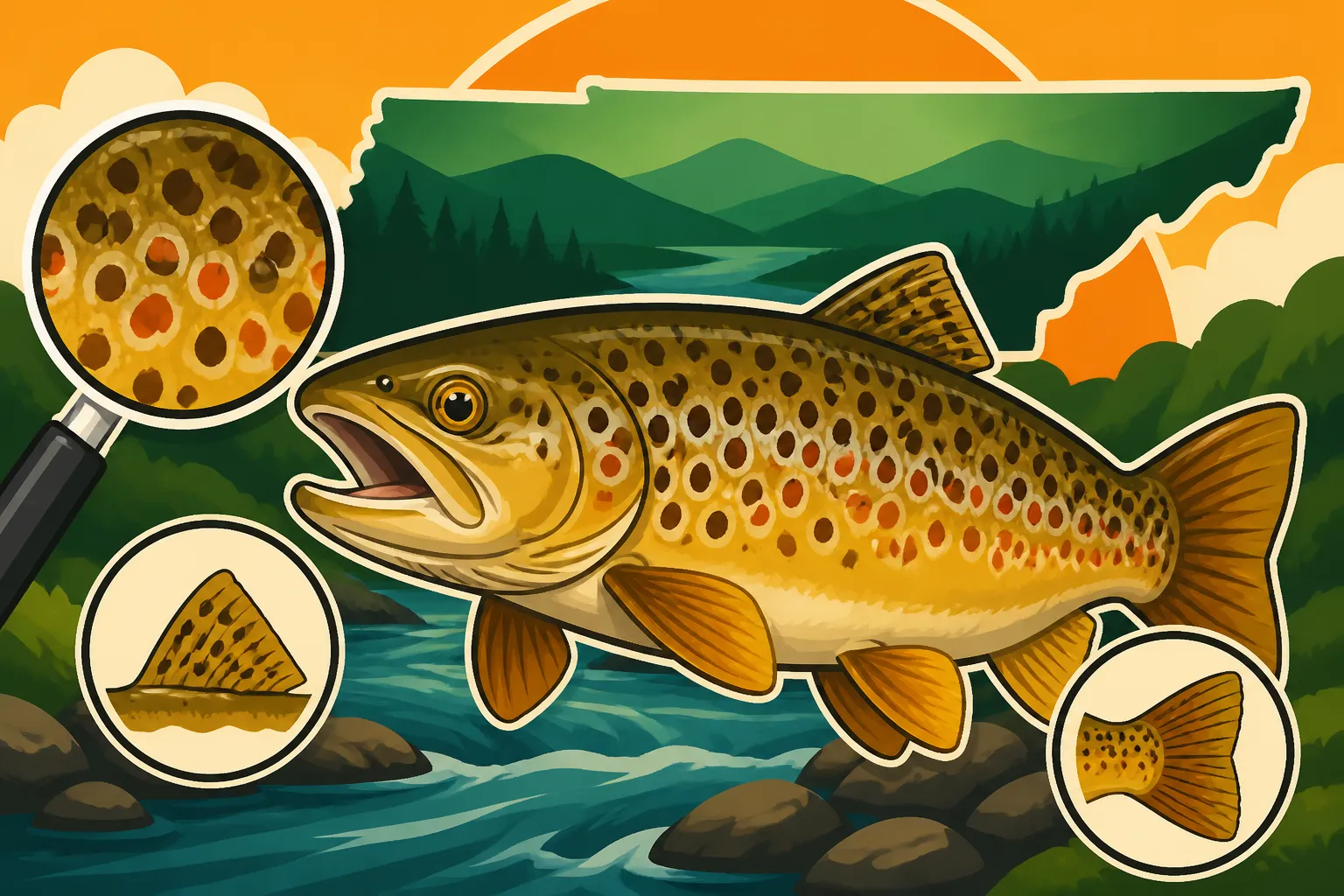
This is where brown trout really show off their unique fingerprint! Brown trout are covered in distinctive spots, and it's these markings that are often the most reliable identifier. You'll primarily notice dark, often black or dark brown, spots scattered across their back and sides. These spots can sometimes extend onto their dorsal fin and adipose fin. But here's the kicker: brown trout also boast vibrant red or orange spots, typically more concentrated on their sides, particularly along the lateral line. These red spots are often surrounded by a pale, almost bluish halo. This "halo" effect around the red spots is a classic brown trout signature.
The distribution and size of these spots can vary. Some brown trout might be heavily spotted, almost speckled, while others have fewer, more widely spaced markings. The combination of dark spots and red spots with halos is what you're really looking for. Rainbow trout, for instance, primarily have dark spots, lacking those iconic red-ringed ones. Brook trout, while colorful, have a completely different pattern of worm-like markings and different spot colors. If you see those red spots with halos, you've almost certainly got a brown trout on your hands. Remember to check out Brown Trout Identification Tips for Tennessee Anglers for more visual cues!
Tail and Fin Nuances
Beyond the body, the fins and tail can offer additional clues. Brown trout typically have a square or very slightly forked tail. It's not deeply forked like some salmon species or even certain types of white bass you might encounter in Tennessee waters. The tail, along with the dorsal and adipose fins, will often have those dark spots mentioned earlier, carrying over the body's pattern. The leading edge of their pectoral, pelvic, and anal fins can sometimes have a pale, almost creamy white margin, but this isn't as consistent or as pronounced as the white leading edges you see on a brook trout's fins.
The adipose fin (that small, fleshy fin between the dorsal and tail fins) is usually unspotted or very lightly spotted, but its presence is a common trait for all true trout and salmon. What you're really focusing on with the brown trout's fins is the overall continuation of the body's spotting pattern onto the dorsal and adipose fins, combined with that relatively square tail. If you're comparing it to other species, paying attention to the fin margins and tail shape can be a helpful secondary identifier after you've examined the body spots.
Physical Characteristics Beyond the Colors
Sometimes, a fish's environment or genetics can make its coloration less typical. That's when you need to look beyond the spots and shades to its fundamental physical structure. Brown trout have a distinct body shape and mouth that, once you learn them, become powerful identification tools, even if the lighting is poor or the fish is muddy.
Body Shape and Size Tendencies
Brown trout are generally known for their robust, somewhat stocky build. They have a more elongated, torpedo-shaped body compared to the shorter, deeper body of, say, a crappie, but they aren't as slender as some other stream-dwelling fish. They have a good girth to them, especially as they get older and bigger. In Tennessee, brown trout can grow to impressive sizes, particularly in rich tailwaters like the Clinch River. While we don't discuss specific weights or measurements, brown trout tend to be the largest trout species found in many Tennessee waters, often reaching trophy proportions, which is why they are such a sought-after game fish.
Their dorsal fin is relatively short and tall, positioned roughly midway along their back. The overall impression is one of strength and power, a fish built for holding its own in strong currents and fighting hard once hooked. When you handle a brown trout, you'll feel that solid, muscular build. Remember that fish grow differently in different environments, so while size can be a clue, it's not a definitive one. A juvenile brown trout will naturally be smaller than an adult, but it will still exhibit the characteristic body shape. For those looking to understand the full range of trout species in Tennessee, our guide Tennessee Trout Guide: Rainbow, Brown, and Brook Trout offers a great overview.
Jawline and Mouth Features
This is a crucial identifier, especially for larger brown trout! Brown trout are known for their relatively large mouth. The upper jaw, or maxillary, extends noticeably beyond the rear edge of the eye, particularly in mature fish. This is a key characteristic that helps distinguish them from rainbow trout, whose maxillary typically doesn't extend past the eye. Furthermore, brown trout have a slight indentation or "notch" at the tip of their upper jaw, where the two halves of the upper jaw meet. This isn't always super obvious on smaller fish but becomes more pronounced on larger specimens.
Their teeth are another indicator. They have small, sharp teeth on both jaws, as well as on the roof of their mouth (vomerine teeth). While you generally won't be sticking your fingers in a fish's mouth to check, you can often feel the roughness if you slide a gloved finger along the roof of the mouth. The large mouth and extended jaw are adaptations for their predatory nature; they are known to eat smaller fish, crawfish, and large insects. This aggressive feeding behavior also contributes to their robust body shape.
Overall Impression on the Water
When you see a brown trout in its natural habitat, or even briefly hooked, there's an undeniable "look" to them. They often appear sleek and powerful, with that distinctive golden-brown sheen. In clear water, you might notice their dark and red spots contrasting sharply with their lighter flanks. The way they hold themselves in the current, often tucked behind rocks or under undercut banks, speaks to their preference for cover and their opportunistic feeding style.
If you're fly fishing, the take of a brown trout can sometimes feel different – often a solid, deliberate pull. Their fighting style, especially when larger, is legendary, characterized by strong runs and powerful head shakes, sometimes even aerial acrobatics. This overall impression, the combination of their color, spots, robust build, and powerful jaw, culminates in a distinct fish that, with practice, becomes unmistakable. Seeing a good photo or even a video can greatly aid in solidifying this overall impression; many helpful resources are available, and you might even find books detailing Tennessee's Best Trout Streams on Amazon that include identification photos.
Habitat as an Identification Aid in Tennessee
Knowing where a fish should be can be almost as helpful as knowing what it looks like. Brown trout have specific preferences for their living conditions, and understanding these can reinforce your identification, especially if you're targeting them in specific Tennessee waters.
Preferred Waters and Cover
Brown trout thrive in cold, clean water, making them common inhabitants of many of Tennessee's renowned trout streams and tailwaters. They prefer water temperatures that generally stay below 70 degrees Fahrenheit, ideally much cooler. This is why you'll find them in the higher elevations of the Great Smoky Mountains, where spring-fed streams maintain frigid temperatures year-round, or below large dams like those on the Clinch or Holston Rivers, where water released from the bottom of the reservoir is consistently cold. Our guide on Where to Catch Brown Trout in Tennessee offers specifics on these prime locations.
They are also notorious for seeking out ample cover. Unlike rainbow trout, which are often more comfortable in open runs, brown trout are masters of concealment. Look for them under cut banks, beneath submerged logs, behind large boulders, or in deep pools. They use these hideouts not only for protection from predators but also as ambush points for prey. If you're fishing a section of a river with lots of structure and you hook a fish that displays the classic brown trout markings, their presence in such a spot is just another piece of the puzzle confirming your identification.
Behavior Patterns to Watch For
Brown trout, particularly larger ones, can be quite nocturnal, especially during warmer months or in heavily fished areas. They might be more active and less wary during low light conditions, such as dawn, dusk, or even throughout the night. This isn't to say you won't catch them during the day – many are caught on nymphs and streamers during daylight hours – but a sudden surge of activity as the sun dips below the horizon might indicate a brown trout becoming more active.
They can also be quite spooky. They have excellent eyesight and are sensitive to vibrations, so approaching their preferred lies quietly and stealthily is often key to success. If you see a fish darting quickly for cover at your approach, it's often a brown trout. They are opportunistic feeders, meaning they'll eat whatever is available, from small insects to crayfish and even smaller fish. This broad diet explains their robust growth and aggressive nature. Understanding these behavioral traits, combined with the visual cues, makes for a more complete identification picture. For more on how to fish for these fascinating creatures, check out our insights into Tennessee Trout Fishing Season Explained.
Brown Trout vs. Other Tennessee Trout: A Comparative Look
Tennessee is home to a few different trout species, and it's easy to get them mixed up, especially when you're just starting out or the lighting isn't ideal. Let's compare the brown trout to its most common cousins here in the Volunteer State.
Distinguishing from Rainbow Trout
Rainbow trout are probably the species most frequently confused with brown trout, as they often share the same waters. However, there are some clear differences. The most obvious is the "rainbow" band. Rainbow trout possess a distinctive, iridescent pink or red stripe running along their lateral line, from gill plate to tail. This stripe can be very prominent on some fish and more subdued on others, but it's almost always there. Brown trout simply do not have this stripe.
In terms of spots, rainbow trout typically have abundant, small, dark spots (often referred to as "pepper spots") on their back, sides, dorsal fin, and especially on their tail fin. The tail of a rainbow trout is usually covered in these spots, which can be a key differentiator from the brown trout's less spotted, more square tail. Crucially, rainbow trout do not have the red or orange spots with pale halos that are characteristic of brown trout. Their overall body color tends to be more silvery-gray or olive-green, rather than the golden-brown of a brown trout. Also, as mentioned earlier, a rainbow trout's maxillary generally does not extend past the back of its eye, a useful contrast to the brown trout's larger jaw. For a deep dive, see Brown Trout vs Rainbow Trout: Key Differences.
Telling Them Apart from Brook Trout
Brook trout are another beautiful species found in Tennessee, primarily in the coldest, highest elevation streams of the Appalachian Mountains. They are often smaller than browns or rainbows and have a very different appearance. The most striking difference is their coloration. Brook trout are incredibly vibrant, with a dark, almost mottled green or olive-green back, transitioning to lighter flanks that are often adorned with stunning red or orange spots, sometimes with blue halos (known as "halos" or "aureoles"). While brown trout have red spots with halos, the brook trout's spots are often much brighter and more numerous, set against a darker, worm-like pattern on their back.
Another unmistakable brook trout feature is the leading edge of their lower fins (pectoral, pelvic, and anal), which are brilliant white, followed by a sharp black stripe. This white-leading-edge fin is unique among Tennessee trout and is an immediate giveaway. Their tail is square or only very slightly forked. Their overall body shape is often more streamlined and delicate than a brown trout's. They also tend to have a smaller mouth compared to a brown trout, rarely extending past the eye. If you're fishing in a small, pristine mountain stream and catch a small, brightly colored trout with white-edged fins, you've likely found a brook trout. You can learn more about them in Brook Trout in Tennessee's Cold-Water Streams.
Here's a quick comparison table to help you keep things straight:
| Feature | Brown Trout | Rainbow Trout | Brook Trout |
|---|---|---|---|
| Base Color | Golden-brown, olive-brown, yellowish flanks | Silvery-gray, olive-green | Dark green, olive, mottled |
| Body Spots | Dark spots, red/orange spots with pale halos | Abundant small dark spots (pepper spots) | Bright red/orange spots with blue halos |
| Lateral Line | No distinct stripe | Prominent pink/red stripe | No distinct stripe, but spots often run along it |
| Tail Fin | Square, slightly forked, few spots | Moderately forked, covered in dark spots | Square, slightly forked, often mottled |
| Lower Fins | Plain, sometimes pale edge | Plain, no distinct markings | White leading edge, then black stripe |
| Maxillary (Jaw) | Extends beyond eye, especially in large fish | Rarely extends beyond eye | Rarely extends beyond eye |
Quick Check: Not a Smallmouth Bass
Sometimes, especially in rivers that hold both species, a very young brown trout or a particularly silvery brown trout might briefly be confused with a smallmouth bass. However, there are several key differences. Smallmouth bass are part of the sunfish family, not trout. They have much larger scales that are more easily visible, and their dorsal fin is distinctly separated into two parts: a spiny, rigid front section and a softer, rayed rear section. Trout, on the other hand, have smaller scales and a single, continuous dorsal fin.
Smallmouth bass typically have vertical bars or blotches on their sides, rather than distinct spots, and their eyes are usually red. Their mouth, while large, usually doesn't extend past the eye for smallmouth (unlike largemouth bass), but it's their spiny dorsal fin and different body shape that are the dead giveaways. Trout also have an adipose fin (the small, fleshy fin on their back), which smallmouth bass (and all members of the sunfish family) do not possess. If you're ever in doubt, just look for that adipose fin – if it's there, it's a trout! If you want to refine your identification skills further, consider picking up a field guide from Amazon that covers all Fish Species Found in Tennessee Waters.
Disclaimer
This article is for general informational purposes only and does not constitute professional advice. Laws, prices and regulations vary by location and change over time. Consult a qualified professional for guidance on your specific situation.