Best Baitcasting Reels for Bass Anglers
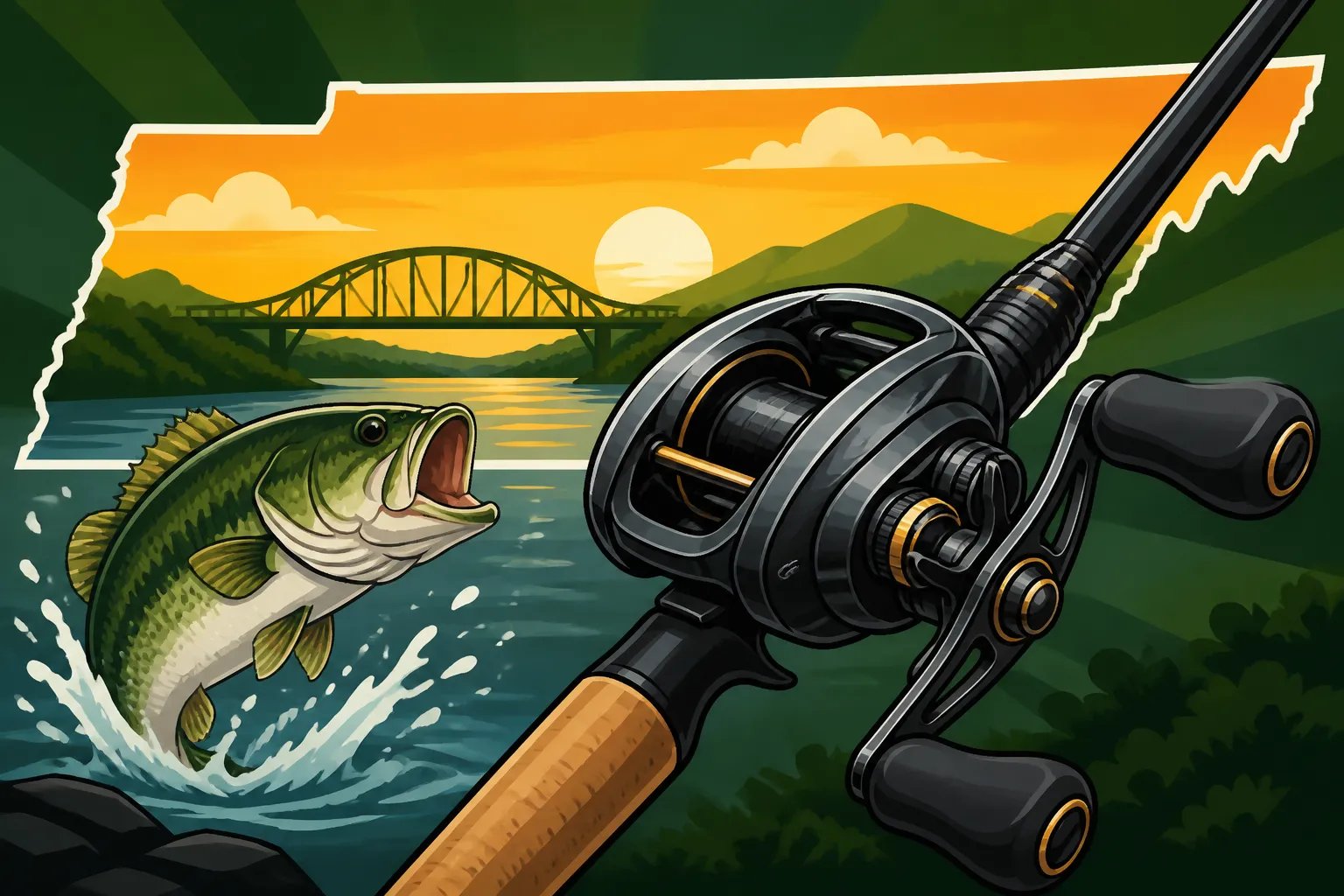
There's nothing quite like the thrill of a big bass strike, especially here in the Volunteer State. But if you've ever felt limited by your spinning reel when trying to make precise casts into tight cover or really muscle in a trophy fish, you're not alone. Many anglers find themselves wishing for more control and power, and that's exactly where a good baitcasting reel comes into play, transforming your bass fishing experience from frustrating misses to pinpoint accuracy and powerful retrieves. This guide will walk you through everything you need to know about choosing and using the best baitcasting reels to up your bass angling game.
Why Baitcasting Reels Are a Game-Changer for Bass Anglers
When it comes to serious bass fishing, especially for the larger species we have here in Tennessee, a baitcasting reel is often the preferred choice for experienced anglers, and for very good reason. They offer a level of control and power that spinning reels just can't quite match for certain techniques and situations. If you're looking to consistently land those lunker largemouths or feisty smallmouths, understanding the advantages of a baitcaster is your first step.
Precision Casting for Tight Spots
One of the biggest advantages of a baitcasting reel is its ability to deliver incredibly accurate casts. Unlike a spinning reel where the line peels off in coils, a baitcaster's spool rotates to release the line directly in line with your rod. This direct line flow allows for more control, especially when you're pitching or flipping into tight cover like dense lily pads, submerged brush piles, or under docks. Imagine seeing a fat bass lurking just beneath a low-hanging tree branch. With a baitcaster, you can skip your lure right into that tiny opening, hitting your target with much greater consistency than with a spinning reel. This precision is invaluable on waters like Chickamauga Lake or Kentucky Lake where bass often hold tight to structure.
The ability to control the spool with your thumb is a key factor here. You can feather the line as it leaves the reel, slowing it down or stopping it entirely to prevent overruns or to precisely drop a bait. This kind of finesse is crucial when you're targeting specific spots where bass are known to hide, giving you an edge over less controlled presentations.
Unmatched Power and Control for Big Fish
Once you hook into a sizable bass, a baitcasting reel truly shines in the battle. The direct connection between the handle, the gears, and the spool means you have more cranking power to pull fish out of heavy cover. This isn't just about brute strength; it's about leverage and efficiency. When a big largemouth tries to bury itself in a thick weed bed, that extra power can be the difference between landing it and losing it.
Furthermore, baitcasters are designed to handle heavier lines and lures with ease. If you're throwing big swimbaits, deep-diving crankbaits, or heavy jigs for those trophy bass, a baitcaster is built for the task. The robust construction and larger gear systems are engineered to withstand the strain of these heavier setups and the powerful runs of a strong fish. This means less wear and tear on your gear and more confidence when you're setting the hook on a fish of a lifetime. This robust setup pairs perfectly when you're trying to fish different patterns throughout the year, like during Tennessee Bass Fishing Seasons and Patterns.
Deciphering the Key Features of a Great Bass Baitcaster
Choosing a baitcasting reel can feel a bit overwhelming with all the numbers and technical terms thrown around. But don't fret! Once you understand a few key features, you'll be able to confidently pick a reel that perfectly suits your style of bass fishing. It's all about matching the reel's capabilities to the techniques you intend to use most often.
Understanding Gear Ratios and Their Role
The gear ratio of a baitcasting reel tells you how many times the spool rotates with one full turn of the handle. This number is expressed as a ratio, like 6.4:1, 7.1:1, or 8.3:1. Each ratio is best suited for different fishing applications.
- Lower Gear Ratios (e.g., 5.X:1 to 6.X:1): These reels are "power" reels. They retrieve line slower but provide more torque, making them ideal for lures that create a lot of drag, like large deep-diving crankbaits, big swimbaits, or umbrella rigs. The slower retrieve helps you keep the lure in the strike zone longer and gives you incredible leverage when fighting big fish. If you're consistently throwing lures that require a steady, slower retrieve, a lower gear ratio is your friend.
- Medium Gear Ratios (e.g., 7.X:1): These are the workhorse reels and probably the most versatile choice for many bass anglers. They offer a good balance of speed and power, suitable for a wide range of techniques like Texas rigs, jigs, spinnerbaits, and topwater lures. If you're only going to buy one baitcaster, a 7.1:1 or 7.3:1 reel is often an excellent starting point, allowing you to adapt to various situations on the water.
- High Gear Ratios (e.g., 8.X:1 and higher): These are "speed" reels. They retrieve line very quickly, which is fantastic for techniques where you need to pick up slack line rapidly or make many casts in a short period. Think about flipping and pitching in dense cover, frogging over mats, or burning a buzzbait. The fast retrieve allows you to quickly re-position your lure, make follow-up casts, or catch up to a fast-moving fish that swims towards you after the strike.
Braking Systems: Magnetic vs. Centrifugal
A baitcaster's braking system is crucial for preventing dreaded backlashes (also known as "bird's nests"). All baitcasters have some form of braking to control the spool's rotation during a cast. The two main types are magnetic and centrifugal.
- Magnetic Braking Systems: These systems use magnets to create resistance on the spool, slowing it down. They are typically adjusted externally with a dial, making them very easy to fine-tune on the fly, even mid-fishing trip. This ease of adjustment is a huge plus for beginners or when conditions change rapidly (e.g., sudden headwind). They provide consistent braking throughout the cast, which can lead to smoother, more controlled casts. Many anglers find them more forgiving.
- Centrifugal Braking Systems: These systems use small pins or weights inside the reel that slide outward as the spool spins faster, creating friction against a brake drum. They provide more braking force at the beginning of the cast when the spool is spinning fastest, then ease off as the lure flies. Adjustments are usually made internally by opening the side plate and engaging or disengaging pins, which can be a bit more fiddly, especially on the water. However, many experienced anglers prefer centrifugal brakes for their "free-spool" feeling and the ability to achieve longer casts once mastered. Some higher-end reels even combine both magnetic and centrifugal systems for ultimate adjustability.
Bearings: Quality Over Quantity
You'll see reels advertised with various bearing counts (e.g., 5+1, 7+1, 10+1). While more bearings can contribute to a smoother feel, the quality and placement of those bearings are far more important than the sheer number. High-quality stainless steel or ceramic bearings in key areas (like the spool shaft and handle knobs) will provide a much smoother retrieve and longer durability than a dozen cheap, poorly placed bearings.
A good rule of thumb is to look for reputable brands known for quality construction. A reel with 5-7 high-quality bearings will often outperform a reel with 10+ cheaper ones. Focus on a reel that feels solid and smooth in your hand, rather than just chasing the highest bearing count on the box.
Frame Material and Spool Design
The frame of your baitcasting reel typically comes in either aluminum or graphite.
- Aluminum Frames: Generally more rigid and durable, offering greater strength for fighting big fish and maintaining gear alignment under heavy load. They can be a bit heavier but provide a more solid feel. Many high-performance reels, especially those designed for heavier techniques, use aluminum frames.
- Graphite Frames: Lighter than aluminum, which can be a relief during long days of casting. They are also less expensive. While modern graphite frames are surprisingly strong, they might not offer the same rigidity as aluminum under extreme pressure. For general bass fishing with lighter to medium lures, graphite can be an excellent, comfortable choice.
Spool design also plays a role. A lighter, thinner-walled spool will spin up faster, allowing for easier casting of lighter lures, while a deeper, heavier spool can hold more line and provide more inertia for longer casts with heavier baits. Many modern bass baitcasters feature lightweight aluminum spools designed for optimal performance.
| Feature | Description | Ideal Application for Bass |
|---|---|---|
| Gear Ratio | Spool rotations per handle turn (e.g., 6.4:1, 7.1:1, 8.3:1) | Lower for power baits (crankbaits, swimbaits); Medium for all-around; High for speed (flipping, frogging) |
| Braking System | Controls spool speed to prevent backlashes (Magnetic, Centrifugal) | Magnetic for ease of adjustment/beginners; Centrifugal for experienced casters/long casts |
| Bearings | Smoothness of retrieve and casting (number and quality) | Focus on quality bearings (5-7 good ones often better than 10+ cheap) |
| Frame Material | Reel body construction (Aluminum, Graphite) | Aluminum for durability/power; Graphite for lightweight/comfort |
| Spool Design | Weight and depth of the spool (lightweight, deep, shallow) | Lightweight for lighter lures; Deeper for more line capacity/heavier lures |
Pairing Your Baitcaster with the Right Rod and Lure
A baitcasting reel, no matter how good, is only part of the equation. To truly unlock its potential, you need to match it correctly with a fishing rod and the type of line and lure you plan to use. This synergy is what makes a well-balanced setup a joy to fish with and incredibly effective for catching bass in Tennessee. Finding the right combination can take some experimentation, but understanding the basics will save you a lot of trial and error.
Matching Rod Power and Action
The rod you choose for your baitcaster is paramount. Rods have two main characteristics to consider: power and action.
- Rod Power: This refers to the rod's lifting strength or stiffness. Common ratings are Light, Medium-Light, Medium, Medium-Heavy, Heavy, and Extra-Heavy. For most bass fishing with baitcasters, you'll be looking at Medium, Medium-Heavy, or Heavy power rods.
- Medium Power: Great for lighter bass techniques, smaller jigs, spinnerbaits, or topwater lures. It allows for a good bend and helps cast lighter baits effectively.
- Medium-Heavy Power: This is arguably the most versatile power for a bass baitcaster. It handles a wide range of lures—from jigs and Texas rigs to medium crankbaits and smaller swimbaits. It provides enough backbone to set hooks and pull bass out of cover. If you're looking for a good all-around rod to pair with your versatile 7.X:1 gear ratio reel, a medium-heavy is often the sweet spot. You can find excellent options at places like Bass Pro Shops.
- Heavy Power: Ideal for techniques that require significant backbone, such as flipping and pitching heavy jigs or soft plastics into dense vegetation, fishing with large swimbaits, or frogging over thick mats. This power gives you maximum control over big bass in heavy cover.
- Rod Action: This describes where the rod bends when pressure is applied.
- Fast Action: The rod bends mostly in the tip section. This provides excellent sensitivity for feeling subtle bites and lightning-fast hook sets. It's fantastic for single-hook baits like jigs, Texas rigs, and Carolina rigs where you need to drive the hook home quickly. Many bass anglers prefer fast action rods for their baitcasters.
- Moderate-Fast Action: The rod bends more into the upper half. It still offers good sensitivity and hook-setting power but provides a little more give, which can be beneficial for treble hook baits like crankbaits and jerkbaits. The slightly slower action helps prevent tearing the hooks out of a fish's mouth.
- Moderate Action: The rod bends through the middle section. These are great for reaction baits like crankbaits, allowing the fish to engulf the lure before you set the hook. The full bend also makes casting some lures easier and provides a great parabolic curve for fighting fish, absorbing shock and preventing pulled hooks.
When you're trying to figure out the perfect rod for your setup, checking out a guide like Best Rods for Largemouth Bass can really help narrow down your choices.
Choosing the Right Line
Line choice is critical for baitcaster performance. Different lines excel in different situations.
- Monofilament (Mono): A good all-around line, especially for topwater and some moving baits. It has good stretch, which can be forgiving with treble hook baits and helps absorb headshakes from jumping bass. It's also fairly easy to cast and relatively inexpensive.
- Fluorocarbon (Fluoro): This is a favorite among bass anglers for its low visibility underwater and its excellent sensitivity due to minimal stretch. It sinks, which can be advantageous for bottom-contact baits like jigs and Texas rigs. However, it can be stiffer than mono, sometimes leading to more memory on the spool, which can be tricky for beginners with baitcasters.
- Braided Line (Braid): Extremely strong for its diameter, with virtually no stretch, offering maximum sensitivity and incredible hook-setting power. It floats, making it ideal for topwater lures or fishing in heavy cover where you need to cut through weeds. Braid can be difficult for beginners to manage on a baitcaster due to its slickness and tendency to "dig in" on the spool if not spooled correctly. Often, anglers will tie a fluorocarbon or monofilament leader to braided main line for stealth.
Many anglers even consider the specific type of lure when selecting a line, such as using specific rigs for Best Lures for Pre-Spawn Bass Fishing. Ultimately, the goal is to choose a line that complements your lure, rod, and reel, giving you the best chance to detect bites and successfully land fish.
Essential Maintenance for Your Baitcasting Reel
You've invested in a great baitcasting reel, perhaps picked up a fantastic deal from Amazon or explored the extensive options at Bass Pro Shops. Now, to ensure it performs flawlessly for years of Tennessee bass fishing adventures, proper maintenance is key. Skipping a few simple steps can lead to decreased performance, premature wear, and even total reel failure. Think of it like taking care of your favorite fishing boat – a little regular attention goes a long way.
Regular Cleaning and Lubrication
This is the most fundamental aspect of reel care. After every few trips, or certainly after any outing where your reel gets wet, muddy, or sandy, it needs a quick wipe-down and inspection.
- External Cleaning: Use a damp cloth to wipe down the exterior of the reel, removing any dirt, grime, or fish slime. Pay attention to the handle, star drag, and line guide. If fishing in saltwater (though less common for Tennessee bass), a thorough rinse with fresh water is essential, followed by drying.
- Line Guide: The line guide is a critical point of friction. Use a cotton swab to clean any debris that might accumulate inside the eyelet. A tiny drop of light reel oil on the line guide's worm gear can help it move smoothly.
- Spool and Bearings: Periodically, remove the side plate and take out the spool. Inspect the spool and the bearings for any debris. The spool bearings are often the culprit for poor casting distance or a noisy retrieve. A very small drop of high-quality reel oil (specifically designed for fishing reels, not WD-40 or other household lubricants) on each spool bearing will keep them spinning freely. Over-oiling can attract more dirt, so less is often more.
- Gears and Internal Components: For a more in-depth cleaning, especially once a season or annually, you might consider disassembling the reel to clean and re-grease the main gears. This is a more advanced task and if you're not comfortable, many tackle shops offer reel cleaning and servicing. However, simply getting a little reel grease on the main gear and pinion gear can make a huge difference in smoothness.
Remember, consistent, light maintenance is better than infrequent, heavy-duty overhauls. A well-lubricated reel casts farther and retrieves smoother, making your time on the water more enjoyable.
Proper Line Management
Your fishing line is in constant contact with your reel, and how you manage it directly impacts performance.
- Spooling Line Correctly: When you put new line on your baitcaster, make sure it's spooled under proper tension. Too loose, and the line can dig into itself, causing backlashes. Too tight, and it can stretch the line, reducing its integrity. Have someone hold the spool with tension, or use a line winder to ensure even, firm wraps on your reel.
- Preventing Line Twist: Line twist can lead to tangles and knots, especially with monofilament. Avoid simply trolling lures without any weight or spinning them excessively. If you notice severe line twist, you can try letting out all your line in open water (like a lake or a large field) and slowly retrieving it without a lure, letting the twist unwind itself.
- Regular Line Inspection and Replacement: Before each outing, check the first few feet of your line for nicks, abrasions, or kinks, especially if you've been fishing around rocks or heavy cover. Retie your knots frequently. Over time, all fishing line degrades from UV exposure, wear, and tear. It's a good practice to replace your main line at least once a season, or more frequently if you fish often or target aggressive species. A fresh line will cast better, have better knot strength, and provide greater sensitivity, which is vital when you're waiting for that subtle bite. Managing your line well will contribute to a much better experience when you're trying to figure out Best Tackle Box Setup for Bass Fishing.
Protecting Your Investment Through Storage
How you store your reel when not in use is just as important as how you maintain it during the season.
- Clean and Dry: Always ensure your reel is clean and thoroughly dry before putting it away for extended periods. Moisture is the enemy, leading to corrosion and rust.
- Loose Drag: Before storage, back off the drag setting completely. Leaving the drag tightened can compress the drag washers over time, leading to inconsistent drag performance when you need it most.
- Protective Cover: Use a reel cover or case to protect your baitcaster from dust, dirt, and accidental knocks. These are inexpensive accessories that can prolong the life and appearance of your reel.
- Environment: Store your reels in a cool, dry place, away from direct sunlight or extreme temperature fluctuations. A climate-controlled environment like a closet or garage workbench is ideal. Avoid leaving them in a hot car for prolonged periods, as this can degrade lubricants and line.
By taking these proactive steps, your baitcasting reel will remain a reliable tool for many seasons, ready to tackle any Tennessee bass that comes its way. This diligent care will serve you well, especially when the fishing patterns shift, and you need your gear to perform perfectly, whether it’s for Best Time of Day to Catch Bass or adapting your approach for How to Adjust Your Technique After a Cold Front.
Disclaimer
This article is for general informational purposes only and does not constitute professional advice. Laws, prices and regulations vary by location and change over time. Consult a qualified professional for guidance on your specific situation.