Best Crankbaits for Reservoir Bass
Choosing the right crankbait for bass fishing in Tennessee's vast reservoirs can feel like a daunting task, especially with the sheer variety available. You're standing in front of the tackle aisle, faced with endless shapes, sizes, colors, and dive depths, wondering which one will actually tempt those elusive reservoir bass. This guide is here to cut through the confusion and help you understand which crankbaits are best suited for the unique challenges and opportunities presented by Tennessee's diverse lake environments, ensuring your next outing is more productive.
Understanding Reservoir Bass Behavior and How Crankbaits Fit In
Tennessee's reservoirs are dynamic environments, constantly changing with water levels, temperature, and seasonal patterns. Bass don't just hang out anywhere; they orient themselves to structure, cover, and baitfish. Understanding these patterns is key to deploying the right crankbait at the right time. A crankbait isn't just a piece of plastic; it's a tool designed to mimic the natural movements and appearance of a bass's prey, making it an irresistible target.
The Impact of Water Depth and Structure
One of the biggest factors influencing where bass hold in reservoirs is depth. During different seasons, and even at different times of the day, bass will move up and down the water column, often relating to specific structural elements. Think about the deep ledges and humps on a lake like Chickamauga or Watts Bar – these are classic bass holding areas, especially when the water warms up. But then you have shallow, stump-filled coves or rocky shorelines that bass will frequent during the spawn or when chasing bait.
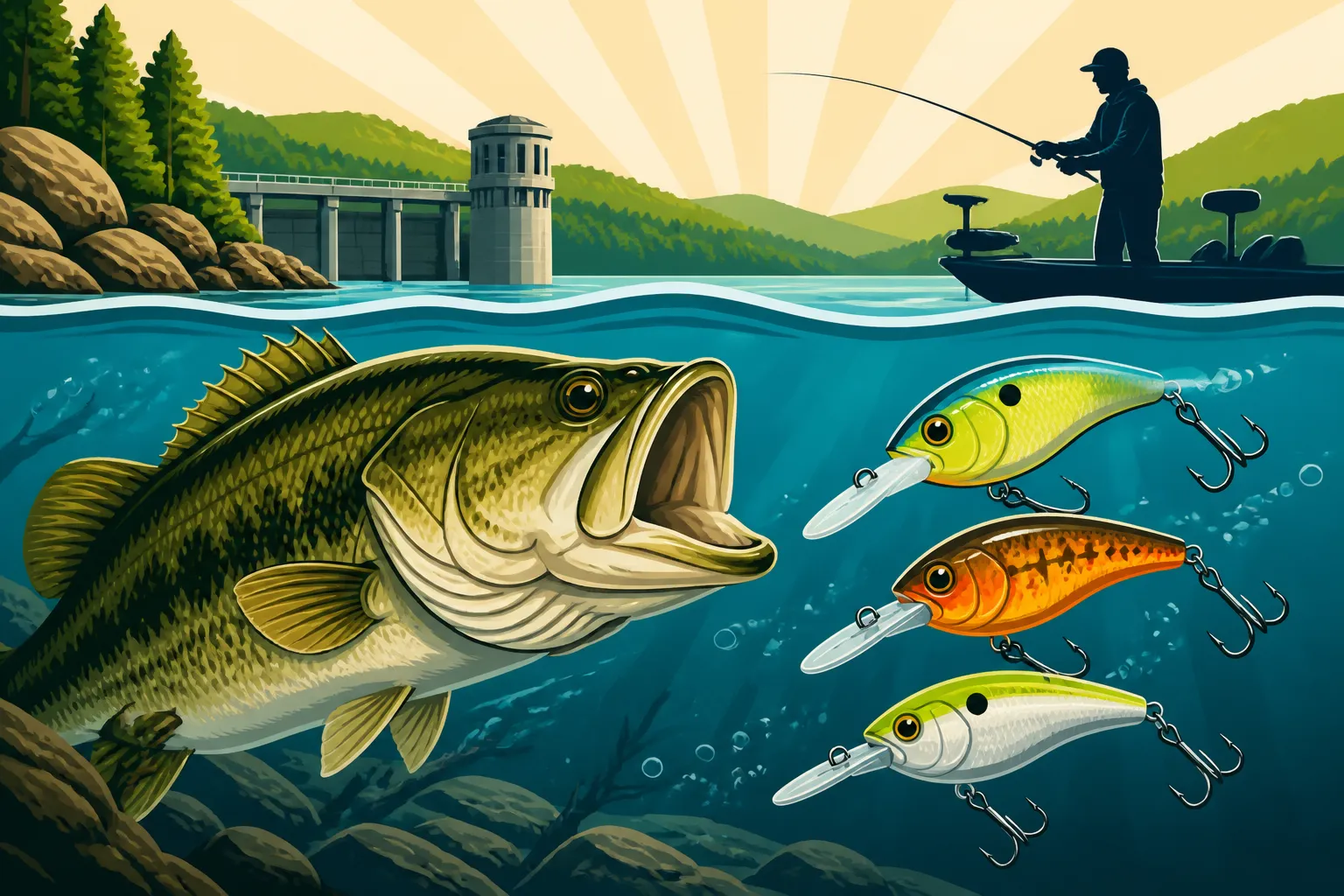
Crankbaits are engineered with different bill designs and body shapes to dive to precise depths, allowing you to effectively target bass wherever they are. A shallow-diving squarebill, for instance, is perfect for banging off submerged stumps and rocks in 2-5 feet of water, kicking up sediment and imitating a fleeing crawfish. Conversely, a deep-diving crankbait is built to plow down 15-20 feet or more, scraping across those offshore ledges where big bass often congregate, imitating a shad that's just a little bit too slow. Matching your crankbait's diving depth to the depth of the structure you're fishing is paramount. Trying to fish a shallow crankbait over a 20-foot ledge is like trying to catch a fish in a bathtub with a swimming pool net – it just won't work.
Matching the Hatch: Forage and Crankbait Profiles
Bass are opportunistic predators, but they primarily feed on what's abundant in their environment. In many Tennessee reservoirs, the primary forage includes various species of shad (like threadfin and gizzard shad), bluegill, and crawfish. When bass are actively feeding, they are looking for something that looks, feels, and acts like their natural prey. This is where "matching the hatch" with your crankbait's profile and color becomes critical.
If bass are keying in on schools of threadfin shad suspended in open water, a slender-bodied crankbait with a silver, white, or light blue back finish will often outperform anything else. These baits emulate the flash and erratic movement of a fleeing shad. On the other hand, if you're fishing rocky banks or areas with lots of submerged wood, bass are likely targeting crawfish. In these scenarios, a crankbait with a bulkier profile and colors like brown, red, or orange can be incredibly effective, as it mimics a crawfish scurrying along the bottom. Paying attention to what baitfish you see jumping or what little critters you find under rocks on the shoreline can give you valuable clues. You can often find a huge array of these specialized crankbaits at Bass Pro Shops or through online retailers like Amazon, allowing you to stock up for any situation.
Types of Crankbaits for Tennessee Reservoirs
The world of crankbaits can seem overwhelming, but we can simplify it by breaking them down into main categories based on their diving depth and action. Each type has its ideal scenario and best application in a Tennessee reservoir.
Shallow-Diving Crankbaits (Squarebills)
Shallow-diving crankbaits, particularly squarebills, are absolute workhorses for fishing skinny water and around dense cover. They're characterized by a short, square lip that makes them deflect off structure incredibly well without getting hung up easily. Imagine casting parallel to a laydown tree on Kentucky Lake or bouncing it off a rock pile on Percy Priest Lake. The erratic deflection these baits create mimics a fleeing baitfish or crawfish, often triggering an aggressive reaction strike from bass hiding in the cover.
These baits typically run in the 1 to 5-foot depth range. They shine in spring and fall when bass are shallow, chasing baitfish in coves or relating to woody debris. Many anglers find success by "cranking and pausing" or by literally running the bait into stumps and rocks, letting it kick off with a sudden, enticing change in direction. The key is to keep that bait interacting with the cover. Don't be afraid to try different retrieve speeds; sometimes a slow roll is what they want, other times a quick, erratic retrieve is the ticket. When exploring Best Fishing Spots Near Nashville, Tennessee, don't forget your squarebills for those shallower stretches.
Medium-Diving Crankbaits (Round Bills)
When bass move a little deeper, but aren't quite in the abyss, medium-diving crankbaits come into play. These typically feature a rounded or coffin-shaped bill and are designed to reach depths from 6 to about 12 feet. They're perfect for fishing secondary points, channel swings, and ledges, especially on lakes like Norris or Old Hickory, where bass might be suspended slightly off the bottom or relating to submerged contours.
The beauty of a medium-diver is its versatility. You can often cast it out, get it down to its maximum depth, and then reel it steadily, letting it "walk" across the top of submerged brush piles or along the edge of a drop-off. Again, deflecting the bait off structure is often the key to triggering strikes. If you feel your crankbait hit a log or a rock, often a slight pause or a subtle twitch of the rod tip can make it wobble just enough to entice a hesitant bass. These baits are excellent for covering water when you're trying to locate schools of bass, particularly during the pre-spawn and post-spawn periods, as described in Pre-Spawn and Post-Spawn Bass Fishing Patterns.
Deep-Diving Crankbaits (Big Bills)
Now we're talking about getting down to where the big ones live! Deep-diving crankbaits are easily identified by their long, often wide bills, which allow them to plunge to depths of 12 feet or more, with some models reaching 20-25 feet or even deeper. These are your go-to baits for summer and early fall when bass are often found on offshore ledges, humps, and deep points on massive reservoirs like Chickamauga or Watts Bar. These are the baits you'll want to have on hand when targeting Tennessee Bass Fishing Seasons and Patterns that dictate deep-water presentations.
Fishing deep-divers effectively requires a bit more effort. You'll often need to make long casts, use lighter line, and employ a specific retrieve to maximize their depth potential. Many anglers use a sweeping retrieve, pulling the rod to the side, then reeling up the slack as they bring the rod forward, which helps the bait dig deeper. The goal is to get that bill ticking the bottom or grinding into the structure, creating a commotion that calls bass in. This can be physically demanding, but the reward of a trophy bass from a deep ledge makes it all worthwhile. Remember to check out tackle shops like Bass Pro Shops for the latest deep-diving models and expert advice.
Lipless Crankbaits
Lipless crankbaits stand apart from their billed cousins. These compact, often flat-sided baits lack a diving lip but create a high-vibration, "wobbling" action as they're reeled, often accompanied by loud rattles. They sink quickly, making them incredibly versatile for fishing a wide range of depths, from shallow flats to deep water columns.
What makes lipless crankbaits so effective in Tennessee reservoirs? Their ability to cover water quickly and their strong vibration profile. They're fantastic for searching large areas, especially in spring and fall when bass are actively chasing baitfish. You can yo-yo them over grass beds, rip them through submerged vegetation, or simply make a long cast and reel them steadily across open water or flats. Their versatility also means they can be effectively used in different seasonal scenarios, from cold water applications described in Winter Bass Fishing Techniques to warmer periods. The loud rattles in many lipless crankbaits can be a game-changer in stained or muddy water, helping bass locate the bait even when visibility is poor.
Selecting the Right Crankbait: Factors Beyond Depth
While diving depth is crucial, it's certainly not the only consideration when picking a crankbait. Bass react to a complex combination of factors, and fine-tuning your selection can make a huge difference in your success rate.
Color Selection: Matching Water Clarity and Forage
The color of your crankbait is more important than many anglers realize. It needs to match both the local forage and the prevailing water clarity.
In clear water, like some sections of Norris Lake, more natural and subtle colors tend to excel. Think transparent shad patterns, chrome with a blue back, or natural crawfish hues. Bass in clear water rely heavily on their sight, and an overly vibrant or unnatural color can be a turn-off. You want your bait to blend in and appear as lifelike as possible.
Conversely, in stained or muddy water, such as after heavy rains on the Tennessee River, bass rely more on their lateral line (which detects vibration) and their sense of smell. In these conditions, bolder, brighter colors often produce better results. Chartreuse, fire tiger, red, and even black and blue can be incredibly effective, providing a high-contrast profile that's easier for bass to see and target in low visibility. A crankbait with strong red or orange accents can also be a killer when crawfish are the primary forage, regardless of water clarity, because these colors imitate a molting or distressed crawfish. Understanding How Water Temperature Affects Bass Feeding can also give clues on what colors and forage patterns to mimic.
Sound and Vibration: Rattles vs. Silent
Crankbaits come in both rattling and silent versions, and choosing between them can significantly impact your catch.
Rattling crankbaits, with their internal BBs or tungsten spheres, create distinct noise and vibration as they move through the water. This added commotion can be a huge advantage, especially in stained water, windy conditions, or when fishing deep structure. The sound helps bass locate the bait and can often trigger aggressive reaction strikes, much like a hungry predator honing in on its prey. For anglers fishing Kentucky Lake Fishing on the Tennessee Side, where the water can be quite turbid, a rattling crankbait might be the perfect choice.
However, there are times when silence is golden. In highly pressured lakes, clear water, or when bass are particularly finicky, a silent crankbait can be more effective. The lack of rattling sound makes the bait appear more natural and less threatening, especially to wary or larger bass that have seen every trick in the book. Sometimes, the subtle wobble and visual appeal of a silent bait are all it takes to get that bite. Having a mix of both rattling and silent options in your Tackle Box Setup for Bass Fishing is always a good strategy.
Retrieves and Rods: Making Your Crankbait Come Alive
A crankbait is only as good as the retrieve you give it. Varying your retrieve speed, adding pauses, and incorporating deflections are all critical techniques to making your bait look like a struggling, easy meal. Don't just cast and reel at a consistent speed; experiment! A sudden surge, a quick stop-and-go, or a rapid deflection off a log can be the difference between a follow and a strike.
Equally important is your rod and reel setup. For most crankbait fishing, a medium-heavy to heavy power rod with a moderate or moderate-fast action is ideal. This softer action allows the rod to load up better on the cast, absorb the shock of a striking fish, and keep the treble hooks from tearing out of a bass's mouth. A rod that's too stiff can result in lost fish. A longer rod (7 to 7.6 feet) also aids in casting distance, which is crucial for deep-diving crankbaits. As for reels, a baitcasting reel with a gear ratio between 5.1:1 and 6.4:1 is generally preferred. This slower retrieve rate helps in cranking deep baits and provides more torque. You can explore a wide range of suitable Best Rods for Largemouth Bass and Best Baitcasting Reels for Bass Anglers at reputable outdoor stores or on Amazon.
Top Crankbait Strategies for Tennessee Reservoirs
Putting all these pieces together into effective strategies is what separates consistent anglers from the rest. Here are some proven crankbait tactics for Tennessee's reservoirs.
Cranking Ledges and Points
Ledges and points are classic bass highways, especially during the warmer months. Bass will use these structures to transition between deep and shallow water, often staging on the deeper edges or roaming the top. This is prime territory for medium- and deep-diving crankbaits.
Start by positioning your boat over the deeper water, casting your crankbait up onto the shallow side of the ledge or point. The goal is to retrieve the bait so it "crawls" down the break, ticking the bottom and mimicking a baitfish trying to escape. Pay close attention to your electronics to identify subtle changes in depth, brush piles, or rock formations along the ledge. These are often sweet spots where bass will hold. Experiment with different angles of retrieve, sometimes a parallel cast works best, other times casting at an acute angle to the break line. The beauty of places like Watts Bar Lake, Tennessee's Largest Lake for Fishing is the abundance of these ledge systems, making them perfect proving grounds for deep cranking.
Covering Flats and Coves
Shallow flats and coves, particularly those with grass beds, stumps, or scattered rock, are excellent areas for lipless and shallow-diving crankbaits. These areas are often productive in spring and fall when bass are feeding aggressively in shallower water.
For lipless crankbaits, make long casts and retrieve them with a steady pace. If you encounter grass, let the bait tick the top of it, and if it fouls, rip it free with a sharp snap of the rod. This ripping action often triggers immediate strikes. For shallow-diving squarebills, focus on casting to specific pieces of cover like laydowns, docks, or stump fields. The key here is to make contact with the cover. Bang that bait off a stump, deflect it off a dock post, or grind it over a rocky bottom. The more erratic the action, the better. Consider these strategies when fishing in spring, as outlined in How to Fish for Bass in Spring.
Fishing Around Wood and Rock
Tennessee reservoirs are full of submerged wood and rock structures – from flooded timber and stumps to riprap banks and rocky points. These are magnetic to bass, providing cover, ambush points, and foraging grounds. Squarebill crankbaits are particularly well-suited for these environments.
When fishing wood, aim to hit the timber with your crankbait. The square bill is designed to "walk" over snags, minimizing hang-ups while creating a natural-looking deflection that often draws a strike. Don't be afraid to let it pause for a second after it deflects; sometimes that's all it takes. For rocky areas like riprap along bridges or dams, cast your squarebill or even a medium-diver directly into the rocks and retrieve it so it grinds along the bottom. The sound and feel of the bait deflecting off the rocks closely imitate a crawfish, a favorite meal for reservoir bass. This technique is especially productive when targeting Best Bass Fishing Lakes in Tennessee that feature extensive rocky shorelines.
Crankbait Quick Reference Guide
To help you quickly decide which crankbait might be best for your next trip, here’s a handy comparison table.
| Crankbait Type | Diving Depth | Key Features | Ideal Conditions | Target Forage |
|---|---|---|---|---|
| Shallow-Diver | 1-5 feet | Square bill, often loud rattles | Shallow cover, wood, rocks, grass flats | Crawfish, small shad, bluegill |
| Medium-Diver | 6-12 feet | Rounded/coffin bill | Secondary points, ledges, channel swings, brush | Shad, bluegill, larger crawfish |
| Deep-Diver | 12-25+ feet | Long, wide bill, often silent | Deep ledges, humps, offshore structure | Larger shad, migrating baitfish |
| Lipless Crankbait | Versatile (sink) | No bill, high vibration, rattles | Covering water, grass, open flats, varying depth | Shad, shiners, general baitfish (high appeal) |
This table provides a snapshot, but remember, experimentation is always your best friend on the water!
Disclaimer
This article is for general informational purposes only and does not constitute professional advice. Laws, prices and regulations vary by location and change over time. Consult a qualified professional for guidance on your specific situation.