Do Kayaks Need to Be Registered in Tennessee?
Many paddlers in Tennessee find themselves scratching their heads, wondering if their beloved kayak or canoe needs to be officially registered with the state. It’s a common source of confusion, especially with the rise in popularity of kayak fishing and leisurely paddles across our beautiful lakes and rivers. This guide is here to clear up that mystery, breaking down Tennessee's specific rules for manually powered vessels versus those with any form of mechanical assistance, so you can hit the water with confidence, knowing you're fully compliant.
Understanding Tennessee's Boat Registration Basics
Before we dive specifically into kayaks, it’s helpful to understand the foundational rules that govern vessel registration in Tennessee. The Tennessee Wildlife Resources Agency (TWRA) is the authority here, and their guidelines are pretty clear once you understand the core definitions. It's not just about what kind of boat you have, but how it moves through the water.
What Constitutes a "Vessel" in Tennessee?
In Tennessee, a "vessel" is generally defined as every description of watercraft, other than a seaplane on the water, used or capable of being used as a means of transportation on water. This broad definition means that yes, your kayak, canoe, paddleboard, or even a rowboat, falls under the umbrella of a "vessel." However, simply being a vessel doesn't automatically mean it needs to be registered. The crucial factor lies in its means of propulsion. For a deeper dive into these general rules, you can check out Tennessee Boat Registration Requirements Explained.
It's easy to assume that because a kayak is small and hand-powered, it escapes the same rules as a big bass boat. Many folks I talk to at the local bait shop or out on Percy Priest Lake share this misconception. They'll tell you they've been paddling for years without a care in the world, and they might be right, depending on their specific setup. But the moment you add a little something extra, the rules shift entirely. It's not the size that matters, it's the engine, or lack thereof.
The Role of Propulsion in Registration Rules
This is where the rubber meets the road, or perhaps, the paddle meets the water. Tennessee law explicitly states that any "motorboat" must be registered. A "motorboat" is defined as any vessel propelled by machinery, whether or not such machinery is the principal source of propulsion. This is the key phrase that trips up many kayak and canoe owners. It doesn't matter if your primary method of getting around is paddling; if you have a motor, even a small one, on your vessel, it changes its classification.
Consider a scenario: you have a sturdy fishing kayak, and for most of your time on the water, you're paddling hard, working those arm muscles. But then you decide to add a small electric trolling motor to help you cover more ground or fight a current on the Tennessee River. That little motor, no matter how small or how infrequently you use it, instantly transforms your kayak into a "motorboat" in the eyes of Tennessee law. This distinction is vital, and it’s a rule that often surprises new kayak owners who just want a little extra boost. You'll find similar details laid out in Which Boats Need Registration in Tennessee.
Specific Rules for Paddled Crafts: Kayaks and Canoes
Now let's get down to the nitty-gritty and clarify exactly when your kayak needs to be registered and when it doesn't. This is often the most confusing part for anglers and recreational paddlers alike, as the lines can seem a little blurry if you don't know what to look for.
When a Kayak Doesn't Need Registration
The good news for most paddlers is this: if your kayak, canoe, or any other vessel is powered solely by oars, paddles, or sails, it is generally exempt from registration in Tennessee. This means if you're out on the Clinch River, enjoying a peaceful day of paddling, and you don't have any kind of motor attached, you're in the clear. No need for numbers on the hull or annual fees. This applies to classic recreational kayaks, touring kayaks, and even many dedicated fishing kayaks that rely entirely on human power (or maybe a good current!).
So, if you're the kind of angler who enjoys the quiet solitude of paddling into a cove on Center Hill Lake, casting your line, and relying purely on your own strength to get around, then your kayak doesn't need to be registered. This is the most common scenario for many kayak owners in Tennessee, and it's certainly the simplest from a regulatory standpoint. Just remember, "solely by paddles" means no motor at all, not even stowed away or as a backup. Similarly, Do Canoes Need to Be Registered in Tennessee? clarifies the same rule for those classic paddle crafts.
When a Kayak Does Need Registration
Here's the critical distinction: if your kayak is equipped with any kind of mechanical propulsion, it must be registered. This includes electric trolling motors, even tiny ones, and any size of gasoline-powered outboard motor. It doesn't matter if you only use the motor occasionally, or if it's just there for emergencies. The mere presence of mechanical propulsion on the vessel triggers the registration requirement. This is clearly outlined in rules concerning vessels propelled by machinery.
Let's say you've got a fantastic fishing kayak, maybe a sturdy model you picked up at Bass Pro Shops, and you decide to add a small electric motor to zip across Chickamauga Lake to your favorite bass spot. That very moment you attach that motor, your kayak becomes a registered vessel. It needs a registration number displayed on the bow and current registration decals. This is why it's so important to understand the definition of "motorboat." If you're wondering how those electric motors fit into the picture, take a look at Do Electric Trolling Motors Count as Mechanical Propulsion in Tennessee?. Many anglers are moving to electric-assist kayaks, and while they offer a great advantage on the water, they also come with this registration responsibility.
Why the Confusion Exists
The confusion around kayak registration in Tennessee is entirely understandable. For years, the image of a "motorboat" was a larger vessel with a noticeable engine. Kayaks were always seen as simple, human-powered craft. However, with advancements in kayak design and the increasing popularity of kayak fishing, hybrid setups (kayaks with electric motors, sometimes even small gas outboards) have become much more common. The regulations, though technically existing for a while, now apply to a whole new class of evolving vessels.
Another source of confusion comes from differing state laws. What might be legal without registration in Georgia or Alabama could be different in Tennessee. Anglers traveling between states or getting advice from friends in other regions can easily get conflicting information. The nuance of "any mechanical propulsion" versus "primarily mechanical propulsion" is often overlooked. People might think, "I paddle 90% of the time, so it's a paddle boat." But Tennessee law doesn't make that distinction; if there's machinery involved, it's a motorboat in the eyes of the law, and it needs to be registered.
Navigating the Registration Process if Required
So, you’ve determined that your kayak or canoe, with its trusty trolling motor, does indeed need to be registered. Don’t fret! The process isn’t overly complicated, but it does require gathering the right documents and knowing where to go. It’s a bit like getting a driver’s license for your mini-boat.
What You'll Need for Registration
To register your motorized kayak in Tennessee, you’ll need a few key pieces of information and documents. First and foremost, you'll need proof of ownership. This typically means a bill of sale or a manufacturer's statement of origin if the kayak is new. Make sure it clearly states the make, model, and hull identification number (HIN). Just like a car has a VIN, every vessel has an HIN, usually located on the transom or hull. You’ll also need your personal identification, like a driver's license. The TWRA (Tennessee Wildlife Resources Agency) will have specific forms for vessel registration that you'll need to fill out completely and accurately.
It's always a good idea to visit the TWRA website before heading out or making a purchase, as requirements can sometimes have slight updates. Having all your ducks in a row – the bill of sale, your ID, and knowing the HIN – will make the process smooth and quick. Imagine buying a new trolling motor for your kayak, maybe a great deal you found on Amazon, only to realize you can't use it until you gather all your paperwork for registration. Planning ahead saves you from that kind of frustration.
Where to Go and What to Expect
Once you have all your documents in order, you have a few options for where to register your kayak. You can visit a TWRA regional office, many county clerk offices also handle boat registrations, or in some cases, you might even be able to complete the process online for renewals. For new registrations, an in-person visit is often best to ensure all documentation is correctly processed and you receive your registration numbers and decals. When you go, you’ll submit your forms and proof of ownership, pay the applicable fees, and then you’ll receive your registration certificate, along with the all-important numbers and decals you’ll need to display on your kayak.
Displaying these numbers correctly is crucial. They typically need to be at least three inches high, block letters, in a contrasting color to the hull, and placed on each side of the bow, reading left to right. The registration decal should be placed within six inches of the numbers. It’s important to make sure they're highly visible and permanently affixed. A quick check of How to Register a Boat With a Trolling Motor in Tennessee provides more clarity on these steps.
Costs and Renewal Considerations
The cost of registering your kayak in Tennessee will depend on its length and the duration of the registration (usually one or three years). While I can't provide exact figures, it's generally a modest fee compared to larger powerboats. You'll want to check the current fee schedule on the TWRA website or with your county clerk’s office. It’s a good idea to budget for this, just like you would for a fishing license.
Once registered, your kayak's registration will need to be renewed periodically. The TWRA typically sends out renewal notices, but it’s ultimately your responsibility to ensure your registration stays current. Setting a reminder on your phone or marking it on your calendar can help avoid a lapse in coverage. Thankfully, renewing is often easier than the initial registration, with online options available for many. How to Renew a Tennessee Boat Registration Online offers detailed steps for keeping your registration up-to-date, ensuring you can continue enjoying Tennessee's waters without any issues.
Beyond Registration: Other Kayak Safety Considerations
While registration is an important legal step for motorized kayaks, it’s just one piece of the puzzle when it comes to safe and responsible paddling in Tennessee. There are several other crucial safety measures and courtesies you should always keep in mind, whether your kayak is registered or not. Safety on the water is paramount, for your own well-being and that of others.
Life Jacket Rules for Kayakers
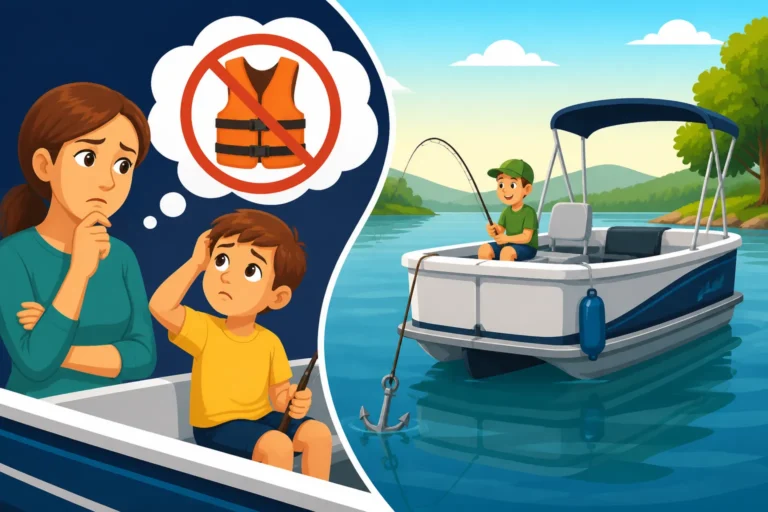
Regardless of whether your kayak needs to be registered, every single person on board a kayak in Tennessee must have a U.S. Coast Guard-approved life jacket (Personal Flotation Device or PFD) readily accessible. "Readily accessible" means not stowed in a dry bag buried under gear, but within immediate reach. And for children under 12 years old, the rule is even stricter: they must wear their life jacket at all times while the vessel is underway. This is not just a recommendation; it's the law, and it's there to save lives.
I always tell folks that a life jacket is the single most important piece of safety gear you can have. Even strong swimmers can get into trouble quickly if they're knocked unconscious or become disoriented in cold water. Modern life jackets designed specifically for kayaking are incredibly comfortable and don't hinder your paddling or fishing. You can find excellent options at outdoor retailers like Bass Pro Shops or even a quick search on Amazon for "kayak fishing PFD" will show you many highly-rated choices. Understanding these rules is critical, and Life Jacket Rules for Kayaks and Canoes in Tennessee goes into more detail, as does Life Jacket Rules for Kids Under 12 on Tennessee Boats.
Essential Safety Gear for Your Kayak
Beyond life jackets, there's a host of other gear that can drastically improve your safety and preparedness on the water. A sound-producing device, like a whistle, is legally required on all vessels and can be crucial for alerting other boaters to your presence, especially in fog or low light conditions. If you plan to be out from sunset to sunrise, or during periods of restricted visibility, your kayak must have proper navigation lights to be seen by other vessels.
Other smart additions include a paddle leash (because losing a paddle far from shore is a bad day), a small anchor to hold your position, and a waterproof dry bag to protect your phone, keys, and wallet. A basic first aid kit is also a no-brainer, because bumps and scrapes can happen anywhere. Carrying a bright light or headlamp, even during daytime trips, can be a lifesaver if you find yourself out longer than expected. For a comprehensive list, check out Kayak Fishing Gear Checklist for Tennessee Rivers or Essential Safety Gear Checklist Before a Tennessee Fishing Trip. These items aren't just for emergencies; they contribute to a stress-free and enjoyable outing.
Respecting Waterway Rules and Other Anglers
Finally, navigating Tennessee’s waters safely also involves common courtesy and adherence to general boating rules. Understand the rules of the road for vessels: who has the right-of-way, how to pass, and how to operate safely near larger boats. Kayaks are small and can be hard to spot, so always be vigilant and assume larger boats might not see you.
When you're out fishing, try to maintain a respectful distance from other anglers, especially those who were there first. No one likes a "crowder." Practice "Leave No Trace" principles by packing out everything you pack in, and dispose of fishing line properly. Being a good steward of our natural resources ensures that Tennessee's beautiful waterways remain pristine and enjoyable for everyone, for generations to come.
| Kayak Type | Primary Propulsion | Mechanical Propulsion Present? | Tennessee Registration Required? | Key Takeaway |
|---|---|---|---|---|
| Recreational Kayak | Paddle (human power) | No | No | Most common scenario; pure paddle power. |
| Fishing Kayak (basic) | Paddle (human power) | No | No | Often used for quieter, less motorized fishing. |
| Kayak with Trolling Motor | Paddle and electric motor | Yes | Yes | Even a small electric motor triggers registration. |
| Kayak with Gas Motor | Paddle and gas motor | Yes | Yes | Any gasoline engine requires full registration. |
| Canoe (basic) | Paddle (human power) | No | No | Same rules apply as pure paddle kayaks. |
| Canoe with Trolling Motor | Paddle and electric motor | Yes | Yes | If it has a motor, it needs to be registered. |
Disclaimer
This article is for general informational purposes only and does not constitute professional advice. Laws, prices and regulations vary by location and change over time. Consult a qualified professional for guidance on your specific situation.