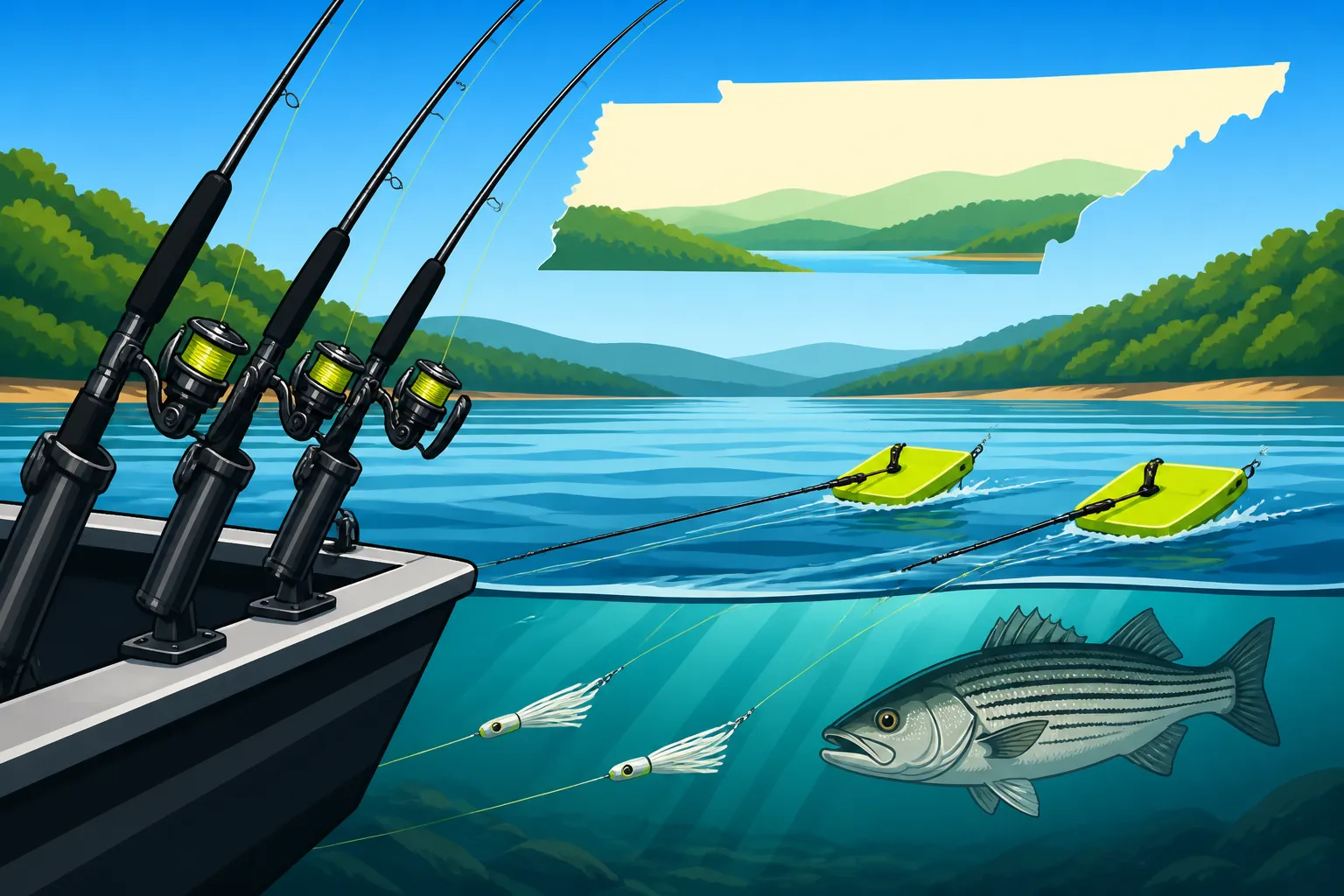
Rod Holder and Planer Board Setup for Reservoir Striper Trolling
It’s a truly frustrating experience when you're out on a beautiful Tennessee reservoir, targeting those mighty striped bass, only to have your lines get tangled or miss out on a prime trolling lane because your setup isn't quite right. We've all been there, watching another boat pull in fish while your spread feels disorganized and ineffective. This guide is going to walk you through the ins and outs of setting up your rod holders and planer boards specifically for successful striper trolling in our fantastic Tennessee waters, helping you cover more water, present your baits perfectly, and ultimately, put more fish in the boat.
Understanding the Essentials of Striper Trolling in Tennessee Reservoirs
Trolling for striped bass in Tennessee's vast reservoirs like Norris, Watts Bar, or Cherokee Lake is an incredibly effective technique, but it’s an art form that requires precision and the right gear. These powerful fish are often found schooling in open water, chasing baitfish, and a properly set up trolling spread can dramatically increase your chances of intercepting them.
Why Striper Trolling is So Effective
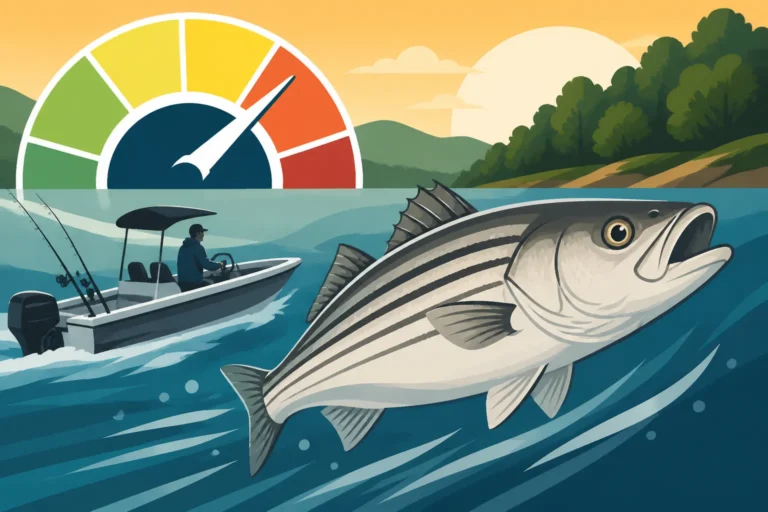
Striped bass, often called "stripers," are pelagic predators, meaning they spend much of their time in the open water column, hunting baitfish like shad. They're constantly on the move, and trolling allows you to systematically cover large areas of water, presenting your lures or live bait directly into their path. Think of it like a search-and-destroy mission; instead of waiting for the fish to come to you, you're taking your offerings to them. This method excels when stripers are spread out or when you’re trying to locate schools of fish. It also presents your baits in a very natural, horizontal swimming motion, mimicking injured baitfish, which is often irresistible to a hungry striper. Whether they’re cruising near the surface or holding deep over structure, a well-executed trolling spread can reach them. If you’re just getting started, understanding Tennessee Striped Bass Fishing Techniques is a great foundational step.
The Role of Rod Holders in a Trolling Spread
Imagine trying to hold multiple heavy-duty rods, each with a fighting striper on the other end, while also steering your boat and keeping an eye on your electronics. It's simply not feasible, and honestly, it’s not safe. This is where quality rod holders become indispensable. They are the backbone of any serious trolling operation. Rod holders allow you to securely deploy multiple lines, keeping your rods at optimal angles and distances from the boat, ensuring your baits are spread out effectively without tangling. More importantly, when a striper hits, it's often with a violent strike that can rip a rod right out of your hands. A sturdy rod holder absorbs that initial shock, keeping your expensive gear safe and allowing you to grab the rod and fight the fish. They ensure a consistent presentation, which is key for sustained success.
What are Planer Boards and Why Do You Need Them?
If you've ever tried trolling more than two or three lines directly behind your boat, you know the frustration of tangled lines, especially when making turns or when a fish hits. Planer boards are ingeniously simple devices that solve this problem by carrying your fishing lines out to the side of your boat, effectively widening your trolling spread. They act like small kites or sails, using the forward motion of your boat to pull your lines away from the prop wash and away from each other.
The primary benefit of using planer boards is dramatically increasing the width of the area you can cover with your lures. This is especially crucial in reservoirs where stripers might be scattered across a wide expanse or when you want to run baits through different parts of the water column simultaneously. Without them, you’re limited to a narrow path directly behind your boat. With planer boards, you can effectively present baits across a much broader "strike zone," increasing the odds of encountering a schooling striper. They also allow you to run shallow baits far away from the boat, preventing the boat itself from spooking wary fish. When you want to truly cover water and avoid the constant headache of tangled lines, planer boards are a game-changer.
Choosing and Installing the Right Rod Holders for Striper Trolling
Selecting the right rod holders isn't just about sticking a pole in a hole; it's about creating a functional, flexible, and robust system that can withstand the brutal power of a fighting striper. Different boats and fishing styles call for different types of holders, and understanding the options is the first step.
Types of Rod Holders for Reservoir Trolling
When it comes to rod holders, you’ve got a few main contenders, each with its own advantages and ideal applications:
- Flush Mount Rod Holders: These are often built directly into the gunwales of many boats. They offer a very clean, integrated look and are incredibly strong when installed correctly. However, their angle is fixed, meaning less flexibility in adjusting your rod tip height or spread. They're fantastic for rods directly off the stern or corners where you want a consistent, unchanging presentation.
- Rail Mount Rod Holders: If your boat has rails, these are a popular choice. They clamp directly onto the existing railing, offering some adjustability in position along the rail, and many models swivel and adjust for angle. They're generally easy to install and move, making them a good option for anglers who want flexibility. However, make sure your rails are sturdy enough to handle the stress of a striper strike.
- Clamp-On Rod Holders: Similar to rail mounts but designed to clamp onto other parts of the boat, like benches or transoms. These offer quick, non-permanent installation, which is great for smaller boats or those who don't want to drill holes. They might not be as robust as a flush mount or a heavy-duty rail mount, so choose wisely for heavy striper gear.
- Track Systems (e.g., Traxstech, Berts Custom Tackle): These are perhaps the most versatile for dedicated trollers. A track is permanently mounted to the gunwale, and various accessories, including rod holders, can be slid into and clamped anywhere along the track. This allows for unparalleled flexibility in adjusting your spread on the fly, adding or removing holders as needed, and customizing angles. While the initial investment might be higher, the adaptability is worth it for serious striper anglers. Brands like Scotty and Cannon also offer robust track-compatible options that you might find at Bass Pro Shops or online on Amazon.
- Tree/Rocket Launcher Rod Holders: These are specialized, multi-rod holders that often mount to a track or a pedestal, allowing you to run several rods vertically or at varied angles from a single point. They're excellent for maximizing the number of lines you can deploy in a tighter space, often used on larger boats or for specific trolling patterns.
The key is to match the strength of the holder to the power of the fish you're targeting. For Tennessee stripers, you need something robust.
Optimal Placement and Angle for Rod Holders
The placement and angle of your rod holders are critical for creating an efficient, tangle-free trolling spread. The goal is to maximize your coverage without crossing lines, even when turning the boat.
- Stern Holders: These are typically angled out and slightly down, allowing lures to run directly behind the boat. You might use two or four here, with the outermost ones angled more to the side. These are your foundational rods.
- Mid-Boat Holders: Placed further forward on the gunwales, these are usually angled out to the side more aggressively, often at a 45-degree angle or even wider, to create separation from the stern lines. These are ideal for running baits away from the boat without planer boards, or for lines that will feed into your planer board system.
- Bow Holders: Less common for direct lure deployment but can be used for very wide "long-line" presentations, particularly with planer boards, or for running shallow baits very far from the boat.
Varying the rod tip heights is another trick to avoid tangles. Have some rods pointing higher and others lower. This creates different entry points for your lines into the water, helping them separate vertically. For instance, rods near the transom can be angled lower to keep lures in the prop wash, while side-mounted rods can be higher to clear obstacles and allow for a wider spread. Consider your boat's layout and how you typically move around it when a fish is on. You want easy access to rods that get hit.
Securing Your Rod Holders: Installation Tips
Proper installation ensures your rod holders stay put, no matter how hard a striper pulls. This isn't the time to skimp on hardware or rush the job.
- Drilling and Sealing: For flush-mount or track systems, you'll be drilling into your boat. Use the correct drill bits for your material (fiberglass, aluminum, wood). Always measure twice, drill once! After drilling, it's crucial to seal the holes with marine-grade sealant (like 3M 4200 or 5200) to prevent water intrusion, which can lead to rot or delamination. This protects your boat’s integrity.
- Backing Plates: For through-bolted rod holders or track systems, using a backing plate (a piece of marine plywood, aluminum, or composite) on the underside of the mounting surface can significantly distribute the stress from a fighting fish, preventing cracks or pull-outs. This is especially important for heavy-duty striper fishing.
- Hardware: Always use stainless steel hardware (bolts, washers, nuts) to prevent corrosion in a marine environment. Lock washers and nylon lock nuts add extra security against vibrations loosening the connections.
- Test Strength: Before hitting the water, give your installed rod holders a good, strong pull to test their stability. Imagine a 20-pound striper hitting it at speed. Better to find a weak point at the dock than out on the lake. If you’re unsure, a professional boat shop can often handle complex installations.
Remember, a well-installed rod holder is a long-term investment in your fishing success and safety.
Selecting and Rigging Planer Boards for a Wide Trolling Spread
Planer boards are the wings of your trolling spread, allowing you to stretch your baits across a much broader path. Just like rod holders, there are different styles, each suited for particular types of fishing and boat setups.
Types of Planer Boards: Inline vs. Mast Systems
The two main categories of planer boards offer distinct advantages:
- Inline Planer Boards: These are individual boards that clip directly onto your fishing line, typically between your rod tip and your lure. They're often smaller, made of plastic or foam, and designed to pull a single line out to the side. Brands like Church Tackle (especially their TX-22 or Walleye Boards) and Offshore Tackle (OR12 Side Planer) are very popular.
- Pros: Simpler to deploy and retrieve, no complex mast system required, more portable, less expensive per board. Great for smaller boats or when you only want to run a few lines out to the side. You can buy these individually, often found at Bass Pro Shops.
- Cons: Each board is retrieved with its own fishing line, which can be a bit more work when fighting a fish (you have to deal with the board and the fish simultaneously). They are also limited in how many lines you can effectively run, usually one per board.
- Mast Planer Board Systems: These systems consist of a mast (a tall pole) mounted on the bow of your boat, from which a heavy main line extends out to a large planer board on each side. Your individual fishing lines are then clipped onto this main line with release clips, allowing the planer board to carry multiple lines. Brands like Big Jon and Riviera are well-known for their mast systems.
- Pros: Can handle many more lines (often 3-5 per side, or more), allowing for an incredibly wide spread. When a fish hits, the release clip detaches your fishing line from the main line, so you only fight the fish, not the board, which stays out there doing its job. Ideal for larger boats and dedicated multi-line trolling.
- Cons: More complex and expensive initial setup, requires permanent mast installation, takes up more space on the boat, can be challenging to deploy and retrieve in rough water.
For most Tennessee reservoir striper anglers running 3-6 lines, inline boards are a fantastic, accessible starting point. If you're running a larger boat and want to run 8-10 lines or more, a mast system is often the way to go.
Setting Up Your Planer Board System
Rigging your planer boards correctly is paramount for smooth operation and successful trolling.
-
Inline Boards:
- Attach to Line: Most inline boards have a front clip that attaches to your main fishing line. Some also have a rear clip or a pin that further secures the line.
- Release Settings: Ensure your release clip is set to hold your line firmly but will "trip" or release when a fish strikes or you tug hard. Many clips have adjustable tension. You don't want the board coming off too easily, but you definitely want it to release when a fish is on.
- Deployment: Let out your lure to the desired distance. Then, clip the planer board onto your line and slowly let it out to the side, maintaining boat speed. The board will pull your line away from the boat.
- Retrieval: When you get a strike, the board will typically trip or slide down your line. Reel in the fish, then retrieve the board. If no fish, simply reel in everything, hand-over-hand or by running the boat in a circle to bring the board closer.
-
Mast Systems:
- Mast Setup: The mast is typically mounted firmly to the bow. Main lines run from the top of the mast to the large planer boards, one on each side.
- Release Clips: These are special clips that slide onto the main line. Your fishing line is then clipped into the release clip. When a fish strikes, the clip releases your fishing line, allowing you to fight the fish directly.
- Deployment: Deploy your main planer boards first, letting them run out to the desired distance on the main lines. Then, let out your fishing lures to their target depths and distances. Clip each fishing line into a release clip on the main line, spacing them out, and slide the clip down the main line towards the planer board. The board will pull the main line, and all your fishing lines attached to it, out to the side.
- Retrieval: When a fish hits, the release clip detaches. Fight and land your fish. To retrieve all lines, you usually just reel in the main line, bringing the planer board and all attached, un-tripped fishing lines back to the boat.
For both systems, using quality braided main line on your fishing rods can make managing the boards and fighting fish much easier due to its low stretch and strength. Keep an eye on your lines and ensure they aren't crossing, especially when turning the boat.
Integrating Planer Boards with Your Rod Holder Setup
The magic happens when your rod holders and planer boards work in harmony. This allows you to create a truly comprehensive and efficient trolling spread.
- Rod Angles for Board Lines: For lines running off planer boards, you'll generally want your rods angled somewhat forward or straight out to the side, rather than directly back. This provides a straighter path for your line to the board and helps keep the rod tip clear. Some anglers will point rods almost horizontally out to the sides for maximum spread. The rod holders themselves should be sturdy enough to handle the constant tension from the planer boards pulling.
- Varying Depths and Distances: Use different lengths of line behind your planer boards, and different lure diving depths, to target various parts of the water column. You might run a shallow-diving jerkbait far out to the side, a deeper crankbait closer to the boat, and a downrigger line even deeper (if using one). This is where having adjustable rod holders and track systems really shines, allowing you to fine-tune angles.
- Staggering Your Spread: A common strategy is to stagger your lines:
- Innermost Lines: Short lines directly behind the boat, perhaps on downriggers or weighted lines.
- Mid-Distance Lines: Longer lines running off transom-mounted rods.
- Outermost Lines: Lines running furthest out to the side using planer boards.
This creates a "V" shape in the water, covering a wide swath and allowing you to present baits at varying depths and distances, increasing your chances of finding where the stripers are holding. Deep Water Techniques for Striped Bass often combine planer boards with other depth control methods for comprehensive coverage.
Managing multiple lines off planer boards can feel like conducting an orchestra at first, but with practice, it becomes second nature. It's a key component of effective How to Troll for Striped Bass.
| Planer Board Type | Deployment | Number of Lines | Cost | Complexity |
|---|---|---|---|---|
| Inline | Direct on line | 1 per board | Lower | Simpler |
| Mast System | Main line from mast | Multiple per side | Higher | More Complex |
Advanced Tips and Troubleshooting for Striper Trolling Success
Even with the best gear, trolling for stripers involves a constant dance with conditions and fish behavior. Knowing how to adapt and troubleshoot common issues will save you headaches and improve your catch rate.
Adjusting Your Spread for Different Conditions
Tennessee reservoirs are dynamic environments, and what works one day might not work the next. Smart anglers are constantly adjusting.
- Wind and Current: Strong wind or current can make managing planer boards challenging, pushing them in unpredictable ways. You might need to adjust your trolling speed, deploy fewer lines, or use heavier boards to maintain your spread. Sometimes, turning into a strong wind can help keep your boards tracking straight. Understanding How Wind Affects Where Fish Feed is important for any trolling operation.
- Fish Depth and Bait Location: Pay close attention to your fish finder. If you're seeing stripers at 30 feet, make sure some of your lures are running at that depth. If baitfish are deeper, adjust accordingly. Planer boards are excellent for covering the upper water column and the water column just off the sides, but you might need to incorporate lead core line, diving planers, or even downriggers for the deeper fish. For instance, Downrigger Basics for Striped Bass can be combined with planer board setups to cover the full water column.
- Trolling Speed: Stripers are often speed demons, but sometimes a slower presentation is key. Experiment with speeds from 1.5 to 3.5 mph. Your lures should be swimming naturally, not spinning erratically. Adjust your speed until your lure action looks perfect. Using a quality trolling motor, like some options from Minn Kota, can help you maintain precise speeds.
- Turning Techniques: When making turns, the inside lines will slow down and sink, while the outside lines will speed up and rise. This can often trigger strikes! However, sharp turns can also cause tangles. Make wide, sweeping turns to minimize tangles and keep your spread organized. Always watch your rod tips and board positions during a turn.
Common Trolling Problems and Solutions
No matter how experienced you are, you'll encounter snags. Here's how to tackle them:
- Tangled Lines: This is the most common frustration.
- Solution: First, ensure proper spacing and rod angles. Check lure action – a poorly swimming lure can spin and tangle. Vary your lure depths and distances to create separation. Make wider turns. If a tangle occurs, immediately stop or slow the boat, and reel in the affected lines carefully. It’s better to clear it quickly than to continue trolling with a messy spread.
- Fish Missing Baits / Light Strikes: Sometimes stripers swipe at lures without committing.
- Solution: Experiment with different lure sizes, colors, and actions. Check your hook sharpness. Sometimes a slight increase or decrease in trolling speed can make a huge difference in how the fish react. If you’re targeting deep fish, consider some of the Best Lures for Striped Bass in Deep Water specifically designed for those conditions.
- Planer Board Tracking Issues: Boards not running straight or dipping below the surface.
- Solution: Check for weeds or debris on the board itself or your line. Ensure the board is rigged correctly (some boards are left-hand or right-hand specific). Adjust your trolling speed; too fast or too slow can affect tracking. In heavy chop, some boards might struggle.
- Water Spooking Fish: If you're not getting bites on lines close to the boat, the boat itself might be spooking fish.
- Solution: Use planer boards to get lines far away from the boat. Use longer leaders, or switch to more natural-looking lures. For really wary fish, targeting them early or late in the day can help, or using stealthier Best Trolling Motors for Tennessee Bass Boats if you have one.
Safety Considerations and Best Practices
Trolling can be a busy operation, especially with multiple lines. Safety should always be your top priority.
- Visibility: Ensure your planer boards are clearly visible, especially in low light or fog. Some boards come with reflective tape or flags, or you can add them. Keep an eye out for other boaters, and make sure they can see your wide spread. Use navigation lights if you're fishing at dawn, dusk, or night.
- Communication: If you have crew on board, establish clear communication signals for when a fish hits, when to turn, or when to clear lines. This helps prevent chaos and tangles.
- Emergency Gear: Always have essential safety gear on board, including life jackets for everyone, a first-aid kit, and a marine radio. When out on large reservoirs, being able to communicate is crucial. Best Marine Radios for Tennessee Reservoir Fishing can provide peace of mind.
- Sharp Hooks and Lines: Keep your hooks razor sharp and regularly inspect your fishing lines for nicks or abrasions. A trophy striper can exploit any weakness.
- Tools: Carry a good pair of pliers, line cutters, and a hook remover. Dealing with a toothy striper or a deep-set hook requires the right tools to protect both you and the fish.
By mastering the setup of your rod holders and planer boards, and continuously adapting your techniques, you'll be well on your way to becoming a highly effective striper troller on Tennessee's incredible waters.
Disclaimer
This article is for general informational purposes only and does not constitute professional advice. Laws, prices and regulations vary by location and change over time. Consult a qualified professional for guidance on your specific situation.