How Wind Affects Where Fish Feed
Oh, the wind. It's the bane of many an angler's existence, isn't it? One minute the water's glassy, the next you're fighting your line, your boat, and your patience as gusts whip across the lake. But what if I told you that understanding how wind affects where fish feed isn't just about battling the elements, but actually unlocking some of Tennessee's best fishing opportunities? This guide is all about turning that frustration into a fantastic fishing advantage, helping you decode the wind's secrets to find those hungry fish.
How Wind Creates Current and Affects Water Temperature
It's easy to just see wind as a nuisance, something that makes casting difficult or sends your hat flying. But beneath the surface, the wind is a powerful force, constantly reshaping the underwater environment. It's not just moving your boat; it's creating currents, shifting baitfish, and even altering water temperatures, all of which have a direct impact on where our finned friends decide to grab a meal.
Surface Currents and Baitfish Movement
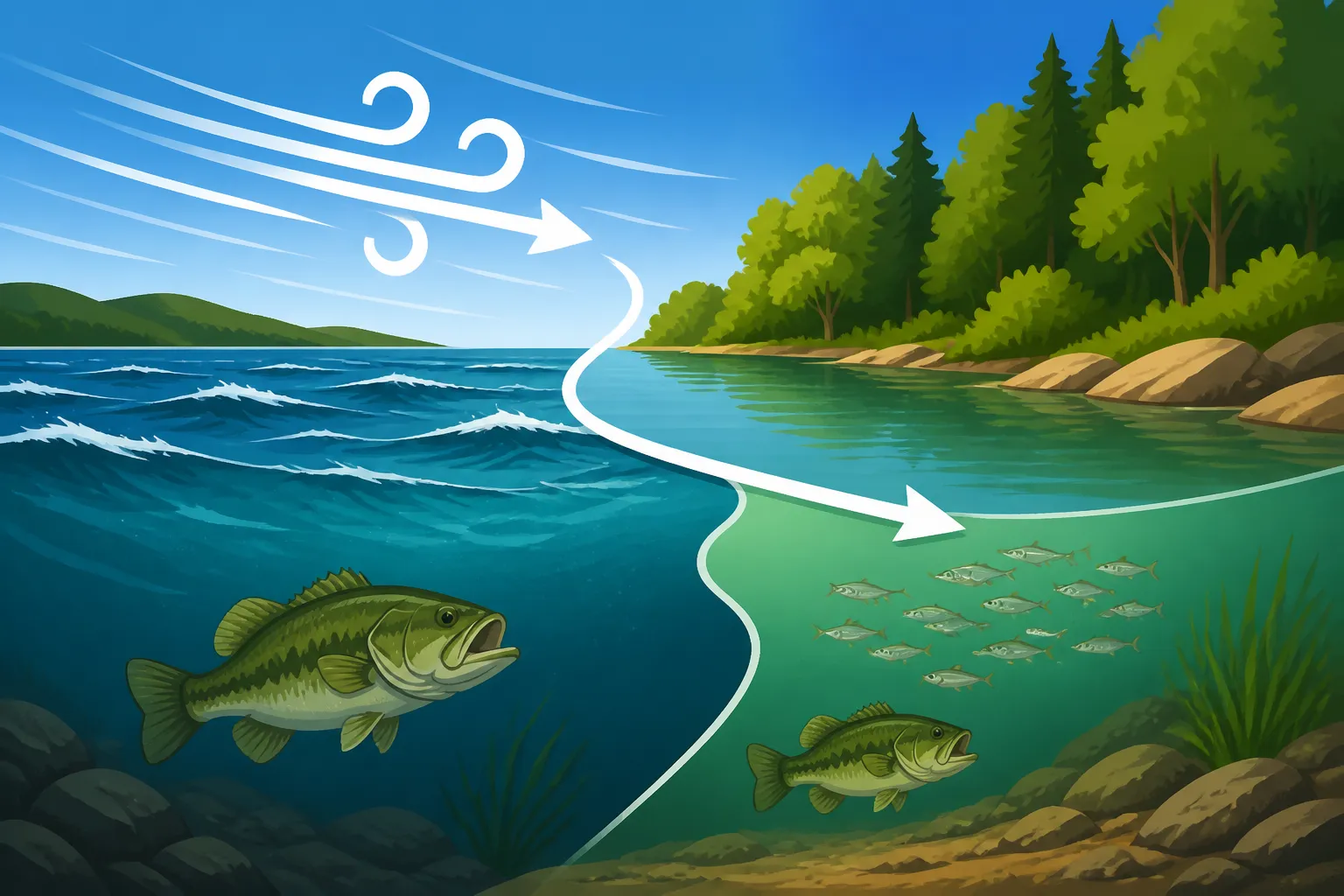
Imagine a strong breeze blowing consistently across a Tennessee lake like Percy Priest or Kentucky Lake. What happens? That wind pushes the surface water, creating a subtle, yet significant, current. This isn't the raging torrent of a river, but it's enough to stack up baitfish. Tiny shad, minnows, and other forage species aren't super strong swimmers, and they'll naturally get pushed by these wind-driven currents. They often find themselves concentrated along wind-blown banks, points, or the backs of coves where the wind "piles" them up.
Think of it like this: if you're a predator, why would you chase food scattered all over the place when the wind can deliver a buffet right to your doorstep? Bass, crappie, and even striped bass are incredibly opportunistic. They learn these patterns quickly, positioning themselves in ambush points where they can easily pick off disoriented or concentrated baitfish. When you see chop on the water, don't just see a challenge; see a natural funnel for bait, and by extension, for the game fish you're after. This is why paying attention to which way the wind is blowing is your first step in finding those active fish.
Water Mixing and Temperature Shifts
Beyond just moving bait, wind plays a huge role in mixing the water column, and this is especially important for understanding How Water Temperature Affects Fish Activity. Strong, sustained winds can break up stratification in the water, particularly in shallower areas or during certain seasons. In the spring, a warm wind blowing into a shallow cove can push warmer surface water there, making it an ideal spot for bass to move in for the pre-spawn. Conversely, a cold front with strong winds can rapidly cool these same shallow areas, sending fish scurrying to deeper, more stable temperatures.
In summer, deep lakes like Norris Lake can stratify into distinct temperature layers. A really strong wind might, over several days, mix the upper layers, potentially bringing cooler, oxygenated water up from slightly deeper zones. While this won't flip a whole lake, it can create more comfortable zones for fish closer to the surface than they might otherwise be. Even small temperature changes can trigger significant feeding migrations. Fish are ectothermic, meaning their body temperature mirrors their environment, so comfortable temperatures are directly linked to their metabolism and willingness to feed. This is particularly true for trout in Tennessee's tailwaters and mountain streams, where slight temperature fluctuations can dictate their activity levels.
Wind-Driven Feeding Lanes and Structure Fishing
The concept of "feeding lanes" is crucial, and wind is often the architect of the best ones. These aren't always visible, but they're pathways where fish naturally expect food to be delivered. Understanding how to identify and fish these lanes can dramatically increase your success, especially when targeting specific structures.
Wind-Blown Banks and Points
This is a classic windy-day pattern, and for good reason. When the wind is consistently blowing into a bank or a point, it's pushing everything with it: baitfish, plankton, insects, and even terrestrial bugs that fall into the water. The game fish know this. They'll set up along these wind-beaten shores, often slightly off the bank in the calmer, deeper water adjacent to the turbulent zone, or right in the turbulent zone itself if they're aggressive. The choppy water provides excellent camouflage for ambush predators like largemouth and smallmouth bass, allowing them to hide from their prey and from you.
On lakes across Tennessee, from Chickamauga Lake known for its bass to Watts Bar Lake, you'll often find that the wind-blown side of a main lake point or a long shoreline will be significantly more productive than the calm, protected side. Anglers frequently cast parallel to these banks, or into the wind, letting their lures drift naturally with the current created by the wind. Think about throwing a spinnerbait like the ones you might find on Amazon, or a crankbait, allowing the lure to tumble and twitch in the turbulent water, mimicking a disoriented baitfish. The key is to present your bait where the fish are expecting the food to come from.
Targeting Submerged Structure with Wind
Wind doesn't just affect shorelines; it influences how fish relate to submerged structures too. Underwater humps, brush piles, rock piles, and old roadbeds become even more potent fish magnets when wind interacts with them. If the wind is blowing across a submerged hump, it can create a "current break" on the downwind side. Just like a rock in a river creates a calm spot behind it, an underwater hump can offer a refuge from the current for smaller baitfish, making it an irresistible ambush point for larger predators.
For crappie fishing, this is particularly valuable. They love to hold tight to cover, and if that cover is also a current break in a wind-driven feeding lane, it's a double win. Similarly, catfish on big rivers like the Tennessee River or Cumberland River will often seek out the lee side of submerged log jams or deep holes where the wind-induced current creates a subtle eddy. Being able to visualize how the wind affects underwater topography and creates these current breaks is a huge advantage. Don't be afraid to drift over these structures, using your electronics to spot the fish and your knowledge of wind direction to predict their exact positioning.
Reading the Wind for Different Fish Species
Just as different fish species have distinct feeding habits and preferred habitats, they also react differently to windy conditions. What might be ideal for one species could send another hiding. Learning these nuances is key to knowing which fish to target when the breeze picks up.
Bass Behavior in Windy Conditions
Bass, particularly largemouth and smallmouth, often become more aggressive in windy conditions. The chop on the water's surface breaks up light penetration, reducing visibility and making it harder for their prey to spot them. It also creates noise and vibration, which can help mask an approaching predator. As mentioned, wind concentrates baitfish, and bass will follow that buffet. You'll frequently find them relating to wind-blown banks, points, and even submerged structures where bait is being pushed.
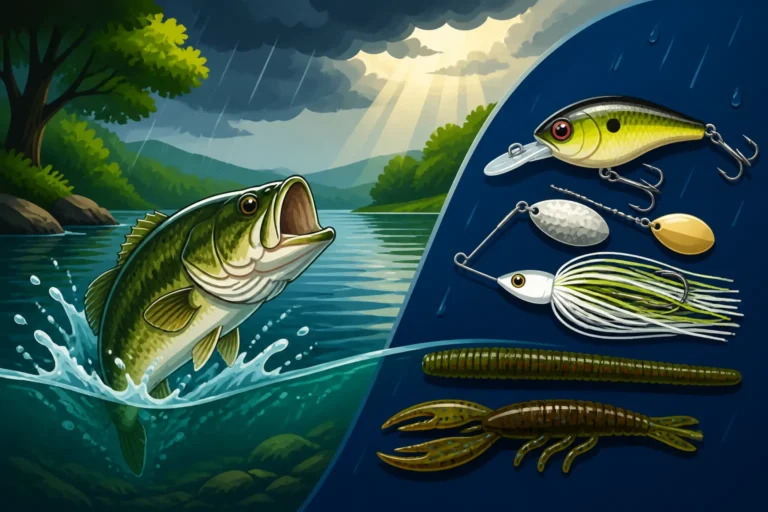
For largemouth bass, look for stained water and cover on wind-blown banks. They love to ambush from brush piles, docks, or submerged timber. Spinnerbaits, chatterbaits, and shallow-diving crankbaits are fantastic choices, especially in brighter, more visible colors since the water might be a bit murkier. Smallmouth bass, Tennessee's official state fish and a true fighter, often prefer rocky areas and main lake points. They'll patrol the wind-swept sides of these structures, looking for crayfish and baitfish dislodged by the chop. Tube jigs, jerkbaits, and deep-diving crankbaits can be incredibly effective. Don't be shy about casting into the wind; it’s often where the fish are looking. For more on their seasonal patterns, check out Tennessee Bass Fishing Seasons and Patterns.
Crappie and Panfish in Wind
Crappie and other panfish like bluegill can be a bit more finicky with the wind. While they appreciate the baitfish concentration, very strong winds can make it hard for them to hold steady and feed. They generally prefer milder wind conditions where bait is pushed but the water isn't too turbulent. In moderate wind, crappie will often move to the downwind side of cover, like brush piles or submerged trees, where they can still pick off passing bait without fighting a strong current.
However, a light, consistent breeze can be excellent. It ripples the surface, giving crappie a sense of security to move into shallower water or away from denser cover. Jigging around brush piles or vertical fishing with live minnows or small jigs on a slip bobber can be very effective in these conditions. If the wind is truly howling, crappie might retreat to deeper, more protected pockets or the leeward side of larger structures, such as a large dock or a bluff wall that breaks the wind. Don't forget, Crappie Limits Under Tennessee Fishing Rules are generous, so when you find them, you can really fill your cooler!
Catfish and Trout Responses to Wind
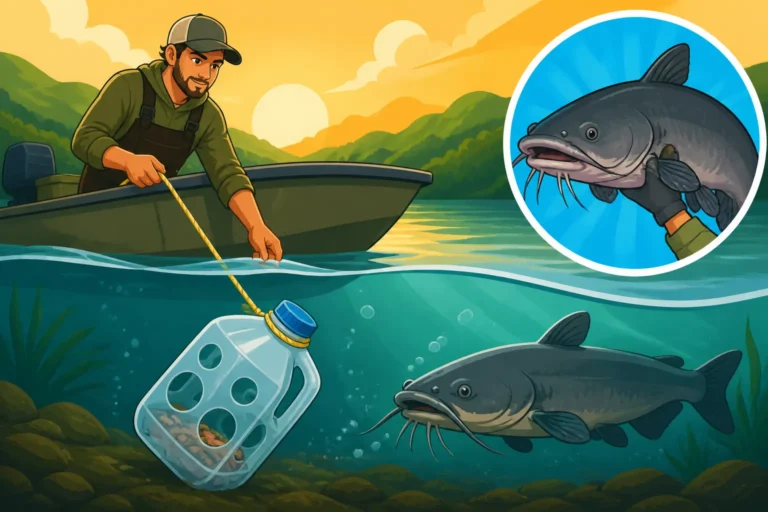
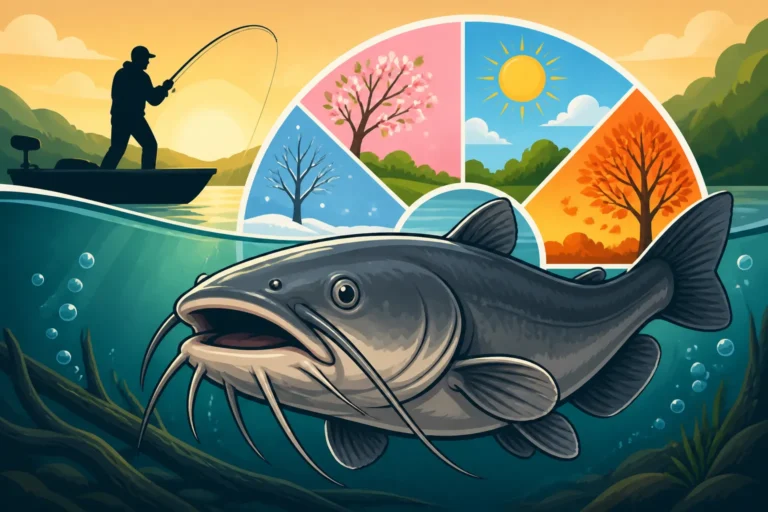
Catfish, especially channel and blue catfish, are often less affected by surface wind and more by the currents it creates. In lakes and reservoirs, strong winds can push warm surface water to one end, which can sometimes attract catfish to those warmer areas, especially in cooler months. On rivers, wind pushing against the current can create interesting eddies and slack water pockets where catfish will hold, waiting for food to be washed into their zone. Best Bait for Channel Catfish Fishing often involves smelly options that disperse well in these currents. They are bottom dwellers and very hardy, so they're often less bothered by surface chop than other species.
Trout, particularly in smaller streams and rivers like those in the Great Smoky Mountains or the Caney Fork River, are primarily influenced by water temperature and oxygen levels. Wind over a stream can actually help oxygenate the water slightly, and if it dislodges insects from streamside vegetation, it can create a feeding frenzy. However, extremely cold winds can drop water temperatures quickly, especially in shallow sections, making trout less active. In these situations, trout will often move to deeper pools or slower runs where temperatures are more stable. Fly anglers might find that fishing nymph patterns deeper in the water column is more effective than dry flies during very windy, cold conditions. Tennessee Trout Fishing Season Explained delves into the nuances of fishing for these beautiful fish throughout the year.
Adjusting Your Approach: Techniques and Lures for Windy Conditions
Facing a windy day doesn't mean canceling your fishing trip. It means adapting. Successful anglers know that modifying their techniques, lure choices, and boat or bank positioning can turn a challenging day into a productive one.
Bait and Lure Selection for Wind
When the wind is blowing, your lure choice needs to account for a few things: castability, visibility, and presentation.
Castability: You want lures that are dense and aerodynamic enough to cast accurately into or across the wind. Lighter lures, like weightless worms or small jigs, can be a nightmare to cast in a breeze. Opt for heavier options.
- Spinnerbaits and Chatterbaits: These are fantastic in windy conditions. Their weight allows for good casting, and the vibration and flash they create are easily detected by fish in choppy, stained water. Look for models with larger blades for maximum thump.
- Crankbaits: Medium to deep-diving crankbaits are also excellent. Their solid body makes them cast well, and they can be retrieved quickly or slowly to match fish activity. The erratic action created by the chop only makes them look more natural.
- Jigs and Plastics (weighted): Heavier jig heads on soft plastics, like creature baits or worms, are crucial for getting down to fish holding tight to structure in wind. A Texas rig or a Carolina rig with a heavier sinker can help you maintain bottom contact and feel bites. You can find a vast array of these on Amazon.
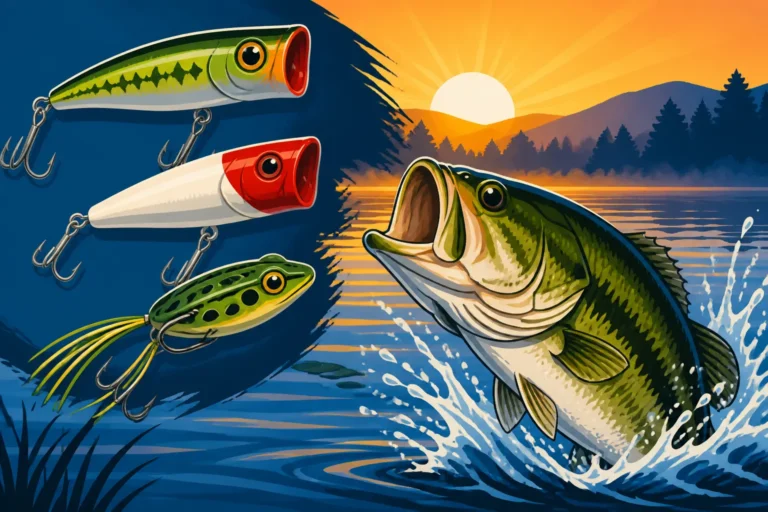
- Topwater (specific conditions): While many shy away from topwater in wind, a moderate chop can actually make some topwater lures, like prop baits or poppers, even more effective by adding natural, erratic movement and breaking up their silhouette. Just avoid extreme wind.
Visibility and Vibration: In choppy water, fish rely more on lateral line vibrations and darker silhouettes. Lures that create a lot of vibration (chatterbaits, big-bladed spinnerbaits) or have high-contrast colors (chartreuse, white, black/blue) can stand out better in the turbulent water. For clearer waters, natural baitfish patterns still work, but focus on action. How to Fish a Spinnerbait for Bass offers more detailed strategies for this versatile lure.
Boat Control and Positioning
This is where many anglers struggle in the wind. Maintaining boat position is paramount to effective fishing.
- Drifting: Often, the best strategy in moderate wind is to embrace the drift. Position your boat upwind of the area you want to fish (a wind-blown point, a large flat, a humped-up area) and let the wind push you over it. Use your trolling motor minimally to slow the drift or steer around obstacles, but let the wind do most of the work. This presents your bait naturally with the current. This is a common strategy for targeting crappie or even bass on many of Tennessee's larger reservoirs like Kentucky Lake.
- Spot-Lock/Anchoring: If you have a trolling motor with GPS spot-lock, this is your best friend in the wind. It allows you to hold your position precisely, casting to specific targets without constantly fighting the elements. For those without spot-lock, a traditional anchor or two (one from the bow, one from the stern) can be used to hold your boat steady, especially when focusing on a small, productive area like a brush pile. Just make sure your anchor is suitable for the bottom type and strong enough to hold. Read up on Boat Fishing Tips for Beginners for more on managing your vessel.
- Fishing the "Lee Side": Sometimes the wind is simply too strong to fish effectively on the wind-blown side. In these cases, move to the protected (lee) side of an island, a bluff, or a large main lake point. While the primary feeding lanes might be on the wind-blown side, aggressive fish that move away from the chaos, or those seeking refuge, will often congregate in these calmer areas. This can be particularly true for more sensitive species.
Bank Fishing Strategies in the Wind
Even if you're stuck on shore, windy days don't have to mean no fishing. With a few adjustments, bank anglers can still find success.
- Seek Out Protected Areas: Just like boat anglers, look for the lee side of obstacles. A large stand of trees, a building, a marina, or even a deep cut in the shoreline can offer a reprieve from direct wind. These calmer pockets can still concentrate baitfish that are trying to escape the turbulence.
- Cast with the Wind: If possible, position yourself so you can cast with the wind. This will add distance to your casts and make it easier to present lighter lures. If you must cast into the wind, use heavier, more aerodynamic lures as discussed above.
- Focus on Wind-Blown Banks (from the bank): If the wind is blowing directly onto the bank you're on, this can be a prime feeding zone. The wave action can dislodge insects and push baitfish closer to shore. Fish parallel to the bank or cast out and retrieve slowly, allowing the waves to impart additional action on your lure. Remember to keep a close eye on your line for subtle bites, as the chop can make them harder to detect.
- Gear Considerations: A longer rod can help with casting distance and control in windy conditions. Consider slightly heavier line to minimize wind knot tangles. And seriously, invest in a good cap keeper or a hat that cinches down, or you'll be buying a new one on Amazon! For more tips, check out Best Gear for Bank Fishing in Tennessee.
Here's a quick reference table to help visualize how wind speed can influence your approach:
| Wind Speed Description | Angler Experience | Fish Behavior Impact | Recommended Angler Strategy | Lure Considerations |
|---|---|---|---|---|
| Light Breeze (0-5 mph) | Beginner-Expert | Subtle surface ripple, slight bait movement. Fish might be shallow, cruising. | Fish calm, protected areas or light wind banks. Focus on precise presentations. | Small jigs, weightless worms, finesse plastics, topwater. |
| Moderate Wind (5-15 mph) | Intermediate-Expert | Creates current, pushes baitfish. Fish often more aggressive, seeking ambush. | Target wind-blown banks/points, use controlled drifts. Focus on cover. | Spinnerbaits, crankbaits, heavier jigs, chatterbaits. |
| Strong Wind (15-25 mph) | Experienced | Significant chop, strong currents, challenging boat control. Fish may retreat or hold tight. | Focus on deep-water structures, protected coves, or the immediate lee side of heavy cover. Use heavy lures. | Heavy jigs, deep-diving crankbaits, Carolina rigs. Focus on bottom contact. |
| Very Strong Wind (25+ mph) | Expert / Avoid | Dangerous conditions for small boats. Fish likely seeking deepest, calmest refuge. | Consider postponing. If fishing, stick to large, protected bays or very deep, sheltered main lake areas. | Very heavy jigs, live bait on the bottom. Safety first! |
Disclaimer
This article is for general informational purposes only and does not constitute professional advice. Laws, prices and regulations vary by location and change over time. Consult a qualified professional for guidance on your specific situation.