How to Fish a Spinnerbait for Bass
If you've spent any time on the water in Tennessee chasing bass, you know that sometimes they just seem to have lockjaw, ignoring every fancy lure you throw their way. It's incredibly frustrating to see potential fish on your electronics or know they're in a spot, but they just won't commit. This guide is all about one of the most consistently effective baits for triggering those stubborn strikes: the spinnerbait. We’re going to break down everything you need to know, from selecting the right one to mastering your retrieve, so you can confidently tie one on and start catching more Tennessee bass.
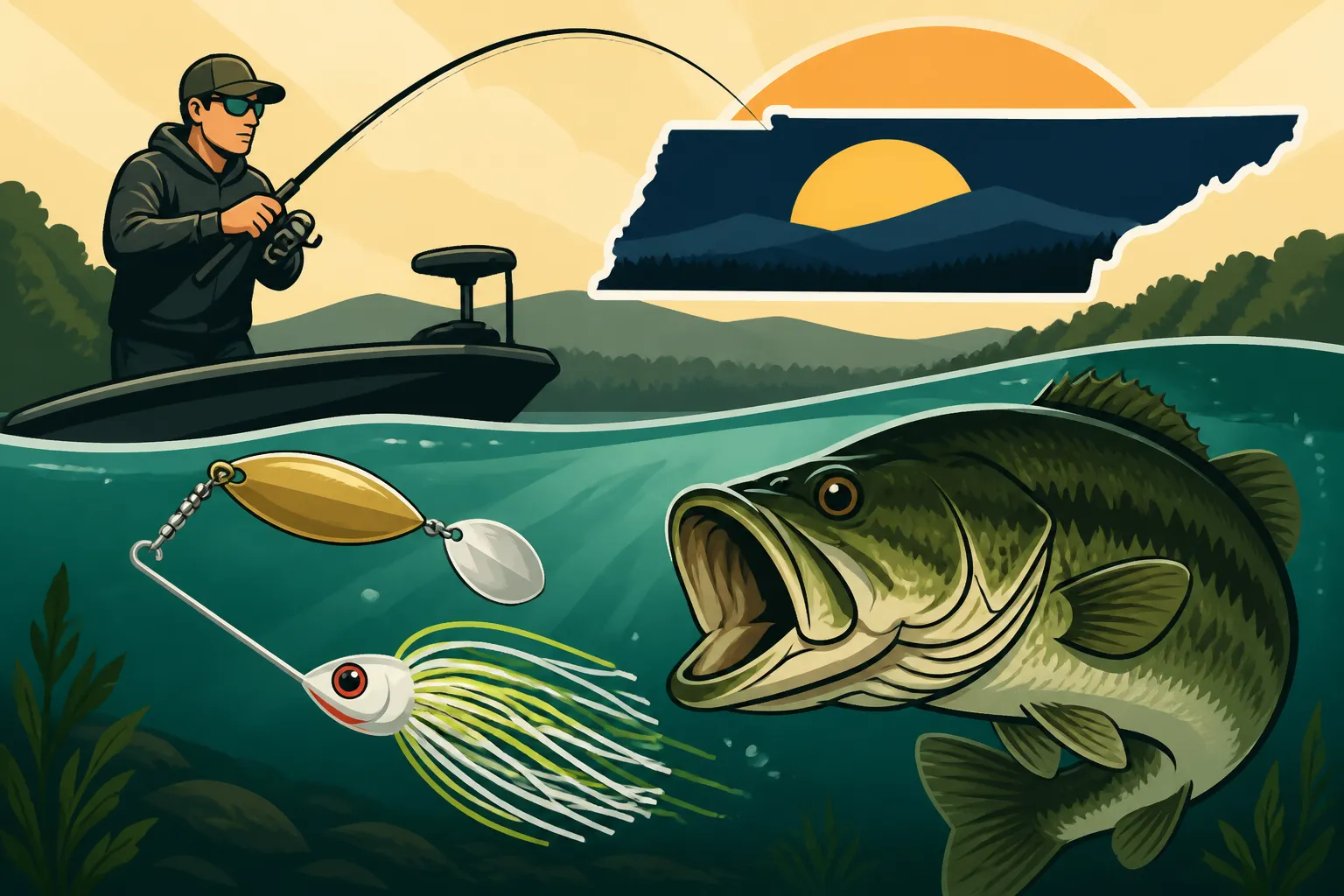
Understanding the Spinnerbait: Anatomy and Appeal
The spinnerbait is a true classic in the bass fishing world, and for good reason. It’s incredibly versatile and effective in a wide range of conditions, often performing when other lures fall flat. But what exactly is it about this odd-looking contraption that bass find so irresistible?
What Makes a Spinnerbait So Effective?
At its core, a spinnerbait is designed to mimic a fleeing or injured baitfish, but it does so in a unique, multi-sensory way that few other lures can replicate. First, there's the visual flash created by its spinning blades, which can draw attention from a distance, especially in stained or murky water. This bright, shimmering effect can look exactly like a small school of minnows darting through the water, or a single baitfish flashing its sides. Bass, being opportunistic predators, are naturally drawn to this movement and light.
Beyond the visual, spinnerbaits create significant vibration in the water. Those spinning blades displace water, sending out pulsations that bass can detect with their lateral lines, even in low light or turbid conditions. This "thump" helps bass pinpoint the lure, acting as an additional trigger that can convince them to strike. Think of it like a sonar ping for the fish, guiding them directly to your offering. The combination of flash and vibration is a powerful one, making the spinnerbait a search bait that can call fish from surprisingly far away. Plus, the overall profile of the bait, with its skirt trailing behind the blades, often resembles a larger baitfish or even a crawfish, adding to its allure.
Key Components: Blades, Skirt, and Head
To really understand how to fish a spinnerbait, you need to know its parts and how each influences its action and appeal. There are three main components: the blades, the skirt, and the head/frame.
-
Blades: These are the heart of the spinnerbait's action. You’ll typically find three main types:
- Colorado Blades: These are round and cupped, designed for maximum vibration and lift. They spin easily at slow speeds, making them excellent for murky water, low light conditions, or when you need to slow roll the bait near the bottom. The strong thump they create is a huge draw for bass relying on their lateral line.
- Willowleaf Blades: Long, narrow, and streamlined, willowleaf blades produce maximum flash and less vibration. They're perfect for clear water, high light, or when you want a faster retrieve that cuts through the water with minimal resistance. Their shape also makes them less prone to snagging grass.
- Indiana Blades: A hybrid between Colorado and willowleaf, Indiana blades offer a good balance of flash and vibration. They're a versatile choice when you're not sure what the bass want or in moderate conditions.
Many spinnerbaits feature a combination of these blades, like a smaller Colorado ahead of a larger willowleaf. This setup gives you both vibration and flash, a popular choice for all-around effectiveness. The size and color of the blades also matter; larger blades create more thump, while gold blades are often favored in stained water and silver in clear water.
-
Skirt: The skirt trails behind the head and blades, adding bulk, color, and a lifelike pulsating action. Skirts are usually made of silicone or living rubber, which flair out and contract as the bait moves through the water, mimicking the fins and tail of a baitfish or the claws of a crawfish. Skirt color is crucial for matching local forage or water conditions. Natural colors like white, chartreuse, shad patterns, or greens and browns work well. In darker water, brighter colors can increase visibility, while in clear water, more subtle, natural hues are often better. You can also customize skirts, adding strands of flashabou for extra shimmer.
-
Head and Frame: The head provides weight and profile, often shaped like a fish head to enhance the baitfish imitation. The wire frame connects the line tie, the blades, and the hook. The stiffness and thickness of the wire affect the bait's durability and how much vibration is transferred. A good quality, stiff wire frame helps transmit blade vibration directly to the hook, which bass can detect. The hook itself is usually a single, stout hook designed to handle powerful bass strikes, and it’s typically well-protected by the wire frame and skirt, making spinnerbaits remarkably weedless.
| Blade Type | Shape | Primary Action | Ideal Conditions | Key Benefit |
|---|---|---|---|---|
| Colorado | Round/Cupped | Max Vibration/Lift | Murky, Low Light | Strong "Thump" calls fish from a distance |
| Willowleaf | Long/Narrow | Max Flash | Clear, High Light | Cuts water easily, less snagging in grass |
| Indiana | Oval/Hybrid | Balanced | Moderate | Versatile, good all-around performance |
Choosing the Right Spinnerbait for Tennessee Bass
Selecting the right spinnerbait isn't just about grabbing the first one you see. It's about making informed choices based on the conditions you're fishing and the bass's mood.
Matching Water Conditions and Forage
This is where your knowledge of the local environment really pays off. Think about the clarity of the water you're fishing in Tennessee.
- Clear Water: For crystal-clear lakes like Norris Lake, you'll want spinnerbaits with plenty of flash and more subtle colors. Think silver willowleaf blades or combinations, and skirts in natural shad, shiner, or bluegill patterns. These mimic the prey bass see every day. Lighter wire frames can also give a more natural, subtle presentation.
- Stained or Murky Water: In muddier waters, such as parts of the Tennessee River after heavy rain, vibration becomes key. Colorado blades, especially double Colorado setups, are fantastic here because they push a lot of water. Gold blades tend to be more visible in stained water than silver, and brighter skirt colors like chartreuse, white, or a chartreuse/white mix will stand out more. Bass rely heavily on their lateral line in these conditions, so a strong thump is paramount.
- Light Conditions: On bright, sunny days, silver or chrome blades can create intense flashes that attract fish. On cloudy days or during dawn and dusk, gold blades often perform better, offering a softer, more visible glimmer. Low-light conditions also favor blades that spin easily and create more vibration.
Beyond clarity and light, consider the local forage. If bass are feeding on shad, a white or silver spinnerbait is a good bet. If bluegill are abundant, a green pumpkin or sunfish-patterned skirt might be more effective. If you’re targeting smallmouth bass in rocky rivers, a crawfish-colored skirt with copper or bronze blades could be deadly. Observing what baitfish are active in the area is one of the best ways to narrow down your choices.
Essential Spinnerbait Sizes and Weights
The weight and size of your spinnerbait directly impact how deep it runs and how fast you can retrieve it. You'll want to carry a range to cover different scenarios.
- 1/4 to 3/8 ounce: These are your go-to sizes for shallow water, fishing around docks, or working through sparse grass. They're also excellent for smaller bass or when fish are hitting smaller baits. They have a more subtle profile and fall slower, which can be crucial when bass are hesitant. These lighter weights are also great for when you want to "wake" the spinnerbait just under the surface, creating a subtle disturbance.
- 1/2 to 3/4 ounce: The workhorses of spinnerbait fishing. These heavier baits cast further, run deeper, and are ideal for covering larger areas, especially in open water or along creek channels. They allow you to maintain contact with the bottom in moderate depths or retrieve at a faster clip without the bait blowing out. If you're fishing a deep reservoir like Watts Bar Lake, these sizes are perfect for targeting bass holding on ledges or submerged points.
- 1 ounce and up: When you need to get down deep quickly, fight strong currents, or target monster bass in heavy cover, these heavier spinnerbaits are essential. They're less common for general use but shine in specific situations, like power fishing through deep brush piles or during Winter Bass Fishing Techniques where fish are holding on deeper structure.
Having a good selection allows you to adapt to the depth bass are holding, the strength of the current, and how aggressive they are. Sometimes just bumping up or down a size can be the difference between a slow day and a successful outing. You can find a vast array of these in different sizes and blade configurations on platforms like Amazon, making it easy to stock up on options.
Master the Retrieve: Techniques for Success
The spinnerbait isn't a "cast and reel" kind of lure, at least not if you want to maximize your catches. The magic often happens in how you work the bait back to you.
The Standard Slow Roll and Variations
The slow roll is perhaps the most fundamental and consistently effective spinnerbait retrieve. It involves casting your spinnerbait out and retrieving it just fast enough to keep the blades turning and the bait barely off the bottom, or just above the tops of submerged grass. The key is to keep it slow and steady, allowing the bait's natural flash and vibration to do its work. This retrieve is deadly when bass are sluggish, in cold water, or when they're hugging tight to structure.
But don't be afraid to add variations!
- Pauses: Every now and then, let the bait fall for a second or two. This momentary drop can trigger a reaction strike from following bass, mimicking an injured baitfish. Then, resume your retrieve.
- Twitches: A subtle twitch of your rod tip can cause the spinnerbait to dart or flash erratically, adding another layer of realism. This is particularly effective when fishing around cover.
- Speed Changes: Vary your retrieve speed. Go from slow to slightly faster, then back to slow. The unpredictable action can often entice a strike when a consistent retrieve is ignored. This is especially useful when bass are feeding actively but aren't committing to a straight retrieve.
A common scenario where the slow roll shines is when bass are holding on deep ledges or drop-offs. You might cast parallel to a contour line, letting the bait sink and then slowly reeling it back, making sure to keep it ticking the bottom or the structure. This is a primary tactic during How to Catch Bass in Fall as bass start to follow baitfish into deeper pockets.
Burning and Blading: Aggressive Presentations
Sometimes, bass want a faster, more aggressive presentation, especially when they're highly active or reacting to a sudden disturbance.
- Burning: This technique involves retrieving the spinnerbait at a very fast pace, often just under the surface or high in the water column. The blades will be a blur, creating a frantic, fleeing baitfish impression. This is fantastic for covering a lot of water quickly, particularly when searching for active fish in open water or over submerged grass beds. Bass will often chase and swipe at a burned spinnerbait, and the strike can be explosive. This is a great choice during warmer months when bass are actively chasing prey near the surface or suspended.
- Blading (or Stroking): This is a more vertical presentation. Cast the spinnerbait out, let it sink to the bottom, then snap your rod tip up sharply, causing the bait to shoot upward. Immediately let it fall back on a slack line, watching for any line movement that indicates a strike. This "lift and drop" mimics an injured baitfish struggling or a crawfish trying to escape. It's especially effective when fish are tight to the bottom or in deep, clear water. This technique can be very productive in situations where bass are relating to specific structure points rather than roaming.
Bumping Cover and Deflections
One of the spinnerbait's greatest strengths is its weedless design. The wire arm protects the hook, allowing it to be fished effectively through various types of cover that would snag other lures.
- Wood: Cast your spinnerbait past laydowns, submerged trees, or dock pilings, and then retrieve it so it bumps directly into the structure. When the bait hits the wood, it often deflects or momentarily stops, which can trigger a reaction strike from a bass hiding nearby. This sudden, unpredictable movement often convinces a hesitant fish to bite.
- Rocks: The same principle applies to rocks and riprap. Let your spinnerbait tick off boulders or rock piles. The deflection simulates a baitfish ricocheting off an obstacle, creating an easy target for a waiting bass. This is particularly effective for smallmouth bass, which often inhabit rocky areas.
- Grass: Spinnerbaits excel at coming through grass. Use a retrieve that allows the blades to just tick the tops of hydrilla or milfoil. When you feel grass on the blades, give a sharp rip of the rod to clear it. This ripping action often creates a sudden burst of speed and vibration, which is a prime strike trigger. If you're fishing a lake like Chickamauga Lake, known for its extensive grass beds, this technique will be invaluable for finding those lurking largemouths. Many anglers will opt for a willowleaf blade in grass to minimize snagging.
The key to all these techniques is to use the cover to your advantage. Don't be afraid to make contact; that's often when the magic happens. Bass are ambush predators, and these sudden changes in action around cover are exactly what they're looking for.
Gear Up: Rods, Reels, and Line for Spinnerbait Fishing
Having the right equipment can make a significant difference in how effectively you fish a spinnerbait and how many fish you land.
Selecting the Ideal Rod and Reel Combo
- Rods: For spinnerbait fishing, a medium-heavy power casting rod is generally considered ideal. Look for a rod with a fast to moderate-fast action, meaning the rod bends mostly in the top third or half. This combination provides the backbone needed to cast heavier spinnerbaits, drive the hook home, and muscle bass out of cover, while the moderate-fast action offers enough tip flexibility to absorb strikes and keep fish pinned without tearing the hook out. A rod length between 6'8" and 7'6" is versatile for most situations, with longer rods providing better casting distance and leverage, and shorter rods offering more precision for tighter spots. Many popular rod manufacturers, like St. Croix or Fenwick, offer excellent spinnerbait-specific rods. If you're looking for a good all-around option, consider something like the Best Rods for Largemouth Bass.
- Reels: A baitcasting reel with a gear ratio between 6.3:1 and 7.1:1 is a solid choice. A 6.3:1 ratio is excellent for slower retrieves like the slow roll, allowing you to control the bait's speed and feel the blades turning. A 7.1:1 ratio gives you more speed to burn baits, quickly pick up slack, and keep up with fast-running fish, or to execute those quick rips through grass. A smooth drag system is essential for battling larger bass, particularly the trophy fish found in Tennessee's waters. When considering a new reel, you might look into Best Baitcasting Reels for Bass Anglers.
Line Choices: Mono, Fluoro, or Braid?
Your choice of fishing line has a direct impact on the feel, action, and durability of your spinnerbait setup.
- Monofilament (Mono): This is a classic choice for spinnerbaits. Its natural stretch acts as a shock absorber, which can prevent hooks from tearing out of a bass's mouth, especially on aggressive strikes. It's also very forgiving for beginners. Mono floats, which can be beneficial if you're trying to keep your spinnerbait higher in the water column or if you're waking it. A common choice is 15-20 lb test.
- Fluorocarbon (Fluoro): Many pros swear by fluorocarbon for spinnerbaits. Its low stretch offers increased sensitivity, allowing you to feel every blade turn and subtle tap from a fish. Fluoro is also nearly invisible underwater, a huge advantage in clear water conditions. It sinks, which helps your spinnerbait get deeper faster and stay at a consistent depth. However, its low stretch means less forgiveness, so a good rod with a moderate action is key. 15-20 lb test is standard.
- Braided Line (Braid): Braid offers incredible strength, sensitivity, and no stretch, making it excellent for fishing in heavy cover where you need to muscle fish out. If you're constantly ripping your spinnerbait through thick grass or wood, braid can be invaluable. However, its visibility can be an issue in clear water, and its lack of stretch can sometimes lead to hooks tearing out. Many anglers using braid will tie a fluorocarbon leader (2-3 feet) to address visibility concerns. A 30-50 lb test braid is common when using it for spinnerbaits.
Ultimately, the best line choice often comes down to personal preference and the specific conditions you're fishing. Experiment to see what feels best for you and your style of spinnerbait fishing.
Spinnerbait Fishing Through Tennessee's Seasons
One of the truly great things about spinnerbaits is their effectiveness year-round. While the general principle remains the same, your approach will definitely change with the seasons here in Tennessee.
Spring: Pre-Spawn and Spawn Tactics
Spring is prime time for spinnerbaits in Tennessee. As water temperatures rise, bass move from their deeper wintering holes into shallower areas to stage for the spawn.
- Pre-Spawn: During this period, bass are actively feeding and bulking up. Target transition areas where deep water meets shallow flats, points, and creek channels. A slow-rolled spinnerbait with a combination of Colorado and willowleaf blades can be deadly here. Fan-cast to cover as much water as possible. Bass will often hit a spinnerbait hard as they cruise for easy meals. This is when you'll find them around early grass beds or rocky banks. For more detailed insights, check out How to Fish for Bass in Spring.
- Spawn: Once bass move onto beds, they become highly territorial. While not a typical bedding bait, a spinnerbait can still trigger aggressive reaction strikes if retrieved quickly past a bed. The flashing blades can irritate a guarding bass, causing it to attack. However, focus more on the pre-spawn staging areas or post-spawn recuperation zones for consistent action. Understanding Bass Spawn Timing in Tennessee Lakes will give you a major advantage. You might also consider using Best Lures for Pre-Spawn Bass Fishing in conjunction with your spinnerbait approach.
Summer: Deep Water and Night Fishing
Summer in Tennessee brings heat, which often drives bass deeper during the day.
- Deep Water: During the hottest parts of the day, bass will retreat to cooler, deeper water, often suspending over structure like ledges, humps, or main lake points. Use heavier 1/2 oz to 3/4 oz spinnerbaits with willowleaf blades to get down faster. A slow, steady retrieve along these deep contours can be effective. Consider fishing near thermoclines if you can locate them.
- Morning and Evening: In the early morning and late evening, bass might move shallower to feed. Burning a spinnerbait along grass lines, over submerged stumps, or around dock pilings can be very effective as bass ambush unsuspecting baitfish.
- Night Fishing: Don't overlook night fishing in the summer! Bass, especially big ones, often become much more active after dark, feeding heavily on open water baitfish. Use larger, single Colorado blade spinnerbaits in dark colors (black, blue, purple) that produce maximum vibration. Retrieve them slowly, often just below the surface, allowing the strong thump to call fish in. Night fishing can be incredibly rewarding, especially on lakes with significant pressure during the day. If you're curious about where to try this, look into Night Fishing Spots on Kentucky Lake, Tennessee. Remember that Where Do Bass Go in Extreme Summer Heat applies to many Tennessee waters, making deeper or nocturnal approaches crucial.
Fall: Following the Baitfish
Fall is another fantastic season for spinnerbaits. As water temperatures cool, baitfish begin to migrate into creeks and shallower pockets, and bass are right on their tails, feeding aggressively.
- Shallow and Aggressive: This is a great time to "burn" spinnerbaits or use a fast retrieve along creek arms, points, and flats where baitfish are abundant. Look for concentrations of shad on your electronics or visual cues like schooling baitfish on the surface. Willowleaf blades are excellent for imitating fast-moving baitfish.
- Transition Zones: As fish follow bait into the backs of creeks, concentrate your efforts on points, channel swings, and any remaining green grass. A slower retrieve can also be effective if the baitfish aren't moving as frantically. For a comprehensive guide, check out How to Catch Bass in Fall.
Winter: Slow and Deep Presentations
While not as common, spinnerbaits can still catch bass in the winter, especially on warmer days or in areas with consistent current.
- Slow Roll Deep: Bass are often lethargic in cold water, holding tight to deep structure like ledges, submerged roadbeds, or rock piles. A very slow-rolled, heavy spinnerbait (3/4 oz or 1 oz) with large Colorado blades is the ticket. The goal is to keep it crawling on or just above the bottom, maximizing vibration.
- Warmer Days: On those rare, warmer winter days, bass might move up onto shallower sun-drenched rocks or small humps. A medium-sized spinnerbait worked slowly through these areas can draw strikes. For more tactics, refer to Winter Bass Fishing Techniques. Remember that How Water Temperature Affects Bass Feeding plays a huge role in their activity level, so adjust your retrieve speed accordingly.
Advanced Tips and Common Mistakes to Avoid
Even with the right gear and techniques, there are always little things that can make a big difference, or pitfalls to avoid.
Trailer Hooks and Soft Plastic Trailers
These are two simple additions that can significantly increase your spinnerbait's effectiveness.
- Trailer Hooks: Bass often short-strike a spinnerbait, especially in colder water or when they're less aggressive, meaning they only nip at the tail of the skirt and miss the main hook. A small, single trailer hook (often called a "stinger hook") attached to the main hook with a piece of surgical tubing or shrink wrap can drastically increase your hook-up ratio. It simply extends the reach of your hook point to catch those short-striking fish. You can find these readily available, often in packs, on sites like Amazon.
- Soft Plastic Trailers: Adding a soft plastic trailer, such as a grub, a small swimbait, or a chunk of plastic, to your spinnerbait's main hook can enhance its profile, add more bulk, and create extra action. A curly-tail grub, for instance, adds subtle wiggling movement and increases the bait's overall size, making it a more substantial meal for a bass. Experiment with colors that match or contrast your skirt to see what the fish prefer. Sometimes a chartreuse trailer on a white skirt can be just the ticket.
Reading the Water and Adjusting Your Approach
Being a successful spinnerbait angler (or any angler, really) means constantly observing and adapting.
- Watch for Baitfish: If you see shad flickering on the surface or fleeing from predators, you know bass are in the area and actively feeding. This is a great time to match your spinnerbait to the baitfish's size and color, and use a faster, more aggressive retrieve.
- Water Clarity Changes: Pay attention to how the water changes. A sudden influx of muddy water might call for a larger Colorado blade and brighter colors, while a clear stretch of water suggests willowleafs and natural hues.
- Fish Reactions: If you're getting short strikes, add a trailer hook. If fish are following but not committing, try varying your retrieve speed or adding pauses. If they're ignoring it completely, change blade type, color, or weight. Sometimes, a subtle change is all it takes to unlock the bite. Don't be afraid to experiment! The bass will tell you what they want if you pay attention.
Avoiding Line Twist and Blade Fouling
These minor annoyances can derail your spinnerbait presentation and frustrate you on the water.
- Line Twist: Spinnerbaits, with their spinning blades, can sometimes cause line twist, especially if you're using monofilament and retrieving at inconsistent speeds. To minimize this, use a good quality swivel between your main line and your leader (if you're using one) or directly to your spinnerbait's line tie. Periodically, cut your lure off and let your line trail behind the boat at a moderate speed for a few minutes; this can help untwist the line.
- Blade Fouling: This happens when the blades get tangled in the wire arm or skirt, preventing them from spinning correctly. It often occurs during casting, especially if you make an awkward cast. Always check that your blades are spinning freely before your retrieve begins. If they're fouled, simply give a quick, sharp snap of the rod tip to free them, or retrieve it quickly and re-cast. A clean, smooth retrieve ensures maximum flash and vibration.
Mastering the spinnerbait takes a little practice, but the rewards are well worth it. It’s a versatile, fun, and consistently effective lure that belongs in every Tennessee angler's tackle box. Get out there, experiment, and enjoy the thrill of a bass blowing up on your spinnerbait!
Disclaimer
Fishing conditions and regulations in Tennessee can change. Always consult the latest Tennessee Wildlife Resources Agency (TWRA) regulations before heading out on the water. This guide is for informational purposes only and should not replace official guidelines.