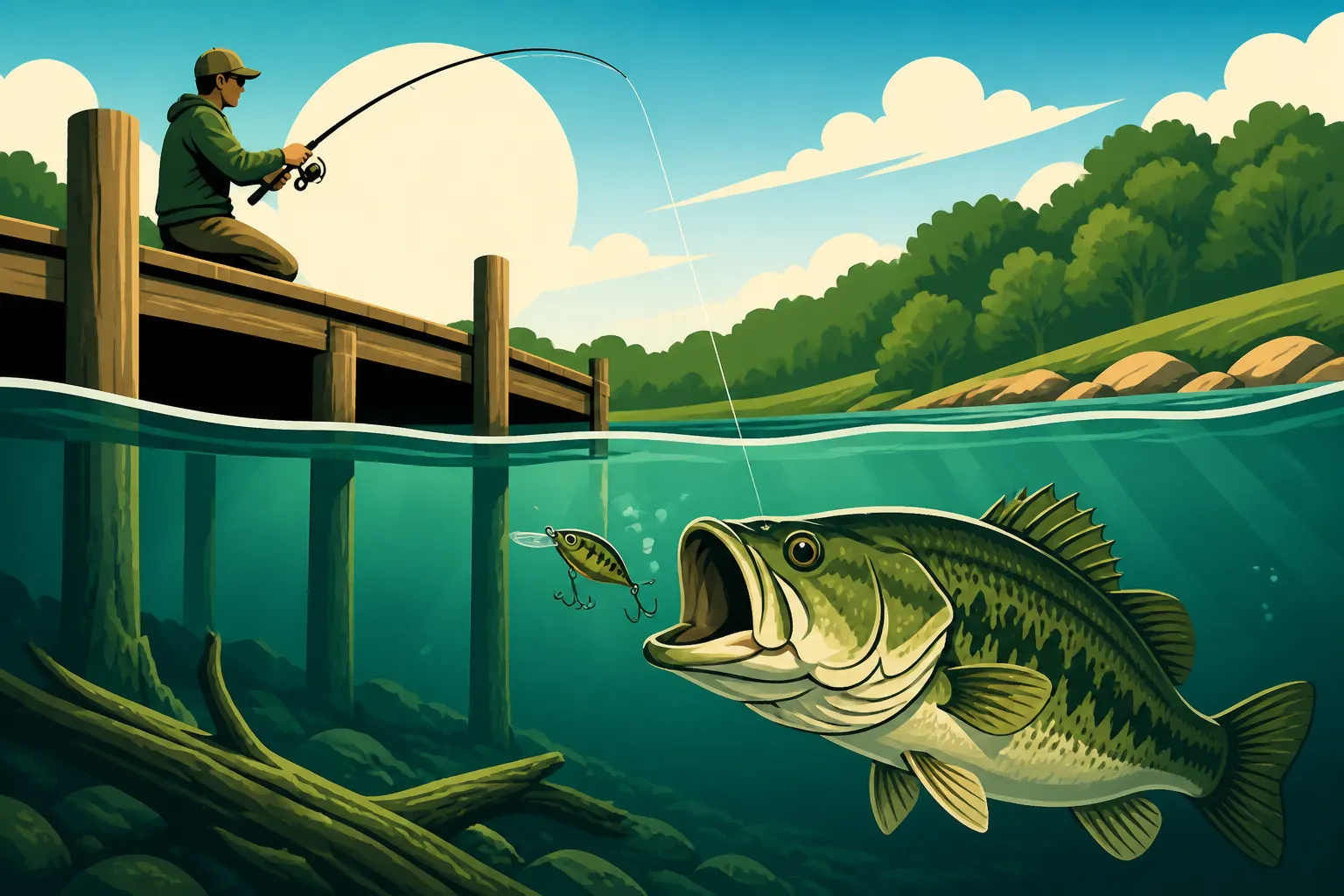
How to Catch Bass Around Docks
Is there anything more frustrating than seeing a perfect line of docks stretching out, knowing bass are lurking beneath them, yet struggling to get a bite? You cast, you retrieve, you try different lures, but those dock dwellers seem to be mocking you. It's a common struggle for anglers in Tennessee, but it doesn't have to be. This guide is dedicated to unlocking the secrets of catching bass around docks, helping you understand their behavior, choose the right gear, and master the techniques to consistently bring in fish from these tricky structures.
Why Bass Absolutely Love Docks
Docks aren't just convenient places for boats to tie up; they're bustling underwater ecosystems that offer everything a bass could want. Think of them as prime real estate in the aquatic world. Understanding why bass gravitate to them is the first step in figuring out how to catch them.
Shelter and Shade From Elements
One of the biggest draws of a dock is the immediate protection it provides. Just like we seek shade on a scorching summer day, bass do the same. The overhead structure of a dock casts a significant shadow, creating a cool, dark refuge from direct sunlight. This is especially critical during those hot Tennessee summers when surface water temperatures can soar. Bass are cold-blooded, and prolonged exposure to intense sun can make them lethargic and less likely to feed actively in open water.
Beyond temperature regulation, docks also offer shelter from predators, both avian and larger fish. The crisscrossing pilings, pontoons, and submerged elements provide a maze of hiding spots where bass feel secure. This sense of security allows them to conserve energy and wait for opportune feeding moments, rather than constantly being on high alert in exposed areas. They can tuck themselves into a dark corner, ambushing anything that swims by.
Ambush Points and Abundant Food Sources
Docks are magnets for baitfish, insects, and other small critters, which in turn attract bass. Algae grows on the pilings, attracting small invertebrates, which then attract minnows and sunfish. These smaller fish become easy targets for opportunistic bass. Additionally, docks often have ladders, ropes, and old tires hanging underneath, providing even more cover and surface area for aquatic life to thrive.
For a bass, a dock is a perfect ambush point. They can hide in the shadows, waiting patiently for an unsuspecting bluegill or shad to swim past the edge of the dock's footprint. With a quick burst of speed, they can dart out, grab their meal, and retreat back to the safety of the dark structure. This makes docks highly efficient feeding grounds, reducing the energy expenditure required to hunt in open water. This strategy is key to understanding How Water Temperature Affects Bass Feeding, as it allows them to feed efficiently even when temperatures might otherwise slow them down.
Seasonal Movements and Dock Preference
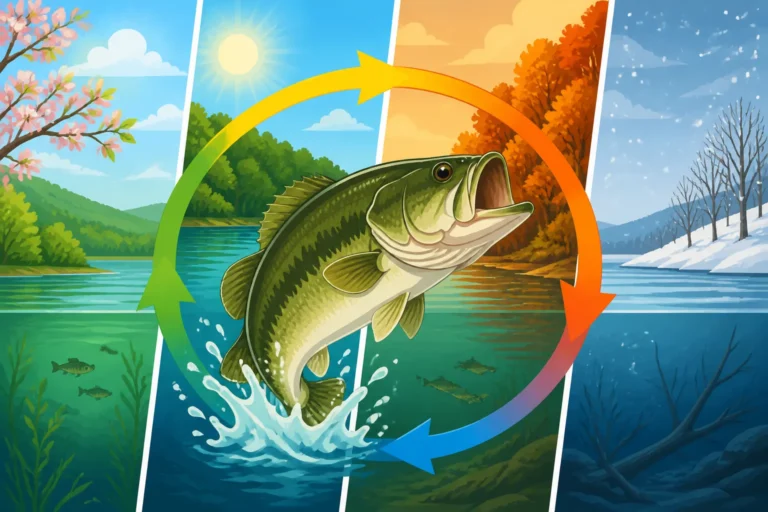
Bass behavior around docks isn't static; it changes with the seasons. In early spring, as water temperatures begin to rise, docks can be crucial staging areas for bass preparing for the Bass Spawn Timing in Tennessee Lakes. The sun-warmed shallow water around docks can be a few degrees warmer than open water, making them attractive for pre-spawn fish. Bass will often congregate near the outer edges of docks or even under floating ones, waiting for the optimal conditions to move to spawning beds.
During the peak of summer, docks become even more vital as deep water access and shade become paramount. Bass will move under the deepest parts of docks, often suspending themselves just above the bottom or tight against pilings, seeking relief from the heat. In the fall, as baitfish become more active and temperatures cool, bass will often use docks as transition points, moving from deeper water to shallower feeding flats. Even in winter, docks, especially those in deeper coves or main lake areas, can hold bass that are seeking stable temperatures and a vertical structure to relate to. Knowing these seasonal patterns is essential for year-round success when fishing for Tennessee Bass Fishing Seasons and Patterns.
Essential Gear for Dock Fishing
Approaching docks effectively requires a specific setup to maximize your chances and minimize frustration. Having the right tools for the job can make all the difference, especially when you're trying to land a fish that's immediately trying to bury itself in a maze of wood and cable.
Rods, Reels, and Line Choices
When you're fishing around docks, you're not just making long casts into open water. You're often skipping lures under low-hanging structures, pitching into tight gaps, or reeling in fish that are doing everything they can to wrap your line around a piling. This calls for a robust and precise setup.
- Rods: A medium-heavy to heavy power casting rod, typically 6'10" to 7'4" in length, is usually ideal. The shorter end of this range is excellent for precise pitching and skipping, offering better control in tight quarters. The heavier power provides the backbone needed to pull a bass out from under a dock before it can snag your line. Look for rods with a fast action tip, which allows for accurate casts and sensitivity, but quickly transitions to a strong backbone. Many anglers find specific "dock skipping" rods useful, which often have a slightly softer tip for easier skipping but retain that heavy power. You can find a good selection of specialized casting rods on Amazon for this purpose. If you're targeting Largemouth Bass Identification Tips for Tennessee Anglers, a sturdy rod is a must.
- Reels: A high-quality baitcasting reel with a fast gear ratio (7.1:1 or higher) is highly recommended. The fast retrieve allows you to quickly take up slack line, which is critical when a bass hits and tries to run back into the dock structure. A good braking system is also key for making precise, controlled casts and preventing backlashes when skipping lures.
- Line: This is where many anglers make mistakes. Around docks, your line is constantly rubbing against wood, concrete, and metal. Fluorocarbon line in the 15-20 lb test range is a fantastic choice due to its low visibility, excellent abrasion resistance, and minimal stretch, which helps with sensitivity and hook sets. Some anglers prefer braided line (30-50 lb test) for its superior strength and abrasion resistance, especially in really dense cover. If using braid, a fluorocarbon leader (15-20 lb) is often tied on to maintain stealth.
Lures and Baits for Dock Success
The best lures for dock fishing are those that can be presented accurately, mimic common baitfish or crawfish, and can be retrieved effectively through cluttered environments.
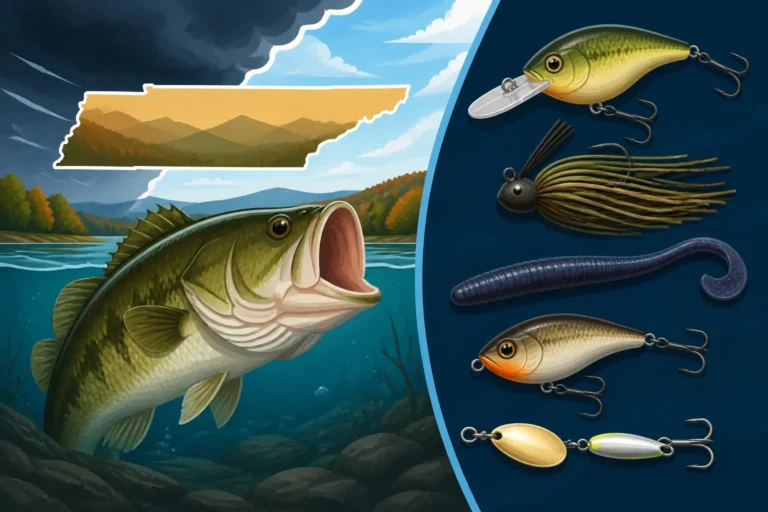
- Jigs: Flipping and pitching jigs are a staple for dock fishing. A 3/8 oz to 1/2 oz jig with a weed guard, paired with a craw-style trailer, is incredibly effective. The weed guard helps it come through pilings and brush without snagging, and the compact profile makes it easy to skip. Dark colors like black and blue, green pumpkin, or brown are usually winners.
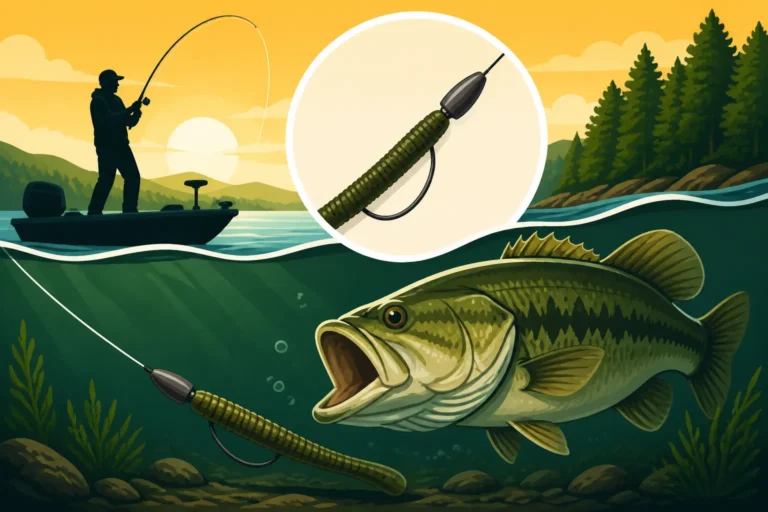
- Soft Plastics: Texas-rigged worms or creature baits are another go-to. A 4-6 inch worm or a creature bait rigged with a 1/4 to 3/8 oz tungsten weight can be pitched or skipped effectively. The Texas rig is incredibly weedless, allowing you to retrieve it through dense cover. Try a zoom Trick Worm or a Strike King Rage Bug. Learn How to Rig a Texas Rig for Bass for optimal performance.
- Bladed Jigs (Chatterbaits): These lures, like the Z-Man Chatterbait, are fantastic for drawing aggressive strikes from bass hidden under docks. Their vibrating blade creates a lot of commotion and flash, often triggering reaction bites. They can be worked parallel to dock edges or pitched into larger open pockets.
- Spinnerbaits: While not ideal for skipping, a compact spinnerbait can be effective when worked along the outer edges of docks or through clearer sections where bass might be patrolling. The flash and vibration can be irresistible.
- Crankbaits: Shallow-diving crankbaits that run just a few feet deep can be excellent for retrieving along the dock edges, especially on cooler days or in the early morning. Squarebill crankbaits are particularly good because their bill helps deflect off structure without snagging.
- Topwater Lures: On calm mornings or evenings, or after rain, topwater lures like hollow-body frogs, poppers, or walking baits can be incredibly exciting. Pitch them into shady pockets or near cover and let them sit, then twitch them enticingly.
Specialized Tools for Precision
Beyond the basic rod, reel, and line, a few specialized tools can make your dock fishing experience much more productive and enjoyable.
- Culling Tags/Clips: If you're fishing a tournament or just keeping track of your best five, culling clips are invaluable. They allow you to quickly weigh and mark fish without causing undue stress.
- Boat Positioning Tools: A good trolling motor with GPS Spot-Lock is a game-changer. It allows you to hold your boat precisely in position, even in wind or current, freeing you up to focus on casting and presentation. Without constantly fighting the boat, your accuracy around docks will dramatically improve.
- Side-Imaging or Down-Imaging Sonar: While not strictly "gear," having advanced electronics can help you "see" under docks. You can identify brush piles, sunken tires, or even schools of baitfish and bass tucked away, giving you a clear target rather than blind casting. This is especially helpful for understanding the layout of an unfamiliar dock.
- Long-handled Net: A net with an extendable handle is crucial for landing fish that are trying to dive back into the pilings. It gives you that extra reach to scoop them up before they can break free.
Master Techniques for Dockside Bass
Having the right gear is only half the battle; knowing how to use it effectively is what truly brings success. Fishing docks requires precision, patience, and a nuanced understanding of bass behavior.
Skipping and Pitching Precision
These two techniques are the bread and butter of dock fishing, allowing you to get your lure into places that are otherwise unreachable.
- Skipping: This technique involves casting a lure so that it "skips" across the water's surface, much like skipping a stone, allowing it to travel far under low-hanging docks or boat covers. It's often done with a baitcasting reel. The key is to use a low, side-arm cast, keeping your rod tip close to the water. The lure needs to be somewhat flat or have a design that allows it to glide, like a jig with a flat head, a soft plastic worm, or a small tube bait. The wrist action is paramount, a flick rather than a full arm swing. Practice is essential, as too much power or the wrong angle will result in a splash or a snag. The advantage of skipping is getting your lure into those dark, undisturbed areas where bass feel safest and most likely to ambush prey.
- Pitching: Pitching is a shorter, more controlled underhand cast used to quietly drop a lure into specific, tight spots, like gaps between pilings or at the very edge of a dock. It's less about distance and more about pinpoint accuracy and a subtle entry. Hold the lure in one hand, bring the rod tip up, and then swing the rod forward while releasing the lure with your hand, guiding it to the target. The goal is a quiet "plop" rather than a loud splash, which can spook wary bass. Pitching is excellent for hitting multiple targets quickly and efficiently, moving from one piece of dock structure to another.
Vertical Jigging and Finesse Tactics
Sometimes, bass are suspended directly under the dock or holding tight to vertical structure. In these situations, a different approach is needed.
- Vertical Jigging: When you've located bass directly under a dock, often using your electronics, vertical jigging can be deadly. Drop a jigging spoon, a dropshot rig, or a small jig straight down to the fish's depth. The technique involves short, sharp lifts and drops of the rod tip, making the lure dart and flutter like a dying baitfish. This is particularly effective in deeper water under boat lifts or floating docks. The advantage here is that you're presenting the lure right in front of the fish's face, often triggering a strike from less active fish. This technique is also used to catch Crappie Limits Under Tennessee Fishing Rules from docks.
- Finesse Tactics: When bass are pressured or finicky, or in clearer waters, finesse tactics shine. A dropshot rig, wacky rig, or a Neko rig can be cast or pitched to the edges of docks. These presentations offer a more subtle, natural look that can entice reluctant biters. For a dropshot, a small, soft plastic worm or bait is suspended above a weight, allowing it to quiver enticingly with minimal rod movement. A wacky rig involves hooking a stick worm directly in the middle, giving it a unique, undulating fall that bass find irresistible. Finesse tactics require lighter line and a gentler approach, but they can be incredibly rewarding when conditions are tough.
Approaching Docks Without Spooking Fish
Bass under docks are often wary, especially in areas with high fishing pressure. Your approach can make or break your day.
- Maintain Distance: Avoid bumping the dock with your boat or trolling motor. Even subtle vibrations can alert bass to your presence. Try to stay a reasonable distance away – 10 to 20 feet is often a good starting point, allowing you to cast effectively without being too close.
- Quiet Movement: Use your trolling motor sparingly and gently. Avoid stomping around in the boat or dropping heavy objects. Sound travels incredibly well through water, and what might seem like a small noise to you can sound like a cannonball dropping to a fish below.
- Angle of Approach: Work docks from multiple angles. Start by casting to the shady side first, as bass are often facing out from these darker areas, waiting for prey. Then, if unproductive, move to other angles. Also, consider the wind and current; try to approach in a way that allows you to easily control your boat with the elements, rather than fighting them, which creates more noise.
- Stealthy Casting: Make soft, accurate casts. A loud splash from a poorly executed cast can send bass scattering. The goal is to present your lure as naturally and quietly as possible, making it seem like an easy meal rather than a threat.
Reading the Docks: What to Look For
Not all docks are created equal. Some docks hold fish consistently, while others might be barren. Learning to "read" a dock and identify its most productive features is a skill that comes with experience, but there are definite clues to look for.
Dock Types and Their Bass Potential
Different types of docks offer varying levels of cover and habitat. Understanding these differences can help you prioritize your efforts.
- Floating Docks: These docks rise and fall with the water level, meaning the depth of the cover they provide changes. They often have solid pontoons underneath, creating large, dark cavities that offer excellent shade and hiding spots. The cables anchoring them can also provide additional vertical structure. Bass love to hold tight to these pontoons, especially on sunny days.
- Fixed Docks (Piling Docks): These are supported by pilings driven into the lakebed. The pilings themselves provide vertical cover, and the spaces between them create corridors for bass to patrol. Look for docks with many pilings, or those where pilings extend further into deeper water. The older the dock, often the better, as more algae, barnacles, and baitfish have had time to colonize the structure.
- Boat Lifts and Hoists: These are bass magnets. The metal framework, cables, and often a boat resting on top create an incredible amount of shade and vertical cover. Bass will often suspend themselves within the framework of a boat lift, particularly in warmer months. Skipping a jig or soft plastic into these tight spaces can be incredibly effective.
- Commercial Docks vs. Residential Docks: Commercial marinas tend to have more boat traffic and less natural cover. Residential docks, especially those in quieter coves, often have more natural wood, brush piles homeowners have sunk nearby, and less disturbance, making them generally more productive.
Identifying Key Structure and Cover
Beyond the main dock structure itself, it's the subtle additions and natural formations around docks that often hold the most fish.
- Brush Piles: Many homeowners intentionally sink brush piles near their docks to attract fish. These are prime ambush points. If you see a subtle change in water color, or if your electronics show a brush pile, focus your efforts there. A jig or a Texas-rigged creature bait worked slowly through brush is hard for a bass to resist.
- Seawalls and Riprap: Docks built along seawalls or riprap offer an additional layer of habitat. The rocks and crevices provide shelter for crawfish and baitfish, making these transitions incredibly attractive to bass. Work a crankbait or a jig parallel to the seawall, focusing on where the dock structure meets the riprap.
- Dock Corners and Ends: The corners and ends of docks are often high-percentage areas. These points can funnel baitfish, and bass will often position themselves here to intercept. Pay close attention to the very last piling on a dock or where a main dock branches off.
- Submerged Cables and Chains: The cables or chains used to anchor floating docks or secure other structures can also hold bass. These provide subtle, vertical cover that bass love to relate to, much like a submerged tree limb. Run a dropshot or a small jig along these unseen lines.
- Shady Spots: Always prioritize the deepest, darkest shade available. On a bright, sunny day, bass will be tucked way back in these shadows. On cloudy days, they might roam a bit more, but shade is still a key comfort zone.
Time of Day and Weather Considerations
The best time to fish docks can vary dramatically based on the conditions.
- Early Morning and Late Evening: During these low-light periods, bass are often more active and willing to move out from under the deepest parts of the dock. This is when topwater lures can shine, as bass are more comfortable feeding near the surface. The cooler temperatures also encourage them to be more aggressive.
- Bright Sunny Days: When the sun is high and intense, bass will seek the deepest, darkest shade possible under docks. Focus your efforts on skipping lures far back into the shadows and pitching into the thickest cover. Finesse presentations can be key here, as fish might be lethargic.
- Cloudy or Overcast Days: On these days, bass might be more spread out and willing to roam away from the immediate dock structure. They might still be relating to the dock, but perhaps a bit further out, or along the sides. Moving baits like chatterbaits or spinnerbaits worked along the edges can be very effective.
- After a Cold Front: Following a cold front, bass tend to become less active and might suspend tight to vertical cover or hug the bottom. This is when slow, meticulous presentations, like a dropshot or a slow-dragged jig, are paramount. They might be in the deepest, most stable water under the dock. Understanding How to Adjust Your Technique After a Cold Front is crucial for success.
- Rainy Days: Light rain can often turn bass on, especially if it's been hot. The rain breaks up the surface, making bass feel more secure, and washes insects and nutrients into the water. However, heavy, cold rain can shut them down. During a light rain, try working jigs and soft plastics in and around the docks. Don't forget to check Tennessee Fishing Regulations Explained before heading out, as rules can change.
Lure Selection Guide for Dock Fishing
To help you quickly choose the right bait for your next dock fishing adventure, here's a table summarizing common lure types and their ideal use cases around docks. Many of these can be found with quick and convenient shipping on Amazon.
| Lure Type | Best for Conditions | Ideal Dock Features | Retrieval Technique | Notes |
|---|---|---|---|---|
| Flipping/Pitching Jig | All-around, especially sunny days, active/passive bass | Pilings, brush piles, boat lifts | Pitch/skip into cover, short hops on bottom | Excellent weedlessness, mimics crawfish |
| Texas-Rigged Plastics | All-around, especially dense cover, finesse | Brush piles, tight gaps, deep shade | Pitch/skip, slow drag, light hops | Highly weedless, versatile for worms, creatures |
| Bladed Jig (Chatterbait) | Cloudy days, active bass, reaction strikes | Dock edges, larger open pockets | Steady retrieve, occasional twitch, parallel to dock | Great vibration and flash, covers water quickly |
| Shallow Crankbait | Cooler water, less dense cover, morning/evening | Outer dock edges, seawalls | Steady retrieve, deflect off structure | Excellent for covering water, triggers reaction bites |
| Topwater Lure (Frog/Popper) | Low light (dawn/dusk), calm water, clear water | Shady pockets, open water next to dock | Pop/walk/twitch, long pauses | Exciting bites, best for aggressive bass near surface |
| Dropshot Rig | Pressured fish, suspended bass, clear water | Vertical pilings, boat lifts, deep water | Dead stick, slight shakes, subtle lifts | Finesse presentation, keeps bait in strike zone longer |
| Jigging Spoon | Deep water, suspended bass, schooling baitfish | Under boat lifts, deep dock ends | Vertical drops, sharp lifts, fluttering fall | Mimics dying baitfish, good for reaction strikes |
Disclaimer
Fishing laws and regulations can change, and it's always your responsibility to be aware of the most current rules. The information provided in this guide is for general informational purposes only and should not be considered legal advice. Always check the latest regulations from the Tennessee Wildlife Resources Agency (TWRA) before heading out on the water.