Where Do Bass Go in Extreme Summer Heat
There's nothing quite like the relentless heat of a Tennessee summer, and if you've ever tried to chase bass when the mercury is pushing ninety and beyond, you know the frustration. The fish seem to vanish, the bites slow to a crawl, and you're left wondering where on earth those hawgs have gone. Well, you're not alone in feeling this challenge, and this guide is here to unravel that mystery, offering practical insights and strategies for finding and catching bass when the water is scorching.
Understanding the Summer Bass Slump
When the dog days of summer hit Tennessee, with air temperatures soaring into the 90s and beyond, the water in our lakes and rivers doesn't just stay cool. Surface temperatures can climb dramatically, impacting everything from fish metabolism to oxygen levels. This isn't just an inconvenience; it's a fundamental shift in the aquatic environment that forces bass to change their behavior.
Why Extreme Heat Affects Bass
Imagine trying to run a marathon in a sauna – that's a bit like what warm surface water feels like for a bass. Bass, like all cold-blooded creatures, are ectothermic, meaning their body temperature mirrors their surroundings. As water temperatures rise, their metabolic rate increases, requiring more oxygen. However, warmer water holds less dissolved oxygen than cooler water. This creates a double-whammy: bass need more oxygen, but there's less available. It’s no wonder they start seeking more comfortable locales. They’re not just being picky; they're trying to survive. This push for cooler, more oxygenated water is the primary driver behind their summer migrations. You might find it useful to learn more about How Water Temperature Affects Fish Activity.
Key Environmental Factors
Beyond just temperature and oxygen, other factors play a crucial role. Light penetration is significant; clear, shallow water heats up faster and offers little cover from intense sunlight, which bass generally dislike. In highly productive lakes like Chickamauga Lake, which experiences substantial summer heat, bass will often seek out the clearest, deepest water they can find to escape both the heat and the glare. Water clarity also affects light penetration, with clearer lakes often seeing bass go deeper earlier in the season. Current is another factor; moving water, especially below dams or in river sections of reservoirs, can provide slightly cooler, more oxygenated conditions, offering temporary relief spots. Recognizing these subtle environmental cues is key to anticipating where bass might be holding.
Deep Water Sanctuaries Where Bass Retreat
When the heat is on, bass don't just disappear; they relocate to their preferred comfort zones. For many Tennessee lakes, this means moving into deeper water, often congregating around specific structures that offer refuge from the oppressive surface conditions.
The Role of the Thermocline
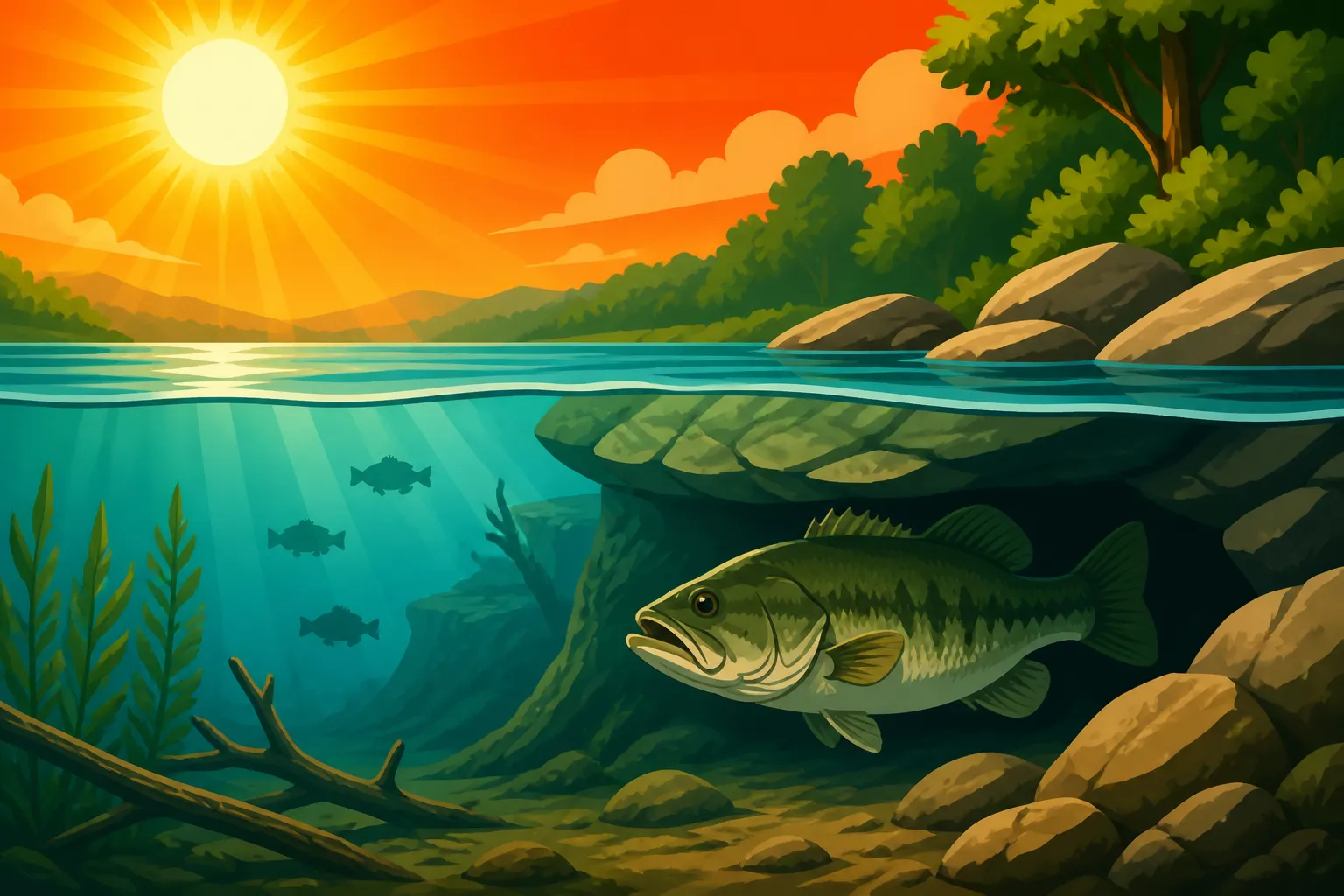
One of the most critical concepts for summer bass fishing is the thermocline. In deep lakes and reservoirs, as surface waters heat up, a distinct layer forms where the temperature rapidly drops. This is the thermocline, and it’s often where you'll find the sweet spot for bass. Above it, the water is too warm and oxygen-depleted. Below it, the water is too cold and also often oxygen-depleted (though for a different reason – lack of mixing). The thermocline itself, and the zone just above it, provides the ideal combination of cooler temperatures and sufficient oxygen. Bass will suspend in or near this layer, often associating with deep structure. Knowing how to use your Fish Finders and Electronics for Tennessee Reservoirs to locate this thermal barrier is a game-changer. For instance, on a massive lake like Kentucky Lake, finding that perfect depth can be like looking for a needle in a haystack without modern electronics.
Major Deepwater Structures
Bass aren't just suspending in open water, though; they're almost always relating to some form of structure within or just above the thermocline.
- Ledges and Drop-offs: These are classic summer haunts. Bass will stack up on deep creek channel ledges, river channel bends, and underwater points that drop into deeper water. They can move up and down these structures, ambushing baitfish that pass by. Think about the main river channels on Watts Bar Lake or Pickwick Lake, which are prime examples of this kind of habitat.
- Humps and Roadbeds: Submerged humps, islands, and old roadbeds offer elevated structure in deep water. Bass will hold on the tops or sides of these features, especially if they have some kind of cover like brush or rock piles. These structures act like underwater oases in an otherwise featureless deep expanse.
- Brush Piles and Timber: Anglers and even the TWRA often sink brush piles in deeper water specifically to create habitat. Bass absolutely love these submerged forests, as they provide both shade and ambush points. These can be particularly effective in reservoirs like Percy Priest Lake, which has many such man-made structures. Finding these can be tricky, but mapping and side-imaging sonar can reveal their hidden depths.
- Cooler Inflows and Springs: While not always deep, areas where cooler water flows into the main body of a lake can attract bass, even in summer. This could be a spring, a dam discharge, or even the mouth of a deeper, shaded creek that feeds into the main lake. These spots can offer a localized pocket of relief.
When you're out on the water, try to correlate your electronics readings with contour maps. Look for sharp changes in depth, isolated bumps, and dense clusters that indicate submerged cover.
Night Moves and Low-Light Opportunities
While deep water is the primary escape during the day, extreme summer heat also pushes bass into entirely different patterns during low-light periods. These times can offer some of the most exciting and productive fishing, far away from the scorching midday sun.
Dawn and Dusk Feeding Frenzies
As the sun begins to dip below the horizon or before it rises in the morning, the intense light and heat of the day temporarily subside. This slight cooling, combined with reduced light penetration, often signals a feeding window for bass. They'll move shallower, closer to the banks, to hunt for baitfish that also become more active in the low light. This is when you can often find them cruising points, shallow flats, and riprap banks that were barren just hours earlier. Topwater lures, spinnerbaits, and shallow crankbaits can be incredibly effective during these times. It’s a drastic change from the deepwater tactics of midday.
Many anglers target these short windows because the bass are more aggressive and accessible. Even a small drop in air temperature or a passing cloud cover can trigger a brief feeding spell. This is particularly true in many of Tennessee's smaller, shallower impoundments, where deep water isn't as readily available.
Embracing the Night Shift
For some of the most consistent summer bass fishing, especially for larger fish, you might need to become a nocturnal angler. Night fishing for bass is a completely different ballgame, but it can be incredibly rewarding. As the sun sets and temperatures truly drop, bass often move into shallower water, sometimes right up to the bank, to feed under the cloak of darkness.
- Why Night Fishing Works: The surface water cools, dissolved oxygen levels stabilize (or even slightly improve), and the bass feel much safer venturing into shallow areas where they might be exposed during the day. Baitfish are also often disoriented or more active, creating easy targets.
- Prime Nighttime Locations: Look for boat docks, lighted bridges, riprap, main lake points, and shallow grass beds. Anywhere baitfish congregate, bass will follow. The lights from docks and bridges attract insects, which attract baitfish, which, of course, attract bass.
- Gear for Night Fishing: You’ll need some specific gear for safety and effectiveness. Headlamps, glow sticks for boat navigation, and often dark-colored or noisy lures are essential. Many anglers find that illuminated bobbers, readily available on Amazon, can make night fishing much more manageable. When selecting lures for night fishing, dark colors like black, blue, or junebug are popular choices as they create a strong silhouette against the moonlit sky. Large spinnerbaits with thumping blades or slow-moving jigs with big trailers can also be very effective. Consider consulting a guide on Night Fishing Spots on Kentucky Lake, Tennessee for specific locations.
| Time of Day | Typical Bass Depth | Key Lure Types | Considerations |
|---|---|---|---|
| Midday (Extreme Heat) | Deep (15-40+ feet), near thermocline & structure | Deep crankbaits, jigs, drop shots, heavy spoons | Slow retrieves, precise presentations, electronics crucial |
| Dawn/Dusk (Low Light) | Shallower (5-15 feet), near points, flats, structure | Topwaters, spinnerbaits, shallow crankbaits, shaky heads | Faster retrieves, focus on ambush points, active feeding |
| Night | Shallow to Mid-depth (3-20 feet), docks, lights, riprap | Dark jigs, large worms, big spinnerbaits, topwaters | Noise and silhouette important, safety lighting crucial |
Tactics for Fishing Heat-Stressed Bass
Successfully catching bass in extreme summer heat isn't just about finding them; it's about understanding how their behavior changes and adapting your techniques accordingly. A slow, methodical approach often outperforms aggressive power fishing during these times.
Deep Water Presentations
When bass are hunkered down in deep water, your presentation needs to be precise and often subtle. They aren't going to chase a fast-moving bait far from their comfort zone.
- Deep Diving Crankbaits: These are workhorses for covering deep ledges and humps. Look for models that can reach depths of 15-25 feet or more, depending on the thermocline and structure. Colors that mimic shad or crawfish are usually effective. Before heading out, a quick search on Amazon for some deep-diving crankbaits might be a good idea, as there are many specialized options available. The key is to make contact with the bottom or structure; the deflection often triggers a bite.
- Jigs and Carolina Rigs: A heavy football jig or a Carolina rig are excellent choices for slowly working deep structure. The jig mimics a crawfish or a bulky baitfish, while the Carolina rig presents a soft plastic bait tantalizingly off the bottom. Both allow you to maintain contact with the bottom and detect subtle bites from lethargic bass. These presentations are all about feel and patience.
- Drop Shot and Ned Rig: For truly finicky, heat-stressed bass, finesse presentations can be invaluable. A drop shot allows you to present a small plastic bait at a specific depth, directly in the strike zone, without the weight interfering with its action. The Ned rig, with its stand-up jig head and buoyant plastic, is another superb finesse option that can coax bites when nothing else will. These are particularly effective on heavily pressured lakes or when bass are suspended in sparse cover.
- Heavy Spoons and Tail Spinners: These baits can imitate dying baitfish fluttering through the water column and are great for vertical jigging on deep schools of bass. If you locate a tight ball of fish on your sonar, dropping a spoon directly into them can often trigger a reaction strike.
Remember, bass in deep, warm water are often not actively chasing; they are reacting. Slow, deliberate movements are key. If you're struggling, consider reviewing your Bass Fishing Techniques for Beginners to ensure you're covering the basics effectively before tackling advanced strategies.
Adjusting Your Retrieve and Tackle
Your retrieve speed, line choice, and even your rod action need to adapt to the challenging conditions of extreme heat.
- Slower is Better: This cannot be stressed enough. Bass are often lethargic. A slow, grinding retrieve on a crankbait, a long pause with a jig, or painstakingly slow drag of a Carolina rig will often get more bites than fast, erratic movements. Think about making the bait as easy as possible for a hesitant bass to eat.
- Line Choice: In clear, deep water, fluorocarbon line is often preferred due to its low visibility and sensitivity. Heavier line might be needed for powerful bass around deep cover, but generally, lighter lines (10-15 lb fluorocarbon) can increase your bite ratio when fishing finesse tactics.
- Rod and Reel: A sensitive graphite rod is crucial for detecting those subtle deepwater bites. Medium-heavy to heavy power rods are suitable for jigs and crankbaits, while medium power rods with a fast tip excel for drop shots and Ned rigs. Matching your Best Rods and Reels for Tennessee Fishing to your chosen technique makes a significant difference. A slower gear ratio reel can help enforce those slower retrieves naturally.
- Focus on Cover and Shade: Even in deep water, bass will gravitate towards any available cover that offers additional shade or ambush points, like isolated stumps, rock piles, or dense brush. If you can find the intersection of deep water, the thermocline, and good cover, you've hit the jackpot. This applies even more to shallower areas during low-light conditions; a shaded dock or an overhanging tree can be a magnet for bass.
When All Else Fails: Embrace Early Mornings and Evenings
Sometimes, no matter how good your deepwater game is, the midday summer heat simply makes fishing too tough. Don't be afraid to adjust your schedule. Prioritize those early morning hours right at sunrise, or head out in the late afternoon and fish into the evening and night. These periods offer bass a reprieve from the heat, making them more willing to move and feed.
For those planning extended trips, remember that the Tennessee Fishing License Guide is crucial, and understanding Tennessee Fishing Season and Catch Limits will ensure you’re always compliant, regardless of the time of year you choose to fish. If you’re visiting from out of state, be sure to look into Nonresident Fishing License Costs in Tennessee well in advance. Sometimes, the most effective tactic in extreme heat is simply to fish during the windows when the bass are most active, rather than fighting against their natural instincts all day long.
Disclaimer
Fishing conditions, regulations, and fish behavior can change. Always consult the latest Tennessee Wildlife Resources Agency (TWRA) regulations before heading out on the water. This guide provides general advice and should not replace official rules or local knowledge. Stay safe and enjoy your time on Tennessee's beautiful waters!