Fish Finders and Electronics for Tennessee Reservoirs
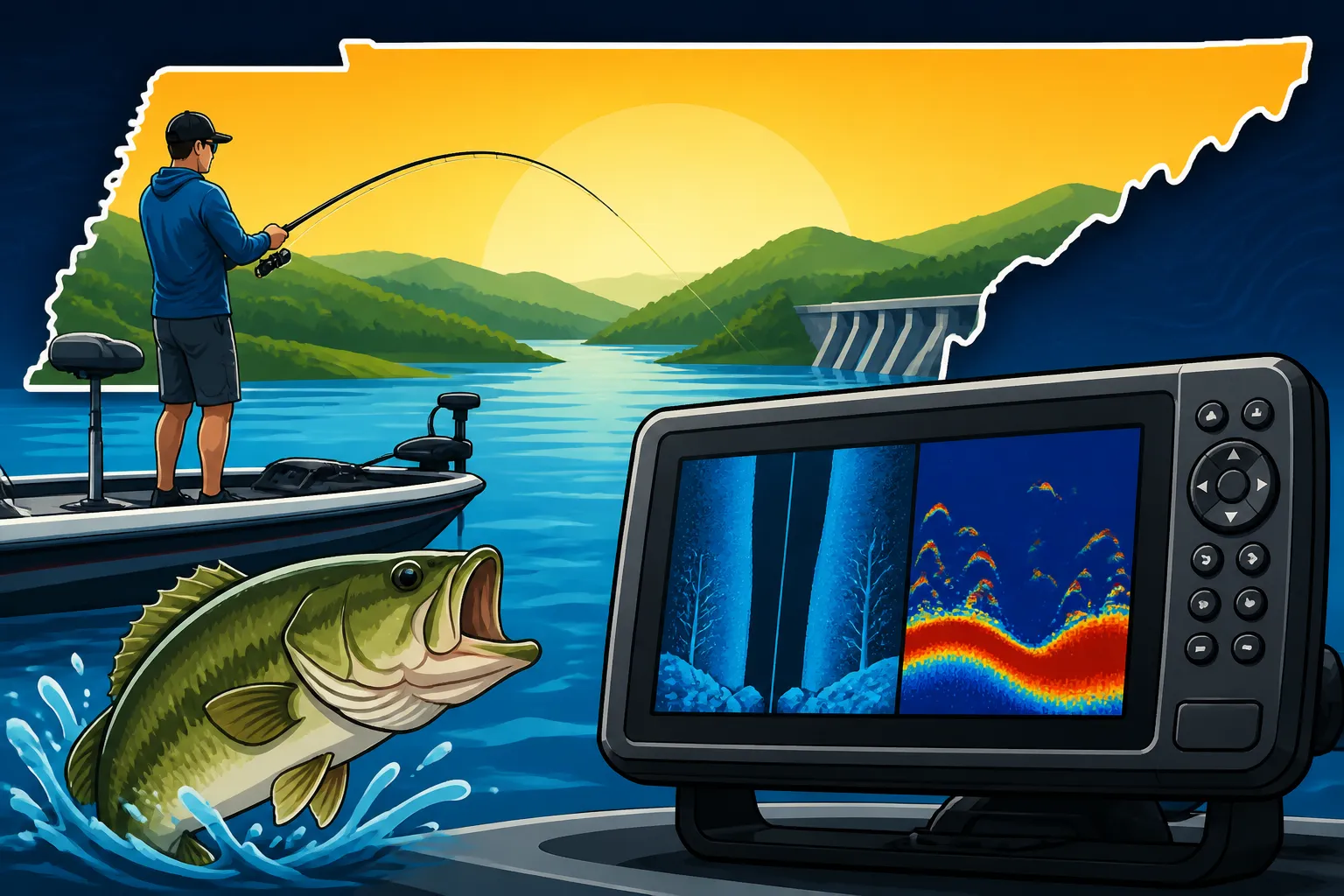
Ah, the mighty Tennessee reservoirs! They are truly magnificent bodies of water, teeming with incredible fishing opportunities. But let's be honest, staring out at a vast expanse like Chickamauga or Kentucky Lake can feel a bit like trying to find a needle in a haystack, especially when you know those trophy bass or monster catfish are down there, just not where you are. That overwhelming feeling, the endless searching, the frustration of "fish where they ain't" – it's a feeling every angler knows. This comprehensive guide is here to tackle that head-on, delving into how fish finders and other crucial electronics can transform your experience, turning those vast waters into manageable, fish-filled playgrounds.
Why Electronics are a Game-Changer on Tennessee Reservoirs
Let's face it, Tennessee's major reservoirs are not your grandma's backyard pond. They are immense, complex ecosystems with hidden depths, ancient riverbeds, and countless secrets beneath their surface. Trying to fish them effectively without modern electronics is like trying to navigate downtown Nashville without a GPS – you can do it, but you're going to miss a lot of prime spots and spend a lot more time guessing. Electronics aren't just gadgets; they're essential tools that give you an underwater advantage, helping you unlock the true potential of these incredible fisheries.
Overcoming the Vastness of Large Lakes
When you launch your boat onto a body of water like Watts Bar Lake, which stretches for miles and miles, it can be incredibly daunting. Where do you even begin? The sheer scale of these impoundments means that blindly casting is often a recipe for frustration and wasted time. You could spend an entire day cruising along the shoreline, making casts into seemingly promising coves, only to come up empty-handed. Without a clear picture of what lies beneath, every fishing trip becomes a shot in the dark.
This is where your electronics become your most trusted companion. Imagine having the ability to "see" underwater, to understand the topography, and to pinpoint those subtle changes that attract fish. Instead of aimlessly wandering, you can systematically cover water, identifying high-percentage areas that might be miles apart. Your fish finder acts as your personal underwater scout, eliminating unproductive water and directing you towards the most likely holding areas, making the vastness feel much more manageable.
Pinpointing Structure and Cover
Fish, especially the larger, more sought-after species like Largemouth Bass Identification Tips for Tennessee Anglers or Smallmouth Bass: Tennessee's Official State Fish, are almost always associated with some kind of structure or cover. This could be a submerged creek channel, a rocky drop-off, a standing timber forest, a brush pile that was purposely sunk, or even just a subtle hump on a flat. The problem? Most of this key real estate is completely invisible from the surface.
Before advanced electronics, finding these hidden gems was a painstakingly slow process involving dragging heavy sinkers, extensive casting, or relying on old paper maps that were often inaccurate due to fluctuating water levels. Now, with the crisp, detailed imagery provided by modern fish finders, you can effortlessly locate these underwater features. You'll see the distinct outlines of a brush pile, the sharp contours of a ledge, or the subtle undulations of a gravel bar, allowing you to position your boat perfectly and present your lure right where the fish are hiding. It's the difference between guessing where the fish might be and knowing exactly where they are.
Adapting to Changing Conditions
Fishing in Tennessee, as in any region, is a dynamic sport. Water temperatures fluctuate, current patterns shift, and fish activity changes with the seasons. A spot that was hot last week might be barren this week due to a sudden cold front or an increase in water flow from the dam. Trying to keep up with these changes based solely on surface observations or anecdotal evidence can be incredibly challenging and often leads to unproductive trips.
Modern electronics provide real-time feedback that allows you to adapt on the fly. You can monitor water temperature at various depths, helping you locate the thermocline where many species congregate in summer. You can observe current direction and strength, understanding how it positions baitfish and predators around structure. Furthermore, some units even offer water column mapping, letting you see subtle shifts in baitfish schools or changes in the behavior of game fish. This constant stream of information empowers you to make informed decisions, adjust your presentation, and stay on the fish, regardless of what Mother Nature throws your way. It's about being proactive rather than reactive to the conditions.
Understanding Different Types of Fish Finders
The world of fish finders has evolved dramatically, moving far beyond simple depth sounders. Today, anglers have access to a suite of sonar technologies, each offering a unique perspective of the underwater world. Understanding what each type does and how it presents information is crucial for maximizing your success on Tennessee's sprawling reservoirs. It's not about having all the tech, but having the right tech for your fishing style and the waters you frequent.
Traditional 2D Sonar (CHIRP)
Think of traditional 2D sonar as the backbone of any good fish finder. It's the classic "fish arch" display that many anglers are familiar with. This technology works by sending a sound wave down into the water and listening for the echoes that bounce back from objects like fish, bait, and the bottom. The returning echoes are then translated into the images you see on your screen. A hard bottom will show a thick, dark line, while softer bottoms appear thinner and lighter. Fish typically show up as arches, with larger, more distinct arches indicating bigger fish.
The real game-changer in 2D sonar has been CHIRP (Compressed High-Intensity Radiated Pulse) technology. Instead of sending out a single frequency, CHIRP transducers send a range of frequencies, from low to high, in a continuous sweep. This allows for much greater target separation and clarity. What does this mean for you? It means you can often distinguish individual fish in a school, tell if fish are holding tight to a brush pile, or even see your lure as it falls through the water column. For anglers targeting species like Tennessee's Crappie Limit Is 20 Per Day, Only 5 Over 12 Inches, this enhanced clarity can be invaluable for finding those subtle brush piles and identifying the fish within them.
DownScan Imaging (DownVü/Down Imaging)
While 2D sonar gives you a general overview and fish arches, DownScan Imaging (often branded as DownVü by Garmin or Down Imaging by Humminbird and Lowrance) provides a much more detailed, photographic-like view of what is directly beneath your boat. Instead of broad conical beams, DownScan uses high-frequency, thin, fan-shaped beams that send sound waves straight down.
The result is an image that looks almost like an underwater photograph. You can clearly see the limbs of a submerged tree, the individual rocks on a rocky bottom, or the precise shape of a bridge piling. This is incredibly useful for distinguishing between fish and structure. With traditional 2D, a fish sitting tight in a brush pile might just look like a blob. With DownScan, you can often see the distinct image of the brush pile and the fish hovering within or around it. It takes away much of the guesswork, allowing you to confirm that what you're seeing is indeed a productive piece of cover and not just random clutter.
SideScan Imaging (SideVü/Side Imaging)
SideScan Imaging (SideVü from Garmin, Side Imaging from Humminbird and Lowrance) is perhaps one of the most revolutionary sonar technologies for fishing vast reservoirs. If DownScan gives you a picture directly below, SideScan casts wide, thin beams of sonar energy out to the sides of your boat, often up to 100-200 feet or more on each side, depending on the unit and water depth.
This allows you to scan an enormous amount of water very quickly. Imagine cruising across a large flat on Kentucky Lake, looking for subtle changes in depth or hidden brush piles. With SideScan, you can see all the structure and potential fish targets to your left and right simultaneously, without having to drive directly over them. This significantly reduces your search time and dramatically increases your efficiency. You can spot a lone stump, a school of baitfish, or even a sunken boat off to the side, mark it with a waypoint, and then come back to fish it precisely. For covering big water and finding those elusive, isolated pieces of cover that hold quality fish, SideScan is an absolute powerhouse.
Essential Electronic Features for Tennessee Anglers
Modern fish finders are more than just sonar units; they are sophisticated command centers for your fishing vessel. To truly capitalize on the potential of Tennessee's incredible reservoirs, you need to understand and leverage the full suite of features available. These aren't just bells and whistles; they are functionalities that can directly impact your ability to locate, approach, and ultimately catch more fish.
GPS Chartplotting and Mapping
Imagine trying to navigate the winding river channels of Percy Priest Lake or the vast open water of Kentucky Lake without a reliable map. It would be a nightmare! This is why integrated GPS chartplotting and detailed mapping capabilities are absolutely non-negotiable for serious Tennessee anglers. These systems use satellite navigation to pinpoint your exact location, displaying it on a detailed map of the lake or river.
High-quality maps, often pre-loaded or available as upgrades from brands like Navionics or LakeMaster, provide crucial contour lines that show depth changes, ledges, humps, and submerged creek beds. These are the highways and neighborhoods for fish. With accurate GPS, you can mark waypoints on productive spots—that brush pile you found with SideScan, a key depth transition, or even where you caught your last fish. These waypoints become your personal treasure map, allowing you to return to those exact spots with precision, time and time again. Furthermore, the ability to create and follow tracks means you can retrace a successful path or systematically cover an area without overlap, making you incredibly efficient.
High-Resolution Displays and Screen Size
You can have the most advanced sonar in the world, but if you're trying to interpret the data on a tiny, low-resolution screen, you're going to miss critical details. The quality and size of your display are paramount. A high-resolution screen means sharper images, more distinct fish arches, and clearer renderings of structure. It allows you to differentiate between a fish and a tree branch, or between a hard rock bottom and soft mud, with far greater confidence.
Screen size also plays a huge role, especially when you're trying to view multiple sonar technologies simultaneously (e.g., 2D, DownScan, SideScan, and a map) in a split-screen format. A larger screen (think 9-inch, 12-inch, or even larger for console units) provides more real estate, allowing you to clearly see and interpret all the information without squinting. Furthermore, bright, sunlight-readable displays are essential under the notoriously sunny Tennessee skies. Trying to peer at a dim, washed-out screen is not only frustrating but also makes it nearly impossible to make accurate decisions on the water. Investing in a good display is like investing in a clear pair of glasses – it helps you see the world, or in this case, the underwater world, much better.
Networking and Integration
In the modern era of marine electronics, isolated units are becoming a thing of the past. The ability to network and integrate multiple devices on your boat is a tremendous advantage, turning individual components into a cohesive system. This typically involves linking your console unit, bow unit, trolling motor, and sometimes even shallow water anchors, all speaking the same electronic language.
Imagine having SideScan data from your console unit instantly displayed on your bow-mounted unit, allowing you to approach a brush pile you just spotted with perfect precision. Or controlling your electric trolling motor directly from your fish finder screen, steering it to follow a contour line or to hold steady over a productive spot. This seamless communication means that information gathered by one transducer can be shared across all displays, providing a holistic view of your fishing environment. For example, a quality networked system allows you to easily share waypoints between units, ensuring that you and your fishing partner are always looking at the same critical information. Brands like Humminbird, Garmin, and Lowrance excel at this, offering comprehensive networking capabilities that streamline your operation and significantly enhance your situational awareness on the water.
| Feature | Description | Benefit for TN Anglers |
|---|---|---|
| Traditional 2D Sonar | Sends sound waves straight down, showing fish arches and bottom contours. | Good for quick depth readings and identifying general fish presence. |
| CHIRP Sonar | Advanced 2D, sends multiple frequencies for clearer target separation. | Better for distinguishing individual fish, even in schools or cover. |
| DownScan Imaging | High-frequency, thin beam for photo-like images directly below the boat. | Excellent for identifying submerged structure (trees, rocks) precisely. |
| SideScan Imaging | Wide beams scan to the sides of the boat for broad area coverage. | Quickly find hidden structure and fish far from the boat, saving time. |
| GPS Chartplotting | Pinpoints boat's location on detailed lake maps with contour lines. | Navigate safely, find depth changes, mark and return to hot spots. |
| High-Res Display | Large, bright screens with many pixels. | Clear interpretation of complex sonar data, even in bright sunlight. |
| Networking | Connects multiple units (fish finders, trolling motor) for data sharing. | Seamless information flow, centralized control, enhanced efficiency. |
| Live Sonar | Real-time, video-like view of fish and lures underwater. | Watch fish react to your bait, understand their movements immediately. |
Integrating Trolling Motors and Other Peripherals
In the relentless pursuit of Tennessee's abundant fish, your boat's electronics don't operate in a vacuum. The real magic happens when your fish finder seamlessly integrates with other crucial components on your vessel, particularly your trolling motor and shallow water anchors. This synergy creates a highly efficient and responsive fishing platform, allowing for precise boat control and an unmatched understanding of the underwater world.
Trolling Motors with Integrated Sonar
The electric trolling motor has become an indispensable tool for serious anglers, especially those focusing on bass and crappie in reservoirs like Chickamauga Lake or Old Hickory Lake. But when these motors come with integrated sonar, they elevate your game significantly. Brands like Minn Kota, with their Ultrex line featuring built-in Mega Imaging, or MotorGuide, offer transducers neatly tucked away within the motor housing.
This integration provides several key advantages. First, you get a consistently clear and unobstructed sonar signal, as the transducer is always perfectly oriented and free from interference from the main outboard motor. Second, it eliminates the need for external transducer mounts and messy cabling along your boat's transom or hull, making for a cleaner installation. Perhaps most importantly, these smart trolling motors often boast advanced features like "Spot-Lock" (Minn Kota) or "Anchor Mode" (MotorGuide), which use GPS to automatically hold your boat in a precise location, even in wind or current. This means you can hover directly over a brush pile you found with your fish finder, meticulously working it with your lure, without constantly jockeying the foot pedal. This level of precise boat control, combined with a clear sonar picture, makes dissecting productive areas far more effective.
Shallow Water Anchors
For fishing in shallower areas, whether it's working the banks for springtime Bass Spawn Timing in Tennessee Lakes or targeting crappie in flooded timber, shallow water anchors have become incredibly popular. Devices like Power-Pole or Minn Kota Talon allow you to silently and quickly deploy a spike or blade into the bottom, instantly securing your boat.
The real benefit comes when these anchors are integrated with your fish finder and trolling motor. Imagine using your SideScan to locate a perfect stump field in 8 feet of water. You can then use your trolling motor's GPS to navigate precisely to that spot, hit a button on your fish finder or a remote, and wham, your Power-Pole deploys, locking you in place. This allows you to thoroughly fish that specific piece of cover, making multiple casts from different angles without drifting. It's about maximizing your time on productive water and making the most of every cast, especially when targeting finicky fish that might be spooked by constant boat repositioning. These anchors are particularly useful in the fertile, shallower waters of places like Reelfoot Lake or the expansive flats of Kentucky Lake.
Radar and Advanced Sonar (Live Sonar)
While radar might be less common for typical freshwater bass or crappie anglers, it does have niche applications, particularly for those who fish extremely early mornings, late evenings, or during foggy conditions on vast, busy reservoirs. It provides an extra layer of safety, helping you detect other boats, buoys, or even land formations in low visibility, allowing you to navigate with confidence.
However, the true pinnacle of modern sonar technology, and arguably the biggest game-changer in recent years, is live sonar. Systems like Garmin LiveScope, Lowrance ActiveTarget, and Humminbird Mega Live offer a real-time, video-game-like view of what's happening underwater. Instead of seeing historical data or static images, you're watching live. You can see your lure falling, watch a fish approach it, and even see how that fish reacts to your presentation. This is truly revolutionary.
Imagine seeing a school of Crappie Limits Under Tennessee Fishing Rules holding around a brush pile 50 feet away, watching them move, and then casting your jig directly to them. You see your jig descend, and then you see a crappie detach from the school and swim towards it. You know instantly if your presentation is working or if you need to adjust. This technology has fundamentally changed how many anglers fish, allowing for incredibly precise targeting and immediate feedback on fish behavior. It takes the guesswork out of the equation and provides an unparalleled advantage for understanding and interacting with fish in real-time, especially in the clear waters of Norris Lake or the timber-filled depths of Center Hill Lake.
Installation and Setup Tips for Optimal Performance
Even the most advanced fish finder won't perform to its potential if it's not installed and set up correctly. This isn't just about plugging it in; it's about meticulous attention to detail that ensures your transducers are reading clearly, your power supply is stable, and your settings are optimized for the conditions you're fishing. Neglecting these steps can lead to frustratingly unclear images, dropped readings, and ultimately, missed fish.
Transducer Placement and Cable Management
The transducer is the "eye" of your fish finder, sending and receiving the sonar signals. Its placement is absolutely critical for clear, interference-free readings. For transom-mounted transducers, it needs to be in clean water flow, typically on the lowest part of the transom, away from prop wash, strakes, and other obstructions that can create turbulence or air bubbles. Even a slightly crooked mount can cause issues. Thru-hull transducers offer the best performance but require drilling a hole in the boat, a job often best left to professionals. Trolling motor transducers are generally built-in or clamp-on, offering excellent views but are susceptible to interference from the motor itself if not properly installed or shielded.
Beyond placement, proper cable management is vital. Sonar cables are sensitive, and kinks, pinches, or cuts can severely degrade performance. Route them carefully, securing them away from sharp edges, heat sources, and any other electrical wiring that could cause interference. Never coil excess cable tightly; instead, make large, loose loops to minimize signal loss. Electrical interference from other boat components (like the engine, bilge pump, or even other electronics) can show up as noise on your screen. Sometimes, running sonar cables completely separate from power cables can help alleviate this. It's a bit tedious, but a clean installation ensures a clear picture.
Powering Your Electronics
Modern marine electronics, especially multiple networked units and power-hungry live sonar systems, demand a robust and stable power supply. Your boat's cranking battery, while essential for starting your engine, might not be sufficient or dedicated enough to run several fish finders for a full day without voltage drops that can affect performance. Many serious anglers opt for a dedicated deep-cycle marine battery specifically for their electronics, or even a specialized lithium battery for lighter weight and longer run times.
Proper wiring is non-negotiable. Use sufficiently thick gauge wire (consult your unit's manual for recommendations) to minimize voltage drop, especially over longer runs from the battery to your units. Each unit should ideally be wired directly to the battery with its own fuse, rather than daisy-chained or connected to an existing accessory bus. This ensures each unit gets a clean, consistent power supply. Faulty connections, corroded terminals, or inadequate fuses are common culprits for flickering screens, lost readings, and premature equipment failure. Think of it like this: your fish finder is only as good as the power it receives, so don't skimp on this foundational aspect.
Initial Settings and Calibration
Once everything is physically installed and powered up, the real fun (and learning curve) begins: fine-tuning your settings. Most units come with default "auto" settings, which are a good starting point but rarely optimized for specific conditions. You'll need to experiment with several key parameters:
- Sensitivity/Gain: This controls how much detail your unit displays. Too low, and you'll miss faint targets; too high, and you'll get excessive clutter and noise. Adjust it until you see a clear bottom line and distinct fish arches without too much "snow" on the screen.
- Range/Depth: Set your depth range slightly beyond the actual depth you're fishing. If you're in 20 feet of water, setting it to 30 or 40 feet gives you a little extra view below the bottom.
- Color Palette: Experiment with different color schemes. Some palettes might make fish targets pop more in certain lighting or water conditions. What works for one angler might not work for another.
- Scroll Speed: This controls how quickly the sonar image moves across the screen. A faster scroll speed can give you a more real-time view, while a slower speed allows for more detail accumulation.
- Frequency: Many units allow you to choose different sonar frequencies. Lower frequencies penetrate deeper and are better in very deep water or for seeing through thermoclines. Higher frequencies offer more detail and are better for shallower water and identifying smaller targets.
The best way to learn your settings is to spend time on the water, actively adjusting them while observing the results. Don't be afraid to tweak, save custom profiles, and learn what works best on your home waters, whether that's the Tennessee River or Watts Bar Lake, Tennessee's Largest Lake for Fishing.
Popular Brands and Where to Find Them
Navigating the landscape of marine electronics can feel like stepping into a foreign country, with various brands speaking their own "language" of features and technologies. However, a few key players consistently dominate the market, each bringing their unique strengths to the table. Understanding these brands and knowing where to source their products is essential for making an informed decision about your next electronic upgrade.
Leading Fish Finder Brands
When it comes to top-tier fish finders and marine electronics, three names consistently rise to the top: Humminbird, Garmin, and Lowrance. Each brand offers a diverse range of units, from entry-level options perfect for a casual day of Bluegill Fishing for Beginners in Tennessee to professional-grade systems designed for tournament anglers chasing Chickamauga Lake, Tennessee's Top Spot for Record Largemouth Bass.
- Humminbird: Renowned for their groundbreaking Side Imaging and Down Imaging technologies, Humminbird units (like the HELIX and SOLIX series) provide incredibly crisp, detailed views of structure and fish to the sides and directly below your boat. Their proprietary MEGA Imaging offers some of the highest resolution sonar available, making it a favorite for bass and crappie anglers who rely on pinpointing submerged cover. Humminbird also offers the AutoChart Live feature, allowing you to create custom, highly detailed contour maps of any body of water in real-time.
- Garmin: Garmin has made significant strides in recent years, largely due to their revolutionary LiveScope technology. Their ECHOMAP and GPSMAP series combine robust GPS chartplotting with excellent sonar capabilities, including traditional CHIRP, ClearVü (DownScan), and SideVü (SideScan). LiveScope, in particular, has captivated anglers with its real-time, forward- and down-looking sonar view, letting you see fish and your lure in incredible detail as they move. Garmin units are known for their user-friendly interfaces and strong navigation features.
- Lowrance: A pioneer in fish-finding technology, Lowrance continues to innovate with their Elite FS and HDS Live series. They offer powerful traditional sonar, StructureScan (SideScan and DownScan), and their own real-time live sonar, ActiveTarget. Lowrance units are often praised for their intuitive touchscreens, extensive networking capabilities, and compatibility with a wide range of mapping options. They have a long-standing reputation for reliability and performance on the water.
Each of these brands has its loyal following, and often, the "best" brand comes down to personal preference, specific feature priorities (e.g., live sonar vs. high-definition Side Imaging), and how well you connect with their user interface.
Shopping for Electronics: Online vs. In-Store
Once you've narrowed down your choices, where do you actually buy your new marine electronics? Both online retailers and physical stores offer distinct advantages.
Shopping at a large outdoor retailer like Bass Pro Shops offers a hands-on experience. You can see the units in person, compare screen sizes, get a feel for the controls, and often speak directly with knowledgeable staff. These stores often have display models set up that simulate sonar readings, giving you a better idea of what to expect. Furthermore, if you're buying a complex system, some stores may offer installation services or be able to recommend local installers. This can be invaluable, especially for more intricate setups involving multiple units, trolling motors, and transducers. Bass Pro Shops often runs promotions and has a wide selection of accessories and related gear, making it a convenient one-stop shop.
On the other hand, online giants like Amazon provide an unparalleled selection and often highly competitive pricing. You can quickly compare models, read hundreds of customer reviews, and have the unit shipped directly to your door. Online retailers can be a great option if you already know exactly what you want and are comfortable with self-installation or have a trusted local technician. However, you miss out on the personal advice and the ability to physically interact with the product before purchase. When buying online, always ensure you're purchasing from a reputable seller to guarantee warranty coverage and genuine products. Whichever route you choose, remember to check current deals and bundles, as prices for electronics can fluctuate.
Budgeting for Your Electronic Setup
Let's be realistic: equipping your boat with quality marine electronics is an investment, and prices can vary wildly. It's easy to get caught up in the excitement of all the new tech, but having a clear budget in mind is essential.
- Entry-Level (around $300-$700): For this price, you can typically get a basic 5-7 inch unit with traditional 2D sonar and decent GPS chartplotting. These are great for smaller boats or those just starting out and needing fundamental depth and fish detection. They're perfect for finding ledges and basic structure.
- Mid-Range (around $800-$1,500): Stepping up, you'll find 7-9 inch units that integrate 2D, DownScan, and SideScan imaging, often with more advanced GPS mapping and some networking capabilities. This is where you get excellent value for serious fishing, providing clear images of structure and efficient search patterns on large lakes. This category covers many needs for anglers on lakes like Percy Priest Lake Fishing Near Nashville, Tennessee.
- High-End (above $1,500 – $5,000+): At this level, you're looking at larger 10-16 inch touchscreen displays, cutting-edge live sonar technology, robust networking for multiple units, and advanced features like custom mapping and integration with high-end trolling motors. This is the realm of tournament anglers and those who demand every possible advantage on the water. A full-blown setup with multiple units and live sonar can easily reach several thousand dollars.
It's perfectly acceptable to start with the essentials and upgrade over time. Many anglers begin with a single unit offering 2D and DownScan, then add SideScan later, and eventually invest in live sonar. Prioritize the features that will most directly impact your fishing style and the waters you frequent. A good starting point is often a unit with reliable GPS mapping and SideScan, as this combination significantly boosts your efficiency on big Tennessee reservoirs.
Mastering Your Electronics on the Water
Having the best fish finder and electronic setup is only half the battle; the other half is knowing how to effectively use and interpret the information it provides. Your electronics are powerful tools, but they require practice and understanding to unlock their full potential. It's about developing an "underwater eye" and translating those pixels into actionable fishing decisions.
Interpreting Sonar Readings
Learning to truly read your fish finder screen is a skill that develops over time. It's not just about looking for obvious fish arches; it's about understanding the subtle cues and patterns.
- Fish Arches: While the classic "arch" indicates a fish passing through the sonar cone, perfect arches are often seen on stationary boats. On a moving boat, fish might appear as blobs, dashes, or even upside-down Vs. Larger, thicker marks generally mean bigger fish. Pay attention to where these marks are—are they near the bottom, suspended in the water column, or tight to structure?
- Bait Balls: Large, dense clouds of small dots on your screen usually indicate schools of baitfish. Where there's bait, there are often predators close behind. Finding bait can be a key to finding game fish.
- Bottom Composition: The thickness and intensity of the bottom return can tell you a lot. A hard bottom (rock, gravel) will show a thick, bright line, often with a "secondary echo" below it. A soft bottom (mud, silt) will appear as a thinner, less intense line. Knowing the bottom type helps you choose the right lure and presentation.
- Structure and Cover: This is where DownScan and SideScan truly shine. You'll learn to differentiate between the distinct limbs of a submerged tree, the broken outlines of a rock pile, the subtle ripples of a sandbar, or the crisp edges of a man-made brush pile. Practice by driving over known structures and observing how they appear on your screen. How Water Temperature Affects Fish Activity also plays a role in where fish position themselves around this structure.
The key is to spend time on the water, experimenting with settings and observing what happens when you catch a fish or drive over a known piece of structure. The more you use your unit, the better you'll become at translating those pixels into real-world fishing information.
Using Waypoints and Custom Mapping
One of the most powerful features of modern GPS/sonar units is the ability to mark and manage waypoints. A waypoint is simply an electronic "pin" you drop on your map, marking a specific location. This is invaluable for:
- Saving Hot Spots: Every time you catch a fish, find a productive brush pile with SideScan, or discover a key depth transition, mark it with a waypoint. Give it a descriptive name (e.g., "Crappie Brush Pile 1," "Bass Ledge 30ft"). These waypoints become your personal log of productive areas.
- Navigating Back: The real beauty of waypoints is that they allow you to return to those exact spots with incredible precision, even months or years later. This eliminates wasted time searching and puts you on the fish faster.
- Creating Custom Maps: Many units, like Humminbird with AutoChart Live or Garmin with Quickdraw Contours, allow you to create your own highly detailed contour maps in real-time as you drive. This is phenomenal for finding subtle, unmapped humps, ditches, or rock piles that aren't on standard lake maps. Over time, you build a personalized, incredibly accurate map of your favorite fishing areas, giving you a distinct advantage over other anglers relying on generic charts.
Think of your waypoints and custom maps as your secret fishing diary, constantly expanding and refining your knowledge of the lake. They are your investment in future successful fishing trips on Tennessee's diverse waters, from the deep clear lakes of East Tennessee to the vast river systems of West Tennessee.
Troubleshooting Common Issues
Even the most advanced electronics can occasionally act up. Knowing how to troubleshoot common issues can save you a lot of frustration and keep you on the water.
- Lost Depth Reading/No Bottom: This is often a transducer issue. Check for obstructions (weeds, debris) on the transducer face. Ensure it's still properly submerged and hasn't been knocked out of alignment. Sometimes, excessive speed can cause aeration around the transducer, leading to signal loss. If your unit is mounted on the transom, ensure it's in clean water, away from prop wash.
- Interference/Screen Clutter: If your screen is full of "snow," streaks, or lines that aren't fish or structure, it's likely electrical interference. Try adjusting your sensitivity down. Check that your sonar cables aren't running parallel to power cables or near other high-voltage lines. Ensure all connections are clean and tight. Sometimes, turning off other electrical devices one by one (bilge pump, livewell pump) can help identify the source.
- GPS Signal Loss: If your unit can't acquire a GPS signal, ensure it has a clear view of the sky. Obstructions like tall trees, buildings (if you're on a very small pond), or even heavy boat covers can block the signal. Check that the GPS antenna (if external) is properly connected and unobstructed.
- Power Issues (Flickering, Unit Shutting Off): This almost always points to an issue with your power supply. Check your battery voltage. Inspect all wiring, fuses, and connections for corrosion, looseness, or damage. A low or failing battery is a common culprit, especially with multiple power-hungry units.
When troubleshooting, always refer to your unit's manual—they often have excellent sections dedicated to common problems and solutions. If you can't resolve it, don't hesitate to reach out to the manufacturer's customer support or consult a professional marine electronics installer. Sometimes, a simple fix can make all the difference.
Equipping your boat with modern fish finders and electronics is more than just buying gadgets; it's investing in your fishing success and enjoyment on Tennessee's incredible reservoirs. From effortlessly scanning vast expanses to pinpointing hidden structure with photographic clarity, and even watching fish react to your lure in real-time, these tools provide an unparalleled advantage. Embrace the technology, learn its nuances, and watch as your understanding of the underwater world transforms your angling experience. Get out there, explore those contours, mark those brush piles, and catch some incredible fish!
Disclaimer
This article is for general informational purposes only and does not constitute professional advice. Laws, prices and regulations vary by location and change over time. Consult a qualified professional for guidance on your specific situation.