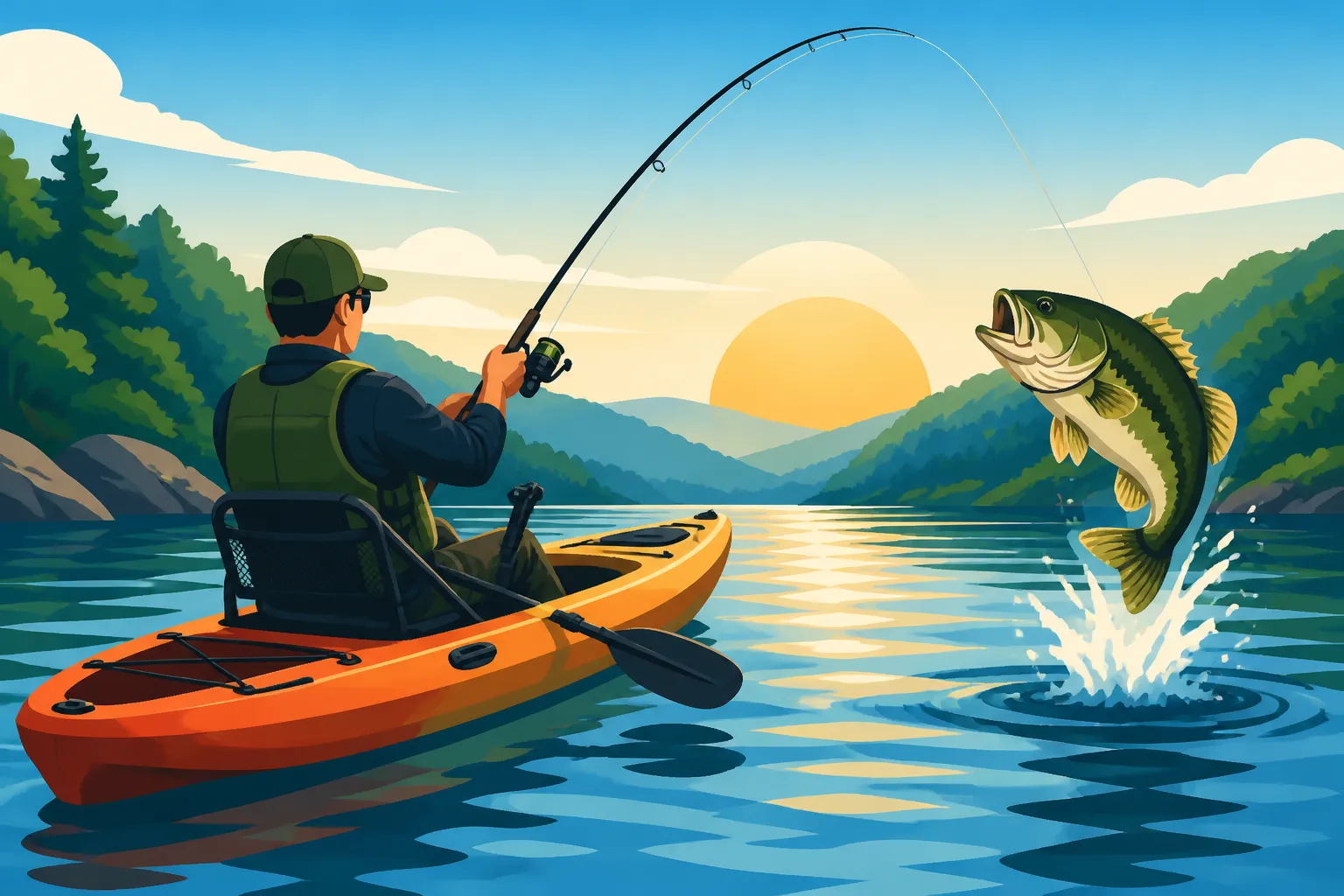
Best Kayaks for Tennessee River Fishing
Trying to navigate the vast and often strong currents of the Tennessee River in a fishing kayak can feel like you're trying to paddle a bathtub in a hurricane if you don't have the right rig. It's a truly amazing fishery, but it demands respect and the right equipment. This guide is all about helping you pick out the best kayak to conquer the Tennessee River, ensuring your time on the water is filled with tight lines, not white knuckles.
Why Kayak Fishing on the Tennessee River is a Game Changer
The Tennessee River is iconic, a sprawling network of reservoirs, channels, and backwaters that offers some of the most diverse fishing opportunities in the state. From smallmouth bass to massive catfish, it’s a true angler's paradise. But fishing from a traditional bass boat or bank often comes with its own set of limitations. This is where kayak fishing really shines, offering a unique blend of access and intimacy with the water that larger boats simply can't match.
The Allure of Quiet Waters and Unpressured Fish
One of the biggest advantages of a fishing kayak on the Tennessee River is its ability to get into places larger boats can't, or simply won't. Think about those shallow coves, tight creek mouths, or even just the quieter stretches of river where the big cruisers don't venture. These are often the spots where fish feel less pressured and are more willing to bite. You can sneak in with minimal disturbance, presenting your lure to fish that might never see a hook from a motorboat. It’s a truly immersive experience, connecting you directly to the environment in a way that’s incredibly rewarding.
Beyond access, there’s the sheer tranquility. Kayak fishing is inherently quieter. You're not relying on a noisy outboard motor, allowing you to appreciate the sounds of nature – the splash of a rising fish, the call of a distant bird, the gentle ripple of the current against your hull. This peaceful approach isn't just good for your soul; it's fantastic for fishing, as you're less likely to spook wary fish. It also makes for a far less stressful day on the water, letting you focus entirely on the cast and the retrieve. You'll find yourself able to concentrate more on the subtle bites and changes in structure that you might miss amidst the rumble of a gas engine.
Navigating the Tennessee River's Unique Challenges
While the Tennessee River offers incredible opportunities for kayak anglers, it's crucial to acknowledge its unique challenges. This isn't a serene pond; it's a major river system. First off, the sheer size of some of the reservoirs, like Kentucky Lake or Chickamauga Lake, means you'll be covering a lot of water. Strong currents, especially near dams or after heavy rains, can be a real force to contend with, making paddling a strenuous workout if you're not prepared. You also have to consider the substantial boat traffic, particularly on weekends and during peak seasons. Bass boats, pontoons, and even large barges can create significant wakes that can easily swamp a small, unstable kayak.
Another factor is the potential for rapidly changing weather conditions. A calm morning can quickly turn into a windy, choppy afternoon, making long paddles back to the ramp a real chore, or even dangerous. Plus, the sheer expansiveness means help might not be as readily available if you run into trouble far from shore. Planning your trips carefully, understanding the Tennessee Fishing Regulations Explained and checking the weather forecast are paramount. Don't forget that even though you're in a kayak, you still need to be aware of the Boat Fishing Rules and License Requirements in Tennessee.
Key Features to Look for in a Tennessee River Fishing Kayak
Choosing the right kayak isn't just about what looks cool; it's about what performs best for the specific demands of the Tennessee River. You need a vessel that prioritizes safety, comfort, and functionality. Cutting corners here can lead to a miserable, or even dangerous, experience. Let's break down the most critical features to consider.
Stability and Capacity: Your Foundation for Safety and Gear
When you're out on a big body of water like the Tennessee River, stability is non-negotiable. You’ll be casting, reeling, standing up to sight fish, and potentially fighting a strong fish. A tippy kayak is not only frustrating but genuinely unsafe, especially when dealing with boat wakes. Look for kayaks with a wider beam (width) and a flat or pontoon-style hull design. These offer superior initial stability, meaning they feel solid even when you shift your weight. While ultimate secondary stability (how hard it is to actually flip) is also important, that initial solid feeling will give you the confidence to focus on fishing rather than balancing.
Capacity is another huge factor. Think about all the gear you bring: rods, tackle boxes, cooler, electronics, and of course, yourself! A kayak's weight capacity tells you how much it can safely hold. Don't just consider your body weight; add in the weight of your gear, and then give yourself a buffer. Overloading a kayak drastically reduces its stability and can make it sit too low in the water, making it sluggish and prone to swamping. A good rule of thumb is to look for a kayak with a capacity at least 100-150 pounds more than your total estimated load. This ensures your kayak performs optimally and keeps you and your precious Kayak Fishing Gear Checklist for Tennessee Rivers safe and dry.
Speed and Tracking: Covering Water Efficiently
The Tennessee River is big. Really big. You won't always find the fish right where you launch, so being able to cover water efficiently is a major plus. This is where speed and tracking come in. "Speed" in a kayak refers to how quickly and easily it moves through the water with each paddle stroke or pedal rotation. Generally, longer, narrower kayaks tend to be faster, cutting through the water more efficiently. "Tracking" refers to how well a kayak holds a straight line without constantly veering off course. A kayak with good tracking requires fewer corrective strokes, reducing fatigue and allowing you to cover more distance with less effort.
However, there's often a trade-off. Highly stable kayaks tend to be wider and shorter, which can compromise speed and tracking. Conversely, very fast, sleek kayaks might feel less stable, especially if you're standing up. The sweet spot for the Tennessee River is usually a kayak that offers a good balance: stable enough to be safe and comfortable, but long enough (often 12-14 feet) to track well and move with reasonable efficiency against currents or across open water. You want to be able to get to that distant honey hole without feeling utterly exhausted before you even make your first cast.
Storage and Rigging Options: Keeping Your Gear Organized
Kayak fishing often means bringing a surprising amount of gear, and having smart storage and rigging options is crucial for an organized and efficient day on the water. Look for kayaks with ample accessible storage, both wet and dry. Large bow and stern tankwells with bungee cords are perfect for coolers, tackle crates, or dry bags. Dedicated dry hatches keep your phone, wallet, and keys safe from splashes. Many fishing kayaks come with built-in rod holders (flush mounts or adjustable ones) and track systems. These track systems are gold! They allow you to easily mount accessories like fish finders, GPS units, camera mounts, and additional rod holders without drilling permanent holes.
Consider the layout of the cockpit area. Is there enough flat surface for mounting your Fish Finders and Electronics for Tennessee Reservoirs? Are there easily accessible storage bins or pockets for frequently used items like pliers, bait, or a water bottle? Some kayaks even feature specialized tackle management systems or integrated storage pods. Think about how you typically fish and what gear you need close at hand. Having a well-rigged kayak means less fumbling and more focused fishing, allowing you to maximize your time on the incredible Tennessee River Fishing Access Points. Both Bass Pro Shops and Amazon carry a huge range of kayak rigging accessories, from rail systems to specialized rod holders, making it easy to customize your setup exactly how you like it.
Top Kayak Styles Suited for the Tennessee River
The kayak market is huge, and it can be overwhelming trying to figure out which style is right for you. For the Tennessee River, certain designs naturally lend themselves better to the diverse conditions and fishing opportunities. Let's explore the most popular and effective options.
Sit-on-Top Kayaks: The Angler's Favorite
For fishing on the Tennessee River, sit-on-top (SOT) kayaks are overwhelmingly the most popular choice among anglers, and for very good reason. Unlike traditional sit-in kayaks where you're enclosed in the cockpit, SOTs feature an open deck, making them incredibly versatile and angler-friendly. The biggest advantage is the ease of entry and exit, which is invaluable if you need to quickly get out to wade a shallow bank or retrieve a snagged lure. There's no claustrophobic feeling, and if you happen to flip (it happens!), re-entry from the water is significantly simpler and safer than with a sit-in.
Furthermore, SOTs typically offer superior stability, especially those designed specifically for fishing. Their wider hulls allow for comfortable standing and casting, which can make a huge difference when sight fishing or needing a better vantage point. The open deck also means ample space for mounting electronics, multiple rod holders, and large tackle management systems. The self-bailing scupper holes are another major plus: any water that comes over the side simply drains out, keeping your footwells dry. Brands available on Amazon and at Bass Pro Shops often feature specialized fishing SOT models that come pre-rigged with many of these angler-specific features, minimizing the need for extensive DIY modifications.
Pedal Drive vs. Paddle: Powering Your Adventure
When it comes to propulsion, you essentially have two main choices for fishing kayaks: traditional paddle power or advanced pedal drive systems. Both have their merits, and the "best" choice really depends on your fishing style, budget, and the specific areas of the Tennessee River you plan to explore.
| Feature | Paddle Drive Kayak | Pedal Drive Kayak |
|---|---|---|
| Cost | Generally more affordable upfront | Significantly higher initial investment |
| Hands-Free Fishing | Requires paddle park or constant re-positioning | Full hands-free operation for casting, reeling, and fighting |
| Speed/Efficiency | Relies on upper body strength; good for short bursts | Often faster and more efficient for covering long distances |
| Navigation | Can be challenging in strong currents or wind | Easier to maintain position and move against currents/wind |
| Shallow Water | Easily navigate very shallow water | Fin/propeller drive can snag in shallow or weedy areas (some retract) |
| Maintenance | Very low maintenance, few moving parts | More mechanical parts, requires more maintenance and cleaning |
| Weight | Typically lighter, easier to transport/launch | Heavier overall due to drive unit and reinforced hull |
Paddle kayaks are the traditional choice and remain excellent for many anglers. They are generally lighter, more nimble in shallow water, and more budget-friendly. They also offer a fantastic workout and a more direct, simple connection to the water. However, the biggest drawback is that you need your hands to paddle, which means you're constantly picking up and putting down your rod, or using a paddle leash to keep it handy. For many, this constant interruption to fishing flow can be a bit frustrating, especially when you're trying to drift a particular structure.
Pedal drive kayaks, on the other hand, use your legs to power a propeller or fin system, freeing up your hands entirely for fishing. This hands-free advantage is a game-changer, allowing you to cast, reel, and fight fish while continuously positioning yourself. They excel at covering long distances on larger bodies of water, making them ideal for sprawling Tennessee River reservoirs where you might need to move from one point to another efficiently. They are also fantastic for holding position against wind or current. The downsides? They are considerably more expensive, heavier to transport, and the drive systems can be vulnerable in extremely shallow or snag-filled waters (though many modern designs feature retracting drives). For serious anglers planning to spend long days covering water, a pedal drive system can truly elevate the experience.
Inflatables and Hybrids: Portability for Different Needs
While hard-shell sit-on-top kayaks, especially pedal drives, are the workhorses of the Tennessee River, inflatable and hybrid kayaks also deserve a mention, particularly for anglers who prioritize portability or have limited storage space.
Inflatable fishing kayaks have come a long way. They're no longer just flimsy pool toys. High-quality inflatables are built with durable, multi-chamber PVC or Hypalon, making them surprisingly rigid and tough. Their main appeal is their compact storage and easy transport – they can often fit in the trunk of a car and be checked as luggage on a flight. For anglers who live in apartments, don't have roof racks, or want to explore remote ponds or smaller tributaries that are hard to access with a full-size boat, an inflatable can be a fantastic option. They often provide excellent stability due to their wide profile, and some even come with mounting points for electronics and rod holders. However, they are generally slower than hard-shells, more susceptible to wind, and require inflation/deflation time. While good for certain parts of the Tennessee River, they might struggle with covering vast distances or battling strong currents found in the main channel.
Hybrid kayaks attempt to blend the best of both worlds. These might include kayaks with a more open deck but a traditional sit-in cockpit feel, or those designed to be equally adept at paddling and rowing. Some offer modular designs where sections connect, allowing for easier transport. While perhaps not as specialized for hardcore fishing as a dedicated SOT, a well-designed hybrid can be a versatile craft for someone who enjoys both recreational paddling and light fishing on various waters, including calmer sections of the Tennessee River. Ultimately, the choice comes down to your priorities, but for consistent Tennessee River fishing, a robust sit-on-top, preferably with a pedal drive, usually provides the best overall experience.
Essential Gear and Safety Tips for Tennessee River Kayak Anglers
Getting the right kayak is only half the battle. To truly enjoy your time and stay safe on the Tennessee River, you need the right accompanying gear and a solid understanding of safety protocols. It’s a big, beautiful beast of a river, and it demands respect.
Must-Have Safety Equipment
Safety should always be your number one priority, especially on a large river system. The most critical piece of equipment is a Coast Guard-approved Personal Flotation Device (PFD). You should wear it at all times, not just have it stowed away. Even strong swimmers can get into trouble if they hit their head, are caught in a current, or suffer from cold water shock. Look for a PFD designed for paddling, which typically has larger armholes for unrestricted movement and pockets for essentials. Remember the Life Jacket Rules for Kayaks and Canoes in Tennessee, especially if you have little ones with you, as the Tennessee's Under-12 Life Jacket Rule Explained is very clear.
Beyond your PFD, always carry a whistle or other sound-producing device to alert others in an emergency. A bright light, like a 360-degree white light, is absolutely essential if you plan to be on the water near dawn, dusk, or after dark, as it dramatically improves your visibility to other boaters. A sturdy paddle leash will prevent you from losing your paddle if you drop it or flip. Consider a small dry bag for your phone, wallet, and keys, and perhaps a VHF radio or personal locator beacon (PLB) for better communication, especially on larger, more remote sections of the river. A first-aid kit is also a no-brainer. Don't forget your Tennessee Fishing License Guide – always have it accessible, whether digital or physical.
Rigging Your Kayak for Success
A well-rigged kayak can make or break your fishing trip. After all, you’ve chosen a kayak for its accessibility; now make sure it's set up to enhance your angling. First, consider how you’ll manage your rods. Beyond the flush-mount rod holders often built into the kayak, adjustable rod holders (like those from RAM Mounts or Scotty) allow you to position your rods perfectly for trolling, soaking bait, or just keeping them out of the way while you paddle. These are often mounted on track systems, which are incredibly versatile.
For navigation and fish-finding, a good fish finder is invaluable on the Tennessee River. Modern fish finders offer features like side imaging and down imaging, which can help you locate submerged structures, ledges, and schools of fish. Mount your fish finder and its transducer securely, ensuring the screen is easily visible from your seated or standing position. Many anglers also add a small anchor or a drag chain to help slow their drift or hold position in currents. A quality Best Kayak Anchors for River Fishing can be a lifesaver when you find a productive spot and want to stay put. Finally, ensure you have a dedicated space for your tackle boxes, ideally secured so they don't slide around or go overboard in choppy conditions.
Navigating the River Safely
The Tennessee River can be a dynamic environment, and safe navigation requires a thoughtful approach. Always check the weather forecast before you launch, and be prepared for sudden changes. High winds can quickly turn calm waters into treacherous conditions for a kayak. Strong currents, particularly downstream from dams or in narrow channels, can be powerful. Learn to "read" the water, identifying eddies and slower moving areas where you can rest or hold position. Pay close attention to current reports, especially if you're fishing near any of the large dams.
Always be aware of other boat traffic. On weekends, the Tennessee River can be a highway of pleasure craft and larger fishing boats. Kayaks are small and sit low in the water, making them less visible. Bright clothing, a tall flag on your kayak, and that 360-degree white light (if applicable) are crucial. Try to stay out of main navigation channels where large barges operate. If you see a large boat approaching, consider paddling closer to shore or finding a safe cove until their wake passes. Understanding How Water Temperature Affects Fish Activity is great for fishing, but also for personal safety: cold water is a major hazard, and a PFD is your best defense against hypothermia if you go overboard. By preparing properly and respecting the river, your kayak fishing adventures on the Tennessee River will be memorable for all the right reasons.
Disclaimer
This article is for general informational purposes only and does not constitute professional advice. Laws, prices and regulations vary by location and change over time. Consult a qualified professional for guidance on your specific situation.