Best Gear for Bank Fishing vs Boat Fishing
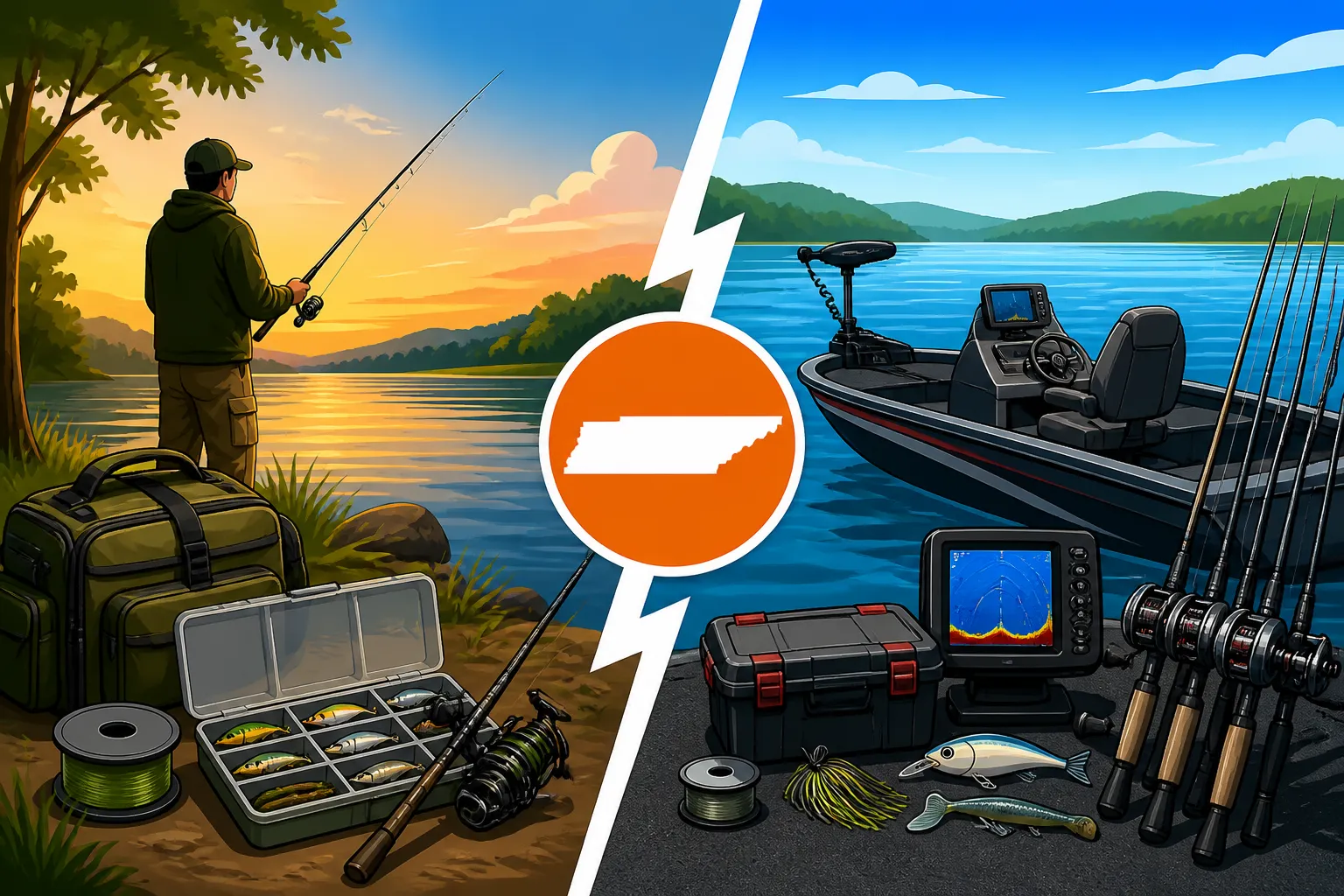
One of the biggest conundrums anglers face, especially here in Tennessee with our incredible variety of waters, is deciding how to approach a fishing trip. Do you hit the banks and enjoy the simplicity of shore fishing, or do you launch a boat and explore deeper waters? Both methods offer unique joys and challenges, but what often gets overlooked is how drastically your gear setup needs to change between these two fundamental approaches. Many folks get frustrated trying to use their boat fishing setup from the shore, or vice versa, and end up having a less-than-stellar day. This guide is all about helping you understand those differences, so you can tailor your equipment for maximum success and enjoyment, no matter if you're casting from the dirt or cruising the waves.
The Fundamental Differences: Bank vs. Boat Fishing Realities
Before we even dive into specific gear, it’s crucial to wrap our heads around the inherent differences between bank fishing and boat fishing. It’s not just about being on land or water; these distinctions impact everything from how much gear you can bring to how you approach a fish. Ignoring these realities is often the first step to a frustrating day on the water, or rather, beside it.
Accessibility and Mobility Constraints
When you're bank fishing, your world is often defined by how far you can walk and what obstacles are between you and the water's edge. You might be navigating steep banks, dense brush, or crowded public access points. This means every piece of gear you bring needs to be easily portable. Think about carrying your tackle box, rods, a cooler, and maybe a chair all at once – it gets heavy fast! Your mobility is limited to the shoreline, meaning if the fish aren't biting where you are, your options are either to pack up and move to a new spot, which takes effort, or simply wait it out.
Boat fishing, on the other hand, opens up a world of possibilities. You're no longer constrained by the bank. You can reach those secluded coves, deep channels, and submerged structures that are completely inaccessible from shore. The "mobility" here isn't about walking; it's about navigating the water, often at speed, to cover vast distances on big reservoirs like Chickamauga Lake or Kentucky Lake. This freedom comes with its own set of considerations, of course, like understanding boat ramps, navigation, and marine safety, but it fundamentally changes your approach to finding fish. For more on this, you might find Fishing From the Bank vs a Boat helpful.
Space and Storage Considerations
This is where the gear differences really start to come into play. A bank angler has a very finite amount of space – essentially, whatever they can comfortably carry and set down beside them. This necessitates a minimalist approach. Every item needs to be considered for its weight, size, and necessity. You'll often find bank anglers with smaller tackle boxes, fewer rods, and compact coolers. The goal is efficiency and portability. You don't want to be lugging around a monstrous tackle box full of every lure you own if you're hiking a mile to your favorite spot on the Clinch River.
Boat fishing, especially on larger vessels, offers a luxury of space that bank anglers can only dream of. You have rod lockers, storage compartments, livewells, and often more deck space than you know what to do with. This means you can bring multiple rod-and-reel combos, extensive tackle assortments, larger coolers, and even creature comforts like elaborate seating or cooking equipment. The challenge here isn't about minimizing, but about organizing. Without a good system, a boat can quickly become a chaotic mess of gear, which is just as inefficient as carrying too much on the bank. You also need to consider where everything will be secured while underway, so it doesn't fly around with waves or sharp turns.
Safety and Comfort Factors
Safety is paramount in any fishing endeavor, but the risks and solutions differ significantly between bank and boat fishing. For the bank angler, safety often revolves around stable footing, avoiding slippery rocks, being aware of your surroundings (wildlife, other people), and protecting yourself from the elements. Comfort might mean a lightweight folding chair, a hat, and plenty of water. It's about enduring the conditions in your chosen spot.
On a boat, the stakes are higher and the safety gear more specialized. Life jackets are absolutely non-negotiable, and Tennessee has specific rules about who needs to wear them, especially for kids under 12. You'll need navigation lights if you're out at dawn, dusk, or night, a fire extinguisher, a sound-producing device, and potentially a marine radio for emergencies. Beyond basic safety, comfort on a boat involves things like secure seating, protection from sun and spray, and managing motion on the water. Proper boat maintenance and knowing how to handle your vessel in varying weather conditions become crucial. You can learn more about specific requirements in articles like Tennessee Life Jacket and PFD Rules for Boaters.
Essential Gear for the Dedicated Bank Angler
When you're rooted on the bank, every piece of gear has to earn its keep. You’re trading wide-ranging mobility for focused precision, so your equipment should reflect that. Think streamlined, versatile, and tough enough to handle being set down on various terrains.
Rods, Reels, and Line for Shore-Bound Success
For bank fishing, versatility is key. You're usually limited to casting distance, so a rod that can handle a variety of lure weights and casting techniques is ideal. A medium-action spinning rod, typically in the 6-foot 6-inch to 7-foot range, is often a bank angler's best friend. This length provides good casting distance without being unwieldy in tight spaces or heavy brush. The medium action offers enough backbone to fight larger fish like bass or catfish, but enough sensitivity for smaller panfish.
Spinning reels are generally preferred for bank fishing due to their ease of use and ability to cast lighter lures and baits with less backlashing compared to baitcasters. A 2500 or 3000 series spinning reel is a good all-rounder, balancing line capacity with retrieve power. As for line, many bank anglers opt for monofilament or fluorocarbon in the 8-12 pound test range. Monofilament is forgiving, has good knot strength, and floats, which can be beneficial for certain topwater presentations. Fluorocarbon is nearly invisible underwater and has less stretch, providing more sensitivity, which is great for detecting subtle bites. The choice often comes down to personal preference and the specific species you're targeting. If you're focusing on smaller panfish in a local pond, an ultralight setup might be better, as discussed in Best Ultralight Rods for Trout Streams (though it applies to panfish too!).
The Ultimate Bank Fishing Tackle Box
Forget the giant multi-tray behemoths you see in fishing shows. A bank fishing tackle box needs to be compact, organized, and focused on the essentials for the species you expect to encounter in your chosen spot. Many bank anglers prefer soft-sided tackle bags or small, single-tray boxes that can be easily carried or slung over a shoulder. When packing your bank fishing tackle, consider a "grab-and-go" mentality.
Here’s a breakdown of what often makes it into a bank angler's kit:
- A small assortment of lures: Focus on versatile options like spinnerbaits, soft plastic worms (Texas rig is a classic), crankbaits that reach moderate depths, and perhaps a topwater lure for early mornings or late evenings. Don't bring five different colors of the same lure; pick one or two proven producers.
- Hooks and weights: A variety of worm hooks (offset, wide gap), small jig heads, and split shot or bullet weights.
- Terminal tackle: Swivels, snaps, and maybe a few bobbers if you're targeting panfish.
- Live bait essentials: If you're using live bait like worms or crickets, a small bait container is a must.
- Tools: A small pair of pliers or forceps for hook removal, line clippers, and perhaps a small scale if you want to weigh your catches.
- First-aid basics: A few band-aids and antiseptic wipes are always a good idea for minor cuts and scrapes.
- Hydration and snacks: A small water bottle and an energy bar can make a long session much more comfortable.
You want to be able to quickly find what you need without rummaging, so transparent boxes within a soft bag are a common choice. Brands like Bass Pro Shops offer a range of tackle bags perfect for this minimalist approach, and you can find many great organizers on Amazon.
Comfort and Convenience Gear for the Bank
Being comfortable makes a huge difference, especially if you plan to spend several hours on the bank. Since you're not moving much, things like seating and sun protection become even more important.
- Portable Seating: A lightweight, foldable chair or even a bucket with a padded lid can be a game-changer. It gives you a place to rest, organize your gear, and simply enjoy the view without putting strain on your back or knees.
- Sun Protection: A wide-brimmed hat, polarized sunglasses, and sunscreen are non-negotiable. Tennessee sun can be brutal, and protecting yourself from UV rays is crucial for long-term health and comfort. Polarized sunglasses also cut glare, allowing you to see into the water better and spot structure or cruising fish.
- Cooler/Water Bottle: Staying hydrated is key. A small, insulated cooler or even a reusable water bottle will keep your drinks cool. If you plan to keep your catch, a separate, slightly larger soft-sided cooler with ice or a stringer is essential.
- Bag or Backpack: To carry all this, a comfortable backpack or fishing specific bag is often the best solution. Look for one with external pockets for water bottles, internal dividers for organization, and comfortable shoulder straps. It lets you keep your hands free for carrying rods or navigating uneven terrain. Check out What Gear Do You Need for Bank Fishing on Tennessee Lakes? for more tailored advice.
Optimizing Your Setup for Boat Fishing Adventures
Boat fishing gives you an incredible advantage in covering water and accessing prime fishing spots. But with that freedom comes the need for different gear and a different mindset about how you organize and utilize your equipment.
Specialized Rods, Reels, and Lines for Boat Anglers
On a boat, you're not worried about carrying everything over rough terrain, so you can afford to bring a variety of specialized setups. Most serious boat anglers will have multiple rod-and-reel combos rigged for different techniques and species.
- Rods: You might have a heavy-action rod for flipping and pitching into dense cover, a medium-heavy rod for casting larger crankbaits or spinnerbaits, and a medium-light rod for finesse techniques or smaller species. Rod lengths can vary more widely, from shorter 6-foot rods for precise casting in tight spots to longer 7-foot 6-inch or 8-foot rods for long casts or deep-water presentations.
- Reels: While spinning reels are still popular, baitcasting reels come into their own for boat fishing. They offer greater casting accuracy, control over heavier lures, and more power for fighting larger fish. Many anglers will have both types on board, matched to their specific rods. For instance, a baitcaster might be paired with a heavy-action rod for bass, while a spinning reel handles a lighter rod for crappie. If you're targeting specific species, understanding Best Rods for Largemouth Bass or Best Reels for Smallmouth Bass can be invaluable.
- Line: With the ability to fish various depths and structures, you'll want different line types. Braided line is popular for its strength, sensitivity, and lack of stretch, especially for fishing in heavy cover or with jigs. Fluorocarbon is excellent for its invisibility and sensitivity in clear water, often used as a leader or main line for finesse applications. Monofilament still has its place for topwater lures or situations where more stretch is desired. Many anglers use braided main line with a fluorocarbon leader for a versatile setup.
Navigational and Fish-Finding Electronics
This is arguably the biggest differentiator in boat fishing, giving you insights that bank anglers simply can't get. Modern electronics have revolutionized how we find and catch fish.
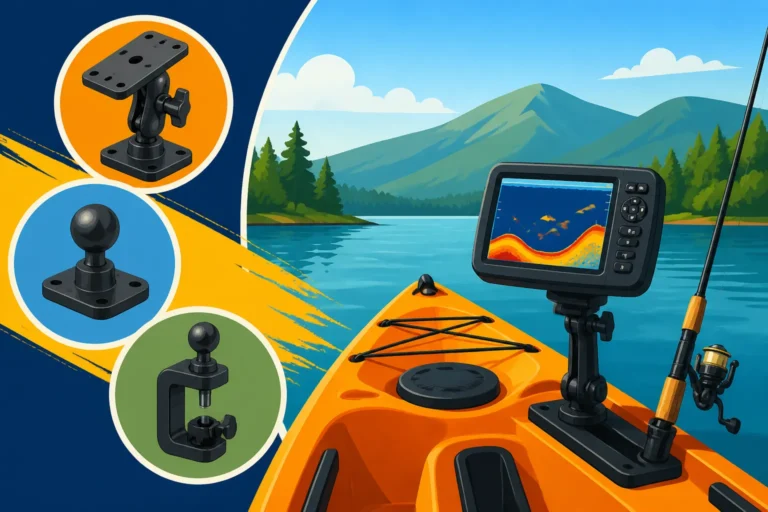
- Fish Finders (Sonars): These are indispensable. Today's units come with incredible capabilities like 2D sonar, Down Imaging, and Side Imaging, allowing you to see structure, baitfish, and game fish both directly beneath and to the sides of your boat. They help you identify ledges, brush piles, submerged timber, and schools of fish that you would never know existed otherwise. Brands like Humminbird and Lowrance offer a wide array of options, from basic models to advanced units with GPS mapping. Best Fish Finders for Tennessee Lake Fishing delves into this further.
- GPS and Chartplotters: Integrated into most fish finders, GPS allows you to mark waypoints, track your path, and navigate safely. Chartplotters display detailed lake maps, showing contours, depths, and navigation hazards. This is crucial for safely exploring large bodies of water like Norris Lake or Center Hill Lake and for returning to productive spots.
- Trolling Motors: While not strictly "electronics," electric trolling motors are often integrated with GPS and sonar systems. They allow for quiet, precise boat positioning, which is critical for sneaking up on fish or holding your boat over a specific piece of structure. Some even have "spot-lock" features that use GPS to automatically hold your boat in place, freeing you up to fish.
Essential Safety and Comfort Gear on the Water
Safety on a boat requires a more robust kit than on the bank. There are legal requirements you must meet, but more importantly, it's about protecting yourself and your passengers.
- Life Jackets (PFDs): As mentioned, these are mandatory. Ensure you have enough Coast Guard-approved life jackets for everyone on board, and that they are correctly sized. For children, the rules are even stricter, requiring them to wear a PFD at all times when the boat is underway.
- Emergency Kit: This should include a first-aid kit, a fire extinguisher, a whistle or horn, visual distress signals (like flares for larger boats, though often not required for smaller fishing boats on inland waters), and a throw cushion (Type IV PFD). Essential Safety Gear Checklist Before a Tennessee Fishing Trip offers a comprehensive list.
- Navigation Lights: If you're out before sunrise, after sunset, or in periods of low visibility (like fog), proper navigation lights are legally required to prevent collisions.
- Anchor: An anchor is crucial for holding your position in current or wind, especially if you've found a productive spot. Different anchors are suited for different bottom types (sand, mud, rock). Best Anchors for Tennessee Reservoir Fishing can help you choose the right one.
- Coolers/Livewells: For keeping your catch, a good cooler with plenty of ice is standard. For bass and crappie anglers, a livewell system is essential for keeping fish alive, especially if participating in a tournament or practicing catch-and-release.
- Weather Gear: Conditions can change quickly on the water. Bring rain gear, extra layers, and heavy-duty sun protection (long-sleeved shirts, neck gaiters) to be prepared for anything Tennessee weather throws at you.
Key Differences in Tackle and Techniques
Beyond the core rods, reels, and major electronics, many smaller pieces of tackle and the techniques you employ also shift dramatically between bank and boat fishing. It’s all about adapting to your environment and the opportunities it presents.
Adapting Lures and Baits for Each Scenario
The lures and baits you choose often reflect the limitations or advantages of your fishing platform.
For bank fishing, you're often targeting fish that are closer to the bank, or relying on your casting distance to reach deeper water. This means:
- Casting distance is key: Lures that are dense and aerodynamic, like spoons, heavier spinnerbaits, or compact jigs, can be cast further from shore.
- Versatile baits: Live worms, crickets, or prepared catfish baits are excellent choices because they appeal to a wide range of species that frequent shallow, bank-accessible areas. You don't need highly specialized lures when you're just looking for a bite.
- Topwater and shallow-diving baits: Fish often cruise shallow banks, especially during low light conditions or when foraging for insects. Poppers, shallow-running crankbaits, or even simple Texas-rigged worms can be incredibly effective here.
- Minimalist approach: You won't carry a huge array of every color and size. You'll often have a few trusted options that have historically produced for you in that specific spot.
For boat fishing, you have the luxury of accessing deeper water, covering more ground, and using specialized techniques. This opens up:
- Deep-diving lures: Crankbaits designed to reach 10, 20, or even 30+ feet become viable as you can fish ledges, drop-offs, and deep structure.
- Jigging spoons and blade baits: These are excellent for vertical jigging over submerged brush piles or schools of baitfish that you pinpoint with your sonar.
- Large swimbaits and umbrella rigs: These can mimic schools of baitfish and are incredibly effective for targeting large striped bass or schooling largemouth in open water, especially on expansive lakes like Watts Bar. Best Lures for Striped Bass in Open Water talks about this more.
- Trolling setups: If you're targeting species like crappie or striped bass that often suspend in open water, trolling with multiple lines (using planer boards or downriggers) is a highly effective boat-only technique.
- Live bait systems: Beyond just a bucket, boat anglers often have aerated livewells or bait tanks to keep a larger quantity of live minnows, shad, or even bluegill for an extended period, which is crucial for targeting species like catfish or stripers.
Managing Your Catch: Stringers, Livewells, and Coolers
How you handle a fish after you catch it is another significant difference.
Bank anglers typically have simpler options:
- Stringers: A classic. These hold fish in the water to keep them fresh until you're ready to leave. They're lightweight and easy to carry.
- Small coolers: If you plan to keep a few fish, a compact soft-sided cooler with ice is perfect for throwing in your backpack.
- Immediate release: Many bank anglers, especially those targeting smaller panfish or practicing catch-and-release, will simply unhook and release fish right away.
Boat anglers have more sophisticated solutions:
- Livewells: Built into many bass and crappie boats, livewells are aerated tanks that circulate fresh water, keeping fish alive and healthy. They are essential for tournaments where fish must be presented alive, or for anglers who wish to release fish back into the lake at the end of the day in prime condition. Do You Need a Livewell for Tennessee Bass Tournaments? can provide more detail.
- Large coolers: For anglers planning to keep a significant amount of fish for the dinner table, large hard-sided coolers filled with ice are standard. They can hold an impressive quantity and maintain temperature for extended periods. Brands like Yeti and RTIC are popular, but many other excellent options exist.
- Fish bags: For larger species like catfish or striped bass, insulated fish bags can be a convenient alternative to bulky coolers, especially if you need to carry fish from the boat to a cleaning station.
The Role of Accessories: Nets, Pliers, and Weighing Scales
Even the smallest tools play a crucial role, and their design often differs for bank vs. boat use.
For bank fishing:
- Compact landing net: If you carry a net, it will likely be a collapsible or compact model that can be easily stored or clipped to your backpack. Something small enough for crappie but strong enough for a decent bass.
- Multitool pliers: A single pair of multi-purpose pliers that can cut line, remove hooks, and crimp weights is often all you need to keep your gear streamlined.
- Small digital scale: If weighing fish is important to you, a small, handheld digital scale is convenient.
For boat fishing:
- Larger, longer-handled landing nets: When you're trying to net a thrashing fish from the deck of a boat, especially a larger one, a net with a longer handle and a wider hoop is invaluable. This prevents fish from getting under the boat or making a last-ditch run.
- Dedicated tools: You can afford to have specialized tools: long-nose pliers for deep-set hooks, bolt cutters for treble hooks on big lures, a specialized hook remover, and a variety of line cutters.
- Tournament scales and measuring boards: For serious anglers, especially those in bass tournaments, certified scales and official measuring boards are often required and will have dedicated storage on the boat.
- Gaffs: For very large species like blue catfish or stripers, a gaff might be used to safely bring the fish into the boat, though this is a specialized tool and not for every angler.
Making Your Choice: Blending the Best of Both Worlds
It’s not always an either/or situation. Many passionate Tennessee anglers enjoy both bank fishing for its simplicity and boat fishing for its expansive possibilities. Understanding when to choose which method, and how to adapt your budget and skills, makes for a more well-rounded and enjoyable fishing journey.
The Hybrid Angler: When to Choose Which Method
Becoming a hybrid angler means you’re flexible and can adapt to different situations, maximizing your chances of success and enjoyment.
-
Choose bank fishing when:
- You're short on time or want a quick, spontaneous trip: No boat prep, no launch hassles. Just grab your Best Gear for Bank Fishing in Tennessee and go.
- Fishing a specific, proven spot: If you know a particular bank at Percy Priest Lake holds fish, there's no need to launch a boat.
- Targeting easily accessible species: Panfish, smaller bass, and catfish are often readily available from shore.
- Introducing kids to fishing: Bank fishing offers a safer, simpler, and more immediate experience. Consider Easy Bank-Access Ponds for a First Fishing Trip Near Knoxville.
- Budget is a consideration: Bank fishing is significantly less expensive, requiring minimal investment in gear and no boat maintenance or fuel costs.
- Enjoying peace and quiet: Sometimes, it’s just about being outdoors, and a quiet spot on the bank is perfect for that.
-
Choose boat fishing when:
- You want to explore vast waters and reach remote spots: This is the ultimate advantage of a boat, allowing you to cover miles of water on lakes like Kentucky Lake or Chickamauga Lake.
- Targeting open-water or deep-water species: Striped bass, suspended crappie, or deep-dwelling bass often require a boat and electronics to locate and catch.
- Fishing in tournaments: Tournaments almost exclusively require boats to cover water and compete effectively.
- You have specific structure in mind: Want to fish that submerged hump or creek channel far from shore? A boat is essential.
- Comfort and convenience are priorities: While there's effort in launching, a boat offers more space, often more comfortable seating, and protection from the elements.
Budgeting for Your Preferred Fishing Style
The financial commitment for bank fishing versus boat fishing can be vastly different.
Bank Fishing Budget:
- Low Entry Cost: You can start bank fishing with a basic rod and reel combo, a small tackle box, and some bait for a very modest investment. You can find perfectly functional Best Rod and Reel Combo for Beginners that won't break the bank.
- Minimal Ongoing Expenses: Your primary costs will be bait, line, and occasional lure replacements. No fuel, no boat maintenance, no registration fees.
- Focus on Essentials: The budget encourages a focus on essential, multi-purpose gear, promoting a simpler, often more fulfilling fishing experience.
Boat Fishing Budget:
- Significant Upfront Investment: A boat itself is a major purchase, whether new or used. Then there are engines, trailers, and the myriad of electronics.
- Ongoing Expenses: Fuel, oil, maintenance, storage, insurance, registration fees, and safety equipment all add up. Even if you're driving to launch points, there's fuel for your tow vehicle.
- Specialized Gear Costs: While you can reuse some bank fishing tackle, many boat anglers invest in multiple specialized rod and reel setups, advanced electronics, and specific lures for different techniques.
- Time Investment: Beyond the money, boat fishing often requires more time for prep, launch, retrieval, and cleaning.
It’s important to be realistic about your budget and how much time you're willing to commit. Starting with bank fishing is an excellent way to get into the sport before considering the larger investment of a boat.
Maximizing Your Experience: Learning Both Approaches
Ultimately, the goal is to enjoy your time on the water (or beside it!). Learning both bank and boat fishing techniques broadens your horizons and makes you a more versatile angler.
- Start Simple: If you're new to fishing, definitely start with bank fishing. It's less intimidating, allows you to learn the basics of casting, retrieving, and fish behavior without the added complexities of boat handling. How to Fish From the Bank for Beginners is a great resource.
- Gradual Progression: As you gain confidence on the bank, you might consider renting a kayak or a small jon boat for a day. This is a fantastic way to dip your toes into boat fishing without a major commitment. Kayak fishing, for example, offers a blend of portability and water access, and is growing in popularity here in Tennessee.
- Observe and Learn: Whether you're on the bank or in a boat, pay attention to local conditions, water levels, weather patterns, and what other anglers are doing. Talk to people at bait shops or boat ramps; local knowledge is priceless.
- Invest Wisely: When you're ready to buy gear, do your research. For example, if you're serious about crappie fishing, understand Best Tackle for Tennessee Crappie Fishing before you buy. For bigger purchases like electronics or a boat, consider what kind of fishing you'll do most often.
By understanding the distinct demands and opportunities of both bank and boat fishing, you can equip yourself properly, make informed decisions, and ultimately have more successful and enjoyable adventures in the fantastic fishing waters of Tennessee.
Disclaimer
This article is for general informational purposes only and does not constitute professional advice. Laws, prices and regulations vary by location and change over time. Consult a qualified professional for guidance on your specific situation.