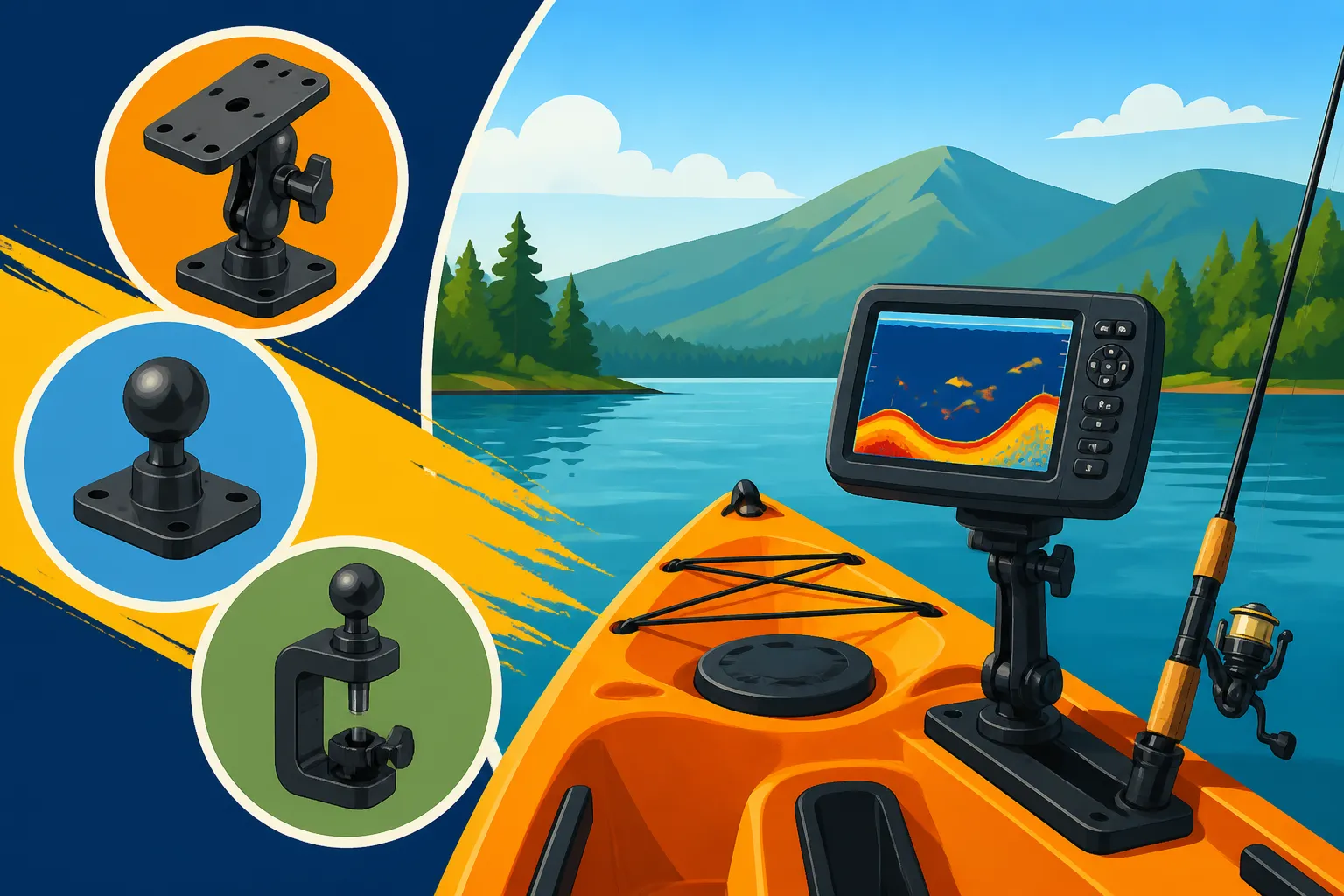
Best Fish Finder Mounts for Kayaks
Finding the perfect spot to mount your fish finder on a kayak can feel like a puzzle, especially when you're itching to get out on the water and not spend hours drilling or rigging. Many anglers struggle with securing their valuable electronics safely and effectively, wanting something stable enough for choppy water but also easy to remove and adjust. This guide is here to walk you through the various fish finder mount options for kayaks, helping you choose the best setup for your Tennessee fishing adventures.
Understanding Your Kayak and Fish Finder Needs
Before you even think about specific mounts, it’s crucial to take a good, hard look at your kayak and the fish finder unit you plan to use. Not all kayaks are created equal when it comes to mounting surfaces, and certainly, not all fish finders have the same footprint or weight. A little planning here can save you a lot of headaches, frustration, and potentially even lost gear down the road.
Kayak Hull Types and Mounting Surfaces
Kayaks come in a fantastic array of shapes and sizes, and their hull designs often dictate where and how easily you can attach accessories. A wide, stable fishing kayak, often called a "sit-on-top," might have large, flat areas or even integrated track systems designed specifically for mounting gear. These are often angler-friendly, providing pre-drilled points or rails that simplify the process immensely. You might also find flush-mount rod holders or designated accessory points.
On the other hand, a "sit-inside" kayak, or a more compact recreational model, might have very limited flat real estate. The cockpit rim might be your best bet, or perhaps a small area near the bow or stern. Consider if your kayak has existing gear tracks, like those from YakAttack or other popular brands. These tracks are gold for quick, tool-free adjustments and offer incredible versatility. If you don't have them, adding a track might be your first step. It really changes the game for Kayak Fishing Gear Checklist for Beginners and makes attaching everything from rod holders to fish finders a breeze.
Fish Finder Size and Weight Considerations
Your fish finder unit itself plays a huge role in mount selection. Are you running a compact, entry-level model with a 4-inch screen, or a full-blown MFD (multi-function display) with an 8-inch screen and a hefty transducer? The larger and heavier your fish finder, the more robust and stable its mount needs to be. A small, lightweight unit might do just fine on a simple suction cup mount for calm waters, but a heavier one demands something with serious holding power.
Think about the forces at play: vibrations from paddling, bumps from hitting submerged logs, or even waves from a passing boat on Kentucky Lake Fishing on the Tennessee Side. A flimsy mount under a heavy unit is a recipe for disaster, risking damage to your fish finder or, worse, losing it overboard. Always check the weight capacity of any mount you consider and compare it to the total weight of your fish finder head unit, bracket, and any cables. You want a secure fit that minimizes wobble and ensures your screen stays visible and stable throughout your entire fishing trip.
Popular Types of Kayak Fish Finder Mounts
Now that you've assessed your kayak and fish finder, let's dive into the actual mounting solutions available. There's a wide world of options, each with its own benefits and drawbacks, designed to suit different angling styles and kayak setups. The right choice depends on how permanent you want the installation to be, how much adjustability you need, and the type of fishing you typically do.
Track Mount Systems
Track mount systems are arguably the most popular and versatile choice for kayak anglers, and for good reason. These systems utilize a track (often aluminum or durable plastic) that is either molded into your kayak's deck or bolted on. Once the track is in place, you can attach a variety of accessories, including fish finder mounts, via track-specific bases. Brands like RAM Mounts, Scotty, and YakAttack dominate this space, offering a huge ecosystem of compatible accessories.
The beauty of track mounts lies in their adjustability. You can slide your fish finder forward or backward along the track, rotate it, and even tilt it, all without tools in most cases. This means you can quickly reposition your screen for optimal viewing, or even remove the entire setup when transporting your kayak or for security. Many track mounts come with a ball-and-socket design (like RAM Mounts) which provides infinite adjustment angles, perfect for dialing in the exact position. You can find these systems readily available at outdoor retailers like Bass Pro Shops or online through Amazon, often with transducer arms that fit directly into the same track, creating a streamlined system for Boat Fishing Rules and License Requirements in Tennessee.
Suction Cup Mounts
For anglers looking for a non-permanent, tool-free solution, suction cup mounts can be a tempting option. These mounts attach to a smooth, flat surface on your kayak using a powerful suction cup. They're quick to install and remove, making them ideal for occasional use, rental kayaks, or if you prefer not to drill into your boat. They also tend to be among the more budget-friendly options.
However, suction cup mounts come with significant caveats. Their holding power is highly dependent on a clean, smooth, non-porous surface. Any texture, dirt, or even prolonged exposure to direct sunlight can compromise the suction, leading to your fish finder potentially detaching. They are generally not recommended for heavy fish finder units or for fishing in rough or choppy water where constant vibrations and impacts could cause them to fail. While they offer convenience, many seasoned kayak anglers find them less reliable for serious fishing, especially when you're in the middle of a hot bite and suddenly your screen is doing a swim test. Use them with caution and always double-check the suction before heading out.
Permanent Drill Mounts
For the angler who knows exactly where they want their fish finder and values absolute stability above all else, a permanent drill mount is the way to go. These mounts require drilling holes into your kayak's deck or hull to bolt the mount directly in place. While this might sound daunting, especially for a new kayak owner, a properly installed drill mount provides an unmatched level of security and rigidity.
Permanent mounts are fantastic for larger, heavier fish finder units that demand unwavering stability. They eliminate any wobble or play, ensuring your screen remains perfectly still, even in the choppiest conditions. When installing, it's crucial to use marine-grade stainless steel hardware and seal all drilled holes with marine sealant (like marine silicone or a quality marine epoxy) to prevent water intrusion. This protects your kayak's integrity and prevents nasty surprises later. While less flexible than track mounts for repositioning, a well-placed drill mount can give you peace of mind that your expensive electronics are going nowhere. Many anglers combine a permanent base with an adjustable arm for the best of both worlds – rock-solid attachment with some flexibility for viewing angle.
Key Features to Look for in a Kayak Fish Finder Mount
Choosing a mount isn't just about the type; it's also about the quality and specific features that make it suitable for kayak fishing. You want something that can stand up to the elements, offer flexibility, and ultimately enhance your fishing experience rather than hinder it.
Adjustability and Versatility
Kayak fishing often means you're in a dynamic environment. The sun might be in your eyes, you might need to stand up, or you might switch from paddling to fishing a specific structure. A good fish finder mount should allow for easy adjustment of your screen's angle, height, and rotation. Look for mounts with ball-and-socket joints, articulating arms, or quick-release mechanisms that let you fine-tune the position without fumbling with tools. This is especially important for Fishing From the Bank vs a Boat, where viewing angles can change significantly.
Consider how easy it is to remove the fish finder when you're done for the day or when you need to transport your kayak. A system that allows for quick detachment not only prevents theft but also protects your electronics from damage during loading and unloading. Some mounts even offer modular components, letting you swap out different accessories (like a fish finder for a camera) on the same base, adding immense value and versatility to your setup.
Durability and Material Quality
Kayaks are exposed to harsh conditions – saltwater or freshwater, UV rays, bumps, and splashes. Your fish finder mount needs to be built to withstand all of this. Look for mounts made from marine-grade materials such as high-strength composite plastics, stainless steel, or anodized aluminum. These materials resist corrosion, degradation from UV exposure, and general wear and tear.
Avoid mounts with flimsy plastic components or exposed, non-stainless steel hardware that will rust quickly. A robust construction means your mount will last longer, provide reliable support, and ultimately protect your valuable fish finder. Remember, you're not just buying a piece of plastic or metal; you're investing in the security of your electronics. A cheap mount that breaks means a lost fish finder, and nobody wants that. Brands like RAM Mounts, widely available at Bass Pro Shops, are renowned for their rugged construction and reliability in marine environments.
Ease of Installation and Removal
While some anglers don't mind a permanent installation, many kayak fishers appreciate the ability to easily install and remove their fish finder setup. This convenience is not just about avoiding drills; it's about adaptability. If you frequently transport your kayak on roof racks, or if you fish different bodies of water and want to move your setup between kayaks, quick installation and removal are paramount.
Track-mounted systems excel here, often requiring nothing more than a twist or a lever to secure or release. Even some drill mounts offer quick-release plates for the fish finder itself, allowing you to leave the base mounted but take the unit with you. Think about the tools required for installation: do you need a full toolkit, or can it be done with just a screwdriver or an Allen wrench? The simpler the process, the more likely you are to actually use and enjoy your fish finder on every trip, whether you're targeting Tennessee's Top Bass Fishing Lakes or exploring remote streams.
| Mount Type | Pros | Cons | Best Use Cases |
|---|---|---|---|
| Track Mount | Highly adjustable, versatile, easy removal | Requires track installation (if not built-in) | Anglers needing flexibility, multiple accessories |
| Suction Cup | No drilling, very easy install/removal | Less reliable, not for heavy units or rough water | Casual use, rental kayaks, calm water |
| Permanent Drill | Maximum stability, rock-solid security | Requires drilling, less adjustable/removable | Heavy units, rough conditions, dedicated setups |
Installation Tips and Best Practices
Once you've picked out the perfect mount, the next step is getting it properly installed on your kayak. This isn't just about bolting it on; there are nuances to consider that will ensure your setup is effective, safe, and doesn't interfere with your paddling or fishing.
Transducer Mounting Considerations
Your fish finder is only as good as its transducer, and how you mount that transducer is just as important as mounting the head unit. Most kayak fish finders come with transom-mount style transducers, but these don't always work perfectly on a kayak. Many anglers opt for a transducer arm that attaches to the same track system as their fish finder mount, allowing the transducer to be deployed into the water and easily retracted. This is a great solution for Kayak Fishing Gear Checklist for Tennessee Rivers.
Another popular method is "in-hull" mounting, where the transducer is epoxied or siliconed to the inside of the kayak's hull, providing a "shoot-through-hull" reading. This protects the transducer from damage but can sometimes reduce signal clarity and doesn't work well on all hull materials. If you have a scupper hole, a scupper-mount transducer cart or a custom bracket can be incredibly clean and effective. Always ensure your transducer is positioned correctly, free from obstructions, and completely submerged for accurate readings. The placement can significantly impact your ability to Find Crappie in Summer or locate deep-water bass.
Cable Management
Untamed cables are not just an eyesore; they're a tripping hazard and can snag on fishing lines, paddles, or other gear. Once your fish finder and transducer are mounted, take the time to properly manage your cables. Use zip ties, adhesive cable clips, or flexible tubing to route the cables neatly along your kayak's deck or through access points. This is an often-overlooked step that contributes immensely to a cleaner, safer, and more enjoyable fishing experience.
Ensure there's enough slack in the cables to allow for any adjustments you might make to your fish finder's position, but not so much that they become a nuisance. If you're drilling holes for cables, remember to use marine sealant around the entry points to prevent water from getting into your hull. A tidy setup means less distraction and more focus on what matters – catching fish.
Pre-Trip Checks
Before every single fishing trip, make it a habit to perform a quick pre-trip check of your fish finder mount and transducer. This only takes a minute but can prevent a world of frustration.
- Wiggle Test: Give your fish finder unit a gentle wiggle. Does the mount feel secure? Is there any excessive play or looseness? Tighten any screws or levers as needed.
- Transducer Check: Is your transducer arm properly deployed and secure? If it's an in-hull mount, ensure it's still firmly attached.
- Cable Integrity: Are all cables free from kinks, snags, or fraying? Are they still neatly managed and out of the way?
- Power Connection: Double-check that your power cable is securely plugged into your fish finder and battery.
These simple checks ensure that your valuable electronics are safe and ready to perform when you hit the water, letting you focus on the fish instead of fiddling with loose gear. Whether you're chasing Tennessee Striped Bass Fishing Techniques or fly fishing for trout, a reliable setup makes all the difference.
Disclaimer
This article is for general informational purposes only and does not constitute professional advice. Laws, prices and regulations vary by location and change over time. Consult a qualified professional for guidance on your specific situation.