Best Boats for Fishing Chickamauga Lake in Winter
Ah, winter fishing on Chickamauga Lake! It's a different beast entirely, isn't it? The fair-weather anglers have packed up their gear, leaving the lake serene, almost eerily quiet. But for those of us brave enough to face the chill, winter on Chickamauga offers some incredible opportunities for trophy fish – if you've got the right setup. The challenge isn't just battling the cold yourself, it's making sure your boat is truly up to the task of keeping you safe, comfortable, and putting you on those deep-holding lunkers. This guide is all about helping you figure out what kind of boat will serve you best when the mercury drops, turning Chickamauga into a winter wonderland for serious anglers.
Navigating the Winter Realities of Chickamauga Lake
Fishing Chickamauga Lake in winter isn't for the faint of heart, but it can be incredibly rewarding. However, the conditions dictate a lot about how you fish and, crucially, what kind of boat will perform best. You’re not just dealing with chilly air; the water itself changes, and so does the behavior of the fish you're targeting.
The Chill Factor and Water Temperature
Let's be real: it gets cold on Chickamauga in the winter. The wind can cut right through you, especially when you're cruising across open water. This isn't just about your personal comfort; it impacts how long you can effectively fish and how safely you can operate your vessel. When the air temperature hovers around freezing, and the water temperature drops into the 40s or even upper 30s, every aspect of your experience is amplified. Getting wet, even a little splash from a chop, can quickly lead to dangerous situations. Your hands, even gloved, can lose dexterity when exposed to biting wind for too long.
Moreover, while Chickamauga is a big lake, shallow coves and backwaters can sometimes skim with ice during prolonged cold snaps. While you might not be breaking through thick sheets, even thin ice can be abrasive on hulls and problematic for lower units. The type of boat you choose needs to withstand these environmental challenges, offering not just a platform for fishing but also a degree of protection from the elements.
Deep Water and Fish Behavior
During the colder months, fish, especially bass, tend to migrate to deeper waters. They seek stable temperatures and often relate to main lake channels, deep ledges, humps, and submerged timber. This means your fishing strategy shifts from covering vast amounts of shallow water to meticulously picking apart deep structure. This is where your boat's capabilities really come into play.
You'll spend a lot more time idling slowly, watching your electronics, and making precise casts to specific targets. This isn't the time for high-speed runs between shallow stumps. You need a boat that allows for stable, slow presentations, often in areas exposed to main lake winds or current. A boat that drifts well, holds a position effectively with a trolling motor, and offers a clear view of your sonar unit becomes invaluable. This deeper focus also means you might encounter different types of fish, like catfish or crappie, that also gravitate to deeper haunts, broadening your winter fishing possibilities. Understanding How Water Temperature Affects Fish Activity is key here.
Essential Boat Features for Winter Fishing on Chickamauga
When you’re contemplating hitting Chickamauga in the dead of winter, your boat isn't just a vehicle; it's your lifeline and your base of operations. Certain features move from "nice-to-have" to "absolutely essential" when the temperatures plunge.
Stability and Safety in Cold Water
First and foremost, safety cannot be overstated. Wearing multiple layers of clothing, often bulky and restrictive, means your balance might not be as sharp as in summer. A stable fishing platform is paramount. Imagine setting the hook on a lunker with heavy winter gloves on, or retrieving a lure in choppy conditions; you need to feel secure underfoot. Boats with wider beams and lower centers of gravity offer better stability, reducing the risk of accidental slips or falls.
The real danger in cold water is immersion. If you were to go overboard, even with a life jacket, hypothermia sets in rapidly. Therefore, a boat design that minimizes spray and offers high freeboard (the distance from the water to the top of the boat's side) can make a huge difference in keeping you dry and preventing an accidental dunking. Always ensure you have your Essential Safety Gear Checklist Before a Tennessee Fishing Trip squared away, and everyone on board knows where it is. Having a clear, uncluttered deck space is also crucial for quickly reacting to any situation without tripping over gear.
Protection from the Elements
The biting wind on a cold Chickamauga day can be brutal. A boat with substantial wind protection, such as a full windshield or even a small console enclosure, can be a game-changer. It shields you from the direct wind, reducing wind chill and allowing you to focus on fishing rather than shivering. Some boats can even be outfitted with canvas enclosures or portable heaters (use these with extreme caution and ventilation to avoid carbon monoxide buildup).
Even a good, tall console that you can duck behind can offer significant relief. For multi-day trips or longer outings, the ability to escape the elements for even a few minutes can make all the difference in maintaining your core temperature and morale. Think about where you'll be sitting or standing most often, and how well that area is protected from the prevailing winds on the lake. You’ll be grateful for every bit of shelter when that icy breeze kicks up.
Electronics and Navigation
Winter fishing on Chickamauga is often a game of hide-and-seek with deep-holding fish. This makes high-quality electronics absolutely non-negotiable. A top-tier fish finder with clear side-imaging, down-imaging, and 2D sonar capabilities will allow you to scan vast areas of the bottom, identify submerged structure, and pinpoint those lethargic bass or crappie huddled together. The ability to see individual fish or schools holding tight to a ledge is paramount when they aren't actively chasing bait. Check out options for Best Fish Finders for Tennessee Reservoir Fishing to ensure you're getting the best view possible of the underwater world.
Beyond finding fish, reliable GPS navigation is equally important. Winter days are shorter, and weather can change quickly, bringing fog or low visibility. Marking productive waypoints, navigating back to a launch in poor conditions, or simply staying on a specific contour line requires precise GPS. Ensure your boat has dedicated, secure mounting spots for these units, and a robust power system to run them all day without draining your batteries, especially when cold weather can impact battery performance. Many anglers even bring portable power stations for extra juice to keep their electronics humming.
Types of Boats Best Suited for Chickamauga Winter Fishing
Alright, so we know what challenges Chickamauga throws at us in winter. Now, let's talk about the different kinds of boats and how they stack up against those cold-weather demands. There's no single "perfect" boat, but there's definitely one that's perfect for your winter fishing style.
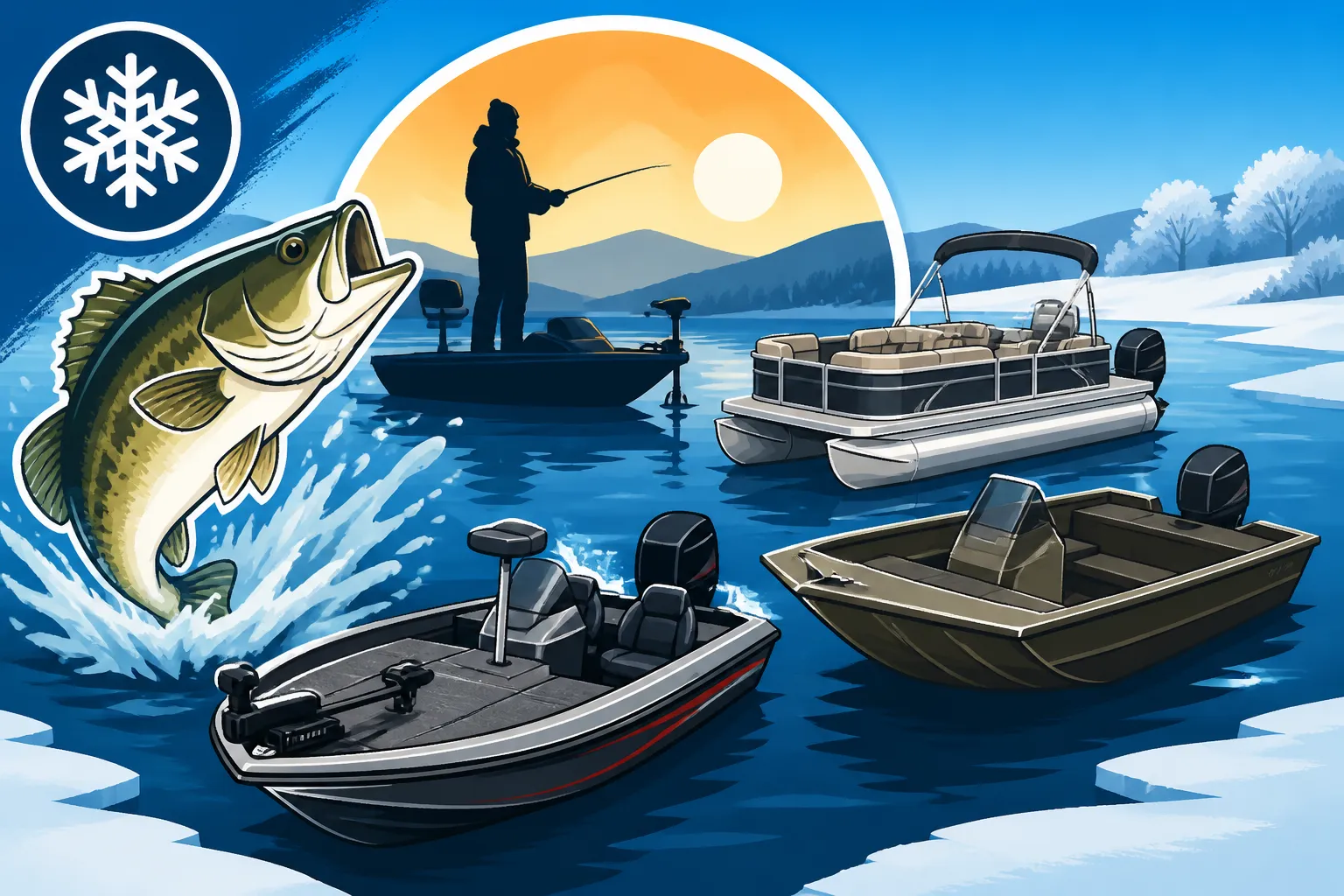
Bass Boats: Pros and Cons for Winter
Classic bass boats are undeniably built for speed, performance, and putting you on fish quickly. Many anglers already own them, and they excel at covering large expanses of water on Chickamauga Lake, Tennessee's Top Spot for Record Largemouth Bass.
Pros:
- Speed: If you need to hit multiple spots across Chickamauga's vastness, a bass boat gets you there fast. This can be crucial on short winter days.
- Casting Platforms: Unmatched casting platforms, both front and rear, give you ample space to work your lures and cover water effectively.
- Integrated Electronics: Modern bass boats come with sophisticated electronics setups, often with multiple screens at the bow and console, perfect for dissecting deep structure.
- Trolling Motor Performance: They are typically equipped with powerful, foot-controlled trolling motors that allow for precise boat positioning, essential for working those subtle winter ledges.
Cons:
- Exposure to Elements: This is the big one. The open design means you're almost entirely exposed to wind, cold, and spray. While a good windshield helps, you'll feel the chill more acutely.
- Lower Freeboard: Most bass boats have a relatively low freeboard, meaning less protection from waves and a higher chance of taking spray over the bow in rougher conditions.
- Storage for Bulky Gear: While they have lots of storage, winter gear (heavy jackets, bibs, extra blankets, thermos) can be bulky and might quickly eat up available space.
Ultimately, a bass boat is best for the dedicated winter bass angler who prioritizes speed and casting space, and is willing to bundle up and brave the cold. If you're targeting specific deep bass patterns, a bass boat's precision can be a huge asset. For some more specific ideas, look into Best Bass Boats Under 20 Feet.
Aluminum Jon Boats or Multi-Species Boats
These boats often get overlooked for serious fishing, but they can be surprisingly capable on Chickamauga in winter, especially if you're mindful of their limitations.
Pros:
- Affordability: Generally more budget-friendly than fiberglass bass boats or deep-V models.
- Versatility: Many multi-species aluminum boats are designed to handle various fishing styles, from bass to crappie to catfish. They can be rigged simply or outfitted with more advanced electronics.
- Durability: Aluminum is tough. While not invincible, it can shrug off minor bumps with submerged timber or other unseen hazards that might be more prevalent in winter, especially with lower water levels.
- Customization: They are often blank canvases, allowing you to add portable enclosures, heaters, or custom seating to improve winter comfort.
Cons:
- Rough Water Ride: Lighter aluminum hulls can provide a rougher, wetter ride in choppy conditions compared to heavier fiberglass boats.
- Limited Protection: Stock jon boats offer minimal protection from the elements, though some multi-species models have full consoles and windshields.
- Speed: Generally slower than bass boats, which means longer runs across Chickamauga can take more time and expose you to the cold for longer.
A well-rigged aluminum multi-species boat can be a fantastic option, particularly if you're after a wider range of fish like crappie or catfish that often hold in slightly different, though still deep, areas.
Walleye Boats/Deep-V Boats
Often seen on northern lakes, deep-V boats, sometimes called walleye boats, are gaining popularity in places like Tennessee for their exceptional rough-water handling and comfort. When the wind picks up on Chickamauga, these boats really shine. For a good comparison, check out Deep-V vs Bay Boat for Trolling Kentucky Lake Stripers.
Pros:
- Superior Rough Water Handling: The deep-V hull cuts through waves, providing a much smoother, drier ride in choppy conditions, which are common on large lakes in winter.
- High Freeboard: Excellent protection from spray and waves, keeping you much drier and warmer.
- Stability: Their design offers great stability, especially when drifting or moving slowly, even with multiple anglers moving around.
- Comfort: Often equipped with comfortable, secure seating and larger, more protective consoles.
- Storage: Ample dry storage for all your bulky winter gear, tackle, and emergency supplies.
Cons:
- Cost: Generally more expensive than jon boats and often comparable to or even more than high-end bass boats.
- Less Casting Deck Space: While they have good deck space, it’s often not as expansive or open as a dedicated bass boat, which can feel a bit more restrictive for certain casting techniques.
- Launch/Retrieve: Their size and weight can sometimes make launching and retrieving a bit more challenging on certain ramps, especially those that might be icy or slick in winter.
If comfort, safety, and the ability to fish effectively in less-than-ideal conditions are your top priorities, a deep-V boat is a phenomenal choice for winter fishing on Chickamauga.
Pontoon Boats (with caveats)
You might not typically think of a pontoon for serious winter fishing, but with the right setup, they actually have some surprising advantages.
Pros:
- Unmatched Stability and Space: Pontoons offer incredible stability and an enormous amount of deck space. This is fantastic for multiple anglers, especially if you're bringing kids or less experienced friends.
- Enclosures/Protection: Many pontoons come with full or partial enclosures, which can be a literal lifesaver in freezing temperatures, creating a warm, dry fishing environment. You can add portable heaters (again, with extreme caution and ventilation).
- Comfort: Plush seating and plenty of room to stretch out make long winter days much more enjoyable.
Cons:
- Speed and Maneuverability: Pontoons are slow and not designed for precision casting or quickly moving between tight spots. They're better suited for anchoring up or slow trolling in a concentrated area.
- Wind Sensitivity: Their large, flat profiles can make them susceptible to being pushed around by strong winter winds, making boat positioning challenging without a powerful trolling motor.
- Deep Water Access: While they can navigate deep water, their draft might be an issue in certain shallow areas, and getting right up against steep bluffs or subtle deep contours can be harder.
If your winter fishing on Chickamauga is more about a relaxed, comfortable outing with family or friends, focusing on specific deep-water crappie or catfish holes, a pontoon with a good enclosure can be a fantastic, albeit unconventional, choice.
Outfitting Your Boat for Winter Success
Having the right type of boat is just the first step. To truly conquer Chickamauga in winter, you need to think about how you equip that vessel. It's about maximizing efficiency, safety, and comfort.
Power and Propulsion
A reliable outboard motor is absolutely critical. Imagine being miles from the ramp on a frigid day and your engine won't start – it's a terrifying thought. Before winter, get your engine thoroughly checked and consider fresh fuel with a stabilizer. Cold starts are harder on engines and batteries, so having a robust battery system is a must.
Beyond the main engine, a powerful and reliable trolling motor is a winter angler's best friend. When fish are deep and lethargic, precise boat positioning over structure is paramount. Whether you're drop-shotting a deep ledge or slow-trolling for crappie, a strong trolling motor allows you to hold your position against wind and current, and move stealthily. Many anglers prefer electric steer models with GPS anchoring capabilities, which can be found at retailers like Bass Pro Shops or online at Amazon. This means less effort from you, allowing you to focus on your fishing. Make sure to consider Best Trolling Motors for Tennessee Bass Boats when upgrading. Don't forget to check your propeller for any dings or damage; a small issue can become a big problem when you're relying on it in cold conditions.
Storage and Organization
Winter fishing means more gear. More layers of clothing, bigger gloves, perhaps a thermos with hot coffee, extra food, and emergency supplies. Your boat needs adequate, dry storage to keep all this essential gear protected from moisture and readily accessible. Lockable compartments are a plus for security, especially if you're leaving the boat overnight.
Think about how you'll keep your tackle organized but also protected from the cold. Fishing line can become brittle in extreme cold, and plastic lures can harden. Keeping sensitive items in a protected compartment can extend their life. Also, consider how you'll keep your catch fresh. Even in cold water, an insulated livewell or cooler is important. No one wants to deal with half-frozen fish or bait. Having a designated spot for everything reduces clutter and enhances safety on deck.
Creature Comforts
While a boat is primarily for fishing, a little bit of comfort goes a long, long way in the winter.
- Heaters: Portable propane heaters, like those you can find on Amazon, can take the edge off the cold in enclosed spaces. However, always use them with extreme caution and ensure adequate ventilation to prevent carbon monoxide buildup. Never run them in a completely sealed space.
- Warm Beverages and Food: A good thermos filled with hot coffee, tea, or soup can be a moral booster on a cold day. Pack high-energy snacks that are easy to eat with gloves on.
- Quality Seating: If your boat has uncomfortable seats, consider upgrading them or adding cushions. Sitting for hours in the cold can be taxing, and comfortable seating helps reduce fatigue.
- Dry Boxes: Small, waterproof dry boxes are excellent for keeping your phone, wallet, and other personal electronics safe and dry, away from any potential splashes.
- Wipes and Towels: Keep plenty of absorbent towels on board. From wiping down equipment to drying hands, they're essential for staying clean and comfortable.
| Boat Type | Pros for Winter Fishing on Chickamauga | Cons for Winter Fishing on Chickamauga | Ideal Winter Angler |
|---|---|---|---|
| Bass Boat | Fast travel, excellent casting platforms, precise trolling motor control, often pre-rigged with advanced electronics. | Exposed to elements, lower freeboard, can be a wet ride in chop, bulky winter gear takes up space. | Dedicated bass anglers prioritizing speed and casting space; willing to heavily bundle up. |
| Aluminum Jon/Multi-Species | Affordable, versatile for different fish species, durable hull, customizable for added protection, often lighter for easy launch. | Rougher, wetter ride in chop, minimal stock protection from elements, generally slower. | Budget-conscious anglers, those targeting mixed species (crappie, catfish), or those who value durability and customization. |
| Deep-V/Walleye Boat | Superior rough water handling, high freeboard for dry ride, excellent stability, often built-in comfort features, ample dry storage. | Higher cost, less open deck space than a bass boat, can be heavier to launch. | Anglers prioritizing comfort, safety, and a smooth ride in adverse conditions; excellent for vertical jigging or slow trolling deep structure. |
| Pontoon Boat | Unmatched stability and space, excellent platform for multiple anglers, easily enclosed for warmth, very comfortable seating. | Slower, less maneuverable for precise casting, susceptible to wind pushing, not ideal for covering vast distances quickly. | Family outings, casual social fishing, or dedicated crappie/catfish anglers who focus on specific deep holes and prioritize comfort and space. |
Ultimately, the "best" boat for fishing Chickamauga in winter truly depends on your personal priorities, fishing style, and budget. Whether it's the speed of a bass boat, the ruggedness of an aluminum rig, the comfort of a deep-V, or the spaciousness of a pontoon, each has its unique advantages and disadvantages when the temperatures drop. No matter which you choose, equipping it properly with reliable power, advanced electronics, and safety gear, alongside some crucial creature comforts, will make your cold-weather adventures on Chickamauga not just tolerable, but truly memorable and rewarding. After all, those winter lunkers are out there, just waiting for a well-prepared angler to find them!
Disclaimer
This article is for general informational purposes only and does not constitute professional advice. Laws, prices and regulations vary by location and change over time. Consult a qualified professional for guidance on your specific situation.