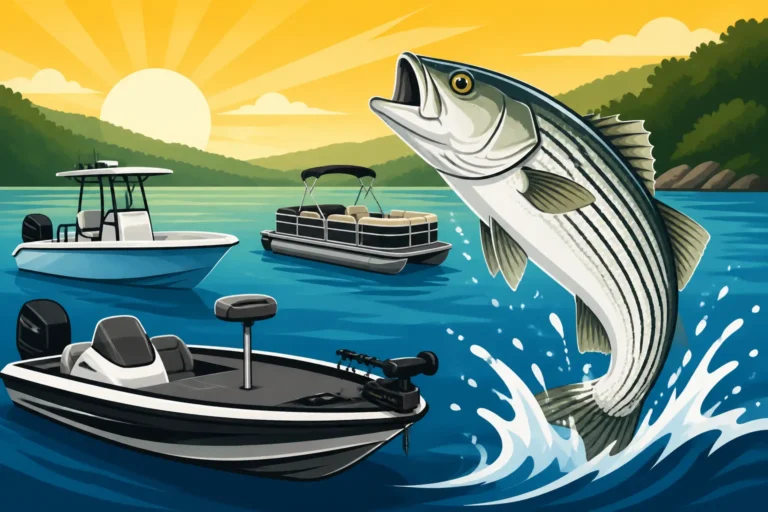
Deep-V vs Bay Boat for Trolling Kentucky Lake Stripers
The decision of which boat to buy for serious fishing on a massive body of water like Kentucky Lake can feel overwhelming, especially when you're dreaming of chasing those hard-fighting striped bass. Anglers often find themselves caught between different hull designs, wondering which one offers the best blend of comfort, capability, and specialized rigging for trolling. This guide aims to clear up that confusion, offering a deep dive into the pros and cons of deep-V hulls versus bay boats when targeting stripers on Tennessee's expansive waters.
Deep-V Hulls: The Offshore Warrior for Big Water Stripers
When you picture a boat confidently cutting through choppy water, chances are you're imagining a deep-V hull. These boats are designed for exactly that: handling the unpredictable conditions of large lakes and coastal waters with grace and stability. For serious striper anglers who spend countless hours trolling the main channels of Kentucky Lake, a deep-V often feels like a natural extension of their ambition.
Anatomy of a Deep-V and Its Ride Quality
A deep-V hull is characterized by its pronounced V-shape extending from bow to stern, with a sharper deadrise (the angle between the bottom of the boat and a horizontal plane) at the transom. This design allows the boat to slice through waves rather than slap over them, providing a much smoother and more comfortable ride in rough conditions. Instead of being tossed around, you feel the boat absorb the impact, which is a huge benefit when you're hours into a trolling pattern and the wind has picked up.
The sharper entry at the bow helps deflect spray, keeping the deck drier, which is especially appreciated on cooler days or when the waves are really rolling. While this design can sometimes make the boat feel a bit "rolly" when at rest or very slow speeds, the trade-off for a superior ride when underway is often well worth it for those venturing far out on the main lake. It's about minimizing fatigue so you can focus on the fishing, not bracing yourself against every swell. This ride quality is a key reason many anglers swear by them for long days chasing Striped Bass Fishing in Tennessee Reservoirs.
Deep-V Performance on Kentucky Lake's Expansive Main Channel
Kentucky Lake is vast, stretching over 160 miles with a massive main channel that can get surprisingly rough, especially with strong winds or heavy boat traffic. This is where a deep-V hull truly shines. Its ability to maintain a consistent trolling speed and direction, even when encountering significant waves, is paramount for presenting your baits effectively to elusive stripers. Imagine trying to keep your planer boards tracking true when your boat is bouncing and veering – it's a nightmare.
A deep-V helps mitigate these issues, providing a stable platform for your Rod Holder and Planer Board Setup for Reservoir Striper Trolling. You can confidently run your lines, knowing the boat is doing its job to keep your spread organized and your baits in the strike zone. Furthermore, if a storm rolls in unexpectedly, a deep-V offers the peace of mind that it can safely and comfortably get you back to the ramp, even through challenging waters. It's built for those long, offshore runs that are often necessary to find the schooling stripers.
Rigging a Deep-V for Serious Striper Trolling
Deep-V boats, particularly those designed for offshore fishing, come with robust transoms and gunwales that are perfect for mounting heavy-duty rod holders, downriggers, and other trolling equipment. Many models offer ample space for multiple flush-mount rod holders, making it easy to set up an organized and extensive trolling spread. You'll find plenty of room for Deep Water Techniques for Striped Bass equipment like heavy lead core or copper lines.
The open cockpit designs prevalent in many deep-V models also provide a clear working area, essential when you're battling a big striper or untangling lines. Storage is usually generous, with large fish boxes that can double as extra storage for gear, and spacious compartments for tackle, safety equipment, and even overnight bags if you're planning an extended trip. When considering electronics, a stable platform is crucial for clear readings, and a deep-V provides that, allowing you to mount large, multi-function displays from brands like Garmin or Humminbird, readily available at retailers like Bass Pro Shops or online at Amazon.
Bay Boats: Versatility for Shallows and Open Flats
Bay boats, on the other hand, represent a different philosophy in boat design. While they might not be the first choice that comes to mind for deep-water trolling, their growing popularity on large reservoirs like Kentucky Lake speaks to their incredible versatility and adaptability. These boats are designed to bridge the gap between shallow-water fishing and navigating choppier, but not truly offshore, conditions.
Bay Boat Design for Hybrid Water Exploration
Bay boats typically feature a modified-V hull, meaning the V-shape is less pronounced than a deep-V, particularly towards the stern. This allows for a shallower draft, making them ideal for running in skinny water without fear of running aground. While the deadrise is shallower, many modern bay boats still incorporate design elements that provide a respectable ride in moderate chop, often achieved through sharper bow entries that flatten out towards the stern.
Their lower freeboard (height of the hull above the waterline) compared to a deep-V can make them feel more connected to the water, and they offer a stable fishing platform when at anchor or drifting. The focus is often on an open deck layout, providing 360-degree fishability, which is a huge plus if you're casting to schooling fish or moving around quickly. This hybrid design allows anglers to chase various species in different environments, from bass in lily pads to stripers in open water.
Accessing Kentucky Lake's Diverse Habitats
One of Kentucky Lake's greatest assets is its incredible diversity, offering everything from vast open waters to countless coves, creeks, and shallow flats. A bay boat truly shines in its ability to access these varied habitats. While deep-V boats might be restricted to the main channel or deeper areas, a bay boat can easily navigate the shallower backwaters where stripers might retreat during certain times of the year or in pursuit of baitfish. Think about those times when the stripers are busting shad in a large, shallow flat – a bay boat can get you there quickly and safely.
Its nimbleness allows you to explore areas that a larger, deeper-draft boat simply couldn't reach, opening up new fishing opportunities. This versatility is a major draw for anglers who don't want to be limited to just one type of fishing or one section of the lake. From searching for Kentucky Lake Bass and Catfish Fishing to targeting schooling stripers, a bay boat offers freedom.
Customizing a Bay Boat for Efficient Striper Chasing
While bay boats might not come pre-rigged for heavy-duty trolling in the same way some deep-Vs do, they are incredibly customizable. Their spacious, uncluttered decks provide ample room to install all the necessary equipment for trolling stripers. You can add robust flush-mount or rail-mounted rod holders, install downrigger bases, and even integrate planer board masts. Many bay boats now feature larger consoles capable of housing substantial electronics, from fish finders to GPS units, making it easy to keep track of structure and fish schools.
Consider adding a powerful trolling motor, available from brands like Minn Kota or MotorGuide (which you can find at Bass Pro Shops or on Amazon), which can be invaluable for fine-tuning your trolling speed or holding position over a marked school. While the lower freeboard might require a bit more creativity for certain setups, the open layout means you're not fighting for space when working multiple lines. Many anglers find the ability to tailor their bay boat to their exact needs makes it a superior choice for their specific style of striper fishing.
Direct Comparison: Deep-V vs. Bay Boat for Kentucky Lake Stripers
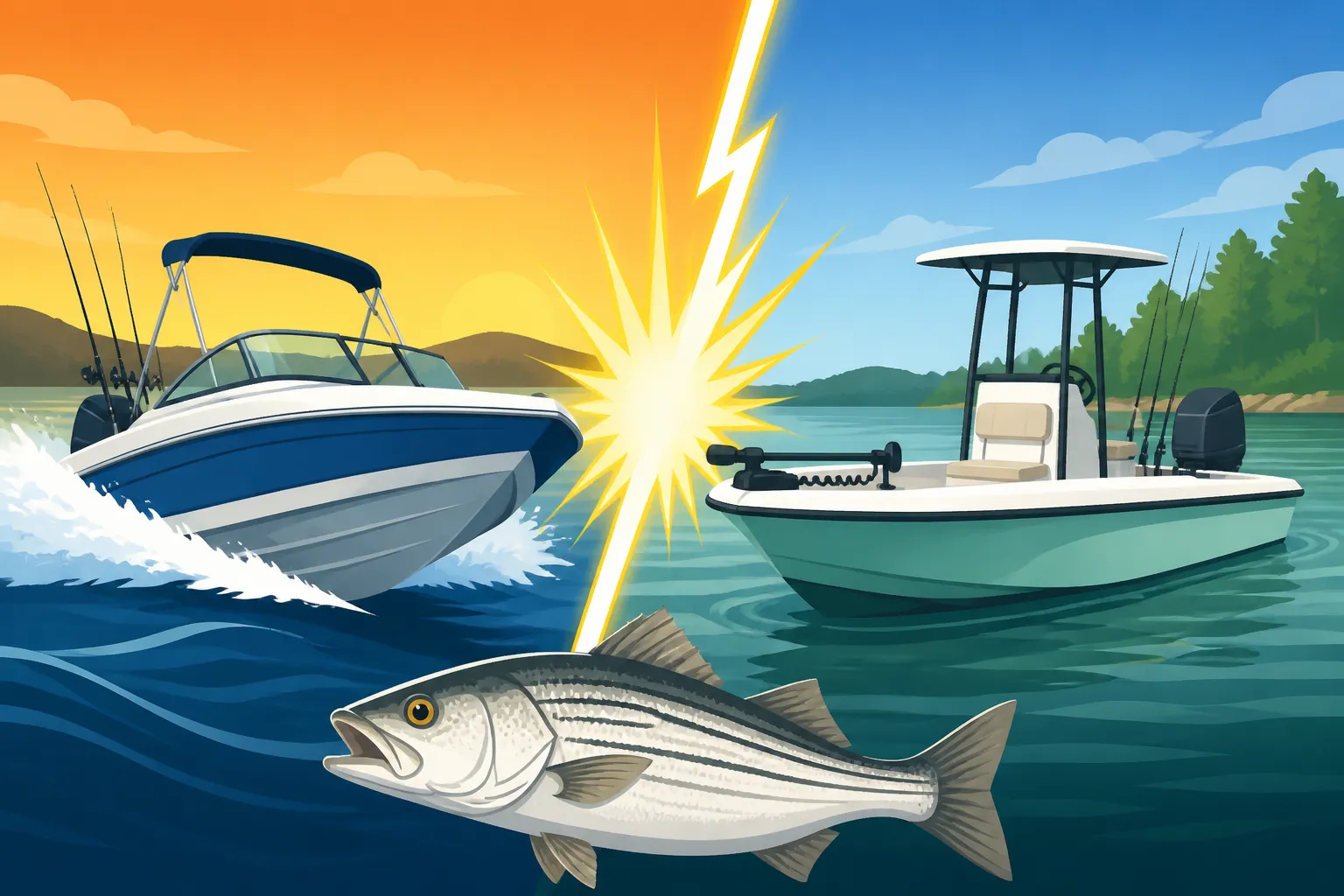
Choosing between these two boat types for trolling stripers on Kentucky Lake really comes down to understanding their fundamental differences and how they align with your fishing priorities. It's not about one being definitively "better," but rather which one is "better for you."
Handling, Stability, and Comfort Comparison
| Feature | Deep-V Hull | Bay Boat |
|---|---|---|
| Ride Quality | Excellent in choppy water, cuts through waves | Good in moderate chop, can pound in rougher seas |
| **Stability (at rest) | Can be rolly due to deep deadrise | Very stable due to shallower deadrise, wider beam |
| Draft | Deeper, limits access to shallow areas | Shallower, excels in skinny water |
| Maneuverability | Good, but larger turning radius | Excellent, very nimble and responsive |
| Spray | Minimal, drier ride in waves | More prone to spray in chop |
| Deck Height | Higher freeboard, more secure in big water | Lower freeboard, easier access to water, casting |
For anglers prioritizing comfort and safety during long, rough-water trolling runs, especially on the main body of Kentucky Lake, a deep-V offers a superior ride. It will handle those stiff winds and boat wakes with more ease, reducing fatigue over a full day of fishing. Conversely, if you plan to spend significant time exploring shallower creeks, flats, or calm coves, and only venture into the main lake when conditions are favorable, a bay boat's inherent stability at rest and shallower draft will be a huge advantage. You might sacrifice some comfort in truly rough conditions, but gain immense flexibility in where you can fish.
Deck Space, Storage, and Practicality
Both boat types generally offer ample deck space, but their layout and intended use can differ. Deep-V boats often have higher gunwales and can sometimes feel more enclosed, though many modern designs offer wide-open cockpits for fishing. Their storage often includes large, insulated fish boxes, perfect for keeping a limit of stripers on ice. Rod storage might lean towards vertical holders or in-gunwale racks.
Bay boats typically boast a wide-open, uncluttered casting deck, maximizing room for multiple anglers to move around freely. Storage might be more dispersed, with numerous smaller compartments and livewells, but perhaps fewer large, dedicated fish boxes compared to a deep-V. The lower gunwales make it easier to reach the water for releasing fish or retrieving gear, but also mean you feel more exposed in heavy chop. For anglers who often cast or jig in addition to trolling, the open, stable platform of a bay boat can be incredibly practical. When looking for Best Kayaks for Tennessee River Fishing or other smaller vessels, similar considerations apply.
Investment and Long-Term Ownership
The cost of a boat can vary wildly based on size, brand, features, and engine. Generally, deep-V offshore boats, especially those with larger engines and advanced electronics, tend to have a higher initial price point. Bay boats, while still a significant investment, often present a slightly more accessible entry point, though high-end models can rival the cost of many deep-Vs. When considering Tennessee Boat Registration Requirements Explained, both boat types will fall under similar guidelines.
Maintenance costs will largely depend on the engine, usage, and how well you care for the boat. Deeper draft boats might have slightly higher trailer requirements due to their weight. Resale value is strong for both types, as they each appeal to distinct segments of the fishing community. Ultimately, your budget will play a significant role, but remember to factor in not just the purchase price, but also insurance, storage, fuel, and the cost of outfitting your boat with the necessary Best Trolling Motors for Tennessee Bass Boats or other specialized striper gear.
Making the Smart Choice for Your Kentucky Lake Adventures
Deciding on the perfect boat for trolling Kentucky Lake stripers isn't just about features; it's about matching the vessel to your personal fishing style, the conditions you typically encounter, and your long-term angling goals. Take your time, do your research, and don't be afraid to ask for advice.
Matching Your Fishing Habits to the Right Boat
Consider how you primarily fish for stripers. Are you a hardcore troller who ventures out in almost any weather, spending long hours on the main lake, covering vast distances? If so, the comfort, stability, and rough-water capability of a deep-V hull will likely be your best friend. It allows you to focus on What Speed Should You Troll for Striped Bass in Tennessee? rather than fighting the waves.
However, if you enjoy a more varied approach—mixing trolling with casting to schooling fish in shallower areas, exploring feeder creeks, or perhaps even dabbling in bass or crappie fishing—the versatility of a bay boat might be a better fit. Its ability to navigate a wider range of depths on Kentucky Lake Fishing on the Tennessee Side gives you more options, allowing you to adapt to changing conditions and fish patterns. Think about your average trip: how far do you run? What kind of water do you prefer? What other species do you enjoy targeting?
Essential Gear and Setup Considerations
No matter which boat you choose, proper rigging is crucial for successful striper trolling. You'll want to invest in a good array of rod holders – enough for your trolling spread, plus extras for storage or different setups. High-quality electronics, including a reliable fish finder and GPS, are non-negotiable for locating stripers and navigating large reservoirs. Brands like Lowrance and Humminbird offer excellent options that can be found at local outdoor retailers or on Amazon.
Consider the type of rods and reels you'll use. You'll need sturdy rods capable of handling powerful stripers and heavy trolling weights, paired with smooth, durable reels. Best Rods and Reels for Tennessee Smallmouth Bass might be too light for serious striper trolling, so look for gear specifically rated for larger species and trolling applications. Don't forget safety gear: life jackets (especially for Tennessee's Under-12 Life Jacket Rule Explained), flares, a first-aid kit, and a marine radio are all essential, regardless of your boat type.
Test Driving and Researching Before You Buy
The best advice I can give any angler looking at a significant boat purchase is to get out on the water. If possible, test drive both a deep-V and a bay boat on a day with some chop on a large lake like Kentucky Lake. Experience how each boat handles the waves, how stable it feels at trolling speeds, and how much deck space you actually have when moving around. Talk to other anglers who own these types of boats and pick their brains about what they love and what they wish was different.
Visit boat shows, talk to dealers, and spend time at retailers like Bass Pro Shops to see the different models up close and ask questions. Research specific models and read reviews. The more informed you are, the more confident you'll be in your decision, ensuring your chosen vessel truly enhances your pursuit of Kentucky Lake's magnificent striped bass. It’s an investment in countless memorable days on the water, so it's worth getting right.
Disclaimer
This article is for general informational purposes only and does not constitute professional advice. Laws, prices and regulations vary by location and change over time. Consult a qualified professional for guidance on your specific situation.