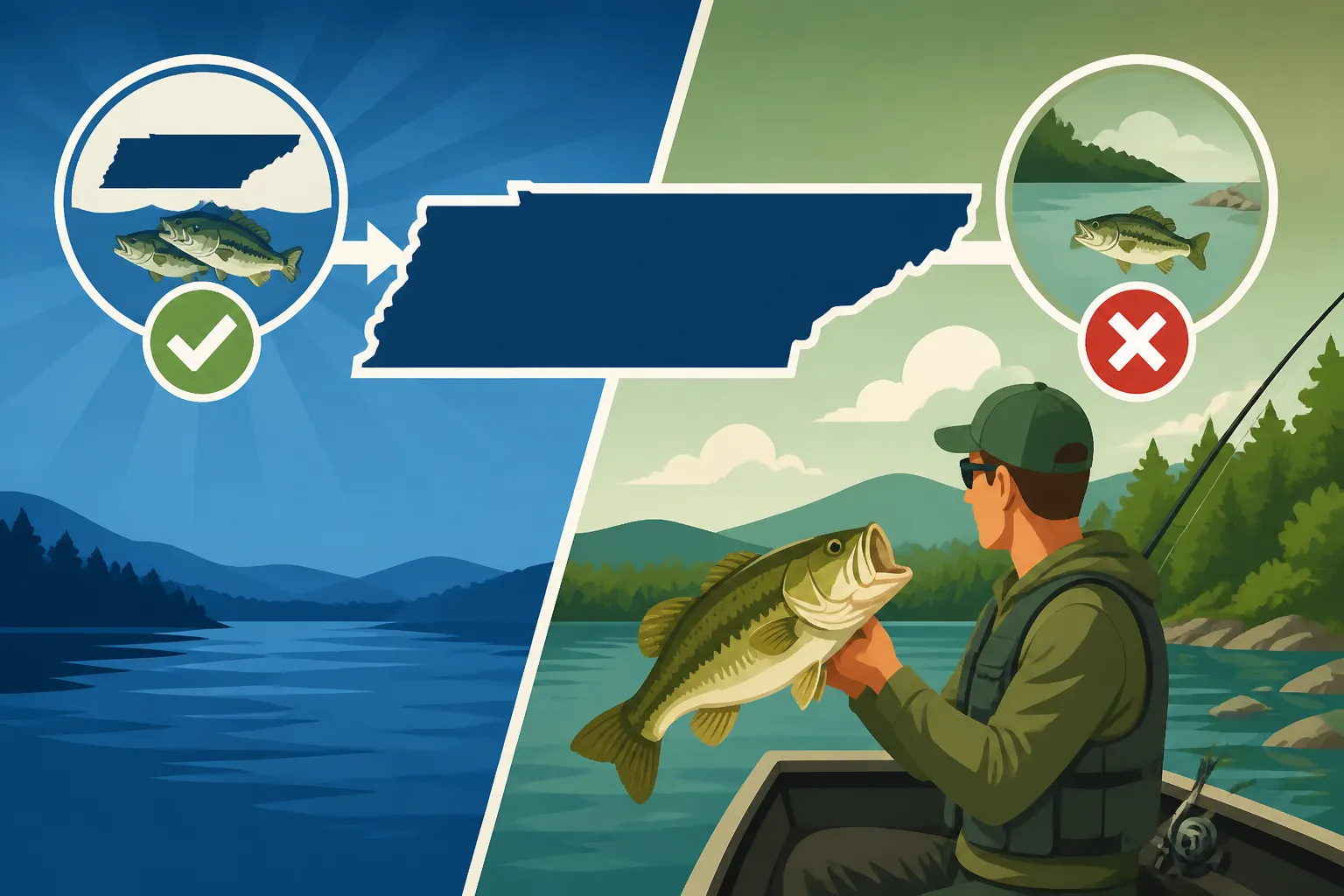
Statewide limits are the default, not a guarantee, on every Tennessee lake
It’s a common misconception, one that I hear all the time from anglers, both new and seasoned: "Once you know the statewide fishing limits in Tennessee, you're good to go anywhere." Unfortunately, that couldn't be further from the truth. Many a fishing trip has been cut short, or even ended in an unwanted encounter with a game warden, because someone assumed the general rules applied to every single body of water. This guide is here to unravel that knot of confusion, helping you understand why those statewide limits are merely the starting point, and how to navigate the unique regulations that often override them on your favorite lakes and rivers.
Understanding Tennessee's Default Statewide Fishing Limits
When you first dive into the world of fishing in Tennessee, whether you're getting your first license or just brushing up, you'll naturally encounter the "statewide" regulations. These are the general rules published by the Tennessee Wildlife Resources Agency (TWRA) that aim to provide a baseline for sustainable fishing across the state. They cover everything from minimum length requirements to daily creel limits for various popular species. It’s easy to think these are the only rules, but that's where many anglers trip up.
What the Statewide Rules Generally Cover
Think of the statewide rules as the foundation of Tennessee's fishing regulations. They’re the broad strokes that paint a picture of what’s generally acceptable for most public waters. For instance, you’ll find that the statewide bass limits for largemouth bass are typically 5 fish per day, with only one allowed over 18 inches. Similarly, for crappie, the statewide limit is often 20 fish daily, but only 5 of those can be over 12 inches. And if you're chasing trout, you'll learn that the Tennessee trout limits and season rules typically set a daily bag limit of 7 fish from March through September, with specific caveats for brown trout. These numbers are crucial to know because they establish the framework. If you're fishing a small, unnamed pond or a stretch of river without specific signage, these are the rules you'd fall back on.
However, even within these general guidelines, there can be subtleties. Some species might have uniform rules across the board, while others, due to their population dynamics or specific management goals, will have different length or creel limits. It’s important to always consult the official TWRA fishing guide, which you can often pick up at your local sporting goods store or view online. This guide is your initial compass, giving you the lay of the land before you zoom in on specific locations. Remember, these are the defaults, not necessarily the guarantees, which is the critical distinction we're trying to make.
Why These Limits Exist
These statewide limits aren't just arbitrary numbers thrown onto a page. They are the result of extensive scientific research, population surveys, and conservation efforts aimed at maintaining healthy and abundant fisheries across Tennessee's incredibly diverse aquatic environments. The TWRA biologists work tirelessly to understand fish reproduction rates, growth patterns, and the impact of angling pressure. By setting these general limits, they strive to prevent overfishing, protect spawning populations, and ensure that there are plenty of fish for future generations of anglers.
Consider the complexity: Tennessee boasts countless rivers, streams, and massive reservoirs, each with its own unique ecosystem. A blanket rule might not be perfect for every single spot, but it provides a necessary baseline for managing the overall fish populations. These regulations help manage different species, from the hard-fighting smallmouth bass, one of Tennessee's official state fish, to the elusive brook trout in our mountain streams. Without these default rules, it would be a free-for-all, leading to rapid depletion of fish stocks and irreparable damage to our natural resources. They’re designed to strike a balance between allowing anglers to enjoy their sport and protecting the very fish that make Tennessee a premier fishing destination.
When Local Lake Rules Take Precedence
Now, here's where things get interesting, and frankly, a little complicated. While the statewide limits provide a solid foundation, many of Tennessee's most popular and productive fishing spots have their own set of rules. These lake-specific fishing rules that override Tennessee's statewide limits are put in place for very good reasons, often to address unique ecological conditions, specific fish populations, or high fishing pressure on particular bodies of water. Ignoring these can lead to serious legal repercussions, even if you thought you were following the general guidelines.
Identifying Special Regulations for Specific Lakes or Rivers
The biggest hurdle for many anglers is simply knowing that these special regulations exist, let alone how to find them. The good news is that the TWRA does an admirable job of publishing these rules. Your first stop should always be the official TWRA fishing guide. Beyond the statewide section, it will often have a dedicated section listing specific regulations by lake, river, or even by a particular section of a river. For instance, the guide will clearly outline any deviations for powerhouse lakes like Chickamauga Lake: Tennessee's Top Bass Fishing Destination, Norris Lake, or Watts Bar Lake, Tennessee's Largest Lake for Fishing.
Beyond the guide itself, keep an eye out for physical signage. Many boat ramps, public access points, and fishing piers will have large, clearly posted signs detailing any special regulations for that specific body of water. This is particularly true for Wildlife Management Area fishing rules in Tennessee or state park ponds, which might have even more localized regulations. It’s also wise to check the TWRA's website directly before your trip. They often have real-time updates and detailed maps that can highlight these special zones. And don't forget the invaluable resource of local bait and tackle shops – the folks running these establishments live and breathe local fishing, and they're usually the first to know about any changes or nuances.
Common Scenarios Where Rules Differ
Local rules can manifest in several ways, often making a significant difference to your daily catch. One of the most common is the implementation of "slot limits." Instead of a simple minimum size, a slot limit means you can keep fish below a certain size and above another size, but you must release any fish caught within the "slot." This is often done to protect a crucial breeding size class of fish, allowing them to grow larger and reproduce more before being harvested. For example, a lake might have a slot limit on smallmouth bass, meaning you can keep fish under 12 inches and over 18 inches, but everything between 12 and 18 inches must go back.
Another frequent modification is a reduced daily creel limit for a specific species, or even an increase in the minimum length limit. A certain lake might be known for its trophy bass, and to further enhance that fishery, the TWRA might reduce the daily limit from 5 to 3 bass per day, or increase the minimum length from 15 inches to 18 inches. This is often the case on highly productive lakes or those with intensive management programs. Conversely, some waters might have more liberal rules if a species is overpopulated. Trout streams, especially those with heavy stocking programs or those that are part of the Tennessee trout stocking schedule, often have very specific regulations, including different limits for different stretches of the same river, or catch-and-release only sections. Always assume there might be a unique rule, especially on well-known or highly managed waters.
| Regulation Type | Statewide Default Example | Lake-Specific Override Example | Reason for Override |
|---|---|---|---|
| Largemouth Bass | 5 fish/day, 1 over 18" | Chickamauga Lake: 5 fish/day, no more than 1 over 24" | Protect trophy bass genetics |
| Smallmouth Bass | 5 fish/day, 1 over 16" | Dale Hollow Lake: 18- to 24-inch protected slot, 1 over 24" | Enhance trophy smallmouth fishery |
| Crappie | 20 fish/day, 5 over 12" | Reelfoot Lake: 30 fish/day, no size limit | Manage abundant crappie population |
| Trout | 7 fish/day (Mar-Sep), 2 brown | Caney Fork River (specific sections): Catch-and-release only | Protect wild trout, enhance fly fishing |
| Catfish | No daily limit, no size limit | Specific small lakes: 5 channel catfish/day | Prevent overharvest in smaller bodies of water |
How to Stay Informed and Avoid Violations
The fear of getting a ticket or, worse, impacting fish populations unintentionally, is a real concern for many anglers. It’s not about being a rule-breaker; it’s often about not knowing the nuances of the law. The good news is that staying informed in Tennessee is relatively straightforward, as long as you know where to look and make it a habit.
Essential Resources for Checking Regulations
Your first and foremost resource should always be the official Tennessee Wildlife Resources Agency (TWRA) fishing guide. This guide is updated annually and is your comprehensive bible for all things regulations. You can find it at most sporting goods stores, bait shops, and even sometimes at local gas stations that sell licenses. Better yet, download the digital version from the TWRA website – it's always current and easily searchable on your phone or tablet. This digital version is incredibly convenient, especially if you're out on the water and need to double-check something on the fly. It's truly a lifesaver.
Beyond the annual guide, the TWRA website (tn.gov/twra) is an invaluable tool. It offers real-time updates, news releases about regulation changes, and specific lake pages that often detail unique rules. You can also use it to How to Buy or Renew a Tennessee Fishing License Online, which is super convenient. For those who prefer a more personal touch, calling your regional TWRA office can provide clarity on complex regulations. Don't underestimate the power of local knowledge, either. Engaging with staff at local bait and tackle shops, especially those near your chosen fishing spot, can offer invaluable insights into recent changes or local interpretations of rules. They're often passionate anglers themselves and happy to help you navigate the system.
Real-World Consequences of Not Knowing Local Rules
It’s easy to shrug off a regulation you weren't aware of, but the consequences of not knowing local rules can be significant, both for your wallet and for your peace of mind. Getting caught fishing without a license in Tennessee, or violating creel or size limits, can result in hefty fines. These fines aren't just a slap on the wrist; they can range from hundreds to thousands of dollars, depending on the severity and frequency of the violation. Plus, you might face court appearances, and in some cases, even lose your fishing privileges for a period.
Imagine you've spent all day on Center Hill Lake, having a fantastic time, only to be approached by a game warden who informs you that you've kept five smallmouth bass within a protected slot limit. What you thought was a successful day turns into a frustrating, expensive lesson. It’s not just about the money either; violating these rules can have a real, negative impact on fish populations. Those slot limits, for example, are in place to protect crucial breeding stock. When anglers unknowingly remove those fish, it can directly hinder the recovery or maintenance of a healthy fishery. The TWRA's stance is clear: ignorance of the law is not an excuse. It’s your responsibility as an angler to be informed, and frankly, it's part of being a good steward of our natural resources.
Navigating Lake-Specific Rules Like a Pro
Feeling a bit overwhelmed? Don't be! With a bit of mindful preparation, you can confidently hit any Tennessee lake or river knowing you're fully compliant with local regulations. It's all about developing a routine that ensures you're always in the know before your first cast.
Pre-Trip Planning and Research
Before you even load up your gear, take a few minutes to do some vital research, especially if you're heading to a new body of water or haven't fished a particular spot in a while. My personal routine usually starts with pulling up the TWRA website on my computer or tablet. I'll navigate to the "Fishing" section and then look for "Regulations" or "Lake Specific Regulations." Most of the time, I can find a detailed page for major lakes like Old Hickory Lake Fishing Spots or Kentucky Lake Fishing on the Tennessee Side. This is where you'll often find those crucial nuances that differ from the statewide defaults.
It's also a great idea to cross-reference information. If you're using the digital guide, quickly search for the lake name. If you have a printed guide, flip to the specific lake or river section. Sometimes, you might even find additional details on fishing forums or local angler groups online, though always prioritize official TWRA sources for accuracy. For example, if you're planning a trip to a specific area like the Clinch River for trout, you'd want to check not only the statewide trout regulations but also the specific Clinch River Trout Fishing in East Tennessee rules, which are known to have special provisions for different sections of the river. Make this quick check a non-negotiable part of your pre-trip checklist, just like packing your tackle box or checking your boat's fuel.
Observing On-Site Signage and Local Intelligence
Once you arrive at your chosen fishing destination, don't just rush to the water. Take a moment to observe your surroundings. Many boat ramps, public docks, and designated fishing areas will have prominent signs posted by the TWRA or local park management. These signs are there specifically to inform you of any immediate, site-specific regulations, and they often highlight critical differences from statewide rules. It could be anything from a temporary closure due to spawning activity to a specific slot limit for a certain species in that particular cove. I’ve personally seen temporary signs about bait restrictions or even reduced bag limits due to localized fish health issues, so these are absolutely worth reading carefully.
Beyond official signs, tap into the invaluable network of local anglers and bait shop owners. These folks are on the water regularly and often have the most current "ground truth" information. Strike up a friendly conversation at the bait shop—they can tell you if there have been any recent changes, if a particular area is catch-and-release only, or even offer tips on where the fish are biting under current conditions. You can often find fishing maps or even local guides for sale at these shops, sometimes through retailers like Amazon, which can further detail lake contours and potential regulation areas. While not official sources, their insights can complement your TWRA research and ensure you're fully prepared.
Disclaimer
Please remember that fishing regulations are subject to change. While this guide aims to provide accurate and up-to-date information, it is the individual angler's responsibility to verify current regulations directly with the Tennessee Wildlife Resources Agency (TWRA) before engaging in any fishing activity. Always refer to the official TWRA fishing guide or website for the most current rules and updates.