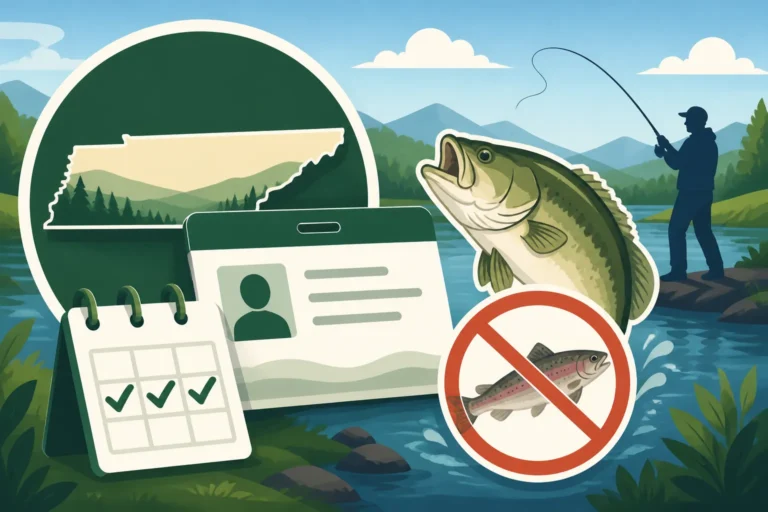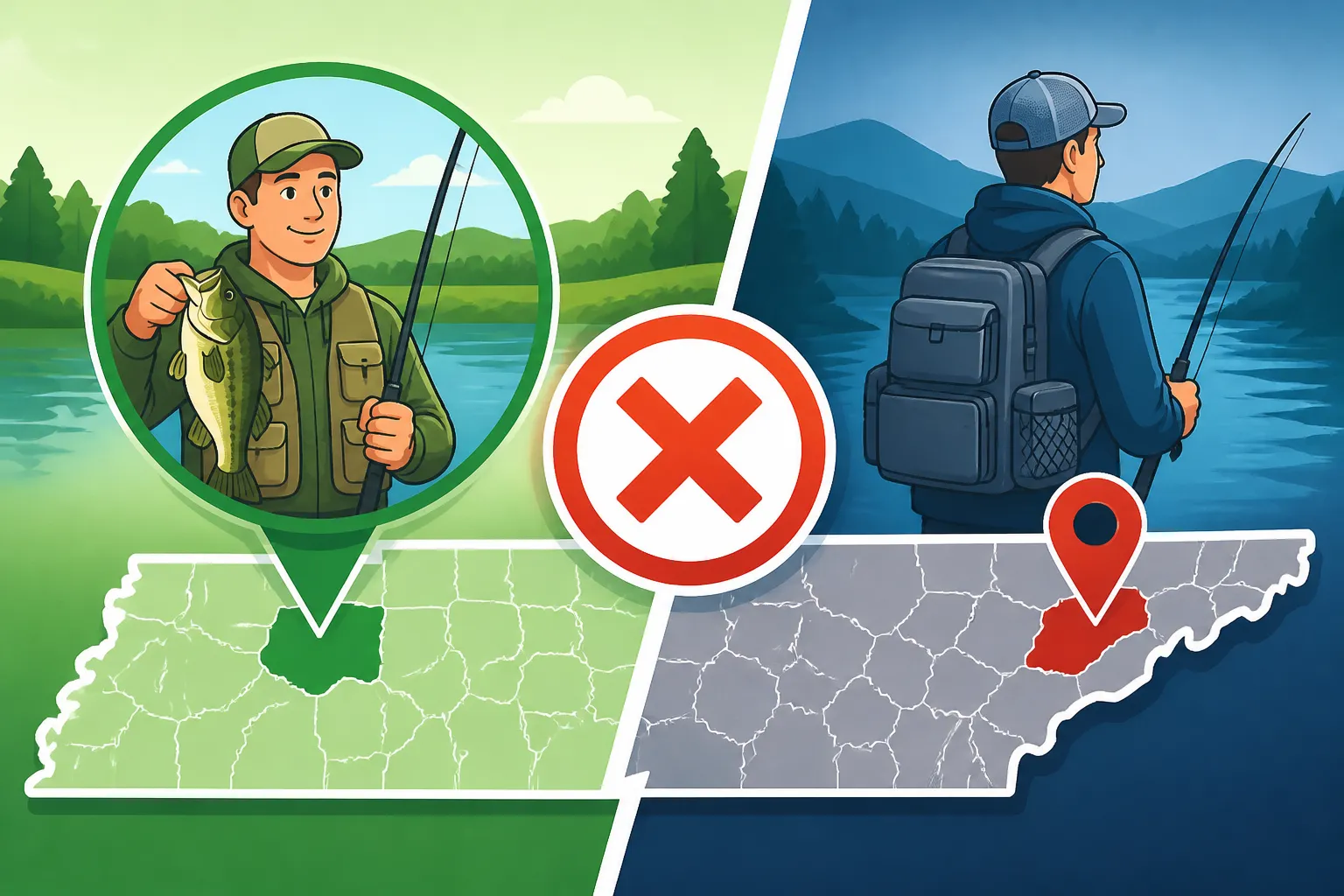
A Tennessee county-only license stops covering you once you leave your home county
It's a common misunderstanding, one that can lead to a lot of frustration and even an unexpected fine: many anglers assume a county-only fishing license in Tennessee acts like a budget-friendly statewide pass. You might think, "Hey, fishing is fishing, right?" but the truth is, this specific license has very strict geographic boundaries. This guide is here to clarify exactly what a Tennessee county-only license covers and, more importantly, where its coverage stops, so you can avoid any unwelcome surprises on your next fishing adventure.
What Exactly is a Tennessee County-Only Fishing License?
Let's start with the basics. A Tennessee county-only fishing license is precisely what its name implies: it's a license that grants you the legal right to fish, but only within the borders of your declared home county. It’s designed as a more affordable option for residents who know they'll primarily be fishing very close to home. For just $10 a year, it offers a significant cost saving compared to the standard statewide annual license, which costs $33. On the surface, that $23 difference seems pretty appealing, especially if you're pinching pennies or rarely venture far from your local waters.
The Tennessee Wildlife Resources Agency (TWRA) created this license to serve a specific segment of the angling community: those dedicated to their local ponds, rivers, and streams. Perhaps you have a favorite fishing spot just a few miles down the road, or maybe a small lake that you've been fishing since childhood, all located firmly within your county's lines. In these scenarios, the county-only license seems like a perfect fit, offering a legal and inexpensive way to enjoy your hobby without overspending on coverage you don't think you'll need. However, the convenience and savings come with a very important caveat that many anglers overlook.
The Crucial Limitation: Geographic Boundaries
This is where the rubber meets the road, or rather, where your license coverage stops at the county line. The single most important thing to understand about a Tennessee county-only license is that its validity is absolutely tethered to the geographic confines of the county in which you reside and declared when purchasing it. The moment your line or lure crosses into a neighboring county, or you decide to visit a popular fishing spot a bit further afield, your license technically ceases to be valid for that specific body of water.
What "Home County" Means for Your License
When you purchase a Tennessee county-only fishing license, you declare a specific county as your "home county." This isn't just a formality; it's the legal boundary of your fishing privilege. For instance, if you live in Davidson County and buy a Davidson County-only license, you can fish Percy Priest Lake as long as you stay within the Davidson County portions of the lake. The problem arises because many of Tennessee's incredible waterways, especially our large reservoirs and rivers, stretch across multiple counties. You might be fishing on one side of the lake, perfectly legal, and then drift or drive your boat just a short distance and suddenly be in violation without even realizing it.
It's easy to get confused, especially with how interconnected our counties are. You might even drive through a small corner of another county just to get to a different access point on the same lake in your home county, but if you drop a line in that intervening county's water, you're technically fishing without a proper license. The TWRA's rules are quite clear on this point, and ignorance, unfortunately, isn't a valid defense if a game warden checks your credentials.
Crossing County Lines: What Happens?
The moment your fishing activity takes place outside the designated county on your license, you are, by definition, fishing without a license. This isn't just a minor technicality. Game wardens are out there enforcing these regulations, and they have the means to know where county lines fall on our waterways. Imagine you’re enjoying a peaceful afternoon fishing for bass on the Kentucky Lake Fishing on the Tennessee Side, having purchased a county-only license for Benton County. You're having a great day, but then you decide to follow a school of fish a few miles north into Henry County. Suddenly, that $10 license is no longer valid, and you could be facing a penalty.
This is a common pitfall for anglers who might drive a bit further for a specific species or simply to explore new waters. The consequences can range from a warning, if you're lucky and the warden is feeling generous, to a hefty fine. The penalties for fishing without a license in Tennessee can vary, but they are certainly more than the cost of upgrading to a statewide license in the first place. It's a risk that many anglers unknowingly take, turning a relaxing day into a stressful encounter.
Examples of Common Scenarios
Let's paint a clearer picture with some real-world examples that highlight these limitations:
- The Multi-County Lake Enthusiast: You live in Knox County and love fishing Douglas Lake. You buy a Knox County-only license. That's perfectly fine for the portions of Douglas Lake within Knox County. However, Douglas Lake also extends into Jefferson and Sevier counties. If you launch your boat in Knox but decide to explore the upper reaches of the lake in Sevier County, your license becomes invalid. You'd need a statewide license to cover all those potential fishing grounds.
- The River Angler: You reside in Cheatham County and regularly fish the Cumberland River, picking up a Cheatham County-only license. One weekend, you hear the bite is hot a little further upstream in Davidson County, or downstream in Dickson County. If you cast your line there, you're outside your licensed area.
- The Quick Road Trip: You're in your home county, but your friend invites you to fish a small, beautiful pond just over the county line, say 15 minutes away. It seems harmless, but that short drive puts you into a different jurisdiction, rendering your county-only license useless for that specific outing.
These scenarios emphasize that while the county-only license is economical, it demands a disciplined approach to where you cast your line.
Why Anglers Choose a County-Only License
Despite its limitations, the county-only license remains a popular choice for a very specific type of angler. It often boils down to a clear understanding of personal fishing habits and budget considerations. For many, the waters they fish are genuinely confined to their immediate area, making the statewide upgrade seem unnecessary.
Cost-Benefit Analysis for Local Anglers
The primary driver for choosing a county-only license is, without a doubt, the price. At $10, it's significantly cheaper than the $33 annual statewide license. For someone on a fixed income, a student, or simply an angler who prioritizes saving money, that $23 difference can be allocated to bait, tackle, or gas. If you genuinely only fish within your county's borders, it's a smart financial decision. You're paying for exactly what you need and nothing more.
Consider the angler who works a demanding job and only has time for short, local fishing trips on weekends. They might have a favorite dock on a local reservoir or a small creek they frequent, all well within their county. For them, paying for a license that covers the entire state, including the far reaches of East Tennessee's trout streams or West Tennessee's Reelfoot Lake, would feel like a waste of money. The county-only option allows them to legally pursue their passion without feeling exploited by a broader, more expensive requirement.
Ideal Scenarios for This License
So, who truly benefits most from a Tennessee county-only fishing license?
- Dedicated Local Anglers: These are the folks who have their go-to spots, often within a 5-10 mile radius of their home. They know the local waters like the back of their hand and have no desire or opportunity to venture further.
- Bank Anglers with Limited Mobility: For those who fish primarily from the bank, perhaps at a public pond or a quiet river bend that is unequivocally within their home county, this license is ideal. It removes the temptation (or possibility) of accidentally drifting into another county's waters by boat.
- Budget-Conscious Individuals: As mentioned, the cost savings are a major factor. If every dollar counts and your fishing habits align with the geographic restrictions, it's a sensible choice.
- New Anglers Testing the Waters: Someone just getting into fishing might start with a county-only license to explore local options before committing to the wider world of Tennessee angling, or before investing in more expensive gear often found on Amazon.
It's a niche product, but a valuable one for those whose fishing lives are centered squarely in their own backyard.
When a Statewide License Becomes Necessary
While the county-only license serves a purpose, for most Tennessee anglers, the statewide option is simply a better fit, offering peace of mind and unlimited exploration. The additional cost is often seen as a small price to pay for the freedom to fish anywhere in the state.
Exploring Tennessee's Diverse Waters
Tennessee is blessed with an incredible variety of fishing opportunities. From the trophy bass fishing on Chickamauga Lake to the world-class smallmouth bass fishing on Dale Hollow Lake, to the serene trout streams in the Great Smoky Mountains, there's a lifetime of fishing to be done here. If you're an angler who enjoys variety, who likes to chase different species, or simply wants the freedom to explore new fishing spots, a county-only license will quickly become a frustrating impediment.
Imagine hearing a hot tip about crappie on Watts Bar Lake, or wanting to try your hand at striped bass on Percy Priest Lake, but realizing your license only covers your small home county. That feeling of being restricted can really put a damper on your angling enthusiasm. The Tennessee Fishing License Guide details the various options, and for true explorers, the statewide license is paramount.
Multi-County Trips and Vacations
Many anglers plan fishing trips that take them across the state. Whether it's a weekend getaway to the Tennessee River to target catfish, or an annual vacation to a cabin near a renowned trout stream, these trips inevitably cross county lines. A family planning a trip to the mountains might want to enjoy some trout fishing in the Tellico River area, which spans multiple counties. Relying on a county-only license for such an adventure would mean constantly checking maps, worrying about boundaries, and potentially missing out on prime fishing spots.
Even if you're not planning a grand expedition, simply visiting friends or family in a neighboring county for a day of fishing would require a valid license for their county or a statewide one. It quickly becomes more complicated and more expensive to try and manage multiple county-only licenses or to risk a fine. The nominal extra cost for a statewide license pales in comparison to the hassle and potential penalties of mismanaging county-specific coverage.
Fishing Tournaments and Events
For the competitive angler, a statewide license is absolutely essential. Most fishing tournaments, especially those for bass, crappie, or catfish, take place on large reservoirs that span multiple counties. It's almost guaranteed that tournament boundaries will extend beyond a single county. Participating in a tournament without the correct statewide license would lead to immediate disqualification and possible fines, jeopardizing not only your entry fee but also your reputation.
Even local fishing derbies or community events might be held on waters that skirt county lines. To ensure you're always legally covered, especially when prize money or bragging rights are on the line, a statewide license offers the necessary blanket coverage. Remember, Tournament Angler Rules on Tennessee Waters confirm that participants need the same standard licensing as any other angler.
Understanding Different License Types in Tennessee
To truly appreciate the context of the county-only license, it's helpful to understand the broader landscape of Tennessee Fishing License Costs and Types. The TWRA offers a variety of options to suit different needs and situations, far beyond just the county-only choice.
Resident vs. Non-Resident Options
First and foremost, there's a distinction between resident and non-resident licenses. Tennessee residents enjoy significantly lower prices, as their tax dollars already contribute to the state's wildlife management. Non-residents, on the other hand, pay a higher fee to access Tennessee's waters, which helps support the resources they're utilizing. For example, a Nonresident Fishing License Costs in Tennessee without trout access is $49 annually, while a resident statewide annual is $33. This difference underscores the value placed on local contributions.
Short-Term Licenses
For visitors or residents planning a very brief fishing trip, short-term licenses are an excellent alternative. The Tennessee Single-Day Fishing License Options are perfect for a spur-of-the-moment outing. Non-residents can also choose from a Nonresident 3-Day and 10-Day License Options for Tennessee, which provide flexibility for longer visits without committing to an entire year. These are always statewide in their coverage, so you don't have to worry about county lines during your short adventure. This flexibility often makes them a better choice for someone leaving their home county for a brief period, rather than trying to navigate county-only restrictions.
Combination Licenses
Tennessee also offers convenience with its combination licenses. The Tennessee Resident Combination Hunt and Fish License, for example, allows you to enjoy both hunting and fishing privileges with a single purchase. This is a popular choice for outdoors enthusiasts who partake in both activities throughout the year. It's another example of how the TWRA tries to streamline the licensing process for different user groups, ensuring comprehensive coverage with less hassle.
Consequences of Fishing Outside Your Licensed County
Let's not sugarcoat it: fishing outside the geographic limits of your Tennessee county-only license is a serious matter. It's not just a minor oversight; it's a violation of state regulations that can lead to tangible and unpleasant consequences. Nobody wants a day on the water ruined by an interaction with law enforcement, especially when it could have been easily avoided.
Game Warden Encounters
Tennessee Wildlife Resources Agency (TWRA) game wardens are highly trained professionals whose job it is to protect the state's natural resources and ensure fair play among anglers and hunters. They patrol lakes, rivers, and streams, and part of their routine involves checking licenses. When a game warden approaches your boat or calls to you from the bank, they're simply doing their job. They'll ask for your license, and if you present a county-only license while actively fishing outside that county, you've put yourself in a tough spot.
Wardens often know the local waterways intimately, including county boundaries. They might even use GPS to confirm your location. Their priority is to uphold the law, and if you're found to be in violation, they have the authority to issue citations. This is where validating the frustration comes in; it's genuinely annoying and embarrassing to be caught off guard, especially if you believed you were doing everything right.
Fines and Penalties
The most immediate consequence of Fishing without a License in Tennessee can result in fines. The exact amount can vary depending on the specific circumstances, the discretion of the warden, and whether it's a first offense or a repeat violation. However, it's safe to say that the fine will almost certainly exceed the cost of the statewide annual license you could have purchased. This means that trying to save a few dollars with a county-only license could end up costing you significantly more in the long run.
Beyond financial penalties, there could be other implications. While less common for a first-time licensing offense, repeated violations could potentially lead to loss of fishing privileges for a period. It's not just about the money; it's about adhering to the regulations designed to manage and conserve Tennessee's valuable fisheries for everyone.
The Importance of Knowing the Rules
Ultimately, the responsibility falls squarely on the angler to understand and abide by Tennessee Fishing Regulations Explained. Before you even cast your first line, it’s crucial to know what your license covers and where you are legally allowed to fish. This includes understanding not only the type of license you hold but also any Lake-Specific Fishing Rules That Override Tennessee's Statewide Limits, which might apply to certain bodies of water.
The rules are in place to ensure sustainable fishing practices and to provide funding for conservation efforts. By respecting these rules, you contribute to the health of the very ecosystems you enjoy. It’s always better to be overly cautious and ensure you have the appropriate licensure for your planned fishing trip, no matter how near or far it takes you.
How to Check Your License and Plan Your Trip
Given the strict limitations of a county-only license, careful planning is paramount. Here’s how you can make sure you’re always on the right side of the law, regardless of where your angling adventures take you in Tennessee.
Digital vs. Physical Licenses
First off, make sure you always have proof of your license readily available. Whether you opt for a digital version on your smartphone or a traditional printed copy, both are acceptable forms of identification when a TWRA officer asks. Digital vs Printed Fishing Licenses in Tennessee outlines the convenience of having your license on your phone, which means one less piece of paper to worry about losing. However, if you're going to an area with spotty cell service, a physical copy might be a better bet. The key is accessibility; don't make a game warden wait while you dig through your online purchase history.
Many anglers prefer to carry both, just in case. A laminated printout tucked into your tackle box or wallet, coupled with the digital version on your phone, offers a solid backup. You can often purchase or renew a Tennessee fishing license online, which is quick and ensures you have immediate access to your digital proof.
Using TWRA Resources
The Tennessee Wildlife Resources Agency (TWRA) is your absolute best friend for staying informed. Their website is a treasure trove of information, including interactive maps that can help you identify county lines, especially on large reservoirs. Before heading out, especially if you're fishing near a county boundary or exploring new water, take a few minutes to consult these resources.
You can also find detailed information on Where to Buy a Fishing License in Tennessee, local regulations, and even fishing reports. Many bait shops and sporting goods stores that sell licenses also have local maps and staff who are knowledgeable about the specific waters in their area. Don't hesitate to ask questions if you're unsure about a particular spot.
Planning Your Route and Fishing Locations
Before you even hook up the boat or pack your tackle box, take a moment to plan your exact fishing locations. If you have a county-only license, open a map (physical or digital, like Google Maps or a dedicated fishing app) and trace your intended fishing path. Identify any potential county lines you might approach or cross.
If you discover that your desired fishing spot falls outside your licensed county, you have a couple of options:
- Adjust your plans: Stick to waters entirely within your home county.
- Upgrade your license: Purchase a statewide annual license or a short-term license that covers the specific area you want to fish. This might mean the difference between a pleasant trip and a potential citation.
It's all about being proactive rather than reactive. A few minutes of planning can save you hours of stress and potentially costly fines.
License Comparison Table
To help you visualize the differences, here's a quick comparison of key Tennessee fishing license types for residents:
| License Type | Cost | Coverage | Ideal Use Case |
|---|---|---|---|
| County-Only Annual | $10 | Your home county only | Fishing strictly within your declared county; budget-conscious local anglers. |
| Statewide Annual | $33 | Entire state of Tennessee | Anglers who explore various lakes and rivers across county lines; tournament fishing. |
| Annual Combo Hunt & Fish | $33 | Entire state of Tennessee (hunt & fish) | Anglers who also hunt; comprehensive annual outdoor pursuits. |
| 1-Day Fishing (Resident) | $6 | Entire state of Tennessee | Sporadic, short fishing trips; trying out fishing for the first time. |
Note: Prices listed are for Tennessee residents and do not include trout permits if applicable.
You can see clearly how the county-only license offers a significant saving, but at the cost of severely limited geographic coverage. Always ensure you have the appropriate license for the waters you plan to fish, and if there's any doubt, opting for a statewide license is always the safest bet. Many useful items like waterproof maps or guidebooks can be found on Amazon to help you plan your trips effectively.
Disclaimer
The information provided in this guide is intended for general informational purposes only and should not be considered legal advice. Fishing regulations in Tennessee are subject to change, and specific rules can vary by season, body of water, and other factors. Always consult the official Tennessee Wildlife Resources Agency (TWRA) website or their most current printed regulations guide for the most accurate and up-to-date information before engaging in any fishing activities. Compliance with all applicable laws and regulations is the sole responsibility of the angler.