A $10 county-only license saves $23 compared to the $33 statewide license
The cost of fishing licenses can really add up, especially when you're just looking to cast a line close to home. Many anglers, particularly those who stick to their local waters, often wonder if they're paying too much for a statewide permit they don't fully utilize. This comprehensive guide will break down Tennessee's county-only fishing license, detailing how it works, who it's designed for, and exactly how much you can save compared to the broader annual license.
Understanding the Tennessee County-Only Fishing License
It's a common misconception that all fishing licenses in Tennessee cover you from the Mississippi River to the Appalachian Mountains. While the statewide annual license certainly does that, the Tennessee Wildlife Resources Agency (TWRA) offers a more localized option for residents: the county-only fishing license. This specific permit is designed with the resident angler in mind who primarily, or exclusively, fishes within the borders of their home county. It’s a fantastic way to enjoy the sport without breaking the bank if your fishing adventures don't take you far from your doorstep.
What the County-Only License Covers
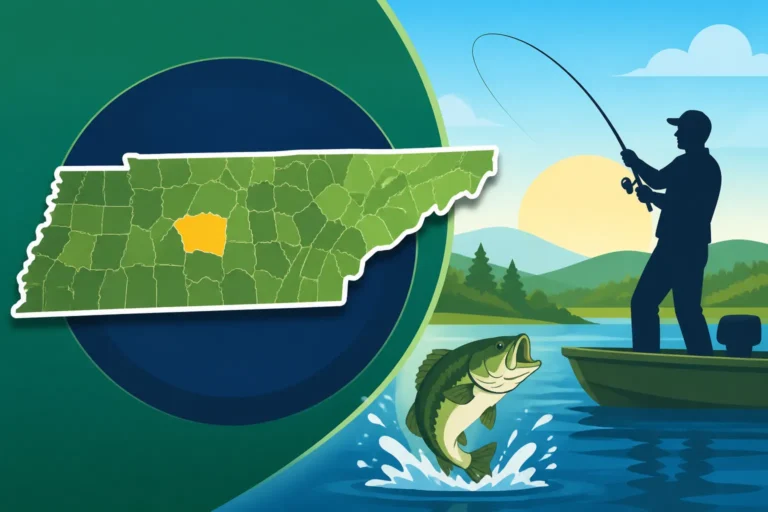
The county-only license is pretty straightforward: it grants you the legal right to fish in any public waters within the specific county you purchased it for. This means if you live in Davidson County and buy a Davidson County-only license, you can fish Percy Priest Lake, the Cumberland River, and any other public access waters located solely within Davidson County. It's important to remember this distinction. It doesn't allow you to cross into Rutherford County, for instance, even if Percy Priest Lake spans both. You'd need a different license for that, or upgrade to the statewide annual.
This license covers all standard game fish, from bass and crappie to catfish and bluegill, much like a regular license. However, a critical point to note is that this basic $10 county-only license typically does not include trout fishing. If you're planning to target trout, even within your home county, you'll need to purchase a separate trout permit or opt for a license type that already bundles trout privileges, which is usually the statewide option. Always check the specifics when you're looking into your Tennessee Fishing License Costs and Types.
Who is Eligible for a County-Only License
Eligibility for the county-only fishing license is generally tied to Tennessee residency. You need to be a bona fide resident of Tennessee to qualify for this particular permit. The TWRA typically defines a resident as someone who has lived in Tennessee for at least 90 consecutive days with the intention of making Tennessee their permanent home. This means if you're a new transplant or just visiting, this option won't be available to you. Nonresidents have their own specific license structures, such as the Nonresident 3-Day and 10-Day License Options for Tennessee, which are priced differently and offer various short-term coverages.
This license is particularly appealing to folks who have a favorite local pond, a specific stretch of river, or a neighborhood lake where they do 99% of their fishing. It's about recognizing that not every angler needs or wants to travel extensively, and the TWRA has created an option to reflect that more localized fishing habit. If you mostly fish from the bank at a nearby state park pond or have a small boat you only launch at a specific county lake, this license could be your perfect match.
The Financial Advantage: Saving $23 Annually
Let's get down to the numbers, because this is where the county-only license really shines for the right angler. In Tennessee, a standard resident annual hunting and fishing combination license, which covers most folks for a full year of outdoor recreation, comes in at around $33. Now, if you're a dedicated angler who only fishes, a statewide annual fishing license usually costs $34. For the purposes of this comparison, let's look at the most common annual permit that includes fishing: the standard resident annual combination license.
Comparing Costs: County-Only vs. Statewide
The difference is stark when you consider the price points. A county-only fishing license for a Tennessee resident is a mere $10 per year. Compare that to the $33 for the resident annual combination hunt and fish license, and you're looking at a direct saving of $23 right off the bat. That's a significant chunk of change that can go towards new tackle, bait, or even a nice lunch at your favorite fishing spot. It's a clear illustration of how a $10 county-only license saves $23 compared to the $33 statewide license.
Imagine you're an angler who spends most Saturdays at Center Hill Lake in DeKalb County, never venturing out of those county lines for your fishing trips. Why pay for a license that covers Cheatham County, Hamilton County, and all points in between when you simply don't fish there? The county-only license is a smart financial move for these kinds of localized fishing habits. For a lot of folks, especially those on a fixed income or who are new to the sport and testing the waters (pun intended!), that $23 saving is incredibly appealing.
Here’s a quick breakdown to visualize the difference:
| License Type | Cost (Resident) | Coverage | Best For | Key Feature |
|---|---|---|---|---|
| County-Only Fishing License | $10 | Specific Home County | Local anglers, budget-conscious, bank fishing | Significant savings |
| Resident Annual Combo H/F | $33 | Statewide Hunt & Fish | Versatile anglers, hunters, broader travel | Comprehensive |
| Annual Savings | $23 |
This table clearly illustrates the financial benefit. If you're thinking about whether Is a county-only license worth it if you only fish close to home, the answer, financially, is a resounding yes for many.
What $23 Could Buy You Instead
Saving $23 might not seem like a fortune, but in the world of fishing, it can go a long way. That extra cash could get you:
- A new pack of lures or jigs: Think about some fresh soft plastics for bass or a handful of different colored jigs for crappie. You can often find great deals on popular brands like Strike King or Z-Man on sites like Amazon.
- Several containers of live bait: Worms, crickets, or minnows – all essential for a successful day on the water, and $23 could cover quite a few trips.
- A new fishing line spool: Fresh line is crucial for preventing break-offs and improving casting distance. You could easily upgrade to a higher quality monofilament or fluorocarbon.
- A fishing multi-tool: Handy for cutting line, removing hooks, and making quick repairs.
- A good fishing hat or a bottle of sunscreen: Practical items that enhance your comfort and safety outdoors.
These are tangible benefits that directly impact your fishing experience, all thanks to a savvy license choice.
Practical Considerations and Limitations
While the county-only license offers attractive savings, it comes with very specific limitations that every angler needs to understand. Ignoring these can lead to fines and legal trouble, negating any savings you might have enjoyed. This isn't just about money; it's about staying compliant with Tennessee Fishing Regulations Explained.
Geographical Restrictions and Enforcement
The most crucial limitation is the geographical restriction: the license is only valid within the county you reside in and for which you purchased the license. This might seem obvious, but it's where many anglers accidentally run into trouble. Imagine you live in Shelby County and buy a Shelby County-only license to fish the Mississippi River. That's perfectly fine. But if you decide to drive an hour east and try your luck at Pickwick Lake, which spans parts of Hardin County, without a statewide license, you're fishing illegally.
This rule means A Tennessee county-only license stops covering you once you leave your home county. Even if you just cross a county line by a few feet while fishing a river or reservoir that borders multiple counties, you could be cited. Game wardens are well-versed in county lines, especially on large bodies of water. Always have a clear understanding of where your county ends and another begins, or simply stick to the obvious boundaries. If you're ever unsure about What Counts as a Public Water for License Purposes, it's always best to err on the side of caution or just get the statewide license for peace of mind.
Trout Permit Requirements
As mentioned earlier, the basic $10 county-only license does not include privileges for fishing for trout. Tennessee has some fantastic trout streams, particularly in East Tennessee like the Clinch River or the streams in the Great Smoky Mountains. If you plan to pursue trout, even within your home county, you will need to purchase an additional trout permit. This is usually a separate stamp or endorsement added to your license.
This detail is important because many anglers might not realize it until they're already on the water. If you're targeting rainbow, brown, or brook trout in a stocked stream or a wild trout fishery, ensure your license package covers it. For most serious trout anglers, or those who travel even within their county to specific trout waters, the statewide license that often includes trout privileges (or makes adding them simple) might be the better, less complicated option. If you're a dedicated trout angler, understanding Do You Need a Trout Permit With Your Tennessee License is vital.
When to Consider Upgrading to a Statewide License
The county-only license is perfect for a specific type of angler, but it's definitely not for everyone. You should seriously consider upgrading to a statewide license if:
- You frequently fish in multiple counties: Even if it's just two adjacent counties, the cost of buying two county-only licenses (e.g., $10 for County A + $10 for County B = $20) starts to diminish the savings compared to a single $33 statewide license, and it becomes more of a hassle.
- You plan on fishing for trout: If trout fishing is on your agenda, especially if you'll be hitting different trout streams that might cross county lines, the statewide annual license with a trout permit is almost always the more practical choice.
- You travel for fishing trips: If you take annual fishing vacations to different parts of Tennessee, whether it's for trophy bass on Chickamauga Lake or crappie on Kentucky Lake, a statewide license is absolutely essential.
- You also hunt in Tennessee: The resident annual combination hunt and fish license is only $33 and covers both activities across the state. If you enjoy both, it's a no-brainer to get the combo rather than a county-only fishing license.
- You use a boat on large reservoirs: Many of Tennessee's major reservoirs, like Watts Bar Lake or Douglas Lake, span multiple counties. If you're launching your boat and navigating these vast waters, it's highly likely you'll cross county lines, making a statewide license crucial. This applies to Boat Fishing Rules and License Requirements in Tennessee as well.
It's about weighing convenience and versatility against the savings. For $23, the statewide license offers immense flexibility and peace of mind for anglers who don't want to worry about invisible lines on the water. You can always check How to Buy or Renew a Tennessee Fishing License Online if you decide to upgrade or purchase either type.
What to Do Before You Go Fishing
Before you even step out the door with your rod and reel, a little preparation can save you a lot of headache, especially when dealing with county-specific regulations.
Double-Checking County Lines and Rules
Even with a county-only license, it's your responsibility to know where you can legally fish. Before you head out, grab a map – a physical one or a digital one on your phone – and familiarize yourself with your county's boundaries. Many counties have readily available maps online, or you can often pick one up at your local TWRA office or county clerk's office. You can even find detailed topographic maps or fishing maps for specific lakes on Amazon that clearly mark county lines.
Remember that while your license dictates where you can fish, there are also Tennessee Fishing Season and Catch Limits that apply to specific species. Some large lakes, like Chickamauga or Dale Hollow, even have Lake-Specific Fishing Rules That Override Tennessee's Statewide Limits that you need to be aware of, regardless of your license type. Always review these local regulations to ensure you're fishing responsibly and legally.
Carrying Proof of License
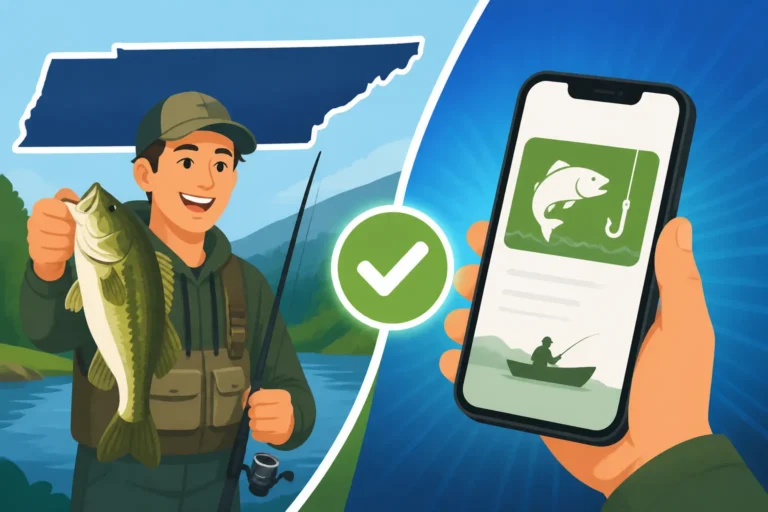
No matter what type of license you hold, it’s absolutely vital to have proof of your current fishing license with you whenever you are actively engaged in fishing. This could be a physical printout of your license, or increasingly, a digital copy on your smartphone. The TWRA recognizes digital licenses, making it easy to carry proof without worrying about losing a paper copy.
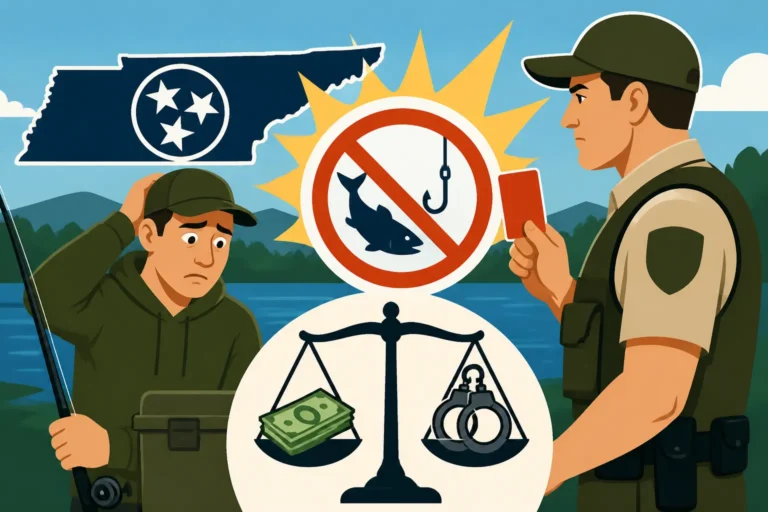
If a game warden asks to see your license and you can't produce it, even if you genuinely have one, you could face penalties. Penalties for Fishing Without a License in Tennessee can include fines and potentially more serious consequences, so don't risk it. Keep your license easily accessible, whether it's in your wallet, tackle box, or a waterproof case for your phone. A simple laminated card in a Ziploc bag tucked into your fishing vest pocket is often the most reliable way to go.
Final Thoughts on the County-Only License
The Tennessee county-only fishing license is a truly valuable option for the right angler. It's a testament to the TWRA's understanding that not everyone's fishing habits are the same, and that sometimes, less coverage for less money is precisely what someone needs. For a mere $10, you gain access to all the fantastic public fishing opportunities within your home county, saving you a crisp $23 over the standard statewide annual license.
However, it's crucial to be honest with yourself about your fishing habits. If you're a homebody angler, someone who cherishes their local spots and rarely ventures beyond their county lines, then this license is a smart, budget-friendly choice that allows you to reinvest those savings into your gear or bait. But if there's even a small chance your fishing adventures might take you across a county line, or if you aspire to chase trout, the statewide annual license offers the peace of mind and flexibility that makes the extra investment worthwhile. Carefully consider your fishing plans for the year, and choose the license that truly fits your angling lifestyle.
Disclaimer
Please remember that fishing regulations and license requirements can change. Always consult the official Tennessee Wildlife Resources Agency (TWRA) website or their latest publications for the most current and accurate information before planning your fishing trips. This guide is for informational purposes only and should not be considered legal advice.