Spring Crappie Spawn Timing in Tennessee
There’s nothing quite like the anticipation of spring fishing, especially when you’re hoping to hit that magical window of the crappie spawn in Tennessee. Many anglers find themselves endlessly checking water temperatures, wondering if they’ve missed it, or if it’s still days or even weeks away. This guide is dedicated to demystifying the spring crappie spawn, helping you understand its timing, what influences it, and how to successfully target these delicious fish when they move shallow.
Understanding the Crappie Spawn Cycle
The crappie spawn is a phenomenon driven by nature’s ancient rhythms, signaling a time of intense activity as these fish prepare to reproduce. For anglers, it’s often considered the prime time to fill a cooler, but understanding the intricate details of this cycle is key to consistent success.
The Biological Trigger for Spawning
At its core, the crappie spawn is all about perpetuating the species. As winter gives way to spring, crappie—both black and white varieties—feel an undeniable biological urge to reproduce. This isn't just a switch flipping overnight; it's a gradual process influenced by changes in daylight hours, water depth, and crucially, water temperature. The longer days of spring signal to the fish that conditions are becoming favorable for their eggs to develop and hatch successfully. They'll start moving from their deeper winter haunts into transitional areas, often staging near creek channels, submerged timber, or drop-offs, getting ready for the final push into the shallows.
This staging period is critical, as crappie are actively feeding to build energy reserves for the strenuous spawning process. They become more aggressive and opportunistic, making them a fantastic target for anglers who know where to look. Missing this pre-spawn bite means you're already behind the curve, which is why paying close attention to early spring signs is so vital.
Water Temperature: The Ultimate Indicator
While daylight and biology set the stage, water temperature is truly the maestro orchestrating the crappie spawn in Tennessee. These fish are highly sensitive to thermal changes, and specific temperature ranges dictate their movements and behaviors. Generally, crappie begin to move shallow for spawning when water temperatures consistently reach the mid-50s (Fahrenheit). The peak of the spawn typically occurs when water temperatures range between 60 and 68 degrees Fahrenheit.
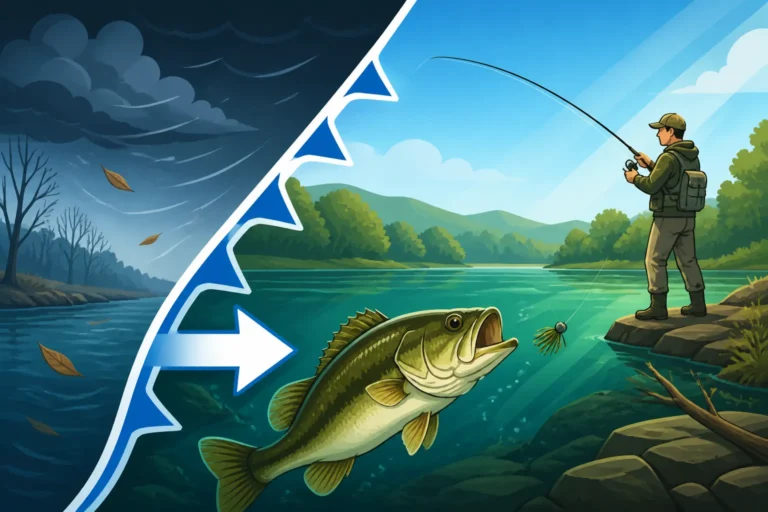
However, it's not just about hitting a specific number. The consistency of these temperatures matters. A sudden cold front can drop water temperatures quickly, causing crappie to retreat to deeper, more stable waters until conditions stabilize again. This fluctuation is often the biggest frustration for anglers, making it feel like the bite turns on and off. Learning to monitor water temperature in your favorite fishing spots, whether with a boat-mounted fish finder or a simple thermometer, is your most powerful tool.
Once the water hits that ideal range, crappie will commit to shallow spawning beds, typically in water from 1 to 5 feet deep. They'll fan out nests on firm bottom areas, often near submerged cover, and guard their eggs. This intense period offers some of the best fishing opportunities, as the fish are concentrated and highly protective.
Common Misconceptions About the Spawn Window
One of the biggest myths surrounding the crappie spawn is that it's a single, uniform event across an entire lake or even the whole state. This couldn't be further from the truth. The spawn is a progressive event, unfolding in waves depending on micro-climates, water body size, and depth. For instance, northern coves on a large reservoir like Kentucky Lake will typically warm up faster and experience the spawn earlier than deeper, more open sections or cooler, shaded banks.
Another common misconception is that once the spawn starts, it's over quickly. In reality, the crappie spawn in Tennessee can last for several weeks on a given body of water, with different waves of fish moving in to spawn. While individual fish might only spend a few days on the nest, the overall population's spawning activity stretches out. This means if you miss the first wave, there are often subsequent opportunities, especially if you understand how to adjust your approach for pre-spawn, peak spawn, and even post-spawn crappie, which we'll cover later. Don't give up if you don't hit it exactly right on your first trip out.
Factors Influencing Spawn Timing in Tennessee
Tennessee is a diverse state, from the Mississippi River lowlands in the west to the Appalachian foothills in the east, and this geographical variance plays a significant role in when and how the crappie spawn unfolds. Understanding these influencing factors can help you pinpoint the best times and locations.
Regional Variations Across Tennessee Lakes
Tennessee's vast network of lakes and rivers doesn't experience the crappie spawn simultaneously. Generally, the warmer waters of West Tennessee, such as Reelfoot Lake or the lower sections of Kentucky Lake, will see the crappie spawn begin earlier, often starting in late March or early April. These shallower, often stained waters absorb heat more quickly. As you move eastward into the larger, deeper, and often clearer reservoirs of Middle and East Tennessee, like Percy Priest Lake, Dale Hollow Lake, or Norris Lake, the spawn tends to occur later, typically in mid-April through May, and sometimes even into early June in the highest elevations or on particularly cool spring seasons.
For instance, anglers targeting crappie on the Tennessee side of Kentucky Lake might experience peak spawn conditions weeks before those fishing the colder, deeper waters of Center Hill Lake. This difference is due to the thermal mass of the water; deeper, clearer lakes take longer to warm up to the optimal spawning temperatures. If you're an avid crappie angler, this knowledge can allow you to "follow the spawn" across the state, extending your productive fishing window significantly. Always check local fishing reports and water temperature data for the specific lake you plan to visit.
Weather Patterns and Their Impact
Spring weather in Tennessee is notoriously unpredictable, and these fluctuations have a direct and often frustrating impact on crappie spawning activity. A stretch of warm, sunny days in early spring can quickly raise water temperatures, prompting crappie to move shallow and begin preparing their nests. However, a sudden cold front, accompanied by dropping air temperatures, rain, or even late-season freezes, can send those same fish scurrying back to deeper water. This is why you might find crappie one day and struggle to locate them in the same spot the next.
Heavy rains can also influence the spawn by causing water levels to rise and muddying the water. While crappie can tolerate some turbidity, extremely muddy conditions might delay spawning or cause fish to seek out clearer water pockets. Understanding how to fish after a cold front or heavy rain is crucial, as fish may become less active or move to slightly different depths or types of cover. Conversely, a sustained period of stable, warm weather is usually when the spawn hits its peak intensity and provides the most consistent fishing.
Moon Phases and Crappie Activity
While water temperature is the primary driver, many experienced crappie anglers in Tennessee swear by the influence of moon phases, particularly the full moon, on spawning activity. The theory is that the increased gravitational pull of a full moon, or perhaps the enhanced nocturnal light, can trigger a surge in crappie movements and spawning efforts, especially if water temperatures are already within the optimal range. It's often observed that some of the most intense spawning waves coincide with the full moon in spring.
While the scientific evidence specifically for crappie is debated, anecdotal evidence from generations of anglers suggests a correlation. Some believe that major spawning pushes happen just before or during the full moon. Similarly, new moon phases might see a different kind of activity or a temporary lull, though fish are still present. Paying attention to the lunar calendar alongside your water temperature readings can give you an additional edge in predicting those prime crappie days. It's just one more piece of the puzzle to consider when planning your spring outings to maximize your chances during this critical time.
Where to Find Crappie During the Spawn
Knowing when the crappie spawn is happening is only half the battle; knowing where to find them when they're shallow is the real game-changer. Crappie have specific preferences for their spawning grounds, and understanding these can dramatically improve your success.
Shallow Water Havens
During the spring spawn, crappie abandon their deeper haunts and migrate en masse to shallow water. We're talking anywhere from 1 to 5 feet deep, sometimes even shallower if there's sufficient cover and stable water conditions. They seek out areas that warm up quickly, are protected from strong winds and currents, and provide a stable substrate for their nests. Ideal spots often include shallow coves, protected creek arms, backwaters, and the calmer pockets of main lake shorelines.
Look for areas with a dark bottom, as these absorb sunlight more efficiently and warm the water faster. Submerged stumps, brush piles, fallen trees, and even boat docks or pier pilings provide essential cover. These shallow water havens are where crappie will fan out their nests, lay their eggs, and often stay to guard them for a short period. Understanding these key characteristics allows you to quickly eliminate unproductive water and focus your efforts where the fish are most likely concentrated during this pivotal time.
Cover and Structure Preferences
Crappie are not just in shallow water; they are in or immediately adjacent to cover and structure. This provides them with protection from predators, a place to anchor their nests, and often a stable temperature zone. Common cover types include submerged brush piles, which are absolute magnets for spawning crappie. These could be natural brush from fallen trees or intentionally submerged structures. Rock piles, stump fields, and aquatic vegetation, such as lily pads or submerged grass beds, are also prime locations.
Man-made structures like boat docks, fishing piers, and even bridge pilings also offer excellent crappie habitat during the spawn. The shade and cover these structures provide are irresistible. When approaching these areas, maintain stealth. Crappie in shallow water are easily spooked. Making long, accurate casts to the edges of the cover, or gently pitching your bait into pockets within the brush, will often yield the best results. Remember, the fish are actively guarding their nests, making them quite aggressive towards perceived threats, which works in our favor.
If you’re unsure where to start, looking for areas with a mix of these elements – shallow water, a dark bottom, and plenty of submerged brush or docks – will greatly increase your chances. On lakes like Watts Bar Lake or Chickamauga Lake, acres of flooded timber offer endless opportunities, but focusing on the shallower edges of that timber in protected bays will be most productive.
Pre-Spawn Staging Areas
Before crappie commit fully to the shallow spawning beds, they spend a crucial period "staging" in slightly deeper water nearby. These pre-spawn staging areas are typically found in 8 to 15 feet of water, often on the first significant breakline or channel edge leading into a known spawning cove. This could be a submerged creek channel, a deep point, or a drop-off near a flat. They will congregate in these areas, feeding heavily to build energy for the spawn.
Identifying these staging areas is incredibly important because if a cold front pushes the shallow crappie back out, these are the first places they will retreat to. Anglers who can locate these staging fish often find success when the shallow bite is slow. They're still active, aggressive, and grouped up. Look for suspended schools of crappie on your fish finder in these depths, especially around the base of brush piles or timber that extends from shallow water. Fishing these transition zones with a vertical presentation or by slowly trolling jigs can be incredibly effective during the pre-spawn period.
Best Techniques for Spawn Crappie
Once you've zeroed in on the "when" and "where," it's time to talk about the "how." Successfully catching crappie during the spawn often requires finesse and a willingness to adapt your techniques to their specific behaviors.
Jigging and Pitching Shallow Cover
When crappie are locked onto their spawning beds in shallow water, precise jigging and pitching techniques become paramount. These methods allow you to present a lure accurately into tight spaces around brush, docks, and other cover where crappie are holding. A light-action spinning rod with sensitive tip, spooled with 4-6 lb test line, is ideal for feeling those subtle crappie bites.
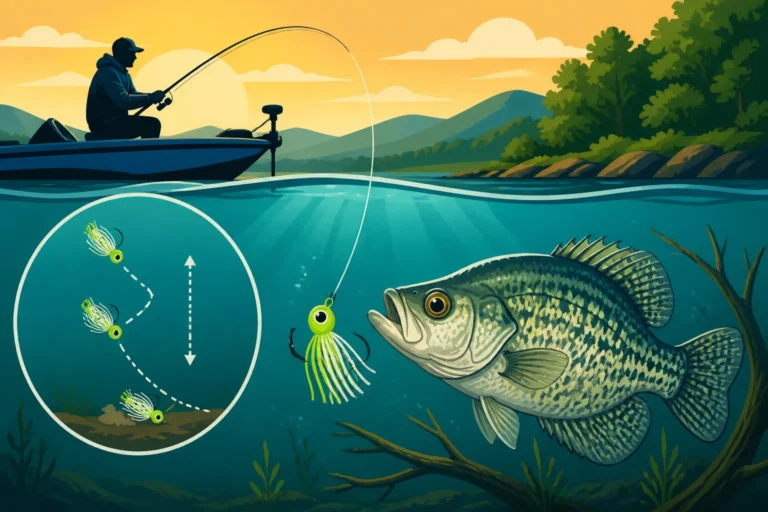
For pitching, use small jigs, typically 1/32 oz to 1/16 oz, rigged with soft plastic crappie tubes, grub bodies, or small swimbaits. Cast or pitch your jig beyond the desired cover, allowing it to sink naturally, then slowly retrieve it through the cover. Experiment with different colors; chartreuse, white, and various "natural" patterns are often effective. Sometimes a steady retrieve works, other times a stop-and-go twitch is better. When fishing extremely dense cover, you might even consider "dipping" by gently lowering your jig straight down into openings, which is a common strategy when the fish are right in the thick of a brush pile. Mastering this technique is a core part of a comprehensive Tennessee Crappie Fishing Guide by Season.
Spider Rigging for Suspended Fish
While crappie are often shallow during the spawn, they can also suspend in slightly deeper water in staging areas or when conditions are fluctuating. This is where "spider rigging" comes into its own. This technique involves using multiple long rods (often 8 to 16 feet) spread out around the boat, each rigged with a weight and hook setup, allowing you to present several baits at varying depths simultaneously. It’s an incredibly efficient way to cover water and find suspended schools of fish. For specific tactics, you can dive deeper into how to spider rig for crappie.
Typically, you'll use a lead sinker at the bottom with one or two hooks tied above it, or a double jig rig. Baits can range from live minnows, which are often irresistible to crappie, to small jigs or a combination of both. Troll slowly, often just 0.5 to 1 mph, over structure like submerged creek channels, deep flats, or the edges of timber. The multiple rods allow you to experiment with different depths and bait presentations until you find what the crappie prefer on that particular day. It’s a fantastic method for covering larger areas and locating fish that aren't hugging the bottom.
Live Bait Tactics for Finicky Biters
When crappie become finicky or inactive, often due to weather changes or intense fishing pressure, live bait can be the ultimate equalizer. Small minnows are the gold standard for crappie fishing, and during the spawn, they are particularly effective. Crappie are naturally drawn to the frantic movements of a live minnow, especially when guarding a nest.
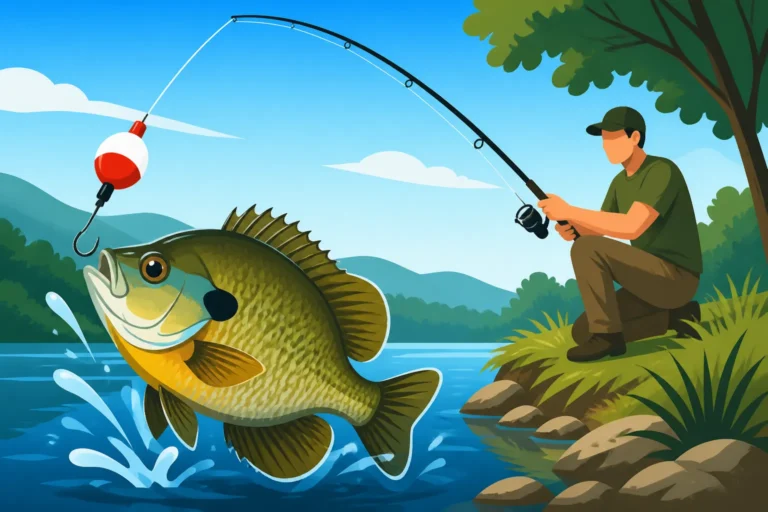
Present minnows under a small bobber, allowing them to drift naturally into cover or suspend at a specific depth. The key is to use small hooks (e.g., #2 or #4 light-wire hooks) that don't impede the minnow's movement. You can also fish minnows on a tightline rig without a bobber, letting the minnow swim freely around brush piles or drop-offs. If you’re fishing a double-jig rig while spider rigging, adding a live minnow to one of the hooks can often entice bites when plastic alone won’t do the trick. A bobber can also be used effectively when you want to target specific depths, allowing the minnow to slowly fall right into the strike zone.
| Spawn Phase | Water Temperature Range (F) | Crappie Behavior | Primary Locations | Recommended Baits/Techniques |
|---|---|---|---|---|
| Pre-Spawn | 50-59° | Staging, actively feeding in deeper water | Creek channels, main lake points, drop-offs, timber | Spider rigging jigs/minnows, vertical jigging |
| Peak Spawn | 60-68° | Shallow nesting, highly aggressive/protective | Shallow coves, brush piles, docks, submerged wood | Pitching jigs, minnows under bobbers, dipping |
| Post-Spawn | 69°+ | Moving deeper, recovering, less aggressive | Deeper edges of spawning areas, main lake structure | Slow trolling, deep jigging, slip bobbers with minnows |
Gear and Tackle for Spring Crappie
Having the right tools for the job can make a world of difference when you're out chasing spring crappie. While you don't need the most expensive gear, choosing rods, reels, and tackle designed for crappie fishing will significantly enhance your experience and success.
Rod and Reel Setups for Sensitivity
For crappie fishing, sensitivity is paramount. You need to feel those subtle taps that often indicate a crappie bite, especially when they're mouthing a bait rather than aggressively striking. A light-action or ultralight spinning rod, typically 5 to 7 feet long, is ideal for most crappie techniques. Graphite rods are excellent for their sensitivity and light weight. For spider rigging, as mentioned, longer rods (8-16 feet) are necessary, often designed with a softer tip to absorb the shock of a bite and a stronger backbone to handle multiple fish.
Pair these rods with small, lightweight spinning reels (sizes 500-1000) spooled with 4-6 lb monofilament or fluorocarbon line. Monofilament offers a bit of stretch, which can be forgiving with soft-mouthed crappie, while fluorocarbon offers greater sensitivity and less visibility. Some anglers prefer braided line for its extreme sensitivity and no-stretch properties, often pairing it with a fluorocarbon leader. Finding a balanced setup that feels comfortable in your hand and provides excellent feedback is key. For a deep dive into options, check out the article on Best Tackle for Tennessee Crappie Fishing.
Essential Lures and Baits
When it comes to crappie lures and baits, simplicity often reigns supreme. Small jigs are your bread and butter. Soft plastic crappie jigs, ranging from 1/32 oz to 1/16 oz, with a variety of tail styles (tubes, grubs, curly tails, paddle tails), are incredibly versatile. Popular colors include chartreuse, white, pink, black/chartreuse, and various shad or minnow patterns. Many anglers like to tip their jigs with a tiny piece of live bait, like a minnow head or a wax worm, for added scent and appeal.
Beyond soft plastics, small hair jigs, tiny spoons, and even micro crankbaits can be effective in certain situations. However, live minnows are arguably the most consistently effective bait, especially for finicky crappie or when the bite is tough. Always have a good supply of fresh minnows on hand. For specific strategies on how to jig for crappie, you'll find plenty of detailed advice that focuses on matching your presentation to the crappie's mood.
Accessories for a Successful Trip
Beyond rods, reels, and baits, a few essential accessories will make your spring crappie fishing trips in Tennessee more enjoyable and successful. A good pair of polarized sunglasses is indispensable for spotting subtle movements in shallow water or seeing submerged cover. A quality pair of line clippers or small scissors is also a must-have.
For measuring your catch, particularly when adhering to specific regulations like those discussed in Crappie Limits Under Tennessee Fishing Rules (which state only 5 of your 20 daily crappie may be over 12 inches), a reliable measuring board or tape is essential. A livewell or a sturdy cooler with ice is crucial for keeping your minnows lively and your catch fresh. Many of these items, from sensitive ultralight rods to specialized crappie jigs, can be found readily available on Amazon, making it easy to stock up before your next outing. Don't forget a comfortable boat seat or a reliable tackle box to keep everything organized, and perhaps a small anchor to hold your position over a productive brush pile.
Navigating Post-Spawn Conditions
Just as the pre-spawn and spawn phases are distinct, so too is the post-spawn period. Many anglers find the post-spawn to be the most challenging time to locate and catch crappie, but with the right approach, you can still find success.
When Crappie Disperse and Move Deeper
Once crappie have completed their spawning duties, usually as water temperatures climb into the 70s and beyond, they begin to disperse from the shallow spawning grounds. This transition can feel abrupt to anglers who were previously catching them in droves. The fish are often exhausted and less aggressive after the energy expenditure of spawning. They're also not as concentrated, making them harder to locate.
During this post-spawn phase, crappie will gradually move back out to slightly deeper water, often suspending over main lake humps, submerged islands, or along the edges of creek channels. They are seeking comfort in more stable temperatures and will often relate to deeper brush piles, standing timber, or offshore structure. This movement is a recovery period where they feed to regain strength. Don't expect them to be in the same 2-foot deep pockets you found them in just a week or two earlier.
Adjusting Your Strategy After the Spawn
Successfully targeting post-spawn crappie requires a significant shift in strategy. Instead of pitching shallow cover, you'll need to focus your efforts on deeper water and offshore structure. This is where your boat's electronics, particularly a good fish finder, become invaluable for locating suspended schools of fish or identifying submerged brush piles and timber in deeper zones (10-25 feet).
Slow trolling with multiple rods, similar to spider rigging but often with heavier weights to reach greater depths, can be effective. Try different depth presentations and jig/minnow combinations until you find the fish. Vertical jigging directly over identified schools or structure can also produce bites. Crappie in this phase might be less aggressive, so slower presentations and smaller baits, or relying heavily on live minnows, can make the difference. This shift in tactics is a natural progression detailed in any comprehensive Tennessee Crappie Fishing Guide by Season.
Summer Transition: Finding the Crappie Again
As spring fully transitions into summer, crappie will settle into their deeper summer patterns. They'll typically be found in even deeper water than the immediate post-spawn, often suspending over open water structure, along deep river channels, or near thermoclines in larger reservoirs. They are still relating to cover, but now it's deep-water cover: submerged trees, deep brush piles, and bridge pilings in 20-40 feet or more.
Finding these summer crappie often means using heavier jigs, larger minnows, or even small crankbaits trolled at deeper depths. Downriggers can be useful for precision depth control. This is also a good time for night fishing, as cooler evening temperatures and low light can bring crappie shallower, though still often suspending over deeper water. Don't be discouraged if the summer bite seems tougher; it just means you need to re-think your approach and embrace deeper-water techniques. The key to year-round success is understanding these seasonal transitions and adapting accordingly, whether you're fishing for Black Crappie Stocking by TWRA in Tennessee or simply enjoying a quiet day on the water.
Disclaimer
Fishing conditions and regulations in Tennessee are subject to change. Always consult the latest Tennessee Wildlife Resources Agency (TWRA) regulations before heading out. Be aware of local lake-specific rules, as these can sometimes override statewide limits. Practice safe boating and fishing habits, and always prioritize conservation.