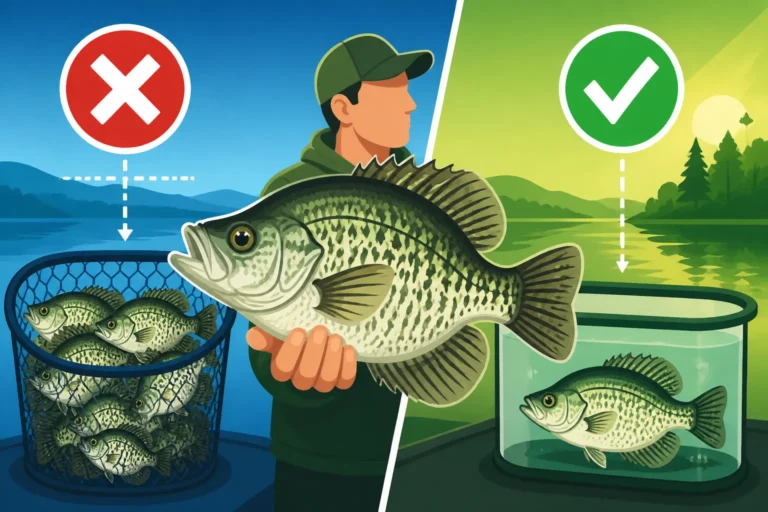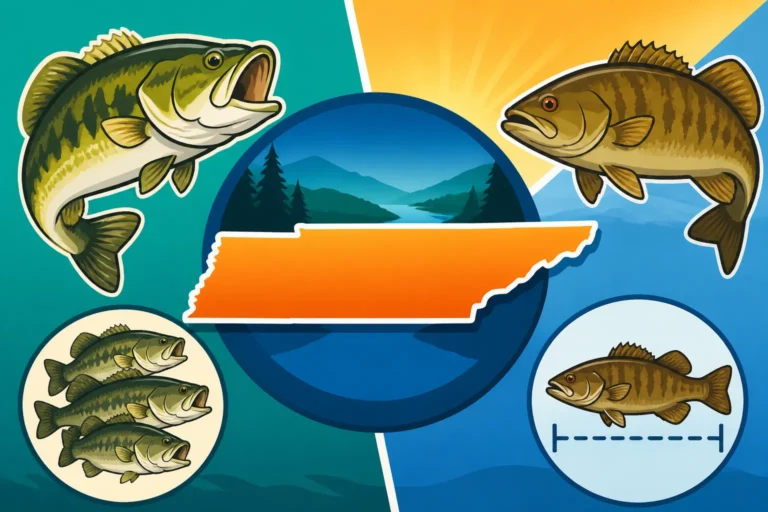
Smallmouth, Alabama and spotted bass share one combined 5-fish daily limit
It can be incredibly confusing trying to keep track of all the different fishing regulations here in Tennessee, especially when it comes to bass. You're out on the water, you've got a great bite going, and then you start wondering, "Wait, how many of these can I actually keep? Do smallmouth count the same as largemouth? What about spotted bass?" It’s a common frustration that can make you second-guess every fish you put in the livewell. This guide is here to clear up that specific confusion, focusing on the combined daily limit for smallmouth, Alabama, and spotted bass, so you can fish with confidence and stay on the right side of the rules.
Understanding Tennessee's Specific Bass Regulations
Tennessee is a fantastic place to fish for bass, with a rich diversity that includes largemouth, smallmouth, spotted, and even some Alabama bass. While largemouth bass have their own distinct limits, the Tennessee Wildlife Resources Agency (TWRA) groups smallmouth, Alabama, and spotted bass under a combined daily creel limit. This isn't just arbitrary; there's a good reason behind it that helps manage our precious fisheries.
Why a Combined Limit Exists for Specific Bass Species
The primary reason for grouping smallmouth, Alabama, and spotted bass under a combined limit is often due to their similar ecological niches, habitat preferences, and sometimes, the challenge of quick identification in the field. These species can often coexist in the same waters, and managing them as a collective helps prevent overharvesting of one species while another might be misidentified and taken instead. For instance, smallmouth bass are incredibly popular sport fish known for their fighting ability, particularly in clear, rocky rivers and reservoirs like those found on the Cumberland River Fishing Spots in Tennessee. Spotted bass and Alabama bass, while distinct, can sometimes be mistaken for smallmouth, especially by less experienced anglers. By setting a combined limit, the TWRA aims to simplify enforcement and encourage conservation across these similar, yet distinct, black bass populations. It’s a pragmatic approach to ensure healthy stocks for future generations of anglers.
The Specifics: Smallmouth, Alabama, and Spotted Bass Defined
Let's quickly touch on what makes each of these species unique, even as they fall under the same creel limit. Knowing a bit about them helps when you're trying to figure out what you've just reeled in.
- Smallmouth Bass: Often called "bronze-backs," these are highly prized sport fish, especially in cooler, clear waters of East Tennessee. They have vertical bars or blotches on their sides, and their jaw typically does not extend beyond the back of the eye. They're incredible fighters and a real joy to catch. You'll find them abundant in many of our best rivers for fishing in Tennessee.
- Spotted Bass: Also known as Kentucky bass, these fish have a series of dark, diamond-shaped blotches along their sides, which often form a lateral line. One key identifying feature is a rough patch of teeth on the tongue, which largemouth lack. Their jaw extends to, but typically not beyond, the back of the eye, similar to a smallmouth, but they often have more pronounced spots on their lower belly.
- Alabama Bass: These are less common but are found in some Tennessee waters, particularly in the Tennessee River system. They look very similar to spotted bass, to the point where distinguishing them without close inspection can be tough for the average angler. The main difference lies in genetics and subtle morphological features not always obvious on the water. For regulatory purposes, if it looks like a spotted bass, it's covered by the same rules.
The key takeaway is that for the purpose of your daily creel limit, these three distinct species are treated as one collective group.
Decoding the 5-Fish Daily Limit
So, you’ve got these three species, and the rule says "5-fish daily limit" for them combined. What does that really mean when you're out on the water? It means you need to count them all together, and there's also a crucial size restriction to remember.
What "Combined Limit" Truly Means
The "combined 5-fish daily limit" for smallmouth, Alabama, and spotted bass means that in any given day, the total number of fish you keep from these three species cannot exceed five. It's not five smallmouth, plus five spotted, plus five Alabama. It's five total.
Imagine you're out on Dale Hollow Lake, famous for its smallmouth. You catch a beautiful 17-inch smallmouth and decide to keep it. That's one fish towards your combined limit. Later, you land three nice spotted bass, all under 16 inches. You keep those too. Now you have one smallmouth and three spotted bass, totaling four fish. You can only keep one more fish from this group (smallmouth, Alabama, or spotted bass) for the rest of the day. If you then catch two more smallmouth, you can only keep one of them to reach your five-fish limit. The other would need to be released. This combined approach streamlines the regulation, making it simpler for anglers and game wardens alike, while still ensuring sustainable populations.
The "Only One Bass Over 16 Inches" Rule
This is a critical detail that many anglers, even seasoned ones, sometimes overlook or misunderstand. For smallmouth, Alabama, and spotted bass, out of your combined 5-fish daily limit, only one can be over 16 inches in length.
Let's break this down:
- You can keep five bass, and all five can be under 16 inches.
- You can keep one bass that is 16 inches or longer, and four others that are under 16 inches.
- You cannot keep two bass that are both over 16 inches, even if your total count is still under five.
This rule is a powerful conservation tool, specifically designed to protect larger, mature breeding fish. These larger fish are often the most productive spawners, and allowing only one per angler helps ensure that a healthy population of "trophy" sized bass remains in the system to reproduce and contribute to future generations. This is especially vital for species like smallmouth, where anglers often target larger individuals. Keeping an eye on the length of your catch, alongside the total count, is essential for compliance. It's a key part of the statewide bass limits for Tennessee anglers, ensuring healthy fisheries for years to come.
Practical Scenarios and Common Questions
Understanding regulations isn't just about reading the rules; it's about knowing how to apply them when you're actually out there with a rod in your hand. Let's walk through some common situations you might encounter.
Hypothetical Catch Examples
Thinking through a few scenarios can really cement your understanding of the combined 5-fish, one over 16-inch limit.
-
Scenario 1: All Smallmouth Enthusiast
You're fishing a clear mountain stream, known for its strong smallmouth population. You catch five smallmouth bass: two are 14 inches, two are 15 inches, and one is 17 inches.- Result: You can legally keep all five fish. Why? Because you have five total fish from the regulated group, and only one of them is over 16 inches (the 17-inch smallmouth). This is a perfectly legal creel.
-
Scenario 2: Mixed Bag on a Reservoir
You're out on Kentucky Lake fishing near the Tennessee side, and you're hitting a mixed bag. You catch two 13-inch spotted bass, one 15-inch smallmouth, and two 18-inch Alabama bass.- Result: You can only keep a total of five fish, and only one of those can be over 16 inches. Since you caught two 18-inch Alabama bass, you would have to release one of them. You could keep one 18-inch Alabama, two 13-inch spotted bass, and one 15-inch smallmouth, for a total of four fish. If you then caught another fish under 16 inches (smallmouth, spotted, or Alabama), you could keep that to reach your limit of five, with only one over 16 inches.
-
Scenario 3: No Large Fish
You've had an amazing day catching smaller but feisty bass on Percy Priest Lake near Nashville. You have six fish in your livewell: three 12-inch spotted bass and three 14-inch smallmouth bass.- Result: You're over your combined limit. Even though all your fish are under 16 inches, your total count for smallmouth, Alabama, and spotted bass cannot exceed five. You would need to release one of your six fish to be compliant, leaving you with five fish, all under 16 inches.
| Species Caught (Combined) | Number of Fish | Length of Fish | Legality |
|---|---|---|---|
| Smallmouth, Spotted, Alabama | 5 | All under 16" | Legal |
| Smallmouth, Spotted, Alabama | 5 | 1 over 16", 4 under 16" | Legal |
| Smallmouth, Spotted, Alabama | 4 | 2 over 16", 2 under 16" | Illegal (too many over 16") |
| Smallmouth, Spotted, Alabama | 6 | All under 16" | Illegal (over 5 total) |
Distinguishing Between Bass Species
Sometimes, in the heat of the moment, telling a spotted bass from a smallmouth or even a young largemouth can be tricky. Here are a few quick tips to help you make the call:
- Jaw Line: For largemouth, the jaw typically extends well beyond the back of the eye. For smallmouth, spotted, and Alabama bass, it usually stops at or before the back of the eye. This is one of the easiest initial checks.
- Dorsal Fin: Largemouth have a deep notch in their dorsal fin, making it look almost like two separate fins. Smallmouth, spotted, and Alabama bass have a less pronounced notch, making their dorsal fin appear more continuous.
- Tongue Patch: This is a definitive one for spotted bass. If you can feel a small, rough patch of teeth on the tongue, it's a spotted bass. Largemouth and smallmouth do not have this patch.
- Body Pattern: Smallmouth tend to have vertical bars or blotches, often appearing "bronze." Spotted bass often have horizontal rows of spots on their lower belly below the lateral line, and more distinct diamond-shaped blotches. Largemouth have a distinct dark, horizontal band along their sides.
If you're ever in doubt, the safest bet is always to release the fish. It's better to be cautious than to risk a fine for violating regulations. You can also consult a detailed freshwater fish identification guide for anglers to sharpen your skills.
Why These Rules Matter for Conservation
Fishing regulations aren't just there to make life difficult for anglers; they are meticulously crafted tools essential for the long-term health and sustainability of our fisheries. The rules surrounding bass limits, particularly the combined limits and size restrictions, play a crucial role in protecting Tennessee’s diverse aquatic ecosystems.
Protecting Trophy Fish and Spawning Stocks
The "only one bass over 16 inches" rule for smallmouth, Alabama, and spotted bass is a prime example of a regulation designed for conservation. Larger, mature fish are typically the most prolific spawners. They produce more eggs, and those eggs often have higher viability, contributing significantly more to the next generation. By limiting anglers to only one large fish per day, we ensure that a healthy population of these vital breeders remains in the water to continue the reproductive cycle.
Consider the smallmouth bass in particular. They are highly sought after by anglers for their fighting spirit and the challenge they present. Without such restrictions, there would be a much higher risk of anglers depleting the population of larger smallmouth, which could have devastating effects on the species' ability to sustain itself. This rule helps create a balance, allowing anglers to enjoy their sport while simultaneously safeguarding the future of our incredible bass fisheries, like those found on Dale Hollow Lake Smallmouth Bass Fishing.
The Role of Anglers in Sustainable Fishing
Every angler has a direct impact on the health of our fishing waters. By understanding and adhering to regulations, we all become active participants in conservation. It's not just about avoiding penalties; it's about being responsible stewards of our natural resources. When you consciously release a fish that pushes you over the combined limit, or carefully measure a bass to ensure it meets the size requirements, you're making a choice that benefits the entire ecosystem.
This responsibility extends beyond just limits. It includes practicing proper catch-and-release techniques to minimize stress and injury to fish you don't intend to keep, properly disposing of litter, and reporting any suspicious activity that might harm the fishery. The Tennessee Wildlife Resources Agency (TWRA) works tirelessly to manage these resources, but their efforts are significantly bolstered by informed and responsible anglers who treat our lakes and rivers with respect. Your commitment to following rules, even when it means releasing a prized catch, is what truly helps protect the quality of fishing in Tennessee for future generations.
Important Resources and Where to Find More Information
Navigating fishing regulations can sometimes feel like trying to untangle a particularly stubborn bird’s nest in your tackle box. But trust me, knowing where to go for the most accurate and up-to-date information is your best tool.
Your Official TWRA Guide
The absolute best resource for all Tennessee fishing regulations is the Tennessee Wildlife Resources Agency (TWRA). They publish an annual Fishing Guide, which is available both in print and digitally on their website. This guide is your bible for everything from statewide limits, like the one we've discussed for smallmouth, Alabama, and spotted bass, to lake-specific rules that might override those defaults. Always remember that some Tennessee lakes set catch limits that override the statewide defaults, so checking that specific waterbody's rules is crucial.
I always recommend downloading the digital version to your phone or printing out the relevant pages before heading out. Regulations can sometimes change season to season, and the TWRA's official guide will always have the most current information. They also have helpful contact information if you have specific questions that aren't clearly covered. Their website is also where you'd go to buy or renew a Tennessee fishing license online, which is the first step to legally fishing here.
Local Knowledge and Bait Shops
While the official TWRA guide is paramount, don't underestimate the wealth of knowledge you can gain from local sources. Your local bait and tackle shops are treasure troves of information. The folks who work there are often avid anglers themselves, and they hear about rule changes, specific lake conditions, and local nuances constantly. They can offer insights into how the Tennessee fishing regulations explained in the guide apply to the particular body of water you're planning to fish.
For instance, if you're planning a trip to Watts Bar Lake, talking to a local bait shop owner might reveal that while the statewide limits are in place, a particular cove has a reputation for holding larger bass, and they might even give you a heads-up on specific patterns or baits. Similarly, if you're fishing in the Great Smoky Mountains, a local fly shop can give you the rundown on Tennessee trout limits and season rules, which can vary significantly by stream and time of year. Just remember to always cross-reference any advice with the official TWRA regulations to ensure accuracy, as friendly local advice, while valuable, might occasionally miss a fine point of the law.
Disclaimer
The information provided in this guide is for general informational purposes only and is not a substitute for the official regulations published by the Tennessee Wildlife Resources Agency (TWRA). Fishing regulations, including catch limits and size restrictions, can change. Always consult the most current TWRA Fishing Guide or visit their official website before you go fishing to ensure compliance. Ignorance of the law is not an excuse for violations.