Best Fly Patterns for Brown Trout
It can be incredibly frustrating to hit the stream, knowing brown trout are lurking, but getting no bites. You've got your rod, your waders, and all the hope in the world, only to find that the fish are completely ignoring your offerings. The truth is, brown trout, especially the wild ones we cherish here in Tennessee, can be notoriously picky eaters. This comprehensive guide is going to strip away the guesswork, helping you understand their feeding habits and arming you with the best fly patterns to consistently entice those elusive brown beauties in our state's incredible waters.
Understanding Brown Trout Feeding Habits in Tennessee
Brown trout are opportunistic feeders, but they're also highly attuned to their environment. They're not just going to grab anything that floats by; they're looking for what's abundant, what's easy, and what looks most like their natural prey. In Tennessee, this means understanding the nuances of our unique aquatic ecosystems, from the cold, oxygen-rich tailwaters to the freestone streams high in the Smoky Mountains. Ignoring these factors is often why anglers struggle – they're throwing the wrong meal at the wrong time.
Seasonal Forage Variations
Just like us, brown trout's menu changes with the seasons. What they're keying in on during a chilly spring morning is vastly different from what excites them on a hot summer afternoon or a crisp fall day.
In spring, as the water begins to warm, aquatic insect hatches become more prolific. This is when nymphs and emerging insects are often prime targets. Caddis, mayflies, and stoneflies are all making their moves, transitioning from their larval stages on the stream bed to adults. Brown trout will position themselves to intercept these easy meals as they drift. As spring progresses into summer, terrestrial insects, like grasshoppers, ants, and beetles, become increasingly important, especially on windy days when they get blown into the water. The fish will shift their focus from purely aquatic fare to anything that offers a substantial calorie boost. Tennessee Trout Fishing Season Explained delves deeper into these seasonal shifts.
By fall, brown trout often become much more aggressive. This is their spawning season, and they need to bulk up. Their diet will expand significantly to include larger prey items like baitfish, sculpins, and even smaller trout. This is a crucial time for larger, more predatory flies. And then, in winter, when insect activity slows down dramatically, they conserve energy and rely heavily on subsurface nymphs that are always available, albeit in smaller quantities, or larger, slow-moving baitfish that are easier to ambush in cold, clear water. Thinking about these shifts like planning your own grocery list for each season will dramatically improve your chances.
Water Conditions and Food Choices
The clarity, temperature, and flow rate of a stream or river also play a huge role in what brown trout are willing to eat. Think of it like a restaurant menu adapting to the weather.
When waters are clear and low, which often happens in late summer or during dry spells, brown trout become incredibly wary. They have excellent eyesight, and they're more likely to scrutinize your fly. In these conditions, smaller, more imitative patterns are usually the ticket. Think tiny midges, small mayfly nymphs, or delicate dry flies presented with a long, fine leader. The fish can see everything, so your presentation needs to be flawless. Conversely, when the water is higher and a bit stained from rain, brown trout gain confidence and become less selective. They can't see as well, so they rely more on vibrations and general profiles. This is when you can get away with (and sometimes need) larger, flashier flies, especially nymphs or streamers, that create more disturbance and are easier for them to spot in reduced visibility. How Water Temperature Affects Fish Activity is a great resource for understanding how these changes impact fish behavior.
Water temperature is another critical factor. Colder water means slower metabolism for the trout, so they're less likely to chase a fast-moving meal. They prefer something that drifts right into their feeding lane with minimal effort on their part. Warmer water, up to a point, means they're more active and willing to chase. Understanding how these conditions influence their feeding window and preferred prey allows you to choose not just the right fly, but also the right size and presentation of that fly.
Essential Fly Patterns for Matching Tennessee's Brown Trout Diet
Now that we understand the "why" behind their eating habits, let's dive into the "what." Having a diverse fly box is essential for brown trout, covering the three main categories: nymphs, dry flies, and streamers.
Nymphs: The Subsurface Staples
Nymphs are arguably the most consistent producers for brown trout because fish feed subsurface the vast majority of the time. These patterns imitate the larval and immature stages of aquatic insects that live on the bottom of rivers and streams. Think about how much of a trout's life is spent rooting around rocks or waiting for a meal to drift past just beneath the surface—it's a lot!
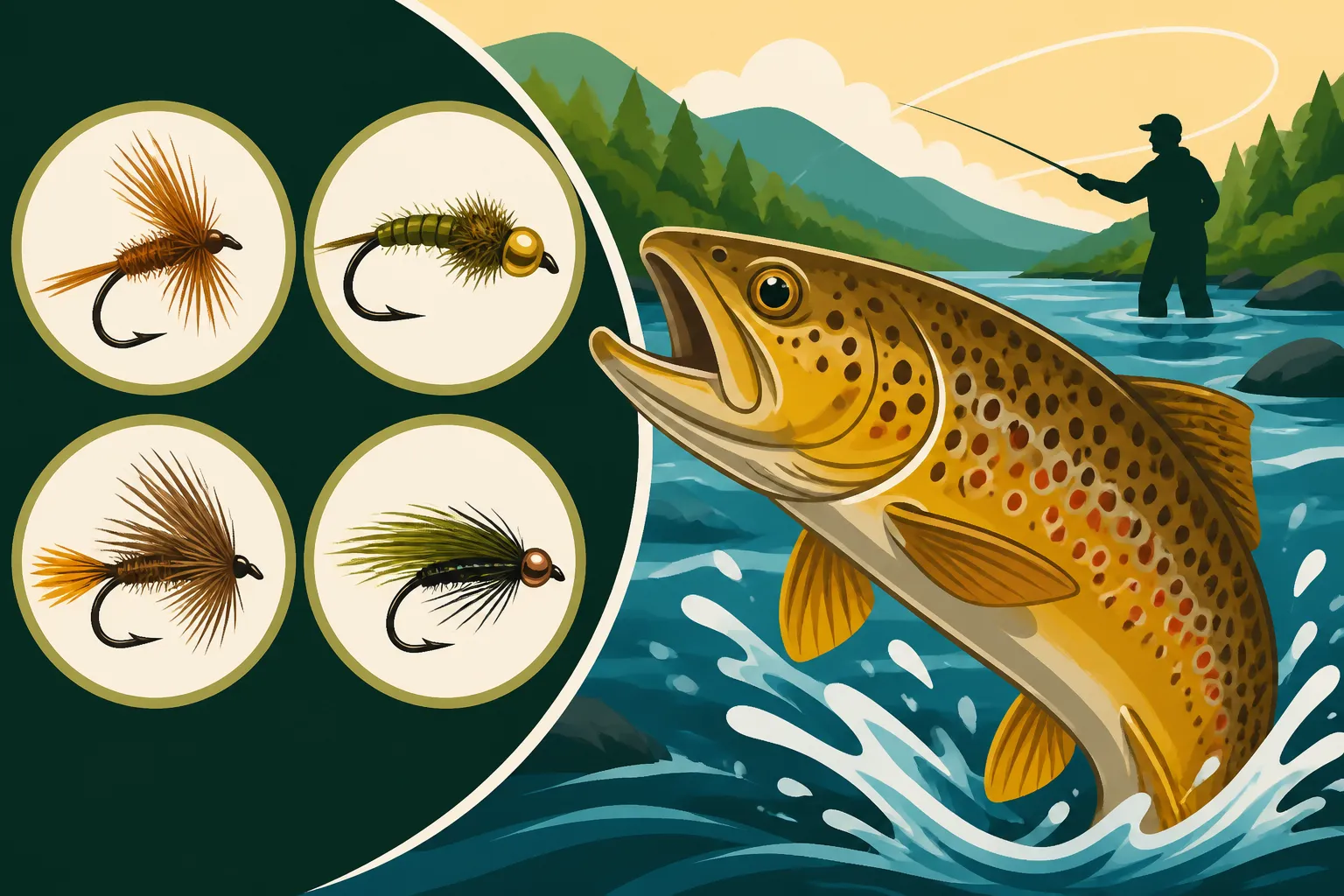
One of the most iconic and effective nymph patterns is the Pheasant Tail Nymph. This simple, natural-looking fly imitates a wide variety of mayfly nymphs and can be fished year-round. Its slim profile and subtle movement are incredibly attractive to brown trout, especially in clear water. Another must-have is the Hare's Ear Nymph. With its buggy, natural fur body, it mimics many different aquatic insects, including caddis larvae and larger mayflies. It's an excellent choice when you're unsure exactly what the fish are eating, as its generalist appeal works wonders. The Prince Nymph, with its white "wings" and peacock herl body, is another powerful attractor that can imitate stoneflies or even some caddis. Its flash and distinct profile often trigger aggressive strikes, especially in slightly off-color water. You can find a vast selection of these versatile nymphs on Amazon, perfect for filling out your fly box. For targeting brown trout with these patterns, understanding techniques like drift fishing is key; How to Nymph Fish for Trout offers some excellent insights.
When fishing nymphs, don't be afraid to add some weight, either built into the fly (like beadheads) or with split shot on your leader, to get them down to where the fish are feeding. Brown trout often hug the bottom, especially in faster currents, waiting for food to drift right into their mouths. A natural, drag-free drift is paramount. Imagine a real insect tumbling along the bottom – that's what you're trying to replicate.
Dries: When Brown Trout Look Up
Ah, the thrill of a brown trout rising to a dry fly! While subsurface feeding is more common, there are magical moments when brown trout actively feed on the surface, especially during prolific insect hatches or when terrestrials are abundant. These are the moments fly anglers live for.
For general searching and when caddis are hatching, the Elk Hair Caddis is an absolute workhorse. Its buoyant elk hair wing keeps it floating high, and its buggy profile fools countless trout. When mayflies are emerging, patterns like the Parachute Adams or the Blue-Winged Olive (BWO) Parachute are indispensable. The Parachute Adams is a phenomenal general imitation for many mayfly species and works almost anywhere. The BWO, often hatching on cloudy or rainy days, can be crucial when smaller, darker mayflies are on the menu. Don't forget terrestrial patterns in summer and early fall, particularly in streams like the Caney Fork or the Clinch River, where bugs get blown in from the banks. A Stimulator can imitate a larger stonefly or even a grasshopper, and a simple Ant Pattern can be deadly when trout are keying in on these protein-packed snacks.
The key to dry fly success is presentation. A delicate, drag-free drift is absolutely critical. Any unnatural drag on your fly will immediately tip off a discerning brown trout. Watch the water carefully for rises, understand the speed of the current, and cast upstream of where you expect a fish to be, allowing your fly to drift naturally over its position. Sometimes, even a slight twitch can impart life, but usually, letting the current do the work is best.
Streamers: The Aggressive Hunter's Choice
For those looking to target larger, more aggressive brown trout, especially the predatory browns found in deeper pools or larger rivers like the Holston or the Cumberland, streamers are your secret weapon. These flies imitate baitfish, sculpins, and other larger food sources that big browns love to ambush. Where to Catch Brown Trout in Tennessee often points to these types of waters.
The undisputed champion of streamers is the Woolly Bugger. This versatile pattern can imitate almost anything—a baitfish, a crayfish, a large aquatic nymph, even a leech. Available in a rainbow of colors (black, olive, brown are staples), and various sizes, it can be stripped, swung, or dead-drifted. Another highly effective pattern, especially for imitating sculpins or other bottom-dwelling baitfish, is the Sculpin Helmet Head or similar weighted sculpin patterns. These flies get down quickly and have a distinctive profile that big browns can't resist. For truly aggressive, large fish, particularly in low light conditions or stained water, a Clouser Minnow (originally a saltwater pattern but deadly in freshwater) or other larger baitfish imitations can be phenomenal. These patterns often have a lot of flash and movement, designed to grab attention.
When fishing streamers, think like a predator. Cast across or slightly upstream, let the fly sink, and then retrieve it with varied strips and pauses. This erratic motion mimics a wounded baitfish, triggering a chase response from the brown trout. Don't be afraid to fish streamers right into deep, dark pockets or under submerged logs where big browns like to hide. The anticipation of a hard strike from a large brown trout on a streamer is one of fly fishing's greatest thrills. You can find excellent quality streamer patterns, including multi-packs, on Amazon, making it easy to experiment with different colors and sizes.
Here's a quick comparison of some popular brown trout fly patterns:
| Fly Pattern | Category | Primary Imitation | Optimal Conditions | Key Feature | Target Fish Size |
|---|---|---|---|---|---|
| Pheasant Tail Nymph | Nymph | Mayfly nymphs | Clear water, year-round, subtle flows | Slim, natural profile, segmented body | All sizes |
| Hare's Ear Nymph | Nymph | Caddis, mayfly nymphs, general | Versatile, slightly stained water, current | Buggy, spiky texture, natural colors | All sizes |
| Prince Nymph | Nymph | Stoneflies, attractor | Moderate to fast current, slightly off-color | Flashy white wings, peacock herl body | Medium to Large |
| Elk Hair Caddis | Dry | Adult Caddis | Caddis hatches, moderate flows | Buoyant elk hair wing, fuzzy body | All sizes |
| Parachute Adams | Dry | General Mayfly | Various hatches, calm water, cloudy days | High visibility parachute, imitative body | All sizes |
| Blue-Winged Olive | Dry | Small Mayflies | Cloudy, rainy days, cooler weather | Small, dark profile, delicate presentation | Small to Medium |
| Stimulator | Dry/Terrestrial | Stoneflies, grasshoppers | Summer/Fall, faster water, windy days | Large, buoyant, highly visible | Medium to Large |
| Woolly Bugger | Streamer | Baitfish, leech, crayfish | Varied, year-round, active fish | Pulsating marabou tail, versatile color options | Medium to Trophy |
| Sculpin Helmet Head | Streamer | Sculpins, bottom baitfish | Deep pools, low light, cold water | Weighted head, broad profile, jigging action | Large to Trophy |
| Clouser Minnow | Streamer | Baitfish | Faster current, aggressive fish | Dumbbell eyes, flashy body, darting action | Medium to Trophy |
Tailoring Your Fly Selection to Specific Tennessee Waters
Tennessee is a vast and varied state, offering an incredible range of fishing environments, from the high-gradient streams of the Great Smoky Mountains to the wide, expansive tailwaters below our massive dams. What works wonders on one body of water might be completely ignored on another. Being able to adapt your fly choice to the specific characteristics of your chosen fishing spot is what separates good anglers from truly great ones.
Smoky Mountain Streams and Their Unique Ecosystems
The streams in the Great Smoky Mountains National Park, and other high-elevation freestone streams across East Tennessee, are pristine and challenging. These waters are often cold, clear, and relatively nutrient-poor, meaning the insect life is typically smaller and less abundant than in richer tailwaters. Brown trout here are often smaller, wild, and incredibly wary.
For these streams, success often hinges on delicate presentations with smaller, more imitative patterns. Think tiny Blue-Winged Olive nymphs and dries, small Parachute Adams (sizes 18-22), or even minuscule midge patterns like a Zebra Midge. Best Trout Streams in the Great Smoky Mountains, Tennessee highlights some of these delicate fisheries. When conditions are right, particularly in late spring and summer, a small Yellow Sally stonefly pattern or a subtle Ant can be very effective if terrestrials are on the water. The key here is not necessarily to "match the hatch" perfectly every time, but to present something small, natural, and unassuming that doesn't alarm the trout. Your leader and tippet should be long and fine (5x, 6x, or even 7x) to ensure a subtle entry and drag-free drift. Heavy, clunky flies or aggressive presentations will often spook these wild, educated fish.
Larger Rivers and Reservoirs
Contrast that with the sprawling tailwaters like the Clinch River, Holston River, or Cumberland River. These are typically nutrient-rich, supporting dense populations of larger aquatic insects and baitfish. Here, brown trout can grow to impressive sizes, becoming much more predatory.
On these larger rivers, while small nymphs are still crucial (especially during midge and BWO hatches), you'll often find success with larger, more substantial patterns. Think beefier Sowbugs or Scuds (imitating the tiny crustaceans abundant in these calcium-rich waters), larger Caddis Larvae patterns, and certainly streamers. The Clinch River Trout Fishing in East Tennessee provides excellent examples of where these larger fish reside. When targeting trophy browns, especially in low light or high water, a 3-5 inch Woolly Bugger or a Sculpin pattern can be incredibly effective. The sheer volume of water means fish have more cover, allowing them to be more aggressive in their feeding. Presentation is still important, but you might need more weight to get your flies down in the stronger currents, and you can often get away with slightly heavier tippet (4x or 3x) when fishing streamers for larger fish. Always check the local regulations for specific areas, as some parts of these rivers have unique catch-and-release rules or gear restrictions.
Adapting to Local Insect Hatches
Ultimately, being a successful brown trout angler in Tennessee means becoming a keen observer of your environment. No matter how many "best fly patterns" lists you read, nothing beats watching the water.
Before you even make your first cast, spend some time observing. Are fish rising? If so, what do the natural insects look like? What color are they? How big? Are they fluttering, drifting, or diving? If you're seeing insects on the water, try to scoop one up and match your fly as closely as possible in terms of size, shape, and color. This is the essence of "matching the hatch." If there are no visible rises, look for signs of subsurface activity, or turn over a few rocks in the stream bed to see what nymphs and larvae are present. This direct observation will give you invaluable clues about what the trout are feeding on at that exact moment. Tennessee Trout Guide: Rainbow, Brown, and Brook Trout emphasizes the importance of understanding the local entomology.
Remember that insect hatches can be incredibly localized. A certain mayfly might be popping off in one section of the Clinch River but not another a mile upstream. Or the brown trout in a small Smoky Mountain tributary might be focused solely on terrestrial ants after a windy afternoon, while trout in an adjacent stream are still keying in on subsurface caddis. Having a selection of the patterns discussed above, and knowing when and how to present them, allows you to adapt. And always remember to carry a variety of sizes for each pattern; sometimes, a slight change from a size 16 to a 18 can make all the difference. Many anglers, myself included, will often pick up specific, local patterns recommended by a fly shop or readily available on Amazon after doing some pre-trip research. This combination of local knowledge and a well-stocked fly box will make you a far more effective brown trout angler.
Disclaimer
This article is for general informational purposes only and does not constitute professional advice. Laws, prices and regulations vary by location and change over time. Consult a qualified professional for guidance on your specific situation.