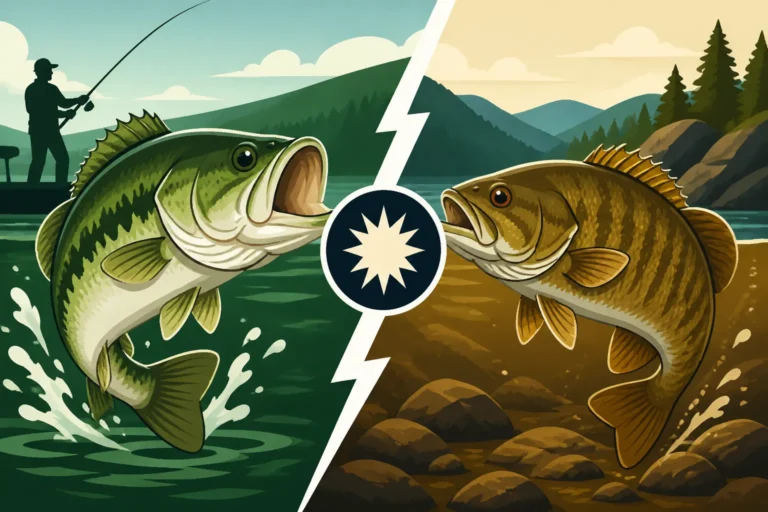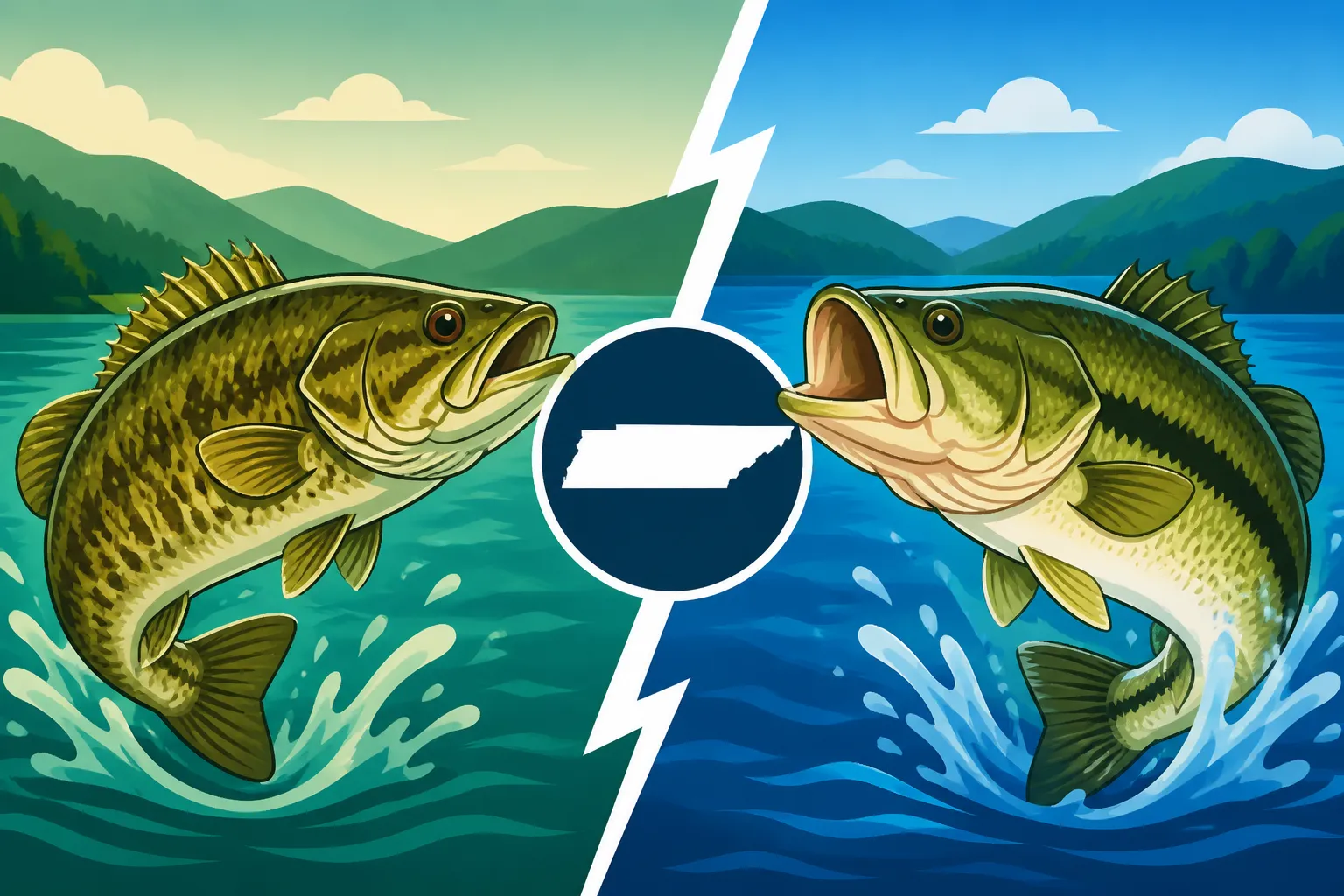
Spotted Bass vs Largemouth Bass in Tennessee Lakes
It's a classic scenario on Tennessee lakes: you've just reeled in a beautiful bass, and as you admire your catch, a nagging question creeps in. Is it a largemouth? Or could it be a spotted bass? The truth is, many anglers, even seasoned ones, find themselves scratching their heads, unsure of the subtle yet significant differences between these two popular species. This guide is here to untangle that confusion, providing you with all the knowledge you need to confidently identify both largemouth and spotted bass, understand their habits, and ultimately, improve your fishing success across Tennessee's incredible waterways.
The Angler's Dilemma: Why Differentiating Spotted Bass and Largemouth is Tough
Let's be honest, it's not always easy to tell these two apart at a glance. They share a lot of visual characteristics, especially when you're quickly trying to decide if it's a keeper or a fish to release. This "identity crisis" can be a source of frustration, making you second-guess yourself right there on the water. But understanding the nuances isn't just about showing off your fish ID skills; it's genuinely important for a successful and compliant fishing trip.
Surface Similarities: The Visual Traps That Fool Even Experienced Eyes
Both largemouth and spotted bass belong to the black bass family, and they often inhabit the same waters, especially in Tennessee's vast reservoirs and rivers. They both sport that iconic dark lateral line running down their sides, which can vary in intensity. Both have green and olive hues on their backs, fading into lighter bellies. They both strike aggressively, pulling hard and putting up a great fight. It's no wonder that a quick look can make them seem almost identical. You might be out on Watts Bar Lake, Tennessee's Largest Lake for Fishing or Chickamauga Lake: Tennessee's Top Bass Fishing Destination, and after a few hours of reeling in fish, they all start to look a little similar, especially if they are juveniles or if the water conditions affect their coloration. It takes a closer inspection, a deliberate pause, to truly see the distinctions that set them apart.
The Real-World Impact: Why Proper Identification Truly Matters in Tennessee
Beyond satisfying your angler's curiosity, correctly identifying your bass has practical implications. First and foremost, fishing regulations, particularly size and creel limits, can differ between species. For instance, Tennessee's Largemouth Bass Limit Is 5 Per Day, Only 1 Over 18 Inches might have specific rules, while spotted bass might fall under more general black bass regulations. Misidentification could inadvertently lead to violations, and nobody wants to deal with a game warden because of an honest mistake. Secondly, understanding which species you're catching helps you refine your fishing techniques and tackle. If you think you're catching largemouth but it's actually spotted bass, you might be using suboptimal lures or targeting the wrong type of structure, costing you potential bites. Knowing your fish helps you adapt and become a more effective angler.
Getting to Know the Largemouth Bass: Tennessee's Iconic Green Machine
Ah, the largemouth bass. For many, this is the quintessential sport fish, celebrated for its aggressive strikes, powerful fights, and impressive size. Tennessee's waters are renowned for their largemouth fishing, drawing anglers from all over the country hoping to land a trophy. This species is often the target of major tournaments, and for good reason – they're a blast to catch!
Defining Physical Characteristics: More Than Just a Big Mouth
When you hear "largemouth," that's usually the first thing that comes to mind: its mouth. And for good reason! This is one of the most reliable ways to identify it. When the mouth is closed, the corner of its jaw (the maxillary) extends noticeably beyond the rear edge of its eye. This is a crucial visual cue. Another key feature is the lateral line, which is usually quite prominent and often appears as a series of dark, blotchy patches rather than a solid, clean stripe. These blotches can sometimes look like distinct, irregular dark spots, but they are typically larger and more spread out than the true "spots" on a spotted bass. The body of a largemouth tends to be robust, almost football-shaped in larger specimens, with a slightly deeper profile compared to a spotted bass. The dorsal fin has a very distinct, deep notch separating the spiny and soft-rayed portions, almost making it look like two separate fins.
When you hold a largemouth, run your finger along its tongue. You'll find that it's usually smooth, without any rough patches or teeth-like structures. This is a subtle but definitive characteristic. The overall coloration can vary depending on the water clarity and bottom composition, ranging from vibrant green in clear, vegetated lakes to darker, almost blackish-green in stained or murky waters. Regardless, the greenish-gold hue on its sides and the white belly are consistent. Many anglers swear by the Largemouth Bass Identification Tips for Tennessee Anglers when they are just starting out, as these details become second nature with practice.
Preferred Habitat and Behaviors: Where Largemouth Reign Supreme
Largemouth bass are masters of ambush, perfectly adapted to dense cover and structure. In Tennessee, you'll find them lurking in thick stands of hydrilla, coontail, or lily pads. They love shallow to moderate depths where they can hide and dart out to snatch unsuspecting prey. Think about those flooded timber areas on Old Hickory Lake Fishing Spots or the extensive grass beds on Kentucky Lake Fishing on the Tennessee Side – these are prime largemouth territories. They thrive in warmer waters and are often found in stagnant backwaters, coves, and areas with submerged vegetation, brush piles, or docks. They use these spots not just for hunting but also for protection from predators and as spawning grounds.
Their behavior is typically territorial and aggressive. They'll often hold tight to a piece of cover, waiting for a meal to swim by. This is why techniques like pitching and flipping jigs or soft plastics into heavy cover are so effective for them. They're also known for explosive topwater strikes, especially during low-light conditions or when temperatures are just right. When it comes to feeding, largemouth are opportunistic predators, consuming everything from baitfish like shad and sunfish to crawfish, frogs, and even small birds or rodents that fall into the water. Understanding their preference for cover is key to locating them, particularly during the Tennessee Bass Fishing Seasons and Patterns.
Fishing for Largemouth: Techniques and Lures They Can't Resist
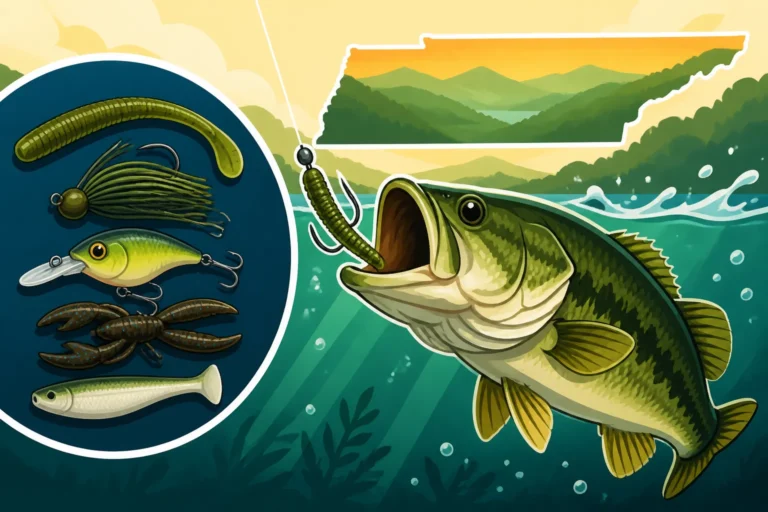
Targeting largemouth bass in Tennessee offers a huge variety of exciting techniques. Since they love cover, Texas-rigged worms, creature baits, and jigs are incredibly effective. You can punch these baits through thick mats of vegetation or pitch them around docks and fallen trees. Spinnerbaits and chatterbaits shine when fished around submerged grass lines or along the edges of brush. For those thrilling topwater bites, buzzbaits, frogs, and poppers can be irresistible, especially during dawn and dusk. Crankbaits are excellent for covering water, especially those designed to deflect off cover.
When selecting lures, consider the water conditions and depth. In clear water, natural colors often work best. In stained water, brighter colors like chartreuse or orange can be more visible. Always match your lure size to the prevalent baitfish in the area. For a great selection, you can check out various bass fishing lures on Amazon, including popular brands like Strike King or Zoom. Remember, patience and precision are key when fishing for largemouth; often, that big strike comes from a perfectly placed cast into a tight spot. Learning How to Fish a Texas Rig for Bass is practically a rite of passage for largemouth anglers.
Unveiling the Spotted Bass: The Often-Misunderstood Fighter
The spotted bass, sometimes called a "spot" or "Kentucky bass," is a fantastic game fish in its own right, though it often lives in the shadow of its larger cousin, the largemouth. Don't let that fool you; spots are feisty, hard-fighting fish that can offer incredible angling experiences, especially in the clear, rocky waters they often prefer. They're built for speed and aggression, often surprising anglers with their tenacity.
Key Identifiers: What Sets a Spotted Bass Apart
While similar to largemouth, spotted bass have several distinct features. The most obvious, and what gives them their name, are the rows of small, dark spots found below the lateral line on their lower sides. These are much more defined and numerous than the blotchy patterns on a largemouth. Their body shape is generally more streamlined and torpedo-like, less chunky than a largemouth, which helps them navigate current and open water more efficiently. The most definitive characteristic is the mouth: when closed, the corner of the spotted bass's jaw typically does not extend past the rear edge of its eye. It usually stops right at or slightly before the eye.
Another critical identification point is the dorsal fin. Unlike the deeply notched dorsal fin of the largemouth, the spotted bass has a dorsal fin where the spiny and soft-rayed portions are clearly connected, forming a continuous, albeit slightly indented, fin. And remember that tongue test? A spotted bass will almost always have a small, rough patch of "teeth" on its tongue. Run your finger over it, and you'll feel the difference immediately. This is one of the most reliable internal markers for Spotted Bass Identification in Tennessee Reservoirs.
Habitat Preferences and Habits: The Spotted Bass's Niche in Tennessee
Spotted bass tend to prefer habitats that are a blend between what largemouth and smallmouth bass like. They often thrive in clear to moderately turbid waters, frequently associated with rocky areas, bluff walls, points, and humps in deep reservoirs and rivers. They are more tolerant of current than largemouth and will often hold in creek channels, river bends, and along rocky banks where there's some flow. Places like Norris Lake Fishing Guide, Tennessee's Clearest Water or the deeper sections of the Tennessee River often hold excellent populations of spotted bass. While they will use some cover, they aren't as dependent on dense vegetation as largemouth. Instead, they relate more to hard structure like rock piles, ledges, and submerged timber on deeper contours.
Behaviorally, spotted bass are often found in schools, especially when chasing baitfish. They can be incredibly aggressive, sometimes striking at baits that seem too large for them. They have a reputation for fighting hard, often diving deep and shaking their heads violently. Their diet is similar to largemouth, consisting of baitfish, crawfish, and insects, but they tend to key in more on pelagic baitfish in open water. Understanding their schooling nature and preference for rocky, current-swept areas is crucial for locating them. You might find several spots in a single location once you pinpoint their school. For more on their specific preferences, check out Spotted Bass Habitat in Tennessee Lakes.
Strategies for Spotted Bass: Adapting Your Approach
Since spotted bass often school and prefer rocky structures, different tactics become effective. Moving baits are often fantastic for covering water and locating schools. Crankbaits, especially those that dive to appropriate depths to hit rock piles or ledges, can be deadly. Spinnerbaits and swimbaits are also excellent for searching. When you find a school, jigs, drop shots, and shaky head worms fished vertically or dragged along the bottom can produce multiple hook-ups. Unlike largemouth that often strike and hold in cover, spots will frequently hit a bait and run with it, making for exciting battles.
Light line and finesse techniques can be particularly effective in clear water or when the bite is tough. Consider smaller profile baits that mimic the forage they are keying on, such as small shad or crawfish. Spotted bass can also be caught on topwater lures, especially poppers and walking baits, when they are actively chasing bait near the surface. Don't be afraid to experiment with different depths; if you're marking fish on your sonar, try to present your bait right at their level. For anglers looking for gear, a good medium-light spinning rod and reel combo is ideal for spotted bass, allowing for lighter lines and precise casts, readily available on platforms like Amazon.
Beyond the Eyeball Test: A Detailed Comparative Analysis
Sometimes, a quick glance just isn't enough, especially for beginners. The real magic happens when you know exactly what to look for. Think of it like being a detective, looking for clues that conclusively prove the identity of your catch. These specific anatomical differences are your best tools for confident identification.
Mouth Structure and Jaw Placement: The Ultimate Diagnostic Tool
This is, without a doubt, the single most reliable characteristic for distinguishing between a largemouth and a spotted bass.
- Largemouth Bass: When you close its mouth, the hinge of the jaw (the maxillary bone) will extend well past the back edge of the eye. Imagine drawing an imaginary vertical line down from the back of the eye; the largemouth's jaw will clearly cross that line. This gives it that characteristic "big mouth" appearance. It’s an evolutionary adaptation that allows them to engulf larger prey whole. This is a consistent and unmistakable feature, regardless of the fish's size or coloration.
- Spotted Bass: In contrast, when you close a spotted bass's mouth, the hinge of the jaw will typically align with the rear edge of the eye, or it might fall slightly short. It rarely extends beyond it. This gives the spotted bass a relatively smaller, more compact mouth opening compared to the largemouth. This difference in jaw structure also influences the types of lures they might prefer, with spotted bass sometimes favoring smaller baits. This difference is so profound that it's often the first thing an experienced angler checks.
This feature is particularly helpful when comparing a small largemouth to a large spotted bass, where other features might seem less clear. Always look at that jawline in relation to the eye!
Lateral Line and Scale Patterns: Subtle but Significant Differences
While both fish have a lateral line, how it presents can be a strong secondary identifier.
- Largemouth Bass: The lateral line on a largemouth bass is often broken, irregular, and appears as a series of distinct, often large, dark blotches or connected diamond shapes. These blotches might form a somewhat continuous stripe, but they usually don't have the clean, sharp definition you might see on other fish. The scales on a largemouth tend to be larger, and the overall pattern on its sides above and below the lateral line is generally smoother, with less noticeable spotting beyond the primary lateral line blotches.
- Spotted Bass: The lateral line on a spotted bass is usually more continuous and solid, though it can still be somewhat broken depending on the individual fish. However, the most distinguishing feature here are the prominent, distinct rows of small, dark spots found below the lateral line. These spots are typically arranged in neat, horizontal rows on the lower sides, and they are almost always present. These true "spots" are what give the spotted bass its name and are a key characteristic to look for. The scales can sometimes appear slightly smaller than those of a largemouth, contributing to a finer texture overall.
It's helpful to observe both the lateral line itself and the presence or absence of these smaller, well-defined spots below it. This combination is a powerful identifier.
The Hidden Clues: Tongue Patch and Pyloric Caeca
For those who want absolute certainty, or simply enjoy a deeper dive into fish anatomy, there are two internal features that offer definitive proof. While you won't typically be checking these on every catch, they are valuable to know.
- Tongue Patch (Lingual Teeth):
- Largemouth Bass: The tongue of a largemouth bass is typically smooth when you rub your finger across it. There are no rough patches or "teeth" present.
- Spotted Bass: A spotted bass will almost always have a small, rough patch of granular "teeth" on its tongue. You can feel this by gently running your finger over the tongue. This patch, sometimes called a lingual tooth patch, is a reliable indicator and one of the most consistent ways to differentiate it from a largemouth.
- Pyloric Caeca: This refers to finger-like digestive glands located near the stomach. This is definitely not an "on-the-water" identification method, as it requires dissecting the fish.
- Largemouth Bass: Typically has pyloric caeca that are unbranched or only slightly branched.
- Spotted Bass: Generally possesses pyloric caeca that are extensively branched, forming a distinctive cluster.
While the pyloric caeca are more for scientific study or extreme curiosity, the tongue patch is a simple, quick check that can be done if you're really unsure and intend to keep the fish.
Here's a handy comparison table to summarize the key differences:
| Feature | Largemouth Bass | Spotted Bass |
|---|---|---|
| Jaw Extension | Extends beyond the rear edge of the eye when mouth closed | Does not extend beyond the rear edge of the eye when mouth closed |
| Lateral Line | Often blotchy, broken, or in diamond-like patterns | Usually more continuous, with distinct rows of small spots below it |
| Spots Below Lateral Line | Generally absent, or very faint and irregular | Prominent rows of small, distinct spots |
| Dorsal Fin | Deeply notched, almost appearing as two separate fins | Connected, forming a continuous fin with a slight dip |
| Tongue | Smooth, no rough patch or "teeth" | Has a rough patch of "teeth" (lingual teeth) |
| Body Shape | Generally deeper, more robust, "football" shaped | More streamlined, slender, "torpedo" shaped |
| Habitat Preference | Dense cover, vegetation, shallow warmer water | Rocky areas, clear water, current, deeper structures |
Mastering the Catch: Tailoring Your Approach for Each Bass Species
Knowing the difference isn't just about identification; it's about applying that knowledge to become a more effective angler. Once you can confidently identify which bass species you're encountering, you can refine your tactics to suit their unique preferences. This means more bites, more fish in the boat, and ultimately, a more rewarding experience on Tennessee's waters.
Selecting the Right Gear and Lures: From Crankbaits to Jigs
The subtle differences in mouth structure, body shape, and feeding habits mean that certain lures and tackle setups will perform better for one species over the other.
- For Largemouth Bass: Due to their larger mouth and preference for ambush from cover, you'll often lean towards bulkier, weedless presentations. Think about using heavy-cover jigs, Texas-rigged creature baits, or oversized soft plastic worms. Topwater frogs and buzzbaits that can be worked over mats are also prime choices. Crankbaits that deflect off timber or rip through grass excel here. Rods are often medium-heavy to heavy power with fast action, paired with baitcasting reels spooled with heavier fluorocarbon or braided line to pull fish out of thick stuff. For a great selection of these, a quick browse on Amazon will show you countless options. Best Lures for Pre-Spawn Bass Fishing also applies heavily to largemouth as they get ready for the spawn.
- For Spotted Bass: Their more streamlined bodies and tendency to chase bait in open water or along rocky contours make them susceptible to faster-moving baits and finesse presentations. Smaller crankbaits, lipless crankbaits, swimbaits, and spinnerbaits are excellent for covering water and triggering strikes from schooling spots. When the bite is tough, finesse techniques like drop shots, shaky heads, or small Ned rigs can be incredibly effective. Small jigs or football jigs dragged along the bottom are also spot favorites. For spots, you might opt for medium-light to medium power spinning or baitcasting rods, often with lighter fluorocarbon lines for increased sensitivity and a more natural presentation.
Having a versatile tackle box that accommodates both styles will serve you well on Tennessee's diverse lakes.
Reading the Water: Locating Each Species' Preferred Structure
Understanding their preferred habitats will guide your casting decisions and help you pinpoint where each species is likely to be holding.
- For Largemouth Bass: Focus your efforts on shallow to mid-depth areas with abundant cover. This includes dense submerged vegetation, lily pad fields, thick brush piles, fallen trees, boat docks, and shallow points with grass. Look for areas with a soft bottom or a mix of soft and hard bottom. Backwater coves, protected bays, and creek arms often hold good numbers of largemouth, especially if they have plenty of shade or cover. Don't forget that How Water Temperature Affects Bass Feeding is a huge factor, and largemouth will often seek out warmer, shallower water in spring and fall, retreating to deeper cover in the heat of summer.
- For Spotted Bass: Shift your attention to harder structures and more open water. Think about deep main lake points, rocky banks, bluff walls, humps, ledges, and channel swings. Areas with current are often magnets for spotted bass, as are clear water impoundments with steep drop-offs. If you have sonar, look for baitfish schools and vertical structure in deeper water. Spotted bass will often suspend over open water or hold tight to the bottom in these rockier environments. Best Fishing Lakes in Tennessee might offer both types of habitat in different areas, so it's essential to understand the specific characteristics of the section you're fishing.
By actively "reading" the water and identifying these habitat cues, you'll dramatically increase your chances of finding your target species.
Seasonal Tactics: Understanding Their Movements Year-Round
Both largemouth and spotted bass are influenced by seasonal changes, particularly water temperature and spawning cycles. However, their specific responses can differ, requiring adjustments to your strategy.
- Spring (Pre-Spawn, Spawn, Post-Spawn):
- Largemouth: In spring, largemouth move from deeper wintering grounds to shallow spawning flats. They'll stage on secondary points and creek channel bends, then move into protected coves and shallow pockets to build nests. Post-spawn, they might be lethargic and dispersed before returning to more active feeding.
- Spotted Bass: Spotted bass also spawn in spring, but often slightly earlier than largemouth and in deeper water, frequently on rocky banks, points, or humps rather than dense vegetation. They'll still stage on deeper structure before moving to their chosen spawning areas. Post-spawn, they quickly recover and will often school up to chase baitfish.
- Summer:
- Largemouth: During the heat of summer, largemouth often seek refuge in deeper, cooler water, relating to offshore humps, ledges, or deep grass lines. They may also move into dense, shaded cover in shallower water during low-light periods. Night fishing can be very effective for them during this season.
- Spotted Bass: Spots typically stay deeper during summer, holding on main lake points, channel ledges, and rocky reefs. They'll actively chase schools of baitfish in open water, making them susceptible to trolling or covering water with fast-moving baits.
- Fall:
- Largemouth: As water temperatures drop in fall, largemouth become highly active, feeding aggressively to fatten up for winter. They'll follow baitfish into creek arms and shallower pockets, often relating to cover.
- Spotted Bass: Fall is a fantastic time for spotted bass as they become incredibly active, schooling up and aggressively feeding on baitfish. They'll often be found on main lake points and humps, busting bait on the surface or chasing it in the water column.
- Winter:
- Largemouth: Largemouth become more lethargic in winter, retreating to deep water and relating to vertical structure, deep creek channels, or submerged timber. A slow, methodical approach with jigs or slow-rolled crankbaits is often best.
- Spotted Bass: Spotted bass remain active in winter, often schooling in deep, clear water on main lake points, river channel bends, or near dam tailraces. Finesse techniques like a drop shot or slow jigging can be highly productive.
By understanding these seasonal nuances, you can better predict where each bass species will be and what they'll be willing to bite. It's a continuous learning process, but one that makes you a more skilled and successful Tennessee angler!
Disclaimer
This article is for general informational purposes only and does not constitute professional advice. Laws, prices and regulations vary by location and change over time. Consult a qualified professional for guidance on your specific situation.