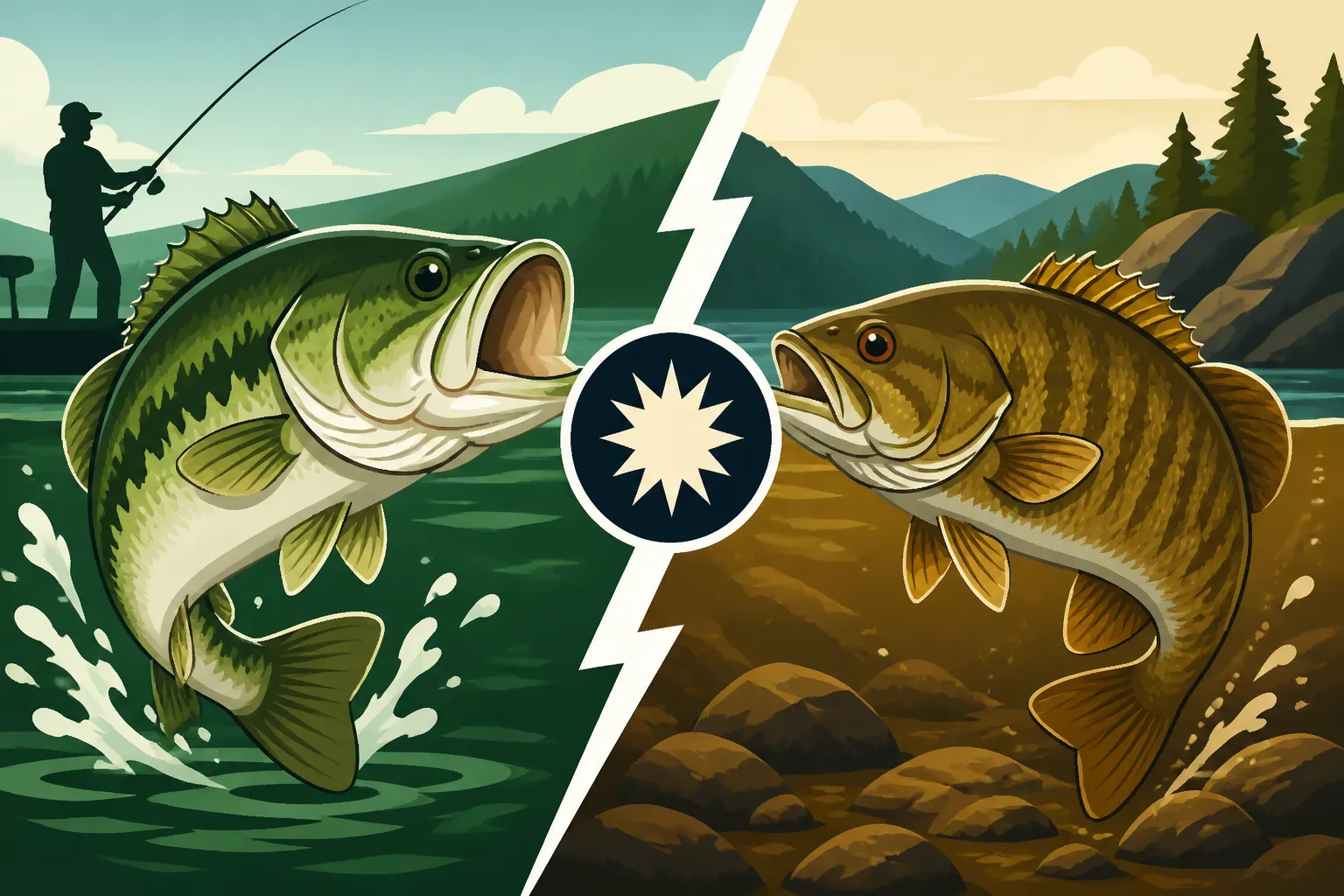
Largemouth vs Smallmouth Bass: Tennessee Angler’s Guide
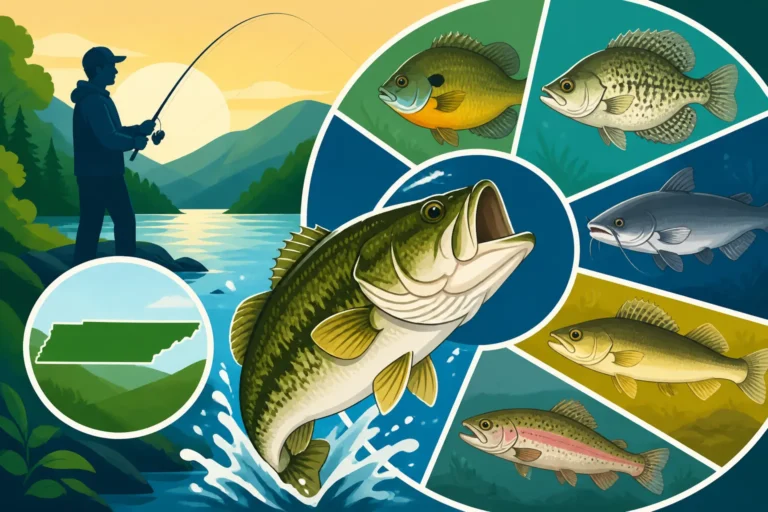
For anglers across Tennessee, few debates spark as much friendly rivalry as the comparison between largemouth and smallmouth bass. It's easy to admire both, but understanding their distinct characteristics, habitats, and fighting styles is key to successful fishing and truly appreciating these magnificent creatures. This guide aims to clear up the confusion and equip you with the knowledge to identify, target, and appreciate both the chunky largemouth and the feisty smallmouth in our beautiful Volunteer State waters.
Understanding the "Bass" Family in Tennessee
Before we dive into the nitty-gritty differences, let's talk about what connects these two popular sport fish. Both largemouth and smallmouth are members of the black bass family, a group of freshwater fish highly prized by anglers for their aggressive strikes and spirited fights. In Tennessee, we're lucky to have a robust population of both, thriving in diverse aquatic environments from vast reservoirs to winding rivers. Many anglers, especially those just starting out, often mistake one for the other, or don't realize there's a significant difference until they've caught a few of each. It's not just about bragging rights; knowing your target helps you choose the right gear and tactics.
The Diverse Black Bass Lineage
The black bass group includes several species, with largemouth and smallmouth being the most prominent and widely recognized in Tennessee. Other members you might encounter, though less common or in specific areas, include spotted bass (which often gets mistaken for a smallmouth) and even redeye bass in certain stream systems. Each species has adapted to different niches within our waterways, developing unique traits that make them specialized predators. This diversity is what makes Tennessee fishing so incredible – there's always something new to learn and a different challenge to tackle.
These fish are vital to our aquatic ecosystems, serving as top predators that help maintain a healthy balance in their environments. They're also an economic powerhouse, drawing in countless anglers who spend their hard-earned money on tackle, boats, and lodging, all in pursuit of that thrilling tug on the line. The Tennessee Wildlife Resources Agency (TWRA) works tirelessly to manage and conserve these populations, ensuring that future generations can enjoy the same fantastic fishing experiences we do today. Understanding the specific needs and behaviors of each species is a huge part of that conservation effort, allowing us to be responsible stewards of our natural resources. For a broader look at the species swimming in our state, check out A Complete Guide to Tennessee Bass Species.
Why Identification Matters for Anglers
Accurate identification isn't just for biologists; it's crucial for every angler. First and foremost, Tennessee has specific size and creel limits that can vary by species and even by body of water. Keeping the wrong bass or exceeding a specific limit for one species because you thought it was another can lead to fines and legal trouble. Beyond regulations, knowing whether you've hooked a largemouth or a smallmouth instantly informs you about their potential size, their fighting style, and even why they were in that particular spot. It's like knowing if you've hooked a deer or a rabbit – totally different expectations!
When you can confidently identify your catch, it helps you refine your fishing strategies. If you're consistently catching smallmouth in a rocky river, you know to focus on similar structures and tactics that appeal to them. Conversely, if you're pulling largemouth from lily pads in a reservoir, you'll continue to target that type of cover. This knowledge builds over time and makes you a more efficient and successful angler. It also allows you to share more accurate information with your fishing buddies, helping everyone learn and improve. You might find a great new lure on Amazon that a friend recommended for smallmouth, only to realize later it's meant for largemouth!
Largemouth Bass: The Classic Reservoir Predator
The largemouth bass is arguably the most iconic freshwater game fish in North America, and it certainly holds a special place in the hearts of Tennessee anglers. When most people think of "bass fishing," they're picturing a largemouth. These fish are known for their explosive topwater strikes and their tendency to call dense cover home. Catching a lunker largemouth can be a truly exhilarating experience, making it a favorite target for both casual weekend warriors and serious tournament pros. Tennessee's vast network of reservoirs provides an ideal environment for these apex predators to grow to impressive sizes.
Key Physical Characteristics of a Largemouth
Let's break down how to spot a largemouth. The most obvious, and hence its name, is its mouth. The upper jaw of a largemouth extends beyond the back edge of its eye when its mouth is closed. This is the dead giveaway! Their bodies are typically a deep green to olive color on the back, fading to lighter green or yellowish sides, and a white belly. They usually have a prominent, irregular dark lateral line running horizontally along their sides, often appearing as a series of blotches or a jagged stripe, though this can sometimes be faint or broken.
Another distinguishing feature is the dorsal fin. A largemouth bass has a deep notch or almost a complete separation between its spiny front dorsal fin and its soft-rayed rear dorsal fin. If you run your finger along their back, you'll feel this distinct dip. Their scales tend to be larger than those of a smallmouth, and their overall body shape is often more elongated and somewhat heavier, especially in larger specimens. You'll also notice their eyes tend to be smaller in proportion to their head compared to a smallmouth, giving them a slightly less "bug-eyed" appearance. To dive deeper into identifying these beauties, check out How to Identify a Largemouth Bass in Tennessee.
Preferred Habitat and Behavior
Largemouth bass are masters of ambush, preferring environments with plenty of cover to hide in and spring out from. You'll typically find them in warmer, shallower waters of lakes, reservoirs, ponds, and slow-moving rivers. Think about places like:
- Submerged vegetation: Hydrilla, lily pads, coontail, milfoil – anything they can hide in or under.
- Woody cover: Fallen trees, brush piles, stumps, log jams.
- Man-made structures: Docks, boat houses, bridge pilings, rip-rap banks.
They love water that's a bit turbid or stained, as it provides excellent camouflage. Their behavior changes with the seasons, but generally, they're not afraid to move into shallow water to feed, especially during dawn and dusk. During the spawn, which typically occurs in spring when water temperatures reach the upper 50s to low 60s, they build nests in shallow, protected areas. After the spawn, they'll often move to slightly deeper edges of cover or suspend over structure. Our Tennessee reservoirs, like Chickamauga Lake: Tennessee's Top Bass Fishing Destination, are prime examples of ideal largemouth habitat.
Fishing Techniques and Lure Selection
When it comes to catching largemouth, variety is the spice of life, but certain techniques truly shine. Because they love cover, presentations that can penetrate or work through dense vegetation and wood are often effective. Here are some popular methods:
- Flipping and Pitching: Using jigs, soft plastics (like Texas-rigged worms or creature baits), or senkos to drop baits silently into heavy cover.
- Topwater: Frogs, poppers, and walking baits thrown over lily pads or along shorelines create explosive strikes that will get your heart pounding.
- Crankbaits and Spinnerbaits: Covering water quickly, especially around structure or along points, helps locate active fish.
- Carolina Rigs and Texas Rigs: Excellent for fishing deeper cover or along bottom contours with soft plastics.
For gear, you'll often want a medium-heavy to heavy action rod with a fast tip to handle the powerful hooksets and pull fish out of cover. A baitcasting reel with 15-20 lb fluorocarbon or monofilament line, or even braided line for heavy cover, is standard. You can find a huge array of these specialized lures and tackle on platforms like Amazon, making it easy to stock up for your next trip. If you're looking for specific recommendations for your setup, check out Best Rods for Largemouth Bass.
Smallmouth Bass: The River and Rock Dweller
While the largemouth is the celebrated "king" of the lakes, the smallmouth bass is often hailed as the "queen" of the rivers and rocky reservoirs. Known for its incredible fighting spirit and preference for cooler, clearer waters, the smallmouth is a challenging and highly rewarding catch. Many anglers consider a smallmouth to be a superior fighter pound-for-pound compared to a largemouth, often making long runs and powerful dives once hooked. Tennessee is blessed with some of the country's finest smallmouth fisheries, particularly in its eastern and central regions.
Key Physical Characteristics of a Smallmouth
Distinguishing a smallmouth from a largemouth is relatively straightforward once you know what to look for. As its name suggests, the smallmouth's mouth is smaller; its upper jaw does not extend beyond the back edge of its eye when closed. Their coloration is typically more bronze, brown, or golden-brown, often with vertical bars or blotches along their sides, rather than a solid lateral line. These bars can be quite pronounced, giving them a distinct tiger-striped appearance, especially when freshly caught from clear water.
Their body shape is also different. Smallmouth bass tend to be more compact, muscular, and torpedo-shaped, giving them their incredible power. The dorsal fin is another key identifier: a smallmouth has a less pronounced notch in its dorsal fin, appearing as more of a continuous, though still divided, fin compared to the largemouth's deep separation. Their eyes are also often larger and more prominent than a largemouth's, giving them an almost "goggle-eyed" look. You can learn more about how to tell them apart in How to Identify Tennessee's State Fish, the Smallmouth Bass. It's worth noting that the smallmouth bass is one of Tennessee's official state fish, a testament to its popularity and importance!
Preferred Habitat and Behavior
Smallmouth bass are built for moving water and rocky environments. They thrive in:
- Rivers and Streams: Especially those with gravel bottoms, boulders, swift currents, and clean, oxygenated water.
- Deep, Clear Reservoirs: Focusing on rocky points, humps, ledges, submerged rock piles, and main lake points.
- Areas with current: They often orient themselves facing upstream or towards current breaks, waiting for food to drift by.
Unlike largemouth, smallmouth generally prefer cooler water temperatures and are less tolerant of turbidity. They are less dependent on dense vegetation and more on hard structure like rocks, gravel, and ledges. Their feeding behavior is often more opportunistic, preying on crayfish, minnows, and aquatic insects. During the spawn, they'll also build nests on gravel beds in shallower, protected areas, but still typically associated with rocky bottoms. Lakes like Dale Hollow Lake Smallmouth Bass Fishing are legendary for their smallmouth populations.
Fishing Techniques and Lure Selection
Catching smallmouth bass often requires a slightly different approach than largemouth, focusing on finesse and presentations that mimic their preferred prey. Here are some effective techniques:
- Tube Jigs and Grubs: These soft plastics are fantastic for mimicking crayfish and can be bounced along rocky bottoms or fished vertically.
- Ned Rigs: A finesse technique that can be incredibly effective on pressured smallmouth, imitating a bottom-dwelling creature.
- Spinnerbaits and Small Crankbaits: Covering water along rocky banks and points, especially those with current.
- Jerkbaits: Great for suspended fish or when trying to entice a reaction strike in clear water.
- Drop Shots: An excellent finesse technique for fishing deeper structure, allowing you to present a bait precisely above the bottom.
For gear, you'll often opt for lighter spinning tackle (medium-light to medium action) with a sensitive tip, allowing you to feel subtle bites on bottom-contact baits. Fluorocarbon line in the 6-10 lb range is popular due to its low visibility and sensitivity. While you can certainly find these items in local tackle shops, a quick search on Amazon reveals a plethora of options for smallmouth-specific lures and lines. Need advice on your reel? Look up Best Reels for Smallmouth Bass.
Comparing the Fight: Largemouth vs. Smallmouth on the Line
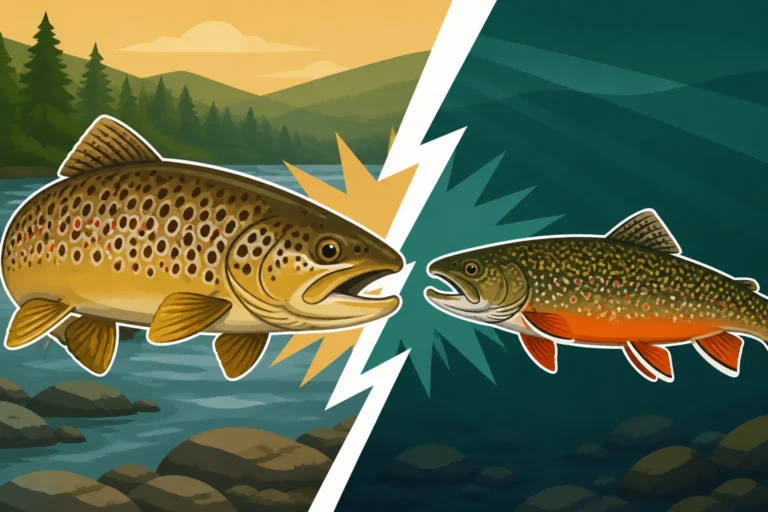
This is where the debate really heats up among anglers! Both species offer a thrilling fight, but they go about it in very different ways. It’s like comparing a heavyweight boxer to a nimble martial artist – both are powerful, but their styles are distinct. Understanding these differences can help you anticipate their moves and adjust your technique once you've set the hook. This isn't just theory; it's the heart-pounding reality when you're out on the water.
The Largemouth's Aerial Acrobatics
When a largemouth bass realizes it's hooked, its primary instinct is often to head straight for the thickest cover it can find. If that cover is far away, or if it feels enough pressure, a largemouth will frequently launch itself out of the water, shaking its head violently to throw the hook. These aerial displays are spectacular to witness, and they're a signature move of a battling largemouth. They might jump once, twice, or even several times during a fight, especially larger fish.
Because of this tendency, many anglers quickly learn the "lip lock" technique, holding their rod tip down or to the side to try and keep the fish from jumping, especially when using treble hooks that can easily get thrown. They're also incredibly strong in short bursts, using their broad, deep bodies to pull hard, especially when trying to bury themselves in weeds or around submerged timber. It’s an explosive, often visual, fight that can be over quickly if you're not ready for their power and acrobatics.
The Smallmouth's Bulldog Battle
Smallmouth bass, on the other hand, are known for their relentless, deep-diving power. When you hook a smallmouth, don't expect it to go airborne as often as a largemouth (though they certainly can!). Instead, they'll typically make long, powerful runs, trying to strip line from your reel. They often swim in wide circles, using the current to their advantage in rivers, or diving deep into rocky crevices in lakes. It's a fight that tests your drag system and your ability to maintain constant pressure.
Many anglers describe the smallmouth's fight as more sustained and "dirty," constantly pulling and bulldogging rather than relying on jumps. They'll shake their head side-to-side underwater, trying to leverage the hook out, and their powerful tail kicks can make them feel much larger than they actually are. It's a testament to their muscular, streamlined bodies designed for fighting currents. You'll definitely feel the burn in your arms after battling a big smallmouth, and they'll keep fighting all the way to the boat or bank.
| Feature | Largemouth Bass | Smallmouth Bass |
|---|---|---|
| Mouth Size | Upper jaw extends beyond eye | Upper jaw does not extend beyond eye |
| Coloration | Green to olive, often with distinct lateral line | Bronze, brown, or golden with vertical bars |
| Body Shape | More elongated, slightly deeper body | More compact, muscular, torpedo-shaped |
| Dorsal Fin | Deep notch, almost separated | Less pronounced notch, more continuous |
| Preferred Habitat | Warm, shallower water, dense cover (weeds, wood) | Cooler, clearer water, rocky structure, current |
| Fighting Style | Explosive jumps, short powerful bursts | Long runs, deep dives, relentless "bulldogging" |
| Typical Prey | Larger baitfish, frogs, crawfish | Crayfish, minnows, insects |
Tennessee's Top Waters for Each Species
Tennessee is a fishing paradise, offering incredible opportunities for both largemouth and smallmouth bass. Knowing where each species thrives can help you plan your next fishing adventure and maximize your chances of success. It's not uncommon for a large reservoir to hold both, but certain characteristics often favor one over the other.
Where to Find Trophy Largemouth
For anglers dreaming of a true trophy largemouth, Tennessee's large, fertile reservoirs are your best bet. These lakes offer expansive shallow flats, abundant aquatic vegetation, and plenty of woody cover, all of which are magnets for big bucketmouths. Some of the most famous largemouth destinations in Tennessee include:
- Chickamauga Lake: Known nationwide for its giant largemouth, Chickamauga is often cited as a top trophy bass fishery. Its dense hydrilla and submerged timber provide perfect ambush points. Serious anglers dedicate entire seasons to this lake, and it consistently produces fish in the double-digit range. You'll find a strong community of anglers discussing tactics and spots, and it's a great place to test out new techniques and gear purchased from your favorite online retailers.
- Kentucky Lake: Spanning the border with Kentucky, the Tennessee portion of Kentucky Lake is another largemouth haven, especially its vast shallow flats and creek arms. The old river channels and submerged structure also hold plenty of big fish, drawing anglers from all over the country.
- Watts Bar Lake: This expansive reservoir offers a mix of riverine and lake characteristics, with plenty of backwater areas, coves, and submerged cover that largemouth love. It’s often overshadowed by Chickamauga but is a fantastic fishery in its own right.
- Old Hickory Lake and Percy Priest Lake: These lakes near Nashville provide excellent largemouth fishing, particularly around their numerous docks, grass beds, and standing timber. They're popular spots for locals and offer consistent action.
When targeting these trophy largemouth, focus on areas with a good combination of deep and shallow water access, plenty of cover, and healthy baitfish populations. You'll also want to keep an eye on seasonal patterns, as fish movements can dramatically impact where you find them. Tennessee Bass Fishing Seasons and Patterns offers more insights into this.
Best Spots for Hard-Fighting Smallmouth
If you're after the exhilarating fight of a smallmouth, you'll want to seek out Tennessee's clearer, rockier waters, particularly rivers and specific deep reservoirs. These environments cater to the smallmouth's preference for current and hard structure. Some of the top smallmouth spots in the state include:
- Dale Hollow Lake: This lake, shared with Kentucky, is legendary for its smallmouth bass. It consistently produces world-class brown bass, boasting some of the largest smallmouth ever caught. Its deep, clear water, rocky ledges, and extensive points are ideal smallmouth habitat. Anglers from all over the world make pilgrimages to Dale Hollow, often using advanced electronics to pinpoint deep-holding fish.
- Norris Lake: Another jewel of East Tennessee, Norris Lake is known for its incredible clarity and deep, rocky structure. It's a fantastic smallmouth fishery, especially in the spring and fall when fish are more accessible. The countless coves and main lake points offer endless opportunities for targeting these bronze beauties.
- Cumberland River and its Tributaries: Many sections of the Cumberland River, along with its feeder streams, offer excellent smallmouth river fishing. These areas often require a different approach, perhaps wading or using a small jon boat or kayak, but the reward is often powerful, current-fueled fights. Best Rivers for Smallmouth Bass Fishing in Tennessee goes into more detail.
- Hiwassee River and Clinch River: While primarily known for trout, these rivers also hold healthy populations of smallmouth bass, especially in their warmer, lower sections. The combination of current, rock structure, and abundant forage makes them productive.
When fishing for smallmouth, pay close attention to current seams, eddy lines, and any change in bottom composition from gravel to larger boulders. These are key areas where smallmouth will hold and ambush prey. Lighter line and a more finessed approach often pay dividends in these clear-water environments.
Fishing Regulations and Conservation Efforts
Understanding and adhering to fishing regulations is paramount for responsible angling in Tennessee. The Tennessee Wildlife Resources Agency (TWRA) sets these rules to ensure healthy, sustainable fish populations for current and future generations. Disregarding these regulations not only harms the fishery but can also lead to hefty fines and legal consequences. It's every angler's responsibility to know the rules before casting a line.
Size and Creel Limits for Each Species
Tennessee has specific regulations for both largemouth and smallmouth bass, and these can vary not just by species, but also by individual lake or river. While there are statewide regulations, many popular bodies of water have special length and creel limits that override the general rules. This is why checking the specific regulations for the water you plan to fish is so crucial. A quick visit to the TWRA website or picking up a current fishing guide can save you a lot of trouble.
For instance, the statewide daily limit for largemouth bass might be 5 fish per day, with only one fish over a certain length (like 18 inches). However, on a lake like Chickamauga, there might be a slot limit or different size restrictions to protect trophy fish. Similarly, smallmouth bass often have their own specific limits. Tennessee's Largemouth Bass Limit Is 5 Per Day, Only 1 Over 18 Inches and Tennessee's Smallmouth Bass Limit Explained provide more specific details on these regulations. Always measure your fish carefully and release any that don't meet the legal requirements.
Protecting Our Bass Populations
Conservation goes beyond just following the rules; it's about actively participating in the health of our fisheries. Catch-and-release is a huge part of bass conservation, especially for larger, older fish that are vital for spawning and producing future generations. Practicing proper handling techniques when releasing fish is just as important as the release itself. This includes:
- Minimizing Handling Time: Get the fish back in the water as quickly as possible.
- Wet Hands: Always wet your hands before touching a fish to protect its protective slime coat.
- Support the Fish's Weight: Support the body horizontally, especially for larger fish, to avoid damaging its jaw or internal organs.
- Use Barbless Hooks: Consider crimping down the barbs on your hooks to make hook removal easier and less stressful for the fish.
Many fishing tournaments in Tennessee are now strictly catch-and-release, often requiring livewells and immediate weigh-ins to ensure fish survival. The TWRA also actively manages bass populations through habitat improvement projects, fish stocking programs, and ongoing research. By doing our part, we ensure that the thrilling pursuit of both largemouth and smallmouth bass remains a cherished tradition in Tennessee for years to come.
Disclaimer
This article is for general informational purposes only and does not constitute professional advice. Laws, prices and regulations vary by location and change over time. Consult a qualified professional for guidance on your specific situation.