Redeye Bass Identification and Habitat
For many Tennessee anglers, the pursuit of bass is a passion, but the sheer variety of species can sometimes make identifying your catch a real head-scratcher. It's easy to confuse one dark-backed, stream-dwelling bass for another, especially when you're caught up in the excitement of a bite. This comprehensive guide is here to untangle that confusion, offering clear, detailed methods for identifying the beautiful and feisty redeye bass and understanding exactly where in Tennessee you're most likely to encounter these unique fish.
The Elusive Redeye Bass: A True Southern Gem
There's something truly special about reeling in a redeye bass from a cool, clear Tennessee stream. These aren't your typical reservoir bruisers; they embody the spirit of wild, flowing waters. While they might not grow to the gargantuan sizes of some of their cousins, what they lack in sheer weight, they more than make up for in fight and distinct character. For those who cherish the challenge of targeting native species in their natural, often pristine, environments, the redeye bass holds a revered place.
Why Redeye Bass Are So Special to Tennessee Anglers
Redeye bass, often called "Coosa bass" in some circles, represent a unique angling experience here in Tennessee. Unlike the widely stocked and abundant largemouth or smallmouth bass, redeyes are primarily found in specific, often smaller, free-flowing streams and rivers, particularly in the eastern and central parts of our state. They thrive in environments that require a different approach, often favoring light tackle and a more stealthy presentation. Catching one feels like a real accomplishment, a testament to your understanding of these subtle ecosystems and the fish that call them home. Many anglers consider them a beautiful fish, with striking coloration that seems to perfectly blend with the rocky, gravelly bottoms of their preferred streams.
Their spirited fight on light tackle is another reason they're so beloved. A redeye, even a small one, will give you a run for your money, darting through currents and around submerged structures with surprising power. It's a connection to a wilder side of Tennessee fishing, an experience that takes you away from crowded boat ramps and into more secluded, picturesque settings. Knowing that you're targeting a distinct, native species adds another layer of appreciation to the catch. For a deeper dive into these fascinating creatures, you might want to check out Redeye Bass: A Tennessee Native Worth Knowing.
Distinguishing Redeye from Other Bass Species
The challenge with redeye bass often begins with telling them apart from other black bass species, particularly smallmouth and spotted bass, which can share similar habitats or even be caught in the same waters. While largemouth bass are generally easier to identify by their significantly larger mouth and darker, less mottled patterns, the distinction between redeye, smallmouth, and spotted bass requires a closer look at several key features. It's not just about one characteristic; it's about a combination of clues that, once you learn them, make identification much clearer. Anglers often struggle because these fish can exhibit slight variations in color or pattern depending on the specific stream they inhabit, making a general "dark fish" observation insufficient. Knowing these subtle differences is crucial not just for bragging rights, but also for adhering to specific regulations that might apply to different species.
Redeye Bass Identification: Spotting the Key Features
Identifying a redeye bass on the fly takes a keen eye, but once you know what to look for, it becomes much easier. They possess a distinctive combination of traits that set them apart from their bass relatives. Pay attention to these details the next time you have one on the line.
Body Shape and Coloration
Redeye bass generally have a more elongated, somewhat torpedo-shaped body compared to the stockier largemouth or spotted bass. Their build is designed for navigating flowing water, making them appear streamlined and powerful. Their typical coloration varies but usually includes a dark olive green to brownish back that fades into lighter, mottled sides, often with bronze or golden hues. This mottled pattern provides excellent camouflage against the rocky, gravelly streambeds they inhabit. Unlike largemouth, which often have a distinct dark lateral line, the redeye's lateral line is usually broken or faded, often appearing as a series of disconnected blotches or spots rather than a continuous stripe.
The belly of a redeye bass is typically white or cream-colored, often transitioning sharply from the darker side patterns. While they do have vertical bars or blotches on their sides, these are generally less pronounced and more irregular than those sometimes seen on a smallmouth. The scales can sometimes have a greenish-gold iridescence, especially when freshly caught from crystal clear water. Remember that coloration can be influenced by water clarity, diet, and even the stress of being caught, so don't rely on color alone for definitive identification.
Eye Color and Mouth Characteristics
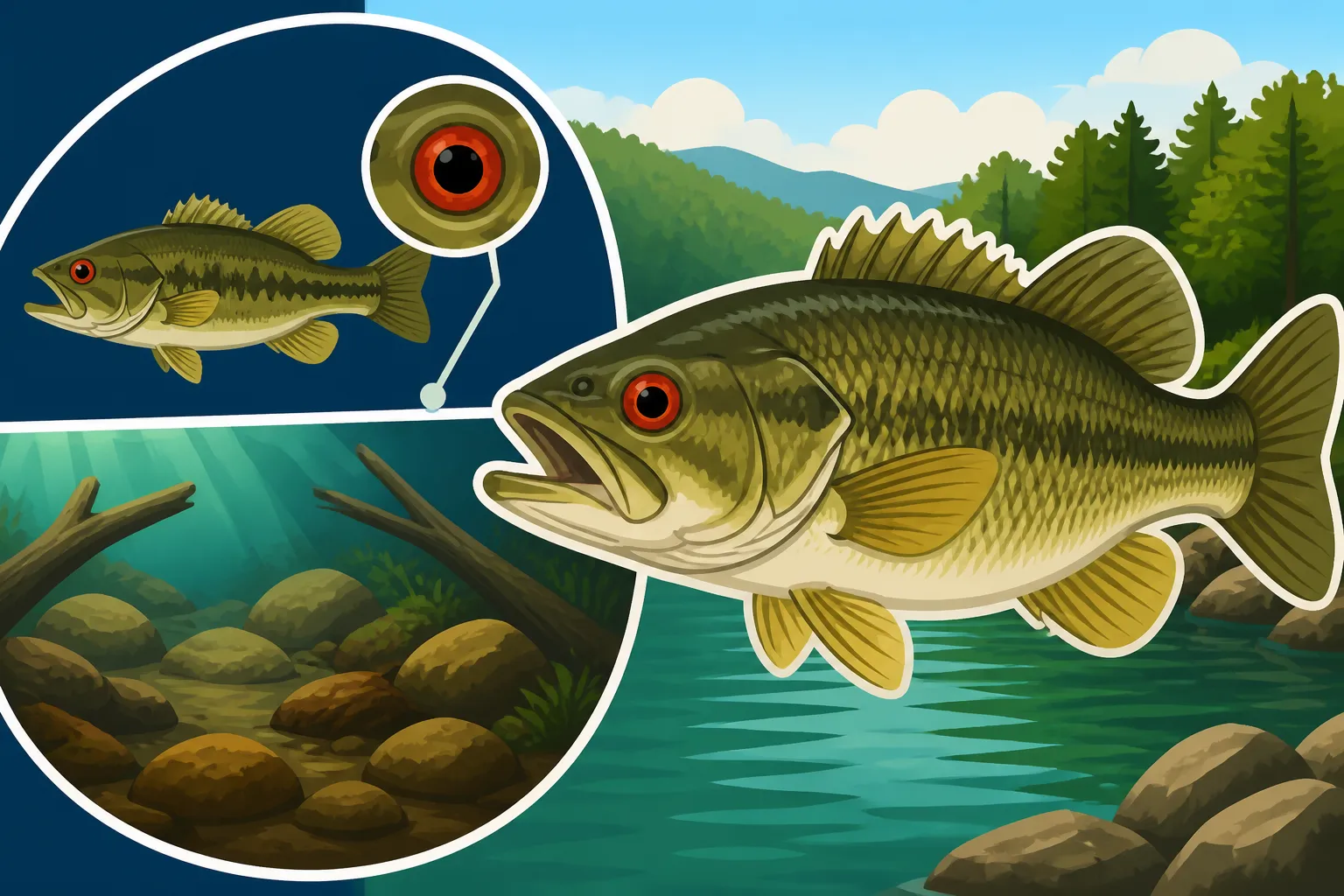
Perhaps the most iconic feature of the redeye bass, and the one that gives it its name, is its striking eye color. While not every redeye will have a brilliant, fiery red eye, most will exhibit some degree of red or orange pigmentation in the iris, especially the upper portion. This reddish tint is often quite noticeable, setting it apart from the generally darker eyes of smallmouth or largemouth bass. It's a consistent characteristic that anglers often look for first.
When it comes to the mouth, the redeye bass has a relatively modest jaw. If you close its mouth, the upper jaw, or maxilla, typically does not extend past the back of the eye. This is a crucial distinction. In contrast, a largemouth bass's jaw extends well past the eye, sometimes even to the gill plate. A smallmouth's jaw usually extends to about the middle or back of the eye, making the redeye's mouth appear slightly smaller in comparison. Additionally, many redeye bass will have a patch of teeth on their tongue, similar to spotted bass, which is a feature not typically found on largemouth or smallmouth bass. This can be a very helpful, though often overlooked, identifier.
Dorsal Fin and Lateral Line Markings
The dorsal fin of the redeye bass is another critical identification point. Like all black bass, it has two dorsal fins – a spiny anterior fin and a soft-rayed posterior fin. In the redeye, these two sections are clearly connected, but there is a noticeable, though not deeply separated, notch between the spiny and soft-rayed portions. This is important when comparing it to a spotted bass, where the fins are also connected but often appear more continuous, or a largemouth, where the separation might be more pronounced than a redeye but less so than some other species.
As mentioned earlier, the lateral line, the faint line of pores running horizontally along the side of the fish, is generally broken or indistinct on a redeye. Instead of a solid line, you'll often see a series of dark, somewhat diamond-shaped blotches or spots along the flank, particularly on the posterior half of the body. These blotches are often connected by a faint, lighter line, rather than a strong, dark one. This characteristic, combined with the eye color and mouth size, paints a very clear picture of a redeye bass. Looking closely at these fin and lateral line details can greatly reduce confusion, especially when trying to differentiate them from other stream bass like smallmouth.
Redeye Bass Habitat: Where to Find These Stream Dwellers
Understanding where redeye bass live is just as important as knowing how to identify them. These aren't fish you'll typically find lurking in the deep, open waters of our major reservoirs. They have very specific preferences that dictate their distribution across Tennessee.
Preferred Water Conditions and Structure
Redeye bass are true connoisseurs of clear, cool, flowing water. They thrive in streams and small to medium-sized rivers with moderate to fast currents. Think about your favorite pristine creek, one with a healthy mix of riffles, runs, and deeper pools, and you're likely imagining ideal redeye habitat. These fish prefer rocky and gravelly bottoms, often interspersed with submerged logs, root wads, and undercut banks that provide cover and ambush points. They are less fond of large, silty flats or heavily vegetated areas that largemouth bass often favor. The presence of good water quality, ample oxygen, and stable temperatures are paramount for redeye populations.
You'll often find them tucked behind boulders, in the deeper pockets of runs, or at the tail ends of pools where they can ambush prey being carried downstream. Unlike smallmouth that might roam more openly in larger river sections, redeyes often stick to a more confined home range within a particular stretch of stream. Their preference for these environments also means they're often found alongside other cold-water species, though perhaps not true trout streams themselves. Finding these specific conditions is key to locating redeye, and it often means venturing into more remote or less trafficked areas.
Geographic Distribution in Tennessee
In Tennessee, redeye bass are primarily found in the eastern and central parts of the state, particularly in tributaries of the Tennessee River system that originate in the Appalachian foothills. Key areas include the upper reaches of the Coosa River drainage (though less prominent there, they are sometimes called Coosa bass) and various other clear-water streams. While you won't find them statewide, they are well-established in many of the state's smaller, wilder river systems. Notable rivers and streams where you might encounter them include certain tributaries of the Hiwassee, Ocoee, and Emory Rivers, among others.
Anglers often report successful trips to the upper sections of these river systems, where the water remains cool and clear year-round. These are typically not the massive, boat-filled lakes, but rather smaller, more intimate settings that are often fished from the bank or by wading. If you're looking for Best Rivers for Smallmouth Bass Fishing in Tennessee, you might find some overlap in the smaller tributaries, as both species prefer similar clear, flowing water, though redeyes typically stick to even smaller, headwater streams. It's always a good idea to research specific local streams and their conditions before heading out, as habitat can vary even within the same watershed.
Seasonal Movements and Feeding Habits
Redeye bass, like most fish, exhibit some seasonal shifts in behavior, but their strong association with flowing water means they generally don't undertake massive migrations. During warmer months, they are highly active, feeding aggressively on insects, small crustaceans, and baitfish. They'll often hold in current breaks, waiting for food to drift by. As water temperatures cool in the fall, their metabolism slows, and they might move to deeper pools or areas with less current, conserving energy. However, they remain catchable throughout much of the year, especially on mild winter days.
Their diet is varied, including aquatic insects like hellgrammites and crayfish, as well as smaller minnows and darters. This varied diet makes them responsive to a wide array of lures and flies. Understanding Tennessee Bass Fishing Seasons and Patterns in general can give you a good head start, but remember that stream fish like redeyes are often more directly influenced by localized water temperature and flow rates than large reservoir bass. High water after a rain can push them into quieter eddies, while prolonged dry spells can concentrate them in the deeper pools.
Common Look-Alikes: Avoiding Misidentification
The biggest challenge in redeye bass fishing, especially for newcomers, is distinguishing them from similar-looking species. The subtle differences between black bass species can trip up even experienced anglers. Let's break down the most common confusions.
Redeye Bass vs. Smallmouth Bass
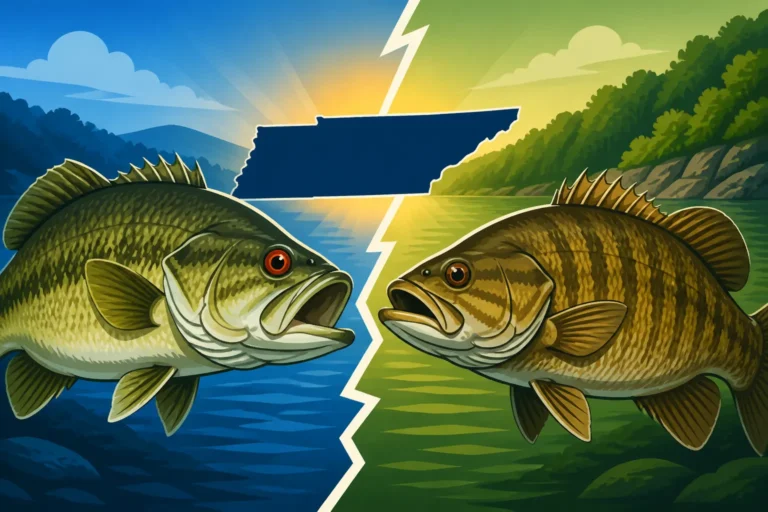
This is by far the most frequent point of confusion, as both redeye and smallmouth bass share a love for clear, flowing water and rocky environments. However, there are several key distinctions. The most prominent is the mouth: a smallmouth's upper jaw extends to about the middle of its eye, sometimes a bit further back, but generally not past the back of the eye. A redeye's jaw, as discussed, is typically shorter, not extending past the back of the eye.
Another significant difference is color and pattern. Smallmouth bass are famous for their vertical bars or blotches, often described as "tiger stripes," particularly when they come from dark water. While redeyes have mottled patterns, these are generally less distinct and not as uniformly barred as a smallmouth. Smallmouth also usually have red or orange eyes, but it's typically less vibrant or consistent than the redeye, often fading into a darker brown or gold. A redeye's eye has a more pronounced reddish hue. Lastly, the patch of teeth on the tongue is a consistent feature of redeyes (and spotted bass), which is absent in smallmouth bass. When you're trying to figure out How to Tell a Redeye Bass from a Smallmouth, always check the tongue and the jaw extension first.
Here's a quick comparison table:
| Feature | Redeye Bass | Smallmouth Bass |
|---|---|---|
| Eye Color | Distinct red to orange often visible | Red or orange in iris, but often less vibrant |
| Jaw Extension | Upper jaw typically not past back of eye | Upper jaw usually to middle or back of eye, but rarely past |
| Lateral Line | Broken, blotchy; faint or absent as a line | Usually a faint, continuous line; vertical bars/blotches often strong |
| Body Shape | More slender, torpedo-like | Stockier, bronze or brownish body, often with vertical bars |
| Tongue Patch | Typically has a tooth patch on tongue | Lacks a tooth patch on tongue |
| Dorsal Fins | Connected, with noticeable notch | Connected, with noticeable notch |
Redeye Bass vs. Spotted Bass
Spotted bass are another common look-alike, especially because they also often have a tooth patch on their tongue, just like the redeye. This can sometimes lead to confusion. However, there are key differences in their appearance. Spotted bass, as their name suggests, typically have rows of distinct spots below their lateral line, creating a more "spotted" appearance than the mottled pattern of a redeye. These spots are often arranged in somewhat orderly rows.
The jaw of a spotted bass, similar to a redeye, usually doesn't extend past the back of the eye. However, their overall body shape is often stockier than a redeye, more akin to a largemouth in girth but with a smaller mouth. The dorsal fins of a spotted bass are connected, but sometimes appear more subtly notched than a redeye's. While both species can inhabit clear, rocky waters, spotted bass are more common in larger rivers and reservoirs, whereas redeye are typically found in smaller, more pristine streams. Pay close attention to the overall pattern of spots versus blotches, and you'll usually be able to tell them apart from Spotted Bass Identification in Tennessee Reservoirs.
The Importance of Correct Identification for Conservation
Accurate identification isn't just for anglers to show off their knowledge; it has significant conservation implications. Different bass species can have different size and creel limits, and misidentifying a fish could lead to unintentional violations. More importantly, understanding species distribution helps wildlife agencies monitor populations and implement effective conservation strategies. For instance, if a specific stream's redeye population is struggling, focused efforts can be made to protect that species and its habitat.
By correctly identifying your catch, you contribute valuable data, even if it's just by understanding and adhering to the specific rules for that species. This helps ensure that future generations of anglers can also enjoy the thrill of catching these unique Tennessee fish. Always double-check Tennessee Fishing Regulations Explained for your specific location and target species to ensure you're in compliance.
Gear and Techniques for Redeye Bass Success
Chasing redeye bass often means embracing a different style of fishing than you might use for largemouth or even most smallmouth. These fish are usually found in smaller, more intimate settings, and a finesse approach often yields the best results.
Recommended Tackle and Lures
For redeye bass, lighter tackle is generally the way to go. A light to medium-light spinning rod, around 6 to 7 feet long, paired with a small spinning reel spooled with 4-6 pound test monofilament or fluorocarbon line, is often ideal. This setup allows for precise casts into tight spots and offers a sporting fight even with smaller fish. You don't need heavy gear to tackle these stream-dwelling gems. Many anglers find the sensitivity of an ultralight setup to be perfect, letting them feel every subtle twitch and tap, especially in current.
As for lures, smaller is usually better. Here's what often works well:
- Small Crankbaits: Shallow-diving or suspending models in natural crawfish, shad, or minnow patterns. Look for ones around 1.5 to 2 inches.
- Inline Spinners: Classic Mepps or Rooster Tail spinners in sizes #0 to #2 are deadly. Silver, gold, or brass blades with black, white, or brown dressings are often effective.
- Small Jigs: Tiny hair jigs or plastic grub jigs (1/32 to 1/8 ounce) fished on light line can be incredibly productive. Colors like olive, black, brown, or white mimic their natural prey.
- Soft Plastics: Small creature baits, tubes, or finesse worms on a light jighead or rigged weightless.
- Fly Fishing: For fly anglers, small streamers (woolly buggers), nymphs (prince nymphs, pheasant tail), and dry flies (hoppers, caddis) can be very effective in the right conditions.
You can often find a fantastic selection of these smaller baits and appropriate light tackle on platforms like Amazon, making it easy to stock your tackle box for your next stream adventure. If you're looking to expand your collection of rods and reels suitable for similar species, consider exploring Best Rods and Reels for Tennessee Smallmouth Bass for some overlap in recommendations.
Approach and Presentation in Stream Environments
When fishing for redeye bass, stealth is your best friend. These fish inhabit clear water and can be easily spooked by heavy footsteps, bright colors, or careless casting. Approach the stream cautiously, staying low and out of sight as much as possible, especially when wading. Wearing natural, camouflaged clothing can also help. Often, the best approach is to cast upstream and allow your lure or bait to drift naturally downstream with the current, mimicking a free-floating insect or injured baitfish. This natural presentation is key to enticing wary redeye.
Pay close attention to current seams, eddy lines, and any visible structure like submerged rocks, logs, or undercut banks. These are prime ambush points where redeyes will hold, waiting for food. Make repeated, accurate casts to these areas, working your lure slowly and subtly. Sometimes, a gentle twitch or a short pause is all it takes to trigger a strike. If you're wading, move slowly and deliberately, disturbing the water as little as possible. Fishing a stream for redeyes is as much about reading the water and understanding fish behavior as it is about casting technique. It's a truly immersive experience that connects you deeply with the natural environment.
Conservation and the Future of Redeye Bass
As anglers, we have a responsibility to protect the resources we cherish. For native species like the redeye bass, this responsibility feels even more significant. Their presence is an indicator of healthy stream ecosystems, and ensuring their future requires thoughtful angling practices and adherence to regulations.
Protecting Tennessee's Native Bass Species
The health of redeye bass populations is intrinsically linked to the health of their stream habitats. This means that protecting our waterways from pollution, erosion, and habitat destruction is paramount. Anglers play a vital role by advocating for clean water, practicing "leave no trace" principles, and being mindful of their impact on sensitive stream environments. Catch-and-release is a highly recommended practice for redeye bass, especially for larger specimens, to ensure these fish can reproduce and maintain healthy populations. If you do choose to harvest, know your local regulations and only take what you will use.
Educating fellow anglers on proper identification and the importance of these native fish also helps foster a culture of conservation. Many resources are available from the Tennessee Wildlife Resources Agency (TWRA) that delve into the importance of native species and how anglers can contribute to their protection. Engaging with these materials helps deepen your understanding and commitment to preserving Tennessee's rich fishing heritage.
Understanding Regulations for Redeye Bass
While specific numbers regarding catch limits and size restrictions cannot be provided here, it is absolutely crucial for every angler targeting redeye bass in Tennessee to consult the most current Tennessee Fishing Regulations. These regulations can vary by species, body of water, and even time of year. For example, some streams might have general statewide black bass limits, while others, particularly those with sensitive native populations, might have very specific, more restrictive rules for certain species.
Always check the latest TWRA fishing guide or their website before you head out. These resources will outline any special regulations for redeye bass, including daily creel limits, minimum size requirements, and any tackle restrictions that might apply to specific stream sections. Being informed and compliant ensures you're fishing legally and contributing to the sustainable management of Tennessee's precious fisheries. Ignorance of the rules is never an excuse, and game wardens are dedicated to enforcing these important guidelines.
Disclaimer
This article is for general informational purposes only and does not constitute professional advice. Laws, prices and regulations vary by location and change over time. Consult a qualified professional for guidance on your specific situation.