Flathead Catfish Size and Growth in Tennessee Reservoirs
There's nothing quite like the tug of a truly massive fish on your line, is there? And when it comes to brute strength and an undeniable challenge in Tennessee's waters, the flathead catfish often tops the list. Many anglers dream of landing a flathead that pushes the scales, but understanding how these incredible fish grow, what influences their size in our vast reservoirs, and where you might encounter a true giant can feel like a mystery. This guide is here to unravel some of that mystery, giving you a deeper look into the impressive growth patterns of flathead catfish across Tennessee's expansive reservoir systems.
The Allure of the Flathead Catfish in Tennessee
There’s a certain respect that comes with talking about flathead catfish among anglers. They're not just any fish; they're apex predators, often lurking in the deepest, most complex structures of our Tennessee reservoirs. The sheer size they can achieve is legendary, making them a prime target for those who seek a genuine battle on the water. It’s this combination of their elusive nature, their raw power, and their potential for enormous growth that captivates so many of us.
Identifying the Flathead: What Makes Them Unique?
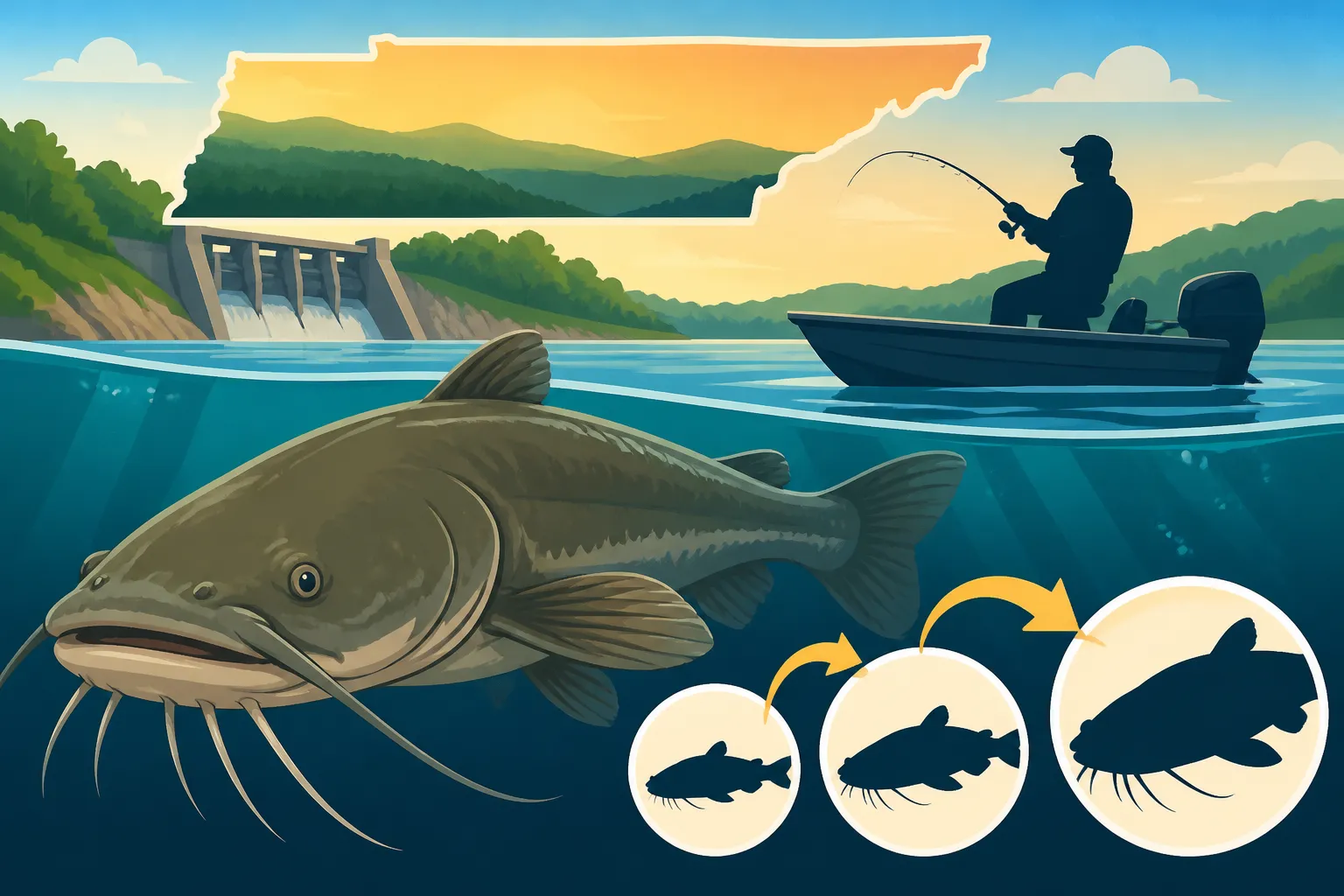
Before you can appreciate their growth, it’s crucial to know you’ve actually hooked a flathead! They are distinctly different from their whiskered cousins, the channel and blue catfish. For starters, as their name suggests, they have a noticeably broad, flattened head, almost shovel-like, which is a key giveaway. Their lower jaw protrudes beyond the upper, giving them a perpetually determined look. Unlike the forked tail of a channel cat or the deeply forked tail of a blue cat, the flathead's tail is notably square or slightly rounded. Their coloring is also unique, often mottled brown and yellow, almost like camouflage against the bottom of a river or reservoir, with darker blotches over a yellowish or olive base. This distinctive appearance isn't just for show; it's perfectly adapted for their predatory lifestyle, allowing them to blend into the submerged timber and rock piles where they ambush prey. If you're looking for more specific details, checking out Flathead Catfish: Identification Tips for Beginners can really help you get a handle on their unique features.
Another tell-tale sign is their small, beady eyes set high on their wide head, which are perfect for spotting prey above them in the dim light of deeper waters. Their skin is smooth, without scales, typical of catfish, but their overall robust and muscular build sets them apart. When you're trying to identify your catch quickly, especially if it’s a big one thrashing in the net, remember that flat head, the slightly protruding lower jaw, and the squarish tail. These features are not just aesthetic; they speak to the flathead's patient, ambush-style hunting, often waiting for unsuspecting fish to swim by before striking with incredible speed.
Preferred Habitats in Tennessee Reservoirs
Flathead catfish are creatures of structure and current. In Tennessee's vast reservoirs, they gravitate towards areas that offer both concealment and a steady supply of food. Think deep holes, submerged timber, rock piles, ledges, and creek channels, especially where there's a good current flow that brings prey to them. They love to hide in these complex environments, waiting to ambush anything from smaller fish like sunfish and shad to even crawfish. You won't typically find flatheads roaming the open water like a blue cat might; they are more territorial and prefer to stick close to their chosen hunting grounds. This makes them a fascinating challenge to locate, as you often need to literally put your bait right on their doorstep.
Major reservoirs across Tennessee, like Kentucky Lake, Watts Bar Lake, and Chickamauga Lake, offer ideal conditions for flatheads. These waters boast extensive submerged forests from when the lakes were initially flooded, along with old river and creek channels that carve deep paths through the lakebed. These structures provide the perfect combination of cover, depth, and ambush points for flathead catfish to thrive and grow to impressive sizes. Knowing Where Flathead Catfish Live in Tennessee Rivers can give you an even better edge. It's not just about the depth; it's about the complexity of the bottom. A simple, flat bottom rarely holds a trophy flathead. They crave the nooks and crannies, the dark shadows where they can hide unseen, ready to strike.
Understanding Flathead Catfish Growth Rates
The growth rate of a flathead catfish isn't a fixed number; it's a dynamic process influenced by a multitude of environmental and biological factors. While it's exciting to imagine every flathead growing into a behemoth, the reality is that many variables play a significant role in how quickly and how large these fish ultimately become in Tennessee's reservoirs. Understanding these factors can help you appreciate the impressive journey of a truly large flathead.
Factors Influencing Growth: Food, Water, and Genetics
Just like any living creature, a flathead catfish's ability to pack on pounds is heavily dependent on its environment. The primary driver is food availability. Flatheads are voracious predators, and in reservoirs teeming with a healthy forage base – think abundant shad, bluegill, and other baitfish – they have all the fuel they need to grow rapidly. A reservoir like Kentucky Lake, renowned for its diverse fish populations, offers an ideal "buffet" for a growing flathead. Conversely, in waters with scarcer food resources, growth might be slower, and the fish may not reach their maximum genetic potential.
Water quality also plays a critical, often overlooked, role. Optimal water temperatures, sufficient oxygen levels, and minimal pollution contribute to a healthy, stress-free environment where fish can dedicate more energy to growth rather than survival. Extremely warm or cold water, or areas with poor water quality, can slow down their metabolism and hinder growth. And then, of course, there's genetics. Just like people, some flatheads are simply predisposed to grow larger and faster than others. While we can't control their genes, providing ideal conditions allows these genetically superior fish to truly express their potential. It's a complex interplay, but essentially, a healthy, food-rich environment allows the fish to thrive and reach impressive sizes.
Typical Size Ranges in Tennessee's Major Reservoirs
So, what kind of sizes can you realistically expect when targeting flathead catfish in Tennessee's reservoirs? While the true giants grab all the headlines, most flatheads you'll encounter will fall into a more common range. Many anglers regularly catch flatheads in the 5 to 20-pound range, which are still incredibly fun to fight and make for excellent table fare. Fish in this range are often younger adults, still actively growing. However, it's not uncommon to land fish pushing 30, 40, or even 50 pounds in our trophy-producing waters like Watts Bar Lake or the lower stretches of the Tennessee River. These larger fish are typically much older, having survived numerous seasons and found prime feeding grounds.
It's important to remember that these are just general guidelines, and individual fish can always defy expectations. What's considered a "good size" can also vary depending on the specific reservoir and its unique ecosystem. For instance, a 20-pound flathead might be celebrated in one lake, while in another, anglers might be primarily chasing fish twice that size. The thrill, of course, is in the unknown – every cast could bring you face to face with a truly monumental fish. To understand the subtle differences between species, especially when looking for big ones, check out Flathead Catfish vs Blue Catfish: Key Differences.
The Elusive Trophy Flathead: What Does it Take?
Ah, the trophy flathead. That mythical beast that haunts the dreams of serious catfish anglers. A true trophy flathead in Tennessee is often considered to be anything over 50 pounds, with some reaching astronomical weights far beyond that. These fish are not only massive but also incredibly old, often decades in age, having survived countless angling attempts and environmental challenges. Landing one requires more than just luck; it demands immense patience, specialized techniques, and a deep understanding of their behavior.
You won't find these giants just anywhere. They hold tight to the deepest, most complex structures, often in areas with strong current or heavy cover that deters smaller boats and less determined anglers. Targeting them requires robust gear – heavy-action rods, strong reels, and braided line that can handle the sheer power of these fish. Live bait, often a sizable bluegill or shad, is almost always the preferred choice, presented right in their strike zone. The pursuit of a trophy flathead is a commitment, often involving long nights, countless hours scouting, and the willingness to learn from every missed bite. When you finally connect with one, the fight is legendary, a test of will and tackle against one of the river's true monarchs.
Record Catches and the Pursuit of Giants
Every state has its legends, and Tennessee is no exception when it comes to gargantuan catfish. While official records are one thing, the stories shared among anglers of almost-got-'em fish and personal bests are equally vital to the culture of chasing these magnificent creatures. The drive to catch a record-breaker, or at least a personal best that makes your arms ache and your heart pound, is a powerful motivator for many dedicated flathead anglers.
Why Size Matters: The Thrill of the Catch
For many, fishing is about relaxation, but for those who target flathead catfish, it's often about the thrill of the hunt and the battle. The sheer physical challenge of battling a 50-plus pound flathead is something words can barely describe. Imagine a fish that can peel line off your reel with astonishing power, dive into submerged timber, and relentlessly pull with a stubbornness that tests your tackle and your endurance. It's an adrenaline rush unlike any other in freshwater fishing. When you finally bring a truly massive flathead to the boat, exhausted but exhilarated, there's a profound sense of accomplishment.
Beyond the fight itself, there's the awe of holding such an ancient, powerful creature. These fish are living relics, often decades old, and represent a lifetime of survival in the wild. The photos, the stories, and the memories of such a catch become indelible parts of an angler's history. It’s not just about the numbers on the scale; it's about the connection to nature, the test of skill, and the respect for a truly remarkable fish. This pursuit of size fuels countless expeditions to our state's best catfish waters, drawing anglers from all walks of life.
Strategies for Targeting Larger Flatheads
Targeting those larger flatheads isn't just about bigger bait and heavier line, though those are certainly crucial. It's about understanding their habits and adapting your strategy accordingly. Big flatheads are almost exclusively nocturnal feeders. While you might stumble upon a smaller one during the day, your best odds for a true giant are from dusk until dawn. Setting up your lines in prime locations, often along deep river channels, submerged humps, or near extensive cover, before dark is essential. For more about optimal timing, check out Best Time of Year to Catch Catfish.
Live bait is king for flatheads. Large, lively bluegill, shad, or even smaller carp are irresistible to these opportunistic predators. Presentation matters, too: you want your bait to be active and struggling, mimicking an injured fish. Techniques like tightlining on the bottom, using heavy weights to keep your bait in place in current, or even employing trotlines or jug lines in appropriate areas, can be incredibly effective. Consider using a sturdy rod and reel combo, capable of handling braided lines and heavy leads. You can find some excellent gear options for Best Rods for Catfish Fishing that will stand up to the challenge. Setting a How to Set Up a Trotline for Catfish correctly or understanding Jug Fishing for Catfish Explained can significantly increase your chances of connecting with a monster. Remember, these fish are patient, so you need to be even more so.
Conservation and Responsible Angling Practices
As much as we all love chasing those giant flatheads, it's incredibly important to remember our role in ensuring these impressive fish continue to thrive in Tennessee's waters for future generations. Responsible angling isn't just a suggestion; it's a necessity, especially when dealing with long-lived, slow-growing species like the flathead catfish.
Catch and Release for Sustainable Populations
While flatheads are certainly delicious, especially the smaller ones, practicing catch and release, particularly for the larger, older flatheads, is a cornerstone of sustainable angling. Those massive flatheads are often decades old and represent the prime breeding stock for the population. Removing too many of these giants can have a significant impact on the overall health and future growth potential of the flathead population in a reservoir. Catching a trophy-sized flathead, snapping a few quick photos, and then carefully releasing it back into the water allows that fish to continue its vital role in the ecosystem.
When practicing catch and release, minimize the time the fish is out of the water. Handle them gently, supporting their full body weight, especially when lifting them for photos. Use circle hooks, which are far less likely to deep-hook a fish, increasing its chances of survival upon release. Consider having a de-hooking tool on hand. By making conscious decisions to release these big fish, we ensure that the thrill of chasing giants remains a possibility for everyone, year after year.
Regulations on Flathead Catfish in Tennessee
Every angler has a responsibility to know and follow the fishing regulations set forth by the Tennessee Wildlife Resources Agency (TWRA). These rules are not arbitrary; they are carefully developed based on scientific data to manage fish populations and ensure healthy fisheries for everyone. For flathead catfish, this often includes daily creel limits (how many fish you can keep in a day) and sometimes size limits (minimum or maximum lengths for fish you can keep). These regulations can vary by specific species and even by particular bodies of water, which is why it's so important to consult the most current TWRA fishing guide before each trip.
The regulations are designed to prevent overfishing and to protect the reproductive potential of species. For example, a slot limit might protect medium-sized fish (the most prolific breeders) while allowing anglers to keep smaller or very large fish. Penalties for not adhering to these rules can be significant, ranging from fines to loss of fishing privileges. Remember, ignorance is never an excuse. Always double-check the latest guide, which you can usually find online or at your local bait shop. By understanding and respecting Tennessee Fishing Regulations Explained, you contribute directly to the health of our beloved Tennessee fisheries.
| Flathead Catfish Characteristics | Description | Angling Relevance |
|---|---|---|
| Head Shape | Broad, flattened, shovel-like head. | Helps distinguish from channel or blue cats, indicates ambush predator. |
| Lower Jaw | Protrudes beyond upper jaw. | Another key identification feature, signifies upward-striking predator. |
| Tail Shape | Square or slightly rounded. | Distinct from the forked tails of channel and blue catfish. |
| Coloration | Mottled brown and yellow, darker blotches over olive/yellow base. | Excellent camouflage for lurking in submerged structure. |
| Diet | Primarily live fish (bluegill, shad, small carp). | Live bait is highly effective for targeting them. |
| Habitat | Deep holes, submerged timber, rock piles, creek channels with current. | Focus fishing efforts on these complex, structured areas. |
| Growth Rate | Moderate to slow, dependent on food, water quality, and genetics. | Larger fish are older and require more patience to catch. |
| Behavior | Nocturnal, ambush predator, territorial. | Best targeted at night, requires precise bait placement in structure. |
| Trophy Potential | Can exceed 50 pounds, often decades old. | Significant challenge, requires heavy gear and specialized techniques. |
Disclaimer
This article is for general informational purposes only and does not constitute professional advice. Laws, prices and regulations vary by location and change over time. Consult a qualified professional for guidance on your specific situation.