Flathead Catfish: Identification Tips for Beginners
Have you ever landed what you thought was a giant blue cat, only to look closer and realize you might have something entirely different on your hands? It’s a common mix-up, especially with Tennessee's fantastic catfish population, but knowing the difference can really elevate your fishing game. This guide is all about helping you, the budding or seasoned angler, confidently identify the unique and often elusive flathead catfish when you hook into one of these impressive bottom dwellers.
What Makes a Flathead Catfish Stand Out?
When you’re pulling a heavy fish out of the murky depths of a Tennessee river or reservoir, it can sometimes be tough to make a quick identification. But the flathead catfish, in particular, has some truly unmistakable features that, once you know them, will make it easy to tell apart from its whiskered cousins. These fish are built for life as a top predator in their underwater world, and their anatomy really shows it.
The Distinctive Head and Jaw
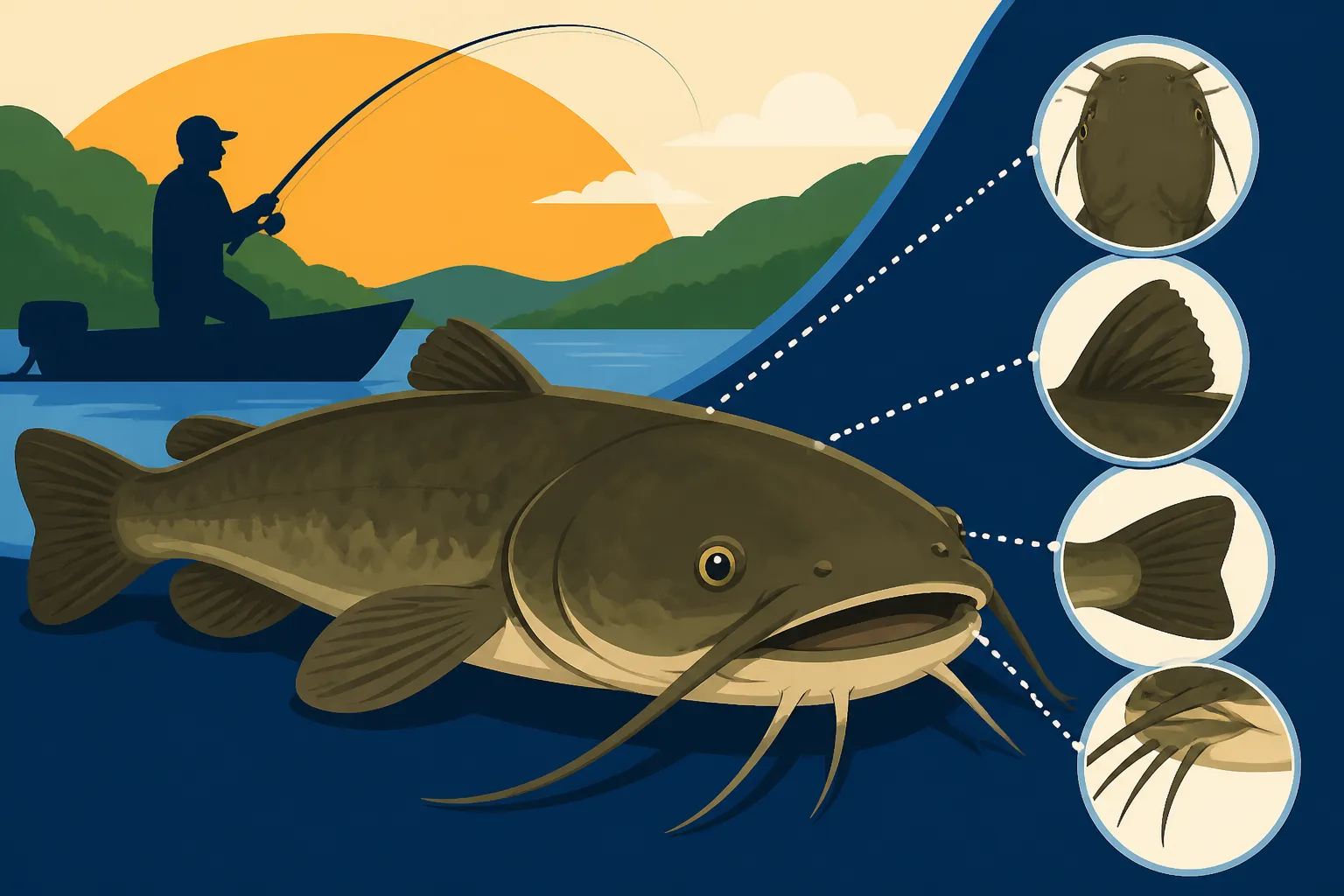
The most obvious clue, and the one that gives the flathead its name, is right there at the front: its head. Unlike the rounded, somewhat bulbous heads of other catfish, the flathead's head is noticeably broad and flattened, almost shovel-like. Imagine it like a wide, depressed pancake from above. This shape isn't just for show; it's perfectly designed for lurking on the bottom and ambushing prey.
Beyond the shape of the head, take a close look at its jaw. Flatheads have a prominent lower jaw that actually protrudes beyond the upper jaw, giving them a slight underbite. This isn’t just a stylistic choice; it's a key predatory adaptation. They use this gaping, upward-angled mouth to engulf smaller fish, crawfish, and even mussels directly off the bottom or from above. When you’re trying to distinguish between a flathead and another species, this underbite is a tell-tale sign that usually clinches the identification. You can almost feel the power in that jaw when you see it.
Unique Body Shape and Fin Structure
Moving past the head, the flathead's body continues to offer clear identification markers. While all catfish tend to be somewhat cylindrical, the flathead has a robust, stocky build that tapers significantly towards the tail. Their bodies are typically sleeker and less compressed than, say, a channel catfish, but not as deep-bodied as a massive blue cat. The skin is usually smooth, lacking the heavy mottling or spots often seen on channels.
Now, let's talk fins, specifically the caudal (tail) fin. This is another major differentiator. A flathead catfish will almost always have a square or slightly rounded tail fin, which is quite distinct from the deeply forked tail you’ll find on a channel catfish or the somewhat forked tail of a blue catfish. This less-forked tail is well-suited for powerful, short bursts of speed used in ambushing prey rather than long-distance cruising. Pay close attention to this when you're admiring your catch; it's a critical detail for proper Flathead Catfish: Identification Tips for Beginners. Additionally, their adipose fin, that fleshy little fin on their back near the tail, is usually a bit smaller and more distinct than on other catfish, though this might be a more subtle clue for beginners.
Common Confusions: Flatheads vs. Their Catfish Cousins
It’s completely understandable why anglers, especially those new to the Tennessee waters, might mix up the different catfish species. They all have whiskers, they all like the bottom, and they can all grow to impressive sizes! But knowing the specific differences between flatheads, blue cats, and channel cats is crucial for proper identification and helps you understand their behavior and preferred baits. After all, what works as Best Live Bait for Flathead Catfish might not be ideal for a channel cat.
Flatheads vs. Blue Catfish
Blue catfish are another trophy species in Tennessee, and they can certainly be mistaken for flatheads due to their sheer size and bottom-dwelling habits. However, there are several key distinctions. The most significant difference is the tail fin: blue catfish have a distinctly forked tail, though perhaps not as deeply forked as a channel cat, it’s still very much a "V" shape, whereas the flathead's tail is square or only slightly rounded. This is usually the first thing I look for.
Beyond the tail, consider the body color and pattern. Blue catfish typically have a bluish-gray color, sometimes appearing silver, with no spots. Their bodies tend to be more uniformly colored. Flatheads, on the other hand, often have a mottled, camouflaged appearance with dark brown or olive splotches over a yellowish or creamy background. This blotchy pattern helps them blend in with the rocky or log-strewn bottoms where they prefer to hunt. For a deeper dive, check out Flathead Catfish vs Blue Catfish: Key Differences. And of course, that prominent underbite on a flathead is absent on a blue cat; blues have upper and lower jaws that are more even in length.
Flatheads vs. Channel Catfish
The channel catfish is probably the most commonly caught catfish species in Tennessee, and it's also the one many people associate with "catfish" in general. While both flatheads and channels are fantastic fighters and great on the table, they look quite different once you know what to look for. The tail is once again a major giveaway: channel catfish have a very deeply forked tail, much like a swallow's tail, which is quite distinct from the flathead's square or slightly rounded tail. This alone can often solve the identification puzzle.
Another clear indicator is the body. Channel catfish usually have small, dark spots scattered across their sides, especially when they are younger. Flatheads typically lack these spots, instead displaying their mottled, almost blotchy pattern. The head of a channel cat is also more rounded and narrower compared to the flathead's broad, flattened head. For a detailed guide on identifying Tennessee's most common catfish, you might want to read How to Identify Channel Catfish, Tennessee's Other State Fish. Channel cats also tend to have a slightly more slender body profile compared to the flathead's more robust and stocky build.
Here's a quick comparison table to help you keep these magnificent whiskered species straight:
| Feature | Flathead Catfish | Blue Catfish | Channel Catfish |
|---|---|---|---|
| Head Shape | Broad, very flattened, shovel-like | Relatively narrow, rounded, less flattened | Smaller, somewhat conical, slightly rounded |
| Jaw | Lower jaw protrudes (underbite) | Jaws even or upper jaw slightly longer | Jaws even or upper jaw slightly longer |
| Tail Fin | Square or slightly rounded | Moderately forked | Deeply forked |
| Body Color | Mottled brown, olive, or yellow with dark blotches | Blue-gray to silvery, unspotted | Olive, gray, or bluish, often with dark spots |
| Body Build | Robust, stocky, tapers towards tail | Deep-bodied, heavy, uniform | Slender, more elongated, often with spots |
| Primary Diet | Live fish, crawfish, mussels | Opportunistic; fish, mussels, invertebrates | Opportunistic; insects, small fish, prepared bait |
| Whiskers | Light brown to yellow, usually dark at base | Dark gray to black | Dark gray to black |
Practical Tips for Identifying Flatheads on the Water
Identifying fish quickly and accurately in the moment can be challenging, especially when the adrenaline is pumping! But with a few practical tips and some keen observation, you’ll be calling out "Flathead!" like a seasoned pro. It’s not just about what you see, but also where you’re fishing and what they're typically feeding on.
Size and Coloration Clues
Flatheads are known for their impressive size. While all three main catfish species in Tennessee can grow quite large, flatheads, especially the really big ones, tend to have a truly massive, powerful appearance. If you've just hauled in a monster that feels like it weighs a small child, it's very likely either a blue cat or a flathead. But that mottled, somewhat patchy coloration is a dead giveaway for the flathead. Think camouflage—they’ve got darker, irregular splotches over a lighter, often yellowish or brownish base. This isn't uniform at all; it's a broken pattern, helping them blend perfectly with submerged logs, rocks, and uneven riverbeds.
Another visual cue is the color of their barbels (whiskers). On a flathead, these are typically a lighter color, often yellowish or pale, and might have a darker base. In contrast, channel and blue catfish usually have darker barbels, often gray or black. This might seem like a small detail, but when you're trying to quickly identify a fish, every distinct feature helps. You can also look for good identification guides, perhaps ones you can keep on your phone or printed from Amazon, to quickly cross-reference features. Having a reliable field guide for Tennessee's 291 Native Fish Species and 52 Sport Fish Explained is an excellent idea for any angler.
Habitat Hints and Behavioral Traits
Beyond their physical appearance, where and how you catch a fish can also offer huge clues to its identity. Flathead catfish are ambush predators. They love to hide out in deep holes, around submerged timber, rock piles, or undercut banks in rivers and large reservoirs. They're not typically found cruising in open water like some blue cats might be, nor are they usually in shallower, muddier backwaters like some channel cats. If you’re fishing a deep, snaggy section of the Cumberland River or another major waterway and you hook into something that puts up a serious fight, lurking near heavy cover, there’s a good chance it’s a flathead. For specific locations, you might look into Watts Bar Lake Catfish Fishing Spots or Kentucky Lake Catfish Fishing Spots, as these are known flathead strongholds.
Their diet is another major clue. Flatheads are almost exclusively piscivorous, meaning they eat other fish, and they prefer live prey. If you're consistently catching catfish on live bluegill, sunfish, or large shiners, you're probably targeting flatheads. Channel catfish, on the other hand, are much less picky and will hit everything from stink bait to worms to small artificial lures. Blue catfish are also big fish eaters, but they're more opportunistic and will readily take cut bait. Understanding these preferences is not only helpful for identification but also for choosing the Best Gear for Tennessee Catfish Fishing and techniques like those described in Tennessee Catfish Fishing Techniques and Seasons.
Why Proper Identification Matters
It might seem like a small detail to differentiate between catfish species, but for the serious angler, and for the health of Tennessee’s fisheries, it's actually quite important. Knowing exactly what you've caught isn't just about bragging rights; it's about being a responsible and knowledgeable participant in the sport.
Understanding Regulations and Limits
Every fish species in Tennessee, especially game fish, has specific regulations regarding size limits and daily creel limits. These rules are put in place to ensure healthy fish populations and sustainable fishing for generations to come. For instance, while you might have a generous daily limit for channel catfish, there could be different, more restrictive rules for flatheads, particularly concerning minimum size or slot limits in certain waters. For a comprehensive overview of general fishing rules, check out Tennessee Fishing Rules Every Angler Should Know.
Catching a fish that you believe is one species, only to find out it's another with a different limit, could inadvertently lead to violations. Imagine keeping a large flathead, thinking it’s a blue cat, and later finding out you were over the flathead's specific regulation. It's an honest mistake, but ignorance of the law is rarely an excuse. Always double-check your local regulations, which are usually available through the TWRA or on their site, or even good old-fashioned fishing regulation booklets you can pick up at sporting goods stores or order from Amazon.
Respecting the Ecosystem
Beyond legal compliance, accurate fish identification is a sign of respect for the ecosystem and the natural world we cherish. Each species plays a unique role in the aquatic food web. Flatheads, as apex predators, help keep populations of smaller fish in check, contributing to a balanced environment. By understanding their specific needs, behaviors, and habitats, we can make more informed decisions about how and where we fish, and how we handle our catch.
For example, if you know you've caught a flathead, you'll be more aware of its preference for live bait and its tendency to hug heavy cover. This insight can help you choose the right gear and techniques, like using stout lines and hooks that allow for a quick, clean release if you're not planning to keep the fish, minimizing stress on this powerful species. Continually learning about species like those detailed in Catfish Species Comparison: Channel, Blue, and Flathead fosters a deeper appreciation for the biodiversity of Tennessee's waters and ensures we're all doing our part to protect it.
Disclaimer
This article is for general informational purposes only and does not constitute professional advice. Laws, prices and regulations vary by location and change over time. Consult a qualified professional for guidance on your specific situation.