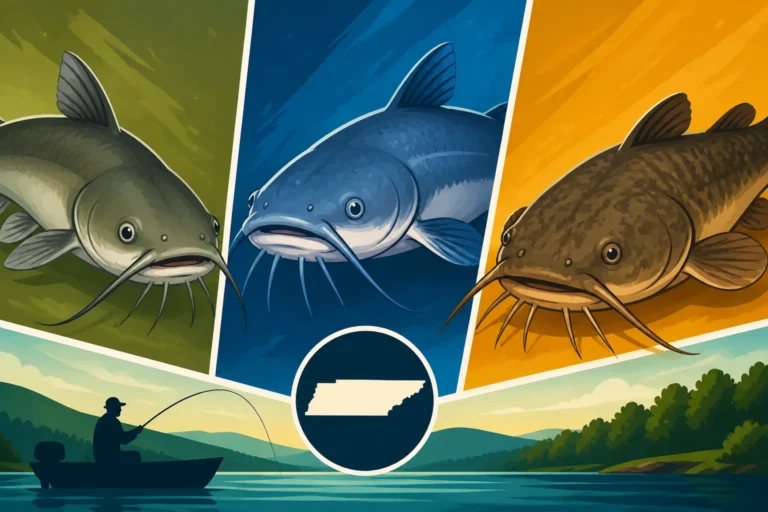
Flathead Catfish vs Blue Catfish: Key Differences
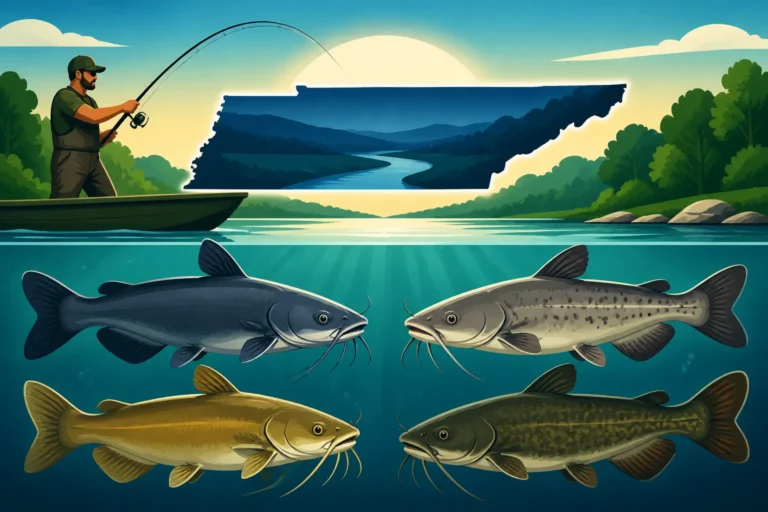
It’s a common scenario on Tennessee’s abundant waters: you’ve reeled in a massive catfish, and you’re absolutely thrilled, but then the question hits you – is this a Flathead or a Blue Catfish? For many anglers, especially those just getting into the world of whiskered wonders, telling these two giants apart can be surprisingly tricky. But trust me, knowing the distinct differences isn't just a fun fact; it's crucial for understanding their behavior and, ultimately, for catching more fish. This guide will break down the key characteristics that set Flathead and Blue Catfish apart, helping you confidently identify your catch and refine your angling strategies for both.
Identifying Flathead Catfish: The Solitary Hunter
The Flathead Catfish (Pylodictis olivaris) is a revered species across Tennessee, known for its sheer power and often impressive size. But what truly sets it apart isn't just its fighting spirit; it's a unique combination of physical traits and behavioral patterns that make it distinct from its Blue Catfish cousin. Understanding these nuances is your first step to becoming a successful Flathead angler.
Distinctive Physical Traits
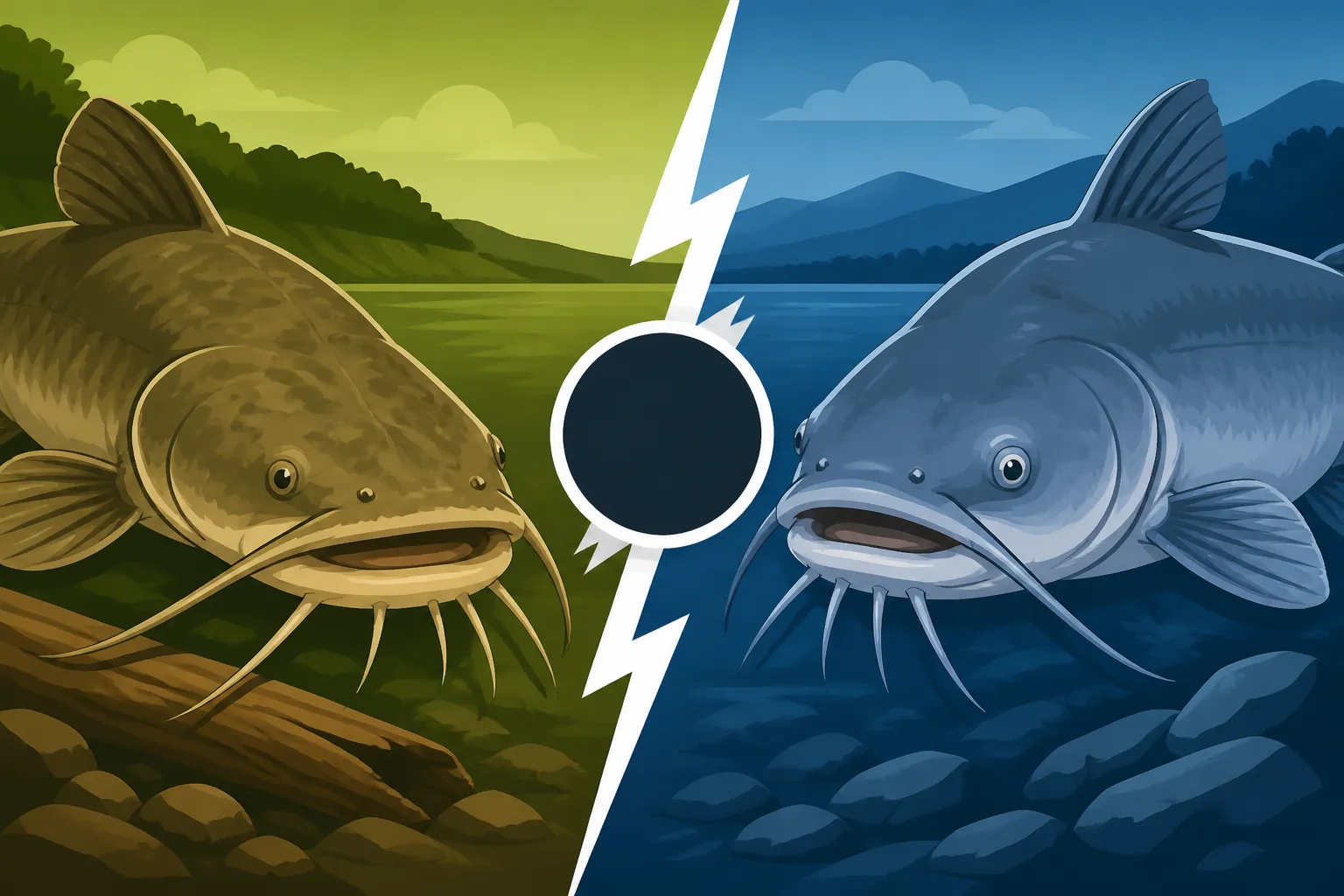
When you bring a Flathead Catfish to the boat, the first thing that will likely catch your eye is its namesake: that broad, flattened head. Seriously, it looks like it's been squashed down a bit, giving it a very distinctive, almost shovel-like appearance. Unlike other catfish, the lower jaw of a Flathead will protrude noticeably beyond the upper jaw, creating a rather formidable, almost "bulldog" profile. This isn't just for show; it's adapted for ambushing prey from below.
Their eyes, surprisingly, are relatively small in proportion to their massive heads. The body coloration is another dead giveaway. Flatheads typically sport a mottled brown or olive-green hue, often adorned with darker spots, blotches, or patches along their sides and back. This camouflage helps them blend into their preferred structured environments, such as sunken logs or rock piles. Their bellies usually fade to a creamy yellow or yellowish-white, which is where they get another common nickname: "yellow cat." Perhaps the most definitive physical characteristic, however, is their tail fin. Unlike the deeply forked tail of a Blue Catfish, the Flathead's tail is either square or, at best, only very slightly notched or rounded. You'll also notice sharp spines on their pectoral fins, a feature common among many catfish species but still important to recognize when handling. Lastly, if you dare to look inside their mouths, you'll find patches of fine, sandpaper-like teeth, designed for gripping struggling prey.
Preferred Habitat and Behavior
Flathead Catfish are, by nature, solitary and incredibly territorial. You won't typically find them schooling up in massive groups like some other catfish species. Instead, they prefer to stake out their own personal domains. Their ideal habitat consists of clear, slow-moving sections of large rivers and reservoirs, particularly areas with abundant natural structure. Think deep holes, colossal logjams, undercut banks, dense brush piles, and formidable rock formations. These are their ambush points, their homes, and their hunting grounds. They are particularly fond of current breaks where they can lie in wait, letting the flow deliver unsuspecting meals right to them.
While they can be caught during the day, Flatheads are predominantly nocturnal hunters. They become much more active under the cover of darkness, leveraging their sensory barbels to detect prey in low light conditions. This solitary, ambush-predator behavior means that when you find one Flathead in prime structure, you might not find a dozen others in the exact same spot. Instead, you might have to move to the next promising piece of structure to find another. This requires a different kind of angling mindset, one focused on targeting specific, high-percentage spots rather than drifting through open water. Understanding their preference for cover and their solitary nature is key to successfully locating them. You can learn more about their usual haunts in Flathead Catfish Habitat in Tennessee Rivers.
Dietary Habits and Fishing Techniques
This is where the Flathead truly stands apart: they are almost exclusively predatory. Forget the stink baits and the cheese chunks; a Flathead's diet consists primarily of live fish. They are not scavengers in the traditional sense; they want a fresh, wiggling meal. Their diet includes everything from bluegill and shad to perch and other small baitfish, often ambushed from their structured hiding spots. This makes them incredibly fun to target, as the bite is usually aggressive and unmistakable.
Given their predatory nature and preference for live bait, fishing techniques for Flatheads are quite specific. Bottom fishing with heavy tackle is the go-to method, presenting a lively baitfish near their ambush points. Rigging with a substantial sinker to hold your bait near structure, often using a three-way swivel or a Carolina rig, is essential. For many anglers, the most effective bait is a live bluegill or a similar panfish, hooked through the back or lips to keep it active. Best Live Bait for Flathead Catfish is a great resource for more details on this. You'll want to deploy your bait in or very close to those deep holes, logjams, or undercut banks where they lie in wait. Patience is paramount, as you're waiting for a true apex predator to decide it's mealtime. Often, setting multiple rods with fresh, lively baits around a promising structure is the most effective approach. This isn't about covering vast expanses of water; it's about precision and dedication to presenting the right meal in the right place.
Identifying Blue Catfish: The Schooling Scavenger
The Blue Catfish (Ictalurus furcatus) represents another pinnacle of Tennessee's angling scene. These powerful fish are not only known for their size, rivaling Flatheads, but also for their abundance and willingness to bite. While they share the "catfish" name, their physical characteristics, habitat preferences, and feeding habits paint a very different picture from their Flathead counterparts.
Key Physical Markers
When distinguishing a Blue Catfish, start by looking at its head – it's notably more pointed and conical compared to the Flathead's broad, flattened cranium. While still robust, it doesn't have that "squashed" appearance. Another subtle but important difference in the jawline is that the upper jaw often extends slightly beyond the lower jaw, which is the opposite of the Flathead's protruding lower jaw. This gives them a more streamlined profile.
The body coloration is a primary identifier: Blue Catfish typically display a uniform blue-gray to slate-gray color on their backs and sides, gradually fading into a pristine white on their bellies. You won't see the mottled, camouflaged patterns that are characteristic of Flatheads. This consistent coloration is one of the quickest ways to visually differentiate them, especially in good light. Their eyes are generally larger than those of Flatheads, which makes sense given their more open-water feeding habits. However, the most unmistakable physical characteristic of a Blue Catfish is its deeply forked tail. Imagine a fish's tail split down the middle almost perfectly; that's what you'll see. This deeply V-shaped tail is a stark contrast to the Flathead's square or slightly rounded tail, and it's often the single best indicator for confident identification. Finally, examine the anal fin – the fin on the underside near the tail. Blue Catfish possess a remarkably long, straight-edged anal fin with a high ray count, typically between 30 and 35 rays. This long, straight fin helps them glide efficiently through water, especially in current.
Habitat Preferences and Social Nature
Unlike the reclusive Flathead, Blue Catfish are highly social creatures, often found in large schools. This schooling behavior can lead to incredible days on the water when you find a productive aggregation of fish. Their preferred habitats are expansive: large rivers and vast reservoirs, particularly areas with deep channels and strong currents. They thrive in these environments, often associating with the main river channel, bends, and deep holes. Blue Catfish Identification and Habitat in Tennessee offers excellent details on where to find them.
While they appreciate structure, they don't rely on it for ambush as heavily as Flatheads do. Instead, they're often found moving with baitfish schools in open water or along ledges. They are also much more tolerant of turbid or murky water conditions, which allows them to thrive in a wider range of riverine and reservoir systems. This adaptability and social nature mean that when you hook one Blue Catfish, there's a good chance more are in the vicinity, creating opportunities for rapid-fire action. Their movements are often dictated by the availability of food and comfortable water temperatures, leading them to migrate throughout larger water bodies.
Feeding Patterns and Fishing Strategies
Blue Catfish are the ultimate opportunistic feeders. While they are certainly predatory and will consume live fish, they are also highly efficient scavengers. Their diet is incredibly varied, encompassing everything from baitfish like shad and skipjack to mussels, crawfish, insects, and even dead or decaying organic matter. This broad palate means they are less picky about bait than Flatheads, opening up a wider array of fishing opportunities.
This versatility in diet translates directly into a broader range of effective fishing strategies. Cut bait is king for Blue Catfish. Chunks of fresh shad, skipjack, herring, or even commercially prepared 'stink baits' are often highly effective. Best Bait for Blue Catfish Fishing provides a comprehensive look at popular options. Techniques include drifting cut bait along deep channels or ledges, anchoring and fan-casting multiple lines across a promising area, or even jug fishing, a popular passive method in many Tennessee lakes. You can explore this technique in Jug Fishing for Catfish Explained.
Because they are often found in schools and are aggressive biters, anglers targeting Blue Catfish can experience fast-paced action, especially when they locate a concentrated group of fish. Their feeding patterns aren't as strictly nocturnal as Flatheads, and they can be caught consistently throughout the day, particularly during periods of low light or strong current. The key is often finding those schools and presenting a scent-heavy bait in their vicinity.
Head-to-Head Comparison: Flathead vs. Blue Catfish
Knowing the individual characteristics of Flathead and Blue Catfish is great, but truly appreciating their differences comes from a direct comparison. This isn't just an academic exercise; these distinctions have profound implications for how you approach catching these magnificent fish in Tennessee's waters.
Side-by-Side Trait Breakdown
Let's lay out the critical features side-by-side to make these distinctions crystal clear. This table summarizes the main points we've covered, offering a quick reference for on-the-water identification.
| Feature | Flathead Catfish | Blue Catfish |
|---|---|---|
| Head Shape | Broad, flattened (shovel-like) | Conical, more pointed |
| Lower Jaw | Protrudes beyond upper jaw | Upper jaw often extends slightly beyond lower jaw |
| Body Color | Mottled brown/olive green, darker patches/spots | Blue-gray to slate gray, uniform, white belly |
| Tail Shape | Square or slightly rounded (not deeply forked) | Deeply forked |
| Anal Fin | Shorter, rounded edge, 14-17 rays | Longer, straight edge, 30-35 rays |
| Diet | Primarily live fish (predatory) | Omnivorous (scavenger and predator), cut bait |
| Social Behavior | Solitary, territorial | Highly social, often in schools |
| Preferred Habitat | Clear, slow rivers; deep holes, dense cover | Large rivers, reservoirs; deep channels, currents |
When you consider these differences, it's like looking at two completely different animals. The Flathead's flattened head and protruding jaw are perfect for rooting around structure and ambushing prey from below. Its mottled coloration helps it blend into those environments. The square tail might not be as efficient for long-distance cruising but is great for short, powerful bursts from an ambush position. On the other hand, the Blue Catfish's more pointed head and deeply forked tail are streamlined for efficient swimming through open water and strong currents, allowing it to cover vast distances in search of food. Its uniform color suggests less reliance on blending into specific, static structures. Knowing these specific differences helps you understand why they act the way they do and why certain baits work better for one than the other.
Impact on Fishing Success
The biggest impact of understanding these differences comes in your fishing approach. If you mistakenly assume a Flathead will hit a piece of chicken liver in open water, you're likely going home empty-handed. Similarly, trying to pick off individual Blue Catfish from dense logjams with a single live bait might prove less efficient than targeting a school in a deep channel.
For Flatheads, your strategy should revolve around precision and live bait. You'll want to target known Flathead hangouts like the gnarly logjams on the Tennessee River or the deep undercut banks of Watts Bar Lake. Deploying a lively bluegill or shad directly into these structures, using heavy line and sturdy hooks, is paramount. This is a game of patience and targeting specific fish. If you're looking for guidance on rigging, Best Live Bait Rigs for Catfish offers excellent advice.
Conversely, for Blue Catfish, your efforts should focus on covering water, finding schools, and using scent-heavy baits. Lakes like Kentucky Lake are renowned for their Blue Catfish populations. Drifting large chunks of fresh cut shad across main river channels, anchoring and spreading multiple lines with various cut baits, or even trolling with specific rigs can be incredibly effective. Because they school, when you find one, you've often found many, leading to exciting multiple hook-ups. Kentucky Lake Catfish Fishing Spots or Watts Bar Lake Catfish Fishing Spots are prime examples where these distinctions are vital. You'll also find a wealth of gear recommendations, like sturdy rods capable of handling these big fish, by searching on a platform like Amazon for "heavy duty catfish rod" or "catfish tackle."
Whether you're after the solitary, live-bait-only Flathead or the schooling, opportunistic Blue Catfish, a clear understanding of their unique traits will make you a much more effective and successful angler. This knowledge allows you to tailor your gear, bait, and location choices, drastically improving your chances of landing that trophy catfish. Remember to always check current regulations for Tennessee Fishing Regulations Explained before heading out.
Disclaimer
This article is for general informational purposes only and does not constitute professional advice. Laws, prices and regulations vary by location and change over time. Consult a qualified professional for guidance on your specific situation.