How to Set Up a Trotline for Catfish
For many anglers in Tennessee, the pursuit of catfish offers both a challenge and a rewarding experience, but sometimes traditional rod and reel fishing just doesn't cut it when you're aiming for a substantial haul or trying to cover a wider area. Setting up a trotline can feel like a daunting task, fraught with questions about regulations, the right gear, and where to even begin. This comprehensive guide is designed to demystify the process, walking you through everything you need to know to safely and effectively set up a trotline for catfish in Tennessee, ensuring you stay within the rules and maximize your chances of success.
Understanding Tennessee's Trotline Regulations
Before you even think about buying a single hook, it's absolutely crucial to understand the Tennessee Wildlife Resources Agency (TWRA) regulations regarding trotlines. Ignorance of the law is never an excuse, and game wardens are vigilant about proper usage to protect both the fish population and other anglers. The last thing you want is a hefty fine or your gear confiscated, especially after all the effort you put into setting it up.
Legalities and Permit Requirements
First and foremost, to set a trotline in Tennessee, you must possess a valid Tennessee fishing license. This isn't just for rod and reel fishing; any method of taking fish, including commercial gear like trotlines, requires it. Depending on your residency status and the species you're targeting, you might need a different type of license. For instance, a basic annual fishing license is usually sufficient for most recreational trotlining. It's always a good idea to refresh your memory on the latest guidelines by checking a comprehensive resource like the Tennessee Fishing License Guide. The TWRA allows recreational trotlines to be used, but they come with specific restrictions on the number of hooks and the line length. Typically, a trotline cannot exceed 100 hooks, and each hook must be spaced at least 24 inches apart. It's a recreational limit, not a commercial one, designed to allow you to catch fish efficiently without overharvesting.
It's also important to remember that these rules are in place for a reason. They help ensure sustainable fishing practices and prevent overfishing, especially in popular waters. Always confirm the most up-to-date information directly from the TWRA website or their annual fishing guide, as regulations can sometimes be adjusted. Don't just rely on what you heard from a friend at the bait shop; verify it yourself.
Marking and Identification Rules
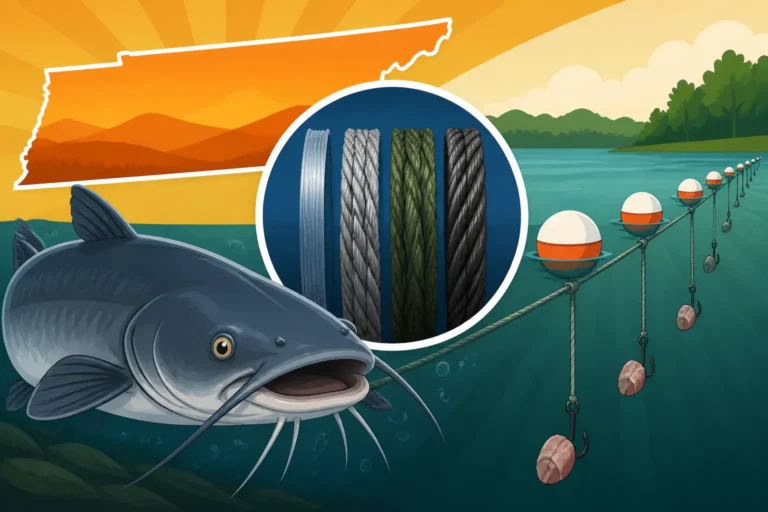
This is one of the most common areas where anglers run into trouble. Every trotline you set in Tennessee must be properly marked and identified. This isn't just a suggestion; it's a legal requirement. Each end of your trotline must have an appropriate float or buoy attached. These floats serve a couple of critical purposes: they make your trotline visible to other boaters and anglers, preventing accidents, and they allow you to easily locate and retrieve your line. The floats must be bright-colored, clearly visible from a reasonable distance, and made of durable material that won't easily sink or get pulled under.
Crucially, each of these floats must also bear your name and address or your TWRA identification number. This allows game wardens to identify the owner of the trotline and ensure compliance with all regulations. Without proper identification, your trotline could be considered abandoned or illegal, leading to its removal and potential penalties. Imagine losing all your carefully rigged gear because you forgot to write your name on a buoy! It's a simple step that can save you a lot of hassle and expense.
Prohibited Waters and Areas
Just because you have a license and your trotline is properly marked doesn't mean you can deploy it just anywhere. There are specific waters in Tennessee where trotlines are either entirely prohibited or have additional restrictions. Generally, trotlines are restricted in designated trout streams, smaller public ponds, and within certain distances of dams or spillways for safety reasons. You also typically cannot set trotlines in areas that impede navigation or block access to public boat ramps, docks, or swimming areas.
For example, many highly managed lakes or specific river sections known for trout fishing will often explicitly prohibit trotlines to protect those delicate fisheries. Always consult the Tennessee Fishing Regulations Explained before heading out to a new spot, as lake-specific or river-specific rules can often supersede general statewide regulations. Knowing these nuances is key to a successful and legal outing. Dropping a trotline in a well-trafficked boating lane on Kentucky Lake, for instance, isn't just illegal; it's incredibly dangerous for boaters and could result in serious accidents. Be considerate of other water users and respect the designated zones.
Essential Gear for a Successful Trotline
Setting up a trotline might seem straightforward, but having the right equipment makes all the difference in terms of effectiveness, durability, and safety. You wouldn't go deer hunting with a slingshot, and you shouldn't approach trotlining with inadequate gear. Investing in quality components from the start will save you frustration and lost fish in the long run.
Mainline and Drop Lines
The backbone of your trotline setup is, of course, the main line itself. You need something strong, durable, and resistant to abrasion. Monofilament line can work for lighter setups, but for serious catfish trotlining, especially targeting larger species like blue or flathead catfish, you'll want to opt for braided nylon, tarred nylon, or specialized trotline cord. A good mainline should be at least 200-pound test, or even heavier if you're expecting truly monster fish. The mainline's strength ensures it won't snap under the weight of multiple fish or when snagged on submerged debris. You can find excellent options on platforms like Amazon, offering various lengths and breaking strengths.
Attached to this mainline are your "drop lines" or "staging lines." These are shorter sections of line, typically 12-24 inches long, that connect your hooks to the mainline. These should be slightly lighter than your mainline, maybe 80-150 pound test, so if a hook gets seriously snagged, you might only lose a drop line rather than the entire trotline. Using a slightly lighter line for the drops also gives the fish a bit more play, which can prevent them from tearing off the hook as easily. Ensure these are securely attached to the mainline using sturdy swivels.
Hooks, Swivels, and Weights
Your choice of hooks is paramount. For catfish, circle hooks are almost universally recommended. Not only are they incredibly effective at hooking fish in the corner of the mouth, which is less harmful if you plan to release some fish, but they also significantly reduce gut-hooking, improving catch-and-release survival rates. Sizes can vary, but generally, 5/0 to 10/0 circle hooks are excellent for a range of catfish sizes. You want hooks that are sharp, strong, and corrosion-resistant.
Swivels are the unsung heroes of a trotline. They prevent your drop lines from twisting and tangling, which can be a real headache when checking your line. High-quality barrel swivels or ball-bearing swivels, rated for at least 100 pounds, should be attached at the point where each drop line connects to the mainline. This allows the baited hook to spin freely without twisting the main line, making your setup much more efficient.
Weights are necessary to keep your mainline submerged and prevent it from drifting too much in the current. Depending on the current and depth, you might use brick weights, heavy lead weights, or even small anchors every 10-20 feet along the mainline. These weights keep your baits at the desired depth and prevent the entire trotline from floating to the surface, where it's more visible and prone to snags from boat traffic.
Anchors, Floats, and Buoys
Every trotline needs reliable anchors at each end to keep it securely in place. The type of anchor will depend on the bottom composition of the lake or river you're fishing. For soft, muddy bottoms, a small grapnel anchor or a cinder block might suffice. For rocky bottoms, a heavier concrete block or mushroom anchor might be needed. The key is to use enough weight and a strong enough anchor to hold your line in place, especially if you hook several large fish or encounter strong currents. A general rule of thumb is to use an anchor heavy enough that you wouldn't easily be able to pull it up by hand from the bank.
As mentioned earlier, floats and buoys are not just helpful; they are legally required for identification and visibility. You'll need at least two substantial, brightly colored floats – one for each end of your mainline. These need to be robust enough to withstand choppy water, boat wakes, and the occasional nibbling critter without sinking or detaching. Many anglers use plastic jugs, foam buoys, or even repurposed pool noodles as floats, as long as they meet the visibility and identification requirements. Look for durable, UV-resistant options on sites like Amazon to ensure they last multiple seasons.
Safety and Essential Tools
Trotlining isn't without its risks, so having the right safety gear and tools on hand is crucial. A good pair of heavy-duty gloves is indispensable for handling the mainline, especially when it's under tension or if you hook a particularly feisty catfish. Catfish spines are sharp and can inflict painful wounds, so gloves protect your hands.
You'll also want a sturdy pair of pliers or bolt cutters. Pliers are great for removing hooks from fish or bending stubborn wire, while bolt cutters can be a lifesaver if a hook is deeply embedded and you need to cut it quickly for the fish's sake, or if your line gets inextricably snagged and you need to free it. A sharp knife is also handy for cutting bait or making quick adjustments to your line. Finally, always have a first-aid kit on board. Even with the best precautions, accidents can happen, and a small cut or hook injury needs immediate attention. Being prepared ensures a safer and more enjoyable experience.
Choosing the Right Location for Your Trotline
The old adage "location, location, location" holds especially true for trotline fishing. You can have the best gear and the freshest bait, but if your trotline isn't in a spot where catfish are actively feeding or traveling, you'll be checking empty hooks. Understanding catfish habitat and behavior in Tennessee's diverse waterways is key to selecting a productive site.
Identifying Catfish Habitat
Catfish, whether we're talking about channel, blue, or flathead species, all have preferred habitats, but there are some common threads. They generally favor deeper areas, especially during the day, where they can find cover and cooler water. Look for structure such as submerged logs, rock piles, old creek channels, and significant drop-offs. These features provide ambush points, shelter, and concentrations of the smaller prey fish that catfish feed on. On larger bodies of water like Kentucky Lake or Watts Bar Lake, focusing on main river channels, deep holes, or the mouths of feeder creeks can be incredibly productive. These are natural travel corridors for fish and often accumulate baitfish.
Another prime location is near areas with current. Catfish are not typically active hunters that chase down prey in open water; they often prefer to let the current bring food to them. The edges of current breaks, eddies, and the slower water behind submerged structures are excellent places. For instance, the Cumberland River is known for its strong currents, and finding seams where fast water meets slow water can be a jackpot for catfishing. Pay attention to river bends where the outside bend is typically deeper with stronger current, while the inside bend is shallower with slower current, often creating a rich feeding zone.
Water Depth and Current Considerations
The optimal water depth for setting your trotline can vary widely depending on the season, time of day, and the specific body of water. In the warmer months, especially during daylight hours, catfish often retreat to deeper, cooler water. Setting your trotline at depths ranging from 15 to 40 feet can be very effective. As temperatures cool, or during the night, catfish may move shallower to feed. Observing local patterns and asking around at local bait shops (like those found near Lake Chickamauga) can provide valuable insights into current depth preferences.
Current is another critical factor. Too much current can make it difficult to keep your trotline properly anchored and your baits presented effectively. It can also cause your drop lines to tangle excessively. On the other hand, too little current might mean your bait isn't dispersing its scent effectively. The ideal situation is a moderate current that gently washes over your baits, spreading their aroma downstream and attracting curious catfish. Setting your trotline perpendicular to the current can maximize the number of fish that encounter your baits as they move through the feeding lane. Remember, Flathead Catfish Habitat in Tennessee Rivers often involves woody debris in areas with some current.
Avoiding Navigation Channels and Public Areas
This is not just a matter of courtesy, but a critical safety and legal consideration. Trotlines must be set in a way that does not interfere with navigation channels, boat traffic, or public access points. Imagine a boat prop getting tangled in your trotline – it's dangerous for the boater, can damage their vessel, and will almost certainly destroy your gear. Clearly marked navigation channels are off-limits, and it's always best to err on the side of caution. Give ample space to boat ramps, docks, swimming areas, and designated public access points.
Additionally, avoid setting trotlines in areas heavily used by other anglers, especially those casting from the bank. A trotline can easily snag their lines or present a hazard. The goal is to find secluded, productive spots where your trotline can do its job without bothering anyone else or getting in the way. Always consider the wider implications of your trotline placement. If you're fishing near popular spots like those mentioned in Kentucky Lake Catfish Fishing Spots, be extra mindful of where you deploy your line.
Step-by-Step Trotline Setup
With your gear assembled and a promising location scouted, it's time to get your trotline in the water. This process requires a systematic approach to ensure your line is set securely, effectively, and safely. Don't rush these steps; proper deployment is key to avoiding snags, tangles, and lost fish.
Securing Your Anchor Points
The first critical step is to deploy your anchors. You need two robust anchors, one for each end of your mainline. Start by taking one anchor and attaching it securely to one end of your mainline. Ensure the knot is strong and reliable; a lost anchor means a lost trotline. From your boat, motor slowly upstream (if there's a current) or into the wind, dropping the first anchor at your chosen starting point. This initial anchor point should be in the productive area you've identified, perhaps near a deep drop-off or submerged structure.
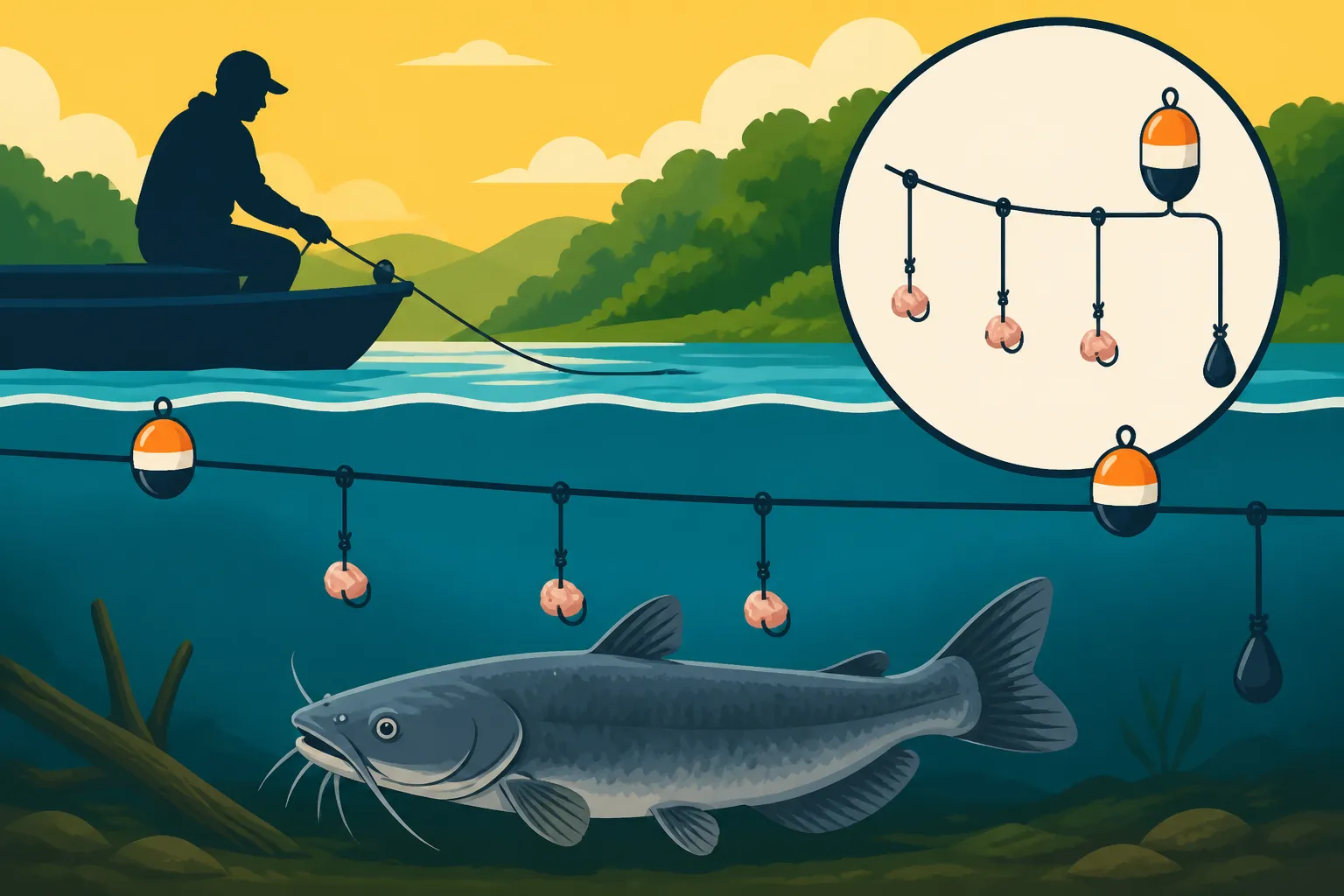
As you slowly move away from the first anchor, continuously unspool your mainline, making sure it lays out smoothly without kinks or snags. Maintain a consistent course and speed, keeping the line taut but not overly stretched. Once you've reached the desired length for your trotline, typically up to 100 feet for recreational use, deploy your second anchor. This anchor needs to be just as secure as the first. The goal is to have the mainline stretched taught between the two anchor points, creating a stable foundation for your drop lines. Remember, a trotline should be stretched horizontally in the water column, not sagging too much.
Attaching Drop Lines and Spacing
Once your mainline is securely anchored, you can begin attaching your pre-rigged drop lines. Each drop line should already have a swivel attached to one end and a hook on the other. The TWRA mandates that hooks be spaced at least 24 inches apart, so measure this distance carefully. You can use a marked stick or simply estimate after a few practice runs. The number of hooks you use will depend on the length of your mainline and the spacing requirement, but remember the maximum limit of 100 hooks for recreational use.
To attach each drop line, form a loop in your mainline and secure the swivel of the drop line to it. There are various knots you can use, but a strong snell knot or improved clinch knot will work well for attaching the swivel. Ensure these attachments are robust, as they will bear the brunt of a struggling catfish. As you attach each drop line, immediately bait the hook (we'll get into baiting strategies next) and gently toss it into the water, being careful not to tangle it with the mainline or other drop lines. This sequential baiting and dropping helps maintain order and prevents missed opportunities.
Setting Depth and Tension
The depth at which your trotline sits in the water column is crucial for targeting catfish. You typically want your baits to be near the bottom, where catfish usually feed. If your mainline is simply floating on the surface or sagging too much, your hooks won't be in the strike zone. This is where your strategically placed weights come into play. As you deploy your mainline and attach drop lines, you'll also be attaching weights at regular intervals, usually every 10-20 feet, depending on the current. These weights should be heavy enough to pull the mainline down to the desired depth.
You can adjust the length of your individual drop lines to fine-tune the depth of each bait. If your mainline is 15 feet deep, and you want your bait to be just off the bottom in 20 feet of water, your drop lines would need to be around 5 feet long. However, if your mainline is already resting on the bottom, shorter drop lines might suffice. The ideal tension for your trotline is firm but not overly tight. A slight give is good, as it absorbs the shock of a fish striking and prevents the line from snapping. If the line is too loose, it can sag and become entangled; too tight, and it might snap under pressure or get pulled out of place by strong currents or large fish. Getting this balance right takes practice, but it's essential for an effective trotline.
Baiting and Maintaining Your Trotline
Once your trotline is set, the real work (and fun!) begins. Choosing the right bait and knowing how to properly maintain your line are critical for maximizing your catch and ensuring your efforts pay off. Catfish are opportunistic eaters, but certain baits are undeniably more effective than others.
Best Catfish Baits for Trotlines
Catfish are primarily scavengers and predators with an incredible sense of smell, making scent a huge factor in bait selection. For Tennessee catfishing, there are several go-to options:
- Cut Bait: This is arguably the king of catfish baits. Shad, skipjack herring, bluegill, and carp are excellent choices. Cut them into 1-2 inch chunks, ensuring each piece has some skin to stay on the hook better. The blood and oils released by cut bait create a powerful scent trail that catfish can't resist. For targeting larger blue catfish on rivers like the Tennessee River, fresh cut shad or skipjack is often unbeatable.
- Live Bait: For monster flathead catfish, live bait is often preferred. Small sunfish, bluegill, or even small carp hooked through the back are irresistible to flatheads. Just be sure to check local regulations regarding the use of live baitfish, especially if you're using species from one water body in another.
- Prepared Baits (Stink Baits): Commercial stink baits, dough baits, and punch baits are highly effective, especially for channel catfish. Brands like Catfish Charlie or Sonny's Super Sticky Bait are popular. These baits are designed for maximum scent dispersion and come in various forms, from dips to nuggets. They are a convenient option and can be very productive.
- Chicken Livers: A classic for a reason, chicken livers are cheap, readily available, and incredibly bloody and stinky. They are fantastic for channel catfish but can be messy and tend to come off the hook easily. Using a small piece of nylon stocking or a bait holder hook can help keep them on longer.
- Nightcrawlers/Worms: While effective for smaller catfish and panfish, worms can still catch bigger cats, especially if you're targeting numbers rather than just trophy size. A big wad of nightcrawlers on a hook provides plenty of wiggle and scent.
The key is often variety. If you're unsure, try baiting different sections of your trotline with various baits to see what the fish prefer on that particular day or in that specific location. Often, the Best Bait for Bottom Fishing Catfish depends on the specific species and local conditions.
Checking and Re-baiting Strategies
How often you check your trotline can depend on several factors, including the activity level of the fish, the type of bait you're using, and the weather conditions. Generally, it's a good idea to check your trotline at least once every 12-24 hours. If fishing is hot, or if you're using baits that come off easily (like chicken livers), more frequent checks might be beneficial, even every 4-6 hours. During the warmer months, fish can spoil quickly, so more frequent checks are recommended to ensure your catch remains fresh.
When checking your line, approach it cautiously to avoid startling any fish or tangling the line. Pull the mainline gently, checking each hook. When you find a fish, handle it carefully, remove the hook, and place it in your cooler or livewell. Immediately re-bait any empty or "cleaned" hooks. If a bait is still on but looks old or washed out, replace it with fresh bait. This ensures a constant, enticing scent trail. It’s also wise to check for any snags or loose anchor points during this time.
Troubleshooting Common Issues
Trotlining, like any fishing method, comes with its share of frustrations. Knowing how to troubleshoot common problems can save you a lot of headache.
- Snags: One of the most common issues is getting snagged on submerged debris, rocks, or tree branches. If you encounter a snag, try to approach it from different angles and gently pull the line to free it. Sometimes, a "de-snagger" tool, which is essentially a heavy weight on a rope that slides down your mainline to the snag, can help. If all else fails, you may have to cut your line, which is why having bolt cutters on hand is useful. The best defense against snags is careful location scouting, as discussed earlier.
- Tangled Lines: Drop lines can get tangled with the mainline or with each other, especially in strong currents or if a fish struggles violently. High-quality swivels help minimize this, but if it happens, carefully untangle the line. Patience is key here.
- Stolen Bait: Raccoons, turtles, and even smaller fish can steal your bait without getting hooked. If you're consistently losing bait without catching fish, try switching to a tougher bait (like cut bait with skin on) or larger hooks that are harder for small critters to strip.
- No Bites: If your trotline isn't yielding any fish, don't get discouraged. Re-evaluate your location, depth, and bait. Perhaps the catfish have moved, or they're preferring a different food source. Adjusting your setup, trying new baits, or moving the trotline to a slightly different spot can make a huge difference. Sometimes, a good strategy is to try How to Catch Catfish at Night, as catfish are often more active after dark.
Hauling and Harvesting Your Catch Responsibly
The moment of truth arrives when you're pulling in your trotline, and the thrill of a bending line with a big catfish on the end is unmatched. However, responsible harvesting involves not just bringing in your catch but also handling fish ethically and adhering to regulations regarding limits and sizes.
Safe Retrieval Techniques
When it's time to retrieve your trotline, always approach your first float slowly and cautiously. Grab the float and gently begin pulling the mainline into your boat, hand over hand. As each drop line comes into view, check for fish. If there's a fish, carefully bring it aboard. For smaller catfish, you can simply unhook them and place them in a cooler or livewell. For larger, more powerful fish, especially those feisty blue catfish or a struggling flathead, use a net or a gaff to safely land them. A sturdy pair of fish-handling gloves is a must to protect your hands from sharp fins, gill plates, and teeth.
Never try to yank a large fish off the hook or swing it directly into the boat, as this can injure both you and the fish, or cause it to escape. Maintain control of the mainline at all times, preventing it from tangling or whipping around. As you remove fish and re-bait hooks, continue steadily pulling in the mainline until you reach the second anchor and float. Lay the mainline and drop lines neatly in your boat to prevent tangles for your next deployment. Some anglers even use a large container or bucket to coil the line, making deployment easier next time.
Handling and Storing Your Catch
Once a fish is in the boat, decide immediately whether you're keeping it or releasing it. If you're keeping it, the priority is to ensure the meat quality remains excellent. For catfish, this means getting them on ice quickly or into a livewell with aerated water. A dedicated cooler filled with ice is the best option for preserving freshness, especially in Tennessee's warm climate. Immediately bleeding the fish can also significantly improve the taste and texture of the meat. This involves making a quick, clean cut to the gill arch or tail to allow the blood to drain.
Proper storage prevents spoilage and maintains the fish's flavor. If you're planning to clean the fish later, keep them whole on ice. If cleaning immediately, fillet them and store the fillets in zip-top bags with a little water or vacuum-sealed before refrigerating or freezing. Always refer to Tennessee's specific limits for different Catfish Species Found in Tennessee Waters. For example, there's no statewide size or creel limit on channel, blue, or flathead catfish, but checking local lake-specific rules is always a good practice, as they can sometimes vary.
Releasing Undesirable Fish
Catch-and-release is a vital part of sustainable fishing, even with a trotline. You might catch undersized fish, species you don't want to keep, or simply more fish than you intend to harvest. When releasing fish, the goal is to do so quickly and with minimal stress to give them the best chance of survival.
Use a de-hooking tool if possible to remove the hook cleanly without tearing the fish's mouth. If the hook is deeply embedded or the fish is severely injured, it might be more humane to cut the line as close to the hook as possible rather than struggling to remove it. Handle the fish gently, supporting its body, especially if it's large. Avoid touching the gills or eyes. If the fish appears stressed, hold it in the water, facing into the current, until it regains its strength and swims away on its own. Releasing fish responsibly ensures a healthy fishery for future generations and is a key aspect of being a good steward of Tennessee's natural resources.
| Catfish Bait Type | Target Species | Pros | Cons |
|---|---|---|---|
| Fresh Cut Bait | Blue, Channel, Flathead | Strong scent, very effective for large fish | Can be messy, needs frequent re-baiting |
| Live Bait (Sunfish) | Flathead | Irresistible to trophy flatheads | Requires livewell, regulations apply to species use |
| Prepared "Stink" Baits | Channel, Smaller Blue | Convenient, long-lasting scent | Less effective for very large fish, can be messy |
| Chicken Livers | Channel, Smaller Blue | Cheap, readily available, very strong scent | Comes off hook easily, very messy |
| Nightcrawlers | Channel, Smaller Catfish | Easy to find, attracts many species | Less selective for large catfish, easily stolen |
Disclaimer
Fishing regulations, including those for trotlines, can change. Always consult the most current Tennessee Wildlife Resources Agency (TWRA) regulations before engaging in any fishing activities. This guide is for informational purposes only and does not supersede official state regulations.