How to Tell a Redeye Bass from a Smallmouth
It's incredibly frustrating when you're out on the water, you hook into a feisty bass, and as you bring it in, you think, "Wait a minute, is this a smallmouth… or something else?" Many anglers in Tennessee, myself included, have stood there scratching our heads, trying to figure out if we've landed a redeye bass or a smallmouth. They look so similar at first glance, especially if you're not intimately familiar with the subtle differences. This guide is here to clear up that confusion once and for all, providing you with the definitive characteristics to help you confidently distinguish a redeye bass from a smallmouth bass in Tennessee waters.
The Challenge of Identification: Why Anglers Get Confused
Let's be real, a fish is a fish, right? Well, not when you're trying to abide by specific regulations or simply want to know what you've caught! The struggle is genuine because redeye and smallmouth bass share a family resemblance that can make telling them apart a real head-scratcher.
Surface Similarities That Deceive
Both redeye bass (often called Coosa bass in some regions, though here in Tennessee, "redeye" is more common for the Micropterus coosae) and smallmouth bass are members of the black bass family, a group known for its streamlined bodies, powerful tails, and aggressive fighting spirit. They tend to inhabit similar types of waters, preferring clearer, cooler, flowing streams and rivers with rocky bottoms. This shared habitat and overall body plan means they often look quite similar at a casual glance. They both have that bronze-to-olive-green coloration, robust jaws, and can display varying patterns of bars or blotches depending on the water conditions and their mood. It's easy to just lump them together, especially if you're excited about a bite!
Imagine you're casting a small spinnerbait into a clear mountain stream in East Tennessee. You get a solid strike, and the fish fights like crazy. As you reel it in, you see those strong, vertical bars and think, "Definitely a smallmouth!" But then you notice something just a little off, maybe a hint of red in the eye, and suddenly your confidence wavers. This is precisely where the confusion sets in, and it's completely understandable. A Complete Guide to Tennessee Bass Species covers all the common types, but these two are particularly tricky.
The Importance of Correct Identification
Why does it even matter if you can tell a redeye from a smallmouth? Beyond the pure satisfaction of knowing your fish, there are some very practical reasons. First and foremost, fishing regulations can differ. While I won't list specific numbers here (always check the current Tennessee Wildlife Resources Agency, or TWRA, regulations!), different species often have different size and creel limits. Mistaking one for the other could lead to inadvertently breaking a rule, and nobody wants to deal with that.
Secondly, correct identification plays a crucial role in conservation. Fisheries biologists rely on accurate catch data to monitor fish populations and manage our precious resources. If anglers consistently misidentify species, it muddies the data and makes it harder for the TWRA to make informed decisions about stocking, habitat protection, and regulation adjustments.
Finally, there's the angler's pride! There's a certain satisfaction that comes from truly understanding the fish you pursue. Knowing the nuances between species helps you appreciate their unique characteristics and adapt your techniques. For instance, if you're targeting smallmouth in a river, knowing exactly what you've hooked allows you to refine your approach for future success. If you're keen on learning more about smallmouth specifically, check out Tennessee's Official State Fish: Channel Catfish and Smallmouth Bass.
Key Distinguishing Features of Redeye Bass
The redeye bass is a truly special fish, a scrappy fighter that holds its own in the smaller, clear waters it calls home. Let's dive into the specifics that set it apart.
Physical Markers of a Redeye
When you've got a redeye bass in hand, here's what to look for:
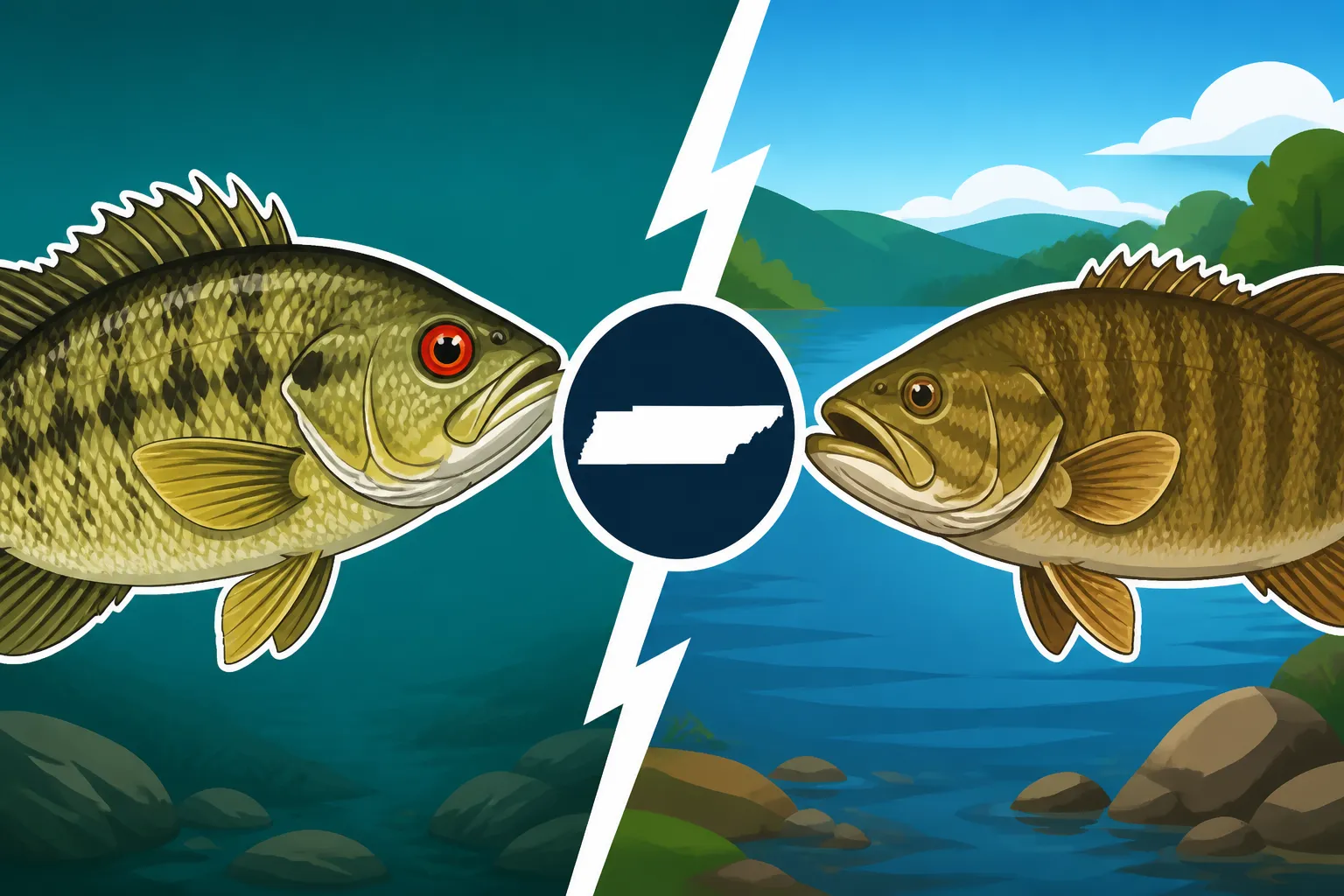
- Eye Color (The Big One!): This is usually the most reliable and obvious clue, giving the fish its common name. Redeye bass almost always have a distinct reddish-orange tint to their eyes. It's not just a faint blush; it's often quite noticeable, especially in vibrant, healthy fish from clear water. This feature alone can often settle the debate immediately.
- Tongue Patch: Run your finger along the tongue of the fish. A redeye bass will not have a tooth patch (also called a "tongue patch") on its tongue. This is a crucial differentiator from some other bass species (like the spotted bass), but not necessarily from the smallmouth, which also typically lacks this patch.
- Jawline: Observe where the upper jaw (maxillary bone) extends relative to the eye. In most redeye bass, the upper jaw does not extend beyond the back edge of the eye. While larger redeyes might occasionally show a slightly longer jaw, it's generally a good rule of thumb for this species.
- Dorsal Fin: The dorsal fins (the spiny one and the soft-rayed one on top) are typically connected, often with a slight but noticeable dip between the two sections.
- Coloration and Body Markings: Redeye bass typically exhibit an olive green to bronze body color. What's distinctive are the pronounced horizontal rows of dark spots on the lower half of their sides, running from behind the gill plate towards the tail. They might also have faint vertical bars or blotches, but these horizontal spot rows are a hallmark. Their bellies are usually whitish.
- Fins: Look closely at the fins. Redeye bass often have reddish or orange coloration on their fins, particularly the caudal (tail) fin and the anal fin. This fiery tint, combined with the red eye, gives them a striking appearance.
Preferred Habitat and Size of Redeye Bass
Redeye bass thrive in specific environments. They are typically found in smaller, clear, cool-water streams and rivers. Think of those picturesque, rocky-bottomed stretches with moderate currents, often in the mountainous or hilly regions of Tennessee. You might find them in places like the headwaters of the Cumberland River system or streams in the eastern part of the state. They prefer areas with plenty of rock structure, submerged logs, and undercut banks for cover. Where to Find Redeye Bass in Tennessee Streams provides some great insights into these locales.
In terms of size, redeye bass are generally smaller than smallmouth bass. While they are incredibly aggressive and feisty for their size, a truly large redeye might only reach 12-15 inches, with anything over 16 inches being quite rare and considered a trophy. They're built for navigating swift currents and ambushing smaller prey.
Key Distinguishing Features of Smallmouth Bass
Ah, the smallmouth bass – the undisputed "bronze back" and one of Tennessee's official state fish! Known for its incredible fight and acrobatic jumps, the smallmouth is a beloved gamefish. While it shares some traits with the redeye, it also has distinct differences.
Physical Markers of a Smallmouth
Here’s how to pick out a smallmouth from the lineup:
- Eye Color: Unlike the redeye, smallmouth bass typically have dark eyes – usually brown, black, or sometimes a dark amber. They will lack that vibrant reddish-orange tint that is so characteristic of the redeye bass. This is often the second best identifier after the body markings.
- Tongue Patch: Similar to the redeye, smallmouth bass do not have a tooth patch on their tongue. So, while this helps distinguish them from some other bass, it's not a sole differentiator from the redeye.
- Jawline: The upper jaw of a smallmouth bass generally does not extend beyond the back edge of the eye. Again, similar to the redeye, and a good way to differentiate from the largemouth bass, which typically has a jaw that extends past the eye.
- Dorsal Fin: Smallmouth bass have two dorsal fins that are clearly connected, forming one continuous fin, but generally without the pronounced dip seen in largemouth or the more subtle dip of a redeye.
- Coloration and Body Markings: Smallmouth coloration can vary widely based on habitat, from light tan or bronze to dark olive green. The most defining markings are the distinct vertical bars or blotches along their sides, often described as "tiger stripes." These bars are generally more pronounced and vertically oriented than any markings on a redeye, and crucially, they lack the distinct horizontal rows of spots on the lower sides that a redeye possesses. Their bellies are typically whitish or cream-colored.
- Cheek Scales: Take a closer look at the scales on the cheek. Smallmouth bass generally have smaller scales on their cheeks compared to the scales on the rest of their body. This can be a subtle but helpful clue if you're really scrutinizing the fish.
Preferred Habitat and Size of Smallmouth Bass
Smallmouth bass are incredibly adaptable and can be found in a wider range of habitats than redeyes. They are kings of clear, cool, well-oxygenated rivers and streams with rocky or gravel bottoms, just like redeyes. However, they also thrive in larger, deep, clear reservoirs and lakes across Tennessee, such as Dale Hollow Lake, Norris Lake, and Pickwick Lake. They prefer areas with rocky points, ledges, humps, and submerged timber. You can find excellent information on these fish in Where Do Smallmouth Bass Live in Tennessee?.
In terms of size, smallmouth bass tend to grow significantly larger than redeye bass. It's not uncommon to catch smallmouth in the 14-20 inch range in Tennessee, with trophy fish exceeding 20 inches and weighing several pounds. Check out Smallmouth Bass Size and Weight Records for some truly impressive examples. This larger average size is another indirect clue if you're holding a really substantial "bass" that you suspect might be a smallmouth. If you're fishing for these magnificent creatures, understanding their season is key, so don't miss Tennessee Smallmouth Bass Fishing Season.
A Side-by-Side Comparison: Redeye vs. Smallmouth
To make it even easier, let's put the key differences between these two fantastic fish side-by-side in a table. This way, you can quickly scan and compare the most important identification points.
| Feature | Redeye Bass (Coosa Bass) | Smallmouth Bass (Bronze Back) |
|---|---|---|
| Eye Color | Distinct reddish-orange tint, very noticeable. | Dark (brown, black, dark amber), no red tint. |
| Body Markings | Prominent horizontal rows of dark spots on lower sides, sometimes faint vertical bars. | Distinct vertical bars or blotches ("tiger stripes"), no horizontal spot rows. |
| Jawline | Upper jaw typically does not extend past back of the eye. | Upper jaw typically does not extend past back of the eye. |
| Tongue Patch | Absent. | Absent. |
| Fins | Often reddish/orange tints, especially caudal and anal fins. | Fins are generally darker, matching body coloration, no distinct red/orange. |
| Preferred Habitat | Smaller, clear, cool, rocky streams and rivers with moderate current. | Clear, cool, rocky streams, rivers, and large, deep, clear lakes. |
| Average Size | Generally smaller (most under 15 inches). | Generally larger (often 14-20+ inches). |
Practical Tips for On-the-Water Identification
Even with all the knowledge, making a quick ID when a fish is flopping around can be tough. Here are some practical tips to help you in the moment.
What to Look for First
When you've got a bass on the line and it's time for a quick ID, start with the most obvious markers:
- Check the Eyes: Seriously, this is your first and best bet. Does it have that unmistakable reddish-orange glow? If so, you're almost certainly looking at a redeye. If the eyes are dark, move on to the next step.
- Examine Body Markings: This is the second crucial step. Are there clear, distinct horizontal rows of dark spots along the lower sides? If yes, redeye. If instead, you see more prominent vertical bars or blotches (like tiger stripes), then it's leaning towards a smallmouth.
- Note Fin Coloration: Do the fins, especially the tail and anal fins, have a reddish or orange hue? This reinforces the redeye identification. Smallmouth fins will typically be more muted, matching the body.
If you're still not 100% sure, and you plan to keep the fish, it's wise to double-check against a physical guide. Many anglers keep a small, waterproof field guide in their tackle box or on their phone (though be careful with water!). You can even find some great laminated guides on Amazon that are perfect for boat use. For some of the best fishing spots in Tennessee where you might encounter these species, consider Best Rivers for Fishing in Tennessee.
The "When in Doubt" Approach
Let's face it, sometimes even with all the tips, a fish might be a "tweener" or just make you second-guess yourself. If you are truly unsure whether you have a redeye or a smallmouth, especially if you plan to keep the fish:
- Consult Regulations for Both: Default to the most restrictive regulations for either species. For example, if redeye bass have a stricter size limit or a lower creel limit than smallmouth in that particular water, assume it's a redeye and abide by those rules. It's always better to be safe than sorry when it comes to wildlife regulations.
- Release the Fish: The safest bet, if you're uncertain, is to simply release the fish. It ensures you're not breaking any rules and contributes to the overall health of the fishery.
- Take a Photo: Snap a clear photo of the fish, focusing on its eyes, jawline, and body markings. You can then review it later with friends, online resources, or even local tackle shop experts to get a definitive identification for future reference. This is a great learning tool, and you can even mark where you caught it for next time! How to Identify Tennessee's State Fish, the Smallmouth Bass is another great resource.
Ultimately, becoming proficient at telling these bass apart comes with practice and keen observation. The more you catch, the easier it will become to spot those tell-tale signs. Good luck out there, and happy fishing!
Disclaimer
This article is for general informational purposes only and does not constitute professional advice. Laws, prices and regulations vary by location and change over time. Consult a qualified professional for guidance on your specific situation.