Where Do Smallmouth Bass Live in Tennessee?
Ah, the smallmouth bass! There's a certain thrill that comes with hooking into one of these bronze fighters. They're not always as straightforward to find as their largemouth cousins, who seem to hang out in every lily pad and stump. Smallmouth have their own particular tastes, their own specific hideouts, and knowing where they live in Tennessee is the key to a successful, exciting day on the water. This guide is all about helping you unlock those secrets, revealing the prime smallmouth bass habitats across our beautiful state.
Understanding Smallmouth Bass Habitat Preferences
To truly track down smallmouth bass, you need to get inside their heads a little bit, or at least understand what makes a particular spot feel like home to them. They're not just any bass; they're the "brown fish" that prefer a specific kind of real estate. Many anglers get frustrated trying to catch smallmouth in waters that are clearly better suited for largemouth, and it's all about understanding these fundamental differences.
The Lure of Clear, Cool Waters
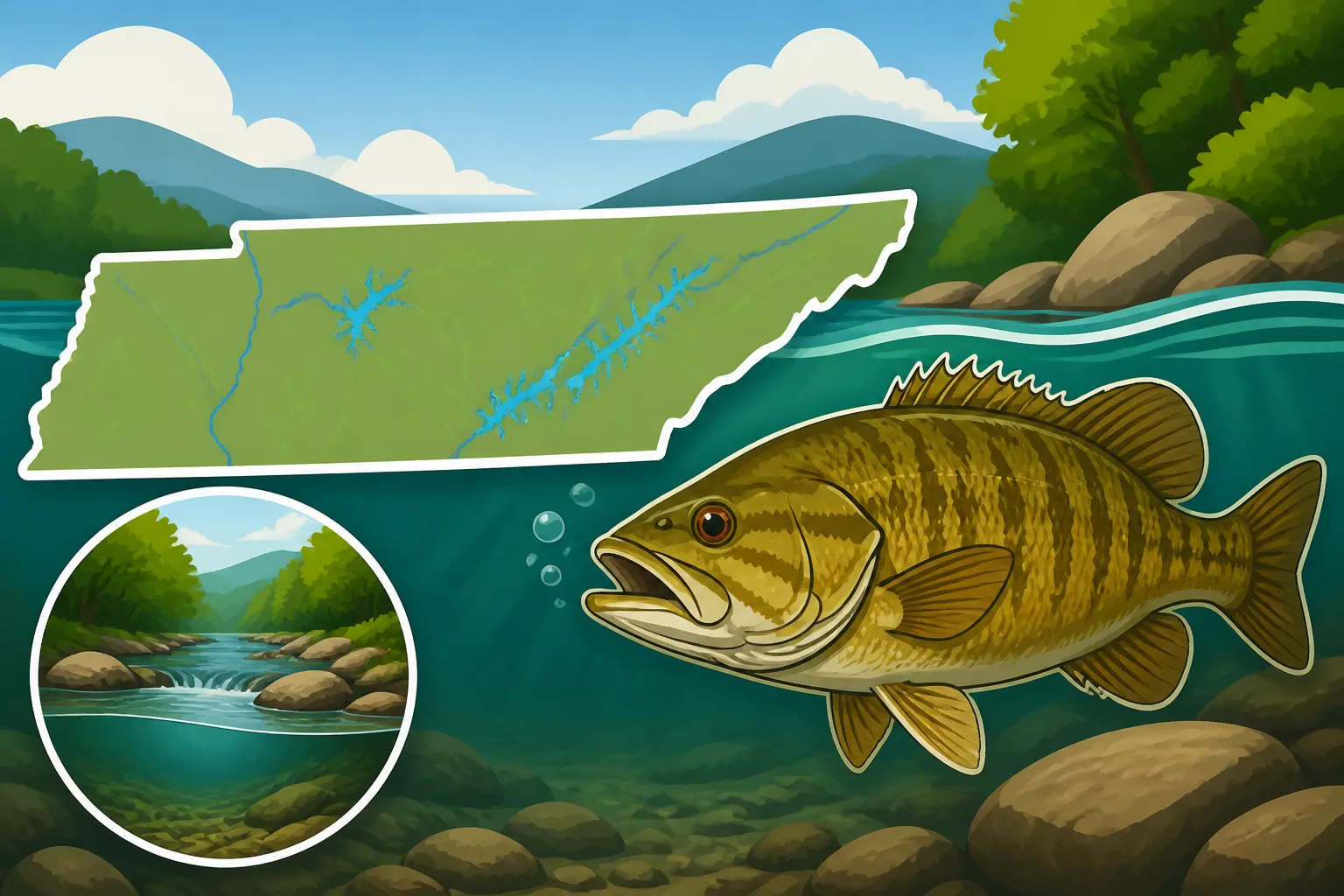
Smallmouth bass are true connoisseurs of quality water. Unlike largemouth, who can tolerate murkier, warmer, and often shallower conditions, smallmouth thrive in environments that are clear, cool, and well-oxygenated. Think about mountain streams or the deep, clean sections of our larger reservoirs. They are often found in places where there's a noticeable current, even if it's just a gentle flow, because that current brings them food and keeps the water fresh.
Imagine standing on the bank of a picturesque river – you can see the bottom, even in several feet of water, and feel that slight tug of the current against your waders. That's smallmouth country. If you're consistently fishing cloudy, stagnant backwaters with heavy weed growth, you're likely in largemouth territory and missing out on the smallmouth action. This isn't to say a smallmouth won't occasionally stray, but their preferred address is definitely in the clearer, cooler, moving water zones. They really appreciate that brisk, oxygen-rich flow, which energizes them and keeps them actively hunting. For anyone looking to understand the difference between these incredible fish, diving into Smallmouth Bass vs Largemouth Bass: What's the Difference? can provide even more clarity.
Structure is Key: Rocks, Boulders, and Ledges
If smallmouth bass had a real estate agent, their must-have list would definitely include "lots of hard structure." These fish are intimately tied to rocky bottoms, boulders, ledges, gravel beds, and bluffs. They use these features for ambush points, shelter from strong currents, and protection from predators. A single submerged boulder in a river, a rocky point extending into a deep lake, or a steep bluff wall with shelves can hold multiple smallmouth.
They're not typically found hanging out in dense aquatic vegetation or fallen timber fields like largemouth. Instead, picture them tucked behind a prominent rock, waiting for a crawfish or baitfish to swim by, or cruising along a rocky drop-off, ambushing unsuspecting prey. Understanding this preference for hard structure is crucial. If you're on a lake, look for areas with exposed rock, rip-rap along causeways, or steep banks that drop quickly into deeper, rocky bottom. In rivers, it's all about the rock gardens, ledges, and current breaks created by larger boulders. Finding these spots can be challenging, but a good quality fish finder or even a detailed contour map, which you might find on platforms like Amazon, can make a huge difference in locating these hidden gems.
Prime Smallmouth Bass Waters in East Tennessee
East Tennessee is often considered the heartland for smallmouth bass fishing in the state, and for good reason. The topography, with its rolling mountains and numerous rivers and reservoirs, provides exactly the kind of clear, cool, rocky habitat these fish crave. If you're serious about targeting smallmouth, this is where you'll want to focus a lot of your attention.
Appalachian Mountain Rivers and Streams
The rivers and larger streams flowing out of the Appalachian Mountains are absolutely legendary for their smallmouth populations. These waterways typically have strong currents, abundant rocky bottoms, and clear, cool water that make them ideal for smallmouth to thrive. They’re simply beautiful places to fish, even if the fish aren't always biting like crazy.
- The Holston River: Particularly the South Fork and Cherokee Dam tailwater sections, offers fantastic smallmouth fishing. You'll find long, gravelly shoals interspersed with deeper, rocky runs. The consistent current and cool water are perfect for smallmouth, and they grow to impressive sizes here. Wade fishing is popular in many stretches, but a jon boat or drift boat can also be incredibly effective for covering water.
- The French Broad River: While it can get a bit wider and sometimes warmer than other mountain rivers, the upper stretches and many tributaries still offer excellent smallmouth opportunities, especially around rock outcroppings and current seams.
- The Clinch River: Although often renowned for its trout (and you can definitely learn more about Clinch River Trout Fishing in East Tennessee), many sections of the Clinch also hold healthy populations of smallmouth bass, particularly where the river warms up a bit downstream from the coldwater releases. Look for those classic smallmouth habitats: rocky banks, current breaks, and gravel flats. These rivers demand a certain kind of approach, often involving lighter tackle, mimicking crawfish or small baitfish, and a lot of patience.
Coldwater Reservoirs of the East
Beyond the rivers, East Tennessee's deep, clear reservoirs are also prime smallmouth territory. These aren't your typical shallow, stained bass lakes; these are massive bodies of water carved through mountainous terrain, offering miles of rocky shoreline and deep, cool water.
- Dale Hollow Lake: This lake is practically synonymous with trophy smallmouth bass. It consistently produces some of the biggest smallmouth in the world. The lake's deep, clear, rocky structure is absolutely perfect for them. Anglers here often target smallmouth on deep points, bluff walls, and submerged humps, especially during the warmer months when the fish move to cooler depths. Fishing Dale Hollow often means using electronics to find deep structure and employing techniques like jigging spoons or drop-shotting. For more focused insights, check out Dale Hollow Lake Smallmouth Bass Fishing.
- Norris Lake: Another jewel in East Tennessee, Norris Lake boasts incredible clarity and a similar rocky, mountainous environment. While it offers a diverse fishery, its smallmouth population is robust. You'll find them cruising rocky banks, feeding near submerged timber on points, and holding to deep ledges. The sheer size and depth of Norris mean that learning to read your electronics and understanding seasonal movements is key to consistent success. Norris Lake truly is a Norris Lake Fishing Guide, Tennessee's Clearest Water and a fantastic spot for bronze bombers.
Central and Western Tennessee's Smallmouth Opportunities
While East Tennessee often steals the spotlight for smallmouth, don't count out the central and even western parts of the state entirely. Smallmouth bass can be found in suitable habitats much further west than many anglers realize, though their presence might be more localized and require a more discerning eye. You might have to work a little harder, but the reward of finding a bronzeback in an unexpected spot is truly special.
Upland Rivers with Smallmouth Pockets
As you move west from the mountains, the rivers generally become flatter and warmer, but there are still hidden gems where smallmouth thrive. These are often the upper stretches of rivers or tributaries that maintain their rocky bottom and current flow before widening and slowing down. The key is to look for those distinct sections that mimic the conditions they prefer further east.
Think about areas upstream of larger impoundments, where the river retains more of its natural character. These can be incredible spots for wading or using a small kayak. It might not be miles and miles of continuous prime habitat, but rather specific "pockets" where the conditions are just right. You'll want to focus on runs with distinct current, riffles over gravel beds, and any rocky ledges or scour holes. These might be harder to find without local knowledge, but exploring on a good map (digital or paper, perhaps found via Amazon) and then hitting the water can lead to delightful surprises.
The Cumberland River System
The mighty Cumberland River, particularly its middle and upper stretches and various tributaries, offers some solid smallmouth fishing in Central Tennessee. While parts of the Cumberland are broad and deep, areas with significant current and rocky structure can hold excellent smallmouth populations.
For instance, the Caney Fork River, a tributary of the Cumberland, is often lauded for its trout, but upstream sections and its rocky stretches away from the coldest tailwater releases can also produce smallmouth. Similarly, segments of the main Cumberland River itself, especially near shoals, dams, or where smaller, rocky tributaries feed in, can provide habitat. Cumberland River Fishing Spots in Tennessee can give you a broader overview of the river's potential. It's often about finding those transition zones where the river maintains enough flow and hard bottom to satisfy a smallmouth's preferences. Anglers who are willing to explore and adapt their techniques for these slightly different environments can be handsomely rewarded with some aggressive smallmouth action.
Seasonal Movements and Finding Smallmouth Year-Round
Smallmouth bass, like most fish, are highly influenced by water temperature and the changing seasons. Knowing where they live isn't just about identifying a specific river or lake, but understanding where in that body of water they'll be at different times of the year. Their depth, activity levels, and proximity to shore can shift dramatically, making year-round success a game of observation and adaptation. For a broader understanding of how the seasons impact all species, delving into Tennessee Bass Fishing Seasons and Patterns is a great next step.
Spring and Fall: The Best Bets
Many anglers consider spring and fall the prime seasons for smallmouth bass, and for good reason. During these times, water temperatures are in their ideal range, prompting the fish to move shallower for spawning (spring) or aggressive feeding (fall) before the cold sets in.
- Spring: As water temperatures climb into the 50s and low 60s, smallmouth move from their deeper wintering holes towards shallower, rocky spawning areas. Look for them on points, gravel flats, and rocky banks in 5-15 feet of water. They're often very aggressive pre-spawn, hitting jerkbaits, jigs, and crankbaits with gusto. Post-spawn, they might be a bit lethargic but will soon resume feeding heavily.
- Fall: This is another fantastic time. As the water cools, smallmouth go on a major feeding binge, stocking up for winter. They'll often move back to shallower rocky points, humps, and secondary ledges, gorging on baitfish and crawfish. Topwater lures, spinnerbaits, and crankbaits can be incredibly effective during the fall frenzy.
Summer and Winter: Going Deeper
When the seasons shift to extremes, so do the smallmouth. They're excellent at adapting, but it usually means heading to different parts of their preferred habitat.
- Summer: During the heat of summer, especially in large reservoirs, smallmouth will retreat to cooler, deeper waters. This means looking for them on deep points, ledges, humps, and bluff walls, often 20-40 feet or even deeper, depending on the lake's thermocline. Techniques like drop-shotting, deep jigging, and dragging Carolina rigs become paramount. Finding these specific deep structures often requires good electronics, and tools like a quality fish finder, which you can easily research on Amazon, are indispensable for pinpointing their summer hideouts.
- Winter: In winter, smallmouth become quite lethargic but are still catchable. They typically hold in deep, main-lake river channels, large holes in rivers, or on deep, steep breaks in reservoirs. They conserve energy, so presentations need to be slow and subtle. Vertical jigging spoons, blade baits, and slow-moving jigs are often the ticket. Don't expect a lot of bites, but the fish you do catch can be exceptional. Remember, even during winter, they'll be associated with that hard, rocky structure, just in deeper capacities.
To really help visualize these habitats and their seasonal shifts, here’s a quick overview:
| Season | Primary Depth | Preferred Structure | Key Fishing Areas |
|---|---|---|---|
| Spring | Shallow to Mid-Depth | Rocky points, gravel flats, banks | Spawning beds, sun-exposed rocky areas |
| Summer | Deep | Main lake ledges, humps, bluff walls | Deep cool water, near thermocline |
| Fall | Mid-Depth | Rocky points, secondary ledges | Baitfish schools, ambush points |
| Winter | Deep | Main river channels, deep breaks | Overwintering holes, slow current areas |
No matter the season, the smallmouth bass is a true Tennessee treasure. Understanding their preferences, whether it's the clear, cold rush of an Appalachian river or the deep, rocky contours of a massive reservoir, is your first step to a memorable day on the water. And remember, before you cast a single line, make sure you're up-to-date on all your Tennessee Fishing License Guide and Tennessee Fishing Regulations Explained to ensure a legal and enjoyable trip.
Disclaimer
This article is for general informational purposes only and does not constitute professional advice. Laws, prices and regulations vary by location and change over time. Consult a qualified professional for guidance on your specific situation.