Tennessee Largemouth Bass Season and Limits
It can be incredibly frustrating to head out for a peaceful day of fishing on one of Tennessee's incredible lakes, only to find yourself confused by the complex regulations around what you can keep. Many anglers, new and experienced alike, often wonder about the specific rules for largemouth bass, especially concerning seasons and daily limits. This comprehensive guide aims to clear up all that confusion, giving you the confidence to enjoy your time on the water while staying completely compliant with Tennessee's fishing regulations for largemouth bass.
The Allure of Largemouth Bass in Tennessee
Tennessee is a true paradise for bass anglers, and the largemouth bass holds a special place in the hearts of many. Known for their aggressive strikes and powerful fights, largemouths provide an exhilarating challenge whether you're a seasoned pro or just starting out. Our state's diverse aquatic environments, from sprawling reservoirs to tranquil farm ponds, offer ideal habitats for these iconic fish to thrive, making Tennessee a premier destination for chasing these green giants.
Identifying Tennessee's Favorite Gamefish
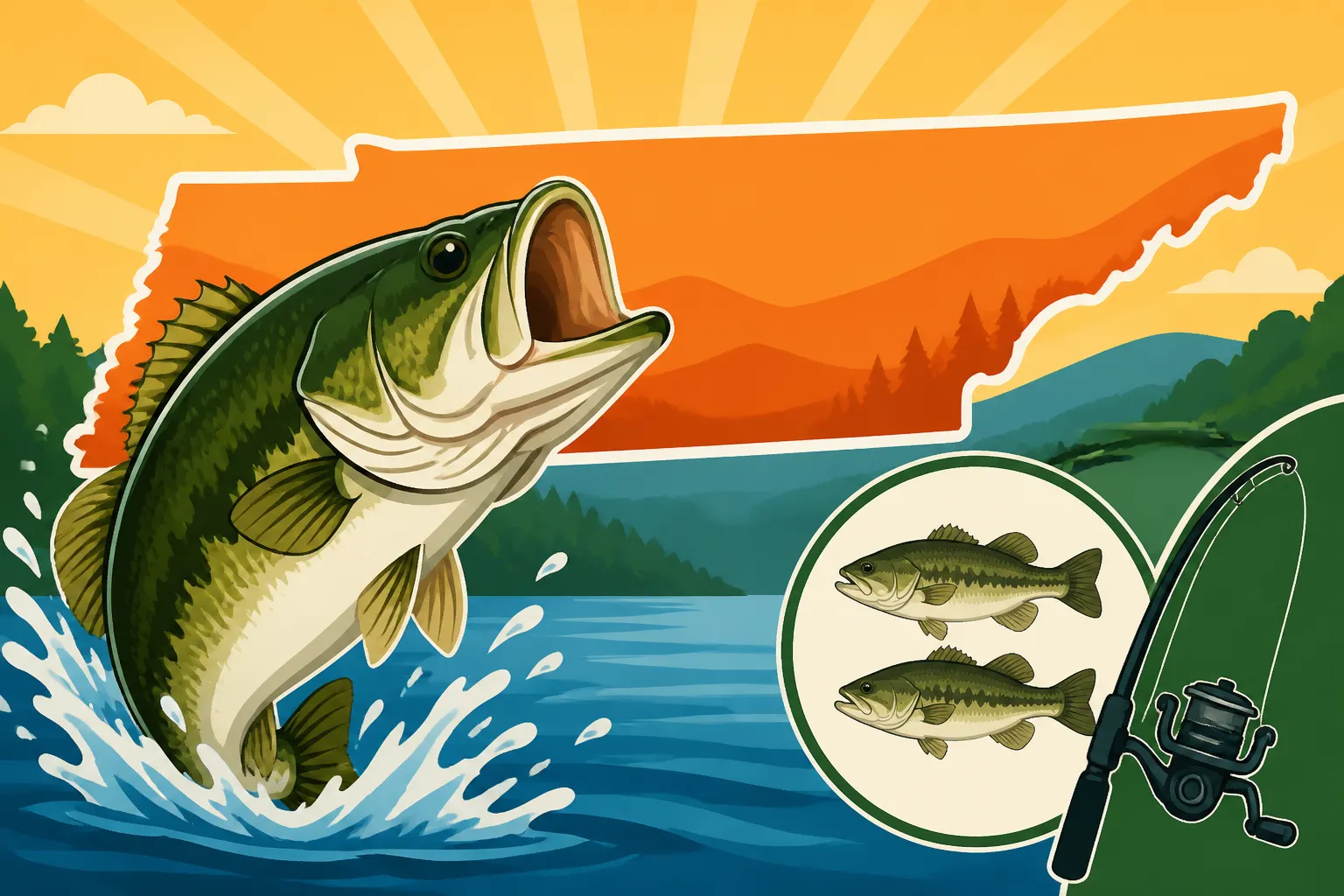
Before you even think about seasons or limits, it’s crucial to know what you’re actually catching. Largemouth bass are quite distinctive, typically sporting a dark green, mottled pattern on their sides that can sometimes look like a horizontal stripe. The key identifier, and where they get their name, is their mouth – when closed, the corner of their jaw extends well past the back of their eye. This is a primary way to differentiate them from their cousins, the smallmouth and spotted bass, whose mouths usually don't extend past the eye. Their dorsal fin also appears almost entirely separated into two distinct parts: a spiny, rigid front section and a softer, rayed back section. You might even notice their bellies tend to be a lighter, often white or pale yellow color. Being able to correctly identify your catch is the first step in adhering to the regulations, and it's a skill every responsible angler should master. If you're keen on learning more about identifying different bass species, you can check out our guide on Largemouth Bass Identification Tips for Tennessee Anglers.
Why Largemouth Bass Thrive in Tennessee Waters
Tennessee's unique geography provides a fantastic environment for largemouth bass. Our state is blessed with an abundance of large reservoirs and river systems, like Chickamauga Lake, Kentucky Lake, and Percy Priest Lake, which are rich in submerged timber, rock structures, and extensive weed beds. These features offer perfect ambush points and cover for largemouths, allowing them to hide from predators and launch surprise attacks on unsuspecting prey. The temperate climate also contributes significantly; while we do experience distinct seasons, the water temperatures generally remain within a range that supports healthy bass populations and robust growth rates. The efforts of the Tennessee Wildlife Resources Agency (TWRA) in managing these fisheries, including stocking programs and habitat improvement projects, further ensure that Tennessee remains a top-tier destination for largemouth bass fishing. It's a combination of natural bounty and careful stewardship that makes our bass fishing so legendary.
Understanding Tennessee's Largemouth Bass Season
One of the most common questions new anglers have is about specific "seasons" for different fish. When it comes to largemouth bass in Tennessee, the good news is that there isn't a strict "season" in the traditional sense, like you might find for hunting certain game animals or for trout in some designated waters. Instead, largemouth bass are generally open for harvest year-round, which is fantastic for those of us who love to cast a line no matter the month. This doesn't mean you can just go out and catch all you want, though; the year-round access is still governed by strict daily creel limits and size restrictions, which are crucial for maintaining healthy fish populations.
The Year-Round Opportunity
The concept of a "season" for largemouth bass in Tennessee is more about understanding their behavior throughout the year rather than a hard opening or closing date. Anglers can pursue largemouth bass any day of the year, which offers incredible flexibility. Whether you prefer the chilly challenge of winter bass fishing, the explosive topwater action of summer mornings, or the strategic approach of targeting pre-spawn bass in spring, Tennessee's waters are open. This continuous access underscores the importance of every angler understanding and respecting the daily catch and size limits, as these are the primary tools the TWRA uses to manage the fishery and ensure sustainable populations for future generations. It’s truly a privilege to have such consistent access to world-class bass fishing, and it comes with the responsibility of following the rules diligently.
Seasonal Patterns and Behavior
While there's no closed season, understanding the seasonal patterns of largemouth bass is key to successful fishing. Their behavior changes dramatically with water temperature and photoperiod, directly influencing where you'll find them and what techniques will work best.
- Spring (Pre-Spawn & Spawn): This is arguably the most exciting time for many bass anglers. As water temperatures climb into the 50s and 60s, bass move from deeper winter haunts to shallower areas to prepare for spawning. They become aggressive, feeding heavily (pre-spawn) to build energy, and then guarding nests (spawn). This is when you'll often find them cruising the banks or staging near cover. Many anglers find success with crankbaits, spinnerbaits, and jigs during this time. Understanding How the Tennessee Bass Spawn Affects Where They Bite can greatly improve your success.
- Summer: With warmer water, bass tend to move to deeper, cooler water during the heat of the day, often relating to submerged structures, ledges, or deep weed lines. Early mornings and late evenings can bring them shallower to feed. Topwater lures, deep-diving crankbaits, and Texas rigs are often effective.
- Fall: As water temperatures begin to drop, bass become highly active again, mirroring their pre-spawn behavior as they feed aggressively to prepare for winter. They often follow baitfish into shallower creeks and coves. This can be a fantastic time for power fishing with lipless crankbaits, jerkbaits, and chatterbaits.
- Winter: During the coldest months, bass become lethargic and seek stable water temperatures in deeper pockets, channels, or near major structure. Fishing slows down, but patient anglers can still find success with slow presentations using jigs, shaky heads, or suspending jerkbaits.
Understanding these patterns, rather than a fixed calendar season, is what defines "largemouth bass season" for the serious Tennessee angler. You can find excellent resources on Tennessee Bass Fishing Seasons and Patterns to help you plan your trips around these natural cycles.
Navigating Largemouth Bass Limits in Tennessee
Here's where the rubber meets the road. While you can fish for largemouth bass year-round, there are very specific rules about how many you can keep and what size they must be. These regulations are designed to ensure that enough bass remain in the population to reproduce and keep our fisheries healthy and thriving for years to come. Ignoring these rules can lead to significant penalties, so it's critical to know them inside and out before you wet a line. Always double-check the latest Tennessee Fishing Guide, available from the TWRA website or at many sporting goods stores, as regulations can sometimes be updated.
The Statewide Daily Creel Limit
For most public waters in Tennessee, the statewide daily creel limit for largemouth bass is five (5) fish per day. This means that in any given 24-hour period, you cannot possess more than five largemouth bass that you intend to keep. This limit is critical for managing the overall population and preventing overharvest. It's not just about what you catch, but what you retain. If you catch more than five, you must immediately release any additional fish you reel in once you've reached your limit. This five-fish limit applies whether you're fishing from a fancy bass boat, a quiet kayak, or simply from the bank. Always remember that this limit is for largemouth bass specifically, and if you're targeting other species like smallmouth or spotted bass, they have their own separate limits, though often combine with largemouth into a total "black bass" limit. It's a common point of confusion, so be sure to understand the combined limits for different bass species if you're catching a mix.
The Crucial Size Restriction (One Over 18 Inches)
Beyond the daily creel limit, Tennessee also imposes a size restriction that is absolutely vital for managing trophy potential and ensuring larger, reproductive fish stay in the water. For largemouth bass, the rule is: Only one (1) fish of your five-fish daily limit may be over eighteen (18) inches.
Let's break that down with a few scenarios:
- Scenario 1: You catch four largemouth bass, all under 18 inches. You are still within your limit.
- Scenario 2: You catch one largemouth bass that is 20 inches long. You keep it. You can now only keep four additional largemouth bass, and they must all be under 18 inches. You cannot keep another fish over 18 inches.
- Scenario 3: You catch five largemouth bass, all under 18 inches. You are at your limit.
- Scenario 4: You catch two largemouth bass that are both over 18 inches. You must immediately release one of them, even if you only have two fish total. You can only possess one largemouth bass over 18 inches.
This "one over 18 inches" rule is particularly important because it protects the larger, more genetically desirable fish, allowing them to continue spawning and contributing to the gene pool. These bigger fish also represent the trophy potential that many anglers seek, and protecting them ensures that Tennessee continues to produce impressive bass. Always carry a reliable measuring device on your boat or in your tackle box – you can find many good options on Amazon – to ensure you comply with this critical regulation. If you're serious about your bass fishing, you'll find that Tennessee's Largemouth Bass Limit Is 5 Per Day, Only 1 Over 18 Inches is a regulation designed for the long-term health of our fisheries.
Exceptions to the Statewide Rules
While the five-fish, one-over-18-inches rule is the general statewide regulation, it's absolutely crucial to understand that certain lakes or specific bodies of water in Tennessee may have their own unique, special regulations that override the statewide limits. These lake-specific rules are put in place by the TWRA based on scientific assessments of the fish populations in those particular waters. They might be designed to address specific population dynamics, enhance growth rates, or create trophy fisheries.
For example, a lake might have a slot limit, where fish between certain sizes (e.g., 14-18 inches) must be immediately released, while fish under 14 inches and one fish over 18 inches can be kept. Another lake might have a reduced daily creel limit, perhaps only three fish per day, or a different maximum size for a trophy fish.
It is solely the angler's responsibility to know and follow the specific regulations for the body of water they are fishing. Before every trip, especially to a new or unfamiliar lake, take the time to consult the current Tennessee Fishing Guide. This guide will list any special regulations for specific lakes. You can often find these guides at local bait and tackle shops, TWRA offices, or digitally on the TWRA website. A quick search on your phone or a look through a physical copy can save you a lot of headache (and potential fines) down the line. Never assume the statewide rule applies everywhere; always check local rules for waters like Chickamauga, Dale Hollow, or Kentucky Lake, as their reputations often come with tailored management strategies. Staying informed about Tennessee Fishing Regulations Explained is your best defense against accidental violations.
| Regulation Category | Statewide Largemouth Bass Rule | Common Exceptions (Always Check Local Rules) | Why Exceptions Exist |
|---|---|---|---|
| Daily Creel Limit | 5 fish per day | Reduced limits (e.g., 3 fish per day) | To reduce harvest pressure on specific populations. |
| Size Limit | Only 1 fish over 18 inches | Slot limits (e.g., 14-18 inch no-keep slot), different minimum/maximum sizes | To protect specific age classes, promote trophy growth, or balance populations. |
| Season | Year-round | Rarely a closed season for largemouth bass, but check for specific spawning closures if applicable (very rare). | Largemouth bass are managed primarily through creel and size limits. |
Maximizing Your Largemouth Bass Success While Staying Compliant
Understanding the seasons and limits is just one part of the equation; the other is applying that knowledge effectively on the water. Being a responsible angler means not just following the rules, but also using best practices to ensure the fish you don't keep have the best chance of survival, and that you're prepared for whatever Tennessee's waters throw at you.
Essential Gear and Tackle Considerations
Having the right gear makes a world of difference, not just for catching fish, but for handling them responsibly. For largemouth bass in Tennessee, a medium-heavy to heavy action casting rod, paired with a baitcasting reel spooled with 12-20 lb fluorocarbon or monofilament line, is a popular choice for throwing larger lures and muscling fish out of heavy cover. If you prefer spinning gear, a medium-heavy spinning rod with a corresponding reel will serve you well, especially for lighter baits or finesse techniques. When it comes to specific lures, your tackle box should include a variety of options to match different conditions and seasonal patterns. Think spinnerbaits and crankbaits for aggressive fish, jigs and soft plastics for working structure, and topwater lures for those thrilling surface strikes. You can explore our guide on Best Rods for Largemouth Bass to find the perfect setup.
Beyond rods and reels, a few other items are non-negotiable for responsible bass fishing:
- Measuring Device: As discussed, a reliable ruler or measuring board is essential for checking your catch against size limits. Many are compact and easily stored in your boat or fishing vest. You can find a good selection of durable measuring boards on Amazon.
- Pliers/Forceps: For quick and safe hook removal, especially with treble hooks.
- Fish Grips/Lip Grippers: These tools help you handle bass securely without putting your hands inside their mouth, protecting both you from hooks and the fish from excessive stress, especially if you're practicing catch-and-release.
- Scale: While not always necessary for compliance, a digital scale helps you weigh your catch, track your personal bests, and gives you bragging rights (responsibly, of course!).
Investing in quality gear ensures a more enjoyable and ethical fishing experience.
Best Practices for Measuring and Releasing Fish
Proper fish handling is just as important as knowing the limits, especially for those fish you intend to release. A poorly handled fish, even if released, might not survive.
- Wet Your Hands: Always wet your hands before touching a fish. Dry hands can remove the protective slime coat, making the fish more susceptible to disease.
- Minimal Handling: Try to handle the fish as little as possible. If you need to remove the hook, use your pliers quickly and efficiently.
- Support the Fish's Weight: When holding a bass, especially a larger one, support its body horizontally with one hand under its belly and the other gripping its lower jaw (if using a lip grip, still try to support the belly). Never hold a large bass vertically by just its jaw; this can cause severe jaw and internal organ damage.
- Measure Carefully: Lay the fish flat on your measuring board. If it's borderline, let it go. It's better to be safe than sorry. Remember, the measurement is from the tip of the jaw to the tip of the tail, with the tail squeezed together to get the maximum length.
- Revive If Necessary: If a fish seems sluggish after a fight, gently hold it in the water, facing into the current, and move it back and forth to help water flow over its gills. Only release it when it swims away under its own power.
- Consider Barbless Hooks: For catch-and-release, barbless hooks make removal much easier and cause less damage to the fish. You can buy them or simply pinch down the barbs on your existing hooks with pliers.
By employing these best practices, you contribute to the health and vitality of Tennessee's largemouth bass populations, ensuring that future generations of anglers can experience the same thrill you do. For more general guidance on Tennessee Fishing Rules Every Angler Should Know, remember that these principles apply across the board.
Disclaimer
This article is for general informational purposes only and does not constitute professional advice. Laws, prices and regulations vary by location and change over time. Consult a qualified professional for guidance on your specific situation.