Best Rod Setup for Channel Catfish
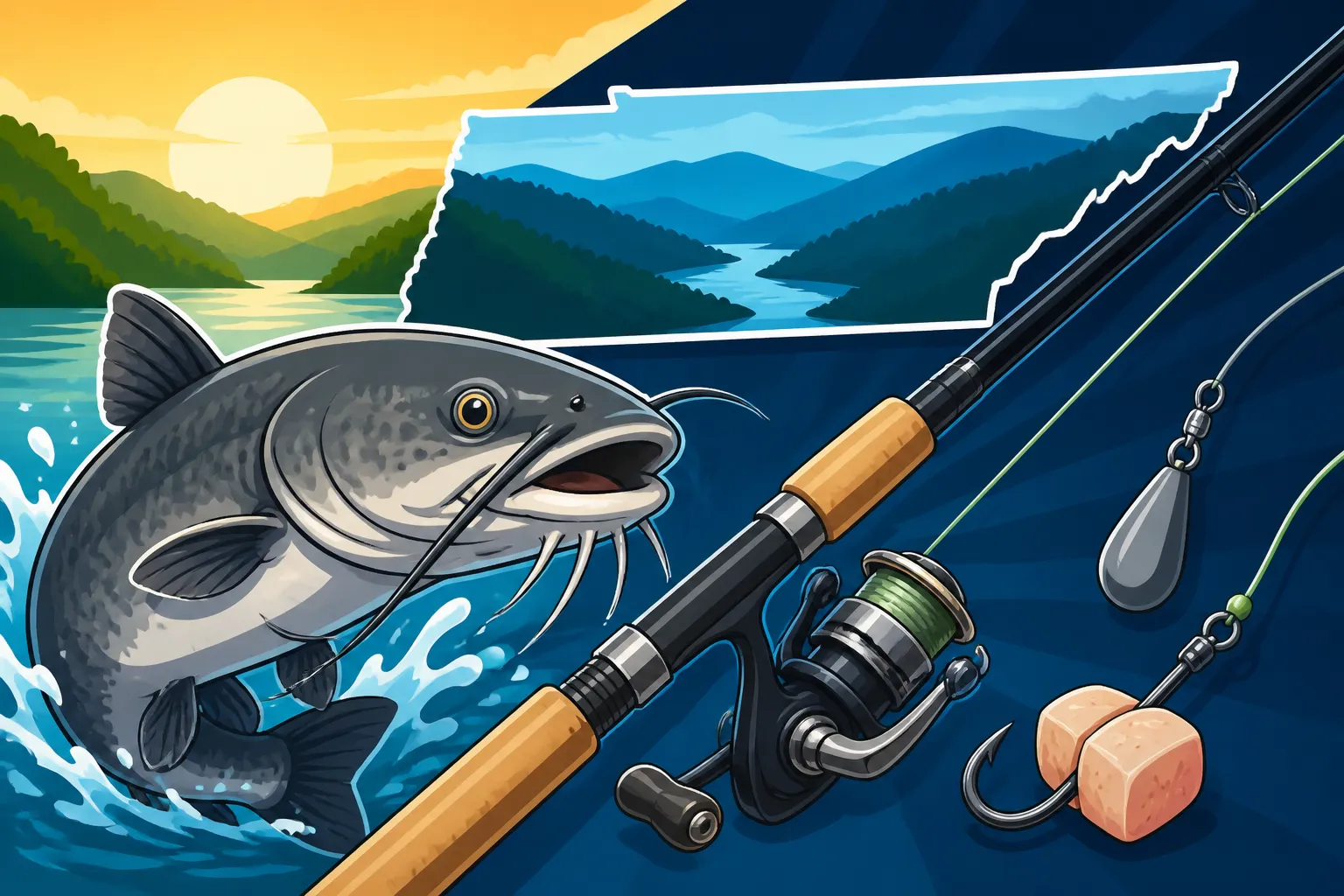
Finding the right rod setup for channel catfish can feel like a guessing game, especially when you're faced with endless options at the tackle shop or online. It's frustrating to invest in gear only to find it's too flimsy for a feisty whisker fish or too stiff to feel those subtle bites. This guide is here to cut through the confusion and help you put together a channel catfish rod setup that's perfectly suited for battling Tennessee's abundant and hard-fighting channel cats, ensuring a more enjoyable and successful fishing experience.
Understanding Channel Catfish Behavior and Habitat in Tennessee
Before we even talk about rods and reels, it's crucial to understand the fish you're targeting. Channel catfish are incredibly versatile, living in everything from fast-flowing rivers to sprawling reservoirs and quiet farm ponds across Tennessee. Their behavior directly influences what kind of gear will serve you best.
Why the Right Rod Matters for Channel Cats
Imagine hooking into a 10-pound channel cat in the Cumberland River with a flimsy panfish rod. You'd likely be in for a short, frustrating battle ending in a snapped line or broken rod, and a lost fish. Conversely, trying to detect the gentle tap of a smaller channel cat in a pond with a heavy-duty deep-sea rod is like trying to swat a fly with a baseball bat – you'll miss most of the action.
The right rod is your primary connection to the fish. It allows you to cast your bait accurately, feel the most delicate bites, set the hook effectively, and absorb the powerful runs and head shakes of a fighting catfish. Without proper rod characteristics, you're constantly at a disadvantage, either struggling to control the fish or failing to even detect it in the first place. When you have a balanced setup, the fight becomes a joyous tug-of-war, allowing the rod to do its job by bending and distributing pressure while you focus on bringing in your catch. This balance helps prevent the line from breaking from sudden surges and gives you the leverage needed to steer a strong fish away from snags or structure.
Key Characteristics of Tennessee Channel Catfish
Channel catfish in Tennessee can range dramatically in size. In smaller ponds or slow-moving creeks, you might primarily catch fish in the 1 to 5-pound range. However, in larger rivers like the Tennessee River or reservoirs like Kentucky Lake, 10 to 20-pounders are not uncommon, and much larger specimens can certainly be found. These fish are known for their strong, sustained runs and powerful head shakes, especially when hooked in current. They're often found near structure—like submerged logs, rock piles, or channel edges—and they'll use that structure to their advantage to try and break your line.
They are primarily bottom feeders, and popular baits include cut bait, chicken livers, stink baits, and even live worms. Their feeding behavior means you're often fishing on the bottom, sometimes in snaggy areas, which demands a rod with enough backbone to pull a fish away from potential line-breaking hazards. You don't want a rod that folds over completely the moment a decent fish grabs your bait and tries to bury itself in a brush pile. Understanding these characteristics helps tailor your gear choice, ensuring that your setup can handle both the typical size of channel catfish you expect and the environment you're fishing in.
Deconstructing the Ideal Rod Setup for Channel Catfish
Choosing the perfect rod involves understanding a few key terms: power, action, length, and material. These elements work together to create a rod that performs optimally for specific fishing styles and target species.
Rod Power: The Backbone of Your Setup
Rod "power" refers to the amount of force required to bend the rod blank. It's often described as ultra-light, light, medium, medium-heavy, heavy, or extra-heavy. For channel catfish in Tennessee, a good starting point is usually a medium-heavy or heavy power rod.
- Medium-Heavy Power: This is a fantastic all-around choice for channel catfish. It has enough backbone to handle fish in the 5-15 pound range without feeling overwhelmed, and it can still cast a decent-sized weight and bait. If you're fishing smaller rivers or ponds where the cats aren't typically giants, this power gives you a great balance of sensitivity and brute strength. It's robust enough to set a large hook firmly and turn a strong fish away from cover, yet still provides enough flex to make fighting a 5-pounder feel exciting rather than like reeling in a log. Many anglers consider this their go-to for most channel cat situations.
- Heavy Power: When you're targeting bigger channel catfish, perhaps in the swift currents of the Tennessee River or in deep holes where 20-pounders lurk, a heavy power rod becomes your best friend. It offers maximum lifting power and control, allowing you to effectively fight larger fish and rip them out of dense cover. While it might be overkill for smaller cats, it gives you peace of mind when you know a monster could be on the other end. This power is also excellent for casting heavier weights and larger baits without the rod feeling like it's going to snap. It’s perfect for those situations where you need to quickly gain control and keep the fish from running into snags.
You'll rarely need an ultra-light or light rod for channel catfish, as they simply don't have the strength to handle these powerful fish. Conversely, while extra-heavy might work for flatheads or trophy blues, it's generally too stiff for channel cats and can make feeling bites difficult.
Rod Action: How the Rod Bends
Rod "action" describes where along the rod the bend occurs when pressure is applied. It dictates how quickly the rod responds and how much leverage you have.
- Fast Action: The rod bends primarily in the top third or quarter. This provides excellent sensitivity for detecting subtle bites and allows for quick, powerful hook sets. For channel catfish, a fast action can be good if you're trying to feel light taps or if you need to set a hook quickly into a hard mouth. However, it can sometimes be less forgiving with larger fish, putting more stress on the line and potentially leading to pulled hooks if you're not careful. It’s a great choice for techniques where you need to react instantly to a bite.
- Moderate Action (or Medium Action): The rod bends from the middle to the tip. This action is incredibly popular for catfish because it offers a great blend of casting distance, hook-setting power, and forgiveness during a fight. The deeper bend acts like a shock absorber, cushioning sudden runs and head shakes, which reduces the chance of line breakage or hooks tearing out. It also helps in keeping a tight line even when a fish makes a sudden surge or shake. For many channel cat anglers, a moderate action rod strikes the perfect balance.
- Moderate-Fast Action: This sits right between fast and moderate, offering a good compromise. It gives you more tip sensitivity than a pure moderate action, but more backbone flex than a fast action. This can be an excellent choice for general channel catfish fishing, providing decent bite detection while still absorbing the shock of a fighting fish.
Avoid slow action rods for channel catfish, as they bend throughout the entire blank and don't offer the necessary power for quick hook sets or controlling large fish. The "whippy" feel of a slow action rod is simply too imprecise for the kind of battles channel cats put up.
Rod Length: Reach, Leverage, and Control
Rod length impacts casting distance, leverage during a fight, and how easily you can maneuver in different fishing environments.
- 6 to 7 Feet: These lengths are versatile and often a good choice if you're fishing from a boat or in tighter spaces along the bank where long casts aren't necessary. A shorter rod provides more leverage over a fish, which can be beneficial when trying to pull a fish out of heavy cover. It's also easier to transport and store. If you're primarily fishing from a johnboat on a small lake or river, a 6.5-foot rod might be your sweet spot.
- 7 to 8 Feet: This range is excellent for most shore anglers and those needing to make longer casts. The extra length helps you cast further, which can be crucial when trying to reach deep channels or drop-offs from the bank. It also provides a little more give during a fight, absorbing some of the fish's initial runs and allowing you to steer it more effectively in open water. Many dedicated catfish anglers prefer rods in this range, especially for situations like fishing larger reservoirs like Percy Priest Lake or the vast expanse of Kentucky Lake. It offers a balance of casting ability and fighting power.
Rods longer than 8 feet (like 9-10 feet surf rods) can be used for extreme long-distance casting from shore, but they can be cumbersome to handle for everyday channel cat fishing and might sacrifice some leverage. Conversely, anything shorter than 6 feet will severely limit your casting distance and might make fighting a larger fish more difficult, especially from the bank.
Rod Material: Graphite, Fiberglass, or Composite
The material a rod is made from significantly influences its weight, sensitivity, and durability.
- Fiberglass Rods: These are known for their incredible durability and forgiveness. They are generally heavier and less sensitive than graphite rods, but they can take a beating and are less prone to snapping under stress. The parabolic bend of fiberglass also makes them excellent shock absorbers, which is a huge advantage when fighting hard-pulling channel catfish. If you're on a budget or prioritize ruggedness, a fiberglass rod is a solid choice. They are often a little thicker and can withstand more abuse, making them great for tossing heavy sinkers and baits without worrying about damage.
- Graphite Rods: Graphite rods are lighter and much more sensitive than fiberglass. This sensitivity allows you to feel even the slightest bites, which can be a game-changer when fish are finicky. However, graphite can be more brittle and prone to snapping if mishandled or high-sticked. If you value sensitivity and lighter weight, a medium-heavy graphite rod can be excellent, but be mindful of its limitations. Many anglers will pair a graphite rod with a strong, flexible line to mitigate some of the stress.
- Composite Rods: Many modern catfish rods are made from a composite of graphite and fiberglass. These rods aim to offer the best of both worlds: the sensitivity and lighter weight of graphite with some of the durability and shock-absorbing qualities of fiberglass. This blend often results in a versatile, high-performing rod that's ideal for channel catfish. When you see rods advertised as "E-Glass" or a similar blend, they are often composite, offering a fantastic all-around solution. You'll find a lot of great options in this category on Amazon.
For most channel cat fishing, a durable fiberglass or composite rod is often preferred due to the nature of their fight and the heavier weights often used. However, a quality medium-heavy graphite rod can certainly get the job done if sensitivity is your top priority.
Pairing Your Rod with the Perfect Reel and Line
A great rod is only part of the equation; it needs to be perfectly balanced with a suitable reel and line to create a cohesive and effective fishing system.
Reel Types: Spinning vs. Baitcasting for Catfish
The choice between a spinning and baitcasting reel often comes down to personal preference, but each has distinct advantages for channel catfish.
- Spinning Reels: These are generally easier for beginners to use and excel at casting lighter baits over long distances with minimal effort. They are also less prone to "backlashing" (when the line tangles into a bird's nest), which can be a real headache. For channel cats, look for a spinning reel in the 4000 to 6000 size range, capable of holding plenty of strong line and featuring a smooth, reliable drag system. A good drag is essential for tiring out powerful catfish without snapping your line. Spinning reels are versatile and a fantastic choice for bank fishing, especially when you need to make repeated casts with lighter weights or smaller baits. They are also excellent for techniques that involve drifting or free-lining bait.
- Baitcasting Reels: Baitcasters offer superior casting accuracy, more brute force, and better control when fighting larger fish. They provide a more direct connection to the fish and typically have more powerful drag systems and greater line capacity for heavy lines. However, they have a steeper learning curve and are more prone to backlashing if not used correctly. For channel catfish, a medium-heavy baitcasting reel, often paired with a heavy-power rod, is a formidable setup. Look for models with a robust gear system and a good bait clicker (if you're fishing with the bail open). Many serious catfishermen prefer baitcasters for their power and precision, especially when targeting trophy fish or fishing from a boat. If you plan to use heavy weights and live baits, a sturdy baitcaster with a high line capacity is often the way to go.
Ultimately, both can be effective. If you're just starting out or prefer a simpler, more forgiving system, a spinning reel is a great choice. If you're looking for maximum power, control, and accuracy, and don't mind the learning curve, a baitcaster is excellent.
Line Selection: Mono, Fluoro, or Braid
The type and strength of your fishing line are critical for success when targeting channel catfish.
- Monofilament (Mono): This is the most traditional and often most affordable line. Mono has significant stretch, which acts as a shock absorber during violent head shakes and runs, helping to prevent hooks from tearing out or lines from snapping. It's also fairly abrasion-resistant. For channel catfish, 12-20 pound test mono is a common choice. It floats, making it good for certain presentations, and its forgiving nature makes it a great option for beginners. Mono is also less visible to fish than braid, which can be an advantage in clear waters.
- Fluorocarbon (Fluoro): Fluorocarbon is nearly invisible underwater, making it excellent for clear water conditions or wary fish. It has less stretch than mono and more abrasion resistance, which is great for fishing around rocky bottoms or submerged timber. However, it's typically more expensive and can be stiffer, making it harder to cast in lighter tests. Many anglers use fluorocarbon as a leader material paired with braided main line. For main line use, 15-25 pound test is common for channel cats, offering a good balance of strength and stealth.
- Braided Line (Braid): Braid has virtually no stretch, providing incredible sensitivity and brute strength in a smaller diameter. This means you can feel even the lightest bites from a distance, and its raw power helps pull stubborn fish out of heavy cover. The thin diameter also allows for longer casts. However, braid is highly visible underwater (though often colored to be less so), and its lack of stretch offers no forgiveness, requiring a rod with a more moderate action to absorb shocks. It's also not very abrasion-resistant on its own, so a fluorocarbon or heavy monofilament leader is almost always recommended when fishing for catfish. For channel cats, 30-50 pound test braid is a popular choice, especially when fishing areas with dense snags or targeting bigger fish. Tennessee's Fishing Regulations Explained often mentions line visibility indirectly through bait choice, but for catfish, strength and abrasion resistance are often prioritized.
For most channel catfish situations, a good quality 15-20 pound test monofilament or 30-40 pound test braided line with a mono or fluoro leader is an excellent starting point. The low stretch of braid combined with a moderate action rod provides an ideal combination of sensitivity and power.
Essential Terminal Tackle Considerations
While not directly part of the rod setup, your terminal tackle plays a critical role in how your rod, reel, and line perform. Using the wrong hooks or sinkers can negate the benefits of a well-balanced rod.
- Hooks: For channel catfish, circle hooks are highly recommended. They are designed to hook fish in the corner of the mouth, minimizing gut-hooking and making for easier, safer releases. Sizes typically range from 2/0 to 6/0, depending on your bait size and the expected size of the fish. Their design also works well with a rod that has a more moderate action, as the fish hooks itself as it swims away, rather than requiring a hard, sweeping hook set.
- Weights/Sinkers: You'll need enough weight to get your bait to the bottom and hold it there, especially in current. Egg sinkers, pyramid sinkers, or no-roll sinkers are popular choices, ranging from 1/2 ounce to several ounces. The weight you choose should be castable with your rod's power rating. If you're fishing swift rivers like the Clinch River, you might need heavier weights, necessitating a heavier power rod.
- Swivels: Heavy-duty barrel or snap swivels (size 1/0 to 3/0) prevent line twist, especially when using cut bait or chicken livers that can spin in the current. They also make it easier to change leaders or rigs.
- Leaders: As mentioned with braided line, a leader of monofilament or fluorocarbon (20-40 lb test) is often tied to the main line. This provides abrasion resistance, makes the terminal tackle less visible, and gives a little stretch if you're using braid.
All these components need to work together harmoniously. A heavy sinker on a light rod won't cast well, and a tiny hook on a heavy-duty rod won't get a good hook set. Think of your entire setup as a system where each part supports the others.
Assembling Your Channel Catfish Rod Setup: Practical Advice
Now that we've broken down the individual components, let's look at how to put it all together for different fishing scenarios in Tennessee.
Recommended Combinations for Different Scenarios
The "best" setup really depends on where and how you plan to fish for channel catfish.
- All-Around Lake and Pond Fishing (Smaller to Medium Cats):
- Rod: 7-foot, medium-heavy power, moderate-fast action composite or fiberglass spinning rod. This is a versatile choice for casting a variety of baits from shore or boat.
- Reel: 4000-5000 size spinning reel with a smooth drag.
- Line: 15-pound test monofilament.
- Terminal Tackle: 3/0-5/0 circle hooks, 1/2 to 1-ounce egg sinkers.
- Why this works: This combination provides enough power to handle most channel cats up to 10-12 pounds, offers good casting distance, and the mono provides forgiveness during the fight. It's a great beginner-friendly setup.
- River Fishing / Targeting Larger Cats (Current and Snags):
- Rod: 7.5 to 8-foot, heavy power, moderate action fiberglass or composite baitcasting rod. The extra length aids casting in current and the heavy power gives you control.
- Reel: Heavy-duty baitcasting reel with strong gears and good line capacity.
- Line: 40-pound test braided main line with a 25-pound test fluorocarbon or monofilament leader.
- Terminal Tackle: 5/0-7/0 circle hooks, 2 to 4-ounce no-roll or pyramid sinkers.
- Why this works: This setup is built for power. The heavy rod and baitcaster provide the leverage needed to pull big cats out of strong current and heavy cover, while the braid offers sensitivity to feel subtle bites even with heavy weights. The leader protects against abrasion. This kind of robust setup is perfect for places like the Tennessee River or the upper Cumberland River.
- Multi-Species/Travel Rod (Compromise):
- Rod: 6.5-7 foot, medium-heavy power, moderate-fast action composite spinning rod (often 2-piece for portability).
- Reel: 4000 size spinning reel.
- Line: 17-pound test monofilament or 30-pound braid with a mono leader.
- Why this works: This setup is a good "do-it-all" option if you're hitting various Best Fishing Lakes in Tennessee and don't want to carry multiple specialized rods. It will handle most channel cats adequately and can crossover for other species like bass or carp.
Remember, these are starting points. Experienced anglers often fine-tune their gear to match the specific conditions of their favorite fishing spots.
What to Look for When Buying Your Gear
When you're ready to purchase, don't just grab the first thing you see. Take your time to really evaluate the gear.
- Balance: A well-balanced rod and reel combo will feel comfortable in your hand and won't be tip-heavy or butt-heavy. Hold the rod with the reel attached, in your natural fishing grip. It should feel like an extension of your arm, not a weight you're struggling to hold up. This balance reduces fatigue, which is crucial for long days of fishing.
- Durability: Check the rod guides for quality inserts (like ceramic or stainless steel), as these will reduce friction and extend your line's life. Examine the reel seat and handle for solid construction. Catfishing often involves rough environments, so robust components are a must. A rod with well-secured guides that show no wobble and a reel seat that firmly holds your reel without play indicates better quality.
- Comfort: The handle material (cork or EVA foam) should feel good in your hand, both dry and wet. Cork often provides better grip when wet and is traditionally favored, but high-density EVA foam can also be very comfortable and durable. The length of the butt section (the part of the handle below the reel seat) should be long enough to tuck under your arm or brace against your body for leverage during a fight.
- Reviews: Before making a purchase, especially online on sites like Amazon, read reviews from other anglers who have used the gear for catfish. Their real-world experience can provide invaluable insights into how the rod performs under actual fishing conditions. Look for comments on durability, casting performance, and how it handles fighting fish.
Brands to Consider
While I can't recommend specific models or price points, there are several reputable brands known for producing quality catfish rods and reels. For rods, look into brands like Ugly Stik, Berkley, Daiwa, Shimano, and Shakespeare. For reels, brands like Penn, Abu Garcia, Pflueger, and again, Daiwa and Shimano, are often highly regarded for their durability and smooth drag systems.
Many of these brands offer a range of products from budget-friendly to high-end, so you can usually find something that fits your needs. Remember to check their official websites or trusted retailers like Amazon for their current offerings and detailed specifications. When considering a combination, often a "combo" package can be a cost-effective way to get a rod and reel that are designed to work together. However, buying components separately often allows for more precise customization.
Summary of Channel Catfish Rod Setup Recommendations
Here's a quick overview to help visualize the typical setup for channel catfish:
| Component | Recommendation (General) | Recommendation (Heavy-Duty/River) |
|---|---|---|
| Rod Power | Medium-Heavy | Heavy |
| Rod Action | Moderate-Fast to Moderate | Moderate |
| Rod Length | 6.5 – 7.5 feet | 7.5 – 8 feet |
| Rod Material | Composite or Fiberglass | Fiberglass or Heavy Composite |
| Reel Type | 4000-5000 Spinning Reel | Heavy-Duty Baitcasting Reel |
| Main Line | 15-20 lb Monofilament | 30-50 lb Braided Line |
| Leader (if using braid) | Not strictly necessary with mono | 20-25 lb Fluorocarbon or Monofilament |
| Hook Size | 3/0 – 5/0 Circle Hooks | 5/0 – 7/0 Circle Hooks |
| Weight Size | 1/2 oz – 1.5 oz Egg/No-Roll Sinkers | 2 oz – 4 oz Pyramid/No-Roll Sinkers |
This table provides a concise guide, but remember the detailed explanations above for understanding why these recommendations are made. Your specific Tennessee fishing adventures, whether on Chickamauga Lake: Tennessee's Top Bass Fishing Destination or a quiet local creek, will ultimately guide your final choices. Learning How to Catch Catfish From the Bank versus a boat might also influence your rod length.
Getting your channel catfish rod setup dialed in can make all the difference in your success and enjoyment on the water. By understanding the characteristics of the fish and the functions of your gear, you'll be well on your way to landing more of those hard-fighting Tennessee whisker fish. And who knows, maybe you'll find yourself wondering Is Channel Catfish Good to Eat? after your successful catch! Good luck, and tight lines!
Disclaimer
This article is for general informational purposes only and does not constitute professional advice. Laws, prices and regulations vary by location and change over time. Consult a qualified professional for guidance on your specific situation.