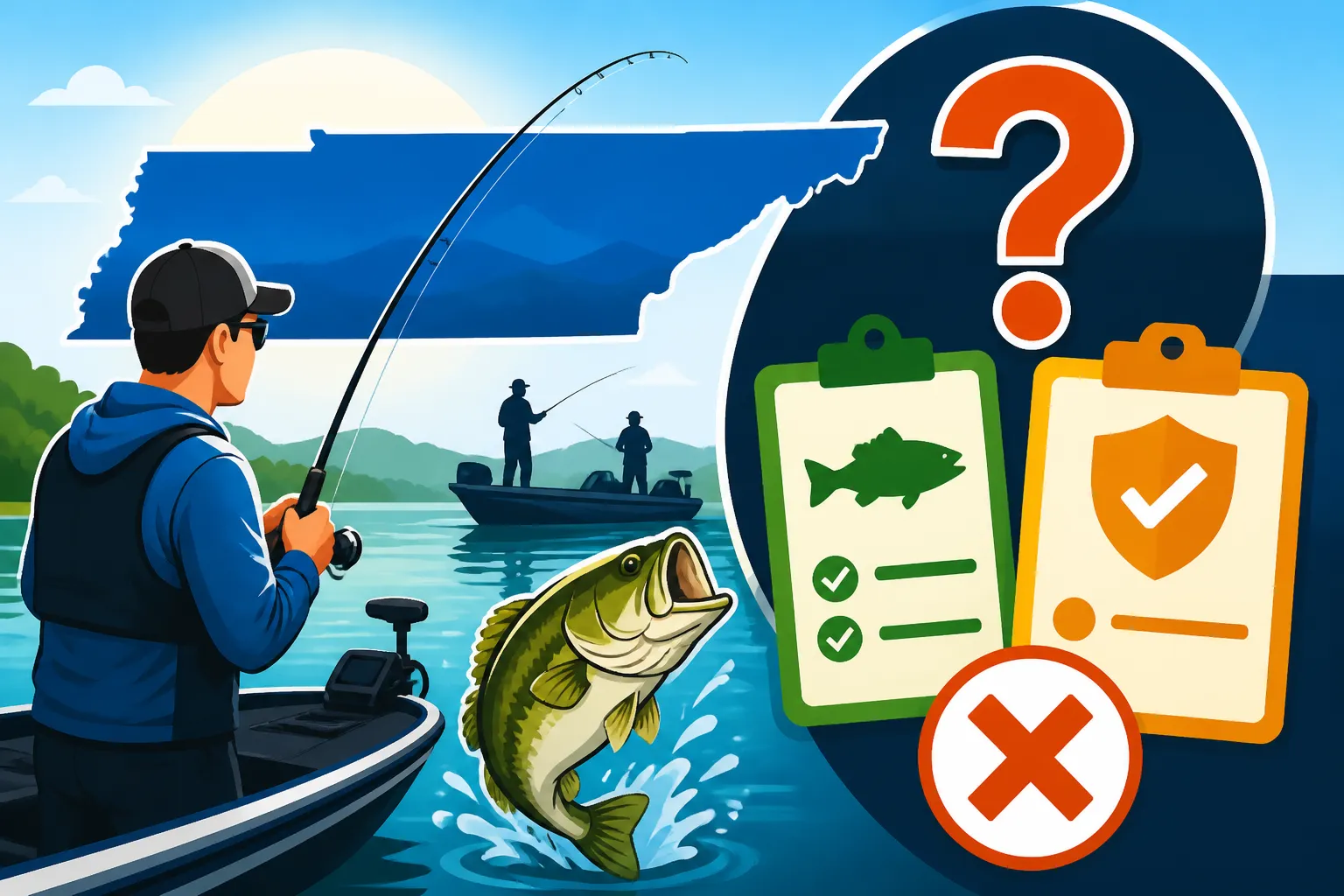
Do fishing tournaments in Tennessee require extra permits beyond a license
It’s a common worry for any angler gearing up for a tournament: beyond your regular fishing license, are there a bunch of secret permits you need to track down just to compete? The thought of showing up on tournament day only to be turned away because of some obscure paperwork is enough to make anyone's stomach churn. This guide is here to untangle those knots of confusion, making sure you understand exactly what's required for fishing tournaments in Tennessee.
Your Essential Foundation: The Standard Tennessee Fishing License
Before you even think about casting a line in a fishing tournament, or frankly, at any other time on Tennessee waters, the absolute first thing you need is a valid Tennessee fishing license. This isn't some extra "tournament permit" — it's the fundamental requirement for anyone 13 years of age and older who wants to fish in the Volunteer State. Without it, you're simply not legally allowed to fish, tournament or not.
The Tennessee Wildlife Resources Agency (TWRA) is the governing body that issues these licenses, and they offer a variety of options designed to fit different needs. For most resident anglers, the annual "Resident Combination Hunt and Fish License" is the go-to, covering both activities for a full year from the date of purchase. If you're solely focused on fishing, there are other options too, but the key is that whatever license you choose, it must be valid for the date(s) of the tournament and cover the waters you'll be fishing. For instance, if your tournament takes place on a specific lake known for its excellent trout fishing, and you plan to target those species, you'll need to ensure your license includes the necessary trout permit. It's not an extra tournament permit, but a permit for a specific type of fishing that many standard licenses don't cover by default.
Many anglers find the easiest way to secure their license is by purchasing it online through the TWRA website. It's a quick process that allows you to print a copy or save a digital version to your phone, which means you can literally buy it minutes before heading out if you realize yours has expired. For those who prefer a physical card or want to pick up some last-minute bait, local sporting goods stores like those found at Bass Pro Shops or even smaller, independent bait and tackle shops across the state are authorized license agents. Remember, carrying proof of your license while fishing in Tennessee is crucial, whether it's a physical copy or a digital one on your device.
Beyond the License: Understanding Tournament-Specific Rules and Requirements
This is where the real nuance lies, and it's often the source of confusion for anglers. The direct answer to whether fishing tournaments in Tennessee require extra state permits beyond a license is generally no. The TWRA does not typically issue separate, special permits just for participating in a fishing tournament. However, tournaments themselves will have their own very specific rules and requirements that go above and beyond the state's basic fishing regulations. These aren't state-mandated permits, but rather the operational guidelines set by the tournament organizers to ensure fair play, conservation, and the smooth running of their event.
Registration and Entry Fees
Every tournament, from a small local club event to a major professional circuit like those seen with Major League Fishing or Bassmaster, will require you to officially register and pay an entry fee. This isn't a "permit" in the government sense, but it is a mandatory step to participate. Registration usually involves providing your personal details, agreeing to the tournament rules, and confirming you hold a valid fishing license. These fees cover prizes, administrative costs, and often contribute to conservation efforts or youth fishing programs. It's vital to complete this process fully and by any stated deadlines, as incomplete registration will disqualify you faster than anything else. You'll typically find sign-up information on the tournament's official website or through a local club's page.
Livewell Requirements and Fish Handling
One of the most critical aspects of competitive fishing, especially for species like bass, is the safe handling of your catch. Many tournaments, particularly catch-and-release events, mandate specific livewell requirements to ensure fish survival. This means having an adequately sized, aerated livewell on your boat capable of keeping fish healthy throughout the competition. While the state of Tennessee has general guidelines for livewells on boats, tournament rules often go further, specifying minimum volumes, aeration systems, and even water treatments or additives allowed. For example, a tournament might require a livewell that can hold a certain number of gallons per fish or have specific recirculation rates.
Similarly, fish handling during the weigh-in process is strictly governed. Bags used for transporting fish from the boat to the scales might need to be of a certain type, and rapid movement back to the release boat or tank is usually emphasized. These rules are designed to minimize stress on the fish and are paramount to the sport's conservation ethics. Anglers found in violation of these fish care rules can face immediate disqualification, regardless of their catch.
Measuring Devices and Scales
For tournaments that operate on length limits or require immediate measurement of fish before release (common in virtual or "catch, photo, release" formats), specific measuring devices might be mandated. While a general ruler might suffice for personal fishing, tournaments often require specific, approved measuring boards to ensure accuracy and prevent cheating. Similarly, if you're participating in a photo-release tournament, a specific bump board that clearly shows the length of the fish in the photo might be required. You can find many tournament-approved measuring devices on platforms like Amazon, ensuring you have the right tool for the job.
It’s always a good idea to check the official tournament rules document well in advance. Don't assume anything. These documents are usually comprehensive and will detail everything you need to know, from eligible species and Tennessee's fishing season and catch limits to specific boat and equipment requirements.
Navigating Tournament Day: Practical Considerations for Anglers
Preparing for a fishing tournament involves more than just having a license and knowing the rules; it's about being strategically equipped and mentally ready. While no extra state permits are likely needed, several practical considerations will ensure your tournament day goes off without a hitch.
Boat and Safety Gear Inspections
Most reputable fishing tournaments conduct some form of boat inspection before launch. This isn't about looking for contraband, but rather ensuring your vessel meets basic safety standards and tournament-specific criteria. Inspectors will typically check for:
- Valid Boat Registration: Your boat must be properly registered with the state of Tennessee. While Tennessee does not issue boat titles, your registration decals must be current and prominently displayed.
- Working Livewell System: As discussed, this is crucial for fish care. Inspectors will often test the aeration and recirculation to ensure it's functional.
- Required Safety Gear: This includes personal flotation devices (PFDs) for everyone on board, a throwable flotation device for boats 16 feet and longer, a fire extinguisher, distress signals, and navigation lights if fishing before sunrise or after sunset. Remember, Tennessee's under-12 life jacket rule explained means any child under 12 must wear a PFD when on the open deck of a recreational vessel.
- Kill Switch Lanyard: For boats with outboards or inboards, the kill switch lanyard must be functional and worn by the operator while the boat is on plane. This is a critical safety feature.
Passing these inspections is a non-negotiable step to hitting the water. If your boat doesn't meet the requirements, you won't be allowed to launch, regardless of how good your fishing license is. This is less about permits and more about ensuring a safe and compliant competition environment.
Understanding Lake-Specific Rules and Exceptions
Even with a valid statewide license, it's paramount to be aware that certain bodies of water in Tennessee have their own unique regulations that might override or add to the general statewide rules. For example, some lakes might have specific slot limits for bass, or different daily creel limits for crappie or other species. Lake-specific fishing rules that override Tennessee's statewide limits are not uncommon.
If your tournament is on a specific lake, it's your responsibility to know if that lake has any special regulations that apply. Tournament organizers usually account for these in their rules, but a double-check on your part can save you from an accidental violation. For instance, if you're fishing a tournament on Chickamauga Lake, which is renowned for its trophy bass, you need to be acutely aware of any specific length or creel limits that might be enforced for that particular body of water. Ignorance of these local rules, even within a tournament setting, is no excuse.
Here’s a quick overview of what you might encounter:
| Requirement Category | Standard Tennessee Fishing | Typical Tournament Rules (Beyond License) |
|---|---|---|
| Fishing License | Always required for ages 13+ | Always required; proof often checked at registration |
| Special Permits | Trout permit if targeting trout waters | No extra state permits required |
| Registration | Not applicable | Mandatory entry/fee, sign-up forms, deadlines |
| Boat Inspection | Generally no pre-launch inspection | Common check for safety gear, livewells, kill switch |
| Fish Handling | General care for catch | Specific livewell sizes, aeration, weigh-in procedures |
| Measuring Devices | Any legal method for length | Approved bump boards, specific measuring techniques |
| Conservation | Statewide creel/length limits | Tournament-specific limits, slot limits, release protocols |
| Safety Gear | State-mandated PFDs, fire extinguisher, etc. | Checked during boat inspection, strict adherence |
Staying Compliant: Avoiding Penalties and Ensuring a Smooth Experience
The last thing any angler wants, especially during the excitement of a tournament, is to face penalties. Most penalties stem from either not having the proper fishing license or violating tournament-specific rules. While a tournament might disqualify you, a state violation can lead to much more serious consequences.
The Consequences of Fishing Without a License
This is non-negotiable: penalties for fishing without a license in Tennessee are real and can be significant. If a TWRA officer finds you fishing without a valid license, whether in a tournament or casual outing, you could face fines, confiscation of your gear, and even legal action. A tournament director, upon discovering an unlicensed participant, would immediately disqualify them. This underscores the importance of making sure your Tennessee fishing license guide is up to date and in your possession.
It's not just about having a license, but the right license for what you're doing. If you're a nonresident, make sure you have a nonresident fishing license costs in Tennessee that covers your duration and target species. If you're only planning a short trip, a Tennessee single-day fishing license options might be sufficient, but always double-check.
Adhering to Tournament Rules vs. State Regulations
It's crucial to understand that tournament rules, while strict, are separate from state regulations. State regulations are laws, enforced by the TWRA. Tournament rules are contractual agreements between you and the tournament organizers. Violating a tournament rule might lead to disqualification, loss of prize money, or even being banned from future events. Violating a state regulation, however, carries legal penalties.
Sometimes, tournament rules will be more restrictive than state regulations, particularly concerning catch limits or size. For example, the state might allow you to keep five bass of a certain size, but the tournament might have a slot limit that means you can only weigh in fish within a narrower size range, or a maximum of three fish. In these cases, always follow the more restrictive rule. It's better to be safe than sorry, and it shows respect for both conservation and the integrity of the competition.
Proactive Steps for a Stress-Free Tournament
To avoid any headaches on tournament day, take these proactive steps:
- Read the Rules (Thoroughly!): Don't just skim. Download the official rulebook and read every single line. If something is unclear, contact the tournament director for clarification before the event.
- Verify Your License: Double-check the expiration date of your fishing license. Consider purchasing an annual license from the TWRA website or an authorized vendor.
- Inspect Your Gear: Ensure your boat, livewell, safety equipment, and any required measuring devices are in perfect working order.
- Know the Water: If possible, pre-fish the tournament waters or at least study maps and recent fishing reports. Understanding the unique characteristics of Tennessee's top bass fishing lakes will give you an edge.
- Have Digital & Physical Proof: Keep both a digital copy of your license on your phone and a printed copy in your tackle box, just in case.
In conclusion, while the idea of "extra permits" for fishing tournaments in Tennessee might cause a moment of panic, the reality is much simpler. Your primary focus should be on having a valid Tennessee fishing license and then meticulously understanding and adhering to the specific rules set forth by the tournament organizers. With thorough preparation and attention to detail, you can cast your line with confidence, knowing you're fully compliant and ready to compete.
Disclaimer
Please note that fishing regulations and tournament rules can change. While this guide provides comprehensive information, it is always the angler's responsibility to verify the most current regulations with the Tennessee Wildlife Resources Agency (TWRA) and the specific tournament organizers before participating.