Catch-and-release tournaments still require licensed participants in Tennessee
It's a common misconception, one that I hear from anglers all the time, especially those new to the competitive scene: if you're just catching and releasing, do you really need a fishing license in Tennessee? The thought process makes sense, right? You're not keeping any fish, so what's the harm? However, the reality on Tennessee waters is that even if your intention is to immediately release every single fish back into the water, you absolutely need a valid fishing license. This guide will walk you through why this is the case, what licenses you need for tournament fishing, and how to make sure you're properly covered so your next tournament day goes smoothly and legally.
Understanding Tennessee's Core Licensing Philosophy
Let's get this straight from the start: the Tennessee Wildlife Resources Agency (TWRA) is very clear about this. Any person 13 years of age or older, resident or nonresident, who attempts to take, catch, or kill fish in Tennessee's public waters must possess a valid fishing license. This isn't just a rule for those looking to fill a cooler; it applies to all angling activities, including competitive events where the fish are returned to the water. The core philosophy behind requiring a license is rooted in conservation and funding, not just harvest.
The Role of Licenses in Conservation and Funding
Think about it this way: when you purchase a fishing license, you're not just buying a piece of paper that gives you permission to fish. You're actually contributing directly to the health and sustainability of Tennessee's aquatic ecosystems. The funds generated from license sales, along with federal excise taxes on fishing equipment (thanks to the Sport Fish Restoration Act, also known as Dingell-Johnson), are the backbone of the TWRA's incredible work. These funds go towards vital programs like fish stocking, habitat improvement projects, scientific research into fish populations, public access site development and maintenance, and, yes, even law enforcement to ensure fair play and sustainable practices. Without these funds, our beloved lakes and rivers, like Chickamauga Lake or Kentucky Lake, wouldn't be the incredible fisheries they are today.
Even if you're practicing strict catch and release, your fishing activity still has an impact. You're still interacting with the fish population, potentially stressing individual fish, and certainly benefiting from the managed resources. The license ensures that you're contributing your fair share to keeping those resources abundant and healthy for everyone, now and for future generations. It's a small investment with a huge return for the sport we all love.
The "Taking, Catching, or Killing" Clause
The Tennessee fishing regulations use the phrase "take, catch, or kill." This wording is crucial. "Taking" a fish, in a legal sense, often means any action to capture or possess a fish, even temporarily. When you hook a bass in a tournament, bring it into your boat, put it in a livewell, measure it, and then release it, you are unequivocally "taking" and "catching" that fish. The act of releasing it afterward doesn't negate the prior action of catching and possessing it.
This interpretation is consistent across many states, not just Tennessee. Game wardens aren't just looking for full stringers; they're looking for anyone actively engaged in the act of fishing who doesn't have the proper credentials. Imagine being in the middle of a fantastic tournament bite, only to have a TWRA officer approach and find you unlicensed. The consequences for fishing without a license can range from hefty fines to even the confiscation of equipment. It's simply not worth the risk, especially when getting a license is so straightforward. To avoid any unpleasant surprises, it’s always best to be fully informed on all aspects of the "Tennessee Fishing Regulations Explained".
Essential Licenses for Tournament Anglers in Tennessee
For tournament anglers, knowing which license to get can sometimes feel a bit overwhelming, but it's generally quite simple. The choice primarily depends on whether you're a Tennessee resident and how frequently you plan to fish throughout the year. Most tournament anglers opt for an annual license for continuous coverage, but short-term options are available for visitors.
Resident License Options
If you're lucky enough to call Tennessee home, you have a few excellent options. The most common choice for avid anglers, especially those participating in multiple tournaments, is the Resident Annual Hunting and Fishing Combination license. As its name suggests, this single license covers both fishing and hunting for a full year from the date of purchase. It's a fantastic value and streamlines your outdoor pursuits. For many, this is the go-to, as it provides comprehensive coverage for both pursuits. You can learn more about how this combination license works in our detailed post on "Tennessee's resident combination hunt and fish license costs $33 a year".
There are also specific annual fishing licenses available if you don't hunt, but the combination license is usually the most popular for its versatility. Don't forget, if you plan on fishing for trout in designated trout waters, you’ll also need to add a trout stamp or permit, even if you’re catching and releasing them. This is an extra permit that applies regardless of whether you keep the trout.
Nonresident License Options
Visiting anglers coming to Tennessee for a tournament, perhaps to tackle the famed bass on Chickamauga Lake or Norris Lake, have a few different choices based on the length of their stay. The Nonresident Annual Fishing license is ideal for those who plan to make several trips to Tennessee throughout the year. This offers the most flexibility. However, if you're just here for a single weekend tournament, you might consider one of the short-term options.
Tennessee offers both a Nonresident 3-Day Fishing license and a Nonresident 10-Day Fishing license. These are perfect for those short trips, providing coverage for a specific number of consecutive days. It's really important to do the math here. If your tournament spans a long weekend or you plan to practice a few days before, comparing the cost of a 3-day versus a 10-day might save you money in the long run. Our article on "Nonresident 3-Day and 10-Day License Options for Tennessee" provides a helpful breakdown of these choices. Remember to also consider whether you'll need a trout permit with these short-term licenses if trout fishing might be part of your plans, even if it's not the primary target species for the tournament.
| License Type | Residency | Duration | Approximate Cost (Basic) | Trout Permit Needed? | Ideal For |
|---|---|---|---|---|---|
| Resident Annual Combo H&F | Resident | 1 Year | $33 | Yes, if targeting | Frequent TN anglers/hunters, multiple tournaments |
| Nonresident Annual Fishing | Nonresident | 1 Year | $49 | Yes, if targeting | Nonresidents making multiple annual trips |
| Nonresident 3-Day Fishing | Nonresident | 3 Consecutive Days | $20 | Yes, if targeting | Short weekend tournaments or single quick trips |
| Nonresident 10-Day Fishing | Nonresident | 10 Consecutive Days | $30 | Yes, if targeting | Longer tournaments, practice days, extended trips |
Note: Costs are approximate and subject to change. Always check the official TWRA website for the most current pricing.
Securing Your Fishing License for Tournament Day
Getting your fishing license in Tennessee is surprisingly simple and convenient. The TWRA has made the process very accessible, which is great news for busy tournament anglers who often have a million things on their minds leading up to competition day.
Online Purchase and Renewal
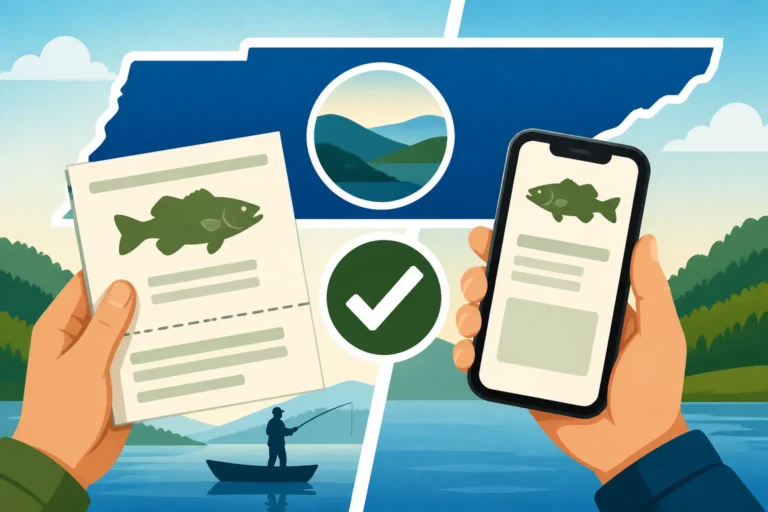
The easiest and most common way to get your Tennessee fishing license is online, directly through the TWRA website. It literally takes just a few minutes, and you can do it from your computer, tablet, or even your phone. You'll simply select the type of license you need, fill in your personal information, and pay with a credit card. Once purchased, you'll receive a digital copy of your license almost instantly. This means you can buy it the night before, or even the morning of, your tournament.
Having a digital license means you can display it on your smartphone or print a physical copy at home. I personally recommend doing both—having it saved on your phone and a laminated printout in your tackle box or boat. Technology can be fickle, and a dead phone battery is the last thing you want when a game warden asks for your license. Our guide on "How to Buy or Renew a Tennessee Fishing License Online" offers a step-by-step walkthrough.
In-Person Options
If you prefer a more traditional route, or if you find yourself needing a license at the last minute and don't have internet access, you can purchase a license in person. There are hundreds of authorized license agents located throughout the state. These often include bait and tackle shops, sporting goods stores like Academy Sports + Outdoors or Bass Pro Shops, and even some county clerk offices. Just look for the TWRA license agent sign.
This is a great option if you need to pick up some last-minute bait or other fishing essentials. While you're there, you might even grab some tournament-specific lures or soft plastics that local anglers swear by. Many of these shops also carry useful accessories you might not think of until you're on the water, from extra line to fish-weighing scales, sometimes even found on Amazon if you plan ahead. Just make sure to bring a valid ID and be prepared to provide your personal details.
Proof of License
No matter how you purchase your license, it's crucial to have proof of it on your person while you are fishing. This means either the printed hard copy, the official digital copy displayed on your smartphone, or an official TWRA app if available. Game wardens are diligent, and they have the authority to check for licenses on any public waterway. Getting caught without a license can lead to fines and legal complications, as detailed in "What happens if a Tennessee game warden catches you without a license". Don't ruin your tournament experience or risk a penalty just because you forgot to carry proof. Always double-check before you launch your boat!
Going Beyond the License: Other Key Rules for Tournament Success
While having a valid fishing license is your first and most important step for legal tournament fishing in Tennessee, it's certainly not the only regulation you need to be aware of. Tournament angling comes with its own set of considerations, and understanding the broader TWRA rules, alongside specific tournament guidelines, is crucial for a smooth and successful event.
General Statewide Fishing Regulations
Even in a catch-and-release tournament, statewide fishing regulations for species, size, and creel limits still apply, at least in principle. While you might not be keeping fish in the traditional sense, you are still handling them. For example, if a tournament has a minimum length limit for bass, you need to be able to identify your catch and measure it accurately before release. Exceeding a statewide daily creel limit, even if you are releasing fish that would put you over, could theoretically be an issue if not handled correctly according to tournament rules and TWRA guidance. The TWRA assumes temporary possession and expects you to adhere to limits as if you were keeping them, until they are legally released back into the water. Knowing Tennessee's specific limits, such as the "Statewide Bass Limits for Tennessee Anglers" or "Crappie Limits Under Tennessee Fishing Rules", is part of being a responsible and knowledgeable angler.
It's also imperative to understand what constitutes legal fishing methods and what equipment is allowed. Most bass tournaments, for instance, are lure-only, but other species might allow live bait. Always check the general regulations in addition to tournament-specific rules.
Tournament-Specific Rules and Requirements
Every fishing tournament will have its own detailed set of rules established by the organizers. These rules can sometimes be more stringent than general TWRA regulations, especially concerning fish handling, measuring, livewell requirements, and disqualification criteria. It’s absolutely essential to read and understand these rules thoroughly before the event. Tournament organizers often have pre-tournament meetings where they go over these details; attend them, ask questions, and clarify anything you're unsure about.
For instance, many bass tournaments mandate the use of functioning livewells that circulate fresh, oxygenated water to ensure the fish remain healthy during the holding period before weigh-in. Some tournaments might also have rules regarding how many fish you can have in your livewell at any given time, or specific procedures for measuring fish that differ slightly from a casual outing. These rules are designed to minimize stress and mortality for the fish, aligning with the spirit of conservation that your fishing license supports. Always adhere to these guidelines to ensure both your eligibility and the well-being of the fish.
Boat Registration and Safety Requirements
For most competitive fishing events, you'll be fishing from a boat. This brings another layer of regulations into play: boat registration and safety equipment requirements. Your fishing license covers you as an angler, but your boat has its own set of legal obligations. All motorized boats, and even some non-motorized vessels of a certain length, must be registered with the TWRA. This includes bass boats, jon boats, and even kayaks with a trolling motor. You can find out more about what needs to be registered in our guide on "Tennessee Boat Registration Requirements Explained".
Beyond registration, ensuring your boat is equipped with all the necessary safety gear is non-negotiable. This includes personal flotation devices (PFDs) for everyone on board, a fire extinguisher, a sound-producing device (like a whistle or horn), navigation lights for low-light conditions, and a throwable flotation device for boats 16 feet or longer. Children under 12 years of age have specific requirements for wearing PFDs. These safety regulations are in place for your protection and the safety of everyone else on the water. A quick check of "Tennessee Life Jacket and PFD Rules for Boaters" can help you ensure you're fully compliant. Don't let a lack of proper safety equipment sideline you from a tournament or, worse, lead to a dangerous situation. You can also find a comprehensive list of essential safety gear on Amazon, making it easy to prepare for your next trip.
Disclaimer
The information provided in this guide is for general informational purposes only and is not intended as legal advice. Fishing regulations in Tennessee are subject to change by the Tennessee Wildlife Resources Agency (TWRA). While we strive to provide accurate and up-to-date information, it is the sole responsibility of each angler to consult the official TWRA regulations and local rules before engaging in any fishing activity. Failure to comply with all applicable regulations may result in penalties.