Statewide Bass Limits for Tennessee Anglers
It can be incredibly frustrating to hit the water, excited for a day of bass fishing in Tennessee, only to be left scratching your head about exactly how many fish you can keep or what size they need to be. With different species, and sometimes even different rules for specific lakes, it feels like you need a law degree just to cast a line! This guide is here to clear up all that confusion, giving you a comprehensive breakdown of the statewide bass limits so you can fish with confidence and stay on the right side of the regulations.
Understanding Tennessee's Statewide Bass Limits: Why They Matter
When you're out on a beautiful Tennessee lake, rod in hand, it's easy to get caught up in the thrill of the catch. But behind every regulation, there's a good reason, usually rooted in the health of our fisheries. Understanding these statewide bass limits isn't just about avoiding a fine; it's about being a responsible angler and ensuring future generations can enjoy the same incredible fishing opportunities we have today.
The Importance of Conservation and Regulation
The Tennessee Wildlife Resources Agency, or TWRA, isn't just making up rules to make our lives harder. Their primary goal is the conservation and management of Tennessee's diverse fish populations. Limits on the number and size of fish you can keep are critical tools in this effort. Without these regulations, certain species could easily be overfished, leading to a decline in their numbers and ultimately, a less vibrant fishing experience for everyone. Think about it: if everyone kept every big bass they caught, those large breeding fish, which are vital for producing the next generation of healthy bass, would disappear quickly.
These regulations create a delicate balance. They allow anglers to enjoy harvesting fish while also protecting the reproductive potential of the bass populations. It means that when you release a smaller bass or one that's outside the legal slot, you're directly contributing to a healthier, more robust fishery. It’s a collective effort, and every angler plays a part in maintaining the rich aquatic ecosystems found across the state. This stewardship is a core tenet of ethical angling, reinforcing why it's so important to know and respect the rules.
Navigating the Nuances of Bass Species
Tennessee is truly a bass angler's paradise, boasting several distinct species that can put up a fantastic fight. However, these different species often have their own specific rules, which can be a source of confusion. When we talk about "bass," we're not just talking about one type of fish. In Tennessee, you'll commonly encounter Largemouth Bass, Smallmouth Bass, and Spotted Bass (which includes Alabama Bass, often grouped with Spotted). You might also run into Hybrid Striped Bass, especially in certain reservoirs, adding another layer to the mix.
Each of these species has slightly different behaviors, preferred habitats, and growth rates, which is why the TWRA sometimes applies different limits to each. Largemouth tend to prefer warmer, clearer water with lots of cover, while smallmouth often inhabit cooler, rockier, and deeper areas. Spotted bass are somewhere in between, and hybrids are often found in open water chasing baitfish. Knowing which bass you've hooked is the first step in applying the correct regulations, and sometimes it can be a real challenge to tell them apart, especially the spotted and smallmouth. This is why having a good understanding of their unique characteristics is invaluable, and we'll dive deeper into identification tips later on.
Largemouth Bass: The Classic Tennessee Favorite
The Largemouth Bass is arguably the most iconic sport fish in Tennessee, drawing anglers from all over for its aggressive strikes and powerful fights. Whether you're fishing the renowned waters of Chickamauga Lake or a quiet farm pond, the largemouth is a prized catch. But before you fill your livewell, you need to be crystal clear on the statewide regulations that govern this fantastic species.
Daily Creel Limits for Largemouth
The statewide daily creel limit for Largemouth Bass in Tennessee is 5 fish per day. This means that in any 24-hour period, you cannot possess more than five largemouth bass that you have caught. This limit is designed to prevent overharvesting while still allowing anglers to take home a reasonable catch. It’s a straightforward number, but there's a crucial additional stipulation that makes things a bit more complex.
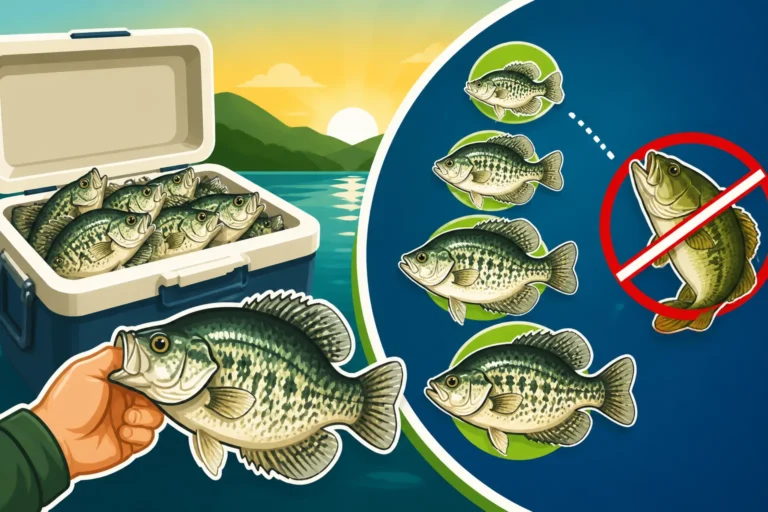
Beyond the total number, there's a size restriction that plays a huge role in how you manage your catch. Of those five fish, only one largemouth bass may be 18 inches or longer. This "one over 18 inches" rule is extremely important for protecting larger, mature breeding fish. It encourages anglers to release the bigger females, which are the most prolific egg-producers, ensuring the sustainability of the population. So, while you might catch several trophy-sized largemouth in a day, you can only legally keep one of them if it's over that 18-inch mark. The other four fish in your limit must be under 18 inches.
Consider a scenario: you've had an incredible day on the water and landed a beautiful 20-inch largemouth, a 16-inch largemouth, a 15-inch, a 14-inch, and a 13-inch fish. You've hit your five-fish limit, and crucially, only one of them (the 20-incher) is over 18 inches. This is a perfectly legal catch. Now, imagine you also caught an 18.5-inch bass. If you wanted to keep it, you would have to release one of your other over-18-inch fish. This is where careful measurement and decision-making come into play.
Size Restrictions and Slot Limits
The 18-inch minimum for that single trophy fish isn't arbitrary; it's a carefully determined conservation measure. This type of regulation is often referred to as a "protected slot limit" or a "maximum size limit" for part of the catch, even though technically Tennessee uses a "one over" rule rather than a true slot. The idea is to protect bass within a certain size range, or in this case, the larger breeding fish. The Tennessee Largemouth Bass Limit Is 5 Per Day, Only 1 Over 18 Inches rule allows smaller, abundant fish to be harvested, which can actually benefit the overall health of the fishery by reducing competition for food.
This regulation helps to ensure that there are plenty of strong, healthy adult bass available to reproduce and grow the next generation. Those larger fish also provide exciting angling opportunities for catch-and-release enthusiasts. Without this rule, the pressure on trophy-sized bass would be immense, potentially leading to a decline in their numbers and quality. Anglers aiming to keep a mixed bag of largemouth should always carry a reliable measuring board to accurately determine the length of their catch. You can find excellent, durable measuring boards on sites like Amazon, which are crucial for quick and accurate assessments right at the boat or bank. Remember, official measurements are usually taken with the mouth closed and the tail squeezed to get the maximum length.
Smallmouth, Spotted, and Alabama Bass: The Combined Limits
While the largemouth gets a lot of press, Tennessee's waters are also home to fantastic populations of Smallmouth Bass, Spotted Bass, and the less common but related Alabama Bass. These species, often found in different types of habitats than largemouth, are grouped together under a common daily limit structure, which can sometimes trip up anglers accustomed to species-specific rules.
The Combined 5-Fish Daily Limit
Here's where it gets interesting: Smallmouth, Spotted, and Alabama bass do not have separate daily limits. Instead, they share a combined daily creel limit of 5 fish. This means that if you catch three smallmouth and two spotted bass, you've hit your combined limit for the day. You can't then go on to catch and keep another five smallmouth. It's five fish total from any combination of these three species. This rule simplifies things in some ways, but it also means anglers need to be vigilant about identifying their catch, especially when fishing waters where multiple species are present.
For example, if you're fishing a clear, rocky lake like Norris Lake, you might catch a mix of smallmouth and spotted bass. If you decide to keep them, you'd need to count them towards that single 5-fish total. This combined limit helps manage the populations of these often-similar looking and similarly-behaving bass species, preventing excessive pressure on any one of them. It acknowledges that they often occupy similar niches and that distinguishing them definitively in the heat of the moment can be challenging for some anglers.
The 16-Inch Single Fish Rule
Just like with largemouth, there's a size restriction for this combined group, but it's slightly different. For Smallmouth, Spotted, and Alabama bass, only one fish may be 16 inches or longer out of your combined five-fish limit. This means if you catch a 17-inch smallmouth, that's your "one over." Any other fish you keep from these species must be under 16 inches. This is a common point of confusion, as many anglers remember the 18-inch rule for largemouth and assume it applies across the board. The Smallmouth Bass: Tennessee's Official State Fish holds a special place, and this rule is designed to protect those larger, mature smallmouth, which are often highly sought after by anglers.
Why the difference in size (16 inches vs. 18 inches)? It generally comes down to the typical growth rates and maximum sizes of these different bass species. Smallmouth and spotted bass, while capable of growing quite large, often don't reach the same extreme lengths as largemouth bass. Therefore, a 16-inch size limit for their trophy fish serves a similar conservation purpose – protecting the prime breeding stock – but is adjusted to reflect their natural biological characteristics. Always remember that the Tennessee's daily bass limits split by species and by size to effectively manage each population. This distinction is crucial for staying within legal limits and contributing to healthy fish populations.
Hybrid Striped Bass and Other Considerations
Beyond the main black bass species, Tennessee's waters offer other exciting angling opportunities, including for Hybrid Striped Bass. These powerful fish, often stocked by the TWRA, provide a thrilling fight but also come with their own set of regulations. Understanding where they fit into the overall bass limits is essential for any angler.
Hybrid Striped Bass Limits
Many anglers are surprised to learn that Hybrid Striped Bass also fall under the combined 5-fish daily limit for Smallmouth, Spotted, and Alabama Bass. This means that if you catch a couple of nice hybrid stripers, they count towards that same five-fish total. So, if you keep two hybrids, you can only keep three more smallmouth, spotted, or Alabama bass to reach your combined five-fish limit. There's also the same size restriction: only one hybrid striped bass may be 16 inches or longer as part of that five-fish limit.
Hybrid Striped Bass are a cross between Striped Bass and White Bass, known for their incredible fighting power and schooling behavior. They are often stocked in large reservoirs like Percy Priest Lake and Watts Bar Lake to provide a robust open-water fishery. They tend to be found chasing baitfish in deeper, open water, contrasting with the more structure-oriented habits of largemouth and smallmouth. Given their strong resemblance to both striped bass and white bass, identification can be tricky, which is part of the reason they are often grouped with the other "smaller" bass species for regulation purposes. It ensures a consistent and manageable approach to their harvest. If you're specifically targeting hybrids, make sure to read up on their habits and how to effectively catch them, as they can provide some of the most exciting action on the water.
Distinguishing Bass Species
Alright, let's be real. In the heat of the moment, with a fish flopping around in your hands, telling the difference between a smallmouth and a spotted bass, or even a largemouth, can be a genuine challenge, especially for less experienced anglers. But it's absolutely vital for staying compliant with statewide bass limits. Here are some key features to help you identify these popular species:
- Largemouth Bass: The most distinguishing feature is the jaw. When its mouth is closed, the corner of the jaw extends beyond the rear edge of the eye. They typically have a prominent, dark lateral line running down their side, which can sometimes look like a series of blotches. Their dorsal fin also appears almost completely separated into two distinct parts. Largemouth Bass Identification Tips for Tennessee Anglers can provide even more detailed visual cues.
- Smallmouth Bass: In contrast to the largemouth, the corner of a smallmouth's jaw, when closed, typically does not extend beyond the rear edge of the eye. They usually have vertical bars or blotches on their sides, often described as "tiger stripes," rather than a continuous lateral line. Their dorsal fin is connected, but with a noticeable dip between the spiny and soft-rayed portions.
- Spotted Bass (including Alabama Bass): These are often the trickiest to distinguish from smallmouth. Like smallmouth, their jaw typically does not extend past the eye. However, the key differentiator is often a patch of small teeth on the tongue, which smallmouth bass lack. Spotted bass also tend to have more prominent rows of dark spots below the lateral line, almost appearing "spotted" on their belly. The dorsal fin is also distinctly connected, similar to a smallmouth, but often with a less pronounced dip. It’s worth noting that Spotted Bass vs Largemouth Bass in Tennessee Lakes highlights some distinct characteristics that can save you from a mistaken identity.
To avoid any doubt, especially when you're just learning, carrying a fish identification guide can be incredibly helpful. You can find excellent waterproof versions or even laminated charts on Amazon that easily clip to your tackle box or fit in your fishing vest. A quick reference can make all the difference between a legal catch and an accidental violation.
Lake-Specific Rules and the Importance of Checking Before You Go
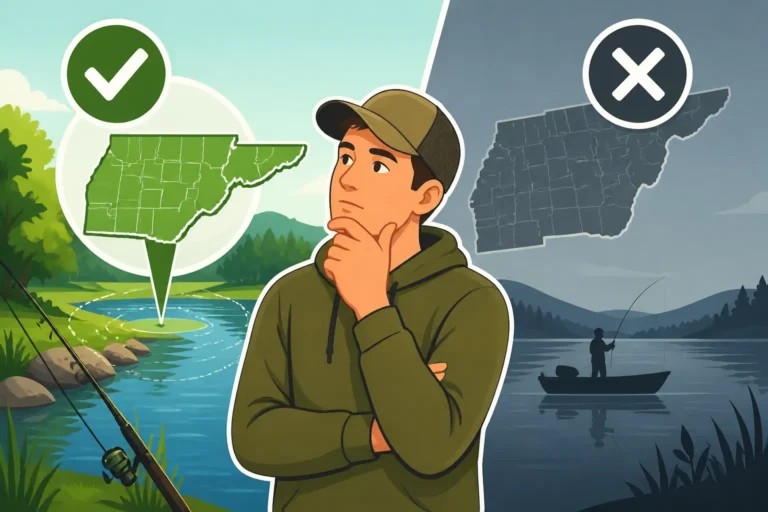
While the statewide bass limits provide a solid foundation for angling in Tennessee, it's absolutely critical to understand that these are just the default rules. Many popular lakes and reservoirs across the state have their own unique, lake-specific regulations that can—and often do—override the general statewide limits. Ignoring these local variations can quickly turn a fun day of fishing into a costly mistake.
When Statewide Rules Don't Apply
Imagine this scenario: you've memorized the 5-fish, one-over-18-inches rule for largemouth bass. You head to a lake, have a fantastic day, and keep five fish according to that rule. Later, you find out that the lake you were fishing had a special 14-to-18-inch slot limit, meaning any fish in that range must be released. Suddenly, your perfectly legal catch is now a violation. This is a very real possibility, and it happens more often than you might think.
Why do these exceptions exist? The TWRA implements lake-specific rules for various reasons. Sometimes, it's to protect a specific fishery that's under heavy pressure, like a lake known for producing trophy bass. Other times, it's to manage a stunted population, encouraging the harvest of smaller fish to allow larger ones to grow. Environmental factors, stocking programs, or even specific research initiatives can also lead to unique regulations. For instance, a lake might have a different size limit for crappie or an altered creel limit for trout, even if the bass rules remain statewide. Always remember, Lake-Specific Fishing Rules That Override Tennessee's Statewide Limits are designed to fine-tune management for optimal local conditions. These tailored rules are crucial for maintaining the quality and sustainability of specific fisheries, making local research a non-negotiable step in your trip planning.
How to Find Local Regulations
Given the potential for variations, checking the rules for your specific fishing destination is not just a good idea; it's essential before every single trip. Don't assume the rules from last year, or even last month, are still in effect, as regulations can sometimes change between seasons or even within a year based on fishery assessments.
The absolute best and most up-to-date source for Tennessee fishing regulations is the Tennessee Wildlife Resources Agency (TWRA) website. They publish a comprehensive annual fishing guide, often available as a downloadable PDF, which includes all statewide and specific lake regulations. This guide is usually organized by species and then by water body, making it relatively easy to navigate. It's also a good idea to pick up a physical copy of the current year's TWRA fishing guide at most sporting goods stores, bait shops, or TWRA offices. Having a physical copy can be handy when you don't have cell service on the water.
Additionally, many local bait and tackle shops near popular fishing spots are excellent resources. The folks working there often live and breathe local fishing and can provide valuable insights into current rules and even recent changes. A quick call or visit before you launch can save you a headache. Take the time to confirm the rules for your chosen destination, whether it's Chickamauga Lake: Tennessee's Top Bass Fishing Destination, or one of the many other Best Fishing Lakes in Tennessee. A few minutes of research before you go fishing is an investment that pays off in peace of mind and legal compliance.
Practical Tips for Staying Compliant
Navigating Tennessee's bass limits might seem a bit daunting at first, but with a few practical habits and the right gear, you can ensure every fishing trip is both enjoyable and fully compliant with the regulations. Being prepared is half the battle when it comes to responsible angling.
Measuring and Handling Your Catch
Accurate measurement is paramount to staying within the legal size limits. The proper way to measure a fish is by laying it flat on a measuring board or tape measure, with its mouth closed and touching the zero mark. Then, gently squeeze the tail to get the maximum length, reading the measurement at the tip of the tail. Many measuring devices even have a small lip at the zero end to ensure the fish's mouth is flush. It's important to do this quickly and efficiently, especially if you plan to release the fish.
Speaking of release, proper fish handling is crucial for the survival of any fish you don't intend to keep, particularly those that are just under or over a specific size limit. Use wet hands when handling fish to protect their slime coat, which is their primary defense against disease. Minimize the time the fish is out of the water. If using a net, choose one with knotless, rubberized mesh to reduce damage to fins and scales. For fish that have swallowed the hook, use long-nosed pliers or a de-hooking tool to minimize injury. The goal is to return the fish to the water in the best possible condition, ready to fight another day and, if it's a breeder, contribute to future generations. These best practices are vital, whether you're chasing Tennessee's Top Bass Fishing Lakes or just enjoying a casual outing.
Essential Gear for Responsible Angling
Having the right tools on hand can make all the difference in quickly and accurately adhering to regulations.
- Measuring Board/Tape: This is non-negotiable. A sturdy, clearly marked measuring board is essential for determining if your bass meets the legal length requirements. Look for ones that are durable, waterproof, and easy to read. Many anglers prefer longer boards (up to 30 inches) to accommodate larger catches. You can find a wide variety of reliable measuring devices for fishing on Amazon.
- Fish Grips/Lip Grippers: These tools allow you to safely handle a bass by its lower lip, reducing stress on the fish and keeping your fingers away from sharp hooks. They also often include an integrated scale, allowing you to weigh your catch quickly before release.
- Pliers/De-hooking Tools: Essential for quickly and safely removing hooks, especially if a fish has been deep-hooked.
- TWRA Fishing Guide (Digital or Print): Always have the most current regulations accessible. Many anglers keep a digital copy on their phone, but a laminated printout is great for waters with no signal.
- Camera (Optional, but Fun!): If you catch a trophy you plan to release, a quick photo allows you to capture the memory without keeping the fish out of the water too long. Just be sure to prioritize the fish's health over the perfect shot.
Equipping yourself with these items is part of being a prepared and responsible angler. It shows respect for the fish, the regulations, and the future of fishing in Tennessee. Whether you're upgrading your current setup or looking for the perfect Best Rods and Reels for Tennessee Fishing, remember that complementary tools like a good measuring tape are equally important for a successful and legal trip.
Here's a quick summary of the statewide bass limits for easy reference:
| Bass Species | Daily Creel Limit | Size Restriction | Notes |
|---|---|---|---|
| Largemouth Bass | 5 fish | Only 1 fish may be 18 inches or longer | Most common bass, prefers warmer, vegetated waters. |
| Smallmouth Bass, Spotted Bass, Alabama Bass | 5 fish (combined) | Only 1 fish from this combined group may be 16 inches or longer | Often found in cooler, rockier waters. Can be hard to distinguish. |
| Hybrid Striped Bass | 5 fish (combined) | Only 1 fish from this combined group may be 16 inches or longer | Powerful fighters, often found in open water chasing baitfish. Count towards Smallmouth/Spotted/Alabama limit. |
Disclaimer
Please remember that fishing regulations, including creel and size limits, can change. While this guide provides the most current information available at the time of writing, it is always the angler's responsibility to consult the official Tennessee Wildlife Resources Agency (TWRA) regulations before heading out on the water. Local regulations for specific lakes and rivers may supersede statewide rules.