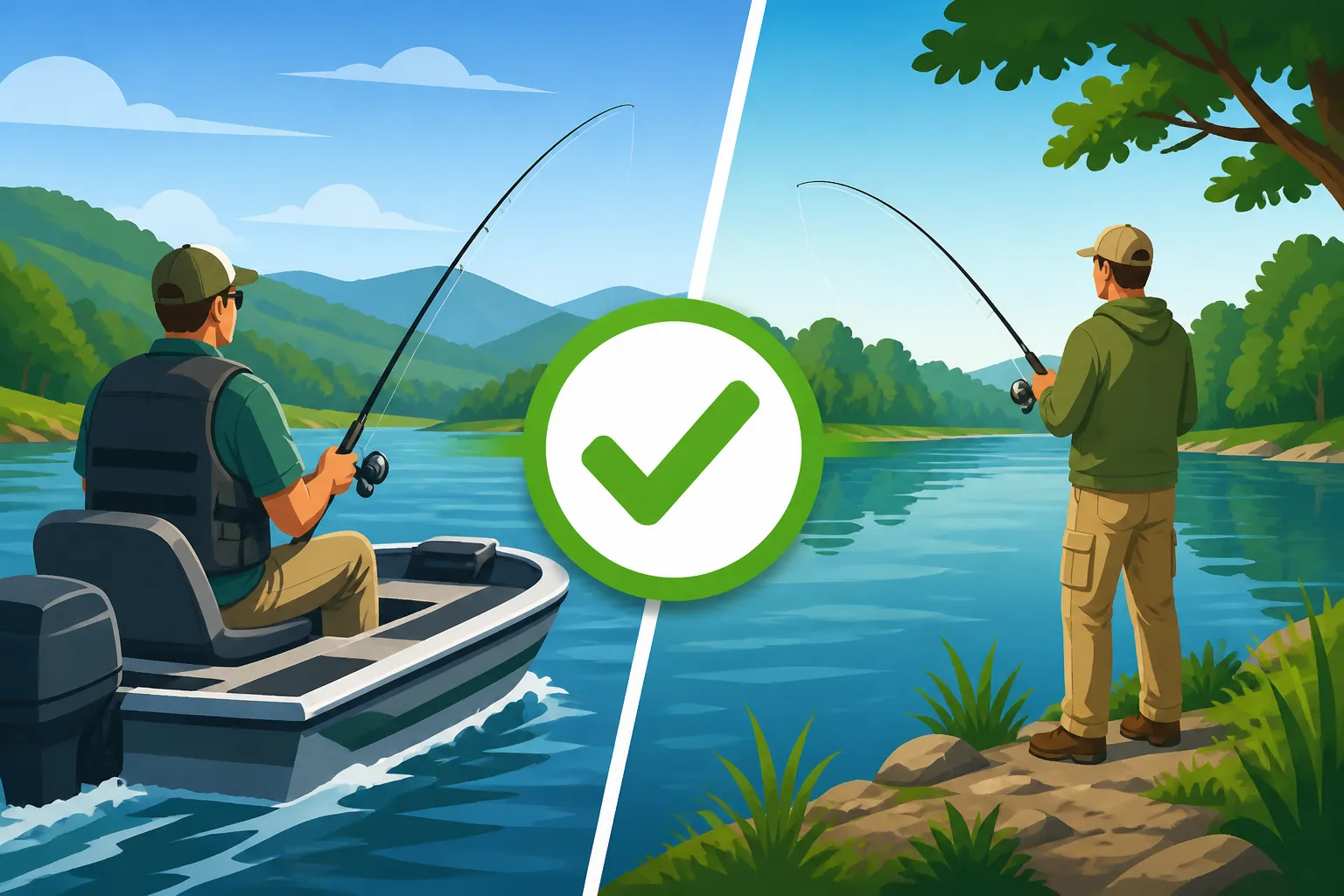
Boat anglers on Tennessee waters need the same fishing license as bank anglers
One of the most common questions I hear from folks new to fishing in the Volunteer State, or even seasoned anglers coming from other states, is about whether fishing from a boat somehow changes the license requirements. There’s this idea floating around that maybe a boat means a different set of rules, or even an extra permit. Let me clear that up for you right away: it doesn't. If you're dropping a line into Tennessee waters, whether your feet are firmly on the bank or you're casting from the middle of Percy Priest Lake, you absolutely need a valid Tennessee fishing license. This guide is here to walk you through exactly what that means, debunk common myths, and ensure you're squared away for your next outing, no matter your preferred fishing platform.
The Core Truth: One License for All Tennessee Anglers
It's a straightforward rule, really, but it's easy to overthink it. The Tennessee Wildlife Resources Agency (TWRA) is pretty clear: if you're 13 years of age or older and engaged in fishing, you need a license. It doesn't matter if you're in a fancy bass boat, a quiet kayak, a sturdy pontoon, or just sitting on a cooler by the shoreline. The act of fishing itself is what triggers the license requirement, not the mode of transport to your favorite fishing hole.
Why the Distinction Doesn't Exist for Licenses
Think about it from the perspective of fish management and conservation. The funds generated from fishing license sales directly support the TWRA's efforts in stocking fish, managing aquatic habitats, conducting research, and enforcing regulations to ensure healthy fish populations for everyone. Whether you're pulling a crappie from a brush pile on Kentucky Lake from your bass boat or landing a bluegill from a dock on a small pond, you're benefiting from these conservation efforts. The fish don't care if you're in a boat or on the bank; they just know they've been successfully caught! Therefore, the responsibility to contribute to these efforts through a license applies universally to all anglers who are of age. It's about participation in the sport, plain and simple, and that means everyone contributes to the sustainability of Tennessee's incredible fisheries.
Understanding Public Waters and License Scope
A valid Tennessee fishing license generally covers you for fishing in most public waters across the state. This includes the vast network of reservoirs like Chickamauga Lake, Norris Lake, and Watts Bar Lake, countless rivers, streams, and many publicly accessible ponds and lakes. The beauty of this system is its simplicity: once you have your license, you're pretty much set for most of the state's fishing opportunities. However, it's always wise to remember that there can be specific, hyper-local regulations that apply to certain bodies of water, or even specific sections of a river or lake. For instance, some private pay-to-fish ponds or certain waters within wildlife management areas might have their own additional rules or permit requirements, but these are typically exceptions to the general statewide rule. Always double-check any local postings or the TWRA's regulations guide for the specific spot you plan to visit, especially when fishing within a Wildlife Management Area Fishing Rules in Tennessee. This ensures you're never caught off guard and can enjoy your time on the water without any unnecessary headaches.
Common Misconceptions and Clarifications
It’s easy to get tangled up in the details, especially when you’re dealing with both fishing and boating. Let’s clear up some of the most frequent misunderstandings that often lead anglers to believe there might be different license rules for boat fishing.
Is Boat Registration the Same as a Fishing License?
This is perhaps the biggest point of confusion I see. Many boat owners assume that because their vessel is registered with the state, that somehow covers their fishing activities. Absolutely not. Tennessee Boat Registration Requirements Explained are entirely separate from your fishing license. Boat registration is about the vessel itself – proof of ownership, compliance with safety standards, and ensuring proper identification on the water. It’s a permit for the boat, not for the person fishing. You could have a perfectly registered boat, but if you're casting a line without your personal fishing license, you're still breaking the law. Imagine driving a car: you need a driver's license for yourself and a registration for the car. The same principle applies here. Your boat needs its registration, and you need your fishing license. Two distinct requirements, both crucial for legal enjoyment of Tennessee's beautiful waters. If you're operating a boat, you'll also want to be familiar with rules like Tennessee Life Jacket and PFD Rules for Boaters to keep everyone safe.
Special Permits for Specific Waters or Species?
While the core fishing license covers the vast majority of fishing in Tennessee, there can be additional endorsements or permits required for specific situations, regardless of whether you're in a boat or on the bank. The most common example of this is the trout permit. If you plan on targeting or possessing trout, you'll need to purchase a supplemental trout permit in addition to your basic fishing license. This isn't a "boat fishing" requirement; it's a "trout fishing" requirement. So, if you're fly fishing for rainbow trout in the Caney Fork River from a drift boat, you'll need both your annual fishing license and a trout permit. The same goes if you're spin fishing for them from the bank. Always check the Tennessee Fishing License Costs and Types and the regulations if you're planning to pursue species like trout, or if you're heading to a specific, highly regulated water body. The TWRA's website is an excellent resource for checking these details, ensuring you're never surprised by an unexpected permit requirement.
Getting Your Tennessee Fishing License No Matter How You Fish
So, we’ve established that all anglers need a license, regardless of whether they fish from shore or from a vessel. Now, let’s talk about how easy it is to actually get one, and how to pick the right one for your specific needs. There are several convenient options, so there’s really no excuse to hit the water without one!
Online, In-Person, and Digital Options
The TWRA has made it incredibly convenient to get your fishing license. For many, the easiest way is to How to Buy or Renew a Tennessee Fishing License Online. You can do this from the comfort of your home, on your computer or even your smartphone. It literally takes just a few minutes, and your license is valid immediately. You'll receive a digital copy, which is perfectly acceptable to carry on your phone, though you can also print it out if you prefer a physical copy. Many anglers appreciate this digital convenience, especially when a spur-of-the-moment fishing trip arises.
If you're more of a traditionalist or prefer speaking with someone, you can also purchase your license in person. Most sporting goods stores, bait and tackle shops, and even some county clerk offices across Tennessee are authorized license agents. Places like Bass Pro Shops, Academy Sports + Outdoors, and countless smaller local businesses can get you set up. This is a great option if you have questions or want to pick up some last-minute bait and tackle at the same time. The choice between a Digital vs Printed Fishing Licenses in Tennessee is yours, but having a record of it readily available is key.
Choosing the Right License Type for Your Needs
Tennessee offers a variety of fishing licenses designed to fit different needs and budgets. Understanding the options is key to picking the right one and not overpaying, or worse, under-licensing yourself.
- Annual Resident Fishing License: This is the most common and comprehensive option for Tennessee residents. It covers general freshwater fishing for an entire license year (March 1 to the last day of February). If you fish regularly, even just a few times a year, this is usually your best value. For a resident, the standard annual all-species license is a fantastic deal. Remember, if you plan to target trout, you'll need that additional trout stamp with this license.
- Nonresident Annual Fishing License: For our friends visiting from out of state, an annual license is also available. It's a bit pricier than the resident version, but it offers full coverage if you're planning multiple trips throughout the year.
- Short-Term Licenses (Nonresident): If you're just visiting Tennessee for a quick fishing getaway, say a long weekend on Dale Hollow Lake or a week exploring the Cumberland River, short-term nonresident licenses are perfect. You can get 3-day or 10-day options, often with or without the trout permit included. This saves you from buying a full annual license when you're only here for a short while.
- Specialty Licenses: There are also options like the annual combination hunt/fish license for those who enjoy both activities, a discounted Tennessee Senior Annual Fishing License for residents 65 and older, and free fishing opportunities for kids on Bobby Wilson Free Fishing Day in Tennessee and Tennessee's Free Fishing Week for Kids. It's crucial to consult the Tennessee Fishing License Guide to find the exact fit for your situation.
It's truly about matching the license to your fishing habits and residency status. Don't let the choices overwhelm you; the goal is simply to ensure you're compliant so you can focus on catching fish. Most standard fishing licenses run for 12 months from the date of purchase, but the official license year always starts March 1st. You can find detailed info on How Long a Tennessee Fishing License Stays Valid on the TWRA website.
Here's a quick comparison of some common license types for Tennessee fishing:
| License Type | Residency | General Cost (approx.) | Covers Trout? | Best For |
|---|---|---|---|---|
| Annual All-Species | Resident | $33 | No (add permit) | Regular anglers, year-round fishing |
| Annual All-Species with Trout | Resident | $51 | Yes | Regular anglers targeting trout |
| 3-Day All-Species | Nonresident | $20 | No (add permit) | Short visits, occasional trips |
| 3-Day All-Species with Trout | Nonresident | $40 | Yes | Short visits, occasional trout trips |
| 10-Day All-Species | Nonresident | $30 | No (add permit) | Longer vacations, extended trips |
| 10-Day All-Species with Trout | Nonresident | $61 | Yes | Longer vacations, extended trout trips |
| Senior Annual | Resident (65+) | $4 | No (add permit) | Senior resident anglers |
| Junior Hunt/Fish (ages 13-15) | Resident | $10 | No (add permit) | Young resident anglers |
Note: Prices are approximate and subject to change. Always check the official TWRA website for the most current fees and regulations.
Important Reminders for All Anglers on Tennessee Waters
Having your license is the first step, but being a responsible and well-prepared angler involves a few more considerations. These apply universally, whether you’re fishing from a high-tech bass boat or a folding chair on the bank.
Always Carry Proof of Your License
This might seem obvious, but it's amazing how many people forget. Whether you have a physical card or a digital copy on your phone, you must have proof of your valid fishing license with you when you are fishing. Game wardens do check, and getting caught without it can lead to fines and a ruined day on the water. It’s not an excuse to say, "Oh, it's at home," or "I bought it online, it just hasn't arrived yet." If you bought it online, it's instantly valid and you have a digital copy. If you're worried about your phone getting wet in a boat, invest in a waterproof pouch (you can find plenty of affordable options on Amazon). That way, your phone and digital license stay safe and accessible. Always having your license means you're ready when a TWRA officer asks to see it, which they are empowered to do to ensure compliance with Tennessee Fishing Regulations Explained. Don't let a simple oversight turn a peaceful day into a frustrating encounter.
Beyond the License: Essential Boating Regulations
While your fishing license itself doesn't change based on your fishing platform, if you are fishing from a boat, there's a whole other set of regulations you need to be aware of. These are boating safety regulations, and they are critical for your safety and the safety of everyone else on the water. These rules cover things like:
- Life Jackets (PFDs): Requirements for having enough Coast Guard-approved life jackets for everyone on board, and specific rules for children under a certain age (often 12 in Tennessee) to wear them at all times while underway. These are non-negotiable safety items.
- Required Safety Equipment: Depending on the size and type of your boat, you might need things like a fire extinguisher, a sound-producing device (horn or whistle), navigation lights (especially if you're out near dawn, dusk, or at night), and a throwable flotation device.
- Boating Education: If you were born after a certain date (January 1, 1989, in Tennessee), you're generally required to have a Tennessee Boating Safety Education Certificate Guide to operate a boat with a motor of 10 horsepower or more.
These are boating rules, not fishing rules, but they absolutely apply to you if you're a boat angler. A responsible angler is also a responsible boater. Make sure your boat is properly registered and equipped, and that you and your passengers are adhering to all safety protocols. Staying informed about both fishing licenses and boating regulations ensures a safe, enjoyable, and lawful experience every time you head out on the beautiful waters of Tennessee. You wouldn't want to receive a Penalties for Fishing Without a License in Tennessee or for unsafe boating practices!
Disclaimer
Please note that while this guide provides comprehensive information based on current knowledge and official sources, fishing regulations can change. It is always the angler's responsibility to consult the most up-to-date regulations directly from the Tennessee Wildlife Resources Agency (TWRA) before engaging in any fishing activities. This content is for informational purposes only and should not be considered legal advice.