Best Fly Reels for Tennessee Mountain Streams
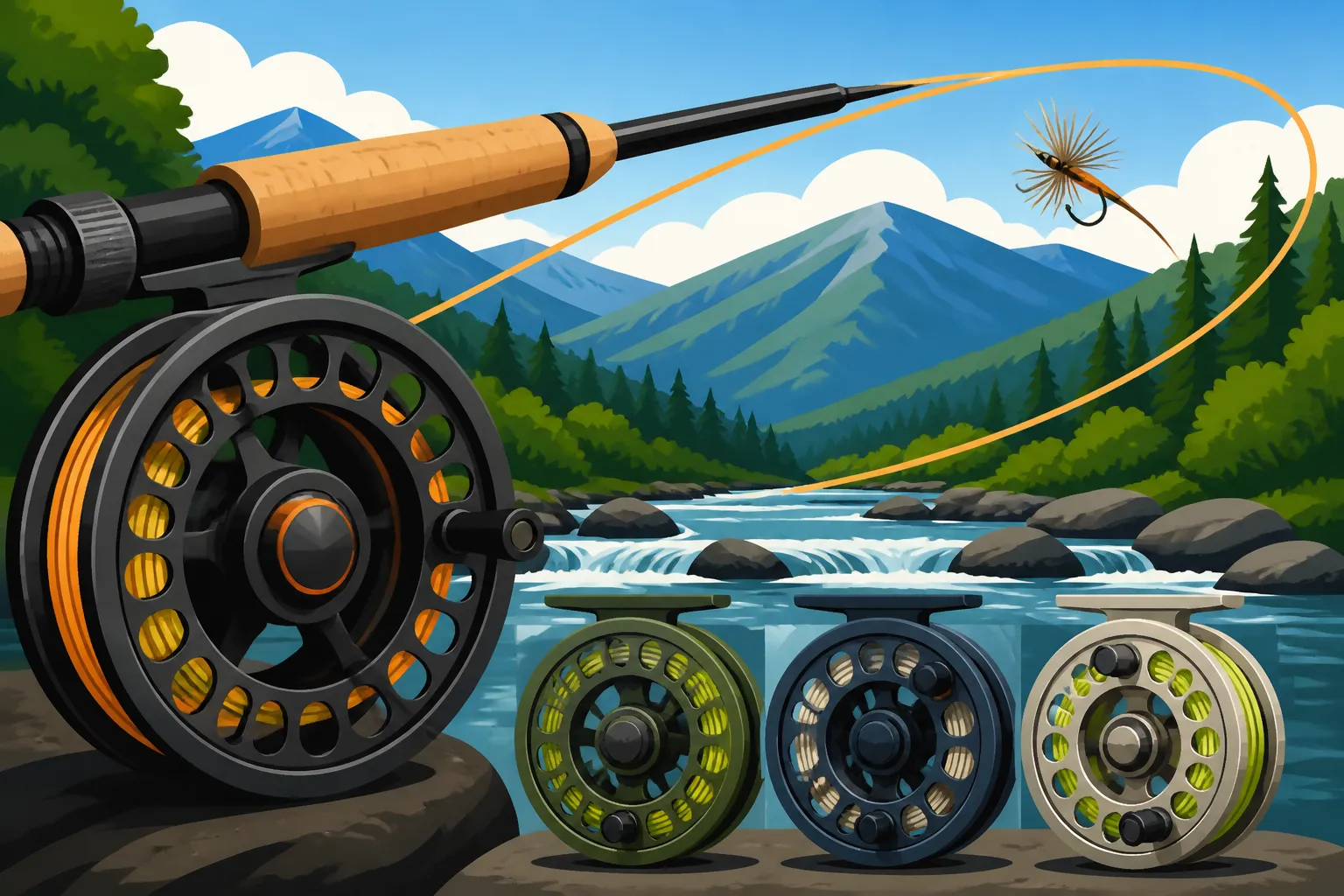
Picking out the perfect fly reel for fishing Tennessee's beautiful mountain streams can feel like a real puzzle. You're not just looking for any reel; you need something that perfectly complements the delicate nature of those wild trout and the often tight, technical casting conditions. This guide is all about helping you understand what truly makes a fly reel shine on the pristine, freestone streams of the Appalachians, ensuring your next outing is a smooth, successful, and thoroughly enjoyable one.
Understanding the Unique Demands of Tennessee Mountain Streams
When we talk about fly fishing in Tennessee's mountain streams, we're not picturing wide-open rivers where you might cast huge streamers. Instead, imagine crystal-clear, freestone streams winding through dense forests, often with canopy cover, tricky currents, and a bounty of beautiful, smaller trout. This environment presents a distinct set of challenges and opportunities that directly influence your fly reel choice.
The Intimate Nature of Small Stream Fishing
Many of Tennessee's prime trout waters, especially those high up in the mountains or within protected areas like the Great Smoky Mountains National Park, are characterized by their smaller size and intimate feel. Think about the Little River, the Tellico River, or even some of the smaller tributaries flowing into larger systems. Here, you’re often making short, precise casts, sometimes just a flick of the wrist to drop a dry fly into a small pocket or drift a nymph through a riffle. The trout themselves, while spirited, are typically not giants that will spool your entire line with a single run. This means your reel's primary function isn't necessarily holding hundreds of yards of backing or having a super powerful drag to stop a runaway freight train. It’s more about balance and ease of handling.
Because of this intimate scale, an overly heavy or bulky reel can throw off the delicate balance of a light fly rod. Imagine trying to make those subtle, accurate presentations with a clunky reel that feels like a brick on the butt of your rod – it's just not going to work. The whole setup needs to feel like an extension of your arm, responsive and nimble. The goal is to feel connected to every subtle movement of your line and fly, and the right reel plays a significant role in achieving that harmony. You can learn more about finding the right rod to pair with your reel in Best Fly Rods and Waders for Tennessee Trout Streams.
Prioritizing Weight and Balance
Given the delicate nature of small stream fishing, weight becomes a paramount consideration for your fly reel. You'll often be using lighter fly rods, typically in the 2-weight to 4-weight range, which are designed for finesse and presentation rather than brute force. A reel that is too heavy will make your rod feel tip-heavy and unbalanced, leading to fatigue over a long day of casting and making accurate casts much harder. Conversely, a reel that's too light might not perfectly counterbalance a slightly heavier rod, though this is less common with mountain stream setups.
The ideal reel will balance your rod perfectly, making the entire assembly feel like a natural extension of your arm. This balance allows for smoother casting strokes, more accurate fly placement, and less strain on your wrist and arm throughout the day. When browsing options, whether online at a large retailer like Amazon or in person at a specialty shop such as Bass Pro Shops, pay close attention to the reel's listed weight and consider how it will pair with your specific fly rod. Sometimes, the difference of an ounce or two can make a surprising impact on how the setup feels in your hand.
Drag Systems for Smaller Fish
While you might dream of landing a monstrous brown trout that peels line off your reel at an alarming rate, the reality of most Tennessee mountain stream fishing is that you're targeting smaller, feisty brook, rainbow, and brown trout. These fish are thrilling fighters, but they typically don't demand the kind of heavy-duty, sealed disc drag system found on reels designed for saltwater species or large salmon.
For these trout, a simpler drag system is often more than sufficient, and in many cases, preferred. A good drag is still important to prevent line breaks on strong runs and to protect light tippets, but it doesn't need to be overkill. The key is smooth, consistent resistance that prevents overruns and allows you to "fight the fish on the reel" when needed. Many traditionalists even prefer the audible click of a simpler drag system, adding to the auditory pleasure of the fight.
Key Features to Look for in a Mountain Stream Fly Reel
Now that we understand the environment, let's dive into the specific features that will make a fly reel excel on Tennessee's mountain streams. It's about finding that sweet spot between functionality, tradition, and practicality.
Lightweight Construction and Materials
As discussed, weight is king on small streams. Look for reels constructed from lightweight materials like machined aluminum. Machined aluminum reels offer an excellent strength-to-weight ratio, ensuring durability without adding unnecessary bulk. Die-cast reels can be a more budget-friendly option, but they are often heavier and might not hold up as well to repeated bumps and knocks against streamside rocks. Carbon fiber components are also appearing in some modern reels, further reducing weight.
The construction method also speaks to the reel's longevity. A fully machined reel typically has tighter tolerances and fewer moving parts that can wear out, making it a reliable workhorse for years of stream adventures. When you’re scrambling over slick rocks and bushwhacking through rhododendron thickets, you want a reel that can take a beating and keep on ticking. This robust, yet light, construction is a major plus for the often rugged terrain you'll encounter when exploring Tennessee's Most Remote Fishing Spots.
Responsive and Smooth Drag Systems
Even if you're targeting smaller fish, a responsive and smooth drag system is crucial. The goal isn't necessarily a super powerful drag, but one that engages smoothly and offers consistent resistance without sticking or jerking. A sticky drag can lead to sudden tension spikes, breaking your delicate tippet and sending your trophy trout (or even a humble 8-incher) back to the depths with your fly still in its mouth.
For mountain stream fishing, many anglers opt for either a traditional click-and-pawl drag or a lighter, simpler disc drag.
- Click-and-Pawl Drags: These are often found on classic, aesthetically pleasing reels. They offer a simple, mechanical resistance that provides an audible "click" when line is pulled out. The drag is typically adjusted by hand using palming the reel rim, or by a simple screw adjustment. They are lightweight, reliable, and perfectly adequate for small trout. The charm of a click-and-pawl reel is undeniable, providing that old-school feel and sound.
- Disc Drags: Even modern disc drags come in various strengths. For mountain streams, look for reels with a fine-tuning capability. You want to be able to set a light, consistent drag that protects your tippet but still gives you control. Sealed drag systems are a bonus, as they keep out grit and water, but aren't strictly necessary for most freshwater applications if you're diligent with cleaning.
Appropriate Arbor Size
The arbor is the central part of the reel around which the fly line is spooled. The size of the arbor influences several aspects of performance:
- Line Memory: A larger arbor reduces "line memory" – the tendency for your fly line to retain the coils from being stored on the reel. This means fewer annoying kinks and coils when you're trying to cast, leading to smoother presentations.
- Retrieve Speed: A larger arbor also means you retrieve more line with each turn of the handle, which can be useful when a fish makes a sudden run towards you, allowing you to catch up quickly and maintain tension.
- Backing Capacity: For small stream fishing, you generally don't need a huge amount of backing. Most mountain stream trout won't take you into your backing, but having 50-75 yards of backing is a good safeguard against an unexpectedly spirited fish or a longer-than-usual run. A mid-arbor or large-arbor reel will still provide plenty of space for your fly line and a reasonable amount of backing without being oversized.
A standard arbor reel can work, but a mid-arbor or large-arbor reel is often preferred for the reduced line memory and faster retrieve, making your overall fishing experience more pleasant and efficient.
Types of Fly Reels Suited for Tennessee Streams
Let's break down the most common types of fly reels and how they stack up for chasing those elusive Tennessee mountain trout. Each has its own benefits and might appeal to different styles of anglers.
The Classic Click-and-Pawl Reel
Ah, the click-and-pawl reel! This is often considered the traditionalist's choice for small stream trout. These reels are mechanically simple, relying on a pawl (a small lever) that "clicks" against a gear to provide resistance. They typically offer a light, non-adjustable drag, or a very basic adjustment, meaning much of the drag control comes from "palming" the rim of the spool with your hand to add friction.
The allure of the click-and-pawl reel lies in its classic aesthetics, lightweight design, and that satisfying zzzzzzzzzz sound when a fish takes line. They are often the lightest reels available, perfectly balancing lighter trout rods. For anglers who love the minimalist approach and the direct connection to the fight, these reels are fantastic. They are usually more affordable than high-end disc drag reels and require minimal maintenance, making them a hardy companion for rugged mountain treks. While some modern ones are available, many anglers seek out vintage models that have stood the test of time.
Modern Mid-Arbor and Large-Arbor Disc Drag Reels
Stepping into the more modern realm, disc drag reels offer a smoother, more adjustable drag system than their click-and-pawl counterparts. These reels use a series of friction plates (discs) to create adjustable resistance. For Tennessee mountain streams, you're not looking for the heaviest drag, but rather one that can be precisely set to protect light tippets.
Mid-arbor and large-arbor designs are popular here. As discussed, they help reduce line memory, which is a big plus for casting accuracy and presentation with delicate dry flies or small nymphs. They also allow for faster line retrieval, which can be critical if a spirited trout makes a sudden dash towards you. Many brands offer lightweight models specifically designed for trout fishing. You'll find a vast selection of these reels at various price points, from entry-level options to high-end machined models. Online stores like Amazon often carry a wide array of brands and models, and you can also find a good selection at specialized outdoor retailers.
The Trade-Off: Simplicity vs. Performance
Choosing between a click-and-pawl and a disc drag reel for mountain streams often comes down to a philosophical debate as much as a practical one.
- Simplicity and Tradition: If you value tradition, light weight, and a direct, hands-on feel during the fight, a click-and-pawl reel might be your ideal companion. It forces you to engage more actively in the fish-fighting process, using your hand to moderate the drag. For small, wild trout, this can be incredibly satisfying.
- Modern Performance and Adjustability: If you prefer the peace of mind that comes with a finely adjustable, consistent drag, and the benefits of reduced line memory and faster retrieve from a large arbor, a modern disc drag reel will be more appealing. While perhaps less "traditional," many contemporary trout-specific disc drag reels are incredibly lightweight and designed to complement light fly rods perfectly.
Ultimately, both can be excellent choices. Many anglers own one of each, using the click-and-pawl for purely nostalgic trips and the disc drag for days when consistent performance and minimal fuss are the priority.
Matching Your Reel to Your Rod and Target Species
The fly reel is only one part of your overall fishing system. To achieve optimal balance and performance on Tennessee's diverse waterways, it's essential to match your reel appropriately to your fly rod, fly line, and the specific fish you're targeting.
Rod Weight and Line Weight Synergy
The most fundamental matching principle is to align your reel with your rod's weight and the corresponding fly line. Fly rods are rated by "weight" (e.g., 3-weight, 5-weight), which indicates the optimal weight of the fly line they are designed to cast. Your fly reel should be chosen to hold the correct weight of fly line and to balance the rod.
For the small stream trout fishing common in Tennessee, you'll likely be using lighter rod weights:
- 2-weight to 4-weight rods: These are the bread and butter for delicate presentations on smaller streams. They are ideal for casting small dry flies, nymphs, and emergers. Your reel should be sized to hold a 2wt, 3wt, or 4wt fly line (plus backing) and be lightweight enough to balance these sensitive rods. This balance is critical for feeling subtle takes and making accurate casts in tight quarters. You can find more specific advice on what line to use in Best Fly Fishing Line Weight for Trout.
- 5-weight rods: While a 5-weight can be a good all-around rod for larger streams or when you might encounter slightly larger fish, it's often considered a bit heavy for dedicated small stream work. If you do opt for a 5-weight, ensure your reel is sized appropriately to balance it.
The goal is to have the reel's weight perfectly offset the rod's weight, creating a comfortable "pivot point" near where your hand holds the grip. This balance point minimizes fatigue and maximizes casting efficiency.
Targeting Specific Trout Species
While the general principles remain for all trout, sometimes subtle adjustments in your setup can be beneficial depending on whether you're chasing rainbow, brown, or native brook trout. You can learn more about these different species in Tennessee Trout Guide: Rainbow, Brown, and Brook Trout.
- Brook Trout: Often found in the highest, coldest, and smallest headwater streams, brook trout are typically the smallest of Tennessee's trout species. For these jewel-toned natives, the lightest possible setup (2- or 3-weight rod with a super lightweight click-and-pawl or small disc drag reel) is perfect. Delicacy and stealth are key, and a light setup enhances both.
- Rainbow Trout: Rainbows are abundant in many stocked and wild-reproducing streams throughout Tennessee. They are spirited fighters, often leaping and making powerful runs. A 3- or 4-weight rod with a smooth, reliable disc drag reel is a solid choice. The slightly more robust drag provides peace of mind when a feisty rainbow decides to test your tippet.
- Brown Trout: Brown trout, particularly the larger specimens, can be more elusive and powerful. While a large brown might demand a stronger drag, most stream-dwelling browns in Tennessee will still be manageable on a 3- or 4-weight setup. The key is a drag that can be smoothly adjusted to prevent break-offs when they make a sudden dash for cover.
Remember, the reel's primary job on these streams is line storage and balance. While drag is important, it's rarely about stopping a monster. It's about protecting your delicate leader and tippet from sudden surges.
Maintenance and Care for Fly Reel Longevity
Your fly reel is an investment, and like any good piece of fishing gear, it deserves proper care and maintenance to ensure it performs flawlessly trip after trip. This is especially true when fishing in the often-gritty, wet environments of Tennessee's mountain streams.
Post-Trip Cleaning Rituals
After every fishing trip, especially if your reel has been submerged or exposed to mud and debris, a quick cleaning ritual goes a long way. This isn't just about aesthetics; it's about preventing corrosion and ensuring your drag system remains smooth and reliable.
- Rinse Thoroughly: Disassemble your reel (take the spool off the frame). Rinse both parts thoroughly with fresh, cool water. Pay extra attention to the drag system and any crevices where grit might hide. If you've been in murky water, you might use a very soft brush (like an old toothbrush) to gently dislodge any stubborn dirt.
- Dry Completely: This is critical. Allow both the spool and the frame to air dry completely. You can gently blot with a soft towel, but avoid using heat sources that could warp components. Ensure no moisture remains trapped, particularly within the drag system.
- Inspect and Lubricate (if needed): While many modern reels are largely maintenance-free in terms of lubrication, some older models or click-and-pawl reels might benefit from a tiny dab of light reel oil on specific moving parts (check your manufacturer's instructions). Inspect your fly line for any nicks or abrasions that could compromise its integrity.
Consistent cleaning prevents the build-up of micro-debris that can degrade drag performance and lead to premature wear.
Protecting Your Reel on the Water
The rugged beauty of Tennessee's mountain streams often comes with challenges like slippery rocks, dense undergrowth, and unexpected tumbles. Protecting your reel while you're fishing is just as important as post-trip care.
- Reel Cases: When transporting your rod and reel, especially when hiking to those more remote spots, a padded reel case is invaluable. Many rods come with a cloth bag for the reel, but a hard or semi-hard case offers superior protection against bumps and impacts.
- Rod Sleeves: Even when assembled, a simple rod sleeve can protect your reel (and rod guides) from scratches and dings when you're moving between fishing spots or scrambling through brush.
- Mindful Placement: When taking a break or changing flies, be conscious of where you place your rod and reel. Don't lay it directly on gravel or sand where grit can easily enter the drag system. Prop it carefully against a tree or rock, or use a rod holder if available.
- Avoid Submersion: While a quick dunk isn't usually a death sentence for a good quality reel, repeated or prolonged submersion, especially in silty water, can introduce contaminants into the drag. Try to keep your reel out of the water when not actively fishing.
Storage Between Trips
Proper storage ensures your reel is ready for action whenever the urge to hit the stream strikes.
- Cool, Dry Place: Store your reel in a cool, dry environment, away from direct sunlight or extreme temperature fluctuations. This prevents material degradation and keeps lubricants from drying out or becoming gummy.
- Loosen Drag: It's a good habit to slightly loosen your reel's drag before storing it for extended periods. This relieves pressure on the drag washers, helping to maintain their integrity and prolong their lifespan.
- Remove Salt (if applicable): While we're talking about freshwater streams here, if you ever use this reel for any brackish or saltwater application, a thorough freshwater rinse and dry is absolutely essential to prevent corrosion, especially around the spool release and handle.
By following these simple maintenance and care tips, your chosen fly reel for Tennessee's mountain streams will provide you with years of enjoyable and reliable service, making every cast and every caught fish a memory to cherish.
| Feature | Click-and-Pawl Reel | Disc Drag Reel (Light Trout) |
|---|---|---|
| Drag System | Simple mechanical pawl, usually fixed or basic adj. | Multi-disk system, finely adjustable |
| Drag Control | Primarily palming the spool rim, or light knob | External knob for precise, consistent setting |
| Weight | Often lightest | Can be very light, but generally slightly heavier |
| Line Memory | Varies, standard or mid-arbor | Often features mid- or large-arbor to reduce |
| Retrieve Speed | Standard, depends on arbor | Often faster with larger arbor |
| Sound | Distinctive, satisfying "click" during retrieve/take | Silent or very subtle click during retrieve/take |
| Maintenance | Minimal, very durable due to simplicity | Low, especially with sealed systems |
| Best For | Purists, small wild trout, delicate presentations | Versatile trout fishing, precise drag control, faster line management |
| Typical Cost | Entry-level to mid-range, some high-end artisan | Wide range from budget to premium |
Disclaimer
This article is for general informational purposes only and does not constitute professional advice. Laws, prices and regulations vary by location and change over time. Consult a qualified professional for guidance on your specific situation.