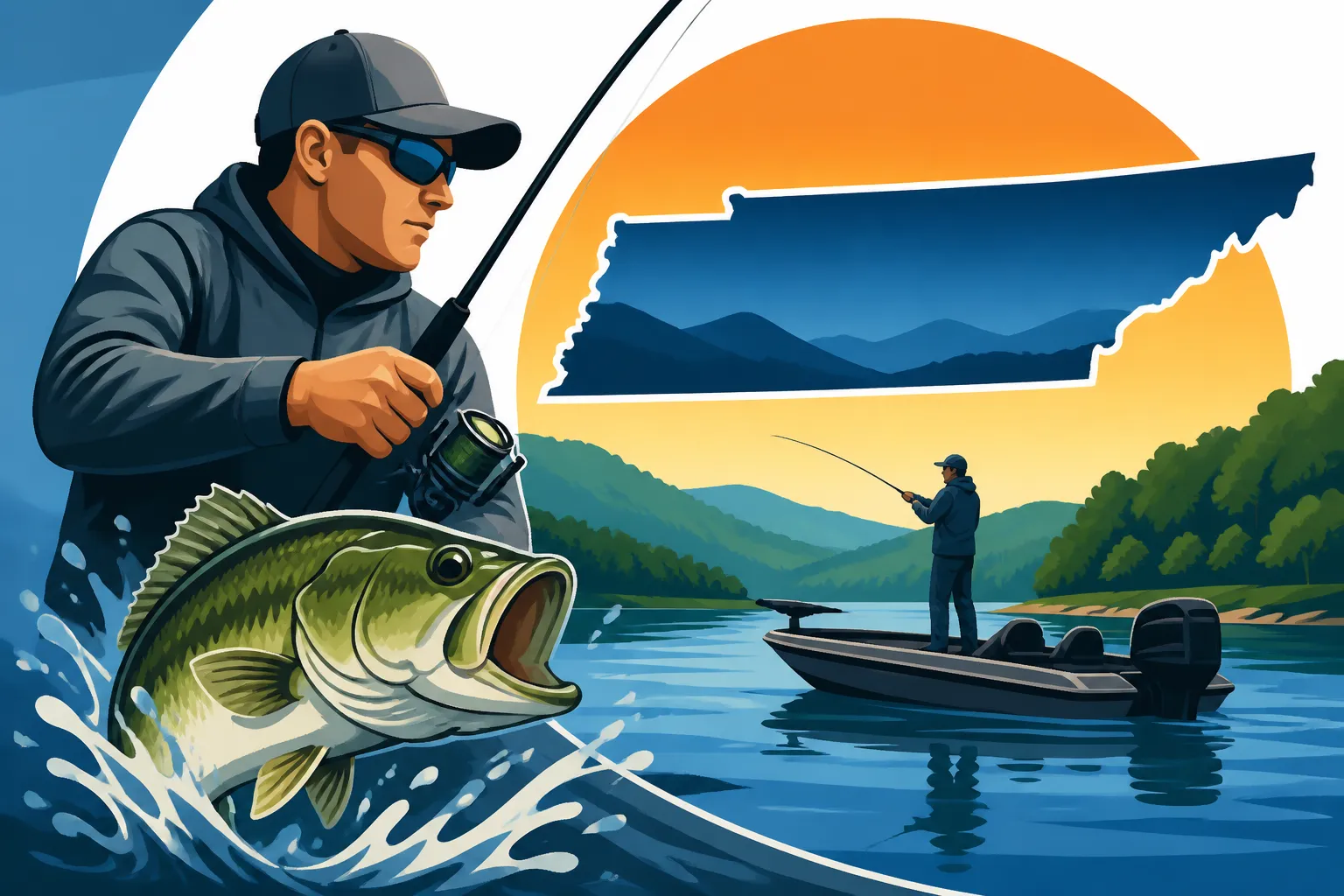
Tournament Angler Rules on Tennessee Waters
Stepping onto the launch ramp before dawn, the air thick with anticipation, is a familiar thrill for any angler, but for those gearing up for a fishing tournament in Tennessee, that thrill comes with a hefty dose of responsibility. The pressure isn't just about landing that lunker; it's also about navigating the maze of rules and regulations that govern competitive fishing. Many folks, even seasoned tournament veterans, find themselves scratching their heads over what applies to them specifically, fearing a disqualification or fine that could ruin their day. This guide is here to clear the waters, providing a comprehensive look at the specific rules tournament anglers need to know to fish legally and competitively in Tennessee.
The Foundation: Standard Fishing License Requirements for Tournament Anglers
Before you even think about casting a line in a competitive setting, the very first thing you need to sort out is your fishing license. It's the bedrock of all legal fishing activity in Tennessee, and tournaments are absolutely no exception. Trying to compete without the proper licensure is a surefire way to turn a day of angling into a day of penalties.
Why a Basic License is Non-Negotiable
Every single person aged 13 and older who fishes in Tennessee, regardless of whether they're casually drowning a worm off a dock or gunning for a grand prize in a major bass circuit, must possess a valid fishing license. This isn't just a suggestion; it's the law. The Tennessee Wildlife Resources Agency (TWRA) is very clear on this. Even if a tournament promotes itself as "catch and release," the act of fishing itself requires a license. You might think, "Well, I'm not keeping any fish, so why do I need a license?" The answer is simple: the license grants you the privilege to participate in fishing activity on public waters.
For residents, the most common option is the annual resident combination hunt and fish license, which covers both activities for a very reasonable fee. If you only fish, a statewide annual fishing license is also available. These licenses are typically valid for 12 months from the date of purchase, not necessarily a calendar year, so it's crucial to know how long a Tennessee fishing license stays valid. You can easily pick one up online, at most bait shops, or even at big-box retailers like those found on Amazon, which often sell official TWRA licenses through their outdoor departments.
Understanding Trout Permits and Other Endorsements
Now, here's where it can get a little more nuanced, especially if your tournament waters happen to hold trout or your target species is often found alongside them. While a basic fishing license covers most freshwater species like bass, crappie, and catfish, if you plan to fish for trout, you'll need an additional trout permit. This isn't always automatically included in your standard license, and it's a critical detail that many tournament anglers overlook.
For example, if your tournament takes place on a lake or river known for its trout populations, such as the Clinch River or some sections of the Cumberland River, and there's any chance you might accidentally catch, or even intentionally target, trout, you absolutely need this permit. It's often referred to as a "trout stamp" or "trout privilege." The same goes for other special species or unique fishing opportunities that might require specific endorsements. Always check the official Tennessee Fishing Regulations Explained to ensure you have all the necessary permits for your chosen body of water and target species. Remember, ignorance of the specific requirements is not a valid defense if a game warden checks your credentials.
Resident vs Nonresident Licenses for Competitions
If you're traveling to Tennessee from another state to participate in a tournament, the rules for your fishing license differ significantly. While Tennessee offers various nonresident fishing license costs in Tennessee, they are generally more expensive than resident licenses and come in different durations. You can choose from an annual nonresident license or shorter-term options like the nonresident 3-day and 10-day license options for Tennessee. The choice often depends on how long your tournament lasts and if you plan to extend your stay for additional fishing.
For instance, if you're coming for a weekend-long tournament, a 3-day or 10-day license might seem more economical than the full annual pass. However, if you plan multiple trips throughout the year for various events, an annual nonresident license might actually be more cost-effective in the long run. Just like residents, nonresidents also need to consider the trout permit if they plan to fish for trout. Why nonresident licenses cost more with trout included is mainly due to the specific management and stocking programs for these cold-water species, which require dedicated funding. Always verify the specific rules and costs for nonresidents, as penalties for fishing without a license in Tennessee can be steep, regardless of your residency status.
Beyond the License: Specific Tournament Regulations
Simply having a valid fishing license is just the first hurdle. Tournament fishing, by its very nature, introduces a layer of additional regulations and best practices that competitive anglers must adhere to. These rules are often designed to ensure fair competition, protect fish populations, and maintain the integrity of the sport.
Permitting and Registration for Tournament Organizers
It’s crucial for tournament anglers to understand that the event itself usually operates under a permit issued by the TWRA. This isn't something the individual angler needs to worry about directly, but it impacts the rules you'll follow. Tournament organizers are responsible for applying for and obtaining specific permits for their events, especially those that involve large numbers of participants or take place on certain bodies of water. These permits often dictate things like launch times, weigh-in procedures, and any special conditions related to the specific lake or river.
For example, a major bass tournament on Chickamauga Lake: Tennessee's Top Bass Fishing Destination will have a TWRA-approved permit that includes specific instructions for fish care and weigh-in. These permits help the TWRA monitor the impact of large events on fisheries and ensure compliance with conservation efforts. As an angler, while you don't secure the permit, knowing that the tournament is officially sanctioned provides a level of assurance that the rules you're following are aligned with state regulations. Always confirm with your tournament director that the event is properly permitted, which is standard practice for reputable organizations.
Livewell Requirements and Fish Care During Tournaments
Fish care is paramount in tournament fishing, particularly in catch-and-release events. Tennessee, like most states, has stringent regulations concerning the proper handling and livewell requirements for fish kept during a tournament. The goal is to minimize stress and mortality, ensuring that released fish have the best chance of survival. Livewells must be adequately sized and properly aerated or oxygenated to keep fish alive and healthy. A common standard is often 1.5 to 2 gallons of water per pound of fish. Many anglers invest in advanced livewell systems that circulate fresh water, inject oxygen, and even regulate temperature.
It's not just about having a livewell; it's about how you use it. Overcrowding your livewell or allowing water temperatures to become too extreme can lead to penalties from tournament officials, regardless of whether you’ve violated a state law. Some tournaments might even have specific additives they recommend or require for livewell water to further reduce stress on the fish. This focus on fish health highlights the ethical responsibilities that come with competitive angling, ensuring that the sport can continue to thrive.
Size and Creel Limits: Lake-Specific vs. Statewide Rules
This is perhaps one of the most confusing areas for many anglers: understanding catch limits. While the TWRA sets statewide bass limits for Tennessee anglers, crappie limits under Tennessee fishing rules, and Tennessee trout limits and season rules, many popular fishing lakes and rivers have their own special regulations that supersede these general rules. This is where you absolutely must do your homework.
For example, a tournament on Watts Bar Lake, Tennessee's Largest Lake for Fishing, might have a different length limit for largemouth bass than the statewide regulation. Similarly, Kentucky Lake Fishing on the Tennessee Side might have unique rules for certain species. These lake-specific fishing rules that override Tennessee's statewide limits are put in place by the TWRA to manage specific fisheries effectively, often due to unique ecological factors or fishing pressure on that particular body of water. Tournament directors will usually reiterate these specific rules, but it is ultimately your responsibility as an angler to know and follow them. Penalties for violating these limits, even unknowingly, can range from disqualification from the tournament to substantial fines from the TWRA. Always consult the latest TWRA fishing guide or their online resources for the most up-to-date information on the specific waters you'll be competing on.
Boating Regulations and Safety for Competitive Fishing
Tournament fishing often means extended hours on the water, sometimes in challenging conditions, and usually involves operating a boat. This brings another layer of regulations into play, focusing on boat registration, safety, and proper operation. Ignoring these rules can lead to significant issues, from fines to accidents, disrupting your tournament and potentially endangering lives.
Essential Boat Registration and Decal Requirements
Just like your fishing license, your boat needs to be properly registered with the TWRA. Every boat equipped with a motor, whether it's a powerful outboard or a quiet electric trolling motor, must be registered in Tennessee. This means securing a Tennessee boat registration, which involves providing proof of ownership and paying a fee. Once registered, you'll receive a registration card and decals that must be prominently displayed on your boat's hull.
While Tennessee doesn't issue boat titles in the same way many states do for cars, the registration process is vital for identification and enforcement. It's not just about having the decals; you must carry your current registration certificate on board at all times when operating the vessel. Failure to do so can result in a citation. For competitive anglers, ensuring your boat is legally registered is a non-negotiable first step before hitting the water for practice or the tournament itself. You can find detailed information on Tennessee Boat Registration Requirements Explained to make sure you're compliant.
Life Jacket and Boating Safety Education Mandates
Safety on the water is paramount, and Tennessee has clear rules regarding life jackets and boating safety education. Every person on board a vessel must have access to a Coast Guard-approved wearable personal flotation device (PFD). Furthermore, any child under the age of 12 must wear a life jacket at all times while on the open deck of a recreational vessel in motion. This rule applies universally, whether you're leisurely cruising or speeding to your next fishing spot in a tournament. Beyond this, boats 16 feet or longer must also carry one Type IV throwable flotation device.
For many tournament anglers, especially those born after January 1, 1989, a Tennessee Boating Safety Education Certificate is mandatory to operate a motorized vessel. This means completing an approved boating safety course and passing an exam. Carrying proof of this certification, often in the form of a TWRA Boating Safety Education Certificate card, is required whenever you operate a boat. These rules are in place not to hinder your fishing but to protect you and other boaters on the water, a critical consideration during high-traffic tournament days. Ignoring these safety mandates can result in fines and, more importantly, put lives at risk.
Navigation Lights and Night Fishing Considerations
Tournament fishing often involves early morning starts or late evening finishes, and some events even extend into the night. If you're operating your boat between sunset and sunrise, proper navigation lights are absolutely essential. Tennessee boating laws require all motorized vessels to display specific navigation lights during these hours: a masthead light (white, 360-degree visibility), sidelights (red for port, green for starboard), and a stern light (white). These lights ensure that your boat is visible to others on the water, preventing collisions in low-light conditions.
Even if your tournament doesn't officially involve night fishing, those pre-dawn runs to your fishing spot or post-weigh-in returns to the ramp necessitate proper lighting. It's not uncommon for tournament anglers to be on the water well before the sun crests the horizon, and visibility can be severely limited. Ensure all your boat's navigation lights are functional and properly displayed. Using a portable light, like those you might find on Amazon for emergency kits, is not a substitute for fixed, regulation-compliant navigation lights. Compliance here isn't just about avoiding a ticket; it's about mutual safety on shared waterways, especially on popular fishing lakes in Tennessee where multiple boats are often active.
Weigh-In Procedures and Fair Play
The weigh-in is the climax of any fishing tournament, where all the hard work and strategy come to fruition. But it's also a highly regulated segment of the event, designed to ensure fair competition, accurate scoring, and, crucially, the well-being of the fish. As an angler, understanding these procedures is vital for a smooth and successful tournament experience.
Minimizing Stress and Maximizing Survival at Weigh-In
Tournament organizers go to great lengths to ensure that fish brought to the scales are handled with the utmost care, particularly in catch-and-release tournaments. This starts long before the weigh-in line. Anglers are typically instructed on best practices for retrieving fish from livewells, placing them in official weigh-in bags, and transporting them to the scales. The goal is to keep the fish submerged in water as much as possible, minimizing air exposure and physical contact that can strip away their protective slime coat.
Many tournaments will have dedicated "bump tanks" or aeration stations at the weigh-in area where fish can be held in fresh, oxygenated water before and after being weighed. This extra step helps revive any stressed fish. It's important to move quickly and efficiently through the weigh-in process, but always with gentle hands. Anglers who are seen mishandling fish can face penalties, including deductions from their total weight or even disqualification, as preserving the resource is a core value in competitive fishing.
Official Scales and Disqualification Factors
Accuracy is paramount at the weigh-in. Tournaments use certified, often digital, scales that are regularly calibrated to ensure precise measurements. These scales are typically monitored by multiple officials to prevent any tampering or errors. Anglers usually bring their fish to the scales in an official weigh-in bag, which is then placed directly on the scale. The weight is recorded, and the fish are immediately transferred to a holding tank or released.
Disqualification factors at weigh-in can be varied and severe. These might include bringing in more fish than the legal creel limit, fish that do not meet the minimum length requirements (even by a fraction of an inch!), or fish that show signs of having been "doctored" in any way (e.g., loaded with weights). Deceased fish are also often penalized, typically with a weight deduction for each dead fish. Furthermore, any unsportsmanlike conduct, such as arguing with officials or attempting to manipulate the weighing process, can also lead to immediate disqualification. Understanding the precise rules your specific tournament has for fish size, limits, and condition is critical to avoiding such pitfalls.
The Role of Game Wardens and Rule Enforcement
While tournament officials handle the immediate rules of competition, Tennessee Wildlife Resources Agency (TWRA) game wardens often play a vital role in overseeing tournaments, particularly larger events on popular bodies of water like Percy Priest Lake Fishing Near Nashville, Tennessee. Game wardens are law enforcement officers with the authority to enforce all state fishing and boating regulations. They can perform random checks on tournament boats, verify fishing licenses, check boat registrations, inspect livewells for fish size and count, and ensure compliance with all safety equipment requirements, including life jackets.
Their presence ensures that state laws are being upheld alongside tournament-specific rules. If a game warden observes a violation of state law, such as an angler fishing without a license or possessing undersized fish, they have the authority to issue citations and levy fines, completely separate from any penalties imposed by the tournament director. This means even if you're abiding by all tournament rules, you must also be in full compliance with all Tennessee Fishing Rules Every Angler Should Know. It's a dual layer of enforcement that reinforces the importance of responsible angling.
Common Misconceptions and Avoiding Penalties
Even the most experienced anglers can sometimes fall prey to common misconceptions about fishing regulations, especially when the added pressure of a tournament is involved. Clarifying these points is key to a penalty-free experience on Tennessee waters.
"Catch and Release" Doesn't Mean "No License Needed"
This is perhaps one of the most persistent myths in recreational fishing. Many anglers mistakenly believe that if they intend to practice "catch and release" and won't be taking any fish home, they don't need a fishing license. This is unequivocally false in Tennessee. The act of fishing itself, whether you release every fish or fill a cooler, requires a valid license if you are 13 years of age or older. The license grants you the privilege to fish, not just the privilege to harvest.
Tournament directors will explicitly state this, and TWRA game wardens will enforce it. Participating in a "catch and release" tournament without a license will lead to the same penalties as fishing casually without one, which can include fines and potential confiscation of gear. If you're unsure about the specific requirements, consult the Tennessee Fishing License Requirements or the official TWRA website. It's a simple, inexpensive step that protects you from unnecessary trouble.
Reciprocity on Border Waters for Tournament Anglers
Tennessee shares several major waterways with neighboring states, most notably Kentucky Lake with Kentucky and Pickwick Lake with Alabama and Mississippi. This often leads to questions about license reciprocity, especially for tournament anglers who might cross state lines on the water. While some limited reciprocity agreements exist for specific shared waters, it's a complex area, and the general rule of thumb for tournament fishing is to err on the side of caution.
For instance, on Kentucky Lake, there are specific areas where a valid Kentucky or Tennessee license might be honored. However, these agreements usually have strict geographical limitations. If a tournament requires you to fish widely across a border lake or venture into waters clearly within another state's jurisdiction, you will likely need a license for both states. Relying on reciprocity for a tournament can be risky, as interpretations can vary, and state lines on large lakes aren't always clear-cut. It's always safest for tournament anglers to possess a valid license for every state whose waters they intend to fish during the event. This prevents any confusion or potential fines from game wardens from either state. Check specific details on Fishing License Reciprocity Between Tennessee and Neighboring States for the most accurate information.
Understanding Lake-Specific Rules That Override Statewide Limits
As touched on earlier, this is a critical point that cannot be overstated. Tennessee has a diverse range of fisheries, and managing them effectively often means implementing regulations tailored to specific bodies of water. This leads to many lake-specific fishing rules that override Tennessee's statewide limits. For tournament anglers, this isn't just a recommendation; it's a mandatory compliance factor.
Take for example, the crappie limit in Tennessee. While a statewide limit of 20 fish per day applies, with only 5 over 12 inches, certain lakes might impose a different total number or length restriction for crappie. The same can be true for bass, catfish, or other game species. These special regulations are usually posted at public access points, boat ramps, and are detailed in the annual TWRA Fishing Guide. Tournament directors will usually highlight these rules, but it is ultimately the angler's responsibility to know them. A common scenario sees an angler familiar with statewide rules inadvertently breaking a lake-specific rule, leading to disqualification or a citation. Always, always check the specific regulations for the lake where your tournament is being held. A simple search on the TWRA website for "specific lake name regulations" can save you a lot of heartache.
Summary of Key Tournament Angler Rules
To help keep everything straight, here’s a quick overview of the essential rules and considerations for tournament anglers on Tennessee waters:
| Rule Category | Standard Requirement | Tournament-Specific Considerations | Potential Pitfall (and how to avoid it) |
|---|---|---|---|
| Fishing License | Required for all anglers 13+ | Mandatory for all participants, even in "catch and release" events. | Fishing without one due to "catch & release" misunderstanding (always buy one). |
| Trout Permit | Required for trout fishing | Necessary if tournament waters contain trout or if trout are a target species. | Overlooking a trout permit on multi-species waters (check species list for waterbody). |
| Boat Registration | Required for all motorized vessels | Must be current, decals displayed, and registration on board. | Outdated registration or missing documents (renew and carry proof). |
| Boating Safety | Life jackets for all, kids under 12 wearing. Boating safety certificate for specific birth years. | Enhanced awareness of crowded waters, adherence to all PFD and safety course rules. | Ignoring PFD rules or lacking safety certificate (always have them). |
| Fish Limits (Creel/Size) | Statewide limits apply by default | Many lakes have specific rules that override statewide limits for certain species. | Assuming statewide limits apply everywhere (check local regulations). |
| Livewells | N/A for recreational | Properly sized, aerated, and oxygenated to minimize fish mortality. | Overcrowding or poor water quality leading to dead fish (maintain livewell). |
| Weigh-In Procedures | N/A for recreational | Fast, gentle handling; official scales; rules against dead or "doctored" fish. | Mishandling fish or trying to manipulate weights (follow all weigh-in rules). |
| Border Waters | Standard license for state you're in | May require licenses for multiple states if fishing across state lines, even on shared waters. | Relying solely on limited reciprocity (buy licenses for all states fished). |
| Tournament Permits | N/A for individual anglers | Tournament organizers secure permits; anglers must follow specific rules outlined by the tournament. | Not knowing the tournament's specific rules (read tournament rules carefully). |
Ultimately, a well-prepared tournament angler is not just skilled with a rod and reel, but also knowledgeable about the rules that govern their passion. By understanding and adhering to these regulations, you not only ensure fair play but also contribute to the conservation efforts that keep Tennessee's waters rich with fish for generations to come. Safe and successful fishing!
Disclaimer
Please remember that fishing and boating regulations are subject to change. While we strive to provide the most current and accurate information, it is always your responsibility to consult the official Tennessee Wildlife Resources Agency (TWRA) website or their current fishing guide for the latest and most complete regulations before engaging in any fishing or boating activities, especially tournament fishing. This guide is for informational purposes only and should not be considered legal advice.