How to Identify Spotted Bass in Tennessee Reservoirs
Have you ever reeled in a beautiful bass from a Tennessee reservoir, only to find yourself scratching your head, wondering if it's a largemouth, a smallmouth, or something else entirely? It's a common dilemma, especially with the subtle differences between species that can sometimes trip up even experienced anglers. This comprehensive guide is here to unravel that mystery, providing you with clear, actionable tips on how to confidently identify spotted bass in Tennessee's vast and diverse waters.
Why Accurate Bass Identification is Crucial for Tennessee Anglers
You might think, "A bass is a bass, right?" and while that might hold true for the thrill of the catch, knowing exactly which species you've landed is more important than you might realize. It's not just about bragging rights; it impacts everything from following regulations to refining your fishing techniques and even contributing to the health of our fisheries.
Understanding Regulation Differences
This is perhaps the most immediate and practical reason to know your bass. The Tennessee Wildlife Resources Agency (TWRA) often sets different size and creel limits for various bass species. For instance, the daily limit and minimum size for a largemouth bass might be distinct from those for a smallmouth or a spotted bass, particularly on specific lakes. Imagine a scenario where you're happily keeping what you believe are legal largemouth, only to find out they're actually spotted bass with a different set of rules. That can quickly lead to an uncomfortable conversation with a game warden and potential penalties for fishing without understanding the specific Tennessee Fishing Regulations Explained. Being able to identify your catch on the spot ensures you're always fishing legally and sustainably, helping to preserve our precious fish populations.
Improving Your Fishing Strategy
Fish species, even within the same genus like bass, have unique preferences when it comes to habitat, forage, and behavior. A largemouth bass might prefer dense cover in shallow, warm water, while a smallmouth might hug rocky ledges in cooler, deeper sections. Spotted bass, as we'll dive into, have their own quirks. If you consistently find yourself catching what you thought were largemouth but turn out to be spotted bass, it means your bait choices, retrieval speeds, and chosen fishing spots might actually be better suited for spots. By accurately identifying your catches, you can start to piece together patterns. "Aha! That technique really worked for those spotted bass in that particular depth with that kind of cover." This feedback loop is invaluable for becoming a more effective angler and will help you better understand Tennessee Bass Fishing Seasons and Patterns in specific locations.
Contributing to Conservation Efforts
Every time you catch and release, or even harvest, a fish, you're interacting with the ecosystem. When biologists and fisheries managers develop regulations, they rely on data about fish populations. If anglers are consistently misidentifying species in their catch reports (even informal ones, like online forums or conversations at the bait shop), it can skew the perception of population health. Knowing you're accurately identifying spotted bass, for example, allows you to appreciate their role in the local food web and understand the specific pressures they might face. This awareness fosters a deeper respect for conservation and encourages responsible angling practices, ensuring these fish thrive for future generations. It’s about being a good steward of our natural resources.
Pinpointing Spotted Bass: Key Physical Traits
Now for the fun part: getting down to the nitty-gritty of what makes a spotted bass a spotted bass. While they share some family resemblance with largemouth and smallmouth, there are several key features that, once you know them, make identification much clearer.
The Jawline Test: Maxillary Bone Location
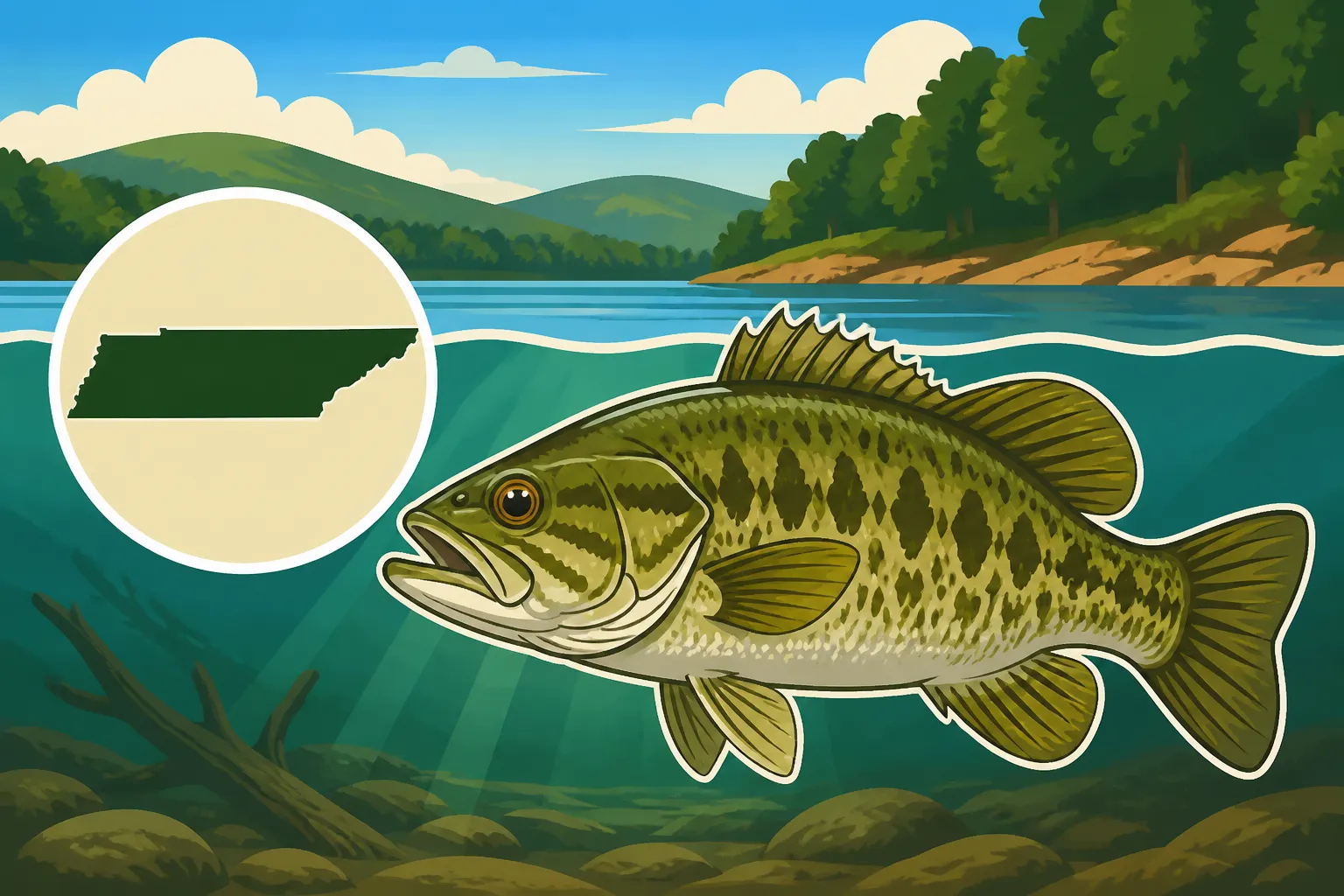
This is often the go-to first check for many experienced anglers. Take a close look at the fish's mouth. The maxillary bone is the bone that forms the upper part of the jaw. For a spotted bass, if you close its mouth, the maxillary bone does not extend beyond the back of the eye. It will typically align with the middle or front of the eye. This is a crucial distinction from a largemouth bass, where the maxillary bone almost always extends noticeably past the eye. Think of it like this: a largemouth has a "big mouth" that goes way back, while a spotted bass has a more "moderate mouth." This visual cue is one of the most reliable indicators to quickly differentiate between a spotted and a largemouth.
You can gently press the fish's jaw shut to get a clear view. If the jaw stops well before the rear edge of the eye, you're likely holding a spotted bass. This specific characteristic helps clarify any initial doubts you might have, especially when comparing a smaller largemouth to a larger spotted bass, where size alone can be misleading. Many anglers even carry a small, waterproof field guide, easily found on Amazon, to double-check this feature on the water.
Distinctive Scales and Patches
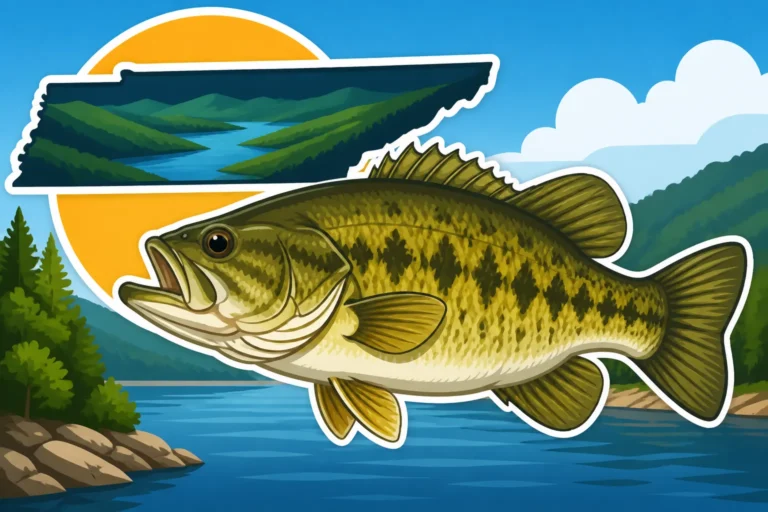
Next, let's examine the body of the fish. Spotted bass get their name for a reason! They have rows of prominent, dark spots along their lower side, running from the gill plate all the way back to the tail. These spots are usually distinct and often appear in neat, parallel lines. While largemouth can have a lateral line that looks like a series of connected blotches, the spotted bass's lower body spots are much more defined and standalone. On the other hand, smallmouth bass typically have vertical bars or faint blotches, not distinct spots on their lower flanks.
Another tell-tale sign is the patch of teeth on the tongue. Gently open the fish's mouth and feel or look for a small, rough patch of teeth right in the center of its tongue. This is known as a "tooth patch." Spotted bass always have this patch. Largemouth bass rarely have one, and if they do, it's usually very faint. Smallmouth bass never have a tooth patch. This small detail requires a bit more hands-on inspection but is an extremely reliable indicator. It’s a great way to confirm your initial jawline assessment.
Tongue Patch and Dorsal Fin Separation
As just mentioned, the tongue patch is a definitive feature. But let's elaborate on the dorsal fin. Like all black bass, spotted bass have two dorsal fins: a spiny one in the front and a soft-rayed one in the back. The key characteristic for spotted bass is that these two dorsal fins are clearly separated or, at most, only slightly connected at their base by a very low membrane. You can often almost slip a piece of paper or a fingernail between them.
Contrast this with a largemouth bass, where the two dorsal fins are usually deeply notched but still visibly connected by a membrane along their entire length. Smallmouth bass also have a connected dorsal fin, though the notch can be quite pronounced. This separation in the dorsal fins, combined with the other features, helps create a clear picture of a spotted bass. When you're out on the water, pay attention to how distinct that separation is. This might be a subtle difference, but when combined with the jawline and body spots, it paints a very clear picture. Many specialized lures designed for these specific bass species, often reviewed on platforms like Amazon, might even imply an understanding of their habitat which directly relates to these physical attributes.
| Feature | Spotted Bass | Largemouth Bass | Smallmouth Bass |
|---|---|---|---|
| Maxillary Bone | Does NOT extend past the back of the eye | Extends noticeably past the back of the eye | Does NOT extend past the back of the eye |
| Tongue Patch | ALWAYS present (rough patch of teeth) | RARELY present (if so, very faint) | NEVER present |
| Dorsal Fins | Clearly separated or slightly connected | Deeply notched but visibly connected | Deeply notched but visibly connected |
| Body Markings | Rows of distinct spots below lateral line | Irregular, broken lateral band or blotches | Vertical bars or faint blotches (often bronze) |
| Body Shape | More streamlined, somewhat slender | More robust, deeper body | Very streamlined, torpedo-shaped |
| Coloration | Olive green to brown, often yellowish tint | Dark green to almost black, often yellowish belly | Brown to bronze, darker vertical bars, red eyes |
Spotted Bass Habitat and Behavior in Tennessee
Knowing what a spotted bass looks like is just one piece of the puzzle. Understanding where they live and how they behave in Tennessee's waters is equally important for identifying them in their natural environment and, of course, for catching them! Spotted Bass Identification in Tennessee Reservoirs goes hand-in-hand with knowing their preferred hangouts.
Preferred Reservoir Environments
Unlike largemouth bass that often seek out shallow, vegetated cover, or smallmouth that prefer clear, rocky rivers and deep, cool lake sections, spotted bass have a bit of a blended preference. In Tennessee reservoirs, you'll often find them in areas that offer a mix of both. They favor clear to moderately clear water, and they love hard bottom structures. Think rock piles, gravel beds, submerged humps, ledges, and transition areas where a creek channel meets a main lake point. You might find them deeper than largemouth, but not necessarily as deep or cold as smallmouth. They often hang around riprap on dam faces, bridge pilings, and bluff walls. Essentially, if you're fishing a deep, clear reservoir like Norris Lake or Dale Hollow Lake and finding bass near rocky points or submerged timber in 15-30 feet of water, there's a good chance you're on to spotted bass. They are also highly adaptable and can be found in a wide range of reservoir settings, from the eastern mountains to the western lowlands.
They're not always in the absolute deepest parts, but they generally gravitate away from the very shallow, murky water that largemouth sometimes inhabit. This makes them a fantastic target for anglers who enjoy fishing with electronics, as their preferred structures often show up clearly on a good fish finder, easily purchased from Amazon if you're looking to upgrade your setup.
Foraging Habits and Diet
Spotted bass are opportunistic feeders, but their diet often reflects their mid-depth, structured habitat. They'll readily consume crawfish, shad, sunfish, and various insects. What's interesting is their schooling behavior. Spotted bass often school up, sometimes in quite large numbers, particularly when actively feeding on baitfish like threadfin or gizzard shad. This schooling tendency means that if you find one, you're likely to find more. They tend to be aggressive feeders, striking fast-moving baits like crankbaits, spinnerbaits, and swimbaits that mimic their prey.
Their foraging habits can also be influenced by water clarity and current. In clearer waters, they rely heavily on their sight, making lures that imitate natural prey very effective. Their willingness to chase and their aggressive strikes make them a thrilling catch. Understanding these habits helps you choose the right presentation, whether it's a deep-diving crankbait along a ledge or a jig fished slowly over a rock pile. Learning these nuances really helps improve your success rate for specific species.
Seasonal Movements and Spawning
Like all black bass, spotted bass exhibit seasonal movements tied primarily to water temperature and spawning cycles. In the spring, as water temperatures rise into the mid-50s to low 60s Fahrenheit, they will move shallower to spawn. They typically build nests on gravel or rock beds, often in somewhat deeper water than largemouth might choose, but still within range of sunlight penetration. After the spawn, they'll disperse and move back to their preferred deeper, structured areas.
During the summer months, you'll often find them holding to deeper structure or suspended over bait balls in the open water of major reservoirs. They tend to stay active even in the hotter months, provided they can access cooler, oxygenated water. In the fall, they become highly active again, feeding heavily as they prepare for winter. They'll follow baitfish into coves and across flats, making for some excellent fishing. Winter typically sees them move to the deepest parts of the reservoir, often suspending over deep channels or holding tight to vertical structure. Understanding these Tennessee Bass Fishing Seasons and Patterns is key to locating spotted bass year-round.
Avoiding Common Confusions: Spotted vs. Other Bass Species
The biggest challenge in identifying spotted bass is often telling them apart from their close cousins: largemouth and smallmouth bass. While the features we discussed are definitive, in the heat of the moment or with smaller fish, it's easy to get them mixed up. Let's break down the common areas of confusion.
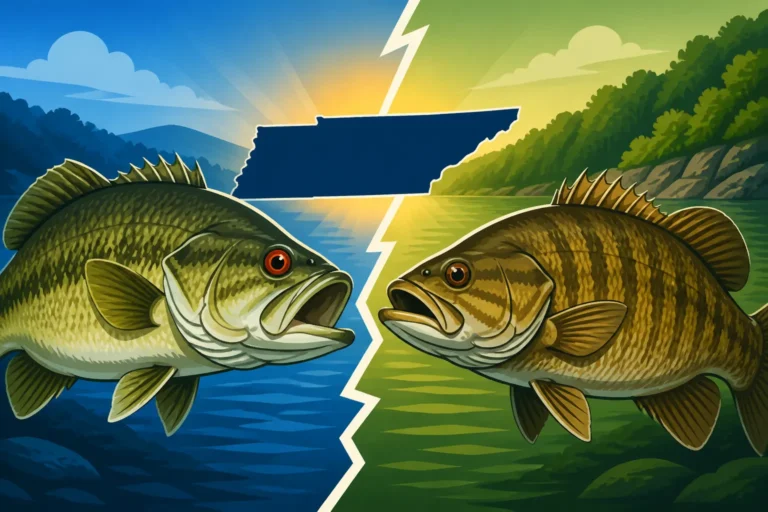
Spotted Bass vs. Largemouth Bass
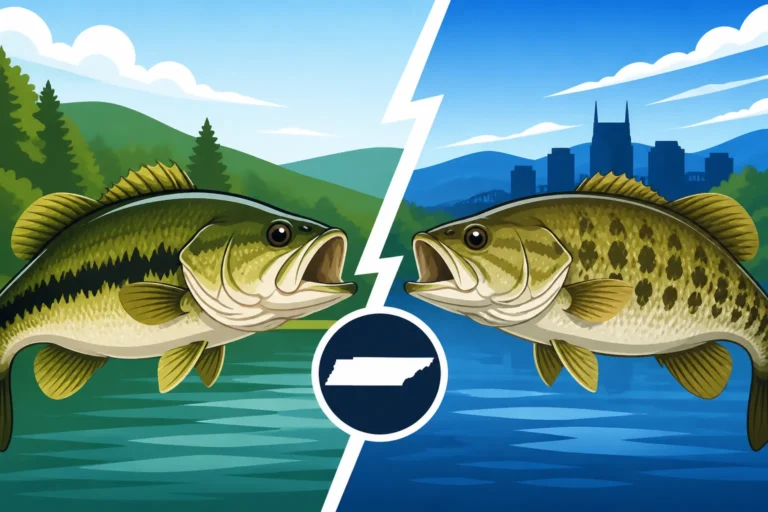
This is by far the most frequent misidentification. Both species can have green coloration and a lateral band. However, remember the golden rule: the jawline. A spotted bass's maxillary bone does not extend past the back of its eye when its mouth is closed. A largemouth's does. This is the absolute best way to differentiate them.
Next, look at the body spots. Spotted bass have those distinct, almost individually stamped, dark spots below the lateral line. Largemouth, while they have a lateral band, usually don't have these clear, separated spots on their lower flanks; their markings tend to be more blotchy or form a broken stripe. Finally, the dorsal fins: clearly separated on a spotted bass, but typically connected (though deeply notched) on a largemouth. Small or juvenile bass of either species can be especially tricky, but these three features remain consistent. For a deeper dive, check out Largemouth Bass Identification Tips for Tennessee Anglers and Spotted Bass vs Largemouth Bass in Tennessee Lakes.
Spotted Bass vs. Smallmouth Bass
While less common, confusing a spotted bass with a smallmouth can also happen, especially if the smallmouth is caught in a reservoir setting where spots are also prevalent. Again, the jawline is key. Both spotted bass and smallmouth bass have maxillary bones that do not extend past the back of the eye. So, the jawline alone won't differentiate these two.
Here's where the tongue patch becomes critical: spotted bass have a tooth patch on their tongue, smallmouth bass never do. This is your definitive tie-breaker when the jawline is similar. Beyond that, look at the body color and markings. Smallmouth typically have a bronze or brownish coloration, often with distinct vertical bars or tiger stripes, and usually lack the pronounced spots below the lateral line that define the spotted bass. Their eyes can also appear reddish. Smallmouth bass also tend to have a more streamlined, torpedo-shaped body adapted for current, whereas spotted bass are a bit more robust. You can explore more about Smallmouth Bass: Tennessee's Official State Fish to truly grasp their unique characteristics.
The Alabama Bass Question
While not officially recognized as a distinct species in most of Tennessee's waters (though present in some), it's worth a brief mention that some anglers might encounter fish that strongly resemble spotted bass and wonder if they're something else. The Alabama bass (often considered a distinct species or subspecies of spotted bass) is incredibly similar to the Kentucky spotted bass (the species most common in Tennessee). They share many of the same physical characteristics, including the jawline, tongue patch, and separated dorsal fin. For most recreational anglers in Tennessee, any fish displaying these traits will be correctly identified as a spotted bass for practical purposes related to regulations and general fishing knowledge. However, the nuance exists for those truly dedicated to species identification and understanding the incredible diversity of Tennessee's 291 Native Fish Species and 52 Sport Fish Explained.
By focusing on these specific identification markers, you'll not only avoid regulatory mix-ups but also gain a deeper appreciation for the unique characteristics of each bass species inhabiting Tennessee’s incredible fishing waters. Getting to know your spotted bass means you're well on your way to becoming a more informed and successful angler.
Disclaimer
This article is for general informational purposes only and does not constitute professional advice. Laws, prices and regulations vary by location and change over time. Consult a qualified professional for guidance on your specific situation.