Smallmouth Bass Growth Rate Compared to Largemouth
One of the most common questions I hear from fellow anglers, especially those just getting into the incredible world of Tennessee bass fishing, revolves around sizing up their catches. Specifically, folks often wonder about the growth rates of smallmouth bass versus largemouth bass – why does one seem to get so much bigger, and what does that mean for catching them? It’s a totally valid question, and one that highlights some fundamental differences in these two amazing sport fish. This guide is going to dive deep into exactly that, exploring the distinct growth patterns of smallmouth and largemouth bass, what makes them tick in our Tennessee waters, and how understanding these differences can make you a more successful angler.
The Core Differences in Growth Philosophy
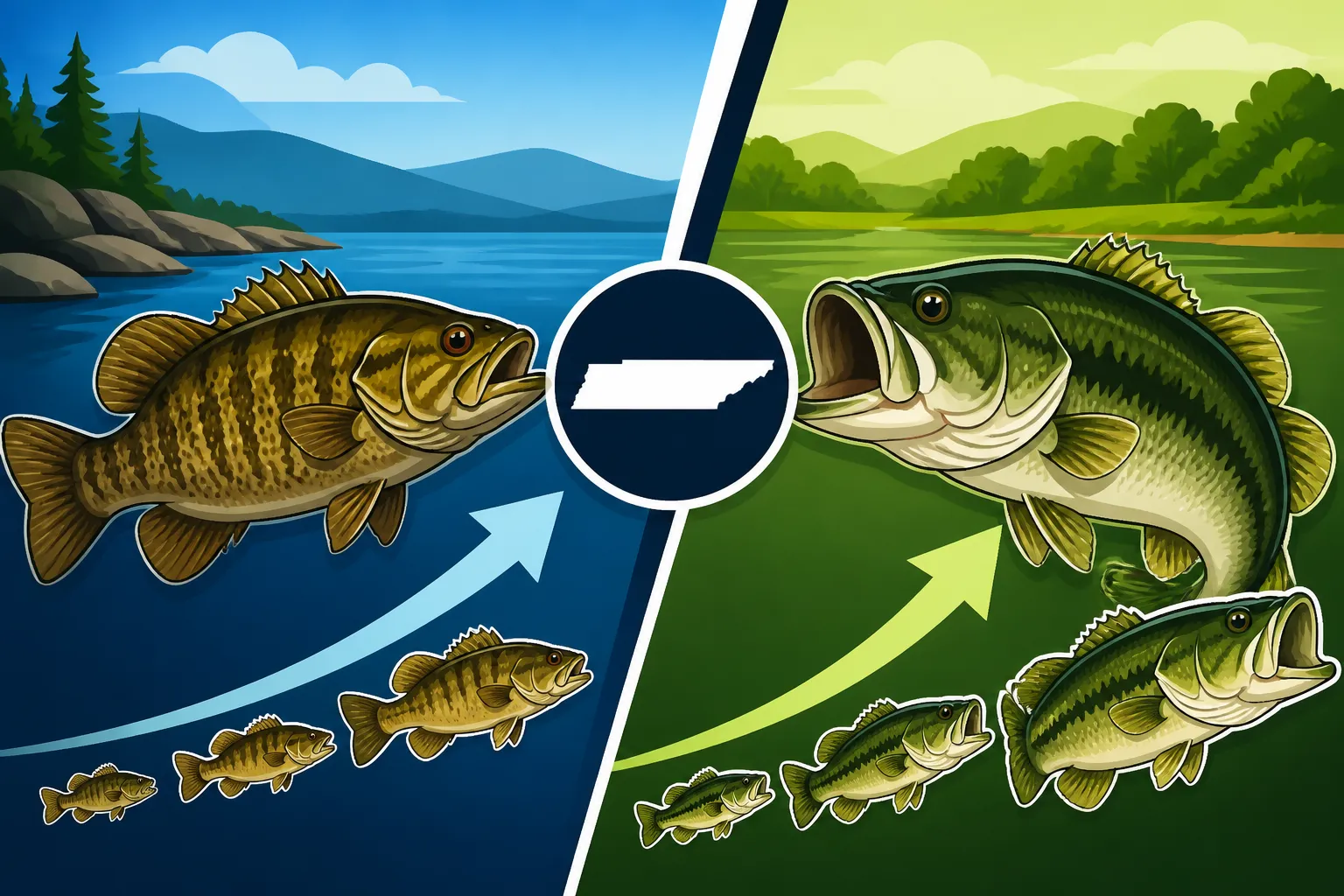
When you're out on a Tennessee lake, whether it's the vast expanse of Kentucky Lake or the clear depths of Norris, you might notice a striking difference in the average size of largemouth versus smallmouth bass. It’s not just your imagination; there's a biological reason for this, and it comes down to their inherent "growth philosophy," if you will. Each species has evolved to thrive in different environments, and that adaptation deeply influences how quickly they grow and how large they ultimately become.
Largemouth: The Rapid Weight Gainers
Think of a largemouth bass as the ultimate opportunist and efficient eater. These fish are designed for rapid growth, primarily because of their preferred habitat and diet. Largemouth bass absolutely love dense cover – we're talking about thick stands of hydrilla, submerged timber, lily pads, and brush piles. These environments are often teeming with easily digestible, high-calorie prey like shad, bluegill, and various other panfish. When you combine this rich food source with warmer, shallower waters, you have a recipe for accelerated growth.
Their body shape also reflects this. Largemouth tend to be broader, heavier-bodied fish, built for ambush predation. They can pack on pounds quickly by hiding in cover and lunging out at unsuspecting prey. This rapid accumulation of mass is why you often see largemouth dominate the scales in bass tournaments, especially when it comes to trophy-sized fish. It's not uncommon to hear stories of largemouth pushing past the 10-pound mark in fertile Tennessee lakes like Chickamauga Lake, Tennessee's Top Bass Fishing Destination, which is a testament to their incredible growth potential under optimal conditions.
Smallmouth: The Lean, Mean Fighters
On the flip side, smallmouth bass are a different breed entirely. These "brown fish" are known for their incredible fight and preference for cleaner, rockier, cooler water environments. Think of the deep, clear waters of Dale Hollow Lake or the swiftly moving sections of a river. In these areas, their primary diet consists of crayfish, insect larvae, and smaller baitfish like shiners. While still nutritious, this diet often requires more energy to hunt and is generally less calorie-dense than the buffet a largemouth enjoys in a weedy flat.
Smallmouth bass are built for agility and endurance. They have a more streamlined, torpedo-shaped body, which allows them to navigate currents and rocky structures with ease. Their growth, while steady, is typically slower than that of a largemouth. They tend to be leaner, pound-for-pound, but don't let that fool you; what they lack in sheer mass, they more than make up for in strength and tenacity when hooked. A 5-pound smallmouth will often put up a much more acrobatic and challenging fight than a 5-pound largemouth, simply because of its muscular build and aggressive nature. Understanding this lean, powerful physique is key to appreciating why their growth rates differ from their green cousins. You'll rarely see a smallmouth with the same girth as a big largemouth, but you'll certainly feel its power on the end of your line.
Factors Influencing Growth in Tennessee Waters
It's not just about what kind of bass it is; where that bass lives within Tennessee also plays a huge role in its growth trajectory. Our state is incredibly diverse, offering everything from vast, murky reservoirs to pristine mountain streams, and each environment shapes the fish differently.
Diet and Forage Availability
The old adage "you are what you eat" holds incredibly true for fish. For largemouth bass in Tennessee, an abundant supply of easy-to-catch, high-fat forage is critical for rapid growth. Lakes rich in gizzard shad and threadfin shad, like Kentucky Lake or Watts Bar, provide an almost endless food source that allows largemouth to bulk up quickly. Imagine a bass living in a dense hydrilla mat on Chickamauga Lake; it barely has to move to ambush a passing school of shad or a stray bluegill. This efficient feeding system translates directly into faster growth and larger fish.
Smallmouth, however, often inhabit waters where such abundant, high-calorie forage is less common or harder to access. In the rocky, deep impoundments like Dale Hollow Lake Smallmouth Bass Fishing or the flowing rivers such as the Clinch River Trout Fishing in East Tennessee, crayfish are a staple. While crayfish are a great food source, they require more effort to hunt and digest compared to schooling baitfish. This difference in primary diet often means smallmouth expend more energy acquiring food, which can lead to a slightly slower growth rate and a leaner physique. An angler keen on smallmouth might carry a dedicated smallmouth kit, finding a great selection of crayfish imitations and tube baits on platforms like Amazon.
Habitat and Water Conditions
The physical environment is another colossal factor. Largemouth thrive in warmer water, typically found in the shallower coves, flats, and backwaters of our Tennessee reservoirs. These warmer temperatures increase their metabolism, meaning they can eat and digest food faster, accelerating their growth. The presence of submerged vegetation or timber provides not only ambush points for hunting but also protection from predators, allowing them to grow larger with less risk.
Smallmouth, conversely, prefer cooler, clearer water. You'll find them holding to rocky points, humps, ledges, and deep main lake structures. Their metabolism is optimized for these slightly cooler conditions. While they are resilient, extreme heat or lack of oxygen in shallower water can stress them, making their preferred deeper, cooler haunts essential for their well-being and consistent growth. The diverse array of fishing spots in Tennessee, from the open waters of the Tennessee River to the clearer streams, means we have optimal habitats for both species to flourish, albeit in different ways.
Genetics and Age
Beyond diet and habitat, the intrinsic genetic makeup of each species plays a defining role in how big they can get. Largemouth bass, by nature, simply have the genetic potential to grow larger than smallmouth bass. This isn't to say smallmouth don't get big – they absolutely do, and a 6 or 7-pound smallmouth is a true trophy in Tennessee! However, a 10-pound largemouth is more common than a 10-pound smallmouth, indicating a higher maximum growth ceiling for the largemouth. This is a topic explored more in-depth in articles like Largemouth Bass Growth Rate in Tennessee Lakes.
Age also factors in heavily. Both species need time to reach their maximum size. A trophy largemouth or smallmouth has likely survived many seasons, skillfully avoiding predators and anglers alike. While largemouth may reach impressive sizes at a younger age due to their faster growth rate, older smallmouth can still achieve substantial weights and lengths, often surprising anglers with their sheer girth after years of growth in nutrient-rich, rocky environments.
Average Size and Record Expectations in Tennessee
When you're out fishing in Tennessee, what can you realistically expect to haul in, and what would be considered a true lunker for each species? The difference in growth rates directly translates into different average sizes and record expectations.
What to Expect from Tennessee Largemouth
In many Tennessee lakes, a "keeper" largemouth might be anywhere from 12 to 15 inches, weighing a pound or two. However, the potential for true giants is ever-present. On our world-class fisheries like Chickamauga or Lake Barkley, it’s not just a dream to land a bass weighing 5 to 8 pounds. These fish are relatively common for experienced anglers, and the prospect of catching a double-digit largemouth is what keeps many of us coming back. The state record largemouth is a truly monstrous fish, a testament to how big these bass can get in optimal conditions.
The key to these larger sizes is often linked to the abundance of threadfin and gizzard shad, combined with excellent cover. You'll find these massive fish often holding tight to submerged structures or deep grass beds, waiting for an easy meal. While you might keep a limit of 5 fish, as outlined in Tennessee's Largemouth Bass Limit Is 5 Per Day, Only 1 Over 18 Inches, it's often the single, massive fish that anglers are truly after. Picking up some robust casting gear from Amazon designed for heavy cover helps tackle these giants.
What to Expect from Tennessee Smallmouth
Smallmouth bass in Tennessee, while not reaching the same peak weights as largemouth, offer their own incredible challenges and rewards. A good-sized smallmouth might be anywhere from 14 to 18 inches, typically weighing between 2 and 4 pounds. A 5-pound smallmouth is considered an excellent catch, and anything over 6 pounds is truly a fish of a lifetime for many anglers, especially on lakes like Dale Hollow. While their numbers might not hit the double-digits as frequently, their raw power and aggressive nature make every catch memorable.
The thrill of smallmouth fishing often comes from the hunt in clearer, rockier waters. They can be found deeper, requiring different tactics than their largemouth cousins. Tennessee's regulations, such as those covered in Tennessee's Smallmouth Bass Limit Explained, reflect the desire to manage these populations for quality fishing. Remember, smallmouth are also one of Tennessee's official state fish, a testament to their cherished status among anglers. If you're serious about targeting these beauties, make sure you have the right finesse and reaction baits; there are always plenty of options on Amazon to explore.
Angler Strategies and How Growth Rates Impact Fishing
Understanding these growth differences isn't just academic; it directly influences how we approach fishing for each species. Knowing where they live, what they eat, and how they grow helps us pick the right spots, the right gear, and the right techniques.
Targeting Larger Largemouth
If your goal is to catch that next personal best largemouth, you'll want to focus your efforts on areas where they can grow big and fat. This means targeting lakes known for producing trophy largemouth, such as Chickamauga, and focusing on habitats with abundant cover and forage. Think heavy jigs, Texas-rigged plastics, or large crankbaits that mimic a sizable shad or bream. You’ll often be casting into thick vegetation, around submerged trees, or under docks.
The key is to present a meal that's worth the energy expenditure for a large bass. They've grown big by being efficient, so they won't waste energy on tiny snacks if a substantial meal is available. Patience and precision casting into heavy cover are often rewarded with a powerful strike from a big largemouth. Your gear should be robust, with strong lines and stout rods, ready to wrestle a heavy fish out of dense structure. It's not just about the strike; it's about getting them to the boat once they hit.
Appreciating the Smallmouth Fight
For smallmouth bass, the strategy shifts. While they might not be as heavy, their fighting spirit is legendary. To target them effectively, you'll want to focus on rocky structures, deep points, humps, and current breaks in clearer waters. Techniques like drop-shotting, throwing small swimbaits, jerkbaits, or Ned rigs can be incredibly effective, especially when mimicking their favorite prey like crayfish or smaller baitfish.
The fight of a smallmouth is characterized by powerful runs and aerial acrobatics. They don't just pull; they often jump and shake their heads violently, trying to throw the hook. This intense battle is precisely why so many anglers adore them. Having a slightly lighter, more sensitive rod, perhaps a medium-light spinning setup, can help you detect those subtle bites in deeper water and fully appreciate the fight once it's on. For more detailed insights, check out How to Identify Tennessee's State Fish, the Smallmouth Bass and learn about their unique characteristics.
Here's a quick comparison to help visualize the differences:
| Feature | Largemouth Bass | Smallmouth Bass |
|---|---|---|
| Primary Habitat | Warmer, shallower, vegetated/woody cover | Cooler, clearer, rocky structures/current |
| Typical Diet | Shad, bluegill, large insects, frogs, small birds | Crayfish, shiners, minnows, insect larvae |
| Growth Rate | Faster; higher potential for heavy weights | Slower; leaner, more muscular build |
| Average Size | 1-5 lbs (trophies 8+ lbs) | 1-3 lbs (trophies 4-7 lbs) |
| Body Shape | Broader, rounder; large mouth extends past eye | Streamlined, torpedo-like; mouth to middle of eye |
| Fight Style | Powerful initial pull, deep dives, head shakes | Hard runs, acrobatic jumps, relentless |
| Key Angling Tip | Heavy cover, large baits, power fishing | Deep structure, finesse baits, clear water tactics |
No matter which bass species you prefer to target, or if you love them both equally (like I do!), understanding their distinct growth patterns, preferred habitats, and dietary habits is paramount. It allows you to tailor your approach, making each trip to Tennessee's abundant waters more informed and, hopefully, more successful. Whether you're chasing that next monster largemouth or the hardest-fighting smallmouth, our state has incredible opportunities for both.
Disclaimer
This article is for general informational purposes only and does not constitute professional advice. Laws, prices and regulations vary by location and change over time. Consult a qualified professional for guidance on your specific situation.