Where Do Brook Trout Live in Tennessee Streams?
If you've ever dreamt of finding those elusive, jewel-toned brook trout, Tennessee is a fantastic place to make that dream a reality – but it's not always easy. Unlike some of their hardier cousins, these native beauties prefer very specific hideouts, often in the most remote and pristine corners of our state. This guide will take you deep into the heart of where brook trout thrive in Tennessee, helping you understand their preferred habitat and giving you the best chance to spot these magnificent fish.
The Unique Habitat of Tennessee's Brook Trout
Brook trout, or "speckled trout" as many old-timers call them, aren't just any fish; they're an indicator species, telling us a lot about the health of our wildest waters. They're incredibly sensitive, which means finding them is a testament to the purity of a stream. You won't find them just anywhere; they have very particular demands for their living quarters.
High-Elevation, Cold-Water Streams
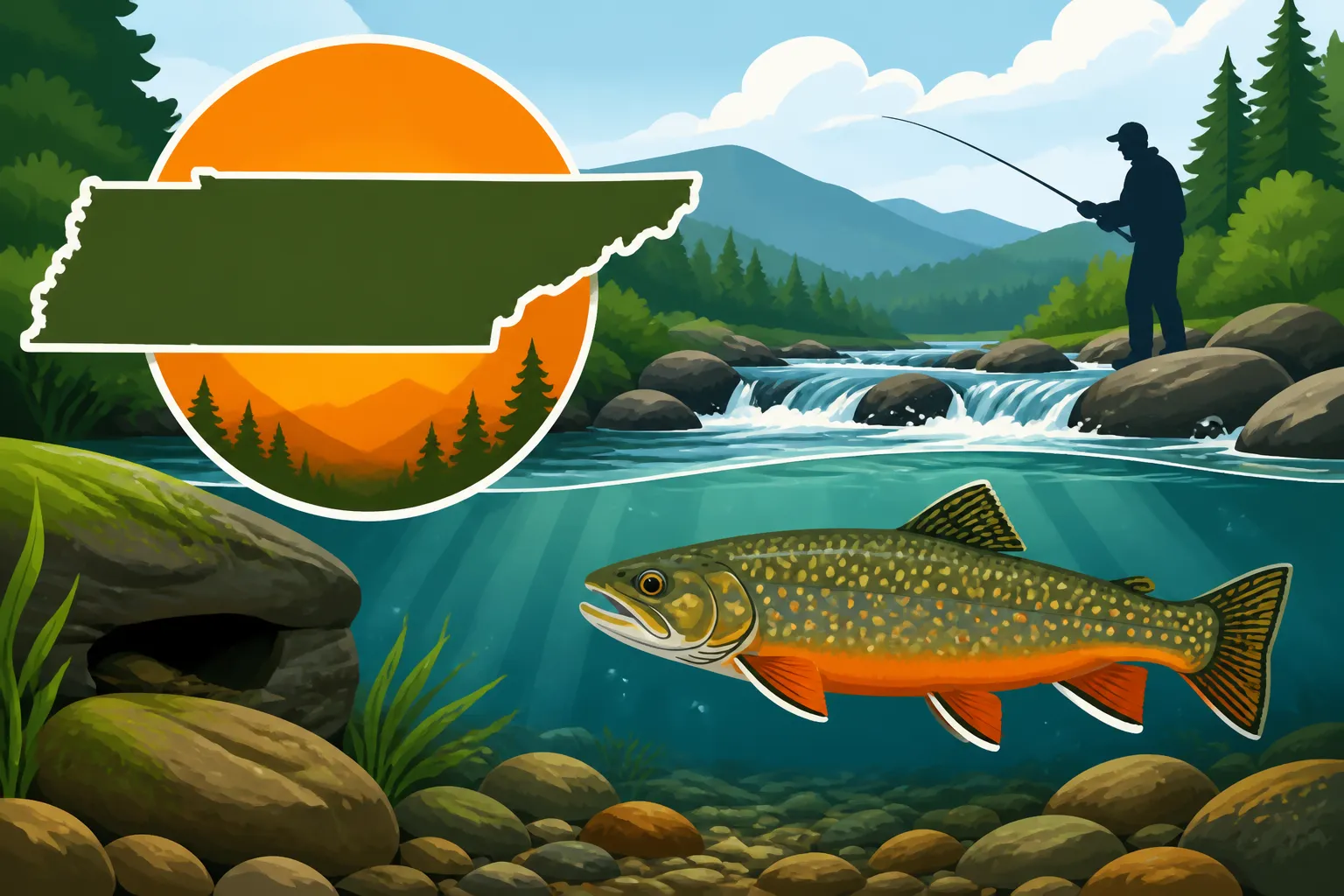
The absolute cornerstone of brook trout habitat in Tennessee is cold water. And when I say cold, I mean really cold – typically below 68 degrees Fahrenheit, and ideally much colder, especially during the warmer months. This is why you'll almost exclusively find them in high-elevation streams. As you climb higher into the mountains, air temperatures drop, and springs bubble forth with water that's often chilled by its underground journey.
These aren't wide, meandering rivers. We're talking about small, often narrow streams that tumble down steep gradients. The constant movement of water over rocks and cascades helps keep it oxygenated, another critical requirement for brook trout. Think about those crystal-clear, fast-flowing creeks you might encounter on a mountain hike – that's prime brook trout real estate. The rocky bottoms provide countless nooks and crannies for them to hide from predators and powerful currents, as well as holding abundant invertebrate life they feed on.
Forested Canopies and Shady Retreats
Beyond just elevation, the surrounding environment plays a monumental role in maintaining those crucial cold-water temperatures. Dense, mature forest canopies are absolutely vital. These towering trees act like a natural umbrella, shading the stream from direct sunlight and preventing water temperatures from soaring during hot Tennessee summers. Without this protective cover, even high-elevation streams could warm beyond what brook trout can tolerate.
But it's not just about shade. These forested banks also contribute to the stream's structure. Overhanging branches, fallen logs, and exposed root systems create excellent cover and ambush points for brook trout. They love to dart out from under an undercut bank or behind a submerged log to snatch a passing insect. These natural shelters also offer protection from aerial predators like kingfishers and raptors, giving the trout a sense of security. If you're walking along a stream and notice stretches with little to no canopy cover, it's less likely you'll find brook trout there; they just can't handle the direct sun.
The Importance of Pristine Water Quality
Brook trout are, simply put, snobs when it comes to water quality. They demand pristine conditions, free from pollution, excessive siltation, and sudden changes in pH. This is precisely why their presence is such a positive sign for an ecosystem. Agricultural runoff, industrial discharge, or even heavy foot traffic leading to erosion can quickly degrade a stream to a point where brook trout can no longer survive.
Their gills are highly efficient at extracting oxygen from cold, clear water, but they are also very susceptible to irritants. Silt can clog their gills, making it hard to breathe and hindering their ability to feed. Chemicals can be directly toxic. This sensitivity means that stream sections near human development or heavy logging operations are typically devoid of brook trout. This is why many of their remaining strongholds are within protected wilderness areas, where human impact is minimized, and the natural filtration systems of forests keep the water pure. Understanding this need for Pristine Waters is key to truly understanding where these fish live.
Key Regions and Specific Stream Types
When you're looking for brook trout in Tennessee, your search is going to be focused primarily on a specific geographic area. While they once had a broader range, their habitat has shrunk to the most resilient, untouched places.
Great Smoky Mountains National Park
Without a doubt, the single greatest stronghold for native brook trout in Tennessee is the Great Smoky Mountains National Park. This vast, protected wilderness boasts thousands of miles of streams, many of which originate at elevations well over 4,000 feet. The park's legal protection ensures that logging, development, and significant pollution are largely kept at bay, creating a sanctuary for these sensitive fish.
Within the park, you'll find brook trout predominately in the headwater streams – the very highest reaches of river systems like the Little River, Abrams Creek, and Big Creek. These streams are characterized by their steep gradients, numerous small waterfalls and riffles, and dense rhododendron and hardwood canopy cover. The water here stays incredibly cold year-round, even in the dog days of summer, making it ideal. The park's commitment to conserving its native species means that many of these streams are managed as "native brook trout waters," often with special regulations like catch-and-release only, to protect their fragile populations. If you're looking to target these fish, exploring the higher tributaries within the Smokies is your best bet, but be prepared for some serious hiking! You can learn more about Trout Fishing in the Great Smoky Mountains, Tennessee to plan your trip.
Eastern Tennessee's Remote Highlands
While the Great Smoky Mountains National Park is the undisputed champion, it's not the only place. There are other pockets of high-elevation, remote wilderness in Eastern Tennessee that still hold populations of native brook trout. These areas often exist within national forests (like the Cherokee National Forest) or on state-managed lands that have been largely untouched by development for decades.
Finding these spots often requires a keen eye for topography and a willingness to explore off the beaten path. Look for sections of streams that are far from roads, have significant elevation gain, and are surrounded by mature forest cover. These might be smaller, less-known creeks that tumble down steep mountain sides, often requiring bushwhacking or long hikes to reach. These streams can be incredibly rewarding, offering a true wilderness fishing experience away from the crowds. Always remember to consult local Tennessee Wildlife Resources Agency (TWRA) maps and regulations for these specific areas, as access and rules can vary. Many of these remote spots are indeed considered among Tennessee's Best Trout Streams.
Identifying Potential Brook Trout Streams on Maps
You don't always need local knowledge to start your search for brook trout. With a good topographical map or an online mapping application, you can begin to identify promising areas. Here’s what to look for:
- Blue-line streams: On most maps, year-round flowing streams are depicted with blue lines. Look for the thinnest blue lines, especially those that originate high on mountainsides. These are often headwater streams.
- Contour lines: Pay attention to how close together the contour lines are. Tightly packed lines indicate steep terrain, which often correlates with faster-flowing, colder streams—exactly what brook trout prefer.
- Elevation: Identify streams that maintain high elevations for significant stretches. The higher the stream, the colder it's likely to be.
- Wilderness designations: Areas marked as wilderness, national forest, or state natural areas often imply a greater degree of protection and less human disturbance, increasing the likelihood of finding pristine brook trout habitat.
- Road access: Look for streams that have minimal or no road access. The harder a stream is to get to, the more likely it is to be undisturbed and hold native fish.
Using these mapping clues can help you narrow down your search and identify potential streams that fit the brook trout's demanding habitat requirements. Before you head out, though, a little more research on local regulations is always a good idea.
Threats to Brook Trout and Conservation Efforts
It's a sad truth that Tennessee's native brook trout populations have faced significant challenges over the past centuries. Their story is one of struggle, but also of hope, thanks to dedicated conservation efforts.
Historical Decline and Habitat Loss
The decline of brook trout in Tennessee is largely a result of historical human activities. In the late 19th and early 20th centuries, extensive logging operations denuded vast tracts of mountain forests. This removed the crucial canopy cover, leading to increased water temperatures and severe siltation as soil eroded into the streams. Without the shade, the water became too warm, and the silt choked out the delicate aquatic insects that brook trout feed on, as well as their spawning grounds.
Furthermore, competition from non-native trout species introduced for sport fishing, particularly rainbow and brown trout, also played a major role. Rainbow trout are more tolerant of warmer water and can outcompete brook trout for food and space in marginal habitats. Brown trout are aggressive predators and can displace brook trout, especially in larger stream sections. These factors, combined with unrestricted fishing pressure in the past, led to a dramatic reduction in brook trout range and numbers. Many of the original "brookie" streams now hold predominantly rainbows or browns. For more on the differences, check out Wild vs Stocked Trout: What's the Difference in Tennessee?.
Ongoing Conservation and Restoration
Thankfully, the tide has turned for Tennessee's brook trout, with significant conservation and restoration efforts underway. The TWRA, in collaboration with national parks, national forests, and various conservation organizations, has been working tirelessly to protect and restore these cherished native fish.
One key strategy involves habitat enhancement. This includes efforts to stabilize stream banks, plant native vegetation to restore canopy cover, and introduce structures like large woody debris to create better hiding and feeding lies. Another critical component is the removal of barriers, such as old dams or culverts that prevent brook trout from accessing historical spawning and living areas. Some programs even involve carefully removing non-native trout from certain headwater streams to allow brook trout to reclaim their ancestral waters without competition.
For anglers, education is also a huge part of conservation. Many brook trout streams now have special regulations, often requiring catch-and-release fishing with specific gear restrictions to minimize stress on the fish. Practicing careful handling techniques and understanding the importance of keeping these delicate fish in the water is paramount. By supporting these initiatives and practicing responsible angling, we can all contribute to the long-term survival of this iconic Tennessee species. Understanding Brook Trout in Tennessee's Cold-Water Streams is a step towards better conservation.
Fishing for Brook Trout in Tennessee
If you're ready to embark on the adventure of finding and fishing for Tennessee's native brook trout, be prepared for an experience that's as much about the journey as it is about the catch. These aren't your typical roadside fishing spots.
Gear and Techniques for Remote Streams
Fishing for brook trout in their natural habitat means adapting your gear and approach. Forget your heavy bass rods; for these small, brush-lined streams, lighter is definitely better.
- Rods and Reels: An ultralight spinning rod, typically 4 to 5 feet long, paired with a small spinning reel spooled with 2 to 4 lb test line, is ideal. This setup allows for precise casts in tight quarters and protects the light line from brush. For fly anglers, a 1- to 3-weight fly rod, 6 to 7.5 feet long, is perfect for delicate presentations and maneuvering in dense overhead cover. You might consider checking out a reputable outdoor retailer on "Amazon" for a compact ultralight combo that can easily fit in a backpack.
- Lures and Flies: Brook trout love small presentations. Tiny inline spinners (like Panther Martins or Mepps), small spoons, or micro-jigs are effective on spinning gear. For fly fishing, classic dry flies like an Adams or Elk Hair Caddis in sizes 14-18, small nymphs (like a Hare's Ear or Pheasant Tail) in sizes 16-20, or even tiny wet flies often do the trick. A small box of assorted flies is a good investment, readily available on "Amazon."
- Wading Gear: Unless you're strictly bank fishing (which can be very challenging in dense rhododendron), waders are essential. Chest waders will keep you dry and comfortable in the cold mountain water. Sturdy wading boots with good ankle support are a must for navigating slippery rocks and uneven terrain. Look for durable, breathable waders and boots on "Amazon" that can stand up to rough use.
- Other Essentials: Don't forget a small backpack to carry water, snacks, a first-aid kit (always good for remote areas!), a small pair of pliers for hook removal, and a camera to capture the beauty. A collapsible landing net with a rubber mesh is also ideal for handling fish gently.
Stealth is your greatest asset. Approach the stream quietly, keeping a low profile. Brook trout are easily spooked. Cast upstream and let your lure or fly drift naturally downstream into pools and riffles. Focus on presenting your offering gently; a heavy splash can send them scattering.
Best Practices for Sustainable Brook Trout Fishing
Because brook trout populations are so fragile and precious, practicing ethical and sustainable fishing methods is paramount.
- Catch and Release: On almost all native brook trout waters in Tennessee, catch-and-release is the rule, not the exception. The goal is to admire these fish, not to keep them. Handle the fish as little as possible, and always keep them in the water. Wet your hands before touching them to protect their protective slime layer.
- Gentle Handling: Use barbless hooks, or pinch down the barbs on your regular hooks with pliers. This makes hook removal much easier and less damaging to the fish. If a fish is deeply hooked, it's often best to cut the line as close to the hook as possible rather than tearing tissue trying to remove it.
- Know the Regulations: Always, always check the current Tennessee Fishing Regulations Explained for the specific stream or area you plan to fish. Limits, tackle restrictions, and season dates can vary significantly, especially for native trout waters. Ignoring these rules can lead to penalties and harm the conservation efforts.
- Leave No Trace: You'll be in some of Tennessee's most pristine wilderness. Carry out everything you carry in, including all trash, fishing line, and old bait containers. Respect the natural environment, stay on established trails where possible, and minimize your impact on the delicate stream banks.
- Respect Private Property: If you're exploring areas outside designated public lands, ensure you have permission before crossing or fishing on private property. Access can be a challenge in some of these remote areas.
By following these practices, you can enjoy the incredible experience of pursuing Tennessee's native brook trout while ensuring these beautiful fish continue to thrive for generations to come.
| Gear Category | Recommended Item for Brook Trout Streams | Why It's Essential |
|---|---|---|
| Rod & Reel (Spinning) | Ultralight spinning rod (4-5 ft, fast action) & small reel (500-1000 size) | Allows for delicate casts in tight spaces, sensitivity to light bites, and prevents over-powering small fish. |
| Rod & Reel (Fly) | 1-3 weight fly rod (6-7.5 ft) & matching reel | Enables precise fly placement and gentle presentations without spooking fish, ideal for small stream dynamics. |
| Line | 2-4 lb test monofilament or fluorocarbon (spinning); 1-3 wt fly line (fly) | Low visibility, minimal drag, and sufficient strength for small trout. |
| Lures/Flies | Small inline spinners, micro-jigs (spinning); dry flies, nymphs (fly) | Brook trout are opportunistic feeders but prefer small, natural presentations that imitate insects found in their streams. |
| Waders & Boots | Breathable chest waders & sturdy wading boots | Keeps you dry and comfortable in cold water, essential for accessing prime fishing spots and navigating slippery terrain safely. |
| Backpack | Small, waterproof daypack | Carries essential gear like water, snacks, first-aid kit, extra layers, and helps keep your hands free for scrambling over rocks. |
| Pliers/Hemostats | Small, non-serrated pliers or hemostats | Crucial for quick and safe hook removal, especially when using barbless hooks. |
| Landing Net | Small, collapsible net with rubber mesh | Minimizes stress on the fish during landing and handling, protecting their delicate scales and slime coat. |
Disclaimer
This article is for general informational purposes only and does not constitute professional advice. Laws, prices and regulations vary by location and change over time. Consult a qualified professional for guidance on your specific situation.