Who Needs Tennessee’s TWRA Boating Safety Certificate
Navigating the waters of Tennessee can be an absolute joy, but it also comes with its fair share of rules and regulations that can feel a bit overwhelming, especially when you're just trying to get out on the lake for a peaceful day of fishing. One question that pops up a lot, causing many folks to scratch their heads, is about the Tennessee Wildlife Resources Agency (TWRA) Boating Safety Certificate. It's easy to get confused about who actually needs this certificate and under what circumstances. This comprehensive guide is here to clear up all that uncertainty, so you can focus on casting your line with confidence and staying safe out there.
Who Exactly Needs This Certificate? Getting to the Nitty-Gritty
Let's cut right to the chase because this is usually the first question on everyone's mind. The TWRA Boating Safety Certificate isn't a universal requirement for every single person who steps foot on a boat in Tennessee. Instead, it targets a specific group of operators to ensure a baseline level of knowledge and safety on our beautiful waterways. It’s all about making sure the person at the helm knows the rules of the road, so to speak, and can handle their vessel responsibly.
The "Born After 1988" Rule: A Key Delineator
This is arguably the most critical piece of information when it comes to the TWRA Boating Safety Certificate. In Tennessee, if you were born after January 1, 1989, and you plan on operating a mechanically propelled vessel (and we'll get into what "mechanically propelled" really means in a moment), then yes, you absolutely need to have this certificate in your possession. This rule was put in place to ensure that newer generations of boaters have a foundational understanding of boating safety, navigation rules, and environmental considerations. It's not about catching anyone out; it's about prevention and education. Imagine you're out on Kentucky Lake, enjoying a quiet afternoon, and a younger angler zooms by, seemingly unaware of the no-wake zone they just entered. This certificate aims to prevent such scenarios by educating operators before they even hit the water. It’s a bit like getting your driver’s license for the road – you need to pass a test to prove you understand the rules.
If you happen to be older than that cutoff date, say you were born in 1975, then you are generally exempt from this specific requirement. You can operate a mechanically propelled vessel without needing to carry the certificate. However, this doesn't mean you're exempt from knowing and following all Tennessee's boating laws and safety regulations. Age might exempt you from the certificate, but it doesn't exempt you from responsibility or common sense on the water.
Operating Different Vessel Types: From PWCs to Pontoons
The type of vessel you're operating also plays a significant role in whether the certificate is required. While the "born after 1988" rule remains the primary qualifier, it specifically applies to "mechanically propelled vessels." This broad term covers a lot of ground, from speedy personal watercraft (PWCs) like Jet Skis and WaveRunners, which are incredibly popular on lakes like Norris Lake, to larger fishing boats, bass boats, and even those leisurely pontoon boats that are perfect for a family day out. Essentially, if it has an engine, it's covered.
Even if you're just puttering around in a small fishing boat with a modest outboard motor on a quiet cove of Percy Priest Lake, if you meet that birthdate requirement, you'll need the certificate. The TWRA's goal is consistent safety across all types of motorized vessels. This means that a teenager operating a small jon boat with a 9.9 HP motor needs the certificate just as much as an adult born after 1988 operating a powerful bass boat for a tournament. The size or power of the engine doesn't change the core requirement.
Passenger vs. Operator: Who's in Charge?
Another common point of confusion revolves around the difference between being a passenger and being the actual operator of the vessel. Let's make this crystal clear: the TWRA Boating Safety Certificate is required for the operator of the vessel, not simply any passenger on board. If you're just enjoying the ride, reeling in fish from the back of the boat, and someone else is at the helm, then you don't need the certificate.
However, if you're taking turns driving the boat, even for a short period, and you were born after January 1, 1989, then you must have your certificate. This often comes up with families or groups of friends where multiple people might take the wheel throughout the day. If you're the one steering, controlling the throttle, and navigating the vessel, you are the operator in the eyes of the law, and the certificate rule applies to you if you fall into that birthdate category. Think about a dad teaching his son, born in 1995, how to drive the family pontoon. The son can absolutely learn, but when he's at the controls, he needs that certificate. It's a critical distinction to keep everyone safe and avoid potential legal issues. Who Needs the TWRA Boating Safety Certificate gives more details on the specific age and birthdate requirements.
Understanding the "Mechanically Propelled" Clause
The term "mechanically propelled vessel" is key to understanding the certificate requirement, yet it's surprisingly easy to misunderstand. Many assume it only refers to powerful engines, but the TWRA's definition is quite broad and covers almost any vessel that uses an engine for propulsion, regardless of its size or power. This is where some anglers might get caught off guard, thinking their small electric motor is somehow exempt.
Electric Trolling Motors: Do They Count?
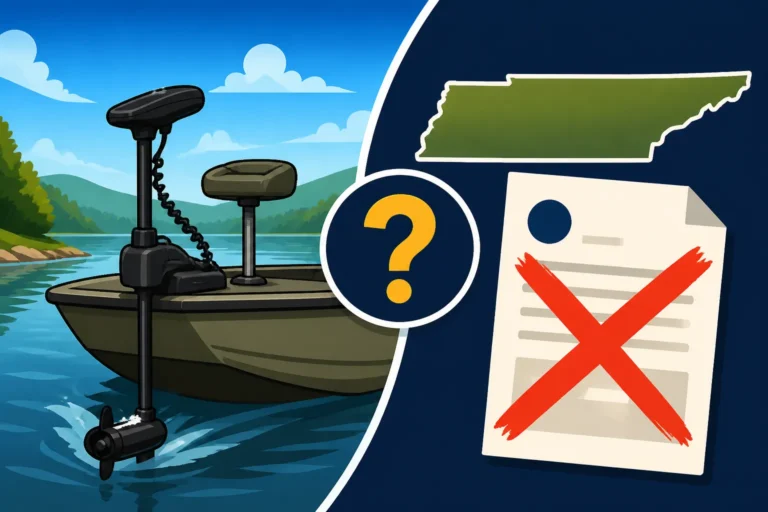
This is a really frequent point of contention and confusion for many anglers. You've got your small fishing boat, maybe a canoe or a kayak, and you've decided to add an electric trolling motor for quiet navigation in those pristine fishing spots. You might think, "It's just an electric motor, it's not a big gasoline engine, so it probably doesn't count, right?" Wrong. In Tennessee, an electric trolling motor absolutely counts as mechanical propulsion.
If you were born after January 1, 1989, and you are operating a vessel that uses any type of engine – including an electric trolling motor – you are required to have your TWRA Boating Safety Certificate. The law doesn't differentiate between gas and electric, or between 5 horsepower and 200 horsepower; if it has a motor, it's mechanically propelled. This is a crucial detail for many bank anglers who decide to upgrade to a small jon boat with a bow-mounted trolling motor. Don't get caught out on Watts Bar Lake thinking your electric motor gives you a pass. Do Electric Trolling Motors Count as Mechanical Propulsion in Tennessee? covers this topic in depth, emphasizing that even small electric motors trigger the certificate requirement if you're in the "born after 1988" category.
Sailboats and Paddled Vessels: Are They Exempt?
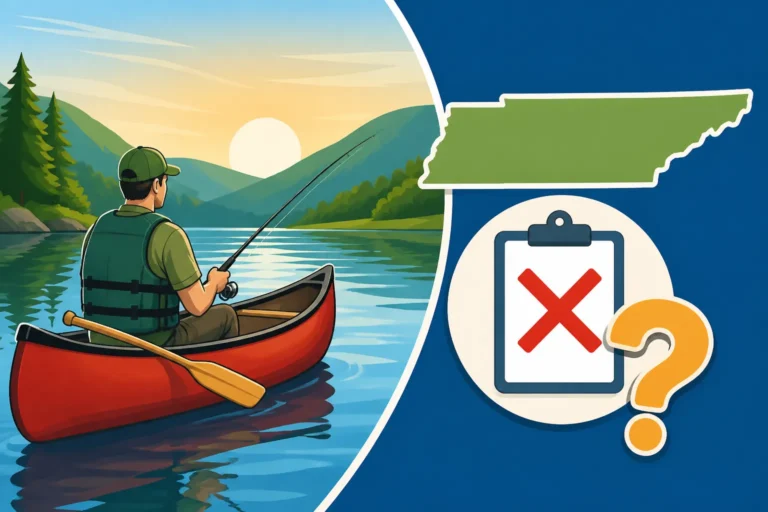
Generally speaking, if a vessel relies solely on wind power (like a sailboat) or human power (like a canoe, kayak, or paddleboard), it is not considered a mechanically propelled vessel for the purposes of this certificate. This means that if you're enjoying a peaceful day paddling your kayak down the Clinch River or sailing across Dale Hollow Lake without an auxiliary motor engaged, you don't need the TWRA Boating Safety Certificate, regardless of your birth year.
However, here's the important caveat: if that sailboat or human-powered vessel also has an auxiliary engine – even a small kicker motor or an electric trolling motor – and that motor is being used for propulsion, then it becomes a mechanically propelled vessel. At that point, the "born after 1988" rule kicks in for the operator. So, if your kayak has a mount for a small electric motor, and you decide to use it to get to your fishing spot faster, the certificate requirement applies to you if you fall into the specified birth year range. It's about how the boat is being propelled at the time of operation.
When an Engine is an Engine: The Clear-Cut Cases
For most traditional powerboats, bass boats, runabouts, and larger cruisers, there's rarely any doubt. If it has an inboard or outboard gasoline engine, it's clearly a mechanically propelled vessel. These are the kinds of boats that demand an operator who understands navigation, safety procedures, and how to react in various situations, whether it's navigating busy channels on the Tennessee River or dealing with unexpected weather changes.
The certificate ensures that anyone operating these more powerful vessels, especially those born after 1988, has received formal instruction on critical topics. This includes knowing basic navigation rules, understanding buoy systems, recognizing distress signals, and knowing how to respond to emergencies. It's about creating a safer environment for everyone sharing the water, from the serious tournament angler on Chickamauga Lake to the family enjoying a leisurely cruise on Center Hill Lake. Having a fundamental knowledge base means fewer accidents and more enjoyable experiences for all.
Exemptions and Special Cases to Consider
While the general rule is quite clear, there are always a few specific situations or exemptions that can add a layer of complexity. It's worth understanding these nuances, as they might apply to your particular boating or fishing plans in Tennessee. Knowing these can save you a headache later on.
Rental Boats and Guided Fishing Trips
One of the most common scenarios involves folks who are visiting Tennessee or simply don't own their own boat and decide to rent one for a day on the lake or participate in a guided fishing trip. So, do you need the TWRA Boating Safety Certificate if you're renting a boat? The answer usually depends on the rental operation and the specific rules they follow, but typically, no, you don't need to possess the certificate yourself if you're renting a boat.
Most reputable boat rental companies in Tennessee are required to provide a thorough safety briefing, demonstrate basic operational procedures, and ensure the renter understands the local rules and safety equipment. They often have specific age requirements for renters, which may be higher than the state's certificate rule, and they take on the responsibility of ensuring the operator is capable. Similarly, if you're on a guided fishing trip, the licensed guide is the operator, and they will hold any necessary certifications. You are simply a passenger, even if you're actively fishing. However, always double-check with your rental company or guide for their specific policies, as some might prefer or even require proof of competency, particularly for more powerful vessels. Do You Need a Boating Safety Certificate to Rent a Boat in Tennessee? offers more specific guidance on this.
Private Waters and Farm Ponds: Do State Rules Apply?
What about those serene, private farm ponds or small lakes completely contained within private property? Do state boating safety certificate rules still apply there? Generally, if the water body is entirely on private property, has no public access, and is not connected to any public waterways, then state-level boating safety certificate requirements typically do not apply. This is often the case for small ponds stocked with catfish or bream where a landowner might let friends or family fish.
However, this doesn't mean "anything goes." Private property owners can (and should) set their own safety rules, and common sense dictates that safe boating practices should always be followed, regardless of where you are. The moment that private water connects to a public stream, river, or lake, even intermittently, then state regulations, including the boating safety certificate requirements, kick in. It's always best to err on the side of caution and understand the specific circumstances of any private water you plan to boat on. Local county ordinances might also come into play, so it's worth checking if you're unsure.
Reciprocity with Other States: What if You're Visiting?
Tennessee sees a lot of visitors from neighboring states who come to enjoy our incredible fishing and boating opportunities, from the largemouth bass on Chickamauga Lake to the crappie on Kentucky Lake. A common question from these visitors is, "I have a boating safety certificate from my home state; does that count in Tennessee?" The good news is, in most cases, Tennessee generally honors boating safety certificates issued by other states, as long as that certificate meets the requirements of the National Association of State Boating Law Administrators (NASBLA) and is equivalent to Tennessee's own certification.
So, if you've completed an approved boating safety course and received a certificate in, say, Georgia or Alabama, you're likely good to go when operating your mechanically propelled vessel in Tennessee, provided you meet the birthdate requirements of your home state's law. Always carry your physical certificate with you, just as you would your fishing license. It's your proof of compliance. However, it's always a smart move to briefly review Tennessee's specific boating laws, as some rules (like specific Tennessee Life Jacket and PFD Rules for Boaters or navigation laws) can vary slightly from state to state.
How to Obtain Your TWRA Boating Safety Certificate
Okay, so you've determined you need the certificate. The next logical step is figuring out how to get one! Thankfully, the TWRA has made the process relatively accessible, offering a couple of different paths to certification that cater to various learning styles and schedules. It’s not an insurmountable hurdle, just a step to ensure you're a responsible boater.
The Online Course Option: Convenience at Your Fingertips
For many people, the most convenient way to obtain the TWRA Boating Safety Certificate is through an approved online course. These courses are designed to be self-paced, allowing you to learn the material and complete quizzes from the comfort of your own home, on your own schedule. This is a huge benefit for busy individuals, or those who live a bit further from an in-person class location. You can usually find these courses through the TWRA's official website or through approved third-party providers.
These online platforms are typically interactive, covering all the essential topics: navigation rules, emergency procedures, responsible boat operation, environmental stewardship, and specific Tennessee regulations. Once you complete the course material, you'll generally take a final exam. Upon passing, you'll receive your certificate, often a printable version that you can carry with you immediately. Many people prefer this method for its flexibility. Just make sure the online course is officially recognized by the TWRA to ensure your certificate is valid.
In-Person Classes and Exams: Traditional Learning
For those who prefer a more traditional learning environment, or perhaps benefit from direct interaction with an instructor, in-person classes are also available. These courses are often taught by certified instructors, including local law enforcement officers, Coast Guard Auxiliary volunteers, or experienced TWRA personnel. They typically involve a set schedule, often over a weekend or several evenings, and culminate in a proctored exam.
The benefit of an in-person class is the opportunity to ask questions in real-time, get clarification on complex topics, and sometimes even gain hands-on experience or demonstrations. These classes are regularly scheduled in various locations across Tennessee, from major cities like Nashville and Knoxville to smaller communities. Checking the TWRA's calendar or reaching out to your local TWRA office or Bass Pro Shops can help you find upcoming course dates and locations. This method can be particularly beneficial for those who are brand new to boating and appreciate the structured learning and direct guidance. How to Get Your TWRA Boating Safety Education Certificate details the various options available.
What to Expect on the Test: A Little Reassurance
The thought of taking any test can be a bit daunting, but the TWRA Boating Safety Certificate exam is designed to ensure you have a practical understanding of safe boating, not to trick you. The questions will cover the topics taught in the courses, focusing on key areas such as:
- Navigation Rules: Understanding "rules of the road," right-of-way, and aids to navigation (buoys, markers).
- Boat Handling: How to safely operate your vessel, docking, anchoring, and responding to various weather conditions.
- Safety Equipment: Knowledge of required equipment like life jackets, fire extinguishers, and sound-producing devices, as mandated by Tennessee Life Jacket and PFD Rules for Boaters.
- Emergency Procedures: What to do in case of a capsizing, fire, or person overboard.
- Environmental Responsibility: Preventing pollution and understanding fish and wildlife regulations.
- Tennessee Specific Laws: Unique rules and regulations pertinent to Tennessee waters.
The test is usually multiple-choice, and you'll need to achieve a passing score, typically around 70-80%, depending on the specific exam version. Many online courses offer practice quizzes to help you prepare and build confidence before tackling the final exam. Don't stress too much; if you pay attention to the course material, you'll be well-prepared. Some students even pick up supplemental study guides from places like Amazon to feel extra confident before their test.
Why This Certificate Matters: Beyond Just a Piece of Paper
It might seem like just another hoop to jump through, another piece of paper to carry, but the TWRA Boating Safety Certificate is much more than that. It's a fundamental tool for ensuring the safety and enjoyment of everyone on Tennessee's magnificent lakes and rivers. Understanding why it matters can make the process feel less like a chore and more like a responsible step toward being a better boater.
Enhancing Boating Safety for Everyone
The primary reason for any boating safety education is, quite simply, to enhance safety. Boating accidents, while relatively rare compared to the sheer volume of boaters, can be severe and often preventable. Many accidents are attributed to operator inexperience or a lack of understanding of basic safety principles and navigation rules. By requiring a certificate for a significant portion of operators, the TWRA aims to reduce these incidents.
Imagine a busy summer Saturday on Chickamauga Lake. You've got anglers, recreational boaters, personal watercraft, and swimmers all sharing the same space. An educated operator knows how to maintain a safe distance, understand speed limits in specific zones, and react predictably to avoid collisions. They understand the dangers of boating under the influence and the importance of vigilance. This isn't just about protecting themselves and their passengers; it's about protecting every other person enjoying the water, ensuring that everyone can have a safe and enjoyable experience without unnecessary risks.
Avoiding Fines and Penalties: The Legal Implications
Aside from the moral imperative of safety, there's a very practical reason to obtain your TWRA Boating Safety Certificate: avoiding legal trouble. Tennessee game wardens and other law enforcement officials patrol our waterways to ensure compliance with all boating and fishing regulations. If you are an operator born after January 1, 1989, and you are caught operating a mechanically propelled vessel without the required certificate, you could face penalties.
These penalties can include fines, and just like Penalties for Fishing Without a License in Tennessee, they can add up quickly. A game warden might stop you for a routine safety check or in response to a boating infraction. If you can't produce a valid certificate, it's a direct violation. It's far better to invest a few hours in an online course or an in-person class than to face the frustration and expense of a citation. Carrying your certificate, whether digital on your phone or a physical copy, is just as important as carrying your fishing license and boat registration.
Protecting Tennessee's Waters and Resources
Finally, the TWRA Boating Safety Certificate plays a role in protecting the very resources we all love to enjoy. The courses often include information on environmental stewardship, such as proper waste disposal, preventing the spread of invasive species, and understanding sensitive habitats. Knowledgeable boaters are more likely to respect no-wake zones near shorelines to prevent erosion, avoid disturbing wildlife, and generally minimize their environmental footprint.
Tennessee boasts an incredible diversity of fish and wildlife, and our lakes and rivers are vital ecosystems. The more informed boaters we have on the water, the better we can collectively protect these natural treasures for future generations of anglers and outdoor enthusiasts. It ties directly into responsible recreational use, ensuring that our beautiful fishing spots like those found in A Complete Guide to Fishing Spots in Tennessee remain healthy and vibrant for years to come. It’s all part of being a good steward of the outdoors.
Disclaimer
This article is for general informational purposes only and does not constitute professional advice. Laws, prices and regulations vary by location and change over time. Consult a qualified professional for guidance on your specific situation.