Best Line Weight for Tennessee Striped Bass Trolling
There’s a common frustration among anglers when it comes to striped bass: these powerful, hard-fighting fish demand a specific approach, and often, the biggest head-scratcher is figuring out the right line weight, especially when you’re trolling. You want enough strength to land a monster striper, but not so much that it interferes with your lure's action or how deep it runs. This guide is here to untangle that knot of confusion, helping you understand the nuances of line selection for successful striped bass trolling in Tennessee's fantastic reservoirs.
Understanding Striped Bass Behavior and Trolling
Before we even talk about line, it's crucial to understand the fish you're after and the technique you're employing. Striped bass are phenomenal sport fish, known for their immense power and aggressive strikes. Trolling is one of the most effective ways to target them in Tennessee’s large, deep reservoirs.
The Nature of Tennessee Stripers: Power and Depth
Tennessee's striped bass populations thrive in our massive reservoirs like Norris, Cherokee, Watts Bar, and Percy Priest. These fish are typically found in deeper, cooler water, especially during the warmer months, as they chase baitfish like shad. They're built for speed and endurance, capable of long, powerful runs that can absolutely shred inadequate tackle. A 20-pound striper isn't uncommon, and much larger fish are definitely out there, presenting a true test of your gear. Their tendency to stay deep means you'll often be presenting lures at significant depths, sometimes 20, 30, or even 50 feet down, depending on the season and water body. This depth factor is a huge consideration for your line choice, as it directly impacts how much resistance your line will face in the water.
The Art of Trolling for Stripers: Covering Water Effectively
Trolling is essentially dragging a lure behind a moving boat, allowing you to cover vast expanses of water and present your bait to fish that might be scattered across a large area. For striped bass, this often means mimicking a fleeing baitfish or a struggling school. The specific speed, lure type, and depth you choose will vary based on conditions, but the common thread is the need for your line to perform reliably under constant tension. Trolling requires line that can handle the constant pull of the lure, the drag of the water, and the sudden, violent strike of a striped bass. It’s a delicate balance; too heavy, and your lure might not run true or deep enough; too light, and you risk losing that fish of a lifetime. This is where understanding your line's properties becomes not just helpful, but essential.
Factors Influencing Line Weight Choice
Choosing the "best" line weight isn't about finding a single magic number; it's about making an informed decision based on several critical factors. Each element plays a role in how your lure performs and how you battle a fish.
Depth and Drag: Getting Down to the Strike Zone
One of the primary challenges of trolling for striped bass in deep Tennessee reservoirs is getting your lure down to where the fish are holding. The deeper you want your lure to run, the more line you'll have out, and the more water resistance, or "drag," that line will create. Thicker, heavier lines create more drag, which means your lure will not dive as deep naturally, or it will require more weight to reach the same depth compared to a thinner line. Conversely, a thinner line with less water resistance will allow your lure to achieve greater depths on its own or with less added weight. This is a crucial consideration. If you're relying solely on the diving lip of a crankbait, a thinner line will give you more depth. If you're using lead core line or downriggers, the main line's diameter might become less critical for depth, but still plays a role in how much water it pushes.
Lure Weight and Action: Presentation Matters
The type and weight of your lure significantly impact your line choice. Heavy casting spoons or large swimbaits might necessitate a stronger line just to handle the casting or the sheer force of the retrieve, even if not trolling. When trolling, a lure's designed action can be dampened by overly heavy or stiff line. Imagine a finesse swimbait meant to flutter gently; if it's tied to a thick, stiff monofilament, that subtle action could be compromised. On the other hand, a large, aggressive deep-diving crankbait needs a line stout enough to withstand the immense pressure on its lip. You want your line to complement the lure, allowing it to move naturally and entice strikes, not hinder it. For guidance on specific lure types, check out Best Lures for Striped Bass in Deep Water.
Water Clarity and Structure: Where Visibility and Abrasion Matter
Tennessee's reservoirs can vary in clarity from crystal clear to stained, and this can influence your line decision. In very clear water, where striped bass might be more wary, a less visible line becomes advantageous. This often means opting for fluorocarbon as a leader or even as your main line if the conditions demand it. However, clear water often goes hand-in-hand with more visible bottom structure like rock piles, stumps, and ledges. Stripers love these areas, but they are also notorious for cutting lines. A line with good abrasion resistance is critical here. While some line types are naturally more resistant to nicks and scrapes, a robust leader is almost always a good idea, regardless of your main line. Losing a big striper to a frayed line around structure is a heartbreaking experience no angler wants to endure.
Current and Boat Speed: Dynamics on the Water
The speed at which you troll and any prevailing currents in the reservoir will directly affect how your line behaves and how deep your lure runs. A stronger current or faster trolling speed will cause your line to bow more, lifting your lure higher in the water column. To counteract this and maintain your desired depth, you might need to deploy more line, use heavier weights, or select a thinner, more hydrodynamic line. Conversely, slow trolling in slack water allows lures to dive deeper with less effort. Understanding these dynamics helps you adjust your line, lure, and speed combination to keep your presentation in the strike zone. Sometimes, even a slight adjustment in boat speed can make a huge difference in how your lure behaves down below. For more advanced techniques on trolling, you might want to read How to Troll for Striped Bass.
Recommended Line Weights for Tennessee Striped Bass Trolling
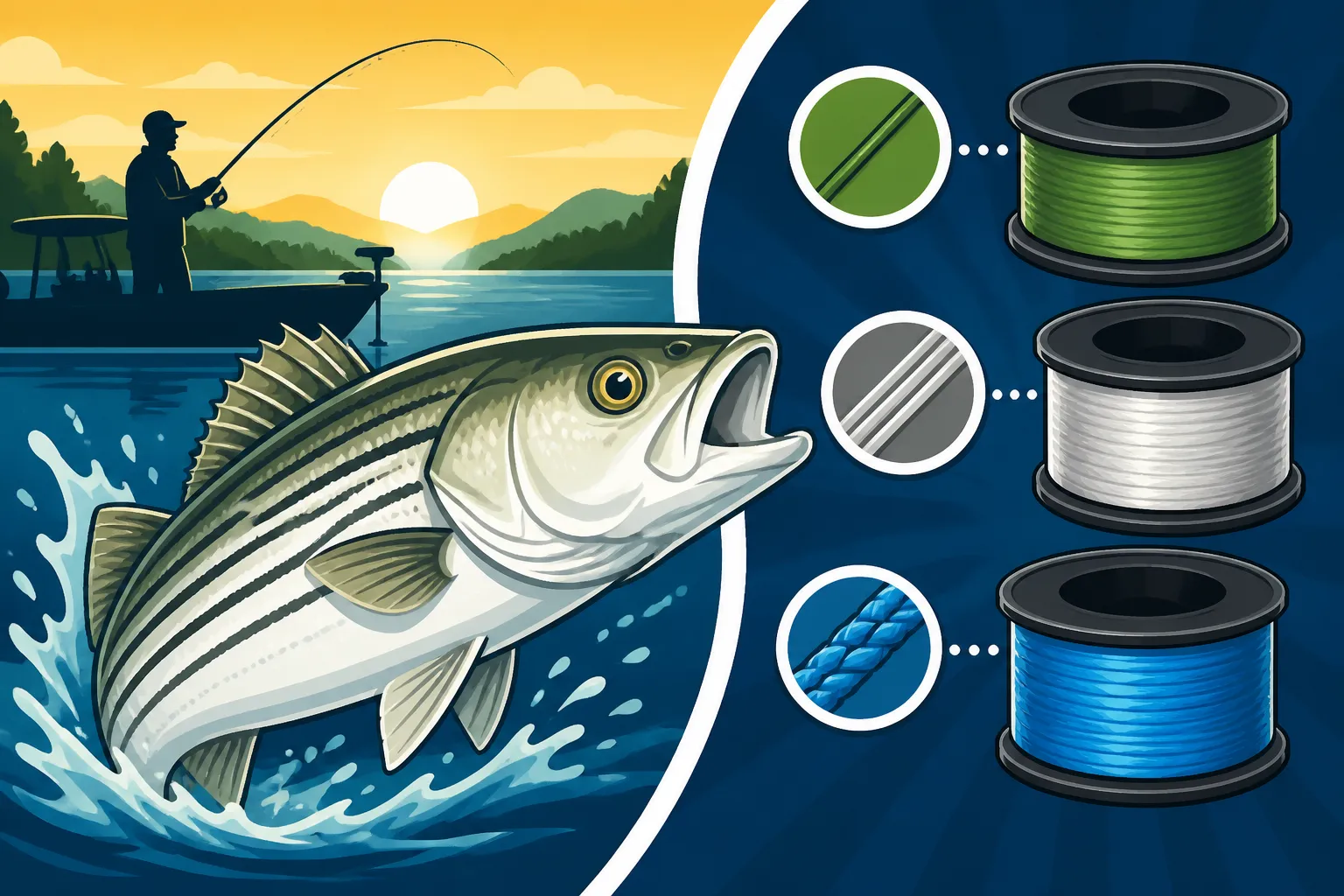
When it comes to the main line for trolling for Tennessee stripers, you'll generally be choosing between three popular types: monofilament, fluorocarbon, and braided line. Each has its strengths and weaknesses, making them suitable for different situations.
Monofilament Line: The Classic Choice
Monofilament, or "mono," has been a staple in fishing for decades, and it still holds its own for striped bass trolling.
Its primary advantages include:
- Stretch: Mono has a good amount of stretch, which acts as a shock absorber. This can be a real benefit when a powerful striper hits your lure at speed, helping to prevent hook pulls or line breaks from sudden surges.
- Knot Strength: It generally offers excellent knot strength, meaning your knots are less likely to slip or fail.
- Cost-Effectiveness: Mono is usually the most affordable option, making it a popular choice for filling large trolling reels.
- Buoyancy: It tends to float or sink slowly, which can be an advantage when you want your lure to stay higher in the water column or if you're using shallow-diving baits.
However, mono also has its drawbacks for striper trolling:
- Diameter: It has a larger diameter compared to braided line of the same breaking strength, leading to more water resistance and reducing the natural diving depth of lures.
- Visibility: Mono is more visible underwater than fluorocarbon, which can be a disadvantage in clear water.
- Abrasion Resistance: While decent, it's not as abrasion-resistant as fluorocarbon or some specialized braids.
- Memory: It can develop "memory," leading to coils, especially on spinning reels or after being spooled for a long time.
For striped bass trolling, monofilament in the 15 to 30-pound test range is a common choice. A 20-pound mono is a good all-around option, providing a balance of strength and manageability. If you’re targeting larger fish or fishing around heavy cover, bumping up to 25 or 30-pound test gives you more peace of mind.
Fluorocarbon Line: The Invisible Advantage
Fluorocarbon line shares many characteristics with monofilament but stands out primarily for its near-invisibility underwater and superior abrasion resistance.
Its advantages:
- Low Visibility: Fluorocarbon has a refractive index very close to water, making it virtually invisible underwater. This is a huge plus in clear waters where stripers might be line-shy.
- Abrasion Resistance: It’s much more resistant to nicks and scrapes than monofilament, which is critical when fishing around rocky structure or submerged timber.
- Sensitivity: It transmits vibrations well, offering good feel, though not as much as braid.
- Low Stretch: Less stretch than mono, giving you better hook sets and direct contact with the fish.
- Sinking Properties: Fluorocarbon sinks faster than mono, which can help get your lures down deeper.
The main downsides are:
- Cost: It's significantly more expensive than monofilament.
- Stiffness: It can be stiffer and have more memory than mono, making it a bit harder to manage on some reels.
- Knot Tying: Tying fluorocarbon knots requires care due to its stiffness and slicker surface.
Many anglers use fluorocarbon primarily as a leader material (typically 20-50 pound test) with a braided main line. However, if you're dedicated to stealth and abrasion resistance in extremely clear, structured waters, you could consider spooling up with 15 to 25-pound fluorocarbon as your main line, though this would be a more niche application given the cost.
Braided Line: Power and Precision
Braided line has revolutionized many forms of fishing, and striped bass trolling is no exception. It offers immense strength in a small diameter.
The benefits are substantial:
- Incredible Strength-to-Diameter Ratio: You can get 50-pound test braid that is the same diameter as 12-pound monofilament. This means less water resistance, deeper diving lures, and more line capacity on your reel.
- Zero Stretch: Braid has virtually no stretch, providing unparalleled sensitivity. You can feel every bump, every weed, and the subtlest of bites, even with hundreds of feet of line out. This also leads to solid, instant hook sets.
- Durability: It lasts a very long time, resisting UV degradation and generally holding up well to wear and tear.
However, braid comes with its own set of challenges:
- Visibility: It is highly visible underwater, often necessitating a fluorocarbon or monofilament leader.
- Abrasion: While strong, individual strands can fray, and it can be susceptible to cuts from sharp edges, though it doesn't break easily.
- Knot Tying: Specific knots are required for braid, and they must be tied meticulously to prevent slippage.
- Cost: It's often the most expensive option upfront.
For striped bass trolling, braided line in the 30 to 65-pound test range is very popular. Many anglers opt for 40 or 50-pound test. This heavy breaking strength might seem like overkill, but it's not just about fighting the fish; it's about being able to pull snagged lures free from cover, which can save you a lot of money and frustration over time. When you're looking for quality braided line or fluorocarbon leaders, places like Bass Pro Shops or even online retailers like Amazon offer an incredible selection to choose from, often with great deals.
Here's a quick comparison to help you visualize the choices:
| Line Type | Breaking Strength (Typical) | Key Advantage | Key Disadvantage | Ideal for |
|---|---|---|---|---|
| Monofilament | 15-30 lb | Shock absorption, cost | Higher diameter, visibility | All-around use, when stretch is desired, budget-conscious anglers, topwater trolling, or if using lead core as main line. |
| Fluorocarbon | 15-25 lb (main) / 20-50 lb (leader) | Invisibility, abrasion resistance | Cost, stiffness | Leaders with braid, very clear water conditions, fishing around heavy structure where stealth and toughness are paramount. |
| Braided Line | 30-65 lb | Strength, thin diameter, sensitivity | Visibility, knot tying | Deep water trolling, maximum sensitivity, pulling lures free from snags, paired with a leader. |
Lead Core Line and Copper Line: Specialty Choices
For situations where extreme depth is required without downriggers, lead core line or copper line are specialty options. These lines are designed to sink, with lead core sinking deeper for its diameter than standard mono or braid. Lead core is color-coded every 10 yards, giving you a visual indicator of how much line is out and thus, how deep your lure is running. This is typically used with a short monofilament or fluorocarbon leader. While effective, it adds a lot of weight to your setup and takes up significant reel capacity. These are often used when trolling with very light lures that wouldn't get down otherwise.
Advanced Considerations and Rigging Tips
Optimizing your line setup goes beyond just picking a breaking strength; it involves understanding how different components work together and maintaining your gear properly.
Leaders and Terminal Tackle: The Crucial Connection
Even if you’re using braided line, a leader is almost always a good idea for striped bass trolling. A leader serves several vital functions:
- Stealth: A clear fluorocarbon leader (typically 20-50 pound test, depending on the main line and target size) makes the connection to your lure virtually invisible, which is particularly important in clear water.
- Abrasion Resistance: Fluorocarbon leaders offer superior abrasion resistance, protecting your main line from jagged rocks, logs, or even the rough scales and sharp gill plates of a big striper during the fight.
- Shock Absorption: A short monofilament leader can add a touch of stretch to a braid setup, acting as a shock absorber.
Connecting your main line to your leader requires a strong, reliable knot. The FG knot, Alberto knot, or uni-to-uni knot are popular choices for joining braid to fluorocarbon or monofilament. For the lure connection, a high-quality snap swivel or solid ring and split ring setup is often preferred. This allows for quick lure changes and reduces line twist. Remember, even the strongest line is only as good as its weakest knot, so practice your knots! You'll want to ensure you're using robust swivels and snaps as well, as a big striper can easily bend or break lesser quality terminal tackle.
Downriggers and Planer Boards: Controlling Depth and Spread
Tools like downriggers and planer boards can dramatically change your line weight considerations.
- Downriggers: These devices use a heavy cannonball weight to carry your fishing line (which is clipped to the downrigger wire) down to a precise depth. When a fish strikes, the line pops free from the clip, and you fight the fish directly on your main line. Because the downrigger is controlling the depth, you can use a lighter main line – say, 20-30 pound monofilament or 30-50 pound braid – which provides better sensitivity and fighting characteristics. The downrigger effectively takes the "depth challenge" out of the equation for your main line. Many anglers rely on downriggers, which you can find readily at most reputable tackle stores or through online platforms such as Amazon.
- Planer Boards: These boards pull your line out to the side of the boat, allowing you to spread out multiple lines and cover a wider swath of water without spooking fish directly under the boat. Planer boards often work best with a strong, low-stretch line like braid, as it reduces sag and allows the board to track more effectively. While they don't help with depth directly, they allow you to run lighter tackle off to the side, maintaining a clear path behind your boat for deeper presentations. For more on these setups, check out Downrigger Basics for Striped Bass or Best Planer Boards for Tennessee Striper Fishing.
Line Maintenance and Replacement: Don't Skimp on Care
This is perhaps one of the most overlooked aspects of successful fishing. Your line is a consumable item, especially when battling powerful fish like striped bass or fishing around abrasive structures.
- Inspect Regularly: After every trip, or even periodically during a long day of fishing, run your line through your fingers, feeling for nicks, abrasions, or flat spots. Even a small imperfection can lead to a break under pressure.
- Replace Frequently: Monofilament and fluorocarbon should ideally be replaced at least once a year, or more often if you fish heavily. UV exposure and general wear and tear degrade these lines over time. Braided line lasts longer but should still be checked and considered for replacement every few years, especially the first 50-100 yards that see the most action.
- Reel Capacity: When spooling your reel, ensure you're not overfilling it, which can lead to tangles and wind knots. Leave a small lip of the spool visible.
- Spooling Direction: Pay attention to how the line comes off the filler spool and goes onto your reel to prevent line twist. This is particularly important for monofilament.
By understanding the unique behaviors of Tennessee stripers and the mechanics of trolling, and by thoughtfully choosing and maintaining your line, you’ll be much better equipped to land those hard-fighting fish. The right line weight isn't just about preventing breaks; it's about optimizing your entire fishing experience, from lure presentation to the thrill of the fight.
Disclaimer
This article is for general informational purposes only and does not constitute professional advice. Laws, prices and regulations vary by location and change over time. Consult a qualified professional for guidance on your specific situation.